
Jonathan Harnum's Blog, page 44
March 1, 2015
Singing Is Learned, Not a Natural Ability: More Evidence

Glad the issue of learning over “natural talent” is getting more attention, and not just from researchers like Steven Demorest and Peter Pfordresher (et al.), who just published a research paper on the subject. Here’s an excerpt from a recent Chicago Tribune article.
Singing is more of a learned skill than a natural talent, said Steven Demorest, a music education professor at Northwestern University who recently published a study in the journal Music Perception that compared the singing accuracy of kindergartners, sixth-graders and college-age adults.
“People tend to think of singing as a characteristic, either you have it or you don’t,” Demorest said. “We think it has a lot more to do with how much you do it.”
To be certain, he’s not promising Beyonce-level skills. Singing on pitch does come easier for some, and some people pick it up more quickly.
But for those who have been shunned for a lack of ability, that “tone deaf” label can carry with it damaging consequences long after it’s uttered.
“This poor musical self-image can shape future engagement in music, and the negative experiences of childhood are remembered vividly well into adulthood,” Demorest and co-author Peter Pfordresher, of the University at Buffalo, wrote in their paper.
Related articles
 Can’t sing? Do it more often
 Regular practice may be as crucial to singing on pitch as it is for learning an instrument
 Think You Can’t Carry a Tune? Just Sing More
Singing: Practice makes perfect
 Busted: Artists Who Were Caught Lip-Syncing And Were Criticized For It
 When It Comes to Singing, Practice Makes Perfect


February 23, 2015
Cover Yourself: Led Zeppelin Medley on Marimba by Grade School Kids
At a recent musical get-together, I realized that I don’t know Beatles tunes (on trumpet) as well as I thought, so I’ve added learning them to my practice list. Covering somebody else’s song is a great way to learn. If you play jazz, pop, folk, or more informal music knows this so deeply, you probably shouted, “Duh!” after that last sentence.
[image error]
Robert Plant (left) and Jimmy Page (right) of Led Zeppelin
But many who learn via written music–the usual approach in band, choir, and orchestra–don’t usually get that kind of advice. Learning by ear and imitation allows you to bypass all of the theory, note-reading, etc. and get right to the meat of the music: making meaningful sound. Here’s a great example, because these Led Zeppelin tunes have some tricky rhythms that these kids nail. I don’t know if they learned by ear (probably not), but you can bet they listened to the tunes many times. Check it out.
Learning by ear is (in my opinion) the best way to go about it, but reading the music is fine, too, as long as you’re constantly referring to a recording, preferably the definitive one. Strive to imitate the notes, tone, and emotion so completely that your sound dissolves into the other sound. That can be a challenge if, say, you’re playing a trumpet with The Beatles. Challenge accepted!
The 2014-15 Louisville Leopard Percussionists rehearsing Kashmir, The Ocean, and Immigrant Song by Led Zeppelin.
The Louisville Leopard Percussionists began in 1993. They are a performing ensemble of approximately 55 student musicians, ages 7-12, living in and around Louisville, Kentucky. Each student learns and acquires proficiency on several instruments, such as marimbas, xylophone, vibraphone, drum set, timbales, congas, bongos and piano.
And the original version of Kashmir:
Related articles
[image error] The Beatles – Here, There and Everywhere
[image error] Training Culture vs. Learning Culture
[image error] black bird the beatles


December 18, 2014
Midwest Clinic Presentation: Free Kindle Editions: 2 Days Only!
I’m presenting my research on music practice at the Midwest Clinic in Chicago Thursday, December 18th at 1:30 PM in room W186. Midwest in an international conference with over 15,000 attendees from all 50 states and 30 countries. Should be a lot of fun!
Links to Resources from the Talk
To access the information from my talk, including a printable poster, the presentation, and lots o’ links, go here.
I believe the information in The Practice of Practice is valuable and helpful, so I’ve decided to give attendees the Kindle edition of that as well as the Kindle edition of my bestseller: Basic Music Theory: How to Read, Write, and Understand Written Music (4th ed.). You can get one even if you’re not there! Just click on the image below to get one. They’re only available for December 18th and 19th. Please share this information with your students, parents, and on social media, and thanks!
Don’t have a Kindle? The Kindle Reader app is free here.
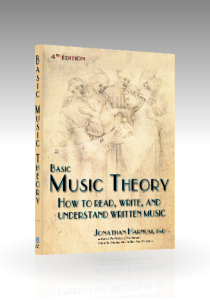
Basic Music Theory: How to Read, Write, and Understand Written Music (4th ed.)
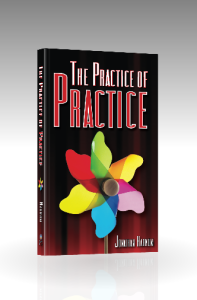
The Practice of Practice, by Jonathan Harnum, PhD


December 6, 2014
From Rock to Bach: THE Book for Any Musician On Your List

A picture of the book in the wilds of Chicago. Found with a dose of wise advice on Clayton Jarvinen’s FaceBook page.

The Practice of Practice, by Jonathan Harnum, PhD
Until The Practice of Practice, there hasn’t been a book on practice written for musicians who aren’t interested in the school musics (band, choir, and orchestra). The good news is that this book is also valuable for those folks, too. It’s useful whether you’re into Bach, Rock, or any other kind of music.
I interviewed world class musicians and studied hundreds of research articles to create the book. The Practice of Practice was written to be valuable for any musician of any genre who wants to get better. (free US shipping from the publisher, or get it from Amazon in the US, UK, Australia, Spain, France, Germany, Canada, India, Netherlands, Japan, Brazil, Mexico)
Here’s what readers have been saying about The Practice of Practice:
“Your overall musicianship will improve and practicing will be more fun.” —Barry C. Smith
“Very interesting book, well written and funny too.” –Sue Custer
“For teachers and students, professionals and amateurs, this book will give everyone some useful insights into the process that so many of us struggle with. I have changed my practice routine and am finding it more effective now.” —James Jennings
“Practical, useful, entertaining and highly recommended.” —David R
Here’s What’s In the Book:
The Practice of Practice outlines 6 parts of practice (47 chapters, 275 pages):
What (6 chapters): Definitions of what music practice is (and isn’t). Also learn about the neural mechanisms of learning and what music practice does to your brain.
Why (5 chapters): Motivation is crucial. Learn ways of keeping the flame lit in this section.
Who (5 chapters): A lot of people (including yourself) will impact your practice. Learn about who they (and you) are, and how they’ll help your practice.
When (6 chapters): This section covers how much, and what times of the day are best for practice, as well as the development of practice skill over time.
Where (5 chapters): Where you practice affects how well you practice. Learn to harness the place of your practice.
How (18 chapters): Three times longer than the next longest section of the book, this section includes information about goals, structuring your practice, as well as specific strategies pros use to get better and effective practice techniques tested by researchers.

The Book Also Contains: Helpful Visual Aids: A picture is worth a thousand explanations. Above are just a few of the diagrams, pictures, and illustrations used in the book to make the ideas stick in your head better.
QR Codes and Web Links: Nearly every chapter contains links to carefully selected extra content online, rich content that will extend and reinforce what you’ve learned in each chapter. With a smart phone and a QR code reader, you can access If you’re reading on a Web-connected e-book, you can click on the link and go to the extra online goodies.
Extra Online Content (link) Includes:
video/audio of great performances
interesting and useful talks
interviews on practice
great books and recordings
helpful practice gadgets
many useful practice tools
Link to Research Used for the Book.
The Stellar Musicians Interviewed for the book
Nicholas Barron, voice, guitar, songwriter (vid)
Bobby Broom, jazz guitar (vid)
Avishai Cohen, jazz trumpet (vid)
Sidiki Dembele, djembe (vid–Sidiki plays first)
Adrian Holovaty, guitar, programming (vid)
Hans Jørgen Jensen, cello (vid)
Ingrid Jensen, jazz trumpet (vid)
Sona Jobarteh, kora, guitar, voice, composition/songwriting (vid)
Om Johari, rock singer, guitar, (vid)
Rupesh Kotecha, Indian classical tabla (vid)
Rex Martin, tuba (vid)
Chad McCullough, jazz trumpet (vid)
Erin McKeown, voice, guitar, bass, piano, drumset, songwriter (vid)
Allison Miller, multi-genre drummer (vid)
Peter Mulvey, voice, guitar, songwriting (vid)
Colin Oldberg, classical trumpet (vid–Colin’s on the left)
Nick Phillips, jazz trumpet (vid)
Michael Taylor, djembe (vid)
Prasad Upasani, Indian classical vocalist, programmer (vid)
Serge van der Voo, upright bass, vocals, foot percussion (vid)
Stephane Wrembel, gypsy jazz guitar, songwriter/composer(vid)
Where to Get a Copy of The Practice of Practice
Free US shipping from the publisher, or get it from Amazon in the US, UK, Australia, Spain, France, Germany, Canada, India, Netherlands, Japan, Brazil, or Mexico.


November 19, 2014
The World’s Hidden Music (Rituals)
Watching the video below started me thinking about how music practice, especially when done with others, is a powerful means of communion, in several senses of that word. We have to practice alone in a room, yes, but it’s vital to embrace and seek out playing with others, too. The sooner the better, and as much as possible.
A couple weeks ago I finally got together with some neighbors for some informal music-making around the dinner table, and, as usual, it was fun. This kind of playing is, at the moment, my most important type of practice, because I need to work on loosening up, enjoying the moment, not worrying too much about “right” notes, and just listening and responding with my instruments. One of the other players was a young neighbor who had just started playing guitar. For her, getting the mechanics down was more important.
Tonight I’m going to go play in a community band, with a bunch of people I’ve never met, and I’m excited. I don’t know what to expect, but it will be very different from playing around the dinner table. There will be a director. There will be sheet music. And there will most likely be laughter (I’ll be in the trumpet section, after all).
[image error]
Naná Vasconcelos
Practice in a room alone is important, and necessary if you want to get good quickly. But don’t neglect making music with others. Don’t wait until you’re “good enough,” because that can be a trap. As musicians, we’re always striving to get better and with that mindset, “good enough” might never happen. Maybe I’m projecting. At any rate, in social music-making situations, good is irrelevant. Participating is what’s most important.
Social bonding is perhaps music’s most powerful gift, and it’s why music is so important in most spiritual practices around the world. Here is a short talk by French cinematographer Vincent Moon about his projects going around the world filming musicians, from the famous to the unknown. We need these images of informal music-making to balance our usual media view of what music is.
At the end of the talk, Moon introduces Naná Vasconcelos, a Brazilian Latin jazz percussionist, vocalist and berimbau player, most notable for his works with Pat Metheny, Don Cherry, Egberto Gismonti, and Gato Barbieri.
Vasconcleos takes you on a musical journey starting at 14:25
Related articles
[image error] The Didgeridoo Gets A Funk Injection
[image error] Boost Your Skills: Adopt a New Instrument. Maybe This Trippy Yaybahar?
[image error] St. Vincent Shares Full Set Video From Pitchfork Music Festival Paris
[image error] Moff, A Toy Wristband That Makes Sounds in Different Themes as the Wearer Moves


November 4, 2014
Boost Your Skills: Adopt a New Instrument. Maybe This Trippy Yaybahar?
Adopting a new instrument can push your musical awareness of pitch, rhythm, timbre, melody, and harmony to new and useful places. A new and unfamiliar instrument can also add a spark to your practice if you’re bored with the same-old same-old.
Here’s a fascinating new acoustic instrument, the Yaybahar, made and played by Görkem Şen. What a great sound! And the practice space is not bad either….
If you’re wondering what would be a good instrument to adopt, I’d suggest a harmony instrument (guitar, piano), and a percussion instrument, like conga, or djembe, or even small percussion instruments.
If you’re interested in creating your own instruments, or other instrument creators, check out one of the most famous, Harry Partch, who invented instruments for his compositions. Personally, I love Partch’s philosophy and his rebel spirit.
If micro-tones are new to you and you don’t have time for the whole documentary, check out this wonderful explanation/demonstration below. Only takes a minute or so:


November 1, 2014
The Flying Fingers of Jeremy Ellis
Looking to hone your rhythmic ability? Gadgets can be a fun way to do it. Many suggestions on using practice gadgets in chapter 33 of The Practice of Practice.
Here’s Jeremy Ellis demonstrating insane amounts of practice with his finger wizardry on the Maschine Mikro and below that, on its bigger brother, the Maschine Studio. Pretty mad skills!
Related articles
[image error] What Your Favorite DJs Are Using To Control Their Live Performances
[image error] What Unique Gear Do Touring DJs/Producers Use?
[image error] Complete Guide to Maschine Studio With Rob Jones
[image error] Native Instruments’ iMaschine now available for free on iOS (Reg. $5)


October 30, 2014
Louis Armstrong + Dancing Skeleton = Happy Halloween!
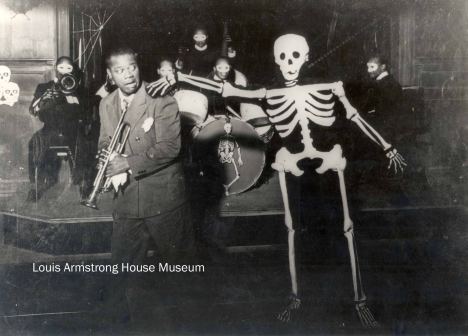
Louis Armstrong performs Skeleton in the Closet from the 1936 movie Pennies From Heaven (with Lionel Hampton on drums)


October 29, 2014
How Does Posture Affect Your Sound?
#165831820 / gettyimages.com
Posture is vital not only to a good sound, but will also help you avoid injury. Jazz trumpeter Ingrid Jensen gives a superb lesson about posture, why it matters, and how to do it. Ingrid spoke with me about practice for my latest book, The Practice of Practice. You can hear her interview about practice here. Listen and learn from Ingrid in the video below:
Check out Ingrid’s discography and order some music!
_________________________________________________
Back-To-School Specials On All Formats:
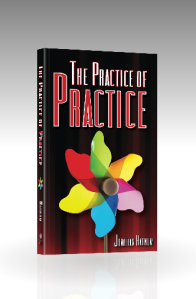
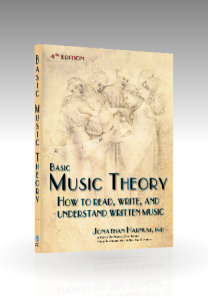
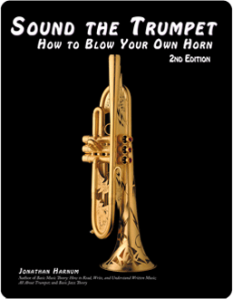
________________________________________________
Related articles
 Do YOU Know the Muffin Man? Imitation in Music Practice
 INTERVIEW/PROFILE: Jazz Musician of the Day: Ingrid Laubrock

October 24, 2014
There Are Just Three Rules of Music Practice….
This is good news. When there is no clear path, you’re better off with a compass than a map. With a compass, you’re figuring out where you are and where you need to go based on your immediate surroundings. A map won’t tell you anything about where you are or what direction you’re facing.
It’s good to NOT know. It can be easy to forget (and difficult to embrace) the fact that not knowing is the first step on the path to true knowledge. But as for practice advice, it’s not too practical, is it?
Most of the world-class musicians I’ve spoken with about music practice have said that, for the most part, they learned to practice on their own, doing the hard work to figure out what worked for them. Now and then a teacher might show them a thing or two, but for the most part, most of us have been on our own.
This isn’t to say that we should ignore other information about music practice, no matter where it comes from. And there are certain “rules” of music practice that seem to work across all genres, but you can bet your last dollar that what works for a punk rocker won’t work for a concert orchestral soloist. That’s why nobody knows what the three rules are. They change depending on the person. You have to find your own three rules.
It’s the active engagement with the material–whether it’s power chords or Petroushka–that makes the difference. Here are some of the best resources I’ve found useful as a compass to help understand practice better. I hope they help you, too.



![[image error]](http://commons.wikipedia.org/wiki/File:Jimmy_Page_with_Robert_Plant_2_-_Led_Zeppelin_-_1977.jpg)
![[image error]](http://commons.wikipedia.org/wiki/File:Nan%C3%A1_Vasconcelos_2.jpg)