
Rosanne Dingli's Blog, page 6
September 24, 2011
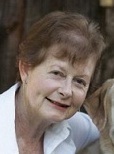
Margaret Sutherland - Guest Blog
I would like you to meet an author who has jumped into the fray to help me out during a period when I am overwhelmed with work. I am very grateful.
Margaret Sutherland is an author with a large body of work. She has written fiction of the full-length and short varieties with great success, and is taking the floor this week. Please make her welcome.
 WRITING AND WORK
"Don't give up your day job!"This gratuitous advice to authors suggests that, as there's no money in it, writing isn't real work, and for the money part, that's true for most of us. Novelists and short story writers don't draw regular paychecks.So isn't writing work?
Of course it is, if work implies regular effort carried out for reward. It's just that the varied rewards of writing may not be measured in cash. We still need money and most of us do have some other form of paid work. Magpies that we are, we will gather experience for future writing, in the way that Somerset Maugham used his training as a doctor for 'Liza of Lambeth' and 'Of Human Bondage'.
 As a young woman, my occupation was raising three children and keeping a home. In the '60's that wasn't considered work. Only when I suggested taking a paid part-time job did the issue arise. Who would do whatever it was I was doing all day? I postponed taking the job. Instead I turned to writing. That probably saved my sanity, but nobody called it work. It was my little hobby in Suburbia. (Guess what my early novel 'The Love Contract' was about.)
In later life I qualified as a piano and guitar teacher, (my current day job). I needn't think hard about how music has infiltrated my fiction. In 'The Sea Between' there's a procession of characters. I'm throwing a little get-together for them right here. Let me introduce you: irritable Mr Casubon, gifted musician forced to support his large family by teaching; Julian Moxham, ambitious bipolar cellist; shy pianist Dot, briefly a nun.
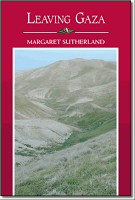
 And from 'Leaving Gaza', here's Heath Barnes, retired now from the Conservatorium but still teaching music at home. (On the quiet, a lovely man, but a terrible frustration to his wife, who paints. Trouble brewing there.)
Let's move on. You know how rackety arty people are.
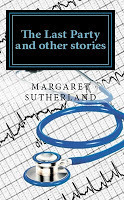
Behind this closed door, the sick and elderly are celebrating life. How resilient they are! By now you'll have gathered I also worked as a nurse? After training in the '70's, I was employed in Women's and Baby Health, Aged Care and Migrant Health. The experiences from this period fill a whole book; life stages and characters who people my just-released paperback and e-book, 'The Last Party'. Well, excuse me. It's time to go. Old friends are calling and then it's back to work.
MARGARET SUTHERLAND is a New Zealand writer who has lived in Australia for twenty years. She has published seven novels and several collections of short stories, has held the New Zealand Scholarship in Letters and has received two Australia Council writing fellowships. Her work has been included in many anthologies. For further details, visit Margaret's website at www.margaretsutherland.com.
Thank you Margaret - most readers would have clicked on the book covers by now. Our curiosity is roused. Leaving comments should start a discussion about writing and work.


Margaret Sutherland is an author with a large body of work. She has written fiction of the full-length and short varieties with great success, and is taking the floor this week. Please make her welcome.
 WRITING AND WORK
"Don't give up your day job!"This gratuitous advice to authors suggests that, as there's no money in it, writing isn't real work, and for the money part, that's true for most of us. Novelists and short story writers don't draw regular paychecks.So isn't writing work?
Of course it is, if work implies regular effort carried out for reward. It's just that the varied rewards of writing may not be measured in cash. We still need money and most of us do have some other form of paid work. Magpies that we are, we will gather experience for future writing, in the way that Somerset Maugham used his training as a doctor for 'Liza of Lambeth' and 'Of Human Bondage'.
As a young woman, my occupation was raising three children and keeping a home. In the '60's that wasn't considered work. Only when I suggested taking a paid part-time job did the issue arise. Who would do whatever it was I was doing all day? I postponed taking the job. Instead I turned to writing. That probably saved my sanity, but nobody called it work. It was my little hobby in Suburbia. (Guess what my early novel 'The Love Contract' was about.)In later life I qualified as a piano and guitar teacher, (my current day job). I needn't think hard about how music has infiltrated my fiction. In 'The Sea Between' there's a procession of characters. I'm throwing a little get-together for them right here. Let me introduce you: irritable Mr Casubon, gifted musician forced to support his large family by teaching; Julian Moxham, ambitious bipolar cellist; shy pianist Dot, briefly a nun.
And from 'Leaving Gaza', here's Heath Barnes, retired now from the Conservatorium but still teaching music at home. (On the quiet, a lovely man, but a terrible frustration to his wife, who paints. Trouble brewing there.)Let's move on. You know how rackety arty people are.
Behind this closed door, the sick and elderly are celebrating life. How resilient they are! By now you'll have gathered I also worked as a nurse? After training in the '70's, I was employed in Women's and Baby Health, Aged Care and Migrant Health. The experiences from this period fill a whole book; life stages and characters who people my just-released paperback and e-book, 'The Last Party'. Well, excuse me. It's time to go. Old friends are calling and then it's back to work.
MARGARET SUTHERLAND is a New Zealand writer who has lived in Australia for twenty years. She has published seven novels and several collections of short stories, has held the New Zealand Scholarship in Letters and has received two Australia Council writing fellowships. Her work has been included in many anthologies. For further details, visit Margaret's website at www.margaretsutherland.com.
Thank you Margaret - most readers would have clicked on the book covers by now. Our curiosity is roused. Leaving comments should start a discussion about writing and work.


September 12, 2011
Guest blog: Tom Kepler on poetry
This week, I have a guest blogger taking the floor.
Some of you might know I started off life as a published writer with poetry. Although I haven't done much since the 1990s, after publication of my collected poems All the Wrong Places, I have kept an eye on the scene, building fascination about poems that tell a story and fulfill the narrative sequencing sought by readers of fiction.
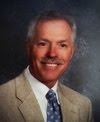 Tom Kepler is my guest blogger today. He delves into this subject much better than I ever could. His collection Bare Ruined Choirs is worth keeping handy, for the occasional foray into a gentler, more contemplative read that elicits understanding of the human condition, of human emotion.
Without further ado, here's Tom.
Poetry That Tells a Story
We'll start not with "poetry" but with "poetic" to lessen the clicking sound of readers mousing to another website.
"How poetic of you!" and "How poetic!" are common enough sayings, and what those expressions mean is pretty clear to everyone: poetry extending into prose, words used with greater intensity, more meaning packed into fewer words.
So what about when the storytelling of prose wriggles its way into a poem? We have three possibilities:
epic poetry (Hello, John Milton and the Beowulf poet)prose poetry (Hello, Walt Whitman, father of the long line)poems as a series (Hello, Shakespeare's sonnets to the Dark Lady)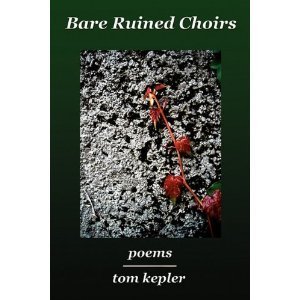 Writing poems in a series is a fascinating opportunity for a writer. A poet can create windows of perception--poems one by one--and then link them.
Modern technology gives us the "slideshow" effect as an example. Each photo is its own reality, yet together the images conjure a greater effect. The whole is greater than the sum of the parts.
The same is true with a series of poems. They can be crafted, each with its own beauty, yet can also be compiled and organized to tell a story. Like flash fiction, poems can be short, impressionistic vignettes that "hint" at a larger story.
If novels are like the cinema, a series of moving pictures, then modern lyric poetry is the individual photograph, each viewed one by one. What is the functional difference of experiencing these two modes of storytelling?
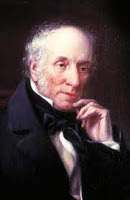 In a movie, the audience is stationary and experiences images as they move. This is true also in a novel; the action occurs on the page to the characters. When a sequence of poems tells a story, the poems are like still images mounted on a wall. It is the viewer or reader that moves from reality to reality--transformed by words that are "possessed of more than usual organic sensibility," to quote William Wordsworth.
My book of poetry, Bare Ruined Choirs, consists of twenty-eight poems that document the life of a relationship. Six years after the last, fading years of my first wife's life, I realized I had the makings of a story, a chronicle with a beginning, middle, and end.
The organization of the poems, though, is conceptual, rather than chronological to the order of their writing. The artistic, universal story supercedes the biographical--or perhaps the two blend together to the universal story of "love, life, and death."
If passages in novels can be poetic prose, then certainly a series of poems can be designed to tell a story. That's what I tried to do with Bare Ruined Choirs , anyway--to tell a universal story and to structure a tribute to a brave and tragic lady.
***
Thank you, Tom: this gives those wishing to venture into poetry once more a springboard. Stories are what writers love to tell, and shaping them as you have, into a book of poems that together form a narrative, yet stand individually rather well, might be the way.
Find out more about my guest here:
Tom Kepler
Tom Kepler Writing Tom Kepler Writinghttp://www.tomkeplerswritingblog.com/(Blog and Website)
Tom Kepler Writing/Wise Moon Books (Facebook Writing Page)
Tom Kepler at Smashwords


Some of you might know I started off life as a published writer with poetry. Although I haven't done much since the 1990s, after publication of my collected poems All the Wrong Places, I have kept an eye on the scene, building fascination about poems that tell a story and fulfill the narrative sequencing sought by readers of fiction.
 Tom Kepler is my guest blogger today. He delves into this subject much better than I ever could. His collection Bare Ruined Choirs is worth keeping handy, for the occasional foray into a gentler, more contemplative read that elicits understanding of the human condition, of human emotion.
Without further ado, here's Tom.
Poetry That Tells a Story
We'll start not with "poetry" but with "poetic" to lessen the clicking sound of readers mousing to another website.
"How poetic of you!" and "How poetic!" are common enough sayings, and what those expressions mean is pretty clear to everyone: poetry extending into prose, words used with greater intensity, more meaning packed into fewer words.
So what about when the storytelling of prose wriggles its way into a poem? We have three possibilities:
epic poetry (Hello, John Milton and the Beowulf poet)prose poetry (Hello, Walt Whitman, father of the long line)poems as a series (Hello, Shakespeare's sonnets to the Dark Lady)
Writing poems in a series is a fascinating opportunity for a writer. A poet can create windows of perception--poems one by one--and then link them. Modern technology gives us the "slideshow" effect as an example. Each photo is its own reality, yet together the images conjure a greater effect. The whole is greater than the sum of the parts.
The same is true with a series of poems. They can be crafted, each with its own beauty, yet can also be compiled and organized to tell a story. Like flash fiction, poems can be short, impressionistic vignettes that "hint" at a larger story.
If novels are like the cinema, a series of moving pictures, then modern lyric poetry is the individual photograph, each viewed one by one. What is the functional difference of experiencing these two modes of storytelling?
 In a movie, the audience is stationary and experiences images as they move. This is true also in a novel; the action occurs on the page to the characters. When a sequence of poems tells a story, the poems are like still images mounted on a wall. It is the viewer or reader that moves from reality to reality--transformed by words that are "possessed of more than usual organic sensibility," to quote William Wordsworth.
My book of poetry, Bare Ruined Choirs, consists of twenty-eight poems that document the life of a relationship. Six years after the last, fading years of my first wife's life, I realized I had the makings of a story, a chronicle with a beginning, middle, and end.
The organization of the poems, though, is conceptual, rather than chronological to the order of their writing. The artistic, universal story supercedes the biographical--or perhaps the two blend together to the universal story of "love, life, and death."
If passages in novels can be poetic prose, then certainly a series of poems can be designed to tell a story. That's what I tried to do with Bare Ruined Choirs , anyway--to tell a universal story and to structure a tribute to a brave and tragic lady.
***
Thank you, Tom: this gives those wishing to venture into poetry once more a springboard. Stories are what writers love to tell, and shaping them as you have, into a book of poems that together form a narrative, yet stand individually rather well, might be the way.
Find out more about my guest here:
Tom Kepler
Tom Kepler Writing Tom Kepler Writinghttp://www.tomkeplerswritingblog.com/(Blog and Website)
Tom Kepler Writing/Wise Moon Books (Facebook Writing Page)
Tom Kepler at Smashwords
September 8, 2011
Authors and depression
Self-doubt and unreliable income can wreak damage to susceptible artistic people. Authors and other artists are vulnerable, are exposed to rejection, and rely on a certain level of intellectual success to validate their occupation. Not that this is not true for any other job, but writing seems to be burdened with the public perception that it must succeed: it must include a degree of noteworthiness, if not outright fame and fortune. When expectations are dashed, or achieved only slowly and painfully, it is not only the authors themselves who question the validity of what they do, but those nearest and most intimate with them. Perhaps that is why male authors, who do not always manage to make enough to sustain a family, are traditionally more affected.
 Anne Sexton
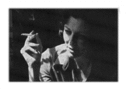
Anyone who has ever studied literature or read a biography will not be surprised to learn that authors sometimes suffer from the blues. As a group, those who identify themselves as authors, or make the bulk of their income that way, have more than their fair share of members who suffer from mental illness. Even off the cuff, one can mention famous authors such as Virginia Woolf or Anne Sexton, Ernest Hemingway or F. Scott Fitzgerald as some who were notorious for their moods.
Benedicte Page, in her Guardian article last year, wrote that writing was one of the top ten professions 'in which people are most likely to suffer from depression'. She also observed that male authors with the complaint outnumbered female ones. Reasons stated were the isolation, self-examination, introversion and subjecting one's work to scrutiny. Anyone who has ever written anything creative can relate to these aspects.
 Artistic people are plagued by an intense inner life that needs an outlet, but they are also artistic because their make-up consists of a fascinating mix of facets, often accompanied by other problems such as gender orientation confusion, family dysfunction, substance abuse and inertia. Experiences, ideas and stories that run deep into a person's psyche are all magnified when it comes to one who writes, because rather than strive to subdue them, ignore them or pretend they do not exist, authors need to dredge, dig and remember. They need to rouse and elicit all that lies in their heads and hearts just to be able to frame what they write on some basis. Even if they write pure fiction, the personal element is never absent.
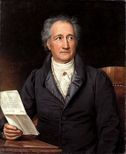
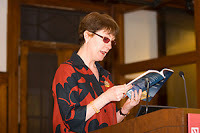 Gwyneth LewisThere is a side to writing, however, that comes to the aid of authors. Given the difficulty of what they do, the meagre earnings for those but the most famous, the discomfort that comes from being misunderstood, and their continual lack of guaranteed success, the poet Gwyneth Lewis writes she is amazed "that writers don't suffer more." Many would agree that the notion that an artist or author needs to suffer for their art is nonsense. There is a cathartic side to writing that does heal. There is a definite closure to be felt when one finishes a work that feels productive. Joy is possible, and is available to authors in ways often denied to those without an artistic outlet. The ability to transcend problems, place them in perspective - even get rid of them by giving them to an invented character - lies within the scope of the author. Many writers have analytical perception, and the mental agility, to overcome feelings of depression. Goethe, when he wrote The sorrows of young Werther, exorcised his own suicidal impulses and thoughts, and very likely saved his own life. (Pöldinger W. 1986) It has been suggested that in their depressive state, authors gather new impressions, which are then released in a fresh and vigorous writing stage, when creativity is unleased, in a kind of 'manic' state.
Perhaps it is useful to regard moods as necessary in the life of a writer: a series of hills and troughs, with their attendant feelings of alternating doubt and determination, melancholia and joy, despair and elation. If one sees there is gathering and collecting of material - of emotion - during the low moods, and great production and creation during the jolly fruitful intervals, one can face anything. Most importantly, one can face that keyboard with courage.


Anne SextonAnyone who has ever studied literature or read a biography will not be surprised to learn that authors sometimes suffer from the blues. As a group, those who identify themselves as authors, or make the bulk of their income that way, have more than their fair share of members who suffer from mental illness. Even off the cuff, one can mention famous authors such as Virginia Woolf or Anne Sexton, Ernest Hemingway or F. Scott Fitzgerald as some who were notorious for their moods.
Benedicte Page, in her Guardian article last year, wrote that writing was one of the top ten professions 'in which people are most likely to suffer from depression'. She also observed that male authors with the complaint outnumbered female ones. Reasons stated were the isolation, self-examination, introversion and subjecting one's work to scrutiny. Anyone who has ever written anything creative can relate to these aspects.
Artistic people are plagued by an intense inner life that needs an outlet, but they are also artistic because their make-up consists of a fascinating mix of facets, often accompanied by other problems such as gender orientation confusion, family dysfunction, substance abuse and inertia. Experiences, ideas and stories that run deep into a person's psyche are all magnified when it comes to one who writes, because rather than strive to subdue them, ignore them or pretend they do not exist, authors need to dredge, dig and remember. They need to rouse and elicit all that lies in their heads and hearts just to be able to frame what they write on some basis. Even if they write pure fiction, the personal element is never absent. Gwyneth LewisThere is a side to writing, however, that comes to the aid of authors. Given the difficulty of what they do, the meagre earnings for those but the most famous, the discomfort that comes from being misunderstood, and their continual lack of guaranteed success, the poet Gwyneth Lewis writes she is amazed "that writers don't suffer more." Many would agree that the notion that an artist or author needs to suffer for their art is nonsense. There is a cathartic side to writing that does heal. There is a definite closure to be felt when one finishes a work that feels productive. Joy is possible, and is available to authors in ways often denied to those without an artistic outlet. The ability to transcend problems, place them in perspective - even get rid of them by giving them to an invented character - lies within the scope of the author. Many writers have analytical perception, and the mental agility, to overcome feelings of depression. Goethe, when he wrote The sorrows of young Werther, exorcised his own suicidal impulses and thoughts, and very likely saved his own life. (Pöldinger W. 1986) It has been suggested that in their depressive state, authors gather new impressions, which are then released in a fresh and vigorous writing stage, when creativity is unleased, in a kind of 'manic' state.
Perhaps it is useful to regard moods as necessary in the life of a writer: a series of hills and troughs, with their attendant feelings of alternating doubt and determination, melancholia and joy, despair and elation. If one sees there is gathering and collecting of material - of emotion - during the low moods, and great production and creation during the jolly fruitful intervals, one can face anything. Most importantly, one can face that keyboard with courage.
September 4, 2011
Meeting the Twisted Sisters
Friday night was eventful. It was rainy and grey in Perth: not exactly the night to seek an address in an unfamiliar part of town. So I gave myself an extra half-hour of driving time to be on the safe side, and set off with map and explicit directions, written in red marker. I still got horribly lost, ending up at Midland first, and then at the international airport. My destination was nowhere near either.
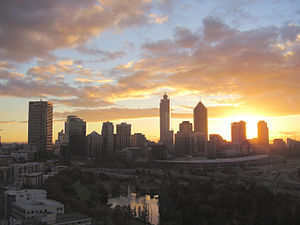 Image via Wikipedia
PERTH
I was heading for a home where the Twisted Sisters - a keen and knowledgable book club - meet. Arriving half an hour late after phoning for directions could have been embarrassing, but the hostess and all the other members of the club made sure I walked into a room of strangers... to a warm welcome. The rest was pretty close to perfect. The night passed quickly, as we discussed According to Luke, which they had all read, and topics included in the narrative. Let me assure you there is nothing quite like talking to readers who all know my book backwards. Some made notes. Others had sticky bookmarks attached to passages they liked! All were on first-name terms with the characters.
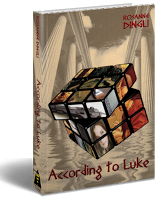
How does an author reward such a crowd of new-found fans? Well - it's not easy, but I found that the personal touch is always valued. I gave them snippets of knowledge that only talking to the author of a novel could give them: secrets. I told them how the story originated. That some of the props exist and where they are. And I gave them insights they could only access through me. Oh no - I am not about to put any of that information here. It is only for readers I meet in person.
Let's face it - authors do tend to love a captive audience: seven attentive women whose eyes lit up at every second sentence did make me don my racconteuse hat. I told them stories connected to the creation of According to Luke, and also some about Camera Obscura, my next novel, coming soon from BeWrite Books. They seemed eager to read it, and showed a lot of interest in my other titles.

Pic: NC State University
Sometimes, an evening is simply a roaring success, even if it does start with a hiccup in the pouring rain. Sometimes, I come away from an event smiling, and warmed by genuine enthusiasm for writing, which goodness knows I find does not always come easily. All the work of drafting, editing, revisions, proofing, and promoting seems suddenly all worthwhile.
I am grateful to bookclubs who take on my fiction: after all, I am not famous or newsworthy, but they take the risk and seem to be glad they did. They clamour with questions - most of them rather clever and insightful. They ask for more - which is what any author would want to hear. They pass the word on to others, which is the strongest form of publicity that exists.
Thank you, Twisted Sisters, for a very enjoyable night.


 Image via Wikipedia
PERTH
I was heading for a home where the Twisted Sisters - a keen and knowledgable book club - meet. Arriving half an hour late after phoning for directions could have been embarrassing, but the hostess and all the other members of the club made sure I walked into a room of strangers... to a warm welcome. The rest was pretty close to perfect. The night passed quickly, as we discussed According to Luke, which they had all read, and topics included in the narrative. Let me assure you there is nothing quite like talking to readers who all know my book backwards. Some made notes. Others had sticky bookmarks attached to passages they liked! All were on first-name terms with the characters.

How does an author reward such a crowd of new-found fans? Well - it's not easy, but I found that the personal touch is always valued. I gave them snippets of knowledge that only talking to the author of a novel could give them: secrets. I told them how the story originated. That some of the props exist and where they are. And I gave them insights they could only access through me. Oh no - I am not about to put any of that information here. It is only for readers I meet in person.
Let's face it - authors do tend to love a captive audience: seven attentive women whose eyes lit up at every second sentence did make me don my racconteuse hat. I told them stories connected to the creation of According to Luke, and also some about Camera Obscura, my next novel, coming soon from BeWrite Books. They seemed eager to read it, and showed a lot of interest in my other titles.
Pic: NC State University
Sometimes, an evening is simply a roaring success, even if it does start with a hiccup in the pouring rain. Sometimes, I come away from an event smiling, and warmed by genuine enthusiasm for writing, which goodness knows I find does not always come easily. All the work of drafting, editing, revisions, proofing, and promoting seems suddenly all worthwhile.
I am grateful to bookclubs who take on my fiction: after all, I am not famous or newsworthy, but they take the risk and seem to be glad they did. They clamour with questions - most of them rather clever and insightful. They ask for more - which is what any author would want to hear. They pass the word on to others, which is the strongest form of publicity that exists.
Thank you, Twisted Sisters, for a very enjoyable night.
August 28, 2011
How to be a special reader
We have all heard how publishing is changing, and how fast the shifts are taking place. We have also heard how this is affecting publishing - how the big publishing houses are trying to catch up with the technology, trying to understand it as well as the smaller publishers do. We've heard of the decline of the bricks and mortar bookshop... and how people are buying everything - including paperbacks - online.
What does all this mean to the humble reader? All I want is good books, the humble reader cries. Yes - a reader reads, but that simple reading means a lot of things to a great number of people. Reading provides jobs and makes money for a very long chain of interested parties. Humble readers and their purchases, habits, likes and dislikes support a whole industry.
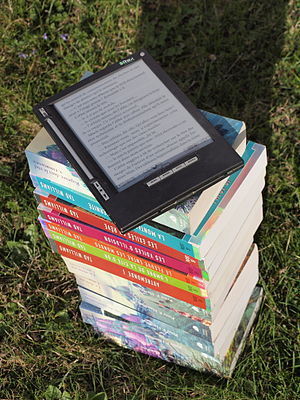 Image via WikipediaThe industry is currently experiencing a momentous upheaval. It will in turn affect the humble reader, in what that reader can obtain to read, the form in which it can be read, and its cost. How - as a reader - can one ensure that there will always be good, affordable reading material to read? How can you and I be special readers?
A special reader knows there are key roles in the publishing game that need to survive in order for books to stay available as a source for education, information, and entertainment. Special readers know that the whole industry is there because of them. All of it. No readers, no book industry. No publishing.
The most important roles in the industry are the indispensible ones. One needs authors, and one needs publishers. One needs producers of physical and digital books. One needs a place to buy the books. Sometimes, these roles overlap - some authors write, publish, produce and sell their own books. Some use producers and retailers. Some use publishers and sell some of their titles themselves. It's a melange that has many possibilities.
 Image via WikipediaA reader is a reader - and yes, many writers also read. How can a humble reader become a special one? Here are the things you can do to make sure you support the industry in the best ways you can. The book industry needs sustaining. It runs on what readers do. If you are a reader, you need to DO things to make sure it lives on to bring you more books.
ONE: Buy books. It seems obvious, but borrowing, stealing and finding books does not support either the industry or the authors you like so much. Stealing books is especially nefarious: books are getting cheaper (If you haven't noticed it yet, you will soon.) Buying inexpensive eBooks is great. Downloading them from pirates is not - it will eventually destroy your authors, so pay the three bucks!
TWO: Discover as much as you can about your favourite authors. Not only the titles of their books, but where they work, what else they write, how they come by their ideas, whether they are on FaceBook or GoodReads or your favourite hang-out. Do they write in another genre? Have they published short stories? Do they give out any free reading examples? Free reading examples supplied by authors and publishers are different from stealing an illegal copy of a book.
THREE: Let your favourite authors know you love them. Most are approachable, nice, contactable... they love their fans back. Write a review, send a message, like them on FaceBook, reTweet their Tweets. Follow them, wherever they hang out.
FOUR: Special readers spread the word. Authors know that word of mouth is the greatest seller of books. So talk about your favourite authors at parties, at the supermarket checkout, on the phone, in your posts and comments. Mention their names, tweet their links. Message the titles of their books. In this way, more people will know about your authors, more people will buy their books, and they will be more likely to still be around when you next want something good to read.
 Being a special reader makes the authors you love special. They will survive to go on and write more books. Do you know what it takes to write a book? Think about it - it is much harder than you think. For your authors to keep writing those fabulous books they need support from special readers like you.
If you are an author, tell me what you'd like your readers to do. If you are a reader, what have you done lately to show your favourite authors you like what they do?


What does all this mean to the humble reader? All I want is good books, the humble reader cries. Yes - a reader reads, but that simple reading means a lot of things to a great number of people. Reading provides jobs and makes money for a very long chain of interested parties. Humble readers and their purchases, habits, likes and dislikes support a whole industry.
 Image via WikipediaThe industry is currently experiencing a momentous upheaval. It will in turn affect the humble reader, in what that reader can obtain to read, the form in which it can be read, and its cost. How - as a reader - can one ensure that there will always be good, affordable reading material to read? How can you and I be special readers?
A special reader knows there are key roles in the publishing game that need to survive in order for books to stay available as a source for education, information, and entertainment. Special readers know that the whole industry is there because of them. All of it. No readers, no book industry. No publishing.
The most important roles in the industry are the indispensible ones. One needs authors, and one needs publishers. One needs producers of physical and digital books. One needs a place to buy the books. Sometimes, these roles overlap - some authors write, publish, produce and sell their own books. Some use producers and retailers. Some use publishers and sell some of their titles themselves. It's a melange that has many possibilities.
 Image via WikipediaA reader is a reader - and yes, many writers also read. How can a humble reader become a special one? Here are the things you can do to make sure you support the industry in the best ways you can. The book industry needs sustaining. It runs on what readers do. If you are a reader, you need to DO things to make sure it lives on to bring you more books.
ONE: Buy books. It seems obvious, but borrowing, stealing and finding books does not support either the industry or the authors you like so much. Stealing books is especially nefarious: books are getting cheaper (If you haven't noticed it yet, you will soon.) Buying inexpensive eBooks is great. Downloading them from pirates is not - it will eventually destroy your authors, so pay the three bucks!
TWO: Discover as much as you can about your favourite authors. Not only the titles of their books, but where they work, what else they write, how they come by their ideas, whether they are on FaceBook or GoodReads or your favourite hang-out. Do they write in another genre? Have they published short stories? Do they give out any free reading examples? Free reading examples supplied by authors and publishers are different from stealing an illegal copy of a book.
THREE: Let your favourite authors know you love them. Most are approachable, nice, contactable... they love their fans back. Write a review, send a message, like them on FaceBook, reTweet their Tweets. Follow them, wherever they hang out.
FOUR: Special readers spread the word. Authors know that word of mouth is the greatest seller of books. So talk about your favourite authors at parties, at the supermarket checkout, on the phone, in your posts and comments. Mention their names, tweet their links. Message the titles of their books. In this way, more people will know about your authors, more people will buy their books, and they will be more likely to still be around when you next want something good to read.
 Being a special reader makes the authors you love special. They will survive to go on and write more books. Do you know what it takes to write a book? Think about it - it is much harder than you think. For your authors to keep writing those fabulous books they need support from special readers like you.
If you are an author, tell me what you'd like your readers to do. If you are a reader, what have you done lately to show your favourite authors you like what they do?
August 20, 2011
How to be a Special Writer
There are 68,200 bloggers who identify themselves as writers or authors on Blogger alone. Think about it: it's a spectacular number. It's especially spectacular if you are an author who blogs using Blogger. I am one. There are 68,199 others.
 Image via CrunchBaseHow on earth am I going to stand out, and bring my work to the notice of readers? The thought does occur: are there more than 68,200 readers out there ready to purchase and read my novels and short stories?
How on earth can any writer seem special, or worthy of note among this competition? There must be a number of ways.
One can have outstanding book covers. A good book cover sells itself. There is much written about colour, size, typography, illustration, layout and meaning of book covers. Reading up on that aspect is important, and should be a major consideration on the part of anyone producing a book: author or publisher.
One can devise a brilliant marketing plan. Raising awareness of one's book is a major task, which is time-consuming, sometimes baffling, and always exhausting. Before marketing, of course, a writer ought to identify the market. Isolating the people most likely to want to buy and read a book is not an easy task, but it is possible, and should be undertaken early - perhaps even before the book reaches the final production stages.
independentaustralia.net
An author can write strictly within a genre, and write for a particular ready-made audience. There are some very popular genres: romance, mystery, sci-fi, fantasy, urban myth, historical, and post-apocalyptic spring to mind. They are everywhere, and seem to assure the author there is a bottomless pit of readers seeking new material to feast upon.
The writing must be good. No question about this - it's got to be invisible: conveying the content - whether it is fact or fiction - in a seamless error-free way. It ought to pack punch, show style, experience, knowledge. It ought to shine in form and content. Not easy at all, but some authors manage. There is a wealth of excellent writing out there, and many readers have found it. Whether we can continue to improve and achieve is a question of effort, striving for improvement and putting in the hard miles.
And then there is the question of quantity - in my mind, one of the most important factors in the life of a writer. One must keep producing material for an audience that seems to latch onto the work of a particular author, once they have liked one example of their work. 'Gee, I could not put this thriller down. I must find more by this author.' The search is on. Any writer is expected to turn out more than just one book. Being a one-book wonder is every author's fear. Publishers do not like one-book wonders, and that is the first question they ask when wooed by a new author: is there more where this came from?
Being a special writer means all this and more: but the last facet is the most important. It is much easier to market nine books than it is to publicize and promote just one. The books of any one author seem to sell each other. A reader browsing for material clicks on the author's name more often than we tend to guess. Authors' names are important, because they are like brands - readers go back for more of the same if they like what they read.
Write more: that seems to be the ticket. If you want to be a special writer, you need to be a prolific one. It is probably more useful to write the next book than to chase the publicity and promotion wagon. It all starts on the next page, doesn't it?
If you are a reader, please tell me if you seek books by writers whose one example you read was pleasing. If you are an author, let me know if you are seriously pursuing inspiration and material for that next title.


Image via CrunchBaseHow on earth am I going to stand out, and bring my work to the notice of readers? The thought does occur: are there more than 68,200 readers out there ready to purchase and read my novels and short stories?How on earth can any writer seem special, or worthy of note among this competition? There must be a number of ways.
One can have outstanding book covers. A good book cover sells itself. There is much written about colour, size, typography, illustration, layout and meaning of book covers. Reading up on that aspect is important, and should be a major consideration on the part of anyone producing a book: author or publisher.
One can devise a brilliant marketing plan. Raising awareness of one's book is a major task, which is time-consuming, sometimes baffling, and always exhausting. Before marketing, of course, a writer ought to identify the market. Isolating the people most likely to want to buy and read a book is not an easy task, but it is possible, and should be undertaken early - perhaps even before the book reaches the final production stages.

independentaustralia.net
An author can write strictly within a genre, and write for a particular ready-made audience. There are some very popular genres: romance, mystery, sci-fi, fantasy, urban myth, historical, and post-apocalyptic spring to mind. They are everywhere, and seem to assure the author there is a bottomless pit of readers seeking new material to feast upon.
The writing must be good. No question about this - it's got to be invisible: conveying the content - whether it is fact or fiction - in a seamless error-free way. It ought to pack punch, show style, experience, knowledge. It ought to shine in form and content. Not easy at all, but some authors manage. There is a wealth of excellent writing out there, and many readers have found it. Whether we can continue to improve and achieve is a question of effort, striving for improvement and putting in the hard miles.
And then there is the question of quantity - in my mind, one of the most important factors in the life of a writer. One must keep producing material for an audience that seems to latch onto the work of a particular author, once they have liked one example of their work. 'Gee, I could not put this thriller down. I must find more by this author.' The search is on. Any writer is expected to turn out more than just one book. Being a one-book wonder is every author's fear. Publishers do not like one-book wonders, and that is the first question they ask when wooed by a new author: is there more where this came from?
Being a special writer means all this and more: but the last facet is the most important. It is much easier to market nine books than it is to publicize and promote just one. The books of any one author seem to sell each other. A reader browsing for material clicks on the author's name more often than we tend to guess. Authors' names are important, because they are like brands - readers go back for more of the same if they like what they read.
Write more: that seems to be the ticket. If you want to be a special writer, you need to be a prolific one. It is probably more useful to write the next book than to chase the publicity and promotion wagon. It all starts on the next page, doesn't it?
If you are a reader, please tell me if you seek books by writers whose one example you read was pleasing. If you are an author, let me know if you are seriously pursuing inspiration and material for that next title.
August 14, 2011
Priests in love: fact or fiction? Fiction or fact?
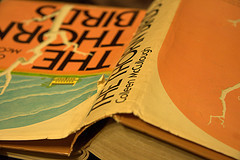 Image by kmevans via FlickrSince Colleen McCullough came out with the topic in the 1970s, with The Thornbirds, people have wondered about Catholic priests, their emotions, and whether the strength of their faith must do battle with the strength of their human drives. Priests tend to crop up in fiction from time to time, which raises the old question of the value or necessity of celibacy in the priesthood: a debate that will not go away until it goes away.
Fiction about priests is not rare: one can easily make a list of books that cover the topic. From Father Brown to Father Crompton to Sylvia Plath's Father Shawn, they have been knitted into fiction for centuries. Although it has not evolved into a genre of its own, fiction about priests has joined hands with other genres to constitute a nice reading portfolio for those to whom the topic seems entertaining, culturally interesting, or intriguing because of its quirky nature. But fiction about priests in love is not that common. Colleen McCollough started something, but too few novelists have taken on the tricky subject.
Den Adler, in his To Become a Priest - A Love Story tackles the opposing forces that battle inside the male adolescent mind and body. Intense friendship is tackled in the book The Company of Women by Mary Gordon. From what I hear of it, Jan Karon's A Light in the Window is a rather light and subtle touch. The All of It , by Jeannette Halen probably touches upon all the long-held morals and tenets of priests in a close community and how they are perceived by women.
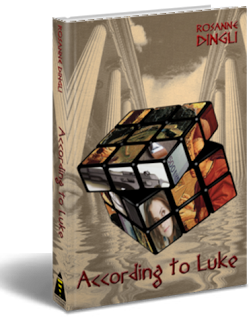 For those with curiosity about priests in general, this is a nice list to start from. The point is of course to include my own
According to Luke
, whose story includes a very important romance woven into the entire plot.
For those with curiosity about priests in general, this is a nice list to start from. The point is of course to include my own
According to Luke
, whose story includes a very important romance woven into the entire plot. In this novel, I place a handsome Australian priest in a situation whose thrilling aspects are external to his priestly vows, but which at some point in the story become so enmeshed with the whole plot that one seems impossible to solve without the other. It is not unlike The Thorn Birds in the sense that higher authority in the Church intervenes with clout. The power to affect people and change their lives comes into play, and is - in this novel at least - shown to be linked to other unresolved issues in a man's life.
It would be very interesting to hear the opinions of readers - both Catholic and not - of this kind of novel. Is there room for more: are there too few or too many novels that treat this aspect of the way love enters and affects the life of a man ... all men? How realistically are the problems treated by this kind of novel? Leave a comment with your thoughts.


August 9, 2011
Gender genres? Thrillers for women!
 Image via WikipediaSay the word thriller, and immediately people think of car chases, conspiracies, fancy hardware such as guns, and lots of money. High stakes, high jinx, high everything. Tension, excitement and thrills, however, are not limited to ransoms, heists and revenge. Thrillers attract an audience (largely, but not exclusively, male) that demands cliff-hangers, fringe theories and paranoia.
The thriller genre has spawned some very familiar household names in fiction: Michael Crichton, John Grisham, Clive Cussler and Scott Turow need no introduction. They spin out worthy volumes that merit the popularity they glean for their authors and the genre in general. The audience they write for is mainly male, adventure-loving and hooked on malevolence and action.
What about the girls, and those who are a bit less blood-thirsty and wild thrill-seeking? There must be a sub-genre to suit them. An intellectual thriller, more tuned to the thoughtful and considered reader: the reader who demands more in the way of character-depth, well-researched background and locations, and a premise that requires concentration, analytical skills, critical thinking, and focus from the reader. And perhaps a bit of background knowledge, culture even.
 The kind of thriller a female reader might enjoy would involve deeper emotional engagement on the part of the protagonist, a premise that needs more than one sentence to describe it, and a background that might be historic, philosophical or psychological in nature. How about a couple of female characters?
Sub-genres to the thriller have recently sprung up that cater to an audience with broader tastes. There are religious thrillers, that deal with alternative biblical interpretations. There are psychological thrillers, that play with the labyrinthine twists and turns of the mind. There are also political thrillers that delve into the nefarious schemes and plots that shake governments to their foundations.

From deviantart
Then there are romantic thrillers. Ah! These are novels in which the characters are more than simply sketched or lightly drawn: they become real to the reader, because who they are determines how the story goes, how hard the action is driven and in which direction the ending leads. Romantic thrillers are novels that entertain not only with their deftly twisted plots and stories, their action and their intrepid protagonists: they also engage the emotion, and demand the reader to pay attention to more than what is just seen and physically endured. They demand examination of the emotion, engagement with feelings and sensitivities.
These are thrillers that female readers might enjoy. Not all women relish comfortable romances where the ending - although not always predictable - can be guaranteed to tie everything up favourably for the protagonist, usually female. Not all female readers require stories that are only engagements of the heart. Romantic thrillers provide enough excitement, thrills and action to deliver an exhilarating read without ignoring the attraction between men and women, the possibilities and risks of a relationship that accompanies a mystery, and how sexual tension can liven up and complicate a plot.
Look out for Tara Moss, Roxanne St Clair, Linda Howard, or Jamie Freveletti if you seek thrillers with a bit of heart.
Now I might have raised questions here about readers, genders, genres and whether authors write for a specific audience of males or females! If you have an opinion about any of these questions, by all means leave a comment.


July 31, 2011
My guest this month - Linton Robinson
This is a rare occasion, so sit up.
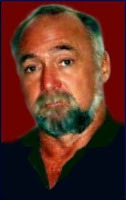 Linton Robinson's name is well-known enough for him to be able to pick and choose where he appears. I am very glad he agreed to this interview. I hesitate when choosing a word to describe this denizen of the world's most important online meeting places. He has experience and know-how, and some very direct ways of sharing them. Linton does not suffer fools easily, so his reputation precedes him. I have asked him special questions: none of the commonplace routine questionnaires for this guy.
Please make Lin Robinson welcome...
Lin, we keep meeting on threads, blogs, writers' sites and forums. How do you think authors benefit from commenting on various online meeting places – is it time well spent?In my case frequently mis-spent I'm afraid. I probably piss off more people than I sell and spend hours fooling around. Of course, it keeps me off the street. What's cool is that the opportunity is available. If there had been a way I could show my writing to professionals when I was in high school, maybe get some comments, I'd have fallen over in shock. Now it's taken for granted. (And the little mutts get sassy about it.) If you're having fun and communicating with people you like to, how better to spend time?
I've read a few wonderful chapters in Mayan Calendar Girls – tell us a bit about the concept, and how the idea came to you.
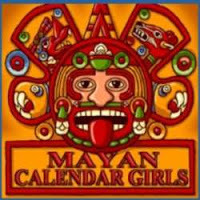 Wow, twisty question for this book, and actually in dispute. Not legally, thank God. The whole thing started in Cancún, at what was either a writing conference where nobody went home when they were supposed to, or a short-term, time-shared writers' colony. It's pretty much established that somebody at a party, where everybody was just messed-up enough, said you couldn't take the Mayan Calendar thing seriously because they didn't have calendar girls. I'm pretty sure it wasn't me, but at least three members of what came to be known as "Team 2012" are rabidly sure it was them, leading to hard feelings and a couple of food fights. The concept is all in the title: "Mayan Calendar Girls" says it all.
The real concepts of interest there are "team written"-- itself a long story full of recruitment, desertion, frantic groups shouting at somebody trying to bang out an episode we promised three days before and were getting flack for not having up, and people sneaking in and rewriting posted episodes -- and "weekly webserial" -- over one hundred chapters posted once a week and delivered to our growing number of fans online or by RSS feed, even cell phones. Both are uncommon means of writing a novel, but both have some powerful advantages.
Your works are a fascinating colourful mixture of the exotic, the sensual, the gritty and the eccentric. Are you influenced at all by the visual arts?
Wow, thank you. I was just trying for "completed". I'm a very visual guy and am often impressed and inspired by visual input. I don't really make any distinction between some masterful painting, a beautiful landscape, a nineteen year old girl's butt on a website, or seeing a car run over somebody: it all adds up. I often compile little portfolios of my characters, so I know what they look like: in fact sometimes the character becomes who he or she is because I saw "their" picture on the internet. That said, I don' t like writing description and am not very good at it. Why I like doing screenplays.
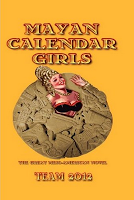 A really good example of how this can work was, again, at Mayan Calendar Girls. Once the title had been uttered and everybody got wiped out enough to think that writing the book was a good idea, we were astonished by how much Mayan calendar cheesecake was out there. Take a look at the website. The cover, by Robin Crandall, came up at some point and was very inspirational. We'd been working on something kind of book like Wilson's Illuminatus -- lots of intellectual stuff, archaeological tidbits. But that image caused us to swing towards "cheesecake rules". You look at that picture; ancient stone calendar with that innocent, playful, tawdry chorus girl shot, and that's a lot of what the book is all about. Girls of many cultures and skin tones: being cute, dashing around on adventures, losing their clothing a lot. There are still serious elements, straight-out romance, Perils of Pauline, and political humor that's probably already dated (a danger for serials, by the way) but that isn't just a cover slapped on the book, it was part of what made the book whatever the hell it is. The idea of writing a novel to "illustrate" a painting might be a little far-fetched, but I think it's legitimate.
What do you think drove the success of your Mexican Slang book? If you were starting it right now, would you do anything different?
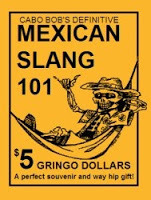 Mexican Slang 101 has sold tens of thousands of copies and I think the reasons are pretty simple. It's a book a lot of people want, but don't know it yet. Another "title equals concept" thing: you see the title and you know you want it immediately. Or not. Jessica Kreager's cover helps, but it sold well with no art at all, just grungy title type. I used to try to make it look like something you'd buy out of a street hustler's opened trenchcoat. It's also cheap. It sells for the same "Five Gringo Dollars" now as it did in 1985. Despite, let me whine, the fact that production cost has doubled. Also, it's pocket-sized. Doing pocket-sized books is a pain in the heinie. And none of the POD producers have quarter page sized formats. But for a book like this, it's worth it. This is a great format for poetry, by the way--and the size makes it twice as thick.
If I was doing it different, I'd have gotten on the internet sooner (my first online sales were eBay, by the way -- which led me PayPal) and done it less beachbum outlaw. I was just selling it where I happened to be. The reason it has some sample trashtalk on the back with page numbers is so little Mexican kids could go up to gringo tourists, flash them the title, then show them the back page. They'd start laughing, showing it to their friends, looking inside -- and they were hooked. I think using back cover references to draw people into the book are a good, and little-used, idea. I was way ahead of Amazon's "Look Inside" gizmo. Way ahead of POD, too: I made 99.9% of those books on copy machines, sometimes doing only like six, dashing out to the beach to sell them and get enough money to print more and pay my hotel room. I used to sell them in beach restaurants to pay for dinner. Once I had them at the counter of a backpacker hotel, where they sold well enough to pay my rent -- subsistence with no cash changing hands. I'm trying to be a little more corporate than that these days.Did I mention it's cheap? Maybe I should do an ebook for $0.99.
We all say that where a writer lives doesn't matter these days, because of the internet and rapid communication. You live in Mexico – surely your location has affected the way you write, or what you write about?
In a lot of ways "where" doesn't matter much to me. I was born in Occupied Japan--not even a country -- and went to twelve schools before I started getting kicked out of colleges and armies. But it has a major effect on what I'm writing. Don't people generally write about their environment? I was laying out novels in Seattle, wrote "The Weekend Warrior" in San Diego (and if you think Mayan Calendar Girls is racy, wait until you catch THAT little bit of zaniness and surrealistic spinouts) and several books at the border, as well as the TV series that will spawn a trilogy of novels starting this fall. Mayan Calendar Girls would have been pointless to write outside the Yucatán.
I move around a lot and have lived less than half my life in the USA. I find US culture weird when I visit there, frankly. And the politics are boring compared to other countries I've written in. On the other hand, they don't try to kill you for political writing in the US, and that's exactly what happened in Mazatlán. I'm hoping this Tijuana bigshot doesn't have me shot over that Borderlines series: he's been known to do it to other writers.
This could be a disadvantage, actually. Writers who have roots and a sense of place have a niche they can work with, and hopefully can develop core readerships based on their region or city. Or... Somebody writes about life on a starship or other dimension or ancient Rome and it just doesn't matter at all.
You have been around the traps a few times – how have your writing and publishing experiences informed the way you treat the business now, in 2011?
I just wish this whole paradigm had come along when I was younger. I'm a solo type guy and actually kind of despise the people in Manhattan who make the decisions on what people get to read. I was publishing my own underground papers in the sixties and seventies, my own lines of poetry in the eighties, Mexican Slang101 in the nineties. I like to deal directly with the reader. Nobody ever reads my books without liking them. But nobody in the "industry" finds them interesting enough to, apparently, read past the first page. So screw them.
And we can do that now. You can sit in your apartment or trailer or cellblock or whatever and write novels, publish them, and make big bucks. Get read all over the world, not just in stores. The very potential to be able to do that is earth-shaking. It completely eclipses Gutenberg: it's a revolution that writers are feeling sooner than readers, but it's all coming. Young writers are so lucky to have the opportunities available to them and should take full advantage of them. Don't be swayed by any of the "real book fetishist" or "gatekeeper bait" niggling about this. It's the most powerful thing that's happened to the written word in history, and the greatest thing for writers of all levels, period.
I see you have collaborated with writers and artists a number of times. How easy – or hard – have you found it to come up with a successful joint effort?
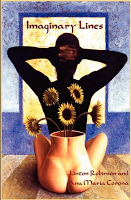 Well, I think I've said enough about the Mayan Girls Team to scare people, but another example is my "Imaginary Lines" with Ana Maria Corona. It's always tickled me that people keep asking me "So who wrote what?" I think it's pretty obvious that many of those pieces stem from stories of her Guadalajara girlhood, and some of the work stems from my own cynical investigations: but the thing is, collaborations are a blend and exchange. Would it make sense for me to ask who was responsible for your last orgasm?
I think teamwork is going to play a LOT more of a role in my future work. Team 2012 has another serial in the works if we can stop bickering and seducing each other -- and sooner or later we have to spring for the sequel -- which ties up the plot and the history of everything in general. If I have huge hits with three books I'm preparing for print right now, on small presses, I don't know where I'd find the time to write the second book in each series. I find myself getting more and better ideas lately, but less time and energy to complete them. (This may be a general condition in men of my age, actually, but I'm talking about literature.) I'm actively looking for young writers to team up with on projects. People like Santana bringing out albums where they play with younger musicians got me thinking about that. I have one long-term "dream series" that I would want to approach with a team of writers and researchers to do like ten novels spanning two decades. I would REALLY like to do it, but have no interest in writing it myself.
A lot of things are changing, and I can see value in it. There's no reason the author of a book has to be some auteur, any more than with films. There's no reason for novels to be 100,000 words long: there is an epublisher called "40K Books" and I just converted a screenplay to a novel (in seven three-hour days) that runs 43,000 and will make a very nice ebook. It will come out on a new publisher that specializes in screenplay novelizations. I have no idea where things will be in a year, but the toothpaste is not going back in the tube and it's just going to get cheaper and easier for writers to reach readers. I've said for years that in the future everybody will be an author, and nobody will make a living at it. An exaggeration, but what if it turns out that way? There's no problem with that: what's a problem is writing sitting around in a drawer, unread.
Thank you for spending time with us, Lin.
Linton Robinson has been a professional writer for far too many years, in genres and formats that often make no sense whatsoever. A lifelong self-publisher, he just thinks all these newbies are crowding the field and cramping his style. After decades working with magazines, newspapers, catalogs, and whatnot, he exuberates to the new models in which he doesn't have to get along with anybody.
Most recently he was a member of the team that wrote Mayan Calendar Girls http://mayancalendargirls.com
See more, including videos, pictures, and meandering, at http://linrobinson.com


Linton Robinson's name is well-known enough for him to be able to pick and choose where he appears. I am very glad he agreed to this interview. I hesitate when choosing a word to describe this denizen of the world's most important online meeting places. He has experience and know-how, and some very direct ways of sharing them. Linton does not suffer fools easily, so his reputation precedes him. I have asked him special questions: none of the commonplace routine questionnaires for this guy.Please make Lin Robinson welcome...
Lin, we keep meeting on threads, blogs, writers' sites and forums. How do you think authors benefit from commenting on various online meeting places – is it time well spent?In my case frequently mis-spent I'm afraid. I probably piss off more people than I sell and spend hours fooling around. Of course, it keeps me off the street. What's cool is that the opportunity is available. If there had been a way I could show my writing to professionals when I was in high school, maybe get some comments, I'd have fallen over in shock. Now it's taken for granted. (And the little mutts get sassy about it.) If you're having fun and communicating with people you like to, how better to spend time?
I've read a few wonderful chapters in Mayan Calendar Girls – tell us a bit about the concept, and how the idea came to you.
 Wow, twisty question for this book, and actually in dispute. Not legally, thank God. The whole thing started in Cancún, at what was either a writing conference where nobody went home when they were supposed to, or a short-term, time-shared writers' colony. It's pretty much established that somebody at a party, where everybody was just messed-up enough, said you couldn't take the Mayan Calendar thing seriously because they didn't have calendar girls. I'm pretty sure it wasn't me, but at least three members of what came to be known as "Team 2012" are rabidly sure it was them, leading to hard feelings and a couple of food fights. The concept is all in the title: "Mayan Calendar Girls" says it all.
The real concepts of interest there are "team written"-- itself a long story full of recruitment, desertion, frantic groups shouting at somebody trying to bang out an episode we promised three days before and were getting flack for not having up, and people sneaking in and rewriting posted episodes -- and "weekly webserial" -- over one hundred chapters posted once a week and delivered to our growing number of fans online or by RSS feed, even cell phones. Both are uncommon means of writing a novel, but both have some powerful advantages.
Your works are a fascinating colourful mixture of the exotic, the sensual, the gritty and the eccentric. Are you influenced at all by the visual arts?
Wow, thank you. I was just trying for "completed". I'm a very visual guy and am often impressed and inspired by visual input. I don't really make any distinction between some masterful painting, a beautiful landscape, a nineteen year old girl's butt on a website, or seeing a car run over somebody: it all adds up. I often compile little portfolios of my characters, so I know what they look like: in fact sometimes the character becomes who he or she is because I saw "their" picture on the internet. That said, I don' t like writing description and am not very good at it. Why I like doing screenplays.
A really good example of how this can work was, again, at Mayan Calendar Girls. Once the title had been uttered and everybody got wiped out enough to think that writing the book was a good idea, we were astonished by how much Mayan calendar cheesecake was out there. Take a look at the website. The cover, by Robin Crandall, came up at some point and was very inspirational. We'd been working on something kind of book like Wilson's Illuminatus -- lots of intellectual stuff, archaeological tidbits. But that image caused us to swing towards "cheesecake rules". You look at that picture; ancient stone calendar with that innocent, playful, tawdry chorus girl shot, and that's a lot of what the book is all about. Girls of many cultures and skin tones: being cute, dashing around on adventures, losing their clothing a lot. There are still serious elements, straight-out romance, Perils of Pauline, and political humor that's probably already dated (a danger for serials, by the way) but that isn't just a cover slapped on the book, it was part of what made the book whatever the hell it is. The idea of writing a novel to "illustrate" a painting might be a little far-fetched, but I think it's legitimate.What do you think drove the success of your Mexican Slang book? If you were starting it right now, would you do anything different?
Mexican Slang 101 has sold tens of thousands of copies and I think the reasons are pretty simple. It's a book a lot of people want, but don't know it yet. Another "title equals concept" thing: you see the title and you know you want it immediately. Or not. Jessica Kreager's cover helps, but it sold well with no art at all, just grungy title type. I used to try to make it look like something you'd buy out of a street hustler's opened trenchcoat. It's also cheap. It sells for the same "Five Gringo Dollars" now as it did in 1985. Despite, let me whine, the fact that production cost has doubled. Also, it's pocket-sized. Doing pocket-sized books is a pain in the heinie. And none of the POD producers have quarter page sized formats. But for a book like this, it's worth it. This is a great format for poetry, by the way--and the size makes it twice as thick.If I was doing it different, I'd have gotten on the internet sooner (my first online sales were eBay, by the way -- which led me PayPal) and done it less beachbum outlaw. I was just selling it where I happened to be. The reason it has some sample trashtalk on the back with page numbers is so little Mexican kids could go up to gringo tourists, flash them the title, then show them the back page. They'd start laughing, showing it to their friends, looking inside -- and they were hooked. I think using back cover references to draw people into the book are a good, and little-used, idea. I was way ahead of Amazon's "Look Inside" gizmo. Way ahead of POD, too: I made 99.9% of those books on copy machines, sometimes doing only like six, dashing out to the beach to sell them and get enough money to print more and pay my hotel room. I used to sell them in beach restaurants to pay for dinner. Once I had them at the counter of a backpacker hotel, where they sold well enough to pay my rent -- subsistence with no cash changing hands. I'm trying to be a little more corporate than that these days.Did I mention it's cheap? Maybe I should do an ebook for $0.99.
We all say that where a writer lives doesn't matter these days, because of the internet and rapid communication. You live in Mexico – surely your location has affected the way you write, or what you write about?
In a lot of ways "where" doesn't matter much to me. I was born in Occupied Japan--not even a country -- and went to twelve schools before I started getting kicked out of colleges and armies. But it has a major effect on what I'm writing. Don't people generally write about their environment? I was laying out novels in Seattle, wrote "The Weekend Warrior" in San Diego (and if you think Mayan Calendar Girls is racy, wait until you catch THAT little bit of zaniness and surrealistic spinouts) and several books at the border, as well as the TV series that will spawn a trilogy of novels starting this fall. Mayan Calendar Girls would have been pointless to write outside the Yucatán.
I move around a lot and have lived less than half my life in the USA. I find US culture weird when I visit there, frankly. And the politics are boring compared to other countries I've written in. On the other hand, they don't try to kill you for political writing in the US, and that's exactly what happened in Mazatlán. I'm hoping this Tijuana bigshot doesn't have me shot over that Borderlines series: he's been known to do it to other writers.
This could be a disadvantage, actually. Writers who have roots and a sense of place have a niche they can work with, and hopefully can develop core readerships based on their region or city. Or... Somebody writes about life on a starship or other dimension or ancient Rome and it just doesn't matter at all.
You have been around the traps a few times – how have your writing and publishing experiences informed the way you treat the business now, in 2011?
I just wish this whole paradigm had come along when I was younger. I'm a solo type guy and actually kind of despise the people in Manhattan who make the decisions on what people get to read. I was publishing my own underground papers in the sixties and seventies, my own lines of poetry in the eighties, Mexican Slang101 in the nineties. I like to deal directly with the reader. Nobody ever reads my books without liking them. But nobody in the "industry" finds them interesting enough to, apparently, read past the first page. So screw them.
And we can do that now. You can sit in your apartment or trailer or cellblock or whatever and write novels, publish them, and make big bucks. Get read all over the world, not just in stores. The very potential to be able to do that is earth-shaking. It completely eclipses Gutenberg: it's a revolution that writers are feeling sooner than readers, but it's all coming. Young writers are so lucky to have the opportunities available to them and should take full advantage of them. Don't be swayed by any of the "real book fetishist" or "gatekeeper bait" niggling about this. It's the most powerful thing that's happened to the written word in history, and the greatest thing for writers of all levels, period.
I see you have collaborated with writers and artists a number of times. How easy – or hard – have you found it to come up with a successful joint effort?
Well, I think I've said enough about the Mayan Girls Team to scare people, but another example is my "Imaginary Lines" with Ana Maria Corona. It's always tickled me that people keep asking me "So who wrote what?" I think it's pretty obvious that many of those pieces stem from stories of her Guadalajara girlhood, and some of the work stems from my own cynical investigations: but the thing is, collaborations are a blend and exchange. Would it make sense for me to ask who was responsible for your last orgasm?I think teamwork is going to play a LOT more of a role in my future work. Team 2012 has another serial in the works if we can stop bickering and seducing each other -- and sooner or later we have to spring for the sequel -- which ties up the plot and the history of everything in general. If I have huge hits with three books I'm preparing for print right now, on small presses, I don't know where I'd find the time to write the second book in each series. I find myself getting more and better ideas lately, but less time and energy to complete them. (This may be a general condition in men of my age, actually, but I'm talking about literature.) I'm actively looking for young writers to team up with on projects. People like Santana bringing out albums where they play with younger musicians got me thinking about that. I have one long-term "dream series" that I would want to approach with a team of writers and researchers to do like ten novels spanning two decades. I would REALLY like to do it, but have no interest in writing it myself.
A lot of things are changing, and I can see value in it. There's no reason the author of a book has to be some auteur, any more than with films. There's no reason for novels to be 100,000 words long: there is an epublisher called "40K Books" and I just converted a screenplay to a novel (in seven three-hour days) that runs 43,000 and will make a very nice ebook. It will come out on a new publisher that specializes in screenplay novelizations. I have no idea where things will be in a year, but the toothpaste is not going back in the tube and it's just going to get cheaper and easier for writers to reach readers. I've said for years that in the future everybody will be an author, and nobody will make a living at it. An exaggeration, but what if it turns out that way? There's no problem with that: what's a problem is writing sitting around in a drawer, unread.
Thank you for spending time with us, Lin.
Linton Robinson has been a professional writer for far too many years, in genres and formats that often make no sense whatsoever. A lifelong self-publisher, he just thinks all these newbies are crowding the field and cramping his style. After decades working with magazines, newspapers, catalogs, and whatnot, he exuberates to the new models in which he doesn't have to get along with anybody.
Most recently he was a member of the team that wrote Mayan Calendar Girls http://mayancalendargirls.com
See more, including videos, pictures, and meandering, at http://linrobinson.com
July 29, 2011
How to use a bookshop
You'll be forgiven for thinking this is a no-brainer. How can one not know how to use a bookstore? You go in, see a book you like, and buy it, right? Right?
Ah, um, er... not really. Everything about the books industry has changed, and I don't just mean the introduction of ebooks and the advent of hand-held reading devices, either. The book selling industry has been evolving rapidly for some time, and learning how to use a book store is vital for a number of reasons.
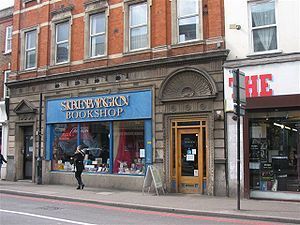 Image via WikipediaThe first is because you like them - you love bookshops. The whole world is debating whether they will survive and everybody cries when one (or one chain) closes its doors. There are other reasons: bookstores make malls varied, make gift-buying for the person who has everything easier, and gently persuade, with smells, colours and textures. They attract youngsters to reading. They fulfil cultural, social, educational and economic roles. I am sure you can think of a dozen more reasons for having bookstores.
But learning how to use them in the new book-buying climate is essential. It's not as simple as enter, browse, buy. Oh no.
Buying books is personal, subjective, and can be expensive. Browsing, impulse buying, and whimsical purchases are all right for the very wealthy, or those with infinite space to store on either real or virtual shelves. But mistakes can be frustrating and costly. Learn how to purchase wisely. First, learn what kind of a reader you are, and also the reading likes and dislikes of those you know and love. Learn how to list what you have read so far. Also list your favourite authors and those you will not willingly read again. Look for "If you liked this, you will like that" lists on the web and at your library.
Examining your reading habits will make you a better user of bookshops, but that is not the most important thing to know about them. Here it is: it is physically impossible for bookshops to carry all the books available in print. Chances are they will not have what you are after. That author you spotted on a blog, that great book everyone at work was talking about, that title you overhead on the street, that paragraph you read over someone's shoulder on the train, from a book whose title now escapes you ... No - they won't be able to guess at the bookstore. No, it won't necessarily be on a bookshop shelf. Amazon.com has about seven million books on its shelves - can you imagine the size of shop needed to take that many books - even just one of each?
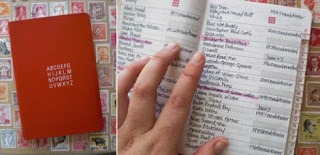 http://pmumau.wordpress.com/2010/01/So how are you going to find the books YOU want to read rather than what the store manager has selected for you from the millions available? How will you find that elusive novel people are buying in some other country, but not where you currently live, shop and work?
You can do it by learning how to put a bookshop to better use, and ensure its survival. Do your homework. Make some intelligent searches online, find those valuable hints. Make a list of overheard titles, books found on newspaper reviews, authors whose names elude you. Then march down to your favourite bookshop and MAKE AN ORDER.
That is what bookshops are really for: taking your orders and finding the books you want on their catalogues, which are enormous, but searchable. They access huge databases looking for the titles you seek, when you bang your fist on their counters! Bookshops are merely a portal to your reading material: all you see is the entrance. The contents are too big to keep in one shop or one location, so you need to ask for what you want. Place an order for any book on the Books in Print catalogue. If it's there, they should be able to get it for you.
Learn how to make your search for books a concerted effort between searching online, storing books on your eReader, downloading, keeping a good TBRL*, and ordering paper books. The result will be a rewarding variety of reading modes, materials you have actively chosen, and very fruitful book-buying experiences.
Leave me a comment on your book shop experiences: are you often disappointed in your search for a specific book? Have you examined how you shop? Are you willing to tweak your buying habits to help ensure the survival of bookshops?
*To Be Read List


Ah, um, er... not really. Everything about the books industry has changed, and I don't just mean the introduction of ebooks and the advent of hand-held reading devices, either. The book selling industry has been evolving rapidly for some time, and learning how to use a book store is vital for a number of reasons.
 Image via WikipediaThe first is because you like them - you love bookshops. The whole world is debating whether they will survive and everybody cries when one (or one chain) closes its doors. There are other reasons: bookstores make malls varied, make gift-buying for the person who has everything easier, and gently persuade, with smells, colours and textures. They attract youngsters to reading. They fulfil cultural, social, educational and economic roles. I am sure you can think of a dozen more reasons for having bookstores.
But learning how to use them in the new book-buying climate is essential. It's not as simple as enter, browse, buy. Oh no.
Buying books is personal, subjective, and can be expensive. Browsing, impulse buying, and whimsical purchases are all right for the very wealthy, or those with infinite space to store on either real or virtual shelves. But mistakes can be frustrating and costly. Learn how to purchase wisely. First, learn what kind of a reader you are, and also the reading likes and dislikes of those you know and love. Learn how to list what you have read so far. Also list your favourite authors and those you will not willingly read again. Look for "If you liked this, you will like that" lists on the web and at your library.
Examining your reading habits will make you a better user of bookshops, but that is not the most important thing to know about them. Here it is: it is physically impossible for bookshops to carry all the books available in print. Chances are they will not have what you are after. That author you spotted on a blog, that great book everyone at work was talking about, that title you overhead on the street, that paragraph you read over someone's shoulder on the train, from a book whose title now escapes you ... No - they won't be able to guess at the bookstore. No, it won't necessarily be on a bookshop shelf. Amazon.com has about seven million books on its shelves - can you imagine the size of shop needed to take that many books - even just one of each?
 http://pmumau.wordpress.com/2010/01/So how are you going to find the books YOU want to read rather than what the store manager has selected for you from the millions available? How will you find that elusive novel people are buying in some other country, but not where you currently live, shop and work?
You can do it by learning how to put a bookshop to better use, and ensure its survival. Do your homework. Make some intelligent searches online, find those valuable hints. Make a list of overheard titles, books found on newspaper reviews, authors whose names elude you. Then march down to your favourite bookshop and MAKE AN ORDER.
That is what bookshops are really for: taking your orders and finding the books you want on their catalogues, which are enormous, but searchable. They access huge databases looking for the titles you seek, when you bang your fist on their counters! Bookshops are merely a portal to your reading material: all you see is the entrance. The contents are too big to keep in one shop or one location, so you need to ask for what you want. Place an order for any book on the Books in Print catalogue. If it's there, they should be able to get it for you.
Learn how to make your search for books a concerted effort between searching online, storing books on your eReader, downloading, keeping a good TBRL*, and ordering paper books. The result will be a rewarding variety of reading modes, materials you have actively chosen, and very fruitful book-buying experiences.
Leave me a comment on your book shop experiences: are you often disappointed in your search for a specific book? Have you examined how you shop? Are you willing to tweak your buying habits to help ensure the survival of bookshops?
*To Be Read List


