
Authors and depression
Self-doubt and unreliable income can wreak damage to susceptible artistic people. Authors and other artists are vulnerable, are exposed to rejection, and rely on a certain level of intellectual success to validate their occupation. Not that this is not true for any other job, but writing seems to be burdened with the public perception that it must succeed: it must include a degree of noteworthiness, if not outright fame and fortune. When expectations are dashed, or achieved only slowly and painfully, it is not only the authors themselves who question the validity of what they do, but those nearest and most intimate with them. Perhaps that is why male authors, who do not always manage to make enough to sustain a family, are traditionally more affected.
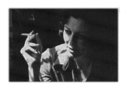 Anne Sexton
Anyone who has ever studied literature or read a biography will not be surprised to learn that authors sometimes suffer from the blues. As a group, those who identify themselves as authors, or make the bulk of their income that way, have more than their fair share of members who suffer from mental illness. Even off the cuff, one can mention famous authors such as Virginia Woolf or Anne Sexton, Ernest Hemingway or F. Scott Fitzgerald as some who were notorious for their moods.

Benedicte Page, in her Guardian article last year, wrote that writing was one of the top ten professions 'in which people are most likely to suffer from depression'. She also observed that male authors with the complaint outnumbered female ones. Reasons stated were the isolation, self-examination, introversion and subjecting one's work to scrutiny. Anyone who has ever written anything creative can relate to these aspects.
 Artistic people are plagued by an intense inner life that needs an outlet, but they are also artistic because their make-up consists of a fascinating mix of facets, often accompanied by other problems such as gender orientation confusion, family dysfunction, substance abuse and inertia. Experiences, ideas and stories that run deep into a person's psyche are all magnified when it comes to one who writes, because rather than strive to subdue them, ignore them or pretend they do not exist, authors need to dredge, dig and remember. They need to rouse and elicit all that lies in their heads and hearts just to be able to frame what they write on some basis. Even if they write pure fiction, the personal element is never absent.
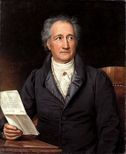
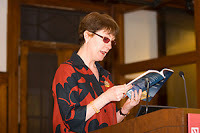 Gwyneth LewisThere is a side to writing, however, that comes to the aid of authors. Given the difficulty of what they do, the meagre earnings for those but the most famous, the discomfort that comes from being misunderstood, and their continual lack of guaranteed success, the poet Gwyneth Lewis writes she is amazed "that writers don't suffer more." Many would agree that the notion that an artist or author needs to suffer for their art is nonsense. There is a cathartic side to writing that does heal. There is a definite closure to be felt when one finishes a work that feels productive. Joy is possible, and is available to authors in ways often denied to those without an artistic outlet. The ability to transcend problems, place them in perspective - even get rid of them by giving them to an invented character - lies within the scope of the author. Many writers have analytical perception, and the mental agility, to overcome feelings of depression. Goethe, when he wrote The sorrows of young Werther, exorcised his own suicidal impulses and thoughts, and very likely saved his own life. (Pöldinger W. 1986) It has been suggested that in their depressive state, authors gather new impressions, which are then released in a fresh and vigorous writing stage, when creativity is unleased, in a kind of 'manic' state.
Perhaps it is useful to regard moods as necessary in the life of a writer: a series of hills and troughs, with their attendant feelings of alternating doubt and determination, melancholia and joy, despair and elation. If one sees there is gathering and collecting of material - of emotion - during the low moods, and great production and creation during the jolly fruitful intervals, one can face anything. Most importantly, one can face that keyboard with courage.


Anne SextonAnyone who has ever studied literature or read a biography will not be surprised to learn that authors sometimes suffer from the blues. As a group, those who identify themselves as authors, or make the bulk of their income that way, have more than their fair share of members who suffer from mental illness. Even off the cuff, one can mention famous authors such as Virginia Woolf or Anne Sexton, Ernest Hemingway or F. Scott Fitzgerald as some who were notorious for their moods.

Benedicte Page, in her Guardian article last year, wrote that writing was one of the top ten professions 'in which people are most likely to suffer from depression'. She also observed that male authors with the complaint outnumbered female ones. Reasons stated were the isolation, self-examination, introversion and subjecting one's work to scrutiny. Anyone who has ever written anything creative can relate to these aspects.
Artistic people are plagued by an intense inner life that needs an outlet, but they are also artistic because their make-up consists of a fascinating mix of facets, often accompanied by other problems such as gender orientation confusion, family dysfunction, substance abuse and inertia. Experiences, ideas and stories that run deep into a person's psyche are all magnified when it comes to one who writes, because rather than strive to subdue them, ignore them or pretend they do not exist, authors need to dredge, dig and remember. They need to rouse and elicit all that lies in their heads and hearts just to be able to frame what they write on some basis. Even if they write pure fiction, the personal element is never absent. Gwyneth LewisThere is a side to writing, however, that comes to the aid of authors. Given the difficulty of what they do, the meagre earnings for those but the most famous, the discomfort that comes from being misunderstood, and their continual lack of guaranteed success, the poet Gwyneth Lewis writes she is amazed "that writers don't suffer more." Many would agree that the notion that an artist or author needs to suffer for their art is nonsense. There is a cathartic side to writing that does heal. There is a definite closure to be felt when one finishes a work that feels productive. Joy is possible, and is available to authors in ways often denied to those without an artistic outlet. The ability to transcend problems, place them in perspective - even get rid of them by giving them to an invented character - lies within the scope of the author. Many writers have analytical perception, and the mental agility, to overcome feelings of depression. Goethe, when he wrote The sorrows of young Werther, exorcised his own suicidal impulses and thoughts, and very likely saved his own life. (Pöldinger W. 1986) It has been suggested that in their depressive state, authors gather new impressions, which are then released in a fresh and vigorous writing stage, when creativity is unleased, in a kind of 'manic' state.
Perhaps it is useful to regard moods as necessary in the life of a writer: a series of hills and troughs, with their attendant feelings of alternating doubt and determination, melancholia and joy, despair and elation. If one sees there is gathering and collecting of material - of emotion - during the low moods, and great production and creation during the jolly fruitful intervals, one can face anything. Most importantly, one can face that keyboard with courage.


No comments have been added yet.


