
Rosanne Dingli's Blog, page 8
June 20, 2011
Four important website elements
 Pic: dowdallconstruction.comSome things in life are inevitable. One of these things is website renovation: sometimes you just need a facelift. I decided to bite the bullet this week, being long due for a fresh look on a website that has seen a lot of use.
Visitors do not leave a trace on the web - no grubby fingermarks or footprints - but they need to be rewarded with something other than the same old, same old. So I went for burgundy linen and reddish decor, with light backgrounds for text.
Which brings me to the first important element on a website: absolutely fresh, clear crisp text on light backgrounds. Two reasons: fast to load, easy to read. I read a post that declared male readers prefer dark backgrounds - I believe they like to create dark backgrounds, not read the text that's on them. There is no clear distinction between genders when it comes to reading: we all like instant legibility.
I also dispensed with a lot of clutter, which is something I could not bring myself to do at home. Out went some of the pictures, many links, and some useless affiliations that never earned me the money they promised. Rule number two: less is less. It's not more, it's less burdensome. It's lovely and roomy and does not demand anything from the visitor but to enjoy genuine offerings. From me, an author, it's writing, information, and books, books, books.
 Reorganization means rationalization: I spent some time figuring what needs to be where. I shifted a few elements because I shifted opinions about how things should be grouped. So news is now all together on one page, as are all my books, free readings, and my links and friends are on one page together. Rule number three: clear navigation. Visitors will not spend time trying to understand your housekeeping. Do it for them by being super-organized. Place things where visitors would expect to find them, and make sure nothing is more than two clicks away. There is nothing more dismaying than a wrong turning online - it exasperates us at the best of times. Back-tracking should be avoided if guests are not to run away to something more simple. Remember - it's so easy to run away on the web. I try not to make it easier than staying.
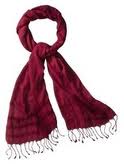 Pic: shopstyle.comI do realize people have differing tastes: furnishings, food, reading material ... we all choose varieties of things, and website decor is no different. I tried to avoid pleasing everyone, and allowing my taste to show through. Which is rule four: personality is presence. Do try to be who you are. I like olde-worlde decor, antiques and collectibles at home. So I tried to make my site reflect my offline taste. Now a visit there will hopefully show visitors my preferences, what I like to look at, and how the images, colours and accessories I choose need to match. Just as I would choose a burgundy scarf to go with a coordinated outfit, I selected and created banners and pictures that I hope are pleasing in the fact that they go together well.
I do hope you will pay a visit - after all, I have done a lot of work in preparation for the next time you pop in to see me. You are very welcome at Rosanne Dingli's Author Website.
How do you feel about changes you find on the web? Do you take kindly to renovations at sites you visit frequently? How often do you change the decor on your home site? Leave your opinions - I'd love to hear them.


June 16, 2011
Guest blogger - Brian Kavanagh

Brian Kavanagh
It is my pleasure today to introduce Brian Kavanagh, an Australian writer who lives and works in Melbourne. Author of the well-known Belinda Lawrence series of mysteries, including A Canterbury Crime, he is also involved in film and television. His observations about characters in books - and what characters reviewers can be - are at once thought-provoking and amusing.
"I recently stumbled across a review of a book of mine on a blog site. The book is Capable of Murder, the first in my mystery series featuring a young Australian woman who is living in the UK. The review was not favourable although the reviewer made it clear that the type of mystery (cosy) was not her favourite genre and she acknowledged that others should not be put off by her comments. The fact it was a so-so review didn't concern me; what I found interesting is that the reviewer, a woman, didn't respond to Belinda, the central character because she "drove me crazy in the way she took chances and trusted people she didn't even know. I never understand why such women walk into situations that any normal thinking person would run a mile from."
Again from the reviewer; "she has an encounter with a stranger, and he accidentally spills coffee on her. I thought her response was cruel and uncalled for: 'You clumsy oaf, look what you've done.' And when he tries to remedy the mess, she says: 'Stop that. You're making it worse. Why did you have to sit next to me, when you had the whole train to choose from?' Not the best introduction to a new heroine, is it?" And when Belinda moves into the house where she found her aunt's body; "She moves in, which I would never do."
I mention these comments because I find it fascinating that a reader should impose her own standards on a fictional character to the point of rejecting her and the book.
 Earlier I had a similar response from a female reader who was extremely critical of another character, Hazel Whitby, a middle-aged woman who is slightly eccentric and has a taste for men and gin. A larger than life creation and meant to supply some humour in the books. Yet I was taken to task by the reader for showing women in a bad light. So again, the reader's personal values are imposed, although in this case, I suspect Hazel's behaviour was too close to the bone for that reader,
All of which makes me wonder just how 'real', fictional characters become for readers. Are the readers (1) standing outside and watching characters as one would study a group of animals or (2) do the fictional creations become so real that they identify with them and take umbrage when they go against the reader's code of ethics? I suppose that depends on the writing and, if well done, presumably (2) is the case. But again, why impose a way of behaving on fictional beings?
For instance, would they object to Madame Bovary? Or do they reserve judgement on contemporary personalities? If Becky Sharp hadn't taken chances and trusted people she didn't even know or walked into situations that any normal thinking person would run a mile from, where would that leave Thackeray?
Surely authors create individual characters with human imperfections, and part of the art of writing is to use these for conflict or the resolution of emotions. So without a character entering into dangerous situations or emotional affairs of the heart, or even of plain lust, certain genres would be dull indeed.All books are fairy-tales but like the fairy-tales of childhood they contain guidelines and morals which we absorb, be they 'literary fiction' or a humble cosy mystery."
Thank you, Brian!
A lot of food for thought: the fictional portrayal of ethics, morals or just plain conduct seems to become a confronting imposition for some. Do you feel readers take characters in a book too seriously? Do you feel they come alive for you, and become similar to 'real' people in your mind?
Is it possible readers feel that characters reflect the morals, attitudes and personality of their author?
If you are an author, how much thought do you give to the morals and behaviour of your characters?
Leave a comment - your opinion is valuable.

June 14, 2011
How I get to know my characters
 I write character-driven fiction. The make-believe people I invent are the most important aspect of the stories I make up. They are the ones that endure all the incidents and accidents I put them through - they make the story, rather than simply participate in it.
When I decide to start the first draft of a new book, I know I am undertaking a very difficult task - and it is impossible unless I get to know a few of the characters first. I need to meet and get to know them intimately, but not through writing necessarily. I 'think them up' rather than write them, and I need to invent them physically first.
This is where imagination and memory come in: I picture someone I have met who fits the physical qualities I need, such as a slender woman with long wavy brown hair. Then I give her an amalgam of qualities I might find in some other woman somewhere else, such as a tendency to turn a foot inward when nervous, or a voice that drops to a hoarse whisper when she is excited. I imagine her facial expressions, the way she turns her words, and how she prefers to dress. Before I can give her strengths and weaknesses, I need to be able to 'see' her form.
 All this in my head. I rarely make notes, because I can remember a character I am in the process of inventing very well. It takes me weeks, so what I forget or omit is possibly not that important. I need at least four of these characters before I write anything. I need to imagine them interacting: fighting, working or making love.
What is important? Age is - a character needs to fulfill a number of age-appropriate tasks in a story. Build is - I need to fit what a character looks like into my mind's eye, so their height, weight and general shape is important. Temperament and energy level are - this affects how characters move, and what action choices they make, so I need to see their activity in my head. And of course, personality is - even with inconsistencies compatible with being human and fallible, there are some things some people would do eagerly that others would never consider.
When I have a person in my head, I need a good name. This is a vital aspect of a character, and once I give one of my people a name I rarely change it, because it is such an intrinsic part of who that character is to me, and how I would like to convey his or her make up accurately to my readers. The credibility of a character sometimes comes down to how well a reader takes on the name of that person, and how it fits in with all that person does and says in a novel.
When I get to know the major characters, I can build a story around them and the plot basics I have written about. Oh yes - I do write a story outline, and do concentrate on the plot, so I do have to invent people that will cooperate with what I need them to do. I sometimes need to enlist the help of an extra character to do something particularly peculiar, if the task is simply something my protagonists would never dream of doing.
How important are characters to you? Have you ever given up on a novel because you did not care what happened to the protagonist? Have you ever been so fascinated by a character that you wished they were real?

June 9, 2011
What publicity means to an author
"What - we need an article on this? We all know how important publicity is. We write and write, and want as many people as possible to read our books."I hear you - I feel the same way. What does publicity mean, though - and how much thought do we give it as we go about our authorly business? It used to be that we sent off a book to a publisher, waited for the day of release, and then sat back to wait for various reviews to show up. We would snail-mail media releases out, and wait to be interviewed.
 Image:blog.gcbm.com.auIt is much faster now, and getting interviewed online is a snap. Reviews too pop up after the various book bloggers receive ARC copies your publisher sends out. It's wide-spread. It's easy, yes. But what does it really mean to you, the author?
"It means there's a lot more for us to do."You got it. The onus of acquiring exposure is almost wholly and solely on the author's own desk. Interviews are time-consuming. Making lists of people to approach - ditto. Promotions are your concern, and you are either going to take it on, and face all its daunting tasks, or risk a black void. The dreaded black-out where no one knows about you, your name, your work ... no one will buy your books. It is a cliched truism: no one can purchase something they have no idea exists.
 Pic courtesy zazzle.com
Publicity means hard work to the author: raising awareness that your book exists is no mean feat. Getting those books into shopping bags is easier said than done. And there are more places than shopping bags: you need to get eBooks onto digital appliances. How are readers going to download your novel if they have no idea you have written it?
"Isn't that what publicists are for?"
Yes, but publicists cost money - a lot of it. You might find some that advertise low-cost packages, but they are inundated with thousands of requests, of which yours will be just another one. You will be dealt the same deal as thousands of others, which is almost the same as not doing anything, if you have so much competition. You need something unique to you and your books, something only you can obtain for yourself, in a different kind of mix or 'package' from every other author out there. The clamour is such that what you devise needs to be select and tailored to the genre, subject matter, theme and purpose of your book.
"And only I can do that!" Image= www.financetrails.com
Exactly. You do, however, have help. It comes in the shape and form of other writers, the fans you already have, your list of perfect outlets on the Internet, (what - you haven't made one up yet?) and the media kit you so lovingly put together. Oh yes - you have a lot to do. Your publisher seeks publicity too, so you can ride along on that for a while, but your publisher will love you to pieces if your publicity works along with theirs. Their objective is to make money selling as many books as possible, which matches your drive, enthusiasm and motivation, with one major difference.
"They do not only want to sell mine!"
You're getting good at this. Quite right - their objective is to sell as many of their books as they can, by all their authors, not just you. Only you are as passionately interested in your success as you are. So what this means to you is simple. You need to attract likely customers. Find links that will match your particular, special, important unique latest release to readers who are actively seeking something just like it.
"It's too late now - my book has been out for some time."
Don't give me that - it's never too late. Technology has developed to the point that many books now will never go out of print. So jump to it - to a reader looking for a good read, any book they have not heard of yet is a new book. This means your market is huge: a whole world of readers who have not yet heard of your book. And when you find them, they'll have found you.
Let me know if you have discovered any publicity outlets or recipes that work. What's your favourite kind of promotion? What works best for you? If you are a reader - what kind of publicity confirms that a particular book is right for you?
 Image:blog.gcbm.com.auIt is much faster now, and getting interviewed online is a snap. Reviews too pop up after the various book bloggers receive ARC copies your publisher sends out. It's wide-spread. It's easy, yes. But what does it really mean to you, the author?
"It means there's a lot more for us to do."You got it. The onus of acquiring exposure is almost wholly and solely on the author's own desk. Interviews are time-consuming. Making lists of people to approach - ditto. Promotions are your concern, and you are either going to take it on, and face all its daunting tasks, or risk a black void. The dreaded black-out where no one knows about you, your name, your work ... no one will buy your books. It is a cliched truism: no one can purchase something they have no idea exists.
 Pic courtesy zazzle.com
Publicity means hard work to the author: raising awareness that your book exists is no mean feat. Getting those books into shopping bags is easier said than done. And there are more places than shopping bags: you need to get eBooks onto digital appliances. How are readers going to download your novel if they have no idea you have written it?
"Isn't that what publicists are for?"
Yes, but publicists cost money - a lot of it. You might find some that advertise low-cost packages, but they are inundated with thousands of requests, of which yours will be just another one. You will be dealt the same deal as thousands of others, which is almost the same as not doing anything, if you have so much competition. You need something unique to you and your books, something only you can obtain for yourself, in a different kind of mix or 'package' from every other author out there. The clamour is such that what you devise needs to be select and tailored to the genre, subject matter, theme and purpose of your book.
"And only I can do that!"
 Image= www.financetrails.com
Exactly. You do, however, have help. It comes in the shape and form of other writers, the fans you already have, your list of perfect outlets on the Internet, (what - you haven't made one up yet?) and the media kit you so lovingly put together. Oh yes - you have a lot to do. Your publisher seeks publicity too, so you can ride along on that for a while, but your publisher will love you to pieces if your publicity works along with theirs. Their objective is to make money selling as many books as possible, which matches your drive, enthusiasm and motivation, with one major difference.
"They do not only want to sell mine!"
You're getting good at this. Quite right - their objective is to sell as many of their books as they can, by all their authors, not just you. Only you are as passionately interested in your success as you are. So what this means to you is simple. You need to attract likely customers. Find links that will match your particular, special, important unique latest release to readers who are actively seeking something just like it.
"It's too late now - my book has been out for some time."
Don't give me that - it's never too late. Technology has developed to the point that many books now will never go out of print. So jump to it - to a reader looking for a good read, any book they have not heard of yet is a new book. This means your market is huge: a whole world of readers who have not yet heard of your book. And when you find them, they'll have found you.
Let me know if you have discovered any publicity outlets or recipes that work. What's your favourite kind of promotion? What works best for you? If you are a reader - what kind of publicity confirms that a particular book is right for you?
June 5, 2011
Short story featured at Twisterpalooza
 Image courtesy www.fanpop.comSubmitting to literary journals and participating in competitions was how I started out writing. We all start somewhere, and I can remember my frequent walks out to my physical mailbox, eagerly seeking acceptances and results. The postman thought I was cuckoo - no one waited for mail in the country town I lived in at the time. We chatted often. He was amazed the town had an author. I was amazed too - especially when something I wrote and sent out actually found a home... or brought home a prize.
It happened every now and then - I published close on eighty short stories that way. I was happy, but the country was not for me. It was in one of those 'Shall I move closer to the sea' periods that I got the idea for a short story. It was not until a full six years later that I wrote it. Today, it resides in my collection
I was asked recently to take part in the Twisterpalooza contest, held to mark Mark Hunter's launch of his book Stormchaser. So I sent him "Rainstorms" since he wanted something weather-based. He announced the results just after his publisher released Stormchaser, and voila - I did not win, but he still posted my story and I am very proud to see it aired like that. Please feel free to go and read it at Slightly off the Mark.
I must add a note here about following authors: do keep in touch with your favourite authors. What can you do to spread the word, or otherwise support the writer of your favourite works? All writers - established, emerging and just starting out - need support. Do it by subscribing to their newsletter, frequenting their blog, commenting on their columns, and buying their books, of course.
To subscribe to my new newsletter, just send an email to the contact address here, and you will receive exclusive news about my next novel. And do let me know what you think about my writings, here and elsewhere.

June 2, 2011
Successful Exhibition Launch for According to Luke
 Yes, it has taken me a full week to recover from the excitement and energy expenditure. The launch for According to Luke was not just any other 2-hour affair. Robyn Varpins - the artist I worked with - and I, took on a full four-day event. We held an exhibition launch, with artworks taken from the narrative and rendered physical.
 This meant we attracted visitors from the literary circle and also the art world. Combining our guest lists worked, and we both benefitted. It was exhausting but fun. There was a steady trickle of visitors from the minute we opened - and even a few who came in and asked questions while ladders, cables, blu-tak and boxes were still in evidence.
 Luckily, the weather was in our favour, and I cannot speak more highly about the curators of the gallery: Colour Lust Art Space and the ladies who manage it suited us down to the ground. It is impressive while staying informal - none of our visitors were daunted, and we had quite a few passers-by who popped in to have a look, and buy a book. The space is large enough for a crowd, yet intimate enough for readings. And the gilt chairs they supplied for the purpose - you must agree - were amazing.
 Robyn Varpins's art worked like magic - it was inspired and she made each piece reverential, while imbibed with a subtle air of mystery: very compatible with the narrative of the novel. According to Luke raised the curiosity of the visiting crowd, and many copies were sold over the duration of the exhibition launch. Postcards, bookmarks and my business cards disappeared, like magic. A few visitors came more than once.
 I gave readings to small groups of friends, family and fans. Robyn gave a painting demonstration at her much-used easel. Because she used aged timber as a support, she had to answer a lot of questions about what she prefers to paint on. She uses canvas, of course, but also loves to paint on wood, metal and fabric - and her sculptures in raku clay attracted a lot of attention. At the end of the show, one happy buyer could walk off with the large statue he bought, not wanting to wait for a delivery.
Early next week, from 7 June, I shall post many of the paintings, pictures and other images on my website when I have processed them. I would love you all to have a look, and give me your impressions about book launches in general.
If you are a reader, how do you feel about meeting an author, having a book personally signed and helping to launch a book into the world?
If you are an author, does it strike you as a difficult task to hold a launch? And what about linking it to physical objects, such as I have done with painting and sculpture, and collaborating with an artist?

May 23, 2011
How to prepare for a book launch
 The first thing is to be afraid - be very afraid. If you are nervous enough, preparation for your book launch will entail a lot of lists, checking and re-checking. The likelihood of forgetting or overlooking something is then reduced.
Lists: what to take, what to wear, what to read, what to display, who to ask... goodness. I am sure it is very possible to imagine the lists. My launch this time is going to be an exhibition launch, with artworks prepared by friend and artist Robyn Varpins. She has interpreted the artworks mentioned in the book, and they look fabulous. It also means that with two hosts, there are twice the items to remember.
All the guest lists and so forth are done and used - the exhibition launch runs over this coming weekend, 26-29 May, so guests were advised a fortnight ago. RSVPs have rolled in thick and fast - the great thing about running an event over a whole weekend is that people can manage to squeeze in a visit at some point over the four days, even if they can't make it to opening night.
There is wine to buy and cheese to dice. An olive or two won't go amiss. Robyn is arranging for an urn for cups of tea, and a biscuit or two will be nice.
Then I have to select excerpts to read - interesting pieces with no spoilers. Now that will be hard. When you choose parts of the book to read, mark them with differently coloured paper, also numbered, so that you do not get confused.
 There will be a running and looping Powerpoint presentation going on in one corner, with pictures and quotes. And book displays I have made mental sketches of - and will probably look vastly different to what I have dreamt up. Making a slide show of this nature needs a lot of thought, so do start a long time before the night. Show it to a few people to gauge immediate impressions. Be prepared to change - flexibility is an asset.
It is always very hard to calculate the numbers of books you will need. Your publisher will be able to help if you ask. I have heard from many authors that the average number of books sold at a launch is 35. But are you and your book average? How many people will turn up? Will you run short ... or over order? Being left with a large box of unsold books is never pleasant. Still, it is better than missing a sale. It is also important not to forget copies of all your other titles - your new book will sell most, of course, but readers invariably ask, "Do you have any other books?" Having them there might stimulate sales of your backlist.
Prepare a selection of comfortable things to wear - it is important to wear comfortable shoes since authors stand a lot at launches. Think of the venue - libraries are usually warm, but halls tend to be chilly. Shops are draughty.
Remember people will expect books signed - a good pen is vital. Take two or three of your favourite brand of pens, and be prepared to listen carefully to how a purchaser would like the book signed. Spelling of names is important, and some people (collectors, especially) prefer a simple author signature and nothing more.
Offering a free bookmark or postcard with your details - email, website, blog - is not only a nice thought but will allow purchasers the opportunity of an afterthought. We often think, "I should have bought one for Mum," when we like something. Readers might like your book that much - if they have your details, they can buy more copies if your directions on the bookmark or card are self-explanatory.
 It is not a bad idea to have a few cover images blown up to poster size and hung around the venue. Marketing experts say people need to see something more than once, and in more than one size, in order to get the buying impulse.
Soft background music can get in the way of your readings, so have someone on hand to turn it down. Lighting is quite important - strong enough for you to read by, yet not glaring so guests are blinded.
There are other things to consider - but it's amazing how many things occur to you when you start thinking in list fashion. So take out a pen when the time comes - and have a nice time, despite the butterflies.

May 17, 2011
How it feels to be a guest blogger
 Jayne Fordham's BlogIt feels great to be a guest blogger when the request comes from the manager of a site you know has good credentials.
It's a bonus when you know the blog is visited by a good number of readers. What feels best is the understanding the blog manager has of the subtle things that make a blog enjoyable to read: clarity and sharpness and an attractive layout are really what make a reader stay on. Relevant images are also good. Even if a surfer happens to stumble upon a blog, its appearance - and then its content - can make that chance guest stay on to read more.
I found this out about The Australian Bookshelf, run by Jayne Fordham. It is sharp, straight, and contains great content, with everything signposted correctly so one is never lost. If only the rest of my world were that organized!
I am this week's guest blogger at The Australian Bookshelf. Jayne asked me to talk about locations in my fiction and triggered off a reminiscence. So why not read about it there?
I would love to know how you feel about guest blogging in general. If you are an author, tell me whether you felt nervous, or if you have a favourite that I can see online. If you read blogs, please tell me whether you enjoy a guest at your bookmarked blogs, and whether guests send you looking for new books and authors you might enjoy.

May 11, 2011
Only if you live in Perth
 Image via WikipediaYes, I'm writing a post for residents of one city, and one city only. Perth - the great little city on the shores of the Indian Ocean, which is bisected in more ways than just geographically by the Swan River.
If you nod at all this and know where I am, and love it because you are here too, this blog post is for you. This is a special invitation to all residents of Perth who love a great story, and who would like to experience a new kind of book launch.
 Perhaps a first for our city, capital of Western Australia, the celebration for According to Luke, my new thriller, will be an exhibition launch. I am working with award-winning local artist Robyn Varpins, who was very taken with the visual aspects in the narrative. According to Luke is packed with art. There are pre-Byzantine icons, sacred representations, sculptures and reverential paintings. Robyn has taken them and interpreted them in her inimitable way. She has used timber supports and thrown sculptures with a very special kind of clay so sympathetic to the way she works that it renders her sculptures tactile - exquisite.
 Over the whole weekend from May 26 to May 29, Perth art lovers and readers are invited to visit this new concept of linking the visual and literary arts. I shall be reading from According to Luke every day, chatting with visitors and enjoying meeting family, friends and fans. Robyn will demonstrate her art, and a spot of music will be audible in the background. Those who attend on Thursday can celebrate with us.
 Many of you already know what According to Luke is about. Some readers have already posted reviews - there are many all over the Internet, especially on Amazon, which is where most people look first. This will be an opportunity to meet me, if you haven't already, and the artist who has so accurately interpreted the words in the book to come up with reverential yet mysterious works of art.
An invitation has been devised for you. It can be viewed and printed from this source. I look forward to meeting as many readers as possible during the length of the exhibition launch. Paintings, sculptures and signed books will be available for purchase. See you there!

Venue: Colour Lust Art Space 1-3 Coventry Parade, North Fremantle
Opening times on invitation.


May 8, 2011
What I do is contagious
 Image via Wikipedia Dr SeussWe do not always realize how much our behaviour affects those around us. In these days of social networking, we interface with people who are to all intents and purposes perfect strangers. Well - they're not all perfect, but some of them come close.
It used to be that parents thought they influenced their children, and practised what they preached. Now most parents know that what really influences children is other kids, and stuff they take in by osmosis though digital means. Still, adults do shift each others' thinking, each others' perceptions, each others' curiosity and each others' taste, even if only temporarily. It only takes a little shift to change one's shopping habits, for example.
I found that what I lifted off a supermarket shelf recently made a nearby shopper take the very same can to read what I had so intently put on my glasses for. I saw her curiosity was moved by my absorbed reading of a label in search of carbohydrate content. Then, at the beginning of the chips-and-chocolate aisle, I stopped and veered off to the left, avoiding it altogether. Another shopper smiled and did the same, winking as he went.
Online, I found I have amazing power to direct my followers to read certain blogs, or look at pictures I like, or listen to tracks I bookmark, or smile at pictures of cats, or nod in agreement at sage snippets such as Dr Seuss's quotes. What I do seems to catch on. If I made a list of books, or links, or images, you'd most likely get curious and wonder what I like, and you might get to like it too. Or dislike it so strongly you might want to warn people off, and you would then influence another circle of people. What you do is contagious.
 I have practised smiling while in the middle of a despondent mood, insanely grinning to myself in my rear-view mirror while stopped at a red light, only to find the fellow in the car to my left smiling insanely back. I have skipped a little dance while pushing my trolley (yes, I shop a lot) only to see a woman laugh and skip too. I have sung along to seventies and eighties songs on the car radio, and my son followed suit.
What amazing power we have to affect how others behave. Like it or not, humans play follow the leader more often than we think. We observe and imitate, discover and emulate, and are not always aware that what we do might end up being copied by others. We also rarely stop to think how much of what we do is original, or truly spontaneous. Which does not really matter that much. Perhaps the knowledge that what we do is catching might make us a bit more careful, and just like sneezing into a hankie not to spread the flu, we might become a bit more positive, cheerful and lighthearted so that when it does turn the circle and come back to us, it will strike us in a nice way, and make us want to copy it all over again.


