
Rosanne Dingli's Blog, page 7
July 26, 2011
Simon says
 From Marray ServicesWriters need to do a lot of strange things to draw attention to themselves and their work. One of these favourite activities is to write blogs and comments on Being a Writer, or The Writer's World, or The Life of the Writer.
Writers read the blogs of other writers, looking for advice on how to write, how to live the writer's life, and how to sell more books. Or perhaps How to Write a Better Novel. I have read so much guidance from other novelists I sometimes wonder which way is up. A lot of it is conflicting, and some of it makes little practical sense.
I find advice on branding, plotting, selling, promoting, characterization, drafting, genres, editing and a whole lot more. There is advice to be had on every single aspect of writing and being an author. Often, it is written and offered by people who have done little writing, except in the way of advice. Some have written so much help, advice, information and guidance it's not immediately obvious that it's all they have written. Doesn't one have to have written one novel - at least - to be able to guide another prospective author through the traps?
 Doesn't one need the experience of dealing with an agent or publisher before jumping into the fray and telling others how to do it? Apparently, it's 'no experience required' when it comes to this kind of advice-mongering. Hop on any discussion group, thread or forum about writing, and you will find 'advice' of all kinds, some forthcoming from individuals whose credentials to offer it are often minimal or non-existent.
It is not unusual to find whole companies popping up offering to 'help ' a new writer through the process, when they have not published as much as a short story themselves. Perhaps this realisation might prompt new writers to be very wary about the sources of advice, and look upon it as a Simon Says exercise. Find out what the writer offering counsel or assistance has actually done. Make it your business to discover what that writer's real experience has been. Do what a writer does, if you like the outcome, not merely what they say you should do.
 Finding out what experiences a writer has been through is sometimes only evident from what they have published. This is not a bad indicator at all. An author with a string of titles out, with a good history of sales, probably has the benefit and weight of consequence behind their information and guidance. Someone whose only testimonial is more dubious advice must be treated with the same suspicion as a door-to-door salesman peddling a product with no reputation.
When an author has the weight of experience and the output to prove it, it's usually visible, and easy to find. Either their own website, or a quick visit to your favourite online bookstore, will confirm backing for that guidance. Even a rapid search will disclose whether the advice is worth following.
It is extremely easy to read up and regurgitate so-called information and advice - let's not be taken in by the ones who have honed this to a fine art: giving advice to follow a career path, a plan of action or a series of steps they have never taken themselves.
What do you think of information and guidance for writers you have found on the web or elsewhere? Was it backed by real experience?


July 22, 2011
4 reasons to try another genre
 Readers - and authors - generally find a genre that fascinates them, and stick to it. At least for a while. You get mystery buffs, romance lovers, history gurus, and biography buyers. There are also thriller nuts, and fantasy fiction freaks.
 Today I suggest readers - and authors! - live dangerously and try another genre. Here are the reasons
One: Taking on a romance rather than a thriller for your next read might sound a little risky. There will be no car chases, extortion, blood or guts. You might find, as a reader, that there is a facet to this different genre you did not suspect existed. The characters are sketched differently. The background, perhaps, is given a different kind of slant. Authors might find themselves engrossed with the emotional life of their characters, and the importance of nuance.
 Image via WikipediaTwo: Another genre might make you seem more interesting to the family, or the crowd you hang with. If they peep over your shoulder at the content of your Kindle, or see a different kind of paperback sticking out of your handbag, you might suddenly seem to have another string to your bow. Interesting - you might find your friends look at you in a different way all of a sudden. Unpredictability makes people fascinating. 'I never knew you were interested in politics.' A conversation is struck up, and you have a new friend, with a new interest.
 Three: Genre jumping as an author might give you a whole new market to exploit. As a science fiction writer, the niche of cosy mysteries is a closed box and itself a conundrum... why not give it a whirl? The following you gather might be tempted to jump genre themselves, and try your sci-fi titles. Iain Banks has done it, and so has Tess Gerritsen. It takes nerve, and a willing agent or publisher, but there too the trend is now favourable, and stranger things have happened.
Four: A change is as good as a rest. Or a holiday! Writing a light detective novel might not seem like as much hard toil as that deeply researched genealogical narrative non-fiction. A travelogue might seem a doddle compared to that psychological thriller, if you are a reader on holiday or simply after a change.
Are you a reader willing to try another genre - if so, from which to what? If you are an author seriously considering this risky genre-jumping caper, tell us about it.


July 19, 2011

July 16, 2011
How to get web attention
 Graph from GoodreadsStatistics are often disheartening - I always suggest to beginning authors that they do not look into how many beginning authors exist, because it would put them off writing forever. The same might apply to those promoting a product on the web, especially if it has anything to do with the written word. There are so many books clamouring for promotion it is inevitable a proportion will never get any attention at all.
 Morgen BaileyCounting the numbers of your competitors is folly, because it illustrates the risk of failure in all its glory. The essence of success for any writer is to write on regardless, and hope for attention from some quarter, some time - even if it is posthumous. On that dreary note, it is quite amazing to see some authors gain attention by advertising their competition! Many authors feel that hosting other writers wins them some sort of note - and it does. Twice last week I found that hosts who had my words all over their sites benefitted in no small way.
The tireless interviewer Morgen Bailey has me on her site right now - she asks some pertinent questions and I had fun answering. She interjects with oohs and aahs and can get quite animated at some responses. She places relevant links and has accumulated a huge bunch of followers who hang on her every word. That's what I call attention. Most of the authors she plies with questions return the favour and receive more web attention themselves by announcing their presence on her site, and so it goes. It's a very effective way of garnering a following.
 The e-BuffetPatrick McCormick is another enterprising individual. Although his web magazine The e-Buffet is still in its start-up stages, he has gathered some momentum, and his 90+ contributors will draw their own followers to have a look at his site, where music, literature and art entertain and edify. Some of what he features is quite good. He has published one of my more continental short stories for all his patrons to read - and read it they do. It is called Strange Things, and the strange thing is that it's getting quite a lot of attention, not only for me, its author, but also for Patrick and his magazine.
It is just as foolish to wonder how many site managers, authors, promoters, publicists and general writers are doing all this, as it is to try and figure how to devise stunts that will bring a stampede of clickers onto any website. Even the most avid number-cruncher will tell you that pure chance plays such a big part in how hits happen, that trying to understand how it happens, or why, or trying to replicate a rush is a complete waste of time. I know that there are grown adults out there whose entire careers ride on being able to prognostigate, plan, manage and direct web traffic, and I salute them all. But I also salute those who try and do the same with the stock market and the pacing and racing industries. The only sure thing about them is that someone makes some money sometime.


July 13, 2011
Rockingham Event: Talk and booksigning
Tomorrow night, Thursday July 14, at 7.00PM, I am addressing the Rockingham Regional Arts group, at the Gary Holland Community Centre, 19 Kent Street, Rockingham WA. The public is invited to attend. I am speaking on the importance of the visual arts in my writing, especially in According to Luke. I shall be signing books and there will be special icons painted on aged timber on show. If you happen to be in the area, do drop in - Teena Raffa-Mulligan and her group will welcome you. I do so appreciate their invitation.The art displayed tomorrow was created by award-winning Fremantle artist Robyn Varpins, who put her exceptional skills to work on mysterious yet reverential artworks that illustrate the pre-Byzantine artefacts discussed in According to Luke. This controversial thriller will delight readers who love the genre made popular by books such as The Da Vinci Code, Codex, People of the Book and The Confessor.Enjoy some of Robyn Varpins's art:





July 10, 2011
A free short story
 Pic courtesy of itsthenorm.com
Everyone loves a short story - they go really well with a cup of tea and a Tim Tam. Or two Tim Tams. Short stories are coming back with a vengeance ... or did they never really go out of style?
Pic courtesy of itsthenorm.com
Everyone loves a short story - they go really well with a cup of tea and a Tim Tam. Or two Tim Tams. Short stories are coming back with a vengeance ... or did they never really go out of style?I know more than one reader who has admitted to reading them on the sly, keeping them hidden away with her stash of Tim Tams.
If you are cold and lonely, put the kettle on, break into that packet (I know you have one somewhere) and let it rip.
If I were on an island, I would be able to hear the sea. I hear nothing here. This place is silent. If I turned on the CD player, the sound of theatre organ would fill not only this stone room, but also space around the house between the veranda and the stand of trees on the bank before the dam. The organ would be audible as far as the top paddock.
 Pic courtesy rutland-electric-fencing.co.ukI found a horse in that paddock once. It stood with its broad brown chest against the wire fence and looked at me as if it knew I was alone, as if it knew I would be mystified about how it got into the paddock with no opening in sight. Horses know about women. This one looked at me: my hair, brown as its mane, my eyes, wide with surprise at finding it there. I did nothing about it. I gave it a pat and two apples from my duffel coat pockets; the ones I was going to have for lunch when I reached the waterfall at the end of the property. I turned my back to it and walked away, wondering whether it would still be there when I returned. 'You alone here?' asked the stranger when I answered the door that night. She was short like me, but with longer curly hair. She was bundled in a homemade jacket whose pockets were deep and full of her gloved hands.'Yes, all alone.''Thanks for holding Freddie.' I gave her coffee in my bright kitchen with the new copper range hood. She placed her sheepskin gloves on the counter and held the mug in both hands. 'Always alone?' She was curious. 'You could come up when you like. Talk to me. Ride Freddie. I'm not always alone, though. Six weeks on, six weeks off.' She shrugged and gave a crooked smile.'Is he up north?' I asked, wondering. How would it be: alone but not alone? 'Drilling. He's offshore.' Then she changed the subject. 'You'll like it here when you get used to it. Bit of a drive to town but you'll like it.'
If I were on an island, I would hear waves crashing against cliffs. I have filled the silences here with names of trees that rustle in the wind whirling through the valley below my house. I have named each bird that squawks or twitters outside my small windows at daybreak and dusk.In the morning I looked towards the top paddock although Freddie was gone. There was an echidna near the dirt track to the main road. Big as a copper sink, moving slowly even as I neared. It lowered to the ground, immobile, when I stood in front of it. 'Echidna!' I had never seen a real one. Just then the sprinklers in the home paddock came on. Reminded me to bring in the goats. It was so cold at night. Only a few; they came with the property. I knew nothing of goats or what to do with them. They all fitted in the barn.My neighbour said her name was Rorie. Funny name for the country. Said her parents had called her Aurora but school soon changed that. Her dark eyes and hair were like mine, but she was livelier. Dressed strangely. Must have made all her own things. 'I make coats out of blankets,' she said, one afternoon in her cluttered kitchen. I had climbed the rise that hid her house from mine. Freddie was in her small paddock. Gave me his back. 'Glad you took up my offer. Another three weeks to go.' She pointed absently at a calendar on the fridge. Days were crossed out in thick marker. 'Do you really miss him?'She nodded. I thought I understood. But with only my own company for the last two years, and not doing badly for it, I could only wonder what it was like for her to have six weeks at a time of constant company. She showed me a room full of yarn and bits of blanket. She knew how to spin. Thought of my goats. Thought of their coats. Thought of my rooms, my house, where no one ever stayed but me.
If I lived on an island, where goats stood on sharp outcrops of rock, balancing gingerly on cleft hooves, I could watch them nibble their way through a dry hedge. I would smell their musty coats and hang a discordant bell round the neck of each one. I would shield my skin from the burning sun and swish a flexible rod to herd them. Here, my ragged mob huddles close to the barn. Their wall-eyes all look the same way and hoarse cries almost stop me placing the bar across the barn door when I lock them in for the night.
Rorie is in my kitchen, placing a tray of pumpkin scones carefully on my counter. I wonder if she is still counting days.
[image error]
'They need distance,' she says, and at first I think she is talking about goats because of my afternoon thoughts. 'Men - they need distance. Have you ever been married?' I do not want to tell her but I nod yes. Soon I suppose I shall tell Rorie about how he pulled away from all the intimacy and all the closeness, which still burns me if I touch the memory of it. 'Now we live on opposite sides of the country.' I look at her face to register her reaction. 'But he has a wife since... Funny...''Funny,' she takes on, finishing my sentence. 'Funny how they pull away as if for fear of being smothered, then are the quickest to find someone else.' Can I see sympathy or wistfulness in her smile? 'Like I said,' she continues, 'they need distance. Jim needs to be on a rig. Needs to be with me too, but only a bit at a time!' She makes it into a joke.'You're lucky to understand,' I say, in spite of myself.
If I lived on an island, I could fish from a jetty made of wood so old no one remembered when it was trees. Grey and splintered, it would hold me up as I stood in black rubber boots, bucket of stinking burley beside me. I would taste the spray with each wave that sloshed against the ancient piers. Here, there is no salt in the air. The ground glints with an occasional crystal, but it is quartz in the ground, or mica. I pick up a flake of mica on my finger and taste it with the tip of my tongue. It is not salty. Freddie is in my paddock again and I have no idea how he got in. I lead him out by his halter and carefully shut the gate behind us. I catch my thumb in the chain. Exactly in the same place where I made a bruise once, soon after moving in. The anniversary of the day he left me I paced a proprietary trail round my new land and caught my thumb on that chain. [image error] Rorie is teaching me to spin. Some of last year's wool from the barn. Perhaps I can knit a rug or a blanket. First I have to spin it all; a dun colour, fading to off-white and grey. I will turn it into skeins and balls, waiting for the needles. Then I will make a square blanket with a knotted fringe around the edges. I savour the prospect of knitting by my fire, alone. Theatre organ music and the clicking of metal needles. Crackles and sparks from the grate.
If I lived on an island, he would come back on a boat. But there are no boats here and the sea is four days away by car. The road is muddy and red, my mailbox sticking out like a sentinel with luminous numbers glowing in the rain. This is not an island, so he will not row and come alongside an old wooden jetty, tie up the boat and hop lightly onto the boards.He needed space, the space of a crowded city two thousand kilometres away. It was becoming too close where we were. For months, it was just us, rods and nets and a boat. Just us, and scaling fish and laughing and waiting for the low rumble of the shrimp boats coming in. Waiting for the beam from the lighthouse to blink past our window in the dark. Here the only sounds are those of birds rustling in my trees by day and possums shifting in the roof at night. I am small. My head comes level with the top of the big fridge out the back. To reach for sugar sacks and the vinegar in the pantry, I have to stand on a chair. In the three years we were together, I grew. I sip coffee in Rorie's sitting room again, where the fire glows softly in a closed stove with a glass front. She has vegetable soup boiling on top. Her thumb is flattened with spinning. She tells me Jim is coming home in three days.'I grew,' I say. 'I filled everything. I filled his head. He moved. First from side to side and then backwards.' Rorie nods. 'Mm.' She does not look up or she will see my eyes. She does not want to feel sorry for me. 'Had fun on Freddie this afternoon?' she asks instead.
If I lived on an island, I could walk round its shores; jumping streams, climbing promontories. I pace the perimeter of my property, finding the surveyor's peg at the west corner and following the fence to a dip where the chimney of Rorie's house is just visible above the rise. Smoke. Jim is there with her and for six weeks from now. He came in a taxi. [image error] Freddie is in my paddock for six weeks. I feed him apples from the box in the kitchen and every morning I shall ride him to the edge of the reserve until we reach the bitumen. From there I will imagine the lay of the land in the valley behind the screen of trees; how the lake must shimmer in the sun and how the hum of traffic interferes with the bird chorus at dusk.
[image error] Out here, it is still and quiet; we shall have rain tonight. If I hurry back, I will save the fire from going out just in time, placing some small sticks and a huge log from the pile on top of it; watch it roar back to life to lick the bottom of my big black kettle. 'I am pushed into a corner,' he had said, 'and all I hear is organ music. All I see is you and me. All I smell is fish and boats. All I touch makes calluses on my hands. It's like living on an island and I am marooned.' The sound of theatre organ fills not only this stone room but space outside my windows that stretches into the bush, past my fences, where the echidna lumbers about. I stretch my arms out to fill my house. I look again at the smoke from Rorie's chimney. Smoke enough for two.
~
This story appears in my collection called How did this story strike you? Leave your impression as a comment - it's always appreciated.


July 5, 2011
How important are an author's fans?
 Jacqueline holding Death in MaltaReaders can make an author feel rather special. When someone really enjoys one of my novels they write to say so. Some write reviews and post them in the usual places. It's flattering and very satisfying to make readers happy they bought one of my books.
Authors become attached to their novels, and when readers praise them, they can carry that happy feeling around with them for days. It's because a novel takes a long time to write, edit, and produce. Publishers like to know that the books they invest in and endorse gather a following for them and the author, without whom their business would not exist. An author does not live or work in a bubble: there is an entourage of people whose input is important and who are happy when a book is a success.
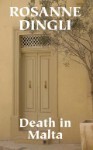 So fans are a vital aspect of a writer's life. They confirm that all that work, all that investment of time, money and energy are worth while. When an author receives a picture from a happy fan who has just received a brand new novel, it is an event. I have just received a photo from a reader who was delighted that Death in Malta reached her so quickly after she ordered it. Jacqueline happens to be in Holland, where I enjoy a very nice readership - the Dutch are great readers, in a number of languages, including English of course.
What can readers do for the authors they like? Well, Jacqueline has shown that a photo speaks louder than words. Even a two-word comment on a blog can make someone's day. It only takes a minute. A brief review can be easy to write. A recommendation to another reader is valuable. They are all small gestures that can make a lot of difference.
Make an author feel special today.


July 1, 2011
What is an eBook "Single"?
 Image via WikipediaAn MP3 playerIn the music recording industry, the concept of a single is well-known. It's an individual track: one song, or one tune. Instead of buying a whole album of eight to twelve tracks, it's possible to purchase the songs you want, one at a time.
Anyone with an MP3 player will know the concept: purchasing single tracks is nothing new. For music. It's different with reading. Until recently, one could only buy either a whole novel, or a book containing a collection of stories by the same author. Anthologies - or collections by a number of different authors - are also available.
Some authors are now making shorter works available. They figure that creating very short eBooks makes sense. It started with novellas. These are stories about a quarter or a third of the length of a novel. Some authors have had great success selling single novellas, which make for convenient and easy reading during a commute, time spent in a waiting room, or a neat addition to a relaxing lunchtime break.
 It's not a long stretch to imagine the possibities of selling individual short stories and calling them 'singles'. They can retail very cheaply, and provide an excellent way for readers to try out an author for quality, subject matter, and the kind of prose they write.
Perhaps the future will see most authors publishing a few short stories to use as promotion tools such as giveaways, tasters and samples. The short story is not as unpopular as some would have you believe. Most classic authors wrote them, and there are some very popular bestselling collections and anthologies. Publishers have in the main avoided and discouraged them, but the current publishing climate has seen short stories return with quite a successful rush.
Because I like this concept, and having a number of short stories I wrote in the 90s to revise and use, I have experimented with the 'single' strategy. I have issued two singles, complete with covers, on Kindle. They retail very cheaply and started to sell immediately they went live. Clicking on these covers will take you to their Kindle pages. They present value - for under a dollar you get about 18 pages, which you can lend to friends, or read over and over again.
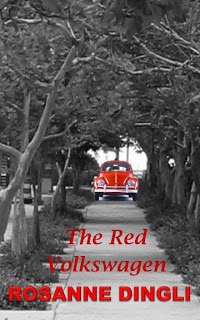
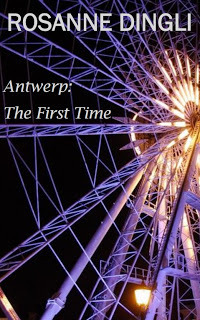
It was fun designing the covers, formatting the text, and waiting for Amazon to throw the 'live' button. So let me know what you think of this concept - do you think it will take on? If you are a reader, tell me whether buying one story seems convenient to you. If you are an author, will you try to experiment in this way?


June 26, 2011
End of Financial Year Sale
 Image via WikipediaIn a few days, the financial year comes to an end for many around the globe. This announces the necessity of filling in a tax return and the great paperchase that fills the middle of each Winter in this house. Some words become taboo. "Don't say
receipts
! Mum will have a fit."
Image via WikipediaIn a few days, the financial year comes to an end for many around the globe. This announces the necessity of filling in a tax return and the great paperchase that fills the middle of each Winter in this house. Some words become taboo. "Don't say
receipts
! Mum will have a fit." I do realize this is not the only household in which the end of the year becomes a rather frantic time of totting up, rounding off, calculating, reconciling, and searching for that vital but missing piece of the fiscal puzzle. It is a rather lonely pursuit, though - it's not possible to phone a friend, or put your unreconciled balance on FB and ask for support and help.
To celebrate and console, then, I am holding a sale. No - I am not selling Grandma's candlesticks in an effort to adjust the balance. I am holding an ebook sale to cheer everyone up who has a break in the grand receipt search, to have a nice fortifying cup or glass of something, and a relaxing read.
 Rosanne Dingli's booksAll my collections of short stories in ebook form have been reduced to a ridiculous but very affordable $1.99 ... Yes - you too can download one or two and either put them away for later or enjoy them on the spot. Your Kindle will thank you for it.
And remember - you do not need a Kindle appliance to take advantage of this crazy offer. You can download Kindle for PC and read it all on your computer. Or Kindle for your phone. Or your Mac.
I am enjoying this little caper, and can't wait to hear your comments. Remember - don't mention receipts.
And many happy tax returns to you!


June 21, 2011
Short story: Piracy
 This short story of mine is taken from my newest collection, Over and Above. If you enjoy it, tell me why.
Piracy
This short story of mine is taken from my newest collection, Over and Above. If you enjoy it, tell me why.
Piracy
Clare could not remember how long it was since her arm had gone stiff. She could not move her elbow joint at all, gasping with pain and shock every time she tried to inch it straight. She could not remember whether it had been weeks or just days or perhaps a few hours.
'Since the boat yard,' mumbled Edward, interrupting her thoughts as he turned from the well-lit window in the yellow kitchen. Hands deep in jeans pockets, he stood tall and square, blotting out some of the brilliant morning sunlight with his frame.'Mm?''I said since we went to see the boat four weeks ago. That's how long you've had that blasted sprain and you have dropped two mixing bowls, the mail yesterday and the iron this morning.' It was unusual for Edward to be so severe. His voice had not risen above a whisper but it was clear and cutting. Clare flinched as his back turned again and his silhouetted outline rebuked her from where he stood. She balanced on a kitchen stool, gripping a mug awkwardly with her left fingers. It was uncomfortable and almost dangerous. Clare was absolutely right handed.'The boat…' she started. Ever since Edward had bought the boat things had changed. She had thought it would help him assert himself in the world, make him readdress his confidence by tackling an element she regarded as almost almighty. 'The sea,' she continued, hoping the subject of her arm would be dropped. 'It's done…''And you have done nothing but contradict and discourage me since I've started sailing.' Edward mumbled the accusation with a small grimace, and he avoided her eyes.He was not right, but Clare was inclined to believe him, partly because of the pain in her arm and partly because of a twinge of guilt. Could the sprain be a psychosomatic response to her feelings of loneliness? Could it be a protest she was making with her body, which she could not make in words? She felt alone when he went out sailing. She tried to bend her arm and failed, uttering another groan of dismay. The mug rocked on the counter, spilling tiny drops of coffee on the yellow laminex top.Edward moved away from the window and out of the kitchen in a slow sideways trot, as if he wanted to disappear. And he would, Clare knew. Out of her sight and out of the house without a word for the remainder of the day. Even when they were home together, he buried himself in a book about knots or tides or rope splicing or marker buoys whenever she came into the lounge, or turned on a video full of flapping sails, grinning men and large expanses of water. Try as she would, it was impossible for her to watch a full hour of people in yellow oilskins leaning out over choppy water, changing tack with smooth un-fumbling hands or smiling into the camera from the cramped confines of a small cabin. And the sea: squared off into deceptively manageable pieces on a video screen, it looked almost welcoming.'It makes me long for things,' Edward had once said. Perhaps that had been more dangerous than the thought of him struggling out of his depth in a storm, yellow lifejacket preventing him from thrashing about or treading water, binding his arms to his sides like a straightjacket. More dangerous, because it made her long for something as well; and it was a feeling she was not used to. It was a non-descript longing, like a soft stirring in her stomach, a nauseating sensation that was neither seasickness nor a definite craving for food or drink.
The arm was better the following weekend. Clare rubbed mentholatum into the crook of her elbow at night, making the bed smell eucalyptic, like a childhood sick bed. Edward asked if she had a cold, forgetting for the moment about her muscular distress. Clare rolled to face him, but saw his nose was creased up and the corners of his mouth drooped dismally in disgust.'It's my arm.''Ah.''Better now ... a bit.'His response was a quick click of the switch on his bedside lamp, making Clare's last word dissolve in darkness. After a while, she could see the outline of the small window through the thin flowered curtains. There was a moon. It made the roses in the fabric yellow; great cabbages to keep her company as Edward slept. They billowed in some strange wind, grew into enormous blimps, spinnakers bulged by a foreign gale that invaded the bedroom but left everything in its place: unruffled, unmoved, except the curtains. Clare changed tack, rolling onto her other side, gasping against the protest from her elbow.In the morning it was raining heavily. Edward pulled on boating clothes: a new sweater with a white collar and rubber buttons, moleskins and a pair of laced loafers. 'Coming?' He seemed light-hearted; he was over the sulky mood that had accompanied his presence for over a week. He whistled, said oops, and that sailors thought it was bad luck to whistle, hugged Claire absentmindedly and kissed her on the ear.'Coming?' he asked again.'Looks horrible out there.'Clouds had moved over Edward's horizon. 'Yes or no, Clare. Don't take all morning making sideways dissenting noises. The earlier I get there, the sooner I get launched!' He was out in fifteen minutes, gulping coffee as he got things together, passing her in the wordless sideways trot she now recognised as his 'sailing gait'.The weekend newspaper supplement was full of boats. It was a conspiracy. Cons-piracy. Piracy, Clare thought. What a thought. She chuckled, searched for her glasses, her sewing basket and her sharpest scissors. Feeling creative, she sank into a chair and sighed. By the time Edward returned, exhilarated and tired from his day on the estuary, she had sewn a black skull and crossbones onto the bedroom curtains.'What is this?'Clare heard his hissing words and smiled.'Clare! Clare - what on earth do you mean by this?' Edward held a curtain by a corner. He was not impressed. Clare could hardly contain her mirth.'Come on, Clare. What is this? Not a joke, if you ask me.' He held up the cabbagy print fabric, looking at the rough but regular stitching that held the black cut outs in place.'I don't know,' Clare laughed. 'I don't know exactly!' She bent over and held herself as laughter surged and curled in her stomach. She went and locked herself in the bathroom, looking in the mirror and bursting into peals of uncontrollable laughter. [image error] The following afternoon, she piped YO HO HO in red icing on the round sponge cake she made. The kitchen contained a warm cloud of flour and icing sugar as she shook things, her elbow now only a little stiff. Edward cupped his chin in a hand and looked at her in unamused vexation. Then his expression changed, blurred slightly. 'How's your arm?' he asked softly.
Clare stopped laughing. She wondered whether she could tell him about the new uncertainty she felt. The arm was much better, but it had been replaced by a kind of nausea. The hall floor had tilted away from her a few hours back, like a companionway on a boat, rolling on a high swell. Was this a new complaint her body – or her mind – was making against Edward's new-found love? Was she unconsciously making a physical protest out of jealousy?I am struggling against an adversary, she thought, and it is mightier than an occupation, stronger than a woman. She giggled again, when a surge of laughter and a feeling of being able to tackle anything came over her. But it made her feel faint.When Edward's sailing friends arrived that evening, she was as still and solemn, as if it was a prayer group they had organised, rather than a convivial evening with friends. They smiled at the writing on the cake. Into Clare's solar plexus came a warm, soggy feeling as she listened to them discuss navigation, storms, man overboard procedures, and different sizes and shapes of sail. She remembered an old painting from her father's study, which they had stored somewhere in the roof. A sloop with pregnant sails tilting on an ocean speckled with drizzle and spray. Tomorrow she would bring it down and hang it in the hall.
The water was smooth, thick. Clare was sure it would turn her fingers green if she drew her fingers through the oily reflective surface and flicked drops away. It was thick and salty, smelling of entrails and dead starfish, of empty shells and brown seaweed. No wind. Edward rowed desultorily towards the small yacht, looking out towards the horizon and wishing up a wind. The dinghy was small and rocked gently on the slightest ripple, but there was no wind to speak of. Once on the yacht, he left Clare to tie the dinghy on to the stern, and rummaged about below for the compass and rolled up charts.'We need a name,' said Clare suddenly. 'Astra … or Miranda or something like that.''She doesn't need a name. Registration number – that's all she needs. Can't remember it... one-six-oh-four-eight, is it? Or one-eight-six-oh-four?''Olinda or Astrid or Astarte or something like that.''Nah.' Edward shook his head distractedly as he searched for things in the clutter that had accumulated in the lockers. Clare did not think it ought to be her job to keep the cabin tidy. It was his passion, after all. It was his space: she rarely came aboard. Her decision to accompany him that morning was a surprise even to her. She had found a horizontally striped sweater in her wardrobe, slipped it on, stepped into a pair of jeans and an old pair of sneakers, and said to Edward, 'All I need is a cap, now.''You aren't coming on the boat?''Yes, I am.'He looked funny, then smiled and hurried her along. Now, in the cabin on the tiny yacht that had started to pitch and toss a bit, he seemed distracted but happy. Claire had discovered Edward's way of being happy. It did not necessarily include grinning or telling jokes. [image error] 'Can't find a thing.'
'Not shipshape, eh?'
'Shut up, Clare. Look for the river chart, will you?''How about Sandra or Petra or ... hey! Marina! Perfect. Marina it will be.' Clare clapped her hands and riffled about in the conglomeration of odds and ends in a locker. She surfaced with a cardboard tube. 'This?''That!' She smiled at him.Edward grimaced. He was actually pleased she came.In half an hour, they were on open waters, looking at green strands of land on the horizon, trying to fix landmarks, which looked so different from when they drove about in the car, from when they were landlocked, concrete objects.'So glad you feel better about this now,' Edward said suddenly. His back was turned to her, a hand raking wind-swept hair out of his eyes. He always looked away in times of emotion or stress. Or discovery or loss or happiness.'Mm.' Claire did not want to destroy his mood.'Well - you do, don't you?''Umm. Don't know.' She didn't like to admit anything to him just then. She was still thinking of last night and the new striped curtains she had put up in the bedroom. They were orangey and warm, vibrant and a strong statement in the room. But a violent clash with the carpet.'Oh, Edward,' she sighed. 'They are far too orange.' 'We'll get used to them,' he had said to console her.She sat on the bed and wondered about her recent misses. The big hole in the hall wall where she tried to hang the boat picture. The unrisen bread. And now, the clashing curtains. All small, all unimportant: but gathering into a hilarious muddle, which was so unlike her.Edward was determined to get her to make a positive statement about the boat. 'You like this now – you even want a name for her.'Clare said nothing.'Marina,' said Edward, to prove he had been listening. 'Marina, you said. I like Marina.''Or Roger...''Jolly Roger.''... because it could be a boy.' She beamed and raised her eyebrows.And at last he understood.
[image error]
Over and Above is available for Kindle and in paperback. Find it at your favourite online book retailer.


