
Rosanne Dingli's Blog, page 9
May 2, 2011
Forgotten feeling: Winning a poetry contest
 I used to write poetry way back in the 80s and 90s. I rather fancied the starving in a garret notion then, and anyway, I was in a totally different place when I would sit with real pen and paper and scribble, sometimes at a cafe, sometimes in my own backyard.
It's easy to dismiss those early scribbling days, but if I hadn't written and published poetry, I would never have morphed into a novelist. Every skerrick of writing an author does is of some value - for a number of different reasons, of course. Writing an angry letter to the local newspaper works on a different level from a romantic sonnet. Drafting chapter nineteen of a new novel is vastly different from trying to formulate a synopsis for a finished one.
So it was with tongue placed firmly in the left cheek that I participated in UKA's recent challenge. UK Authors accepted me as an international member, and I found that early participation is a good way to get a warm welcome, so up took I my metaphorical pen, and wrote a very rapid poem there and then in the blog box. No paper, no real writing instrument, but this here keyboard. What I saw forming before my eyes was mature ... surprisingly nothing like the poems I wrote in the early days, but very much like the ones I wrote as an established writer of that kind of thing. Yes, the very same one who published all those poems decades ago. It was like the intervening years had just not existed, at that moment. Spooky, that.
This is what I wrote, and it took all of five minutes:
BISHOP
Beatific, soporific an expression
As light
As the day his puckered infant's body
Rose in matron's hands
Above the birthing bed.
Here, among
A million curious eyes
Of parishioners too exhausted
With daily toil and strife
To properly observe
This solemn occasion
He lies.
They follow the cavalcade,
The hearse dark:
Postmortem elegance and pomp
His last salute.
Where will they bury him?
A bishop in life;
In death a mere corpse
Too corpulent for aught
But this heavy procession
That leads him away
And down.
And the prize I received is in the top right-hand corner of this blog: a golden egg that is worth a lot more to me than I thought, because it made me realize - just like it would if I ever foolishly attempt to ride a bicycle again - that some skills and talents stay with you when you have mastered them properly.
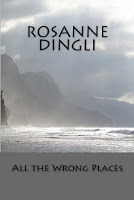 I love my golden egg and am very proud of it. And I am very grateful to UK Authors for being a vehicle for this little event in my writing life, and unwittingly enabling a kind of return to this literary artform. Perhaps it's not such a vain and silly thing I did recently then, to resurrect my collection of successful poems and publish it once more. All the Wrong Places is available again, and can be seen here.


April 24, 2011
Authors and the visual arts
 Pic courtesy Timothy's sketchpadWriting classes often advise emerging authors to give a lot of attention to all the senses. 'Include smells,' they say. 'Include textures and sounds. Mention the taste of things.' These tutors are right. Humans have five senses, and use them constantly, whether they are aware of the fact or not. Writing needs to suggest real life.
Beginning writers need to take care with this aspect of writing, however: bombarding the reader with every single sensory notion in every scene, or giving too much information about a character's experience of one, can have an off-putting effect. Are you sure your reader wants to know what every scene smells or sounds like? It can be over-kill to compare noises and aromas continually. It is much more effective to mention these things occasionally, and with a lot of thought and planning.
Humans are, after all, very visual - and what they do while they read is build a mental 'picture' of what the author suggests. It is rarely a mental noise, or a mental smell! And this is where the literary arts have a similarity to visual arts such as photography or painting. Such artists suggest mental imagery that prompts the reader's own store of memories and experiences. Words are as powerful as pictures in suggesting emotions such as fear, joy and exhilaration, and a few words are enough, just as a few strokes of charcoal in a sketch or a vague black and white photograph are sometimes enough to provoke a whole flood of memories.
 A bleak landscape, a family group ... they are images we all have in our heads, but they are not all necessarily identical. Reading a book, we tend to like suggestions much more than literal and minute descriptions, so that we can fill in the picture with our own imagination. A reader's own thoughts play a very important part in the activity of taking in a novel, just as they do when they see a sketchy rendition of something that looks vaguely familiar.
The role of the author must be understood in this relationship between one who creates a story and the receptor of that narrative. It is a kind of dance, where one leads, but occasionally stands back to allow the other a very personal space in which to conjure pictures of their own.

Is this why reading is so satisfying? Readers often say they prefer the book to the movie that follows. Is it because the movie is not their own visualization, but that of the director?
Let me know what you think - how you like sensory aspects in what you read. If you are a writer, tell me how much prompting you feel your readers need to conjure a scene you create for them in their minds. Tell me whether you feel there is some sense in calling writing a visual art.


April 18, 2011
eBook Giveaway

Easter is a break that's entirely suited to sitting back with a new eBook. A holiday without some relaxed reading is no holiday at all, is it?
According to Luke fits the bill. It's an exciting thriller that's romantic and intriguing, offering entertainment and fruit for thought. Reviews and blurb can be seen at Amazon.com or by clicking on to the author's website.
Download this eBook between April 17 and May 3 for the chance to win one of 5 free eBooks. The conditions and How to Enter all appear on Rosanne Dingli's Author Website. Front page - you can't miss them.

 The eBook short story collections on offer for free are: Vision or Delusion, A Great Intimacy,
  Short stories are once more gaining popularity because of their quick consumption - today's hurried lifestyle sometimes only allows snatches of minutes: small windows of opportunity for reading. A short story neatly fills a small pocket of time with a pleasant escape. Visit Europe, experience new or forgotten tastes and sensations. Sample a new writer, a new style of writing or a new genre with a short story.
Don't forget to put in your entry soon - it's as easy as a quick download and a rapid email. And don't forget to leave a quick comment about what you think of all these colourful covers.
Publish Post


April 12, 2011
The best kind of promotion
 Image via CrunchBaseAuthors rack their brains - often, and hard! - to find ways to promote their books off- and online. There are the most obvious ways to promote, for sure: social media works well for most. Facebook, Twitter and LinkedIn are among my favourites.
There is growing interest in statistics as to whether this kind of promotion translates to sales, and I have found that there is a difference, although not a huge one, that I can ascribe directly to my Facebook presence and activity. And therein lies the crunch - consistent activity is necessary to keep your name and presence afloat in these places. You, and your books, are easily forgotten when your name slips too far down below the fold.
 Because we are so taken with online activity that can be done at any time of day, in any state of dress or state of mind, it is easy to discard the offline activities that can boost sales. There is nothing that secures a sale faster than a personal encounter. Talking to people about your books can elicit responses that range from utter surprise to enthusiastic demands for information. I speak to everyone about my newest book, According to Luke. From the person at the supermarket check-out (often university students bored rigid by the repetitive and monotonous process) to the crossing attendant outside a school, waiting for the final siren!
Sitting targets are one thing - they make avid listeners and do look you up, I've checked. There are also targets for book information who are in the business of looking up books, namely librarians and bookstore owners. Take one or two of these into a regular round-up, and there might be a few sales there too. Offering to talk at a library often has an events coordinator light up with joy... another spot on the calender she does not have to phone around for.
 Schools and colleges hanker for speakers to flesh out their curricular activities. A real live author speaking to a language or literature class does marvels for the students, and captures yet another stream of people aware of your name and the titles of your books.
I have spoken to many people about According to Luke, and it's starting to show in sales. I am rather interested in hearing the comments of other book lovers. If you are an author, do tell me about your latest effort in face-to-face promotion. Who have you spoken to about your book? If you are a reader, let me know whether you have ever met any real live authors, and what the experience was like.


March 31, 2011
Different strokes for different folks
 I found out a long time ago that what I like best in fiction is a clever reference or two to things I'm interested in, such as history, literature, art, and music. Books that tick the knowledge box are my thing. I also relate well to solitude, discovery, cynicism and defiance. Knowing what kind of reader you are and what you enjoy makes seeking good reading material easier. A defiant character in a novel full of literature and music references will have me enthralled.
As a writer, understanding what your readers seek is somewhat harder. A 'readership' is made up of a number of different personalities, so how is a writer to know who likes what, and in which combination? If you write within a particular genre, you might have a pretty good handle on the type of aspects readers expect to find. So it is useful to have a mental - or sticky-noted - list of aspects to tick off as you go.
 One side of the list should enumerate tangible, physical, and active notions. These could be a sport, a hobby or interest such as collecting jewellery, an extraordinary ability or disability such as dyslexia, a chase, a booby-trap, a kidnapping, and so forth.
The other side should dwell on the abstract notions. Love, of course, disgust, hatred, envy, compatibility, shyness, ignorance, jealousy, laziness, joy ... the list is inexhaustible.
The fun is linking them up, having a very physical chase through a forest, for example, coupled with the discovery of jealousy. Or the ploughing of a field coupled with thoughts of hatred and repulsion. Or the feeling of exhilaration and bliss when washing dishes in a newly-opened restaurant.
Putting together physical and abstract notions will place the reader in an observer's position, but able to relate to the picture you create, because that, after all, is how life seems to us. A task is generally accompanied by a sentiment, especially if it is a boring one, or a moving one, or one that angers us to tears of frustration.
How do you like your mixes of feelings and action in fiction? If you are an observant reader, you will be able to recount the last one that made you sit up and take notice. If you are a writer, what unusual combination of active and mental notions have you come up with lately?


March 29, 2011
Global launch - According to Luke
Well, it was worth the wait and all the hard work. Of course it was - there's nothing like the feeling an author gets when a new book hits the stores. According to Luke is well and truly launched, today March 29, 2011.
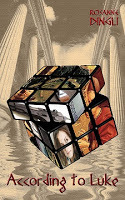 Simultaneously in eBook and paperback, BeWrite Books has set it off, with a blog entry and a front-end feature on their store front. Wow - it looks great, and people are telling me they'd love to read it. Well over 60 people queued up for the giveaway at Goodreads in the first hour. That makes me very happy.
No - you have not missed it. Entries are accepted for about a month, and a winner is drawn at random by the Goodreads Giveaways machine.
eBook sales have taken off and my publishers tell me digital sales at BeWrite have never been so good. The eclipse is happening this year, and According to Luke will be one of the books that prove people are preferring to read on the go.
No matter whether people choose to read this new thriller on an eReader or a paperback, the content is identical - and takes the reader on an thrilling chase. Join the star-crossed lovers as they try to solve a personal dilemma and a very threatening mysterious one. And when you do read it, I would certainly like to know your opinions.
 Simultaneously in eBook and paperback, BeWrite Books has set it off, with a blog entry and a front-end feature on their store front. Wow - it looks great, and people are telling me they'd love to read it. Well over 60 people queued up for the giveaway at Goodreads in the first hour. That makes me very happy.
No - you have not missed it. Entries are accepted for about a month, and a winner is drawn at random by the Goodreads Giveaways machine.
eBook sales have taken off and my publishers tell me digital sales at BeWrite have never been so good. The eclipse is happening this year, and According to Luke will be one of the books that prove people are preferring to read on the go.
No matter whether people choose to read this new thriller on an eReader or a paperback, the content is identical - and takes the reader on an thrilling chase. Join the star-crossed lovers as they try to solve a personal dilemma and a very threatening mysterious one. And when you do read it, I would certainly like to know your opinions.
March 27, 2011
Paperback or eBook?
 Image via WikipediaWhat should a writer publish a book in first - paperback or eBook? This is a dilemma faced by writers who feel confident enough about their own writing to attempt a self-publishing venture with a book or two. There cannot be many established writers, too, who are not tempted to get their out-of-print volumes out there and for sale.
For some writers, the latter venture could be their only self-publishing endeavour. Finding a publisher is not an easy thing to accomplish, and once one is found, giving that publisher the right of first refusal on all subsequent manuscripts might feel like a good idea in this climate. It certainly makes sense. Self-publishing then is reserved for those volumes an author would like to keep in print beyond their contract dates. When rights revert, the time is right.
For emerging writers, finding that first publisher is a difficult thing. Yes, we all hear amazing stories of first-time authors landing seven-figure contracts, but the reason we hear the news is because it does not often happen. Generally, there are months if not years of receiving rejection after rejection, that often have less to do with the quality of the work than its potential to make money in a particular season, climate or market environment. Self-publishing is an option, but when I say 'self', I mean self. It makes little financial or practical sense to pay a company to 'help' you do what you can do yourself with some research and a lot of commonsense. Getting stuck is something one can get oneself out of rather easily with a search for more information.
It is very possible to self publish for next to nothing. It is certainly the case for eBooks. Paperbacks will incur the writer some costs along the way, but nothing major.
So the choice: what comes first, the eBook or its hardcopy version?
The answer is simple: start on the version you think most of your readers are likely to choose first. Is yours a YA urban fantasy? Then the chances are your market is digital-savvy and already equipped with eReaders or some sort of device on which your book with fit. Have you written a cosy mystery with a forty- or fifty-something protagonist, which will appeal to ageing baby-boomers? Then perhaps a paperback should come first. Mind you, I know some pretty digital-happy fifty-somethings, so you might have to come out with your eBook in pretty quick succession.
Think market. Think speed. If you use Kindle, your eBook can be out as soon as tomorrow, and selling happily, as mine do. If you use CreateSpace, it takes a week or so (depending on where your proof needs posting to) and you are ready to go.
Time is of the essence, especially in these days of rapid everything. Doing things yourself and making timely choices might mean your book is bought and read sooner, rather than later. Don't hold back - let me know your opinion now by filling in a comment box. I love to hear what readers and writers feel.


March 20, 2011
Food and fiction
 Image via WikipediaReality TV has given us an escape route from drudgery: cooking programs that seem to restore our faith in our ability to conjure up amazing meals. It is really all "if only" TV. It's wishful thinking TV, in the same way that lifestyle and home decor programs and magazines are wishful thinking productions.
Fiction has some of the same elements that make us, as readers, conjure up in our minds situations that seem a bit more palatable or enjoyable than ours. We read romance, adventure, drama, and nostalgia and sigh ... "If only!" It's like looking at a fabulous dessert on the cover of a cooking magazine, wondering whether you could ever summon the patience, ingredients and persistence necessary to create it yourself.
What then, if fiction and food were combined for such an experience? Perhaps it would have the same effect. Stories that have food in them have been known to send readers to the kitchen - or to a restaurant! There is that same element of satisfaction, though, that one gets from a good story that one can derive from a really good dish. Both together the sensations are twice as powerful.
 Try it: either read a story that has food as one of its elements or topics, or get yourself to the kitchen, wield a wooden spoon, and create a delicious dish. Or you can write a story that contains food. There are various ways food can be used as a prop in fiction.
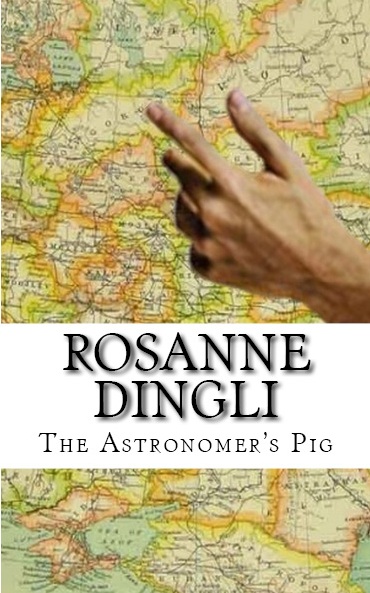
I have just resurrected seven food stories and packaged them as The Astronomer's Pig, a neat little volume that won't cost the earth. It will soon come up on Amazon. Don't forget to have a look.
And don't forget to tell me how you relate food with fiction in your mind, and whether you like the combination.


March 17, 2011
Why are religious thrillers so popular?
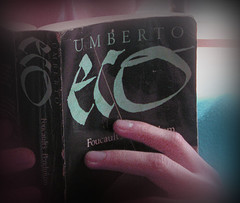 Image by Ross_Angus via FlickrIt all started, or so we think, with Dan Brown. He wrote a religious thriller that kept the reading world in thrall for more than just a couple of months. Whether he started something or not is a moot point. Before The Da Vinci Code, there were
 These books are appealing to a certain kind of audience, and some of them are controversial enough to stay in the bestseller list for such a long time, that the whole world gets curious. What is it about religious thrillers that makes them so engaging?
First of all, they explore one of the fundamental human urges: the impulse to worship. They also tackle the dichotomy between knowledge and belief. And they add to the perpetual question humans have been asking about existence since the time they started to figure stuff out. Is there a higher power or force? Is it likely an almighty, all-seeing all-knowing God exists? And if there is a God, is it likely to be the intervening kind?
Together with those questions are linked others to do with worship, religion and faith. Stacked upon which, of course, come the history of the various religions, their intersections and debacles, and their testimonies in the way of sacred writings. The wars, crusades, iconoclasts, inquisitions, schisms and other historical events add to the perplexing puzzles that make anything religious extremely interesting, very intriguing, highly debatable and not only a little controversial.
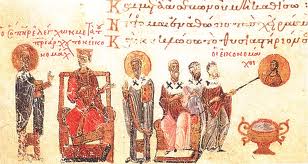 So it is no wonder that writers have taken on - at various times during the history of literature and the telling of stories in writing - some of these religious aspects and used them as background to novels. It is no wonder because humans always marvel, debate and think about these aspects - they will never go away. They continue to perplex and excite people, so writing a thriller with such ingredients is bound to attract readers who have wondered and debated.
To those who are knowledgeable about religious topics, and also to those who know less about religious aspects but love a good thrilling read, this kind of book is a fascinating way to combine entertainment with polemic. It is an engaging way to investigate and explore the deeper questions in a lighter way.
I would love to hear what you think about the popularity of religious thrillers. Leave your opinion now.


March 14, 2011
Collaboration between writers and how it works
 Writing can be a solitary and seemingly thankless task. Feedback is very hard to get, and few will understand the frustrations that face a novice or emerging writer.
Finding someone who understands the processes, attitudes and situations a writer can face on a daily basis is not that hard. Empathy and advice are only a few clicks away. Networks such as LinkedIn and Writers' Digest, not to mention AuthorAdvance and Authors Den, put writers in touch with each other. One can exchange ideas and get support for problems without leaving desk, keyboard and mouse.
When a group of like-minded writers get together, however, based perhaps on a similar genre, regional identity, or simply a liking for each other's style and ethics, the group is more likely to become collaborative in a way that helps with more than personal glitches or style queries.
Collaboration between writers can bring about an exchange of audiences. Readers can discover writers affiliated with each other much more easily, through shared websites, link exchanges, and online networking. Take ANZauthors, a group I belong to. This group of serious working writers operates in the same wide region, but all in widely differing genres and styles. Still, we collaborate in more ways than one. Advice and support is always there when we correspond through our Yahoo group. And we are always visible to the world together on our own website.
 Readers coming to the site discover new writers and new kinds of writing to explore. My fans, family and friends find books they would not otherwise have stumbled upon on the enormous Internet. And my own books are discovered by the followers of my colleagues in the group.
It works. Support and advice ... and the exchange or audiences: these are invaluable assets to a writer whose occupation is no longer the lonely struggle it used to be, thanks to online connections.
I would be very happy to hear how you make connections with other writers, and how you find it valuable. If you are a reader: do you find you can stumble upon great reads if you follow writers you know, and their connections?


