
Rosanne Dingli's Blog, page 2
August 15, 2013
How posterity might see us
We often wonder, as writers, how our readers see us. We wonder what they might think of our way with words, our ability to tell a rollicking story. How do readers think we come up with the fabricated murders, deaths, disasters, trials and tribulations through which we put our poor protagonists? When we write of neglected gardens, dusty rooms, burnt dinners and lost keys, do they think we base our fiction on the truths in our own lives? When we write about drunken uncles, forgetful mothers, cruel sublings, and sorrowful aunts, do they think we base our characters on real relatives?
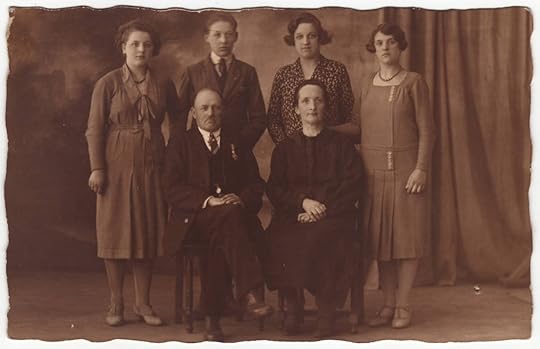
Authors have always felt under scrutiny by their public. They leave memoirs that show a depth of concern, a deep lack of confidence in their own ability to make up a story and have it believed for what it is - pure fiction.
It's not only authors who feel they might be viewed in a bad light because of what they do. Actors who take on the parts of antagonists, of characters who commit awful deeds, of frivolous socialites, of greedy businessmen, of pirates who slice off hostages' heads without a blink, often wonder whether audiences think they are capable of such dastardly deeds.
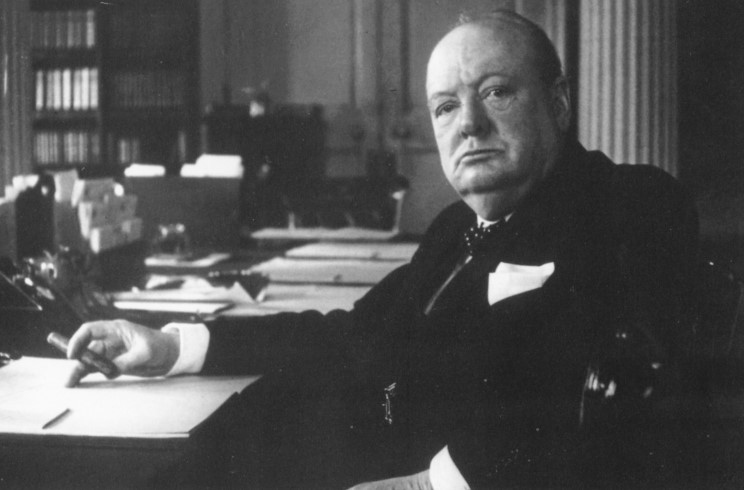 Anyone who puts pen to paper, though, knows of the power of the written word to persuade. Winston Churchill knew the feeling. He did have an eye on the future, and on generations in posterity that might question his motives, his judgement, and his ability to strategize and act out perfect diplomacy with a big international D. It was the kind of questioning he knew would happen, so he found a way around it.
'History will be kind to me for I intend to write it.' He wrote. Ah - that's one way of doing it. When the diplomat, the strategist and the quintesssential politician write the history books themselves, the written word cannot fail them. History is kind to those who take their own deeds into their own pen as ink.
This is what comes to mind when I think of my own as yet unwritten memoirs or autobiography. It is the vainest undertaking in the world, one might think. But it is a powerful thing to leave nothing to chance and make sure history is kind to the author, because the author has made sure the history is written in a certain way.
What do you think?


August 13, 2013
What to expect from one of my novels
 Purchase hereWhen it comes to fiction, I try to give my readers what they have come to expect: an adventure of the mind, coupled with action and intrigue. Art is to be found, references to history, and some other artistic or intellectual undertaking that embroiders an intricate story.
The story is the thing, of course - it takes up threads of the human condition readers recognise: those they have experienced, those they would like to, and those they hope will never happen to them. The story unfolds in my novels to reveal obstacles and incidents that require solutions.
And it's solutions that people always seek - we all need at least one solution a day for something that intrigues, baffles, annoys, defeats or requires us to pit our resources against 'the world'. An easy solution for everything would be just the thing!
Solutions that are too easy, however, don't satisfy in fiction. The author needs to send characters over hurdles, against proverbial brick walls, toward the near-impossible. Satisfaction comes from one or two intrepid characters facing their fate with grit, determination, and not a little presence of mind. Satisfaction comes from seeing all ends tied in a way that a reader finds resourceful, unusual ... but always applicable to how they see life. It's got to be feasible. It must feel right.
 In The Hidden Auditorium, my latest offering, it was hard to come up with a predicament that required all this, but a good brainstorming session, a lot of reading and research - not to mention quite a lot of rewriting and planning - did the job. My protagonist has a first-world modern dilemma in an ancient city: Rome. He is fed up with a superficial life and seems to need something deeper: a quandary many find themselves in, somewhere in mid-life. He doesn't know what's wrong, exactly - but the reader senses it almost immediately: he misses a meaningful relationship, and hopefully might find one before the end.
Reading a story that contains a number of apparently insuperable problems is excellent entertainment. It's distraction from real life, where solutions do not present themselves so easily, even if our problems are not as drastic as being held at knife-point, or being trussed up with cable-ties at the back of a car. And that's what readers seek: something drastic and sticky enough to distract them from ordinary mundane matters, such as the latest power bill or a burnt pizza.
If you are a reader who likes intrigue, tell me what you like to find in fiction.
July 31, 2013
It's out
 The Hidden Auditorium was a hard novel to write. The research alone took months. The writing of it went through several phases, because of the choices and options that kept presenting themselves.
Now that the novel has passed all stages of production, which - as an indie author - I have had to plan, execute, and manage myself, I am exhausted. There is hardly energy left to promote its release.
I had magnificent, generous help in the creation of this new novel, my fourth. My partner in life and first reader was as ever insightful and brilliant, hacking out of my first poor efforts for story and plot a very interesting angle which evolved into a cogent and clever whole. Using that plan, I worked hard and tried a few new methods of creation. Some worked, others were discarded for old habits.
My handful of beta-readers were sharp, observant, and revealed how well they know my writing. Without them, The Hidden Auditorium would not be as nicely-detailed or free from the small flaws any author fails to see in their own work.
Gratitude and appreciation go to my editor Shane McCauley, who spent hours reading, thinking, and marking the manuscript. His wide cultural knowledge, love of music, and especially his grasp of the underlying premise of the novel, were invaluable. Nothing beats first-hand knowledge of locations, subject matter, and fundamental culture, so I feel my selection of editor succeeded on all these aspects. Then there is the matter of language usage ... no author can claim to know it all, which is where a good editor is needed. The Hidden Auditorium reads so well only because Shane had a hand in it.
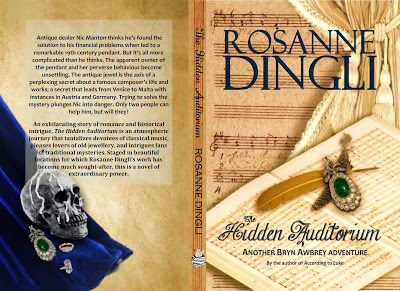
So it's out, available ... there. What remains to be seen is how readers take it on. The first few reviews will tell.
If you are an author, please share the feelings that arise when you first release a new novel.
If you're a reader, have you ever paid mind to what might go through an author's mind when they publish a new book?
June 27, 2013
Pants on fire
I responded to a post on FaceBook. What's the novelty in that, you might ask. True - we respond to stuff we see all the time.
This time, it was a statement by my good friend and collegue Duncan Long - illustrator and author par excellence. This is what he wrote:
Every successful novelist must first be a good liar.
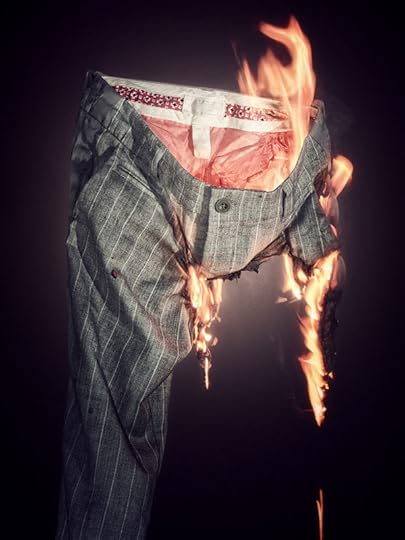 Pic courtesy bgillettephoto.comThis of course set me thinking and writing. But let's face it, how long and hard does one think when one taps off a response on Facebook? Not terribly long at all. This was my response:
 It's not lies we tell, strictly speaking, although tradition has it that it's what we do. We invent, create, and build a whole world on top of a fabrication. How thin, or how implausible, that fabrication is largely instils in the reader the necessity to suspend disbelief. If, however, the fabrication is so strong and feasible that debate is taken up among readers, or real-world belief becomes attached to the tale, it constructs around that author the ability to "pull the wool over readers' eyes" and when the obvious revelation is made that it's fiction (duh!) the easy decision is made to dub the author a liar. This happens with authors who use gaps, loopholes, and mysteries in history to devise a rollicking story ... it's my genre, so I think I know of which I speak. As long as the reader sits back and breathes in awe, "Wow - what a lie. What a great liar!" I do not mind being called that one bit.
Then I stopped to think again. How many authors truly sit and think of the "lies" around which they build their fiction? How many - like me - latch onto some gap in history, and use the spak-filla of words to create a tale for readers' edification and entertainment?
If you are an author, tell me whether how you build stories feels like lying.
If you are a reader, tell me whether you regard authors as being great liars.
And then look at my novels, especially, to see how I love to find a bit of a blank in history or literature, or art, or music, and insert into it a story worth telling. And worth reading. Many have done it before me, and perhaps better. AS Byatt, Hugh Ashton, Meredith Whitford, Anna Jacobs, Mel Starr, Brian Kavanagh, and other authors do this regularly. And how can we not love what they do?
June 19, 2013
The Writers' Mayo
What has mayonnaise got to do with the price of fish? They go well together, mayo and fish, I hear you exclaim.
Yes, well - apart from that, there are huge health benefits to be had from what I call the writers' mayo. And author Dan Mader at Unemployed Imagination, reminded me of my remarkable discovery this morning.
He spoke about writers' eyes, and how they suffer from day after night after day of looking at a screen. We peer at words, words, words - editing and composing. Some even do their own typesetting and formatting. That scrolling is cruel to the eyes. You're nodding. You're with me. You're peering at my words wanting to be able to read on for longer each day. You want that headache over one eyebrow to melt away.
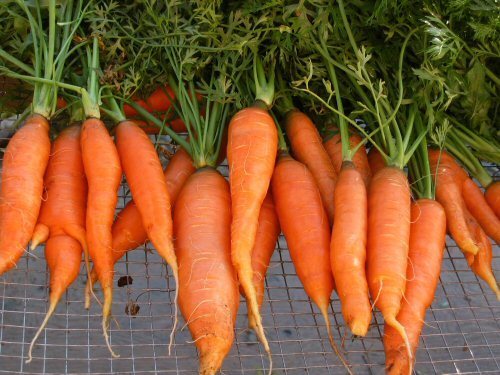 Eat more carrots!Well - eat more carrots. Raw carrots. Lots. Every day. Grate a mound of carrot into a bowl. Add some finely shredded cabbage of all colours. Yeah, go ahead - grate a zucchini too. Finely dice a red capsicum if you want. Brightly coloured vegetables, in their raw state, is what you are after.
Now what?
Now drench the lot with a huge amount of mayo and combine. But not just any mayo, dear writer. You must make it yourself. "But I want to get back to writing!" you shout in dismay. Wait - remember the eyes? This is for your eyes. You will write longer.
You must make your own mayo because it's the only way you can guarantee it contains no sugar, of any sort. Of any kind. Of any variety. No fructose, no glucose, no lactose, no corn syrup, no granulated anything that ends in OSE. Yeah - no sugarOSE, either! No honey.
 Here's my famous Writers' Mayo recipe you are going to thank me for, on bended knees.
In a clean and sparkling 800 gm glass jar (that's 25 - 30 oz), that has a nicely-fitting lid, put a teaspoon of made mustard, a raw egg, half a teaspoon of salt, a good splash of white vinegar, a couple of teaspoons of real lemon juice, and a spoon of ground garlic (optional).
With me so far?
Good. Now grab your magic wand. (Some people call it a stick mixer, others call it a wand blender. Whatever you call it, it looks like mine on the left here. Its head fits through the mouth of the jar, see?
Whizz the stuff in the jar until it's light yellow and frothy - under a minute. Now start to add the oil. Any kind of oil is okay ... canola, soybean, vegetable, sunflower. (Corn oil and olive oil give you a heavier texture and stronger taste.)
Keep whizzing - did I say you could stop whizzing?! Whizz.

Add oil and whizz until the mixture starts to thicken - about a minute. The more oil you add, the thicker your mayo. Stop whizzing when you have the thickness you want. It'll never be more than the jar will hold if you use the right amount of vinegar and lemon juice. (If you want really white mayo, add a spoon of very hot water for the last few whizzes.)
Shake your blender so it all falls in the jar. Rinse under tap. Wash it later. You want to taste that mayo. Mmmm.
Put the lid on, and refrigerate until you have grated your vegetables.
You will notice an improvement in eyesight and health in about a fortnight.
To gain the most benefit, NEVER eat this with bread or anything made out of grains. I know you'll be tempted but that'll make you gain weight. This is Writers' Mayo - for coleslaw, okay? Oh, well ... okay then. You can put it on steamed vegetables. On salad. But do not put it on anything that contains processed grains or starches. No... not even potato salad. Uh-uh.
Let me know how you go.
What? None left to store in the fridge? Thought so. Start again.

May 28, 2013
When is a review not a review?
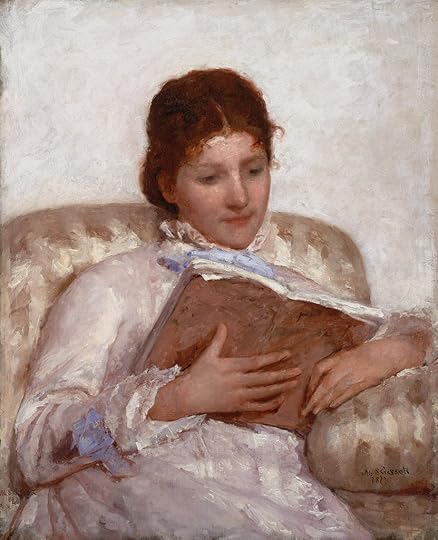 Mary Cassatt -
The Reader
Mary Cassatt -
The Reader
In these days of rapid publishing, quick downloads, fast reading, and trigger-happy reviews, one must wonder about the meaningfulness of it all. The very definition of the word review is becoming skewed and market-shaped. Never has the consumer had more power to influence than now.
What? The reader ... a consumer? That comment alone would have been viewed as sacrilege eight or eighteen years ago.
Reviews are not merely opinions, they are REACTIVE opinions: the opinions one forms as consumers of anything these days are dubbed 'reviews'. Restaurant meals, small appliances, wine, television programs, digital games, mobile phones, breakfast cereals ... their makers and retailers create places where consumers can leave their opinions. And REVIEWS is the best word they could use.
When we have a reaction, as ordinary readers, we feel we need to warn off the rest of the world, or give it the come hither beckon. This kind of REACTIVE review is what one generally finds on Amazon and other online retailers' sites. And readers and authors heed these knee-jerk (or keyboard finger-jerk) reactions with the same attention and weight as they might have - a decade ago - given to a critical review.
The CRITICAL review is different. The word does not mean that it criticizes... it means that the review comes from a career CRITIC, one qualified by experience, education, occupation - or all three - to draw an objective perspective on a literary work. Objective is the operative word here, which still does not remove a CRITICAL review completely from the realm of the subjective (formed from an opinion).
There used to be a time when authors, critics, and publishers had more or less equal understanding of these terms. All that is gone - we have authors who are learning as they go, readers who think they qualify as critics, and the publisher is of course a bit of a dinosaur. What kind of a USEFUL dinosaur this is will be shown in the next five years.
Publishing houses now value (at least ostensibly) readers' reactive reviews very highly - as highly as those that might be written by a 'real' literary critic, whose job, these days, is largely supernumerary, redundant, pushed to the corners of the reading earth. Online reactive reviews are counted, observed, announced, and publicized like never before. Never has so much fuss been lavished on so little of value. The spotlight focussed on deleted reviews from 'competing' author peers on Amazon last year was intense.
Never has so much fuss been lavished on so little of value.
So how much weight, attention and value should an author place on random reviews? Because of their perceived importance, it is definitely worthwhile to have a few. It is also important to have a number of less-than-glowing reviews, if only to indicate the collection is formed by bona fide readers, and not the fawning family and friends of the author. It is important to have at least a couple of 5-star reviews to indicate that the work in question is worth some consideration.
The necessaity lies, however, in understanding the meaningfulness and the evolving role of the so-called review when it comes to books. Rather than taking them personally - even if chock-full of praise - the author needs to see they are (or ought to be) directed at the work, rather than its creator. The necessity lies in seeing reviews as what they are: reactive opinions, unless they come from a bona fide literary critic with a wealth of background reading against which to place the new book.
If you have taken on a new understanding of what reviews could mean to you as reader or author, leave a comment.

May 26, 2013
Nearly there - a new novel in the making
Revealing the title, blurb, and cover of my forthcoming novel on Facebook last week was good fun. Sixty readers came along and joined in. We had virtual champagne, canapes, and general chatter. Great fun was had by all.
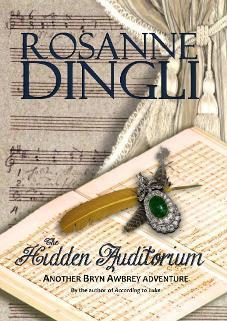 The Hidden Auditorium has raised the curiosity of a satisfying number of readers, many of whom said they can't wait to read it. During the reveal event, I displayed several pictures of locations, costumes and props, as used in the narrative. You can see it all here.
The novel is another 'art history mystery', in a similar style used in my other three novels. It's meant to make readers follow a mysterious thread while forming sympathy for the protagonist. Hopefully, this happens in The Hidden Auditorium as well. My editor and team of beta-readers all agree it is quite captivating, so I'm left wondering whether the reading public will feel the same.
One of my beloved characters from According to Luke, my second novel, makes another appearance in this new novel. I could not resist giving him a part in the unraveling of this new mystery, which is firmly based in the history of music. Classical music is one of my personal loves, so presenting it to my readers seems a no-brainer at this stage. In three novels, I have presented love for special locations, love for visual art, and love for literary pursuits. Music seems now to need a turn.
In this novel, Nic Manton, a small-time Italo-Australian antiques dealer living in Rome, stumbles on a piece of jewellery he thinks might lift him from financial doldrums. The woman who leads him to it acts strange, but reliable experts tell him his find is not only valuable, but holds the key to an old mystery to do with nusic. Trying to solve it means taking on the help of an old Welshman living in Venice, Bryn Awbrey, who first appeared in According to Luke . He soon shows Manton a few relevant clues which they follow. Nothing prepares them for what they find, or the violence they unleash. The story of the pendant and Nic's own life become inseparably entwined as the narrative takes the adventurers from Venice to Malta. There are little peeks at Vienna and Bayreuth woven into the story. The ending is a revelation even to the old Welshman... so readers might like the unexpected twist too.
How long must readers wait for this new novel? Only a few weeks remain until it is launched. Work is now progressing on the cover details, the exact wording of the blurb, the final editing of the text, and the design of the interior.
Leave a comment if you look forward to reading The Hidden Auditorium.

The Hidden Auditorium has raised the curiosity of a satisfying number of readers, many of whom said they can't wait to read it. During the reveal event, I displayed several pictures of locations, costumes and props, as used in the narrative. You can see it all here.The novel is another 'art history mystery', in a similar style used in my other three novels. It's meant to make readers follow a mysterious thread while forming sympathy for the protagonist. Hopefully, this happens in The Hidden Auditorium as well. My editor and team of beta-readers all agree it is quite captivating, so I'm left wondering whether the reading public will feel the same.
One of my beloved characters from According to Luke, my second novel, makes another appearance in this new novel. I could not resist giving him a part in the unraveling of this new mystery, which is firmly based in the history of music. Classical music is one of my personal loves, so presenting it to my readers seems a no-brainer at this stage. In three novels, I have presented love for special locations, love for visual art, and love for literary pursuits. Music seems now to need a turn.
In this novel, Nic Manton, a small-time Italo-Australian antiques dealer living in Rome, stumbles on a piece of jewellery he thinks might lift him from financial doldrums. The woman who leads him to it acts strange, but reliable experts tell him his find is not only valuable, but holds the key to an old mystery to do with nusic. Trying to solve it means taking on the help of an old Welshman living in Venice, Bryn Awbrey, who first appeared in According to Luke . He soon shows Manton a few relevant clues which they follow. Nothing prepares them for what they find, or the violence they unleash. The story of the pendant and Nic's own life become inseparably entwined as the narrative takes the adventurers from Venice to Malta. There are little peeks at Vienna and Bayreuth woven into the story. The ending is a revelation even to the old Welshman... so readers might like the unexpected twist too.
How long must readers wait for this new novel? Only a few weeks remain until it is launched. Work is now progressing on the cover details, the exact wording of the blurb, the final editing of the text, and the design of the interior.
Leave a comment if you look forward to reading The Hidden Auditorium.
April 16, 2013
What do I sell you, when I sell you a book?
 When you buy a book from me, you get much more than just a story.
The story is always there of course - we all know that people love the concept of narrative, so my stories are well thought-out and crafted. A lot can be wrapped up in a story.
What does Rosanne Dingli wrap up inside her stories?
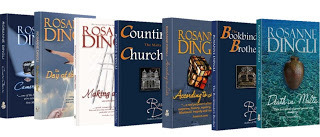 My stories are built on a lifetime of reading, listening to music, painting, collecting, and travel. Each of my experiences, however small or insignificant, eventually finds a place inside a narrative. Inside my novels, short stories, and novellas - even inside my poems - readers find what I have lived. It is not directly put down as a word-for-word memoir, because it's fiction ... it's made up.
But nothing comes from nothing. It's all reconstructed material from my life. All the music I have listen to, all the books I have read, all the pictures I have looked at and painted, all the places I have visited. Plane and train rides, and sea voyages, car drives - they eventually emerge to play a part. Locations are so important in my stories many readers say they seem like characters.
The books I have read since childhood - all have their influence, and it resurfaces to affect the story as it's written. There are also books read specifically for a story - the research I undertake is always intense and takes longer than the writing itself.
What are you really buying?
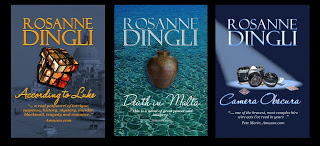 When you buy one of my books, you buy a story that grew out of a past, out of an amazing education that did not stop when I finished school, out of a series of jobs I've held down, people I have met, and food I have eaten. When a character in one of my stories eats something, or goes somewhere, or puts on a garment, or lifts a phone for a conversation, you can bet I have witnessed it before, either in person or through my reading.
You are buying my travels, my reading pleasure, my education, my realizations, my mistakes, my sensations, my pauses, my hopes and wishes, and my work. But it's all wrapped up in heart-felt stories of action, adventure, thrills and spills.
Thank you for sharing the experience.

April 7, 2013
Pre-release interviews
Everything's in place for release of my new novel in July 2013.
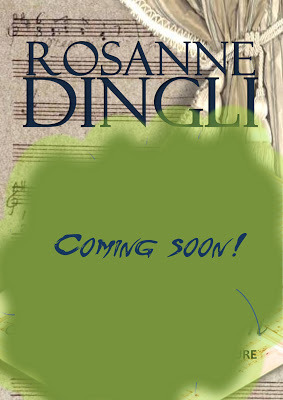 To gather momentum, bloggers and others have started to grant me interviews.
See what Ruth Jacobs asked me here:
RUTH JACOBS interviews Rosanne Dingli at In the Booth with Ruth.
And what Nick Wale's questions were here:
NICK WALE interviews Rosanne Dingli and calls it Plain Truth.
It's always all about the next release or the last release, isn't it?
 To gather momentum, bloggers and others have started to grant me interviews.
See what Ruth Jacobs asked me here:
RUTH JACOBS interviews Rosanne Dingli at In the Booth with Ruth.
And what Nick Wale's questions were here:
NICK WALE interviews Rosanne Dingli and calls it Plain Truth.
It's always all about the next release or the last release, isn't it?
February 24, 2013
Is it a serial or a series?
 The difference in meaning of these two words has often stumped readers, viewers, and even the authors of what they read and watch.
What's a serial?
This is a group of books or TV programs, or games, or movies, which have the same essential story that progresses from one issue to the next.
What's a series?
The definition of series is a group of games, programs, books or movies that have something in common, but whose plot, or characters, or themes are distinct and varied.
Confusing. Examples, please.
Okay - let's take Agatha Christie's Miss Marple novels, or Georges Simenon's Maigret detective books. They constitute SERIES, because although the main character is always the same one, the plot and story in each novel is different. The story does not continue from one to the other, there is no progression in the tale, which does not come to a conclusion with the last in the series. One can pick up any of the novels and read them in any order with the same satisfying experience, because each volume holds one discrete story that concludes in that book.
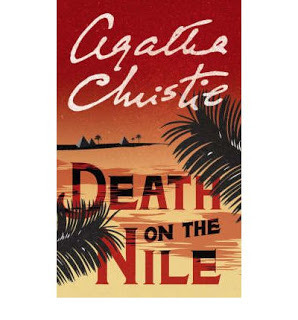 When the story progresses from one 'episode' to another, in soap operas such as Dallas or Dynasty, or in books such as
The Forsythe Saga
by John Galsworthy, there is story development which must be read or viewed in a particular order to be enjoyed and understood. This makes them SERIALS. Each book becomes a sequel to the one before.
When the story progresses from one 'episode' to another, in soap operas such as Dallas or Dynasty, or in books such as
The Forsythe Saga
by John Galsworthy, there is story development which must be read or viewed in a particular order to be enjoyed and understood. This makes them SERIALS. Each book becomes a sequel to the one before.What's my next novel got to do with all this?
Good question! My forthcoming novel, due for release mid-2013, forms part of a SERIES of novels. They have something important in common, but one can read them in any order and derive the same enjoyment. The story does not progress from one novel to the next, but the unifying element is always present.
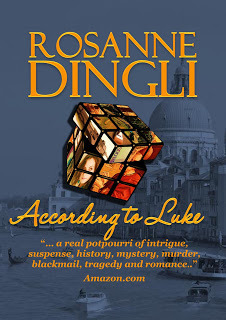 The novel my next one connects with in this special way is According to Luke. Readers still have plenty of time to buy and read it before the next one in this series comes out. The novels will please readers in any order, however. So readers new to my name and styles might pick up the new novel later on this year, find that there is another in the series, pick it up, and enjoy According to Luke just as much, because there is no time or order element.
What kind of reader are you? Do you like a series where the story progresses from one volume to the next? You might like a series, where some element unifies a group of books you can read in any order.
What kind of author are you? Does the enormous task of writing a series or serial attract or repel you? Have you more to say on the subject?


