Diane Lockward's Blog, page 22
March 24, 2014
A New Incarnation for "Orchids"
If you're not familiar with Nic Sebastian's The Poetry Storehouse, you must get familiar. It's a wonderful resource of poems, audios, and videos. Poets are invited to submit poems. If selected, the poems are posted at the site. The poets may then send in an audio for each poem. Nic and her team of readers may also choose to make an audio of a poem. The poem and audio are then made available for a "remix." Someone who has skill in making videos may select one of the poems and transform it into a video. The videos sometimes incorporate video clips from other sources and sometimes are made from still images. A music track is added. The result is a new version of the poem. I've viewed a number of these remixes and they are of incredible beauty.
Nic, who is a wonderful reader of poetry—she has a great voice and really captures the pulse of a poem—made an audio of my poem, "Orchids," from my book, What Feeds Us. I was delighted with that and then some days later completely thrilled with the video she made of the poem. Here's the poem:
Orchids
They are hot and moist in operation, under the
dominion of Venus, and provoke lust exceedingly.
—The British Herbal Guide, 1653
Such flowers must be used with discretion.
Love of them becomes obsession.
A man pursues an orchid as he once
pursued a green-eyed woman. He hunts
in Florida swamps, Thailand, and Brazil,
delirious with lust, blissed on the smell
of dust and mulch, steamy veil of moisture,
breathing pores on leaves, tessellated lure
of waxy sepals, pouched lips, and tubers,
stamen and pistil twisted together,
inflorescence of Phalaenopsis,
Vanda Sanderiana, Cryptanthus.
Dream-haunted nights—ghost, slipper, and spider,
the deep plunge to the nectar inside her.
Now take a look at what Nic did with the poem:
As if that weren't enough bountiful gift for me, another filmmaker, Paul Broderick, also chose the same poem and audio for a new video and produced a very different version, also fantastic. I'm glad I don't have to choose only one. I love them both.
Check out Paul's version:
If I were still teaching, I think it would be fun to do a lesson with the poem and videos. Ask students to read and respond to the poem. Show the two videos and ask students to compare and contrast. Then perhaps ask them to find a poem they like and make a video.
All of the videos produced by The Poetry Storehouse are available at their Vimeo page.
Nic, who is a wonderful reader of poetry—she has a great voice and really captures the pulse of a poem—made an audio of my poem, "Orchids," from my book, What Feeds Us. I was delighted with that and then some days later completely thrilled with the video she made of the poem. Here's the poem:
Orchids
They are hot and moist in operation, under the
dominion of Venus, and provoke lust exceedingly.
—The British Herbal Guide, 1653
Such flowers must be used with discretion.
Love of them becomes obsession.
A man pursues an orchid as he once
pursued a green-eyed woman. He hunts
in Florida swamps, Thailand, and Brazil,
delirious with lust, blissed on the smell
of dust and mulch, steamy veil of moisture,
breathing pores on leaves, tessellated lure
of waxy sepals, pouched lips, and tubers,
stamen and pistil twisted together,
inflorescence of Phalaenopsis,
Vanda Sanderiana, Cryptanthus.
Dream-haunted nights—ghost, slipper, and spider,
the deep plunge to the nectar inside her.
Now take a look at what Nic did with the poem:
As if that weren't enough bountiful gift for me, another filmmaker, Paul Broderick, also chose the same poem and audio for a new video and produced a very different version, also fantastic. I'm glad I don't have to choose only one. I love them both.
Check out Paul's version:
If I were still teaching, I think it would be fun to do a lesson with the poem and videos. Ask students to read and respond to the poem. Show the two videos and ask students to compare and contrast. Then perhaps ask them to find a poem they like and make a video.
All of the videos produced by The Poetry Storehouse are available at their Vimeo page.


March 19, 2014

March 12, 2014
Obsession: Sestinas in the Twenty-First Century
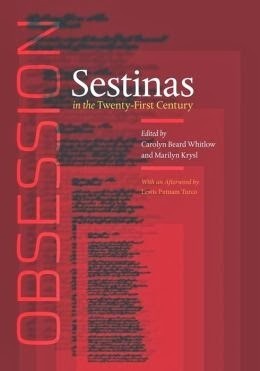 Click Cover for AmazonI’ve written two sestinas in my entire life. After the first one, I thought that that would probably suffice for a lifetime. But some years later I found myself once again tackling a form I found difficult, elusive, and enticing—and more than slightly obsessive. I’d just read yet one more true crime book and wondered, as I often had, just why I found that genre so compelling. Just how depraved was my mind? Then I had a lightbulb moment: Because it always happens in someone else’s house. And thus began my second sestina, “Why I Read True Crime Books.”
I began with that first line and moved on to the next, then the next. I moved to the second stanza, putting the ending words down the right margin in the prescribed pattern. I labored hard. I stopped after a few stanzas. I put away the draft. I kept it nearby and often thought of it. Every few weeks or months I returned to it. Two years later that sestina was done. I’m not sure I have another one in me.
But I have dozens of them now before me, in the just-released anthology, Obsession: Sestinas in the Twenty-First Century, edited by Carolyn Beard Whitlow and Marilyn Krysl and published by UPNE. This is a beautifully designed book, with an elegant and eye-catching cover. I very much appreciate that the book is slightly over-sized so that each sestina fits on one page. The book includes 103 poems by 103 poets. I am happy to have my sestina included among poems by such poets as Maxine Kumin, Marilyn Nelson, Sherman Alexie, Alicia Ostriker, Kelly Cherry, Denise Duhamel, Patricia Smith, Dana Gioia, Donald Hall, and Evie Shockley. Space does not allow me to include all the names here, but trust me when I say that the list of poets is impressive.
The book is organized into eight sections: 1) Americana, 2) Art, 3) Love and Sex, 4) Memory, Contemplation, Retrospection, and Death, 5) The Natural World, 6) Sestinas about Sestinas: Metasestinas, 7) Sestinas with Irregular Teleutons, and 8) Unconventional Sestinas. The book begins with an excellent Introduction by Marilyn Krysl, includes a brief introduction before each section, and ends with an Afterword by Lewis Turco. Teachers and students of the sestina will be grateful to find an Index of First Lines, an Index of (Loosely) Metrical and Syllabic Sestinas, and an Index of Teleutons (each poem’s six repeating ending words).
Although all of the poems are in the same form, you’ll find plenty of variety here. The poems cover a wide range of topics. Some take liberties with the form and offer surprises. Some use short lines, some use long lines, some alternate line lengths, some use indented lines. Some of the poems include rhyme and some are metrical or syllabic. Some are serious while others are playful. I'm enjoying this anthology so much that I'm beginning to think maybe I will try yet another sestina after all.Here’s one of my favorites from the book. It’s by Kathryn Stripling Byer, former Poet Laureate of North Carolina.
Sleepless
It’s been years since I’ve kept a garden,
the soil needing too much work. One breath
of spring, and my old dread of late freeze
comes back again. Sometimes it’s moonlight
that keeps me awake. Sometimes night sweats.
Then I feel a clamor like wings
in my throat. The most frightening sound? Wings
in the chimney or trapped in the house. Such a garden
of fears I’ve grown all my life, sweaty
stalks rising out of the muck! When I couldn’t breathe
my mother would turn on the light
and sit rubbing my back. She spooned frozen
milk into my mouth, as if she’d freeze
the dark in my throat where those wings
trembled. The trouble with light?
There’s never enough at the end. I imagine a garden
the dying walk into as they take their last breath
before the gates slam shut. These sweaty
deathbed imaginings! What good does it do me to sweat
if I’ve nothing to show for it? If I could freeze
time, I’d never forget how each next breath’s
a mystery. What keeps it going, this wing-
beat of rise and fall, first thing that out of the garden
gate Adam and Eve saw, the cold light
of their own mortality dawning? God’s light
seemed thrilling at first. They were glad to sweat
under it, tilling the soil of that first garden,
expecting good weather to last, not a hard freeze
in store for eternity. The angels dozed, wings
furled all afternoon. So silent. Scarcely a breath.
Some days the wind makes me catch my breath.
Then I’m amazed by the simplest things—light,
for example, or air, the way it’s made for wings.
I remember my father at night washing sweaty
hands, dirt spinning round in the drain. He could freeze
me with one look, God turning me out of the garden.
That garden has always been breathing its myth
down my throat, its freezing light making my palms
sweat, my arms heavy with wanting to be wings.
March 5, 2014
The Poet on the Poem: Susan Rich
I am pleased to have Susan Rich as the featured poet in The Poet on the Poem.
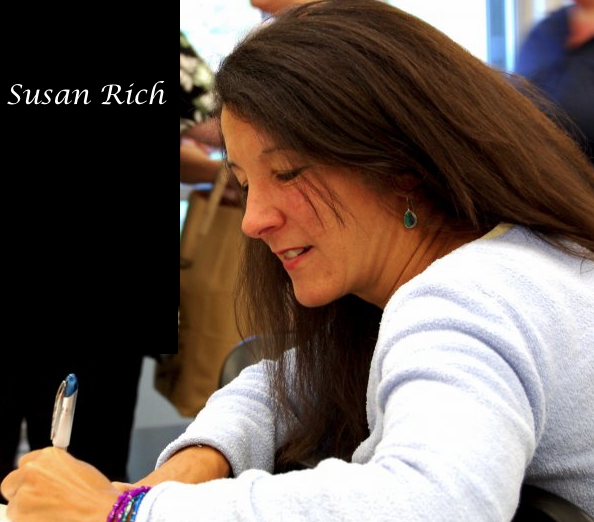 Susan Rich is the author of four collections of poetry, most recently Cloud Pharmacy. Her earlier books are The Alchemist’s Kitchen, named a finalist for the Foreword Prize and the Washington State Book Award, Cures Include Travel, and The Cartographer’s Tongue, winner of the PEN USA Award for Poetry and the Peace Corps Writers Award. Susan has received awards and fellowships from Artist Trust, CityArtists, 4Culture, The Times Literary Supplement of London, Peace Corps Writers and the Fulbright Foundation. Her poems have appeared in the Harvard Review, New England Review, and The Southern Review. She lives in Seattle and teaches at Highline Community College.
Today's poem comes from Susan's new book, Cloud Pharmacy.
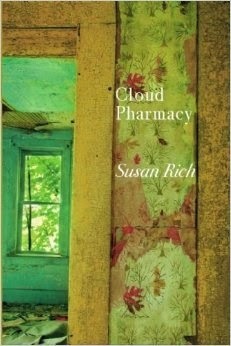 Click Cover for AmazonBlue Grapes
 There are days made entirely of dust
months of counter-winds
and years unbalanced on the windowsill.
The soup poured in the same yellowed cup.
Newspapers appeared like oracles on your doorstep—
glamorous fragments of anonymous love.
You stayed in bed, read novels, drank too much.
God visited, delivered ice cream; returned your delinquent library books.
Is it simpler after you’re dead
to watch the living like characters on an old-fashioned TV set?
The dying are such acrobats—
You see them ringing doorbells with their clipboards
remarking on the globes of lilacs.
They try to lure you out; request a drink of water,
some blue grapes. This does not work.
Then the dying leave you to yourself—
to the girl dressed in black, suffused with commas,
and question marks—
How to write your one blue life?
DL: I’m intrigued by the form of your poem. You alternate 2-line and 1-line stanzas. Then you also alternate lines that are flush to the left margin with lines that are indented several spaces. How did you arrive at this form?
SR: I believe this poem needs the freedom to move across the page; it needs to wander.
My reason for the indentations and alterations is that for me, and perhaps for my readers, the oddness of the subject—God delivering ice cream, for example—is best represented with a physical shape that quietly signals a slightly different type of poem, different let’s say, than straight narrative. Or perhaps my reason for this choice is as simple as this: when I open a journal, my eye is immediately attracted to the poems that frame white space in startling ways.
In my collection, Cloud Pharmacy, I try out different forms for different types of poems. With “Blue Grapes,” which introduces the book, I wanted to explore an interior, surreal, landscape of loss. This unreliable, yet definite pattern emerged. At first, I was afraid that this wasn’t a poem. It arrived in fragments and I was unclear about how the parts would fit together.
I write the first few drafts of a poem in red notebooks with graph paper. My process is often very messy—this form was my way of trying to honor the messiness of thought.
DL: Punctuation seems important in this poem. You violate Richard Hugo’s prohibition against the semi-colon, you pepper the poem with em dashes, in the penultimate stanza you make reference to “commas, / and question marks,” and you include two questions. Tell us your thoughts about the role of punctuation in the poem.
SR: When I was in elementary school in Brookline, Massachusetts, in the late 1960’s, there was little emphasis placed on correct punctuation; instead, the teachers encouraged full expression. Students chose which books we wanted to read for our curriculum and created our own poetry anthologies. Fortunately or unfortunately, this means that since I did not learn the hard and fast rules of punctuation when I was young, I sometimes get into trouble when I am writing. It also means my ideas on punctuation remain fluid.
And yes, I do have a great fondness for the em dash. I’m amazed that it isn’t used more in poetry. Punctuation, like poetry, remains a bit like magic to me. So often poets seem to let go of punctuation in their poems. I prefer to use different punctuation marks for my own strange purposes. I recall Denise Levertov’s strict guidelines for how long to pause after a comma and how long to stop at the end of a line. Many of Levertov's poems were set to music, yet she was never satisfied with the scores; they didn't equate with the music she heard in her head. I offer this by way of explanation. I want to use punctuation to score the poems, to make them equate with the music inside my head.
DL: There’s a surreal element in the poem. You give us “years unbalanced on the windowsill,” newspapers that appeared “like oracles on your doorstep,” and a God who “visited, delivered ice cream; returned your delinquent library books.” How do you achieve these dream-like moments? How hard is it to trust them, to allow them into the poem?
SR: Wow, I love this question, but I want to first turn it around. The dreamlike moments are the core of the poem; they are the force of the vision I’m trying to express. I think of Elizabeth Bishop saying that what she wants while reading a poem is “to see the mind in motion.” My mind goes to the odd and the unlikely. I’ve always been interested in the juxtaposition of the quiet of morning coffee with the news of the world. As a child the unfolding of the newspaper from itself taught me that the world was out there waiting for me to try to understand it.
Now to answer your question more directly: these “dream-like” moments come easily to me; they are the way my mind works, the way I understand the world. I find no tonal separation between the line “you stayed in bed, read novels, drank too much” and the next line “God visited, delivered ice cream; returned your delinquent library books.” In fact, I do not drink alcohol, so that first line seems more preposterous to me. Poetry works as an avenue of presences, a way to live in the world that exists beyond what we can actually know.
DL: The poem includes a line borrowed from poet Deborah Digges: “The dying are such acrobats.” The line appears just beyond the mid-point, but was it the impetus for the poem? Did it ever appear earlier in the poem? Talk about its influence on the poem.
SR: Sometimes when I write, I find myself losing interest in a poem long before it’s done—and certainly I do abandon poems. I’m pretty ruthless when it comes to tossing out work. Other times, there’s something that I’m caught on—I’m not ready to call it quits, but I don’t know where the next handhold is hiding.
In “Blue Grapes” I used Deborah Digges’ line to catapult myself back into the work. I was reading and re-reading her book Trapeze at the time. The line arrived in the middle of the process. I think of it as the hinge pin to the poem. I worry a little that my favorite line in my poem is not mine at all. And then I remember that most useful quote by T.S. Elliott, “Immature poets imitate, mature poets steal; bad poets deface what they take, and good poets make it into something better, or at least something different.”
I love the sense that I’m able, through my poems, to have a conversation with the poets I admire, especially those who are now deceased. Shortly before I wrote “Blue Grapes,” a friend introduced me to the work of Deborah Digges and I became immediately transfixed. Her work gave me permission to try many different approaches to a poem all at once. I hear her voice as strongly lyrical interspersed with the vulnerability of grief. In a sense, I needed a bit of bravery to continue on with this poem and her line helped me find it.
DL: Beginning with the title, “Blue Grapes,” colors play a role in the poem. There’s also a “yellowed cup,” “lilacs,” a “girl dressed in black,” and finally, the “one blue life.” The poem has the feel of a still life painting. Tell us how and why you painted in the colors.
SR: I was deep into studying ekphrastic poetry when I wrote this. An emphasis on composition found its way into this piece from the work I was doing on 19th-century women photographers. Another major influence on my poetry is that I teach film studies. I’m constantly asking my students to think in images and symbols, to focus on what is seen.
The irony is that I don’t see this poem as colorful or even very cinematic. And yet I can’t disagree with you. You’ve certainly provided solid evidence to prove me wrong! I think my blindness to the poem's colors has more to do with my own understanding of the poem as coming from a supremely interior world. This particular poem felt hard-won. I’m not writing about an event or an easily identifiable feeling here. Instead, I’m trying to pry open my own sense of consciousness. What does it mean to live as a “self”?
I’m not one to write about my own life and this speaker is not me. However, I am very fond of ice cream.
********************
Readers, please listen to Susan reading her poem, "Blue Grapes," from Cloud Pharmacy.
February 26, 2014
AWP: Some Alternatives
 By now you know that everyone is talking about the AWP Conference. Non-stop talking. It’s all over the blogosphere, Twitter, and Facebook. Lots of people are offering advice on how best to do the conference, e.g., what kind of clothing to bring, where to get sushi, which bars are the coolest.
 Judging from the various comments I’ve seen, many regard the weekend as prime schmoozing time. Clearly, the hottest readings are the off-site ones (you know, the ones you didn’t pay for with your registration fee). And just as clearly, there will be some drinking and partying going on. One poet-blogger advised last year that others follow her example and carry a flask.
I went in 2007 when the conference was in NYC. That will probably suffice for a lifetime. It was okay, but really not my kind of thing. I’m not much of a party girl and I don’t drink. I know that there are plenty of other things to do, but this upcoming conference in Seattle is too far away, too expensive, and too big. I prefer smaller events.
So what will I be doing? I’m staying home! But poet Julie Brooks Barbour has invented an online Facebook version of AWP: "The Facebook Writing Conference." On Thursday, Friday, and Saturday, February 27, 28, 29, there will be “panels.” These will be led by a handful of invited writers and others will be invited to chime in. The discussions will go on all day. Thursday’s topic is “Place.” Friday’s is “Teaching the Creative Writing Workshop.” Saturday’s is “The Practice of Submission.”
I’ve been invited to be a panelist for the Creative Writing Workshop discussion that will take place on Friday. Julie sent me five questions. I’ve sent back my responses which she will post in due course. I think there will also be some surprises along the way. I think there might also be some kind of mini-book fair. I hope at the very least to get a list of titles and order some from Amazon.
But I’m not a total party pooper. I do go out of the house from time to time. I’m going to the Massachusetts Poetry Festival in May and will be leading a group reading there. Later that month I’ll be hosting the West Caldwell Poetry Festival in New Jersey. In July I’ll be going to the Mayapple Writers’ Retreat in Woodstock, NY. In October I’ll be attending the Geraldine R. Dodge Poetry Festival in Newark, NJ. Happily, not one of these events requires that I board a plane.
February 21, 2014
West Caldwell Poetry Festival
For the past ten years I have run an event called "Poetry Festival: A Celebration of Literary Journals." The event takes place at my local library and has always included twelve journals and editors. Each editor has invited two poets to read for the journal, so we have had a total of 24 poets reading. After last year's festival, I seriously considered not doing it again. A number of print journals had gone out of business, so it was getting harder and harder to find journals. Also, the turnout seemed to have diminished a bit the past few years. Then one day while debating with myself whether or not I'd do it again, it occurred to me that instead of dropping it perhaps I should revise it. I began to think of ways to revitalize the festival. Before long I came up with a plan that I'm excited about.
I decided to switch the focus from journals to new poetry books. I first compiled a list of poets with new books, poets within reasonable driving distance. The list was fairly long, so I had to make choices. I hate making hard choices, but I did it. Three guy poets and three women poets. All with different presses.
I then planned the structure of the day. Two reading sessions, each with three of the poets, so each one gets to read a decent amount of time. Then I began to think of other activities with which to fill the program. I came up with a bunch of possibilities. I narrowed the list and ended up with one publishers' panel and one creative process discussion. So now I had the event divided into four segments.
I also wanted to include journals as in the past but decided to pare down to eight from twelve so that there would also be table space for the publishers.
I arranged a meeting with my librarian to present this new format and get his endorsement. He was fine with it and agreed that change is a good thing.
Next came the implementation. I issued invitations to the six poets. Within that same day I'd received an enthusiastic yes from each of them. Off to a good start! Then I invited the eight editors. Within a day or two, all eight spots were filled. Then I issued invitations to four publishers and soon had all four lined up.
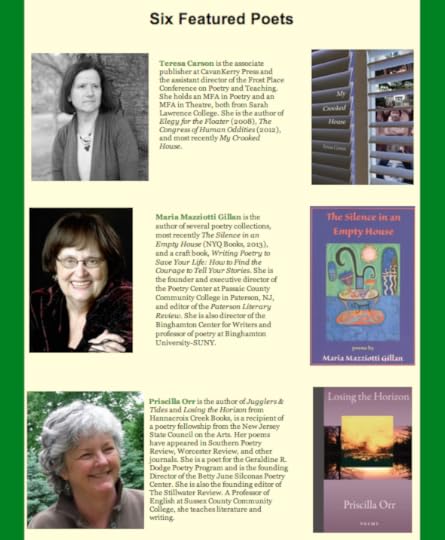
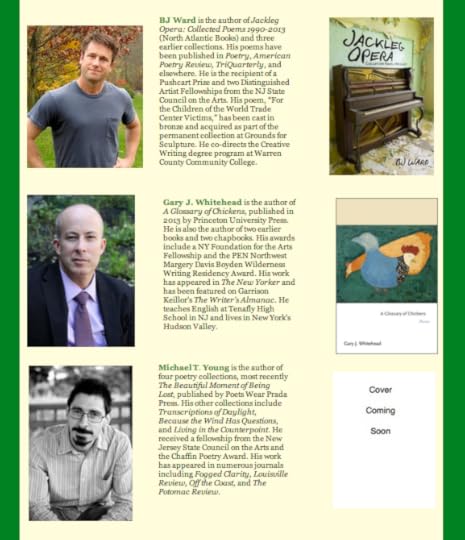
The Six Featured Poets: Teresa Carson, Maria Mazziotti Gillan, Priscilla Orr, BJ Ward, Gary J. Whitehead, and Michael T. Young
The Publishers' Panel: Joan Cusack Handler with CavanKerry Press, Roxanne Hoffman with Poets Wear Prada, Anna Evans with Barefoot Muse Press, and Ellen Foos with Ragged Sky Press
The Creative Process Discussion: the six featured poets
The Journals: Adanna, Edison Literary Review, Exit 13, Journal of New Jersey Poets, Lips, Paterson Literary Review, Raintown Review, and The Stillwater Review
Books and journals will be available for sale and signing.
See the website for Schedule and details. Please mark your calendar and plan to join us!
I decided to switch the focus from journals to new poetry books. I first compiled a list of poets with new books, poets within reasonable driving distance. The list was fairly long, so I had to make choices. I hate making hard choices, but I did it. Three guy poets and three women poets. All with different presses.
I then planned the structure of the day. Two reading sessions, each with three of the poets, so each one gets to read a decent amount of time. Then I began to think of other activities with which to fill the program. I came up with a bunch of possibilities. I narrowed the list and ended up with one publishers' panel and one creative process discussion. So now I had the event divided into four segments.
I also wanted to include journals as in the past but decided to pare down to eight from twelve so that there would also be table space for the publishers.
I arranged a meeting with my librarian to present this new format and get his endorsement. He was fine with it and agreed that change is a good thing.
Next came the implementation. I issued invitations to the six poets. Within that same day I'd received an enthusiastic yes from each of them. Off to a good start! Then I invited the eight editors. Within a day or two, all eight spots were filled. Then I issued invitations to four publishers and soon had all four lined up.
The Six Featured Poets: Teresa Carson, Maria Mazziotti Gillan, Priscilla Orr, BJ Ward, Gary J. Whitehead, and Michael T. Young
The Publishers' Panel: Joan Cusack Handler with CavanKerry Press, Roxanne Hoffman with Poets Wear Prada, Anna Evans with Barefoot Muse Press, and Ellen Foos with Ragged Sky Press
The Creative Process Discussion: the six featured poets
The Journals: Adanna, Edison Literary Review, Exit 13, Journal of New Jersey Poets, Lips, Paterson Literary Review, Raintown Review, and The Stillwater Review
Books and journals will be available for sale and signing.
See the website for Schedule and details. Please mark your calendar and plan to join us!


February 14, 2014
A Giveaway and Sundry News Items
Right now there is a week-long Goodreads Giveaway of one copy of The Crafty Poet: A Portable Workshop. Click on the link below and sign up. Even if you already have the book, you could use a second one as a gift. Please note that the Giveaway will end midnight on Friday, February 21. You must enter by then in order to be eligible.
.goodreadsGiveawayWidget { color: #555; font-family: georgia, serif; font-weight: normal; text-align: left; font-size: 14px; font-style: normal; background: white; } .goodreadsGiveawayWidget img { padding: 0 !important; margin: 0 !important; } .goodreadsGiveawayWidget a { padding: 0 !important; margin: 0; color: #660; text-decoration: none; } .goodreadsGiveawayWidget a:visted { color: #660; text-decoration: none; } .goodreadsGiveawayWidget a:hover { color: #660; text-decoration: underline !important; } .goodreadsGiveawayWidget p { margin: 0 0 .5em !important; padding: 0; } .goodreadsGiveawayWidgetEnterLink { display: block; width: 150px; margin: 10px auto 0 !important; padding: 0px 5px !important; text-align: center; line-height: 1.8em; color: #222; font-size: 14px; font-weight: bold; border: 1px solid #6A6454; border-radius: 5px; font-family:arial,verdana,helvetica,sans-serif; background-image:url(https://www.goodreads.com/images/layo... background-repeat: repeat-x; background-color:#BBB596; outline: 0; white-space: nowrap; } .goodreadsGiveawayWidgetEnterLink:hover { background-image:url(https://www.goodreads.com/images/layo... color: black; text-decoration: none; cursor: pointer; }
Goodreads Book Giveaway
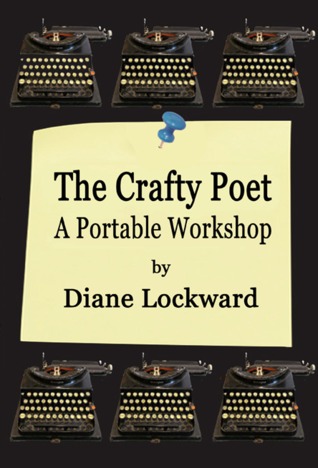
The Crafty Poet
by Diane Lockward
Giveaway ends February 21, 2014.
See the giveaway details
at Goodreads.
Enter to win
The Crafty Poet: A Portable Workshop received a very nice review from Erika Dreifus in "The Practicing Writer," a monthly newsletter which is the companion to Erika’s blog of the same name. In both her newsletter and her blog, Erika provides all kinds of useful information for writers. For example, she regularly includes lists of paying markets.
Erika begins the review with this disclosure: "I’ve known Diane Lockward for quite some time. Earlier in her career, she taught English at the New Jersey high school I attended (in fact, she was one of my sister’s English teachers)." The high school referred to is Millburn High School, same one Ann Hathaway attended. Sadly, I did not have the privilege of having both Dreifus sisters as my students, but I am happy to have Erika now as my reviewer. Read the rest of the review HERE. You can also sign up for the newsletter at the same site.
I was also happy to find this in Erika’s newsletter:
FEATURED RESOURCE: DIANE LOCKWARD’S POETRY NEWSLETTER.
Another nice piece of news is that I was recently invited to be the Featured Poet in the Poetry Spotlight at Cultural Weekly. My three poems are "Invective Against the Bumblebee," "Organic Fruit," and "Linguini." All three are from my book, What Feeds Us. Cultural Weekly is an online newspaper with several columns, including Film, Art, Architecture, Music, and Dance. Each issue is also distributed via email. You can sign up at the site if you want to receive the weekly newsletter. (Bottom of the screen, right side)
I was also recently invited to become part of the "This Is Poetry" project that will result in eight volumes of poetry, each devoted to a different theme. The first volume will focus on women in the small presses. I'll be part of that first print volume. In the meantime, the woman behind the project is posting the poems as she selects them on Tumblr. My poems are Pyromania and The Best Words. Both poems are from my book, What Feeds Us.
February 7, 2014
Planning a Girl Talk Reading
For the past six years I have organized and run an event called "Girl Talk: A Poetry Reading in Celebration of Women’s History Month." Each year since keeping this blog, I’ve posted something about the event after it took place. I’ve then received notes from other women poets saying that they’d love to attend such an event or organize one. I thought that this year I would post details before the event so that others might feel motivated to host such an event and have time to do the planning. So here’s how it goes.
1. Choose a date. Ideally, this should be in March since that’s Women’s History Month, but if March doesn’t work out, a different month is fine. Decide where you want to hold the reading. Mine is held in my local library, a place that has a great reading room and has become a congenial place for poetry. I always choose a Saturday, daytime, but you could choose any day of the week or could hold your event in the evening. Once I have a date in mind, I contact the librarian, and if the date is available, he puts Girl Talk on the calendar. A house reading would also be a lovely option if someone has a space large enough to accommodate the readers and guests.
2. Decide how many poets to include. I begin with two dozen, but somehow the list always grows as each year I get requests from women who want to read the next year. You can, of course, keep your group smaller, but I wouldn’t go much larger than 30. I have 32 on this year’s list, but typically a few readers cancel last minute. Be prepared for that. Make a list of who you want to invite to read. Aim for some diversity. Invite each poet to read one woman-related poem. I stick with poets who live within an easy driving distance. That reduces the chance of last-minute cancellations and seems to bring in more visitors. Send out your invitations. I do this by email. Be sure to give a deadline for response.
3. Once the list is compiled, I ask for a brief bio from each poet—3-5 sentences—and make a page at my website. This is not essential, but it’s a good way to publicize the event. I ask poets to link to the site from their own reading calendars and to use the link when they invite friends to attend. I prepare a list of readers to hand out at the event. If I didn’t have the website, I would include the bios there.
4. I ask for volunteers to bake cookies. I decline any offers for store-bought or bakery cookies. Homemade only! I usually get more volunteers than I need. The cookies are for the reception that follows the reading. The poets and all visitors are invited to join in.
5. I ask poets with books published within the past 5 years to send me title and price, one title only per poet. These books are placed on the book sale table at the reading. Poets may put out 6 books, but replenish if they get lucky and sell out. The library provides two volunteers to handle book sales.
6. Next comes the pr. I post notices of the event in a variety of online sources and local newspapers. I prepare and send a flier to all of the poets and ask them to post it and use it in their email invitations to friends and relatives. If everyone helps a bit with the pr, you can be sure of a good turnout.
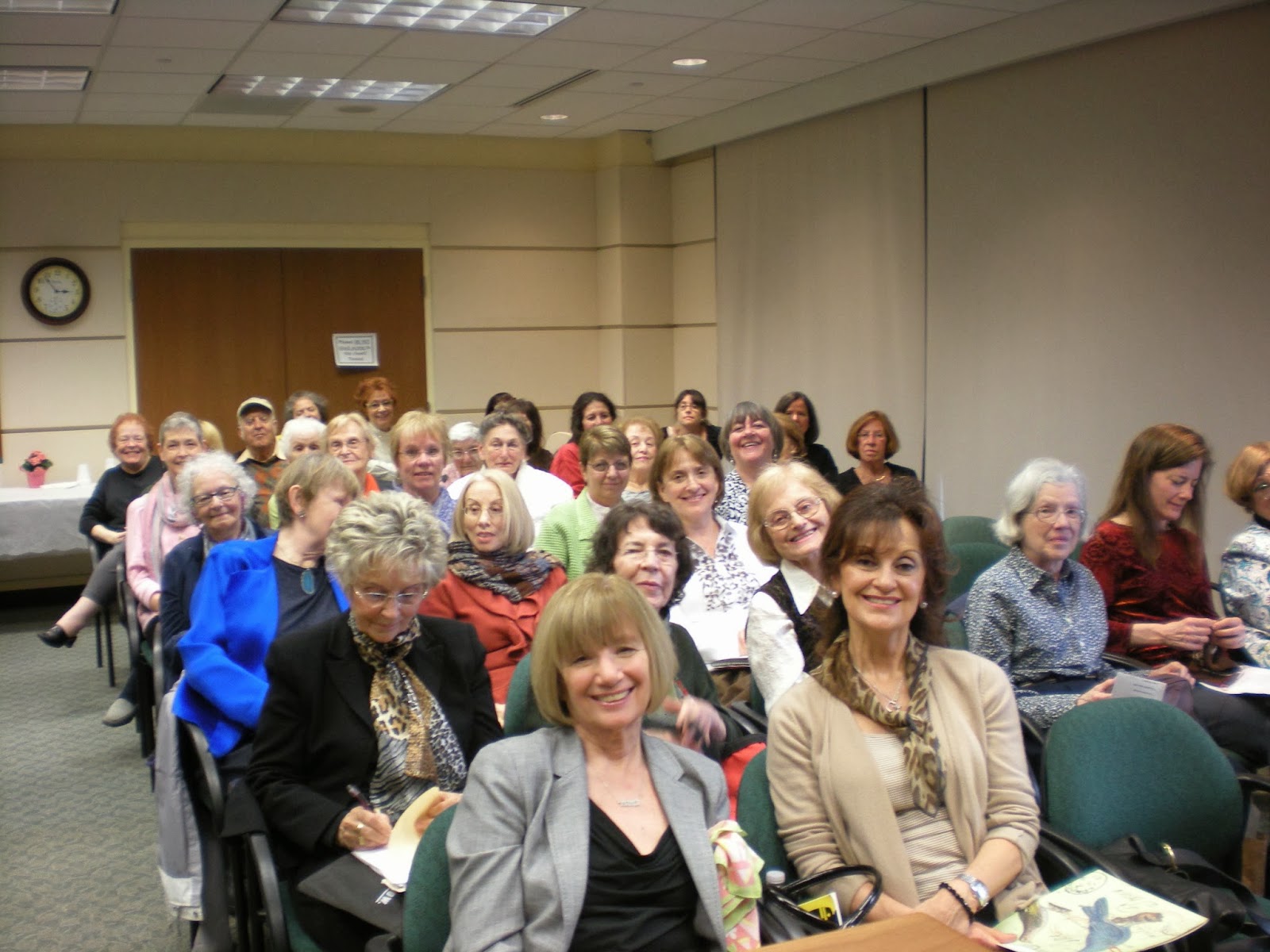 This is just one half of the room. We also fill up the other side.7. I have one short meeting with the librarian about two weeks before the event. We go over room setup, book sales, and any last-minute details.
That’s it for the planning. At the event you’ll want to arrive a bit early to greet people and get the volunteers set up with the books. Be sure that prices for the books are very visible. I ask my poets to use straight dollar amounts so no one has to mess with silver change. All the cookies get put in the kitchen until the reading is over.
I use alphabetical order for the reading. I begin with a welcome to the audience. Then I introduce each poet by name. She gets up and reads at the podium. The mic is set up there. About halfway through we take a 10-minute break. Caution: Don’t let the break go much over that or you will lose some people. Then we go through the remaining poets. Throughout the reading I remind everyone that books are available for sale and signing.
After the reading, the bakers get their cookies and put them on the table at the back of the reading room. Chairs are moved up to allow poets and visitors to circulate. There’s lots of good conversation during this time and lots of good cookies are eaten. There’s also a table set up at the front of the room where poets and visitors can put out fliers, postcards, notices of workshops, etc. (Nothing for sale there.)
 That’s it! The event runs from 1:00 - 4:00. We leave well nourished with poetry, cookies, and girl talk.
Let me know if you decide to do a similar event. I hope you do.

January 29, 2014
Me and the Massachusetts Poetry Festival
 Several months ago I submitted a proposal for a presentation in this year's Massachusetts Poetry Festival. A few days ago I received the good news that my proposal had been accepted. This will be my first time at the festival, and I'm very much looking forward to it. I've heard all good comments about the previous festivals. This year's event will be held May 2 - 4 in Salem.
One of the highlights of the festival is the great lineup of poets. Readings are given throughout the festival. Here's the list of this year's featured poets:
Kim Addonizio • Lucie Brock-Broido • Rafael Campo • Carol Ann Duffy • Oliver de la Paz • Cornelius Eady • Rhina Espaillat • Forrest Gander • David Ferry • Ilya Kaminsky • Li-Young Lee • Philip Levine • Susan Rich • Marge Piercy • Vivian Shipley • C.D. Wright
In addition to readings by these featured poets, there will be a generous selection of panels and group presentations. There will also be a number of workshops which you can sign up for. Although the cost of admission has not yet been posted, it has been incredibly reasonable in the past. There is a minimal additional fee for workshops—last year it was $5.
Called "The Crafty Poet: A Portable Workshop Group Reading," my presentation will bring together several of the poets in the book. I expect this to be a terrific and varied group. A few of these poets contributed model poems, a few contributed Craft Tips, and one contributed a Q&A poem to the book. We will have a mixture of poems and craft chatter. We hope to send our audience home nicely nourished by wonderful poems and fired up to write some new ones.
I don't yet know which date or time slot my presentation will be assigned, but I plan to be in Salem for the entire festival. I've already booked my hotel room for four nights. If you come to the festival, I hope to see you there.
Be sure to frequently check the festival website for updates and the schedule and sign-up information which will soon be posted.
January 21, 2014
Crafty Poet Update and Good Cheer
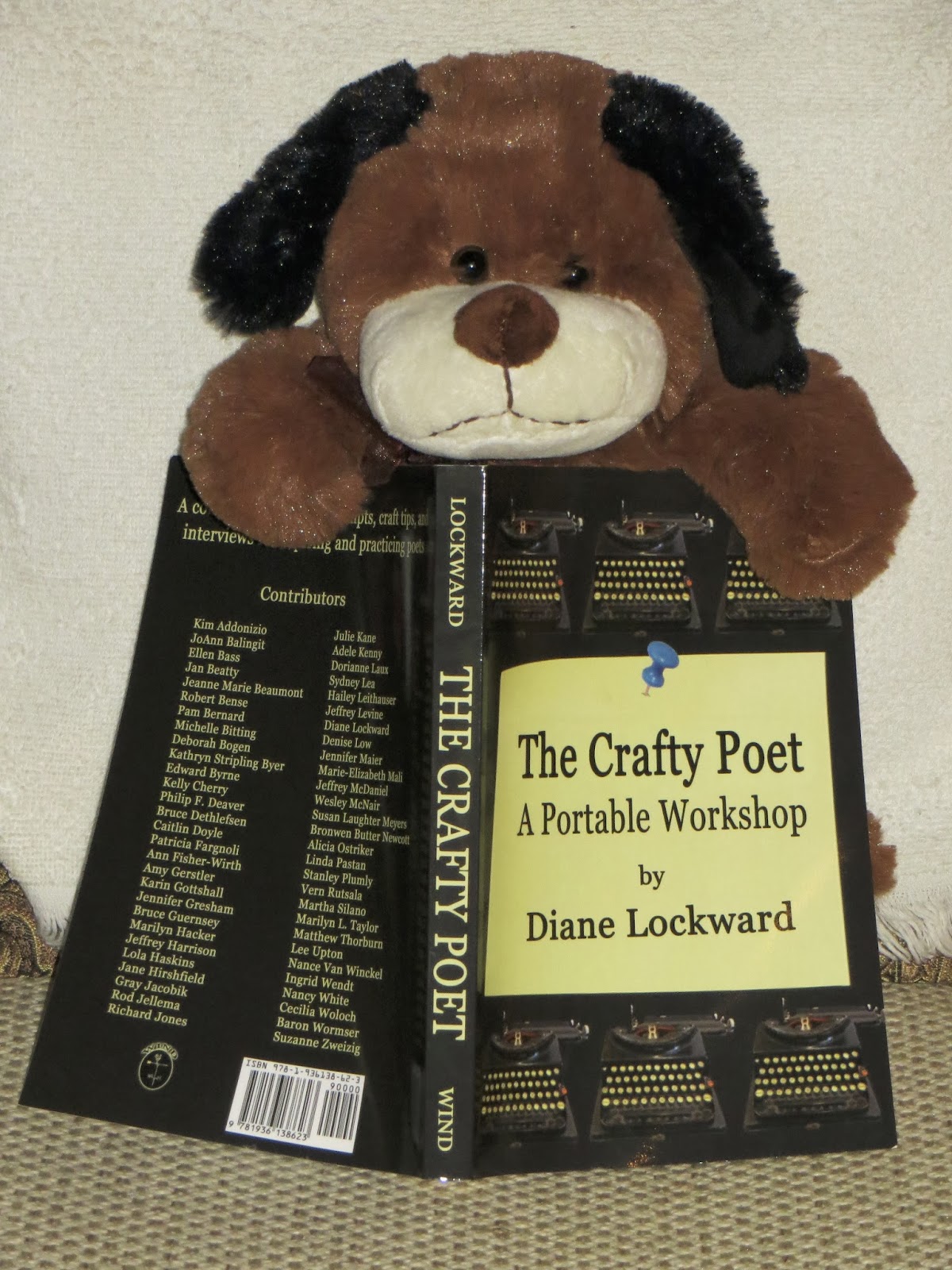 An Aspiring PoetI am so pleased with the response that The Crafty Poet: A Portable Workshop has thus far received. One good thing about having 101 different poets in the book is that I have a lot of ambassadors spreading the word. The book has recently had a nice handful of new reviews.
Poet Lynn Domina has created a wonderful blog where she does reviews of poetry books. This past week she included a review of The Crafty Poet which she describes as "both craft book and anthology, but its unique characteristic is the direct relationship between the included poems and the exercises." The entire review delighted me, but these closing words made my day: "Reading through this book, I find myself torn by competing desires: to linger over many of the poems, and to rush to my desk to try the prompts. A book that inspires me to do more than is possible—what a good book that is. I’m glad The Crafty Poet found its way to my hands, and I’m looking forward to leafing through my notebook in a year or so, counting up the poems that owe their conception to this book."
I was recently interviewed by Carol Berg about The Crafty Poet. That interview now appears in the current issue of Ithaca Lit. I enjoyed sitting back and reflecting on the process of doing this book—the challenges, the poets who contributed, the differences between doing this kind of book and a collection of poems. Carol asked just seven questions, so there’s not a lot of fluff and stuffing to get through.
Ruth Foley wrote a nice review at Five Things. She recommends The Crafty Poet and The Daily Poet as companion books. I’ve made that recommendation myself, so was happy to see that Ruth agrees that these two books belong in every poet’s bookbag.
Grace Cavalieri, who is surely one of the most generous poets/reviewers in America, also wrote a lovely review of The Crafty Poet in the Washington Independent Review of Books. Grace reads a book of poetry a day! Then she reviews many of them.
I'm also happy to report that eight different colleges and universities are already using The Crafty Poet as a textbook.
Lest we forget that I am a poet, I’ve recently had a few poems published in online journals.
Sinkholes appears in the current issue of Valparaiso Poetry Review. Many of you will recognize the story in the poem. It was one that haunted me, the idea that the earth could just open up and swallow somebody’s son.
Then I also have two poems in Mezzo Cammin: An Online Journal of Formalist Poetry by Women. The first, "My Arty Ars Poetica: A Cento," is made up of lines taken from the bio notes in a journal that asks contributors to send in something about their writing process or how they wrote their poem. The other poem, "A Salmon Swims in My Bones," is a concrete poem, one of maybe three I’ve ever written.