
Audrey Kalman's Blog, page 14
June 4, 2013
Almost all is Fair: upcoming events
 When my kids were little, we went to the San Mateo County Fair for the rides and the pig races. Now they’ve lost interest, but I have a great reason to go: The fantastic Literary Arts lineup. An enormous amount of work (much of it by Literary Arts Director and fellow CWC member Bardi Rosman Koodrin) has gone into making this year’s Literary Arts events the best yet.

The Tilt-a-Whirl (or should that be “Tilt-a-Hurl”?)
There will be an autograph party/launch event, a publishing workshop, readings, spoken word and poetry events, and live music.
The full schedule is here, for those of you in the San Mateo area who want to partake of some high-quality literary events while maintaining your proximity to fried dough and the Tilt-A-Whirl.
Fair events
I have a number of official duties during the Fair’s run, including:
Saturday, June 8 – 5 p.m.: Winner’s Circle Reading. I can brag now and tell you that my story, “California,” won best of show, and I’ll be reading from it along with many other winners.
Sunday, June 9, 5 p.m: Individual Writing Evaluation sessions. I’ll be part of a panel of editors available to read and critique writing on the spot. A bit like speed dating for your prose.
 Wednesday, June 12, 7-9 p.m.: Fault Zone readings. Since Lisa Meltzer Penn, who edited the Fault Zone: Over the Edge anthology last year, is not able to host, I will be hosting this event, featuring readings from a number of authors whose work appears in the anthology. More on Fault Zone at the Fair (PDF).
Saturday, June 15, 2-4 p.m.: Author Day. I’ll be representing Fault Zone (all four editions, three published and one forthcoming) at Author Day, joined by some of the Fault Zone contributors.
Other happenings
Monday, June 10: Q&A on my blog with Kourtney Heintz, author of The Six Train to Wisconsin. A chance to get inside another writer’s mind!
Wednesday, June 19: Open Mic reading at Dove & Olive Works in San Mateo. I’m back to attending readings now that my Wednesday evening obligations are done. Note the new location on 25th Ave. for Dove & Olive Works.
Related articles
The 2013 San Mateo County Fair Opens Sat (carrythelight2013.wordpress.com)


May 22, 2013
Literary head on a cartoon body

Caricature of Aubrey Beardsley by Max Beerbohm (1896), taken from Caricatures of Twenty-five Gentlemen (Photo credit: Wikipedia)
I love art. I love books. I do not love books that tell stories with art.
Comics, cartoons, graphic novels—I can’t read them. It’s not that I’m averse to their subject matter; I love to laugh and I enjoy a dark tale as much as the next reader.
I brought this up with my son, who detests reading novels but has always enjoyed comics and graphic media. When I try to read a graphic novel or a comic, my brain gets—for lack of a better word—antsy. It’s hard to concentrate and I’d rather just not do it. He told me that’s exactly how he feels when faced with a page of text.
I figured there must be something in our brains that makes this so. A Google search on “brain physiology why do some people like graphic novels?” led to Brian Kane’s blog on graphic texts. One of his posts contains a section on the psychology of perception. Jackpot!
Kane’s blog post asks the fascinating question, “So what does the brain ‘see’ when it ‘sees’ a page or panel of sequential art, and how does it derive meaning from this literate art form?” The answer, I’m sure, holds the key to both my difficulty with—and my son’s enjoyment of—the medium.
Kane relates the perception of meaning to several branches of psychology including gestalt and cognitive. My real aha came from his section on neuroscience. Research into the neuroscience of perception is ongoing, with—believe it or not—sub-disciplines such as neuroesthetics. There is evidence of specialized cells in the brain responsible for responding specifically to straight lines!

Thinking about this lends a new dimension to the idea of keeping an open mind. Our minds themselves may limit their own openness to particular types of art and esthetics; neurophysiology may account for the fact that not everyone will get their kicks from a 500-page roman a clef. And the people who do will likely not get much from Jeff Smith’s Bone series, which my kids so loved during their elementary school years, or Art Spiegelman’s Pulitzer Prize-winning Maus.
But I have decided to attempt to overcome my neurological deficit. Here and now, I am committing to read Marjane Satrapi’s Persepolis, a memoir of growing up in Iran during the Islamic Revolution that has been compared to Maus.
I’m sure wondrous rewards await between its covers if I can just make my antsy brain stay still long enough to discover them.
What about you? Are their types of art that seem to resonate with your brain?
Related articles
Final Thoughts on Graphic Novels (teacherleaders.typepad.com) – A contrast to Kane’s ideas.
Understanding Maus (thepenguinblog.typepad.com) – A guide by someone whose research “is concerned with non-mimetic narratives of the Second World War.”
How Graphic Novels Became the Hottest Section in the Library – Publishers Weekly weighs in
Why Graphic Novels? (whybehumansp13.wordpress.com) – a 21-year-old student asks about the place of graphic novels in education
Upcoming
The Art of Character
I was introduced to the work of (and seduced into buying a book by) novelist David Corbett after his presentation for the CWC-SF/Peninsula last weekend. The book I bought was not one of his novels but a writing how-to guide called “The Art of Character: Creating Memorable Characters for Fiction, Film, and TV.” My challenge usually is not coming up with compelling characters but tying the book’s action to them in believable ways. I’m hoping his tips will help in that arena as I continue to hone my next novel.
The Art of Kourtney
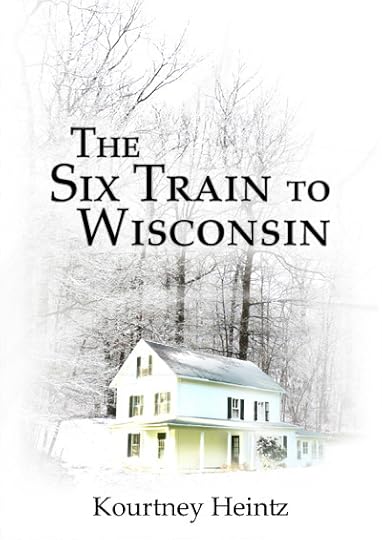 On June 10th, I’m doing something I have never done: hosting a guest on my blog. Kourtney Heintz, whose blog I have been following for a couple of years, has just released her novel “The Six Train to Wisconsin.” Instead of having her discuss self-publishing or marketing—both of which she has become well-versed in—I’m asking her to discuss the book itself: where it came from, what compelled her to write it, and yes, its characters.


May 3, 2013
Sympathy for the Devil
I once heard it was a good idea for everyone to have a job as a waiter or waitress at some point in their lives. (I believe the correct word these days would be “server.”) The idea is that we’ll all be restaurant customers and turning the tables on the situation—so to speak—will give us a greater appreciation of the job and perhaps make us kinder diners.

Chaplin and Purviance in the memorable restaurant scene. They do not look too happy with their server. (Photo credit: Wikipedia)
My walk-in-their-shoes experience came not as a waitress, but as a bus person (you know, bussing tables), salad girl (sorry, there is no gender-neutral term for that), and baker/dessert-maker. My time on the inside opened my eyes to the reality of the restaurant biz.
I’m undergoing the writerly version of such table-turning, or desk-turning. As editor of the 2013 edition of the CWC’s Fault Zone anthology, I’ve spent the last month reading submissions. Now my wonderfully capable assistant editor Dorcas Cheng-Tozun and I are beginning the process of responding to authors with letters. Acceptance letters, provisional acceptance letters and… rejection letters.
[image error]
My edits to my manuscript for “Bad Luck with Cats.” Sitting on both sides of the desk!
I’ve been an editor before, but I’ve never been in the position of reviewing a big ol’ pile of submissions. Here’s what the writing side of myself has learned so far from sitting behind the anthology editor’s desk—and my advice to anyone who is submitting anything, anywhere.
There’s a reason a publication’s response time can be two, three, or even four or more months. It takes a long time for a small staff to read a lot of submissions, and even longer when it’s a volunteer staff. BE PATIENT.
An editor may be lenient upon encountering one piece with typos, grammatical errors, or wonky formatting. After the 4th or 5th piece with such flaws, the editor becomes irritated and begins tossing submissions directly on the rejection pile. COPY EDIT, PROOFREAD, and DO IT AGAIN before you submit.
Writing thoughtful, empathetic, and constructive letters to authors is really, really hard. Maybe even harder than writing a good piece of fiction. APPRECIATE PERSONAL LETTERS. Even if they tell you things you don’t really want to hear.
De gustibus non est disputandum is Latin for “There’s no arguing with taste” and applies to an individual’s reaction to a poem, story, or essay. In more than a few cases, three members of our editorial reading team had three completely different evaluations of a piece, with two at opposite ends of the like/dislike spectrum. IF YOU’RE REJECTED AND YOU KNOW YOUR WORK IS GOOD, SHRUG AND MOVE ON. Sooner or later, you’ll find the right publication and editor and catch them in the right mood (sad to say, that can have something to do with it, too.)
Somebody will be offended. I’m hoping not to be pilloried by any of the writers whose work was rejected. If I am, I hope a few things will mitigate the vitriol: our rigorous and transparent selection process; the fact that we relied on more than one person’s input to evaluate each piece; and our extensive feedback to authors, which involves writing personal letters even to those whose pieces we are not accepting. TREAT THY REJECTOR AS YOU WOULD LIKE TO BE TREATED. As hard as it is to believe, YOU are not your writing and the editor is not rejecting YOU. See # 4 for solace.
Taking on a big editing project and working on your own project are mutually exclusive. My novel revision has slid to the bottom of the priority pile. Shame on me, but there are only so many hours in the day. DO NOT UNDERESTIMATE THE AMOUNT OF TIME IT WILL TAKE TO BE AN EDITOR. Do not schedule a vacation around deadline time. Do stock up on pre-made dinners and lots of chocolate. Do not expect to have much else on your mind for a while.
Despite the challenges, I’m having fun editing Fault Zone: SHIFT and am excited to help the contributors through the next steps of the process to create an anthology of sparkling, compelling writing.
And I’ll be a much more sympathetic writer when those rejection slips come back. I’ll know the devil on the other side of the desk is me.
Writers: have you ever gone over to the dark side?


April 13, 2013
At the brink of the familiar
Recently, I gave up my e-mail program of 15-plus years and switched to a new one. (No one would accuse me of being an early adopter.) My experience in doing so—can you say “dragged kicking and screaming”?—revealed how deeply I cherish the familiar.
I shouldn’t be surprised about my affinity for the comforts of the known. I’m past the age at which I am the target of new pop music; the local grocery store only annoys me by rearranging items on its shelves. There must be an evolutionary explanation for the fact that our tolerance for new experience often diminishes with age, because it happens no matter how much we swear we’ll never let it.
I like life to be ordered in such a way that I can navigate it at night without the lights on. Years of experience tell me where the doorways are and I never encounter unexpected objects on the floor.
Readers, too, crave the comfort of the familiar. That’s why form flourishes and particular genres attract millions of readers. The characters may change, but the arc of a mystery or thriller, the arrangements of the elements of a romance, are like the familiar nighttime bedroom. You can get around with your eyes closed.
And yet…
[image error]
Edgar Allan Poe at 39. (Photo Credit: Wikipedia)
My imaginative life is far less restrained than my “real” life. (Though who’s to say which is which? If you subscribe to Poe’s vision, “All that we see or seem/Is but a dream within a dream.”)
In my writing, I tiptoe up to—and over—the edge of the familiar. I am drawn to stories with odd forms, layers of revelation, circular structures, and non-traditional plot lines.
Maybe knowing I can count on the comfort and predictability of my daily life is exactly what allows me to twist and explode the familiar in fiction.
I seek thrills on the page, not just in the content of the story but in the container for the story. And believe me, playing with the container can lead to a dark, scary room where you don’t know the location of the furniture or even of the walls or the ceiling. Just ask William Faulkner, James Joyce, or Virginia Woolf.

Up to the edge at the Grand Canyon. Thrilling–but don’t step back.
Readers: Do you crave the familiar? Are you willing to let a book take you somewhere utterly unknown—not only in terms of story, but in the way the story is told?
Writers: Do you experiment with form? Do you worry that your experiments will never never find as large an audience as traditional forms?
Read Bad Luck With Cats
My flash fiction piece Bad Luck with Cats went live today on Every Day Fiction. I hope you’ll read, enjoy, and pass it along!


March 21, 2013
What you don’t know won’t kill you
We’ve all heard the cliché “Write what you know.” Perhaps it’s a useful instruction to beginning writers so they don’t get distracted while learning the basics of craft. Beyond that, it seems silly.
My journalism training gave me the confidence to write about almost anything, as long as I was willing to do research. I wrote about a reclusive artist in upstate New York, wildlife in Connecticut, artificial intelligence, client/server databases, and data security schema. I later learned—what a revelation!—that fiction writers can do research too.

NOT ME running the 32 Mile Wyoming Ultramarathon (Photo credit: Wikipedia)
Since my first (unpublished) novel, my fiction has moved further and further away from autobiography. Lately, in my short fiction, I’ve felt particularly drawn to topics and characters I most decidedly don’t know—a homeless former musician in L.A., a retired schoolteacher, an ultramarathoner, ‘Seventies swingers.*
As I work on my latest story, which puts a magical realist twist on a tale of inner-city violence, I keep thinking, “I have no direct experience of poverty or racism. What right do I have to write about it?”
Maybe I have no right. Maybe, like my character, a middle-class white woman who becomes obsessed with helping a young black teenager, I’ll be harshly judged for taking my bleeding-heart viewpoints into a story setting where they have no business going.

NOT ME – Homeless on bench in Hermosillo, Sonora, Mexico (Photo credit: Wikipedia)
But I’m writing the story anyway. I’m writing it because it is about something I know: the emotional truths experienced by my characters. Fear, disappointment, all-consuming love, regret, alienation—these are truer than anything we can learn through research, and they’re what matter in storytelling.
I believe that, as fiction writers, we have not only a right but an obligation to tell stories about these emotional truths, using the enormous, mixed-up, unfathomable world as a canvas.
What rights and obligations do you think fiction writers have?
* My recent (NOT YET PUBLISHED) short stories include:
“Everyone is Gone” – A retired schoolteacher finds love in the dollar store
“Forget Me, Forget Me Not” – An ultramarathoner contemplates what she is running away from—and toward
“Bad Luck with Cats” – An old woman’s life flashes before her, filled with cats
“The Echo” – Homeless but hopeful in L.A.
“Back After a Break to Discuss the Decline of Civilization” – ‘Seventies swingers grow up
“Tiny Shoes Dancing” – A ballet performance crystallizes a mother/daughter struggle


February 27, 2013
Your pain is my gain
Who doesn’t love statistics?
Okay, maybe not everyone. But statistics can be exciting when they have immediate relevance, like the stats Word Press and other blogging tools offer. Thanks to those, I discovered that the search term people used most often to find my blog in the past year has been the phrase “pain assessment tool” or some variation thereof.

I know writing is painful, but what’s going on?
Back in July I wrote a post titled “My quest for a universal book-assessment tool.” It began by referencing the pain assessment scales used in the medical profession. Now more people have viewed that post than have viewed any other I’ve written, by a factor of more than three.
I have to guess that many of those visitors aren’t really interested in fiction writing.
Which got me thinking about marketing.
To thine own self stay true
“Why don’t you just give your book a title like Improve Your Sex Life in Three Easy Steps?” a friend asked when I described the challenges I’ve been having marketing Dance of Souls.
That might entice more hits to my web site and maybe even more book sales, but roping people in with a title that doesn’t match the content is the literary equivalent of putting a pig in an evening dress. If readers expect a date and end up with bacon, it’s unlikely they’ll come back for more books.

Maybe not the date you had in mind. (Photo credit: Wikipedia)
Some people, of course, build their careers on deliberate deception. For example, there’s the book Steve Jobs by Isaac Worthington—NOT the bestselling author—and Thirty-Five Shades of Grey, unrelated to the steamy bestseller. On the Media discussed these and more on a show last summer.
Sometimes what seem to be small decisions—for example, the topics you cover in blog posts—can have big consequences. I’m not saying self-published authors need to become statisticians or market analysts. But after my pain experience, I will definitely think a little longer and harder about keywords and a title for my next novel. Just don’t expect Forty-Six Shades of Gray from me.
Have you ever felt betrayed by packaging?
ROW80 Update
Since finishing up a big project last week, I’ve done a fairly good job sticking to my 8 a.m. – 9 a.m. writing commitment. I still haven’t gotten back to my novel because for some reason, short fiction is calling me. I sent another short story off to a couple more markets (thanks, Duotrope), sent one to be edited, and started another.


February 21, 2013
I want to be like Carol Winfield even when I’m dead
For this year’s Beauty of a Woman BlogFest hosted by August McLaughlin, I present another homage to another remarkable woman. (ROW80 followers, my update is at the end.)
As far as I can tell, my mother only had two close women friends. One of them was Carol Winfield.
Carol was such a good friend to my mother that when my parents decided to get married after knowing each other for only five weeks, Carol arranged the wedding. Carol’s husband at the time was a doctor who could rush the blood tests—a useful thing in 1959. She also hosted the wedding at her home.
My mother was not one to follow convention, as I revealed in my post for last year’s Beauty of a Woman BlogFest. Nor was Carol. That much I knew even as a kid. Carol was older than my mother by a few years but she was no fuddy-duddy.

The pond, circa 1970
We lived in the country about two hours outside of Manhattan on a spread of acreage with a pond. A couple of times a year Carol took the train from the city and my parents picked her up at the station in Hudson. The first thing she’d always do when she arrived at our house was go for a swim. It didn’t matter what time of year it was. Unless the pond was covered with ice, Carol would suit up in her one piece and trek across the lawn for a dip.
Forty years later, after both my parents had died, Carol came to stay in their house with me and my husband and kids for a few days. I was in the process of sorting through the overwhelming accumulation of stuff to make the house rentable. Carol was—well, what was Carol doing during that visit? Being Carol.
She didn’t swim but she practiced yoga, something she had taken up (and begun teaching) 19 years earlier at the age of 70. I practiced with her. Watching her move deliberately through each asana revealed the true meaning of the dictum “All you have to do to practice yoga is to breathe.”

We drank martinis together every evening. Gin martinis, straight up, with olives. Stirred, not shaken, and served in iced glasses with only a whiff of vermouth.
I had given her one of my mother’s old shirts, a mustard-yellow velour turtleneck straight out of 1974. On Carol’s bird-like frame it hung loosely.
We sat on the deck and talked about my parents. She mourned her loss of mobility and damned the pain that had become her constant companion, but she never gave off the vibe of a cranky old person complaining about her ailments. She may have been 89, but she was still one cool cat.
After three days, she packed her few things and got into the limo we had hired to drive her the four and a half hours to her home in Burlington, Vermont.
I found out Carol had died when a mutual friend sent me a card a few years later. I cried. I still cry, even though, thanks to the Internet, Carol’s voice lives on. You can still read the blog she started in 2008, The View from 90. She was my mother’s friend, and mine, and I miss her.

Carol being Carol.
So why do I want to be like Carol? Yes, to practice yoga. Yes, to devour new ideas and books and people with an open mind and an open heart. Yes, to enjoy an icy martini at the end of the day. But mostly to embody the attitude she came to at the end of her life. She took the words that are so easy to say—live in the moment—and made them a reality. And she did it not only when things were going well but when the moment itself was pretty shitty.
As she put it in her blog post,* “Do Not Look Back:”
And, bingo, it came to me there in my bed on that dark early morning, in that silent room the words and thoughts I have been uttering for years now to my yoga classes: “It is not how expertly you perform the postures that matters. What matters is the attention you pay, the effort you exert, the concentration and recognition of practice in and of itself is enough. That’s all of it. That’s the moment, the moment you are not missing.”
I still hurt like the very hell. I haven’t grown a whit sprier, no, nothing has changed except my reaction. It has made such a difference I want to share it with you, explain how it is being a frail, ragged, aching nonagenarian with not a single recourse except my own, very private heart and mind set.
Much as I want, I cannot evade a decision; Either I re-evaluate my sense of self, or continue wallowing in grief and despair dragging friends and family with me. I have decided to seize the moment, to turn it into not exactly one continuously blooming rose garden but at least into an occasional, sweet-smelling rose.
Will you join me?
Yes, Carol, I will.
*Thanks to the blogger at Latefruit who quoted the paragraphs above and gave me the notion that Carol’s blog might still be accessible. You can read more about Carol’s amazing life in her obituary.
Much less important miscellany
I have been woefully remiss in sticking to my daily ROW80 writing commitment. I won’t bore you with excuses. I did, however, submit another short story to another market. I now have five pieces out to nine markets.
On the subject of short stories, if you’re a writer of same, you should know about the Fault Zone contest open to all writers who are not members of the California Writer’s Club. The deadline is July 31, 2013 and details on entering are here. Members, the deadline is March 15!


January 30, 2013
Enter at your own risk
As much as I love writing, sometimes I hate it.

Enter at your own risk
After bellyaching for a while about how I don’t know what to do with the feedback from my beta readers, I decided to take the cure. Once again, my weekday calendar contains a slot for writing from 8 a.m. to 9 a.m. (it’s my ROW80 commitment for the next few months). I might use the hour for editing, creating new scenes, working on short fiction, writing blog posts, researching clubs in San Francisco (for the novel!), watching fun cat videos…

Last week I wrote for three of the five weekdays and over the weekend. Nike admonishes us to “just do it”—effective, perhaps, but not always pleasurable. Like any challenging endeavor, it requires a tush-in-the-chair, hands-on-the-keyboard, toss-the-cat-off-your-lap dedication that can be downright squirm-inducing.
What your bookshelf says about you
On to something more lighthearted. I stole a whimsical idea from Kourtney Heintz (who in turn was inspired by Jenna Bennett). The exercise is to describe your life using only the titles of books you’ve read in the last year.
Before the advent of Goodreads I would have had trouble doing this, since I usually can’t remember the name of a book even while I’m reading it. Here’s my list, gleaned from Goodreads. (I cheated a tiny bit and included two books I started in 2012 and finished in 2013.)
Describe yourself: Girl, Interrupted (Susanna Kaysen)
How do you feel: Homesick (Eshkol Nevo)
Describe where you currently live: Lunch Bucket Paradise (Fred Setterberg)
If you could go anywhere, where would you go: Middlesex (Jeffrey Eugenides)
Your favorite form of transportation: The Water’s Lovely (Ruth Rendell)
Your best friend is: Olive Kitteridge (Elizabeth Strout)
You and your friends are: Cleaning Nabokov’s House (Leslie Daniels)
What’s the weather like: ’Tis (Frank McCourt)
You fear: A Visit From the Goon Squad (Jennifer Egan)
What is the best advice you have to give: Talk Talk (T.C. Boyle)
Thought for the day: How to Buy a Love of Reading (Tanya Egan Gibson)
How I would like to die: [Via] Things That Fall from the Sky (Kevin Brockmeier)
My soul’s present condition: The Double Bind (Chris Bohjalian)
This is a fun reminder that, in a very real sense, we are what we read.
What does your reading list say about you? I’d love to see what was on your bookshelf in 2012 or hear about what you plan to put there in 2013.


January 20, 2013
Art vs. commerce
Last week, my usually sedate monthly critique group erupted in a lively debate.

A group of Canada geese along with a white domesticated goose on a lake. It takes all kinds. (Taken by Neaco; Photo credit: Wikipedia)
We’re a diverse bunch, consisting of non-fiction writers pursuing memoir and personal essay, as well writers in various fiction genres: chick-lit, mystery, young-adult fantasy, historical, and literary (me). We seem like a gaggle of odd geese but I have come to really value the different writing approaches represented in the group. When my work gets lost inside the heads of my characters, the mystery writer will ask when I’m going to get to the next plot point. The chick-lit writer will call me out on a character’s motivation, pressing me to figure out the why behind the action.
So it was something of a surprise when one of our members became heated in her insistence that, no matter what, story must take precedence—even in a form like memoir.
“If you want to be successful, you can’t write just a good book,” she said. “You have to write a great book.”

Great books? You be the judge.
I think most of us can agree with that. The heat in the room arose from the fact that her statement touches on some very fundamental—and often contentious and uncomfortable—questions about writing.
The “If you want to be successful…” statement makes us ask the question at the very root of it all: “Why do we write?” I explored this in an early blog post. But, like all questions of self and identity, it’s not something you figure out once and then put away in a drawer. You keep coming back to it.
Does everyone write with the goal of being “successful?” And if so, how do we define success?
The statement also makes us ask “What makes a book great?” I believe that, beyond a few general principles, there are almost as many ways of telling a story as there are books in the world. Narrative style, voice, tense, form—all of these can be infinitely varied and still work. The question then becomes about your audience. What kind of storytelling do they expect? Sometimes, you need to stay within the bounds of your genre. Other times, busting up the genre creates a whole new style of literature.
The answers to these two questions collide in the great cauldron where Art meets Commerce. The Art is the how and why we do it; the Commerce is how we are received and rewarded in the world. Can the twain ever meet? And where does your writing lie on the spectrum?
Poll: Why do you write?
I’ve been thinking again about why I write. I’d love to hear from other writers out there. Take this poll and I’ll share the results in an upcoming post.
Take Our Poll
Back to the ROW
 Since receiving feedback on my novel a month ago from beta readers, I have been spinning my wheels. Realizing the depth and breadth of the changes I need to make feels overwhelming. Then I remembered how helpful it was to create outside accountability. So I’m rejoining ROW80 (two weeks late for this round, but they call themselves a forgiving group) because I have to get to work if I want to meet my ultimate goal of a finished second draft by the end of May. My commitment for now is six hours of writing a week dedicated exclusively to the novel. I’ll report back next week.


December 31, 2012
I’m so meta
(I’m using “meta” here as described in Wikipedia: “In epistemology, the prefix meta- is used to mean about (its own category). For example, metadata are data about data (who has produced them, when, what format the data are in and so on)… metaemotion in psychology means an individual’s emotion about his/her own basic emotion, or somebody else’s basic emotion.”)

It’s all relative. Brain cells, bodies, ancient cliffs, far-flung galaxies… (Photo of the Grand Canyon by me)
Reading through fellow bloggers’ posts over the last week I couldn’t help but notice the year-in-review and welcome-the-new-year themes.
Of course that got me thinking about the kind of year I had in 2012, in writing and in other areas.
Almost as soon as I began my mental review, however, I began contemplating, as I always do, the bigger existential questions that lie behind such thinking. It’s a treadmill I’ve been running on since young adulthood. It takes the form of a conversation with myself and goes something like this:
What’s the point of a New Year’s resolution when we’ll all be dead in 100 years—and you in less than that?”
“But I’m here right now. That has to mean something.”
“It means only as much as you decide it means.”
“I wish I had me some of that religion. Then I wouldn’t have to figure all this out for myself.”
“What fun would that be?”
“Maybe not fun, but a lot more comforting.”
“It’s the curse of being human.”
“Then I’d rather be a cat. Or a dog.”
“Sorry, you don’t get a choice.”
“But I have to figure out some way to live.”
“I think you just did.
So there it is: the conversation that plays out in my head, in various forms and at various volumes, with tiresome regularity.
It has led my husband to describe me as “tormented.” It drew me to write fiction. It prompted me to begin working as a birth doula, a profession that requires me to forget who I am, forget past and present, and focus only on the moment at hand. It explains why blog posts like KM Huber’s make me cry.
An uplifting message for those of you who need one
Lest you think I spend my life in perpetual despair, rest assured that I’m actually a pretty upbeat person.
I’ve realized over the many years of listening to this repeating conversation that the real achievement is to know in your gut that life is meaningless and uncertain—and live it anyway. (Oh, wait, that isn’t very uplifting, unless you’re me. Sorry.)
How about those resolutions, meta-girl?
In the writing realm:
Finish my current novel-in-progress and decide whether to self-publish or pursue an agent
Have a short story accepted for publication in a literary journal
In the personal realm, there is only one
Live in the moment
A little later I’ll be off to celebrate the coming new year with friends. As I look into the champagne glass exploding with bubbles, my mind will flash forward to the eventual annihilation of the universe. And I will surrender to the heart-rending awareness that the gelatinous matter inside my skull can even conceive of both a glass of bubbly and universal extinction—never mind appreciate them, and give them both up.
What about your New Year’s resolutions? Have you vowed to stop reading blog posts that make parenthetical references to Wikipedia entries about epistemology? I hope not, because I’m looking forward to another year with you!




![[image error]](http://audreykalman.files.wordpress.com/2013/05/edited-ms.jpg)
![[image error]](http://commons.wikipedia.org/wiki/File:Edgar_Allan_Poe_2.jpg)