Amy Julia Becker's Blog, page 125
February 9, 2020
A Model for Race and Justice Events
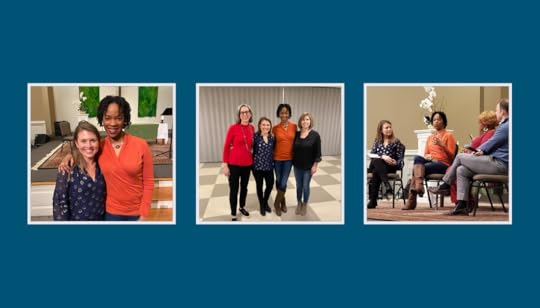
A MODEL FOR RACE AND JUSTICE EVENTS—It was a tremendous honor to stand alongside my friend and colleague Natasha Sistrunk Robinson last Thursday night at Church of the Apostles in Raleigh, NC. I trust that what we said in and of itself was helpful for the people in attendance, but what seemed even more significant to me was the form this event took. I loved the way Carrie Alspaugh and Amy Moreau organized the event to catalyze community involvement in issues related to race and justice.
If you want to see more people in your community engaged in this type of work, you might consider creating an evening like this one (with or without Natasha and me as speakers!).
The Model of Honest Conversation
First, this event was a collaborative effort between two churches. Second, they invited Natasha, a black Christian woman, and me, a white Christian woman, to stand side by side and share our stories.
After we each spoke, a white pastor and an African American church leader took questions from the audience (written on index cards, so they could curate whatever came up). The question and answer time was probably the best part of the night, both because they were great questions but also because it offered a chance for Natasha and me to model honest conversation about race without judgment or fear.
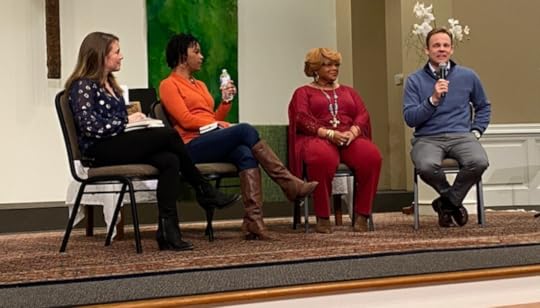
One question was whether it’s a bad thing that our churches remain functionally segregated across the nation. Another was about whether Natasha has had “the talk” (if you don’t know what that means, she was gracious enough to explain that “the talk” is parents of black sons explaining how they must behave in public, and especially in front of the police, in order to never be perceived as a threat and to make it home alive). Another was about what practical steps people can take as they go into the next week.
Organizing Involvement
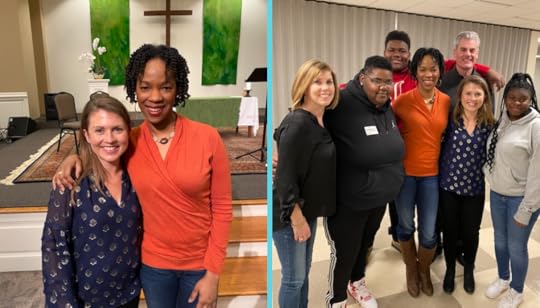
But third, what I just LOVED about this time was that the event organizers invited four different local organizations to attend and share about ways people could get involved after the event was over. As it happens, these offerings align with the work I’ve been doing to encourage people to use head, heart, and hands to respond to injustice and social divisions in their local communities.
In this case, “use your head” aligned with the Racial Equity Institute, which offers opportunities to learn about the history of racial division in our nation. “Use your heart” aligned with The Encouraging Place, which organizes lunch and supper clubs for people who want to build relationships across racial divides. And “use your hands” aligned with an opportunity to become involved in a local women’s shelter.
A Model for Race and Justice Events
I dream of seeing this same model in cities and towns across the nation, and once again I’m grateful to Carrie Alspaugh and Amy Moreau for their work in bringing together so many people. I hope and pray that people left that event not only inspired by hearing Natasha and me speak, but empowered and equipped to participate with their whole selves—head, heart, and hands—in an ongoing work of healing and love within their city.
If you haven’t already, please subscribe to receive regular updates and news. You can also follow me on Facebook , Instagram , and Twitter.
The post A Model for Race and Justice Events appeared first on Amy Julia Becker.


February 7, 2020
Race, Sex, Faith, and the Halftime Show
The Superbowl halftime show: salacious or celebratory? Empowering or objectifying?
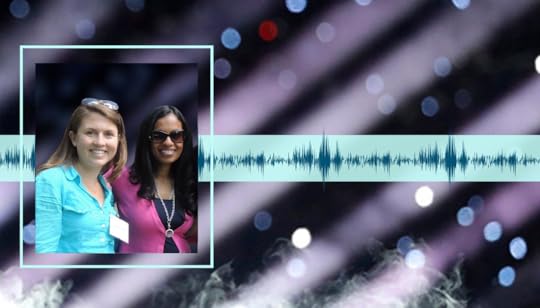
After the halftime show last Sunday, and after noticing really different reactions to it from white Christian women and Christian women of color, my good friend Niro Feliciano and I decided to record a conversation about these disparate reactions.
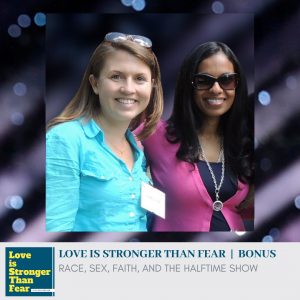 Niro is a psychotherapist, mother of four, Sri Lankan American woman. We’ve been friends for nearly 30 years, and she is a smart, wise, fun, compassionate Christian woman who has been a wonderful friend to me over the years and who has taught me a lot about how to think about race and ethnicity and my own whiteness. Yes, in this conversation, we talk about Shakira and J Lo, about sensuality and our hypersexualized cultural moment and whether or not it was okay for our kids to watch the Superbowl.
But this is also a conversation about how culture shapes our view of the world, how to listen with grace and compassion to one another, and how to grow in love even when we disagree. I hope you will listen or watch and let us know what you think. (You can also let us know if you think we should do something like this again…)
You can listen to this podcast episode via the player above or on Apple Podcasts, Google Podcasts, and Spotify, as well as other platforms.
If you haven’t already, please subscribe to receive regular updates and news. You can also follow me on Facebook , Instagram , and Twitter.
The post Race, Sex, Faith, and the Halftime Show appeared first on Amy Julia Becker.
February 5, 2020
Really Good Bacon and the Expansive Love of God
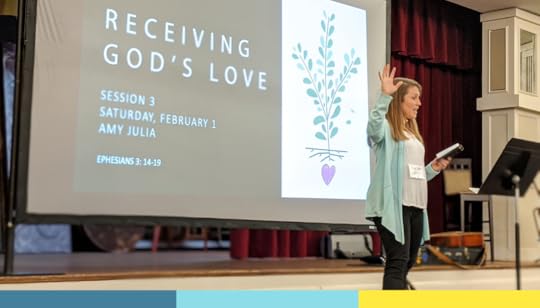
The expansive love of God filled my weekend with the women of White Memorial Presbyterian Church at a retreat in Pinehurst, NC.
It was such a joy to gather with over 200 women, ranging in age from 26 to 82, who attended this weekend of music, laughter, great food (One of the best lines of the weekend: “I didn’t come to hear you. I came for the bacon.”), deepening friendships, and a lot of teaching from me. After my first talk, a woman approached me and said, “I could listen to you for hours!” and I said, “This, my friend, is very good news for both of us.” I spoke five times over the course of 40 hours (!), and it blessed me tremendously to speak the truth about God’s abundant, infinite, neverending love for us all.
Reality and God’s Love
In short, I explained why God’s love is the most true thing about reality. Then I talked about how fear and injustice keep us from experiencing and living into that love. (I also think distraction keeps us from love, but that’s a talk for another day.) Then came the good news: I shared how we can receive God’s love and how we can take practical steps to participate in God’s ongoing work of love every day.
On Sunday morning, in addition to beautiful music, prayer, and communion, I had a chance to speak from John 15, where Jesus offers parting words to his disciples. First, he tells them to “remain in my love.” He invites them to live in love, to be like trees with roots firmly and unmovingly planted in love, to stay put in love. But then he says, “If you love me, you will obey my commands,” and all of a sudden this love starts to seem to be about obedience, about morality, about getting it right. All of a sudden this love starts to seem to be conditional upon our behavior, as if Jesus is saying, “Get it right, and then I’ll love you.”
Expansive Love of God
A few sentences later, though, Jesus says, twice, “This is my command: love one another.” That’s the only command, just as when he is asked earlier in his life what the greatest commandments are, he sums it up with: “Love God. Love your neighbor.” In other words, love begets love. God’s love bubbles up and overflows to love others. Love is the beginning, the middle, and the end of the story of our lives.
I’ve spoken about these topics before, and I’ll be touching on similar themes when I visit St. Mary’s Church in Richmond in a few weeks and in April at the Festival of Faith & Writing. In 1 Corinthians 13, Paul writes that love is “the greatest,” and I am learning the truth of that statement, as I dive deeper and deeper into all there is to begin to comprehend about the expansive love of God.
If you haven’t already, please subscribe to receive regular updates and news from me. You can also follow me on Facebook , Instagram , and Twitter .
The post Really Good Bacon and the Expansive Love of God appeared first on Amy Julia Becker.
February 2, 2020
Caregiving: The Humble Act of Bathing

In caregiving, the humble act of bathing requires deep trust and deep care. Here’s what it taught me about God.
Have you ever washed another person’s body? Maybe a young child, or even a parent or friend who was too sick or injured to wash themselves?
I’ve resided over many baths of babies, but two of the most profound moments of my adult life came while helping to bathe adults. My mother-in-law came home from the hospital after surgery, and I had the responsibility of pouring water over her body, keeping her wound clean and dry, and trying to make the experience as refreshing and respectful as possible for her. On another occasion, a friend of mine broke her neck, and I had the honor of pouring water over her bare shoulders and hair, massaging her scalp, and rinsing her clean.
The Humble Act of Bathing as a Caregiver
Bathing another person is one of the most intimate ways to interact. It requires deep trust from the one being bathed, and deep care from the one doing the bathing. I felt humbled to be trusted in that way. I would think that my mother-in-law and my friend also felt the humility (but hopefully not humiliation) of sitting in that posture of total vulnerability.
The God Who Bathes Us
I bring this all up because I was reflecting on Psalm 51, in which David asks God to wash him clean. Imagery of God cleansing us of our sins comes up throughout the Bible, and I’ve never really paused to recognize what that would entail. But when I heard David’s words, “Wash away all my iniquity and cleanse me from my sin,” I started to imagine someone who is dirty, smelly, perhaps bloody, in desperate need of a bath, and incapable of bathing themselves. Most of us would reject that person. Or perhaps that person wouldn’t even come to most of us with their need.
But the image here is of God like a mother bathing an infant, or God like a nurse bathing a patient who is too weak or sick or injured to clean themselves. God as a lover, patiently nurturing the beloved one back to wholeness. God as the intimate caregiver, gently, patiently, humbly, faithfully, washing us clean.
If you haven’t already, please subscribe to receive regular updates and news. You can also follow me on Facebook , Instagram , and Twitter .
The post Caregiving: The Humble Act of Bathing appeared first on Amy Julia Becker.
January 30, 2020
Amy Julia Recommends: Privilege and Race Podcasts

Amy Julia Recommends is a new feature on my blog where I’ll compile recommendations for podcasts, books, articles, etc., that I’ve shared on my social media platforms. This edition of Amy Julia Recommends features podcasts that I recommended in January focused on privilege, race, and justice.
Cape Up
Cape Up: Stacey Abrams
One of the ways I’ve been trying to expand my perspective (and not only see the world through the lens of a politically moderate white educated Christian woman) is by listening to people who have different backgrounds than I do. That means both reading and listening to people who are more conservative than I am (reading the magazine First Things, for instance) and more liberal than I am.
It also means listening and reading people of color. I learned about Jonathan Capehart last spring with his Voice of the Movement series on his podcast CapeUp (which is awesome. I’ve recommended it here before). Capehart is a Pulitzer-Prize winning journalist for the Washington Post. He is also an African American man with a deep and wide knowledge of politics. I have loved his interviews with various candidates throughout the past few months, but I particularly recommend his conversation with Cory Booker and, more recently, Kevin Sheekey, the campaign manager for Mike Bloomberg. But my very favorite episode was his interview with Stacey Abrams, who does a masterful job of explaining the problem of voter suppression as well as her decision to put her energy into helping America live into our promise to be a country governed for and by all the people. If you can only listen to one of these, Stacey Abrams is the one I recommend!
{Listen to Cape Up: Stacey Abrams}
………………….
Cape Up: Peggy Wallace
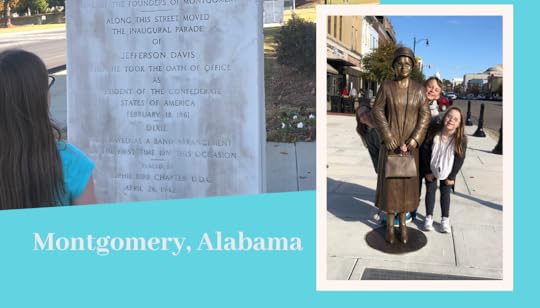
Montgomery, Alabama is a study in contradictions, with monuments to President of the Confederacy Jefferson Davis alongside those to Civil Rights icon Rosa Parks. The legacy of racism can seem intractable, and yet the story of former Governor George Wallace bears witness to the possibilities of healing.
I first heard from his daughter Peggy Wallace on the Cape Up podcast last spring, and when we were driving through Alabama, I introduced our kids to this story and had them listen. They heard the unforgettable and now infamous words Wallace spoke while barring African American students from integrating: “Segregation now. Segregation tomorrow. And segregation forever.”
They also heard about how Wallace, decades later, came to the African American congregation at the Dexter Avenue Baptist church to apologize. Peggy Wallace recently wrote a memoir, The Broken Road, which details her own life story and tells of her father’s transformation. He not only apologized but also appointed “160 African American Alabamians to state boards and agencies and doubled the number of black voter registrars in Alabama.” We all got a small sense of the humanity we share with a man like George Wallace. He lusted after power and grabbed it by whatever means he had available. And he came face to face with his own sin and brokenness and tried to make his wrongs right. He was glorious and despicable, as we all can be.
{Listen to Cape Up Podcast: Wallace}
………………….
SCENE ON RADIO

I’m so grateful for the work of John Biewen and Chenjerai Kumanyika, who already rocked my world with their comments on the series Seeing White, and who are doing it again with a new season for Scene on Radio exploring American Democracy. In the first episode, Rich Man’s Revolt, they explore the democratic system of government in place in some Native American tribes as well as the underpinnings of democracy (and power and wealth) for white Americans. I highly recommend taking the time to listen to this whole series.
………………….
NPR: Prisoners Find Rehabilitation Hope

On our sabbatical trip we spent four days learning some of the history of our nation when it comes to slavery, Jim Crow, Civil Rights, and mass incarceration. Our time concluded at the Legacy Museum in Montgomery, Alabama, with important and painful reminders of the legacy of injustice that continues through the criminal justice system today.
I’ll have more to say about that elsewhere, but I also want to share a hopeful coda to our time learning about so many young black and brown men who are behind bars. A few days after that museum, I listened to an interview about an initiative out of Bard College that provides a college education to hundreds of imprisoned men.
This interview suggests why programs like this would benefit our entire society. That said, there are very few such programs in existence today, in large part due to the way public funds are allocated to build new prisons rather than rehabilitate the people already behind bars. This interview with two of those men demonstrates the beauty and the inherent potential of every human being and what can happen when we believe that everyone can learn and grow and contribute. It is both sobering and hopeful and well worth hearing.
………………….
Ask Code Switch: What About Your Friends

If you are white, do you have any non-white friends? Most white people are only friends with other white people, for a variety of reasons. But if white people do have non-white friends, those friendships likely started in school. This episode of the Code Switch podcast explains how likely it is for people of various ethnic backgrounds to have friendships that extend beyond their typical groups. The hosts interview Dr. Beverly Tatum, author of Why Are All the Black Kids Sitting Together in the Cafeteria?
Listening to this conversation reminded me that one role I have as a white parent is to talk with my kids about the cultural power they hold simply because they are white. I want to encourage them to take the initiative towards friendships with kids of color in their schools. All attempts at friendship–especially as tween and teenagers–is risky. I want my kids to understand why it’s worth it for them to be the ones to take those risks. We all stand to gain if we can participate in breaking down these unspoken but very clear boundary lines.
………………….
If you haven’t already, please subscribe to receive regular updates and news. You can also follow me on Facebook , Instagram , and Twitter .
The post Amy Julia Recommends: Privilege and Race Podcasts appeared first on Amy Julia Becker.
Amy Julia Recommends: Faith and Family Podcasts

Amy Julia Recommends is a compilation of recommendations for podcasts, books, articles, etc., that I’ve shared on my social media platforms. This edition of Amy Julia Recommends features podcasts that I recommended in January focused on faith and family.
The Happy Hour Podcast

Awesome conversation between Beth Moore and Jamie Ivey about how to start the new year well, how to understand God’s hand in the suffering we’ve endured in the past, the #metoo movement and evangelicalism, and how to pray for our children (not to mention a recipe for the perfect ham and cheese sandwich!)! 
January 29, 2020
Four Tips on Teaching Your Child with Down Syndrome to Read
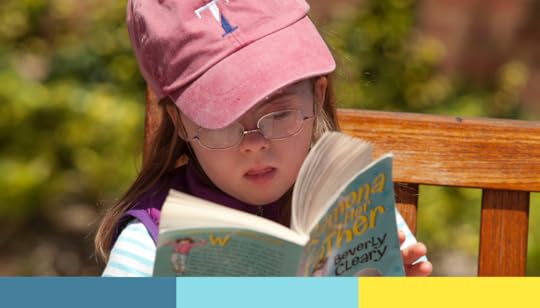
Teaching your child with Down Syndrome to read is an opportunity for you to welcome your child into reading with love. Here’s a glimpse of our family’s invitation into reading.
Penny is 14 now, and very reticent to have me tell any stories about her in this public space. And I very much respect those wishes! But I recently received a question on Facebook about how Penny learned to read way back when she was little, and I thought it might be helpful to share some thoughts about how she learned to read all those years ago. (She approves of me sharing about when she was younger!)
In our culture, we tend to treat reading as a skill to be acquired. At its core, however, I believe reading is an opportunity to love our kids and invite them into love.
Hours of Practice
Penny has enjoyed books since she was really young (like her mother).
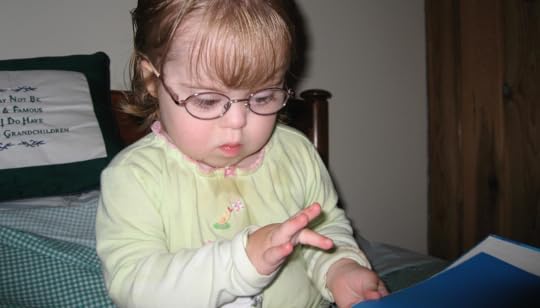 Decoding (being able to understand what word the letters on the page stand for) came more naturally for her than expected. She spent hours and hours as a little girl, flipping the pages of picture books, memorizing the words that went with those pages, and then learning how to pair her own knowledge of those sounds and symbols together.
I say it came “naturally,” though that really means it came with hours and hours and hours of practice—sitting next to one of us while we read out loud to her, flipping on her own.
Reading Comprehension
The next step for readers is to comprehend what they are reading. This was harder for Penny. In general, kids with Down syndrome have a harder time understanding abstract concepts, including the unspoken social messages people send to each other—in stories and in real life—all the time. Penny’s decoding skills remained strong, but we began to include goals in her Individualized Education Plan that involved understanding inferences and being able to put stories into her own words.
Still, that early foundation of confidence and fluency while reading continued, and she finds great comfort in snuggling up with a book and reading. Now she reads a lot of graphic novels and a lot of series about middle school girls encountering typical middle school girl social situations. But I’m not going to say too much about that in light of the aforementioned desire to protect her privacy!
Teaching Your Child
I’ve written before with ideas about how to help your kids love reading, and I know that every child is different. (In our family, for instance, Marilee was the opposite of Penny—comprehension came easily, decoding took years.) Reading can be a tremendous challenge for kids in general and for kids with Down syndrome in particular.
Most kids won’t grow up in Penny’s particular situation, with her particular (nerdy) parents, and with her particular access and interest in books.
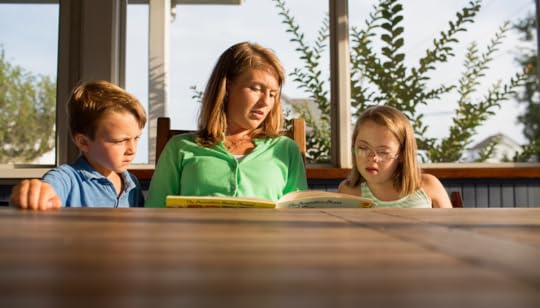
So yes, I can offer advice for teaching your child with Down Syndrome to read, such as: read a lot, provide a lot of exposure to books, go to the library, check out the resources offered by Down Syndrome Education International.
Four Tips
But before and beyond all that, I would say this to any parent who feels their child with Down syndrome is “stuck” or “behind” when it comes to reading:
One, ask for help. Ask for an evaluation. Get teachers and/or therapists to offer advice.
Two, consider what the next small step towards learning could be. What’s the next step that would challenge him/her but also build his/her confidence?
Three, focus on whatever is positive in your child’s experience of reading and build on that positive experience.
Four, consider what it would take for reading to be enjoyable. If flashcards are a fun teaching game, great. If they are tedious and serious and don’t seem to be helping, then limit the flashcards and find something more fun for both of you.
Reading is Relational
Reading, at its core, is relational, even though we often think of it as transactional. We think of reading as a skill we acquire so that we can get knowledge and produce information. But reading can also be about the relationship between a parent and child, the relationship between a child and the stories on the page. When it is seen as a relationship, reading can be a conduit of love and an invitation to love.
As parents, our job is not to produce efficient readers. We are, however, invited to introduce our children, as slowly or quickly as they need, to a world of adventures, information, emotions, and stories. We are invited to welcome them into reading with love.
If you haven’t already, please subscribe to receive regular updates and news. You can also follow me on Facebook , Instagram , and Twitter .
The post Four Tips on Teaching Your Child with Down Syndrome to Read appeared first on Amy Julia Becker.
January 26, 2020
Harriet: Hope in the Face of Oppression
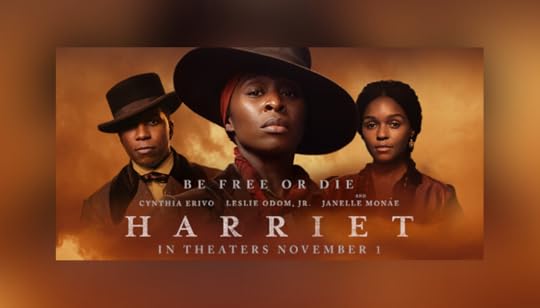
Harriet’s hope in the face of oppression and injustice—this true story of courage, faith, and hope is worth watching.
I used to think that the reason we learned the stories of famous men (and usually famous white men) in school was because white men had the most power, and therefore lived the most remarkable lives, worthy of the most remarkable stories. Movies like Harriet show me how very wrong I was.
I missed this movie when it was released in the theaters, but with William at a sleepover, and Penny and Marilee happily perched in front of Pitch Perfect 2 on the computer (please don’t judge. There’s no excuse. Yes, Marilee is 8.)—we settled in.
From what I can tell, the story of Harriet Tubman’s life is told with accuracy and little embellishment. An illiterate, enslaved woman with a brain injury escapes from her owners and goes on to rescue dozens of other enslaved people from bondage and oppression, then leads a raid during the Civil War that rescues hundreds more. The film stays focused on Harriet, but gives a sense of the historical situation in Philadelphia and throughout the mid-Atlantic with the passage of the Fugitive Slave Act.
If anything, it downplays the horrors of slavery itself with images of Harriet’s scarred back rather than depicting her under the lash and dreamlike memories of her siblings being sold away. Still, the message is clear, and these decisions make the film appropriate for younger viewers. (I truly wish we had invited the girls to watch with us instead of singing along to the a cappella college girls in the other room.) The actors are top-notch, the music is beautiful, the story of hope is compelling. It’s well worth watching.
Harriet’s Faith and Hope
I was particularly grateful that the filmmakers emphasized Harriet’s faith and hope in God as the center of her mission to free other enslaved people rather than treating that faith as a curiosity or a footnote. On this point everyone agrees—Harriet Tubman sustained a life-threating head injury as a child after which she suffered “spells” for the rest of her life. During those spells, she heard from God and saw what would happen in the future. Those moments guided and directed her in a mysterious, inexplicable manner.
Her visions contrast with the more reasonable approach advocated by William Still, an educated free black man who is a fellow conductor on the Underground Railroad and urges caution rather than faith. Her visions contrast with the violence and brute force of the white men who want to kill her. They suggest a different way of knowing than reason or power, a way of listening, paying attention, and responding with courage and hope to God.
I recommend Harriet for anyone ages 10 and up who wants a true story of courage, faith, and hope in the face of oppression and injustice.
If you haven’t already, please subscribe to receive regular updates and news. You can also follow me on Facebook , Instagram , and Twitter .
The post Harriet: Hope in the Face of Oppression appeared first on Amy Julia Becker.
January 22, 2020
What 7 Nights in an RV Taught Me About a Cotton Candy Life
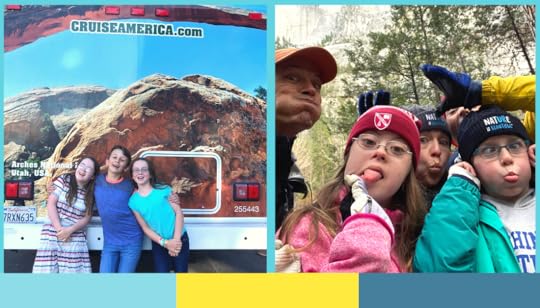
Seven nights in an RV taught me about a cotton candy life and the invitation to a different way, a way that leads to full life, full to overflowing.
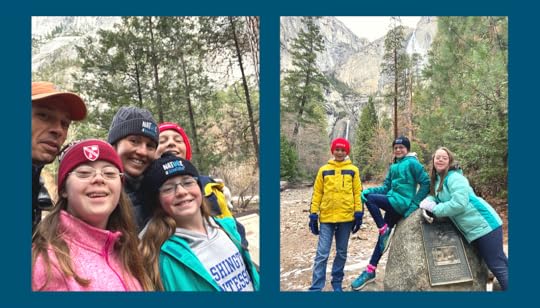
There was nothing productive about our seven-day tour of five National Parks during our sabbatical. We didn’t make anything. We didn’t earn anything. We didn’t achieve anything. Instead, we encountered beauty. We encountered each other.
We had long, meandering conversations. We gave thanks. We laughed and got annoyed with each other and lived together in a very small space (Truth be told, I did feel some sense of accomplishment that I lived in an RV for a week). We didn’t think profound thoughts or have rapturous spiritual moments.
But sitting in those open spaces, standing under those cliffs and forests, walking alongside rivers and waterfalls—it called to a deep part of my soul.
There’s a place within each of us that is quiet, gentle, and slow. Much like the trees in a forest, that place doesn’t shout for attention. Much like a pool of water, it doesn’t show off its depth. Rather, it whispers an invitation every so often, if only we have ears to hear.
National Parks
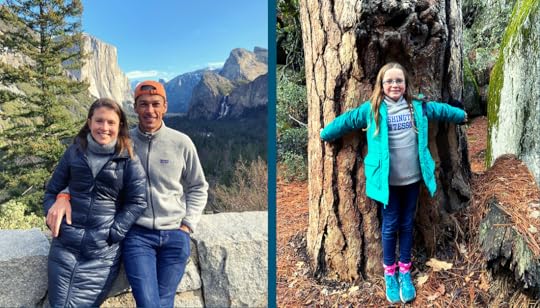
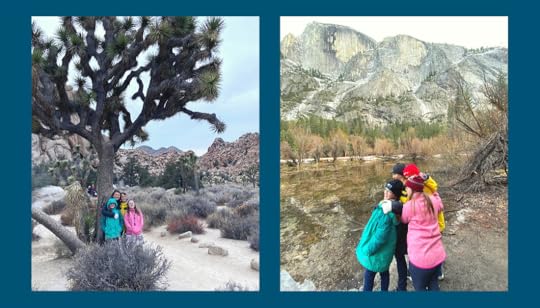
We picked up our RV outside of San Francisco. Our itinerary called for two nights in Yosemite, one in Sequoia, one in Death Valley, two more at the South Rim of the Grand Canyon, and a final night in Joshua Tree.
Over that week, we learned some cool stuff about geology, with the stubborn force of time pushing and pulling the land and rock into what have become majestic views. The trees along the way stood as object lessons—the scrappy, quirky Joshua trees, the grand and expansive redwoods and ponderosas—all patiently, quietly thriving. We saw spectacular vistas—cascading waterfalls in Yosemite, shimmering salt and sand in Death Valley, the light of the sunrise on the Grand Canyon.
During that week, Penny talked about her Sweet Sixteen (in two years’ time) and William explained to me how plate tectonics work and Marilee asked questions about how we know if God is real.
During that week, we laughed until we cried because Penny couldn’t find her socks until Marilee pointed out that she was, in fact, wearing them.
During that week, we lay on our backs on a picnic table and pointed out Orion’s belt (“Old Ryan’s” belt, Marilee would say) and the Big Dipper and Cassiopea’s chair in the heavens.
Universal Studios
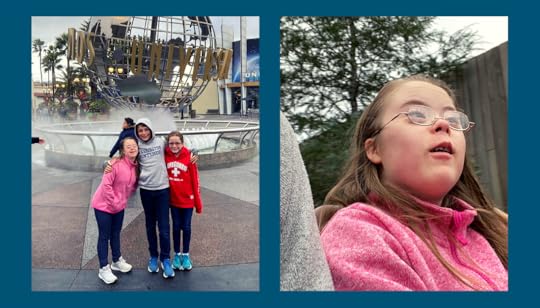
A few days after we dropped off the RV, we gave our kids their Christmas present, a day at Universal Studios Hollywood. We rode through Hogwarts Castle and Jurassic World. Penny conquered her fear and rode a roller coaster all by herself.
We saw how special effects are made and toured the sets of famous movies. The kids ate cotton candy and bought jelly beans and butterbeer, of both the hot and cold varieties.
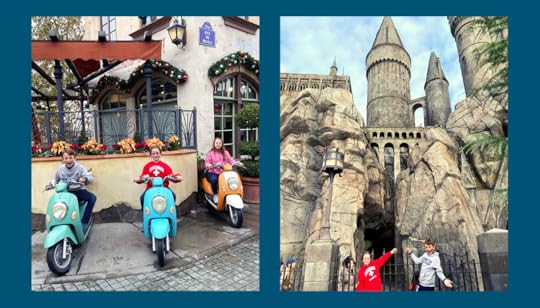
We had a lot of fun. But it also stood in vivid contrast to where we had been the week before.
More Than the Cotton Candy Life
Exploring the National Parks reminded me that cotton candy and roller coasters are not the only ways to enjoy life. In fact, the National Parks cost less and gave more.
Over the course of our week in the RV, I had the chance to read The Sabbath as Resistance by Walter Brueggemann, and I listened to Dallas Willard talk about spiritual disciplines. They both advocated intentional acts of what we would commonly call self-denial—practicing the Sabbath, practicing silence, solitude, and simplicity.
These disciplines deny the consumer mentality of immediate gratification. They stand in contrast to a day like ours at Universal, where we said yes to everything we wanted and then had some more.
One of the things Dallas Willard emphasized was that spiritual disciplines aren’t about morality. There’s nothing inherently good about fasting, for instance. There’s nothing inherently sinful about talking instead of remaining silent, of being with people instead of practicing solitude. If these disciplines are practiced in order to demonstrate morality, they fail. If they are done in order to be righteous, they really are just boring and serious. They result in shame and guilt rather than life and freedom.
Cotton Candy or Sustaining Feast
The life of the Spirit does call into question the goodness of a cotton candy life, but only because it puts before us an invitation to a feast that is both delicious and sustaining.
We are invited to a different way, a way that leads to full life, full to overflowing. We are invited to walk in the woods instead of ride the rollercoaster. We are invited to watch the sunrise instead of the laser light show. This path is quieter, and slower, but it also nourishes us forever.
Rooted and Grounded in Love
When we finished the trip, I bought three coffee table books (I like to think of them as pictures books for grownups) about trees—the newly illustrated version of The Hidden Life of Trees by Peter Wohlleben as well as Wise Trees and .
Now that we’re back, I spend some time every week paging through and gazing at the array of specimens within their pages. These trees are ancient, hundreds and even thousands of years old, dating back to before Jesus was born. There’s one photo of thirteen people spread out along the trunk of a tree in Mexico.
In Ephesians 3, Paul prays that followers of Jesus would be “rooted and grounded in love,” and his words remind me that I don’t need a rapturous sunset to know the deep and sustaining love of God. I can sink into the soil that grows us with patience and gentleness and grace in my very own living room. I can cultivate a practice of listening to the one who called creation into being every day.
The National Parks are certainly worth visiting, and I hope I will return often. But they are also a call to recognize the beauty and spaciousness within each one of us. And they are a reminder that I will turn to thrill rides and cotton candy to fill me up unless I pay attention to the beauty and life within my soul, unless I cultivate ears to hear the voice of love.
If you haven’t already, please subscribe to receive regular updates and news. You can also follow me on Facebook , Instagram , and Twitter .
The post What 7 Nights in an RV Taught Me About a Cotton Candy Life appeared first on Amy Julia Becker.
What Seven Nights in an RV Taught Me About a Cotton Candy Life
Seven nights in an RV taught me about a cotton candy life and the invitation to a different way, a way that leads to full life, full to overflowing.
There was nothing productive about our seven-day tour of five National Parks during our sabbatical. We didn’t make anything. We didn’t earn anything. We didn’t achieve anything. Instead, we encountered beauty. We encountered each other.
We had long, meandering conversations. We gave thanks. We laughed and got annoyed with each other and lived together in a very small space (Truth be told, I did feel some sense of accomplishment that I lived in an RV for a week). We didn’t think profound thoughts or have rapturous spiritual moments.
But sitting in those open spaces, standing under those cliffs and forests, walking alongside rivers and waterfalls—it called to a deep part of my soul.
There’s a place within each of us that is quiet, gentle, and slow. Much like the trees in a forest, that place doesn’t shout for attention. Much like a pool of water, it doesn’t show off its depth. Rather, it whispers an invitation every so often, if only we have ears to hear.
National Parks
We picked up our RV outside of San Francisco. Our itinerary called for two nights in Yosemite, one in Sequoia, one in Death Valley, two more at the South Rim of the Grand Canyon, and a final night in Joshua Tree.
Over that week, we learned some cool stuff about geology, with the stubborn force of time pushing and pulling the land and rock into what have become majestic views. The trees along the way stood as object lessons—the scrappy, quirky Joshua trees, the grand and expansive redwoods and ponderosas—all patiently, quietly thriving. We saw spectacular vistas—cascading waterfalls in Yosemite, shimmering salt and sand in Death Valley, the light of the sunrise on the Grand Canyon.
During that week, Penny talked about her Sweet Sixteen (in two years’ time) and William explained to me how plate tectonics work and Marilee asked questions about how we know if God is real.
During that week, we laughed until we cried because Penny couldn’t find her socks until Marilee pointed out that she was, in fact, wearing them.
During that week, we lay on our backs on a picnic table and pointed out Orion’s belt (“Old Ryan’s” belt, Marilee would say) and the Big Dipper and Cassiopea’s chair in the heavens.
Universal Studios
A few days after we dropped off the RV, we gave our kids their Christmas present, a day at Universal Studios Hollywood. We rode through Hogwarts Castle and Jurassic World. Penny conquered her fear and rode a roller coaster all by herself.
We saw how special effects are made and toured the sets of famous movies. The kids ate cotton candy and bought jelly beans and butterbeer, of both the hot and cold varieties.
We had a lot of fun. But it also stood in vivid contrast to where we had been the week before.
More Than the Cotton Candy Life
Exploring the National Parks reminded me that cotton candy and roller coasters are not the only ways to enjoy life. In fact, the National Parks cost less and gave more.
Over the course of our week in the RV, I had the chance to read The Sabbath as Resistance by Walter Brueggemann, and I listened to Dallas Willard talk about spiritual disciplines. They both advocated intentional acts of what we would commonly call self-denial—practicing the Sabbath, practicing silence, solitude, and simplicity.
These disciplines deny the consumer mentality of immediate gratification. They stand in contrast to a day like ours at Universal, where we said yes to everything we wanted and then had some more.
One of the things Dallas Willard emphasized was that spiritual disciplines aren’t about morality. There’s nothing inherently good about fasting, for instance. There’s nothing inherently sinful about talking instead of remaining silent, of being with people instead of practicing solitude. If these disciplines are practiced in order to demonstrate morality, they fail. If they are done in order to be righteous, they really are just boring and serious. They result in shame and guilt rather than life and freedom.
Cotton Candy or Sustaining Feast
The life of the Spirit does call into question the goodness of a cotton candy life, but only because it puts before us an invitation to a feast that is both delicious and sustaining.
We are invited to a different way, a way that leads to full life, full to overflowing. We are invited to walk in the woods instead of ride the rollercoaster. We are invited to watch the sunrise instead of the laser light show. This path is quieter, and slower, but it also nourishes us forever.
Rooted and Grounded in Love
When we finished the trip, I bought three coffee table books (I like to think of them as pictures books for grownups) about trees—the newly illustrated version of The Hidden Life of Trees by Peter Wohlleben as well as Wise Trees and .
Now that we’re back, I spend some time every week paging through and gazing at the array of specimens within their pages. These trees are ancient, hundreds and even thousands of years old, dating back to before Jesus was born. There’s one photo of thirteen people spread out along the trunk of a tree in Mexico.
In Ephesians 3, Paul prays that followers of Jesus would be “rooted and grounded in love,” and his words remind me that I don’t need a rapturous sunset to know the deep and sustaining love of God. I can sink into the soil that grows us with patience and gentleness and grace in my very own living room. I can cultivate a practice of listening to the one who called creation into being every day.
The National Parks are certainly worth visiting, and I hope I will return often. But they are also a call to recognize the beauty and spaciousness within each one of us. And they are a reminder that I will turn to thrill rides and cotton candy to fill me up unless I pay attention to the beauty and life within my soul, unless I cultivate ears to hear the voice of love.
If you haven’t already, please subscribe to receive regular updates and news. You can also follow me on Facebook , Instagram , and Twitter .
The post What Seven Nights in an RV Taught Me About a Cotton Candy Life appeared first on Amy Julia Becker.