Ronald H. Clark's Blog, page 4
June 23, 2024
Delivering a Dynamic Trial Opening Statement with Visuals
Cynthia Ozick, a shorty story writer, once said, “two things remain irretrievable: time and a first impression.” So true. Opening statement is a trial lawyer's best opportunity to make a positive first impression of the case.
I'm currently teaching two Visual Litigation and Today's Technology courses: one for FLEX JD students who are working and will get a degree after three and a half years at Seattle University Law School and a regular class. In both classes, we cover how to use visuals in trial, and this week the students are focusing on how to use visuals in opening statement to make a good first impression.
The key to delivering a good opening statement is being a good storyteller. Storytelling means engaging the jurors and persuading them with both your words and visuals. When they have a story construct, “conformation bias” comes into play, which means that the jurors sort through the evidence and draw everything that supports that story.
I tell the students that the first minutes of your opening statement are critical. That’s when you grab the jurors’ attention and make them want to hear and see more. Under the rule of primacy, what you begin with is what they are likely to remember. So, seize their attention and make them want to hear more. Begin with something memorable.
As a teaching tool, I use the prosecutor's opening statement in the Conrad Murray manslaughter trial for killing Michael Jackson because the prosecutor employed visuals to give a dynamic opening statement. As you can see from WATCHING THE VIDEO CLIP ABOVE, the prosecutor begins by stating the prosecution's theme of the case: "Michael Jackson literally put his life in the hands of Conrad Murray." The prosecutor then employs the visual of Michael Jackson on a gurney - his death bed. The prosecutor goes on to talk about and humanize Michael Jackson before turning to the chart of drugs that were administered to Jackson.
After watching the video clip, the students discuss the use of visuals in opening statement and then develop a digital slideshow - PowerPoint that they would use in their opening statement.
For more about trial visuals and today's technology, you might wish to get a copy of Visual Litigation. Just click here for more information


June 18, 2024
WINNING TRIAL VISUALS AND LAW SCHOOL COURSE—VISUAL LITIGATION AND TODAY’S TECHNOLOGY

This Summer, I am teaching two sections of Visual Litigation and Today’s Technology at Seattle University Law School. These are remote-learning courses. One course is a regular course and the other is a FLEX JD course that is offered to people who working or otherwise unable to attend the three-year program. The FLEX JD course goes for three and a half years.
The courses are perfectly suited for remote learning because students can not only listen and watch presentations online, engage in discussions, submit report and also actively perform with software and hardware.
I have developed a Canvas site that for your course. It has all the assignments, instructions, videos and so much more. The home page for the site can be seen above.
The subject matter is ideal for an online course, where students can receive guidance in leveraging litigation software, such as Sanction, TrialPad, and SmartDraw. Also, students can be involved role-play assignments for both a criminal and a civil case using downloadable case files via the book’s website.
Here are some of the students’ activities:
• Designing a crime scene diagram and a timeline utilizing the software SmartDraw;
• Creating opening statement and closing argument PowerPoints in civil and criminal cases;
• Developing a mediation slideshow;
• Working with nonlinear software, such as Sanction; and
• Touring professional technician and designer sites and discussing the pros and cons of the software and technical support that is offered.

The text for the course is Visual Litigation: Visual Communication Strategies and Today’s Technology, published by Full Court Press, which is the publishing arm of Fastcase. As you can tell from the title, the book focuses on visual presentations in the pretrial venue and in trial and technology. You can purchase the book by clicking on this link. If you are a professor, you can probably get a complimentary copy if you are considering using it for a course. Click here for Full Court Press.
My co-authors of the book are Thomas O’Toole, President of Sound Jury Consulting, and Patrick M. Muscat, former Assistant Prosecuting Attorney, Deputy Chief/Special Prosecution Divisions, Wayne County Prosecutor’s Office (Detroit, MI) and currently on the faculty for Vera Causa Group.
Should you or someone you know be interested in developing a course similar to the one described above or perhaps enrolling in Seattle University Law School, please contact me (206-930-6601 or clarkrh@comcast.net).
June 1, 2024
Eradication of American "Prosecutor Misconduct"

This Eradicating American “Prosecutor Misconduct” Handbook is designed for both prosecutors and defense counsel alike as well as anyone interested in the prosecutor’s roles and functions. Its modest goal is to eradicate what is called “prosecutor misconduct”. While this Handbook may serve as a guidebook for prosecutors, it also arms defense counsel with information that can be used to ensure that their clients receive a fair trial.
Have you visited the bookstore? ronclarkbooks.com
May 29, 2024
Montana Law School and an Advance Trial Advocacy Course

I just finished lecturing at the University of Montana Law School's Advanced Trial Advocacy course designed for fledgling trial lawyers. It was an opportunity to make 4 presentations and I attempted to practice what I preached in Powerful Presentation Handbook.

Here it is in a nutshell:
Whether your speech is intended to educate, persuade, inspire, or entertain, Powerful Persuasion Handbook explains how to structure, word, and deliver a successful speech from an attention-grabbing introduction through to a first-rate conclusion. The Handbook covers the nuts and bolt, such as choosing the right words and visual aids for the winning speech and triumphing over nervousness. This Handbook is an outgrowth of my career delivering speeches to audiences of all sizes, managing seminars, and training speakers. Most of all, this Handbook passes on what I learned from outstanding speakers about how to craft and deliver a powerful presentation.
Inside this accessible and comprehensive guide, you’ll learn:
• To have a purpose and passion for your speech that will connect with your audience.
• How to select the right words to engage your audience.
• Methods for using your voice, demeanor, and body language to enhance your talk.
• Speech devices that will make your talking points instantly comprehensible.
• How to employ the three Aristotelian appeals to an audience.
• Ways to enhance your speech with compelling visual aids.
• How to avoid “Death by PowerPoint.”
• Steps for staging and timing your presentation.
• Techniques, strategies, and skills from the best-of-the-best speakers.
• To project authenticity and sincerity to the audience.
• A proven methodology for preparing to make your presentation.
• And, so much more.
You can get a copy of Powerful Presentation Handbook by clicking here.Montana Law School and a Advance Trial Advocacy Course
I just finished lecturing at the University of Montana Law School's Advanced Trial Advocacy course designed for fledgling trial lawyers. It was an opportunity to make 4 presentations and I attempted to practice what I preached in Powerful Presentation Handbook.
Here it is in a nutshell:
Whether your speech is intended to educate, persuade, inspire, or entertain, Powerful Persuasion Handbook explains how to structure, word, and deliver a successful speech from an attention-grabbing introduction through to a first-rate conclusion. The Handbook covers the nuts and bolt, such as choosing the right words and visual aids for the winning speech and triumphing over nervousness. This Handbook is an outgrowth of my career delivering speeches to audiences of all sizes, managing seminars, and training speakers. Most of all, this Handbook passes on what I learned from outstanding speakers about how to craft and deliver a powerful presentation.
Inside this accessible and comprehensive guide, you’ll learn:
• To have a purpose and passion for your speech that will connect with your audience.
• How to select the right words to engage your audience.
• Methods for using your voice, demeanor, and body language to enhance your talk.
• Speech devices that will make your talking points instantly comprehensible.
• How to employ the three Aristotelian appeals to an audience.
• Ways to enhance your speech with compelling visual aids.
• How to avoid “Death by PowerPoint.”
• Steps for staging and timing your presentation.
• Techniques, strategies, and skills from the best-of-the-best speakers.
• To project authenticity and sincerity to the audience.
• A proven methodology for preparing to make your presentation.
• And, so much more.
You can get a copy of Powerful Presentation Handbook by clicking here.May 28, 2024
Did you miss it? New FREE BOOK devoted to Successful Trial Skills and Strategies

In case you missed the previous offer of this NEW FREE BOOK about SUCCESSFUL TRIAL SKILLS AND STRATEGIES, here is another opportunity to get it. Just CLICK HERE & CONTINUE TO CLICK THROUGH and the book will be emailed to you. You can not only read about successful trial skills and strategies but also watch them in video clips.
May 26, 2024
SUMMARIZING THE EVIDENCE IN THE TRUMP “HUSH MONEY” TRIAL
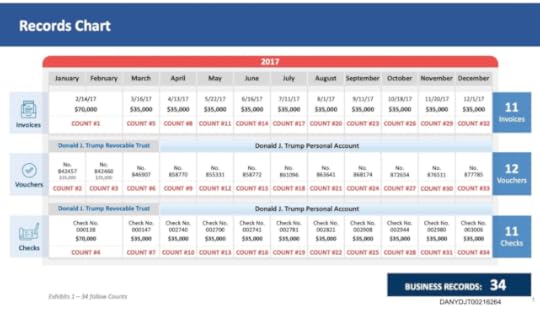
Because the summary chart has now become available, I thought it worthwhile to go back over the importance of this piece of evidence, which I discussed in a prior blog post and incidentally discussed with the audience at last week's Advanced Trial Advocacy course for new trial lawyers at Montana University Law School.
During the Trump “Hush Money” trial (May 11, 2024), the newspaper headline stated: “Prosecutors introduce key text and call records into evidence”
The newspaper article went on as follows:
“After Westerhout left the stand, prosecutors spent the rest of the day calling a series of custodial witnesses to introduce cell phone records into evidence. It made for a dry day of testimony, but it also provided key evidence that prosecutors plan to use to try to convince the jury that Trump is guilty of falsifying business records.
“Those records included a summary of the 34 charges against Trump – 11 invoices, 12 vouchers, and 11 checks. Through a Manhattan district attorney’s office paralegal, prosecutors introduced a summary explaining how the charges correlated with the documents in evidence.” (emphasis added)
The exhibit the article refers to is a summary chart. The summary chart admitted into evidence in the Trump case is shown above.
The New York law permitting the use of a summary chart is as follows:
"10.11. Exception for Summary of Voluminous Material The content of voluminous writings, recordings, or photographs may be proved by the use of a summary, chart, or calculation of the contents, provided the writings, recordings, or photographs are accurate, otherwise admissible, and cannot be conveniently examined in court. The party offering such evidence must make the originals available for examination, copying, or both, by other parties at a reasonable time and place. The party against whom the item is being offered must be given an opportunity to challenge its admission. And, the court may order the offering party to produce the underlying originals in court."
New York’s law mirrors Federal Rule of Evidence 1006, which states:
"The contents of voluminous writings, recordings, or photographs which cannot conveniently be examined in court may be presented in the form of a chart, summary, or calculation. The originals, or duplicates, shall be made available for examination or copying, or both, by other parties at reasonable time and place. The court may order that they be produced in court."
These rules authorizing the admissibility of summary charts are commonsensical -allowing the voluminous pile of evidence that can’t be conveniently examined - into evidence in an form that jurors can clearly understand. Jurors don’t need to plow through the papers and photos; they can instead just look at the summary chart.
Wise trial lawyers should take advantage of this rule when faced with a pile of paper and/or photos.
May 11, 2024
SUMMARY CHART: POWERFUL EVIDENCE IN THE TRUMP "HUSH MONEY" TRIAL
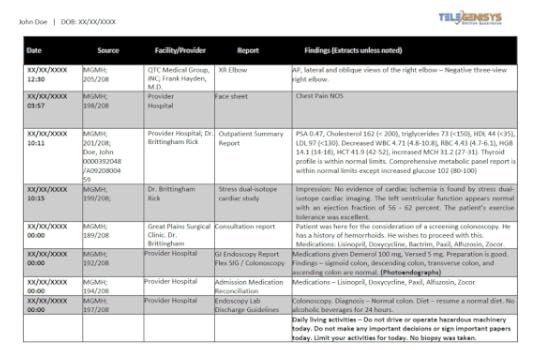
Illustrative Summary Chart
The headline for the May 10, 2024 newspaper article about Trump's "hush money" trial read "Prosecutors introduce key text and call records into evidence" Then, the article went on to state:
After Westerhout (a prosecution witness) left the stand, prosecutors spent the rest of the day calling a series of custodial witnesses to introduce cell phone records into evidence.
It made for a dry day of testimony, but it also provided key evidence that prosecutors plan to use to try to convince the jury that Trump is guilty of falsifying business records.
Those records included a summary of the 34 charges against Trump – 11 invoices, 12 vouchers, and 11 checks. Through a Manhattan district attorney’s office paralegal, prosecutors introduced a summary explaining how the charges correlated with the documents in evidence."
The applicable New York evidence rule that supports the admissibility of a summary chart is 10.11. Exception for Summary of Voluminous Material, and it provides for the admissibility of a summary chart as follows:
The content of voluminous writings, recordings, or photographs may be proved by the use of a summary, chart, or calculation of the contents, provided the writings, recordings, or photographs are accurate, otherwise admissible, and cannot be conveniently examined in court. The party offering such evidence must make the originals available for examination, copying, or both, by other parties at a reasonable time and place. The party against whom the item is being offered must be given an opportunity to challenge its admission. And, the court may order the offering party to produce the underlying originals in court.
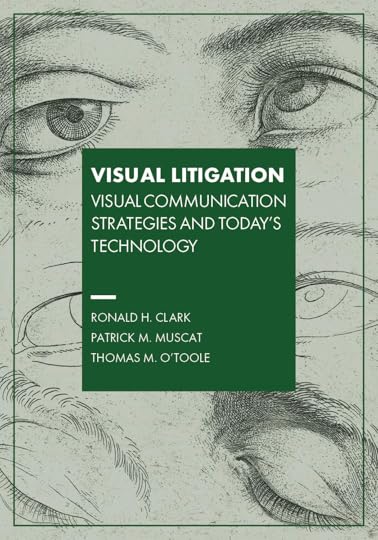
In my book Visual Litigation: Visual Communication Strategies and Today's Technology my co-authors and I discuss Federal Rule of Evidence 1006, which is similar to New York's rule, as follows:
"Fed. R. Evid. 1006 provides:
The proponent may use a . . .chart. . . to prove the content of voluminous writings, recordings, or photographs that cannot be conveniently examined in court. The proponent must make the originals or duplicates available for examination or copying, or both, by other parties at a reasonable time and place. And the court may order the proponent to produce them in court.'
"Rule 1006 makes common sense. If there are too many writings, recordings or photos for the jury to conveniently examine, they can be summarized on a chart. To lay an evidentiary foundation for a summary chart, the proponent must establish that the original writings, recordings or photographs would be admissible, that they cannot be conveniently examined in court, and that the chart accurately summarizes the originals.
"U.S. v. Milkiewicz , is an example of how to lay a foundation for a Rule 1006 chart and its benefits. In Milkiewicz, the defendant appealed a conviction of defrauding a federal court when he collaborated with a court administrator, sold office supplies to the court at inflated prices and billed it for more products than he delivered. At trial two summary charts were admitted into evidence, one showing the allegedly fraudulent sales transactions and the other showing discrepancies in defendant's income tax reporting. U.S. Court of Appeals, First Circuit, discussed what must be established as an evidentiary predicate for a summary chart to be admissible:
Rule 1006 allows ‘‘[t]he contents of voluminous writings which cannot conveniently be examined in court [to] be presented in the form of a chart, summary, or calculation.’’ Fed. R. Evid. 1006. It creates an exception to Rule 1002, which requires that originals be used to prove the content of writings, recordings and photographs. Evidence admitted under Rule 1006 must be otherwise admissible and remains subject to the usual objections under the rules of evidence and the Constitution. ‘Most notably, Rule 1006 evidence normally is objectionable if the voluminous source material on which it is based is inadmissible.’ . . . The proponent must show that the voluminous source materials are what the proponent claims them to be and that the summary accurately summarizes the source materials. . .
Under Rule 1006, the underlying documents must be made available to the other parties, and ‘‘[t]he court may order that they be produced in court.’’ The discretion accorded the trial court to order production of the documents means that the evidence underlying Rule 1006 summaries need not be introduced into evidence . . ., but nothing in the rule forecloses a party from doing so. For example, we can imagine instances in which an attorney does not realize until well into a trial that a summary chart would be beneficial, and admissible as evidence under Rule 1006, because the documents already admitted were too voluminous to be conveniently examined by the jury.
Most often, however, we think it likely that an attorney would anticipate the benefits of summarizing voluminous writings and would take advantage of the opportunity offered by Rule 1006 to present only the summary at trial. Consequently, while in most cases a Rule 1006 chart will be the only evidence the fact finder will examine concerning a voluminous set of documents, . . ., in other instances the summary may be admitted in addition to the underlying documents to provide the jury with easier access to the relevant information. . .
The summary chart in the Trump trial (which has not yet been published on line) will be not only a valuable piece of evidence that the prosecution can rely upon in closing argument to tell the story in a way jurors can easily understand but also an exhibit the jurors will turn to rather than the original documents.This latter practice has drawn criticism as inconsistent with the purpose of Rule 1006 to provide an exception to the ‘‘best evidence rule’’ because, ‘‘[i]f the underlying evidence is already admitted, there is no concern that a summary is used in lieu of the ‘best evidence.’ ’’ . . . We agree with the Fifth Circuit, however, that ‘‘[t]he fact that the underlying documents are already in evidence does not mean that they can be ‘conveniently examined in court.’ ’’. . Thus, in such instances, Rule 1006 still serves its purpose of allowing the jury to consider secondary evidence as a substitute for the originals. (citations omitted)
April 30, 2024
Get your FREE copy of TRIAL ADVOCACY GOES TO THE MOVIES BOOK

Get your FREE copy of TRIAL ADVOCACY GOES TO THE MOVIES BOOK - Click here.
What do My Cousin Vinny and Atticus Finch have in common? A lot more than you might think. While Atticus Finch’s closing argument in To Kill a Mockingbird continues to inspire viewers to attend law school, the cross-examinations in My Cousin Vinny—while hilariously funny—offers an equally compelling example of excellent trial advocacy.
With the aid of movie clips that are just a click away, this book explores advocacy from pretrial preparation through closing argument.
Inside this concise yet comprehensible book, which is includes movie clip gems that you can watch, you’ll learn:
• A methodology for writing the script for your trial performances from opening statement through closing argument
• How to effectively engage and deliver a message to an audience—the jury
• Trial advocacy strategies, techniques, and skills
• Whom to cast as witnesses to be called at trial
• How to be successful in trial by watching movies based on real trials
• The ethical and legal boundaries that trial lawyers should not cross
• How to impart your message to a jury with storytelling and visuals
• The concession-seeking cross-examination methodology
• And, so much more
Get your copy of the book with accompanying movie demonstrations of successful trial advocacy today.
April 27, 2024
Pretrial Advocacy in the Part-time Hybrid-online FLEX JD Program
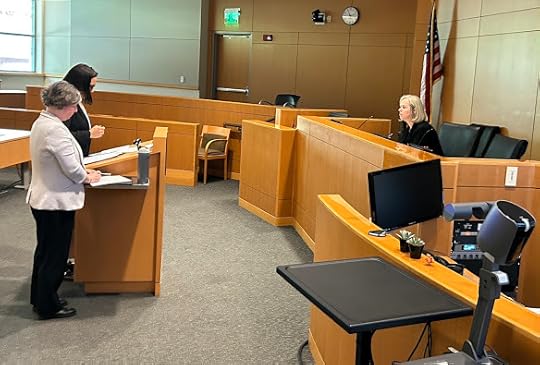
Here are students in my Seattle University Law School’s Pretrial Advocacy course arguing a mock motion during the last class of the course. While King County Superior Court Judge Melinda Young presided over some of the arguments - for instance the one shown here, Judge Patrick Oishi presided over others during this Saturday’s event. This is the culmination and a high point of the course for the students.
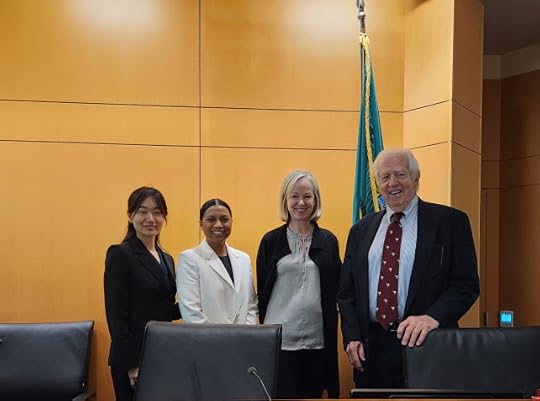
My students are participating in S.U. Law School’s FLEX JD program which is designed for people who are working or otherwise occupied during the day. The FLEX JD program runs for three and a half years rather than the traditional three years, and almost all classes are done online commencing at 6 p.m. with two weekend sessions where the students attend in-person classes at the law school.
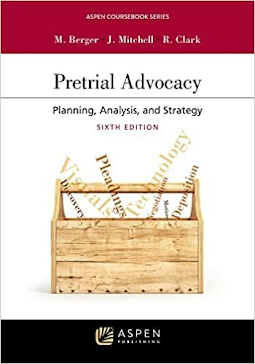
The curriculum for the FLEX JD courses is basically the same as those for regular students. For instance, my Pretrial Advocacy class uses the same text book – my Pretrial Advocacy: Planning, Analysis, and Strategy (w/ Connected eBook with Study Center) – as that used in regular classes.
The subject matter covered during the course is fundamentally the same but condensed to one class per week rather than two sessions. Learn more about the course by visiting Seattle University Law School’s website.