Ronald H. Clark's Blog, page 3
October 15, 2024
FREE copy of ADDRESSING THE JURY: OPENING STATEMENT & CLOSING ARGUMENT
Get your FREE COPY of ADDRESSING THE JURY: OPENING STATEMENT & CLOSING ARGUMENT

Get your FREE COPY of ADDRESSING THE JURY: OPENING STATEMENT AND CLOSING ARGUMENT - CLICK HERE
Addressing the Jury: Opening Statement and Closing Argument offers an in-depth explanation of how to craft a winning opening statement and summation and how to persuasively deliver them to a jury. Author Ronald H. Clark was a career prosecutor in King County, Washington, Senior Training Counsel at the National Advocacy Center, and he is currently a Distinguished Practitioner in Residence at Seattle University Law School where he has taught trial advocacy, pretrial advocacy, essential lawyering skills and visual litigation and technology.
Inside this accessible and comprehensive handbook, you’ll learn:
How to structure a persuasive opening statement and closing argumentCompelling storytelling techniques for a “golden opportunity” opening statementAttention-grabbing beginnings for an opening statement and closing argumentHow to deal with case weaknesses in an opening statementStrong concluding remarks for an opening statement and closing argumentClosing argument pitfalls to avoidHow to be a great persuader utilizing Aristotelian arguments and speech devicesHow to bring your opening statement and closing argument alive with visual aids8 techniques for being a great persuader—having a winning deliveryTrial attorney role models for you to consider emulatingTriumphing over nervousness

October 8, 2024
GOVERNMENT’S WELL-CRAFTED BRIEF AGAINST TRUMP
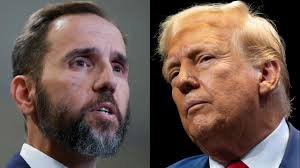
On October 2, 2024, Special Counsel Jack Smith filed the government’s motion for an immunity determination –Were Donald Trump’s acts done in his official capacity or as the government contends, “At its core, the defendant’s scheme was a private criminal effort.”
The 165-page brief, which is worth reading for a full understanding of Trump's conduct and culpability, succinctly lays out what the defendant Trump did and the alleged three conspiracies as follows:
“When the defendant lost the 2020 presidential election, he resorted to crimes to try to stay in office. With private co-conspirators, the defendant launched a series of increasingly desperate plans to overturn the legitimate election results in seven states that he had lost—Arizona, Georgia, Michigan, Nevada, New Mexico, Pennsylvania, and Wisconsin (the “targeted states”). His efforts included lying to state officials in order to induce them to ignore true vote counts; manufacturing fraudulent electoral votes in the targeted states; attempting to enlist Vice President Michael R. Pence, in his role as President of the Senate, to obstruct Congress’s certification of the election by using the defendant’s fraudulent electoral votes; and when all else had failed, on January 6, 2021, directing an angry crowd of supporters to the United States Capitol to obstruct the congressional certification. The throughline of these efforts was deceit: the defendant’s and co-conspirators’ knowingly false claims of election fraud. They used these lies in furtherance of three conspiracies: 1) a conspiracy to interfere with the federal government function by which the nation collects and counts election results, which is set forth in the Constitution and the Electoral Count Act (ECA); 2) a conspiracy to obstruct the official proceeding in which Congress certifies the legitimate results of the presidential election, and 3) a conspiracy against the rights of millions of Americans to vote and have their votes counted.”
Click here for the full brief.
October 2, 2024
2 Techniques to Combat Public Speaking Nervousness
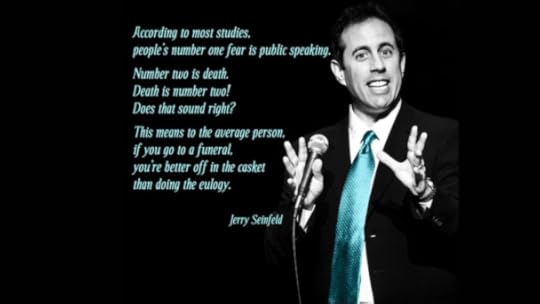
Nervousness or stage fright can interfere with an effective delivery of a presentation. Even experienced trial lawyers, politicians, presenters, actors, comedians and so on are nervous. We all get nervous.
As comedian Bob Hope said, “If you’re not nervous before you perform, you’re probably dead.” We cannot make nervousness go away, but we can convert it into good energy. What we think of as nervousness is trapped energy. We just need techniques for converting bad energy into good energy.
Two techniques for combating nervousness and turning bad energy into good energy are explained in Chapter 12 of Powerful Presentation Handbook: The Nuts and Bolts of Crafting and Delivering a Powerful Presentation.
Click here to get a FREE COPY OF CHAPTER 12 "NERVOUSNESS".

September 24, 2024
INQUESTS – WHAT ARE THEY GOOD FOR?

If the question is: “Inquests into police officer-involved deaths, what are they good for?” The answer came with a front-page article in The Seattle Times (9/20/24) about inquests held into police officer involved deaths in King County (Seattle). And, the answer in the article is: “Absolutely nothing.” Indeed, the newspaper article’s headline is “Critics: Inquests ‘horrific in every way”.
The Seattle Times article begins with this description:
“A King County program meant to provide answers for families of those killed by police - revised in 2018 to broaden its scope and address inequities - remains broken and should be fixed, replaced or abandoned, say prosecutors and private attorneys involved in the process.
“The coroner's inquest program is unique in Washington and the United States because it impanels a jury to review the circumstances around every law enforcement related death. The 2015 revisions made this program more accessible to the families of those killed providing them with an attorney, and expanded the scope of the inquiries in response to protests that the old process was tilted heavily in favor of police.”
Here are but some of the problems with the current situation. While all the interested parties agreed that inquests should be conducted within 90 days of the person’s death, the current wait time is between four and seven years and there is a backlog. Before 2018 revisions, the inquest’s jury’s finding focused on whether there was criminality involved in the killing and the jury’s findings were considered by the King County Prosecutor in making a decision of whether criminal charges should be filed. However, former Prosecutor Dan Satterberg abandoned the idea of awaiting an inquest jury’s findings, and the Prosecutor’s office now makes a filing decision without considering the inquest jury’s determinations.
Even those who previously supported inquests, such as former Superior Court Judge Terrence Carroll and Sam Pailea, co-chair of the panel that worked on reform of the inquest process, have stated that King County should abandon inquest altogether.
There are deaths that occur under suspicious circumstances where holding a coroner’s inquest makes sense - think of the Chappaquiddick case, but the King County inquest process for officer-involved deaths is not the answer.
Chapter 8 “Police Officer-Involved Violence and Death” in my book Roadways to Justice, Reforming the Criminal Justice System examines cases involving police officer-involved violence and death, and the chapter offers roadmaps to end systematic police violence by studying past successful and failed efforts to end unjustified police violence.
You can get your free copy of Chapter 8 just click here
September 17, 2024
6 Ways to use Visuals as Weapons on Cross-Examination
At Seattle University Law School I teach an online course entitled “Visual Litigation and Today’s Technology". Cross-examination visuals are featured because they can be extremely powerful weapons for cross-examination. They can be used to gain concessions either supporting your case theory or undermining the other side’s case theory.
Visuals can also be very effective for impeaching a witness. For examples, impeachment visuals can include:
1. a prior inconsistent statement either in a document or in a visual, such as a video deposition;
2. a prior conviction—judgment and sentence document;
3. a visual that establishes that the witness did not have personal knowledge about that which the witness testified;
4. a visual that proves that the witness’s testimony is improbable;
5. a visual that reveals the witness’s bias or interest;
6. and a statement in a learned treatise that conflicts with the witness’s testimony.
“Visual Litigation and Today’s Technology” is a 2-credit course. In this online course, students interested in litigation learn how to integrate technology into their trial visual presentations and case. Just as visuals and technology have become a centerpiece in modern life, they also are the centerpiece in trial. Judges and jurors expect lawyers to use visuals with today’s technology.
The “Visuals” course is taught in the context of mock civil and criminal cases, giving students simulated real-world experiences working with visuals and cutting-edge technology. This experiential course will allow students in role-play assignments to plan the cross-examination of witnesses with visuals.
This course is comprehensive in its exploration of visual communication strategies and technology, including, among other topics: the ethical and legal boundaries to what visuals may be displayed in trial; evidentiary foundations for visuals (animations, demonstrations, laser scanner images and so on); visual advocacy in both a pretrial venue and a courtroom, from opening statement through closing argument; the creation of visuals; litigation software, such as Sanction, TrialPad, and SmartDraw; and meeting the trial judge's expectations of a trial lawyer's competency when employing technology.
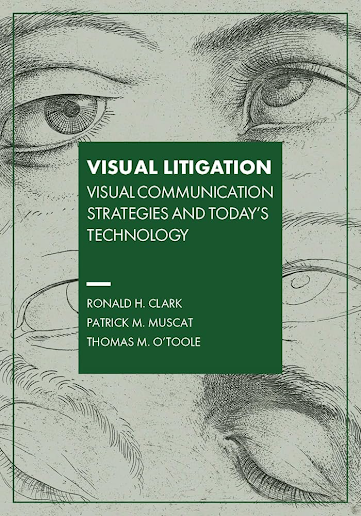
The text for the course is my book Visual Litigation: Visual Communication Strategies and Today’s Technology, which is being published by Full Court Press, the publishing arm of Fastcase. The text offers examples of how visuals were used on cross-examination in notable cases, such as Abraham Lincoln’s cross-examination with a Farmer’s Almanac or the prosecutor’s cross-examination of Richard Hauptmann in the Lindbergh kidnapping/murder case with a ransom note and Hauptmann’s diary.
September 12, 2024
Answer Tough Questions from the Bench

Concrete advice on how to field tough questions from the appellate bench, which applies equally well to fielding hard questions from a trial judge, is provided by Justice Paul Anderson of the Minnesota Supreme Court (ret.) in Chapter 16 of The Appellate Prosecutor book. Justice Anderson states:
“Appellate judges enjoy asking questions. It is our lifeblood. It is how we seek to understand a case, eliminate ambiguity, and test a proposed rule of law. We do not purposely think up difficult questions to put appellate advocates on the spot. Nevertheless, many of our questions are difficult to answer because we are testing or probing in an effort to solve complex legal probing in an effort to solve complex legal problems. “Most good appellate advocates welcome difficult questions because they know that this is how they can engage in a dialogue with the court. They know that it is only through such a dialogue that they and the court can act together to explore the nuances of complex legal issues.
“But not all appellate advocates appreciate difficult questions; many view them as a necessary burden. Why is there this difference? Generally speaking, it can be characterized as a difference in attitude, anticipation, expectation and preparation. By using the foregoing attributes properly, an advocate is able to significantly change the dynamics of oral argument so that even the most difficult questions are welcome or at least palatable. Fortunately, some principles and practices enable an advocate to successfully field the difficult questions. What follows are a few of these principles.”
Justice Anderson’s principles, insights and points and they include:
• Entering the Dialogue: The Gift; Listen and Respond to the Question Asked and The Courteous Conversationalist
• Preparation and Anticipation: How the Court Prepares and How the Court Views Your Case - The Three Categories
• Answering Particular Types of Questions: The Premature Question; The Softball Question; The Stupid Question; The Nasty Hypothetical Questionn and Opposing Counsel's Questions
• A Final Word About Preparation
Get the entire Chapter 16 clicking here .
September 5, 2024
Want to be a Great Communicator in Trial
Get your free GUIDE to being A GREAT COMMUNICATOR IN TRIAL
Oratory has been defined as “the art of making formal speeches which strongly affect people's feelings and beliefs"
Learn the THREE CHARACTERISTICS of a GREAT COMMUNICATOR IN TRIAL in this
ADVOCACY NEWS & VIEWS Newsletter.
August 27, 2024
WANT TO BE A BETTER WRITER? Read this and have a laugh too.

As an advocacy you need those vital writing skills. Sally Bulford, a Utah lawyer, provided these humorous writing pointers under the title “How to Write Good”.
1. Avoid alliteration. Always.
2. Prepositions are not words to end sentences with.
3. Avoid cliches like the plague. (They're old hat.)
4. Employ the vernacular.
5. Eschew ampersands & abbreviations, etc.
6. Parenthetical remarks (however relevant) are unnecessary.
7. It is wrong to ever split an infinitive.
8. Contractions aren't necessary.
9. Foreign words and phrases are not apropos.
10. One should never generalize.
11. Eliminate quotations. As Ralph Waldo Emerson said, "I hate quotations. Tell me what you know."
12. Comparisons are as bad as clichés.
13. Don't be redundant; don't use more words than necessary; it's highly superfluous.
14. Be more or less specific.
15. Understatement is always best.
16. One-word sentences? Eliminate.
17. Analogies in writing are like feathers on a snake.
18. The passive voice is to be avoided.
19. Go around the barn at high noon to avoid colloquialisms.
20. Even if a mixed metaphor sings, it should be derailed.
21. Who needs rhetorical questions?
22. Exaggeration is a billion times worse than understatement.
August 25, 2024
Trial Advocacy Checklists for You

Checklists are critical to pretrial and trial work. To illustrate the importance of checklists, Dr. Atul Gawande tells the true story of an October 30, 1935 airplane flight competition that the U.S. Army Air Corps held at Wright Air Field in Dayton Ohio to determine which military-long range bomber to purchase. Boeing’s “flying fortress” was the likely winner. But, after the plane reached three hundred feet, it stalled, turned on its one wing and crashed, killing its pilot and another of its five crew members. The pilot had forgotten to release a new locking mechanism on the elevator and rudder controls. The plane was dubbed “too much airplane for one man to fly.”
Nevertheless, a few of the Boeing planes were purchased, and a group of test considered what to do. They decided that the solution was a simple pilot’s checklist. With the checklist in use, pilots flew the B-17 1.8 million miles without an accident. Dr. Gawande in his book The Checklist Manifesto: How to Get Things Right (p. 34) concludes, “Much of our work today has entered its own B-17 phase. Substantial parts of what software designers, financial managers, firefighters, police officers, lawyers, and most certainly clinicians do are now too complex for them to carry out reliably from memory alone. Multiple fields, in other words, have become too much airplane for one person to fly.”
Dr. Gawande who headsedthe World Health Organization’s Safe Surgery Saves Lives program recounts that after the World Health Organization introduced the use of checklists for surgeons, research of nearly 4000 patients showed the following: major complications fell 36 percent; deaths fell 45 percent; infections fell almost 50 percent. Rather than the expected 435 patients expected to develop complications, only 277 did. The checklist spared 150 patients from harm and they spared 27 of those 150 from death. (The Checklist Manifesto, p. 154)
Just as checklists are critical for pilots and doctors, they are necessary for trial lawyers as well. At the end of almost every chapter in both Pretrial Advocacy, 5th Edition and Trial Advocacy 4th Edition is a checklist of matters that are essential to effective pretrial and trial advocacy. The following is an example of a checklist that follows the Closing Argument chapter in Trial Advocacy.
CLOSING ARGUMENT CHECKLIST
Preparation
Preparation begins soon after entry into the case. Counsel should keep notes of ideas for closing.
Prior to trial, write the closing argument, with final editing during trial. Reduce closing to outline notes.
Rehearse closing argument. Just like opening statement, commit concluding remarks to memory so they will flow smoothly.
Content
Case theories should serve as guides for planning closing.
Regarding the legal theories, jury instructions, among others, serve as the core around which to craft closing argument:
Elements of the claim or defense,
Burden of proof,
Issues in dispute, and
The other side’s case theory.
In arguing the factual theory, counsel should use jury instructions that pertain to crucial facts, as well as a story embodying those facts.
The case theme should be incorporated into the closing.
Closing should meet the other side’s case theory and attacks.
Juror beliefs and expectations that could be detrimental to the case should be identified, met, or distinguished from your case.
Length
Length of closing should be suitable to the complexity of the case, and should not run overly long.
Aristotelian Appeals
Closing should make all three appeals: logical, emotional, and ethical.
Persuasive language should include:
Words with connotations, and
Rhetorical devices, such as postponement, concession, anti¬thesis, metaphors, similes, analogies, and rhetorical questions.
Structure
The closing should begin by seizing the jury’s attention.
The body of the closing should be well organized, emphasizing the strengths of the case before dealing with case weaknesses or the other side’s attack.
The closing should conclude by referring to the theme and reasons for the requested verdict, thus motivating the jury to make the right decision.
Rebuttal should refute the other side’s arguments and finish strong.
Bench Trial
Counsel should:
Be prepared to answer the judge’s questions during closing.
Not spend an inordinate amount of time explaining the basic law in the case.
Assist the court in making findings of fact and conclusions of law.
Make logical and ethical arguments. Do not seek to appeal the judge’s emotions, except as telling of the facts evokes emotion.
Be concise and to the point.
Be candid, accurately stating the facts and law, and conceding what should be conceded.
Delivery
Counsel should:
Project sincerity;
Avoid distracting behavior, such as pacing back and forth;
Maintain eye contact with jurors or judge;
Deliver the closing with a minimal outline;
Position her body to hold the fact finder’s attention; and
Make purposeful movements.
Counsel should use trial visuals effectively:
Ensure use is permissible,
Make visuals persuasive,
Position equipment and visuals appropriately, and
Have a backup plan if equipment malfunctions.
Ethical Boundaries
Counsel should not state a personal opinion.
Counsel should not venture outside the record.
Counsel should not introduce irrelevant matter.
Counsel should not invoke the golden rule.
For more advocacy books go to ronclarkbooks.com
July 7, 2024
Abe Lincoln Trial Lawyer - History, Wit & Good Advice

George (Bob) Dekle’s book entitled Prairie Defender: The Murder Trials of Abraham Lincoln provides a brilliant anatomy of Lincoln’s murder trials. It is a great read on multiple levels. First, it reveals the true nature of Lincoln’s trial practice, debunking myths with solid evidence and providing an accurate description of his trial work. For instance, while some historians have asserted that Lincoln shunned any criminal cases in favor a civil trial practice, Dekle not only chronicles his murder trials but also notes that he tried “. . .approximately one per year for his entire career, not a shabby number for a general practitioner in a scarcely populated jurisdiction.” For any Lincolnophile seeking to fully understand the man and his law practice, this book is a must.
On a second level, Prairie Defender is packed with intriguing trial war stories. For example, the case of People versus Archibald and William Tailor was so remarkable that as Dekle states, “Lincoln tried many interesting cases in his career, but the facts of the case under consideration were so bizarre that he felt compelled to reduce them to writing.” How often does it happen that an alleged murder victim is found very much alive?
Some of the stories and anecdotes in Prairie Defender are amusing. In the People versus Anderson trial, the prosecutor (who had arrived after the trial had commenced) in closing argument pointed at a young man at the defense table and said, “Gentlemen of the jury, if you wanted any additional evidence of this man’s guilt, it would only be necessary for you to recur to his boldness and impudence during this trial. You can see guilt written all over his countenance.” At that point the young man rose and said, “General Linder, you are mistaken; I am not the criminal, but my name is Rosette; I am a lawyer, and one of the counsel for the defendants.”
Third, Dekle, who is a veteran trial lawyer having tried hundreds of homicide cases, provides astute analyses of Lincoln’s murder trials which are instructional for trial lawyers who want to understand how they can improve their craft. Here is a taste of the author’s discernment:
“A prosecutor needs five ingredients to ensure a conviction: (a) an agreeable jury, (e) an egregious crime, (i) an innocent victim, (o) an odious defendant and (u) undeniable guilt. Of the five vowels, (a) is the most important, and the next three, (e), (i), and (o) are essential for the prosecutor to have that critical first ingredient. No matter how undeniable the guilt of the accused, if the jurors are not upset about the crime, if they dislike the victim, and if they sympathize with the defendant, the verdict is going to be not guilty. On the face of things, the Wyant case had all the vowels.. . . (Dekle goes on to apply the vowels to the case).”
These are but a few examples of why Prairie Defender is both engaging and edifying. This is a book that belongs in the library of anyone with an interest in trial work, Lincoln or just a good read.