Ronald H. Clark's Blog, page 10
November 25, 2022
THE BEST BOOK ON APPELLATE ADVOCACY
WHAT IS THE BEST APPELLATE ADVOCACY BOOK?
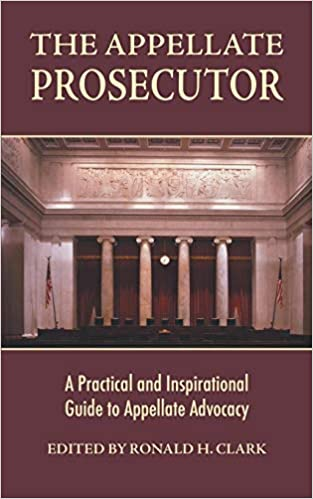
The Appellate Prosecutor: A Practical and Inspirational Guide to Appellate Advocacy is the best book on appellate advocacy, and it comes in a small package. Yes, it’s my opinion, but I’m biased because I had the honor to engage the authors and edit their work.
However, it’s not just my opinion that it’s the best. It is the opinion of others who know what it takes to be an appellate advocate. Judge Charles Moylan, thirty-year veteran of the appellate bench and renowned lecturer put it this way: "This work in my judgment will find an indispensable place on the desk, or at the bedside on the night before argument, of every successful appellate prosecutor."
Michael D. Schwartz, Senior Deputy District Attorney, Writs, Appeals and Training Supervisor, Ventura, CA said, "I have been a prosecutor for 25 years, and have spent about half of that time handling writs and appeals. I thought I knew what I was doing, but in reading your book I found myself thinking many times, ‘Oh! So that's how I'm supposed to do it!’ Thanks again for publishing a great book!"
Annina Mitchell, Utah Solicitor General, said of the book, "I have attended many appellate practice seminars. Few of those presentations were as helpful to the appellate litigator as those in this book, whose topics range from the obvious (persuasive brief writing and oral argument techniques) to the practical (books and online research resources, complete with website addresses) to the sublime (standards of review) . . .. I will surely use it in my own civil appellate work, and I heartily recommend it to all lawyers interested in improving theirs."
THIS IS WHY IT'S THE BEST BOOK ON APPELLATE ADVOCACYProfessor Tessa L. Dysart, Assistant Director of Legal Writing and Clinical Professor of Law, University of Arizona, College of Law provides the answers. She wrote, “… I think that most appellate attorneys, even defense-oriented appellate attorneys, will find something of value in the book.” "Something Reinforced, Something New: A Review of The Appellate Prosecutor," The Journal of Appellate Practice and Process (Vol. 22 No. 2 Summer 2022).
In her article on the book, Professor Tessa's goes on to observe:
"I have been teaching appellate advocacy for over a decade. Yet, when I pick up a book or article on the topic, I often find that I still learn something new in the reading. And, even if I learn nothing new, per se, in the reading, I find important concepts re-solidified, new ways to approach important topics, things I disagree with, and a reminder that practices and customs do vary by jurisdiction. The Appellate Prosecutor both taught me something new and reinforced familiar, but important, concepts. It is a book I recommend to any appellate attorney but especially one that represents the government in criminal appellate matters.
"The Appellate Prosecutor is an anthology of essays on appellate practice, with a special emphasis on attorneys who represent the state on appeal in criminal law matters. Although this emphasis is pronounced in certain chapters, I think that most appellate attorneys, even defense-oriented appellate attorneys, will find something of value in the book. The chapters run the gamut of appellate practice, from protecting the record at trial to brief writing to oral advocacy to even how judges conference cases. The individual chapters were written by state appellate judges and state appellate prosecutors, and the volume was edited by Ronald H. Clark, a longtime state court prosecutor and Distinguished Practitioner in Residence at Seattle University School of Law. . ."
Professor Dysart singled out her favorite chapters as follows: “The three chapters that I learned the most from were the chapter on persuasion and the chapters on conferencing cases. The persuasion chapter, written by Judge Robert J. Humphreys of the Virginia Court of Appeals, started with a look at Aristotle’s methods of persuasion—ethos, logos, and pathos—and how those methods can be used to persuade in appellate advocacy. And while this is something I discuss in my classes, Judge Humphreys then pivoted into a topic that I had not considered before, at least when it comes to judges—the ‘thinking process.’ As he explained it, there are generally two modes of thinking—the systematic mode and the heuristic mode. While the systematic mode is “careful, deliberate and analytical,” the heuristic mode is a ‘stream-of-consciousness’ approach that skims information rather than carefully analyzing it. I suspect that most attorneys believe that judges only ever use the systematic mode. But, as Judge Humphreys noted, some-times judges read briefs at the end of a long day when they might not be able to focus as much. He then offered tips for brief writing that can catch the attention of the heuristically thinking judge.”
Professor Dysart’s full article can be read here.
Although the The Appellate Prosecutor is only 219 pages, it is comprehensive in its coverage. Here is the table of contents:
· Persuasion, Planning and Analysis for Appellate Advocacy – The building blocks of persuasion and how to use them in appellate advocacy.
· Writing the Persuasive Brief – How to effectively craft the three major sections of the brief.
· The Key to Good Legal Writing.
· A Sample Appellate Brief Template.
· Appellate Strategies – How to: find procedural and other bars; uncover flaws in Appellant’s brief; determine the real issue; enhance your credibility with the court and more.
· Research Resources: An Appellate Lawyer’s Tools of the Trade – Internet sites, prosecutor association information banks and written resources for appellate prosecutors.
· Standards of Review: The First Line of Defense.
· Protecting the Record for Appeal: Advice to the Trial Prosecutor.
· Professional Responsibility on Appeal – How to respond to ethical dilemmas that confront appellate prosecutors.
· Prosecutor Appeals - Eight considerations that may influence your decision to appeal.
· Successful Appellate Oral Advocacy.
· Appellate Court Conferencing of Cases – How appellate courts
conference and how that can affect your advocacy.
· Answering the Difficult Questions from the Bench.
· Inspirational Words for the Appellate Advocate.
Learn More HereI hope that the book serves you well in your practice. Click here to buy the book.


November 23, 2022
Formulating Your Trial Theme for Closing Argument
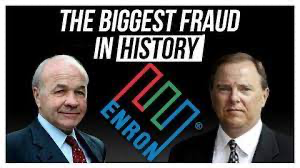 The Trial Theme in the prosecution of defendants Skilling and Lay in the Enron case
What is your trial theme? This is part of a series of articles regarding how to construct and deliver closing argument. The prior post examined how to begin your closing with an attention step. Here, we shift to the body of the argument.
Common topics for the body of closing argument are as follows:• integrating the case theory and theme• issues in dispute • a discussion of the law new • applying that law to the facts • refuting opponent’s arguments discussing case weaknesses • discussing missing evidence and or witnesses • witness credibility • expert witness testimony • circumstantial evidence • damages
The case theory is a combination of your legal theory and your factual narrative. Your factual narrative should be about a human being, appeal to the jurors’ values, and concern the deprivation of a human need. Your case theme is the hub of your case around which everything else revolves. The theme should be short and via crystallization of your case theory.
The Enron trial serves as a good illustration of the integration of case theory and theme. The case involved two people at the head of Enron corporation Ken Lay and Jeff Skilling. Lay once was one of Houston's most respected power brokers and philanthropists, Enron's ex-chairman and long-time CEO commanded his employees' loyalty far longer than other executives. Now, in the Enron case, however, he's defending himself against charges of incompetence. Much of the blame for Enron's problems has centered on the Jeff Skilling- the man who took the company away from pipelines and into new frontiers in power trading and marketing. His abrupt resignation after six months in the CEO job started speculation that quickly turned into scandal.

Kathryn Ruemmler
Enron Task Force prosecutor Kathryn Ruemmler’s Theme was: "There's nothing wrong with getting rich. But what you can't do is you can't get rich by deceiving. You can't get rich by cheating." Ruemmler, sometimes pacing before the jury during her four-hour closing argument, laid out the case theory, saying that the victims of the deceits of Lay and Skilling were shareholders — real people "deprived of the truth."
In rebuttal argument, prosecutor Sean Berkowitz reiterated the theme: “They lied to their investors.” He said, “Senior management had been lying to the public for years. . . Enron could not handle the truth.”