Collins Hemingway's Blog, page 8
April 14, 2016
A Taxing Subject for Americans–and for Austen and her Peers
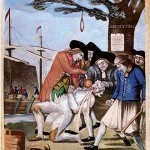
April 15 being tax day in the U.S., I thought it appropriate to celebrate the many ways the tax man visited Jane Austen and her fellow citizens during Regency times.
The tax philosophy of the day echoed the views of the famous tax philosopher, George Harrison of the “Beatles”: “If you get too cold I’ll tax the heat/If you take a walk, I’ll tax your feet.”
Well, they didn’t tax feet in the Regency era, but they did tax other modes of transport such as horses and carriages.
Among the items taxed between 1795 and 1820 were: almanacs, bricks, candles, carriages, dice, glass, gloves, hair powder, hats (men), horses, leather, letter franks, newspapers, perfume (women), ribbons, servants and gamekeepers, shooting licenses, sporting dogs, spirits and wine, starch, timepieces, tobacco, wallpaper, and wills.
Taxes ranged from threepence for a cheap worker’s hat to several pounds for luxury items. Though the tax on alcohol and tobacco affected everyone, most taxes were geared toward the wealthy. Riding horses, for example, were taxed, but working horses were not.
In “Pride and Prejudice,” Mr. Bennet’s horses, which were farm horses first and pulled a carriage in their spare time, would have escaped taxation. Otherwise, the Bennet family probably could not have afforded a carriage. The carriage tax was among the highest: £8.16s for one four-wheel carriage; £9.18s for a second ; and £11 for each one after that, as Hazel Jones documents in “Jane Austen’s Journeys.”
By comparison, an unskilled laborer of the day made about £25 a year, and the Austen women, after the death of Mr. Austen, lived on about £400 annually.
Most of the tax revenue went toward the war with France, which carried on for most of Austen’s adult life.
The window tax, which had been around for many years, is a tax Austen mentions in “Mansfield Park” as a proxy for wealth. Henry Crawford gravely shakes his head at the size of Sotherton Court, the Rushworth house, and the narrator comments that there are more windows “than could be supposed to be of any use than to contribute to the window-tax.” This comment may have originated with Jane’s mother after Mrs. Austen’s trip to the fabulous Stoneleigh estate.
Tax policy and its implications arise subtly in the opening scene of my trilogy, The Marriage of Miss Jane Austen, in which Austen observes the entrance of a young man, Mr. Ashton Dennis, who quickly emerges as the male protagonist. After describing his wardrobe, the narrator observes: “He wore his own hair, whether because of the new fashion or unsuitable political views, it was impossible for Jane to know.”
The reference is to Ashton’s lack of a traditional wig and the hair powder used to keep it fresh. Old-fashioned Tories wore wigs and gladly paid the tax on powder as a patriotic show of support for the war with France. Some people, however, stopped wearing wigs to avoid the tax, while many Whigs disposed of wigs to protest the war itself, which ran counter to their commercial interests. Walking into a room, one could often tell political affiliation at a glance.
Having failed to raise as much money as expected, the hair tax was ultimately reduced; but by then a more natural look was in, sporting real hair in Roman styles. Vic Sanborn provides a lovely tutorial on changing men’s hairstyles in this era. This was also the beginning of the Romantic era, when hair could be as wild as the heath.
Despite the lack of revenue production, the hair-powder tax did have a positive effect. The powder was made from wheat; by discouraging its use, the tax somewhat reduced the pressure on food supplies for the army.
Every tax has such unexpected consequences, some negative, some positive. The tax on English newspapers led to the start of book clubs and subscription libraries, several of which Austen joined. These groups greatly increased the number of readers, and politics were often discussed at the meeting places, likely speeding up efforts at reform.
Most of the taxes remained in place during the war with France, but the ladies got a break. The men’s hat tax was not repealed until 1811, but the perfume tax ended in 1800.
Readers: What do you think—have I missed any other tax-related commentary in Austen’s works?
Were there other unintended negative consequences of these taxes?
The post A Taxing Subject for Americans–and for Austen and her Peers appeared first on Austen Marriage.


March 29, 2016
Sexism in Film, Part II: What’s the Solution for Hollywood?
Recently, I wrote about sexism in films today and the general lack of strong roles for women. The blog noted that Jane Austen has been the source for at least ninety TV or movie productions, nearly half of all female films in the last twenty years.
Though the quiet perseverance of her characters has a universal appeal, the point was not so much hooray for Austen as it was a raspberry for the dearth of female roles from other sources.
The discussion over women in films, it turns out, was only beginning to gather steam in the industry, and the numbers that have turned up are damning.
In a survey of movies from 2007-2012, the New York Film Academy (NYFA) found that only 31 percent of all speaking characters in film are women. Nearly 30 percent of all women in movies wear revealing clothes or become partially naked, versus less than 10 percent of men. Women characters tend to be younger than men and ancillary to them.
Gena Davis, star of “Thelma and Louise” and other female-driven films, points out that in family films the percentage of speaking female roles is even lower (28 percent) and the female roles are often stereotypical.
In animated films, in which the production company can include as many females as desired, women compose only 17 percent of crowd scenes! Are they that much harder to draw?
Black women have particularly difficult problems getting roles or visibility. By overwhelming numbers, black women in films are homeless, powerless, abused, or alone. Even when they achieve recognition, it’s often for a menial position. Two of the six academy awards won by black females in 88 years were for servant roles, Hattie McDaniel in 1941 and Octavia Spencer in 2011.
The lack of roles for women translates into a lack of leverage for paychecks. NYFA found that men took home the top 16 biggest paychecks in Hollywood. The highest salary for a woman, Angelina Jolie, was equal to the lowest two salaries for men on the list.
Nancy Myers, the acclaimed director of movies about women, said in a New York magazine interview in Sept. 2015 that, except for a “couple” of bankable female stars, most women are fighting over the same small number of roles. This gives them less negotiating power than men. She also said it’s hard to get male movie stars to play in a movie if a woman is the lead.
The assumption is that putting women in positions of power will help female actors, and that turns out to be true. NYFA found that a female director results in nearly an 11 percent increase in female characters and a female writer leads to a nearly 9 percent increase in female characters.
Female directors, however, find it difficult to obtain employment.
Vulture columnist Kyle Buchanan documents that, in 2015, not a single film directed by a woman was produced by 20th Century Fox, Paramount, Sony, or the Weinstein Company.
Movies in the pipeline for 2016 have a similar tale: A USC study found that just 3.4 percent of working film directors were female and only 7 percent of all films reflected the country’s diversity. A USA Today analysis of 184 movies by 14 studios slated for release this year found little female presence.
Even the next in the female-based “Divergent” series, which stars Shailene Woodley, went to a male director. And, in the entire history of the Academy Awards, only four women have been nominated for best director, and only one has won, Kathryn Bigelow in 2010. Surprise: 77 percent of Oscar voters are male.
Barbra Streisand observed that women were doing better 100 years ago, when 12 women were working as directors in Hollywood.
Directing is only part of the equation, of course. Women are vastly underserved in the Hollywood power structure. According to NYFA, women comprise only 25 percent of producers; 20 percent of editors, 15 percent of writers; and 2 percent of cinematographers. Women constitute 9 percent of directors; if only 3.4 percent made a studio film in 2016, then two-thirds of women are unable to find a major directing job.
To the complaint that there aren’t enough good women directors out there, Buchanan of The Vulture provides a list of one hundred female directors Hollywood should be hiring .
Nancy Myers, the director, says that the problem is part cultural and part psychological, because in Hollywood a male director can have a flop and get another chance, but a woman cannot. Shonda Rhimes, considered the most powerful female in television for her hit shows featuring strong black females, echoes these remarks, saying that men consider successful female productions to be a fluke—even when the “fluke” repeats.
What drives women film professionals crazy, of course, is that female films, when they can be made, are often very successful. Seven of the top twenty movies of 2015 were primarily female-driven, including “Mad Max: Fury Road,” which was really a women’s liberation movie in which the male lead is dragged along for the ride. “Pitch Perfect 2” and Melissa McCarthy’s “Spy” trounced their male competition on release. Yet it’s also true that all but “Pitch Perfect 2” (Elizabeth Banks) was directed by a man.
The Motion Picture Academy has since announced changes designed to double the number of women and minority voters by 2020, which over time should help create more visibility for female and minority projects come award season.
But there’s the chicken-and-egg problem: What difference will that make if women and minorities continue to be overlooked for roles by the Hollywood establishment, which continues to make action-oriented movies primarily for young men?
It’s great that Austen is the go-to source for female movies, but there’s also only so much Austen material available. Though the newly released “Love and Friendship” is an excellent movie, the other new flick, “Pride and Prejudice and the Zombies,” is as awful as the book that spawned it. We’re now dredging the bottom of Austen’s manuscript drawer.
What’s the solution, readers?
Should women boycott male movies? Start a petition drive? Institute a quota system? Insist on equal pay for women actors? Is it enough that a few powerful women have created their own production companies?
Women in Films has started an online campaign, #52filmsbywomen, to encourage people to see at least one movie a week by a woman. One can rush out to see the lovely “Brooklyn,” for instance. Its star, Saoirse Ronan, was nominated for an Academy Award, and another dozen women are featured in prominent roles. Then one learns—it was written and directed by men.
The post Sexism in Film, Part II: What’s the Solution for Hollywood? appeared first on Austen Marriage.
Sexism in Film, Part II: What’s the Solution?
Recently, I wrote about sexism in films today and the general lack of strong roles for women. The blog noted that Jane Austen has been the source for at least ninety TV or movie productions, nearly half of all female films in the last twenty years.
Though the quiet perseverance of her characters has a universal appeal, the point was not so much hooray for Austen as it was a raspberry for the dearth of female roles from other sources.
The discussion over women in films, it turns out, was only beginning to gather steam in the industry, and the numbers that have turned up are damning.
In a survey of movies from 2007-2012, the New York Film Academy (NYFA) found that only 31 percent of all speaking characters in film are women. Nearly 30 percent of all women in movies wear revealing clothes or become partially naked, versus less than 10 percent of men. Women characters tend to be younger than men and ancillary to them.
Gena Davis, star of “Thelma and Louise” and other female-driven films, points out that in family films the percentage of speaking female roles is even lower (28 percent) and the female roles are often stereotypical.
In animated films, in which the production company can include as many females as desired, women compose only 17 percent of crowd scenes! Are they that much harder to draw?
Black women have particularly difficult problems getting roles or visibility. Even when they achieve recognition, it’s often for a menial position. Two of the six academy awards won by black females in 88 years were for servant roles, Hattie McDaniel in 1941 and Octavia Spencer in 2011.
The lack of roles for women translates into a lack of leverage for paychecks. NYFA found that men took home the top 16 biggest paychecks in Hollywood. The highest salary for a woman, Angelina Jolie, was equal to the lowest two salaries for men on the list.
Nancy Myers, the acclaimed director of movies about women, said in a New York magazine interview in Sept. 2015 that, except for a “couple” of bankable female stars, most women are fighting over the same small number of roles. This gives them less negotiating power than men. She also said it’s hard to get male movie stars to play in a movie if a woman is the lead.
The assumption is that putting women in positions of power will help female actors, and that turns out to be true. NYFA found that a female director results in nearly an 11 percent increase in female characters and a female writer leads to a nearly 9 percent increase in female characters.
Female directors, however, find it difficult to obtain employment.
Vulture columnist Kyle Buchanan documents that, in 2015, not a single film directed by a woman was produced by 20th Century Fox, Paramount, Sony, or the Weinstein Company.
Movies in the pipeline for 2016 have a similar tale: A USC study found that just 3.4 percent of working film directors were female and only 7 percent of all films reflected the country’s diversity. A USA Today analysis of 184 movies by 14 studios slated for release this year found little female presence.
Even the next in the female-based “Divergent” series, which stars Shailene Woodley, went to a male director. And, in the entire history of the Academy Awards, only four women have been nominated for best director, and only one has won, Kathryn Bigelow in 2010. Surprise: 77 percent of Oscar voters are male.
Barbra Streisand observed that women were doing better 100 years ago, when 12 women were working as directors in Hollywood.
Directing is only part of the equation, of course. Women are vastly underserved in the Hollywood power structure. According to NYFA, women comprise only 25 percent of producers; 20 percent of editors, 15 percent of writers; and 2 percent of cinematographers. Women constitute 9 percent of directors; if only 3.4 percent made a studio film in 2016, then two-thirds of women are unable to find a major directing job.
To the complaint that there aren’t enough good women directors out there, Buchanan of The Vulture provides a list of one hundred female directors Hollywood should be hiring .
Nancy Myers, the director, says that the problem is part cultural and part psychological, because in Hollywood a male director can have a flop and get another chance, but a woman cannot. Shonda Rhimes, considered the most powerful female in television for her hit shows featuring strong black females, echoes these remarks, saying that men consider successful female productions to be a fluke—even when the “fluke” repeats.
What drives women film professionals crazy, of course, is that female films, when they can be made, are often very successful. Seven of the top twenty movies of 2015 were primarily female-driven, including “Mad Max: Fury Road,” which was really a women’s liberation movie in which the male lead is dragged along for the ride. “Pitch Perfect 2” and Melissa McCarthy’s “Spy” trounced their male competition on release. Yet it’s also true that all but “Pitch Perfect 2” (Elizabeth Banks) was directed by a man.
The Motion Picture Academy has since announced changes designed to double the number of women and minority voters by 2020, which over time should help create more visibility for female and minority projects come award season.
But there’s the chicken-and-egg problem: What difference will that make if women and minorities continue to be overlooked for roles by the Hollywood establishment, which continues to make action-oriented movies primarily for young men?
It’s great that Austen is the go-to source for female movies, but there’s also only so much Austen material available. Though the newly released “Love and Friendship” is an excellent movie, the other new flick, “Pride and Prejudice and the Zombies,” is as awful as the book that spawned it. We’re now dredging the bottom of Austen’s manuscript drawer.
What’s the solution, readers?
Should women boycott male movies? Start a petition drive? Institute a quota system? Insist on equal pay for women actors? Is it enough that a few powerful women have created their own production companies?
Women in Films has started an online campaign, #52filmsbywomen, to encourage people to see at least one movie a week by a woman. One can rush out to see the lovely “Brooklyn,” for instance. Its star, Saoirse Ronan, was nominated for an Academy Award, and another dozen women are featured in prominent roles. Then one learns—it was written and directed by men.
The post Sexism in Film, Part II: What’s the Solution? appeared first on Austen Marriage.
March 9, 2016
JASNA Interviews Collins
Collins Hemingway was recently interviewed by Christopher Duda, Treasurer of the Eastern Pennsylvania Region of the Jane Austen Society of North America (JASNA), about The Marriage of Miss Jane Austen and what inspired him to write a novel about one of the world’s most beloved English writers.
Listen to the full interview now!
The post JASNA Interviews Collins appeared first on Austen Marriage.
February 17, 2016
First Monthly Winner of 2016 Bath Sweepstakes

We have our first winner of the monthly prize of our 2016 Bath Sweepstakes, which is a signed copy of The Marriage of Miss Jane Austen. This is the first of several smaller prizes before we select the grand prize winner, which will be a trip for two to Bath, England.
Click on this link to see the details of this month’s drawing!
Don’t wait to enter if you have not already.
The post First Monthly Winner of 2016 Bath Sweepstakes appeared first on Austen Marriage.
January 3, 2016
Austen Sweepstakes Offers Grand Prize of Trips to Bath
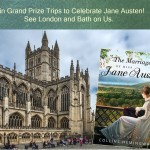
Trips to Bath, England, are the grand prizes of The Marriage of Miss Jane Austen Sweepstakes 2016, to coincide with the city’s annual Jane Austen Festival in September 2016.
The sweepstakes, which honors Jane Austen, her work, and the many readers around the world who have made her a literary icon, comes in the midst of a series of Austen anniversaries—the 200th anniversaries of the publication of her novels from 1811 to 1817, and of course the 240th anniversary of her birth last month. I wanted to mark these important dates, as well as the publication of my own trilogy, The Marriage of Miss Jane Austen, in a way that recognizes her literary importance and also gives back to her many readers around the world.
My goal in the trilogy is to examine life and love for an intelligent woman in 1805, and to recognize Austen by imagining how an author of her skills would have tackled topics that were forbidden to women writers in her times. Just as I treat her seriously as a person and an artist, this contest provides a serious and meaningful reward for the people who have turned her into one of the most respected and best-loved writers of all time.
Participants may enter The Marriage of Miss Jane Austen travel sweepstakes daily from January 4, 2016, through April 14, 2016, for a chance to win either of two grand prizes, depending on whether they reside in the U.S., Canada or Great Britain:
Grand Prize Trip for two adults from the U.S. or Canada to London and Bath, England. Grand prize includes round-trip air travel (economy class) for two adults to London, a one-night lodging in London, two round-trip train tickets to Bath, three-night lodging with daily breakfast in Bath, and specified local tours and activities.
Grand Prize Trip for two adults from Great Britain to Bath, England. Grand prize for residents of Great Britain includes round-trip train or airline travel (economy class) to Bath, depending on which mode of travel is more cost-efficient from the winner’s residence in Great Britain. Three-night lodging in Bath with daily breakfast, and specified local tours and activities.
No purchase is necessary for sweepstakes entry.
In Bath, each Grand Prize winner and his/her travel companion will enjoy free two-day admittance to the Jane Austen Festival, which begins Friday, September 9; a three-night stay with daily breakfast at Three Abbey Green, a Four Star Gold Award guest house in the heart of central Bath; a tour of Bath and the surrounding countryside including Jane Austen’s house; the famous Bath Abbey, Roman Baths, the iconic Pulteney Bridge and Weir, Royal Crescent and King’s Castle among other sites; an exclusive tea with Hemingway, author of The Marriage of Miss Jane Austen; and signed copies of his new novel.
As the one-time home of Austen, the beautiful UNESCO World Heritage city of Bath and the surrounding county of Somerset are favorite destinations for Austen devotees from around the world. Bath, in the picturesque valley of the River Avon, is also the setting for several pivotal chapters in The Marriage of Miss Jane Austen, which critics have praised for the quality of the writing, its compelling love story, its sensitive treatment of the historical Austen, and its meticulous research.
Travel must take place September 7, 2016, to September 12, 2016, in conjunction with the Jane Austen Festival in Bath The U.S. or Canada Resident Grand Prize Winner and his/her travel companion must travel together on the same itinerary and must travel to/from London on the following dates: Wednesday, September 7, 2016, and Monday, September 12, 2016. Air travel will be via round-trip, economy class airfare for two adults to London from a major airport nearest to the U.S. or Canada Resident Grand Prize Winner’s home.
The Grand Prize trips do not include additional travel, meals, or other costs not specifically listed in the Description of Grand Prizes or any miscellaneous expenses, as explained in the Official Rules.
Throughout the sweepstakes, entrants may also win one of four monthly prizes, which will include signed copies of The Marriage of Miss Jane Austen and an exclusive conversation via Skype about the novel with the author.
Residents of the U.S., Canada (excluding the province of Quebec) and Great Britain may enter the contest here. If you would like to “Like” the novel’s Facebook page, please do so here.
The post Austen Sweepstakes Offers Grand Prize of Trips to Bath appeared first on Austen Marriage.
News Release
 Enter The Marriage of Miss Jane Austen Sweepstakes 2016; Win One of Two Grand Prize Trips to Bath, England
 PORTLAND, Oregon, Jan. 4, 2016 – The Marriage of Miss Jane Austen Sweepstakes 2016 was announced today by author Collins Hemingway in celebration of Jane Austen, the world-renowned English novelist, and his new historical novel based on her life. The travel sweepstakes will include two grand prize trips to the beautiful UNESCO World Heritage city of Bath, England, during the annual Jane Austen Festival in September 2016, which celebrates her life and work.
As the one-time home of Austen, the historic city of Bath and the surrounding county of Somerset are favorite destinations for Austen fans from around the world. Bath, in the picturesque valley of the River Avon, is also the setting for several pivotal chapters in Hemingway’s novel reimagining her life. Reviewers have praised The Marriage of Miss Jane Austen for the quality of the writing, its compelling love story, its sensitive treatment of the historical Austen, and its meticulous research.
Participants may enter The Marriage of Miss Jane Austen travel sweepstakes daily from January 4, 2016, through April 14, 2016, for a chance to win either of two grand prizes, depending on whether they reside in the U.S., Canada or Great Britain:
Grand Prize Trip for two adults from the U.S. or Canada to London and Bath, England
o Grand prize includes round-trip air travel (economy class) for two adults to London, a one-night lodging in London, two round-trip train tickets to Bath, three-night lodging with daily breakfast in Bath, and specified local tours and activities.
Grand Prize Trip for two adults from Great Britain to Bath, England
o Grand prize for residents of Great Britain includes round-trip train or airline travel (economy class) to Bath, depending on which mode of travel is more cost-efficient from the winner’s residence in Great Britain. Three-night lodging in Bath with daily breakfast, and specified local tours and activities.
No purchase is necessary for sweepstakes entry. People may enter daily on www.austenmarriage.com/sweepstakes and visitors to The Marriage of Miss Jane Austen’s Facebook may enter and then use Twitter to tweet about the sweepstakes to earn additional entries for themselves.
In Bath, each Grand Prize winner and his/her travel companion will enjoy free two-day admittance to the Jane Austen Festival, which begins Friday, September 9; a three-night stay with daily breakfast at Three Abbey Green (www.threeabbeygreen.com), a Four Star Gold Award guest house in the heart of central Bath; a tour of Bath and the surrounding countryside including Jane Austen’s house; the famous Bath Abbey, Roman Baths, the iconic Pulteney Bridge and Weir, Royal Crescent and King’s Castle among other sites; an exclusive tea with Hemingway, author of The Marriage of Miss Jane Austen; and signed copies of his new novel.
“Our sweepstakes is a celebration of Austen and her work in a way that gives back to her many fans around the world,” Hemingway said. “Just as I treat her seriously as a person and an artist in The Marriage of Miss Jane Austen trilogy, this contest provides a serious and meaningful reward for the people who have turned her into one of the most respected and best-loved writers of all time. My goal in the trilogy is to examine life and love for an intelligent woman in 1805, and to honor Austen by imagining how an author of her skills would have tackled topics that were forbidden to women writers in her times.”
Travel must take place September 7, 2016, to September 12, 2016, in conjunction with the Jane Austen Festival in Bath (www.janeaustenfestivalbath.co.uk). The U.S. or Canada Resident Grand Prize Winner and his/her travel companion must travel together on the same itinerary and must travel to/from London on the following dates: Wednesday, September 7, 2016, and Monday, September 12, 2016. Air travel will be via round-trip, economy class airfare for two adults to London from a major airport nearest to the U.S. or Canada Resident Grand Prize Winner’s home.
The Grand Prize trips do not include additional travel, meals, or other costs not specifically listed in the Description of Grand Prizes or any miscellaneous expenses, as explained in the Official Rules www.austenmarriage.com/sweepstakes/official-rules.
Throughout the sweepstakes, entrants may also win one of four monthly prizes, which will include signed copies of The Marriage of Miss Jane Austen and an exclusive conversation via Skype about the novel with the author.
Residents of the U.S., Canada (excluding the province of Quebec) and Great Britain may enter the contest here: www.austenmarriage.com/sweepstakes. For more information about The Marriage of Miss Jane Austen and author Collins Hemingway, please visit www.austenmarriage.com. If you would like to “Like” our Facebook page, please do so here: www.facebook.com/pages/The-Marriage-o....
About The Marriage of Miss Jane Austen
The Marriage of Miss Jane Austen is available online at amazon.com, barnesandnoble.com, authorhouse.com, the Jane Austen Centre in Bath (http://janeausten.dblencowe.com/product/the-marriage-of-miss-jane-austen-signed-by-the-author/), and Jane Austen Books http://www.janeaustenbooks.net/p/store_29.html#!/~/search/inview=product57551432&keywords=15864&offset=0&sort=relevance). This novel is the first book in a trilogy that examines how a serious romantic relationship would have changed her as a person and a writer, using historical fiction to provide a thoughtful, in-depth look at what life was really like for women in the early 1800s. The trilogy takes the heroine out of rural England and plunges her into what the Regency era was really about: great explorations and scientific advances, political foment, wars that were among the longest and most devastating in European history—and into a serious relationship with a man very much her equal.
Austen achieved success as an author during the years of 1811 to 1816 with her novels Sense and Sensibility (1811), Pride and Prejudice (1813), Mansfield Park (1814) and Emma (1815), and the joint publication of Northanger Abbey/Persuasion shortly after her death in 1817.
The post News Release appeared first on Austen Marriage.
December 16, 2015
Reader Thoughts on ‘Marriage,’ Austen’s Journey of the Soul
’Tis better to give than receive, but in this holiday season I would like to take a moment to thank readers for what I have received—their very generous thoughts and comments on my novel, The Marriage of Miss Jane Austen.
What touched me most was the number of times “beautiful” and “delight/ful” came up:
“A delightful book, beautifully researched with historical tidbits.”
“This beautifully constructed book transports the reader. … The exchange of letters was exquisitely beautiful.”
“The escapades of the couple made me laugh and the beautiful letters brought a depth of character to Jane and Ashton while also bringing them together.”
“This book is beautifully written. It was so engaging that I didn’t want it to end. … This is one of the best love stories I have read in a long time.”
“How delightful to read a novel so creatively written which explores what many JA fans have wondered—did she ever fall in love?”
“The book is a delight—readers are transported to another time and place with amazing detail and accuracy.”
“I have just finished reading this delightful book. … It is not too far from Austen’s life story—with a twist that intrigues. …[T]he ending is quite lovely. … The best ending of its sort I have read.”
Beyond being glad that any reader enjoys a novel, an author feels a special joy when readers appreciate things that he worked hardest to achieve. Professional reviewers all cited the language:
“The irony and sly humor of Jane Austen herself, complete with the stylistic language of the Regency period” (Blueink starred review). “A talent for witty banter and wry observations that would make Elizabeth Bennet proud” (Kirkus). “Wry, observant, laconic—much like Jane Austen herself, without ever dipping into pastiche or mimicry” (Jane Austen’s Regency World).
And a regular reader: “The language, timing and historical accuracy were all perfect. I found myself reading the last of this book rather than preparing for a party I was to give that evening.”
Ultimately, novels rise and fall on characterization, and these comments engender pride:
“The characters jump off the page with their captivating personalities.”
“This author has fleshed out a Jane Austen who remains true to what I felt she might be like reading her novels in my teens. He makes her come alive—her quick wit, intelligence, eagerness to learn new things, and thoughtful reflections. … How dear to me that she becomes a woman of strong passion!”
Kirkus found my Austen “true to life, an intelligent and determined young woman.” Others referred to “a very human Jane” and “a believable version of her character, truly a worthy addition to the Jane Austen legacy.”
My favorite was a four-star review from Foreword CLARION Reviews, which described the novel as “an imaginative journey of the soul.” More than a historical romance or a period piece, I wanted to create a flesh-and-blood reality for a sensitive woman caught up in a turbulent time in a relationship with a man very much her equal. Volume I is the start of a journey that will test her character and her soul.
Many thanks again to all who have read the book and especially to those who have taken the time to comment.
Happy holidays, everyone!
The post Reader Thoughts on ‘Marriage,’ Austen’s Journey of the Soul appeared first on Austen Marriage.
December 15, 2015
Wilsonville Spokesman

December 16, 2015
Marrying Microsoft and Jane Austen
It may come as some surprise that after several decades co-authoring nonfiction works on science and business with the likes of Bill Gates, Eugene-based writer Collins Hemingway — who is unrelated to Ernest Hemingway — should direct his efforts to a literary trilogy that reimagines the life of Jane Austen.
But to hear Hemingway tell it, the shift in emphasis is not as much of a stretch as one might think….Read entire story.
The post Wilsonville Spokesman appeared first on Austen Marriage.
November 13, 2015
East Oregonian

November 14, 2015
What if Jane Austen had married?
The post East Oregonian appeared first on Austen Marriage.