Kelsey Timmerman's Blog, page 20
February 5, 2015
The 4 Best Ways to Trust Your Food
In her book Safe Food: The Politics of Food Safety, Marion Nestle refers to the current food regulatory system in the United States as “breathtaking in its irrationality: 35 separate laws administered by 12 agencies housed in 6 cabinet-level departments.”
Nestle calls the fact that more of us aren’t dropping over with food-borne illnesses “nothing less than miraculous, a tribute more to our immune systems, the benefits of cooking and food preservation, and plain good luck than to federal oversight.”
Our food system is a mess. Don’t even get me started on imported food. We inspect barely 2% of the food that enters our country. Organic anything from China is laughable. So, something needs to change.
President Obama’s new 2016 $4 trillion federal budget seeks to address this:
The Budget proposes to consolidate the FSIS [the Food Safety and Inspection Service of USDA] and the food safety related components of the FDA to create a single new agency within HHS…A single Federal food safety agency would provide focused, centralized leadership, a primary voice on food safety standards and compliance with those standards, and clear lines of responsibility and accountability that will enhance both prevention of and responses to outbreaks of food borne illnesses. It would rationalize the food safety regulatory regime and allow the Federal government to better allocate resources and responsibilities.
In a recent blog post, Nestle doubts any of this will actually happen even though food safety watchdogs have been calling for something like this since the 90s.
The 4 best ways to trust your food:
1. Grow it yourself!
2. Know the name of the farmer who produces it.
3. Buy from local farmers that allow visitors on their farms. No, you probably aren’t going to visit, but the fact they allow visitors says something.
4. Shop at a trusted filter grocery. An example of this would be Muncie’s Downtown Farm Stand. Owners Dave and Sara Ring do visit farms, if possible, and only sell items that meet their high standards.
The further we get from our food geographically, emotionally, and relationally, the more unknowable it becomes. All of the food my family eats doesn’t come from these four sources, but we eat a lot from these four sources than we did before I researched and wrote a book on food.
It’s about baby steps.
Know this: The U.S. government will more than likely not change the safety of what we eat in the near future, but you can change what you eat today.


February 4, 2015
9 Things I learned living 1 week in a college dorm at age 35

Last week I was the guest-in-residence at the University of Illinois’ Allen Hall. In other words, I lived in a dorm.
The last time I moved into a dorm was half my life ago. I turn 36 on Friday, and I was 18 on my last move-in-day. On that day, Mom and Dad moved me into a quad with three other guys. It was cozy, if not awkwardly tight. Our beds nearly touched when we pulled them out of the wall.
That year I played my first drinking game and attended my first frat party. I politely turned down my first joint. I walked in a herd with fellow freshmen because that’s what freshmen did. My dog back home became paralyzed with coon dog paralysis; I don’t think my roommates heard me crying at night. I participated in all night video game tournaments. I went in on orders of breadsticks several times per week. The halls smelled like vomit and urine, and no matter how often I showered or washed my clothes I stunk. While showering it wasn’t rare to have your clothes stolen and you’d have to to walk back to your room either naked or wearing the latest in moldy shower curtain style.
I enjoyed my freshman year, but it was also my worst year of college academically. I’m not sure dorm life is something I would want to repeat, but the University of Illinois gave me the chance to do so.
My typical college visit involves a few class visits, maybe a lunch and/or dinner with students, and one larger talk in an auditorium. I’ll get to know a few students some, but conversations are limited because they usually take place in a line of students waiting to talk to me. I try to be efficiently useful, suggesting books, websites, articles, career paths, and travel destinations as quickly as possible. I try to make the conversations about them while being mindful that others are waiting.
Allen Hall was different. After my lectures we had “tea time” with Kelsey back in my dorm room. I got to know much more about the students. And I got to experience what life is like for a 36-year-old living in a dorm.
Here’s what I learned:
1. I go to bed and get up early
I typically go to bed between 11 and 12, which I thought was kind of late, but the students reported staying up to 2 on a regular basis. I get up between 7 or 8 when I don’t have anywhere to be or kids to get going. I gave a few students some Runa guayusa tea and they reported being up dancing (dancing!) until 3!
2. Inconsequential questions are debated vigorously
One night during tea time we played Chuck Klosterman’s Hyperthetical questions.
Here’s one of the questions:
You meet your soulmate. However, there is a catch: Every three years, someone will break both of your soul mate’s collarbones with a Crescent wrench, and there is only one way you can stop this from happening: You must swallow a pill that will make every song you hear–for the rest of your life–sound as if it’s being performed by the band Alice in Chains. When you hear Creedence Clearwater Revival on the radio, it will sound (to your ears) like it’s being played by Alice in Chains. If you see Radiohead live, every one of their tunes will sound like it’s being covered by Alice in Chains. When you hear a commercial jingle on TV, it will sound like Alice in Chains; if you sing to yourself in the shower, your voice will sound like deceased Alice vocalist Layne Staley performing a capella (but it will only sound this way to you).
Would you swallow the pill?
The average post-college adult has too many damned dilemmas with impossible answers already to commit time they could be working, napping, wiping an end of a kid, to such questions.
But to have the time to seriously ponder these inconsequential questions was kind of fun. If you are a college student or smoke weed, I highly recommend the game.
3. Where to sit in a dining hall still stresses me out
I was the new kid and several times I had that new kid moment in which I was holding my food examining the possibilities of where to sit. Hide in the corner? Pick an empty table up front and hope someone would choose to sit with me? Randomly sit with someone new? I did all of the above. Being new to a college dorm and 35-years-old is not too unlike that first day in a foreign country.
4. The dining hall has a no shoes, no pants, no shirts, no service policy, but boxers count as pants
I got staring in disbelief at a dude wearing shirts, flip-flops, and his boxers! I wanted to call his mother. You can read about the awkward experience here.
5. The freshman 15 would now be the freshman 120
Food plans are amazing! You don’t have to buy groceries. You don’t have to cook. You don’t have to do dishes. And there is dessert for every meal! That said, I did put on 5 pounds in 5 days. At that rate by the end of the semester I would weigh nearly 300 pounds.
6. Cell phones make walking to class so much different
“I love you,” the girl said as I passed her.
I turned and looked at her puzzled. She looked at me and gave me a look that said “creep.”
I remember the good old days when cell phone minutes were too precious to waste on casual conversations to and from class and there was no facebook or instagram or smart phones. When we passed someone we didn’t want to make eye contact with, we had to stare at cracks in the ground.
7. I’m decaying
“So, I read that basically after 35 your body starts to breakdown,” EJ said, during tea time.
I mean really when you think about it, the life expectancy during paleolithic times for a man was 35.4 years. I’m on borrowed time.
Still, thanks to CrossFit at The Arsenal, I like my chances against the average student in any feat of fitness.
This reminds me of another of Klosterman’s questions:
You are placed in the unenviable position of having to compete for the right to stay alive.
You will be matched against a person of your own gender in a series of five events – an 800-meter run, a game of Scrabble, a three-round boxing match, a debate over the legalization of late-term abortion (scored and officiated by reputable collegiate judges), and the math portion of the SAT.
In order to survive, you must win at least three of these events (your opponent will be playing for his or her life as well). However, you (kind of) get to pick your opponent: you can either (a) compete against a person selected at random, or (b) you can compete against someone who is exactly like you. If selected at random, the individual could be of any age or skill level – he/she might also be an Academic All-American linebacker from Notre Dame. If you pick “the average human,” he/she will be precisely your age and will have an identical level of education, and the person will be a perfect cross-section of your particular demographic – he/she will be of average height and of average weight, with a standard IQ and the most normative life experience imaginable.
So whom do you select? Or – perhaps more accurately – do you feel that you are better than average version of yourself?
8. The quarter-life crisis is real
Picking a major, deciding what to do after you graduate are tough, tough decisions, and I do not envy the uncertainty in the lives of college students. The quarter-life crisis is real! Do you follow your passions or just get any J-O-B.
9. Elton John who? Jimmy Buffett, the hamburger restaurant guy?
A students mentioned they had a friend named Levon.
“Oh, Levon, Levon like his money. Makes a lot they say…” I said deadpan quoting Elton John’s song Levon to blank stares. “You don’t know Elton John’s song Levon?”
“Who is Elton John?” she said.
She also thought Jimmy Buffett was the guy who owned the restaurants!
February 3, 2015
Why I couldn’t see today
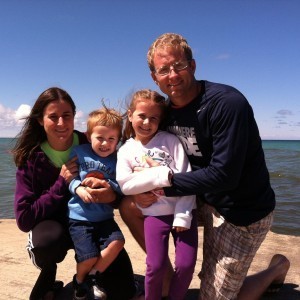
Vacationing in South Haven, Michigan
I was driving the family to South Haven, Michigan, for a family vacation when the right side of the world disappeared. It just gradually faded away to nothingness. I decided it would be best if Annie drove.
I sat in the passenger seat, closed my eyes and imagined all the ways I was going to die. Surely it was a stroke. If not that, then an air bubble from the time I got the bends while SCUBA diving had broken loose and was about to kill me.
And then it got better and we were on the beach in Michigan in August, which means we were wearing sweatshirts and had hand warmers in our pockets. I could see now, so what did it matter?
And then it happened again. This time I was at work. I called Annie and told her just so she knew what to tell the hospital if they found me unconscious in my office. And then it got better and I was fine, but Annie told me that I needed to go to the doctor still. She demanded it.
So I went to the doctor and he told me that I was experiencing a classic precursor to a migraine, and that I should pop a few Advil when it happened.
It happened again today in my office. Here’s how to best describe it. When I type an email address, I can’t see anything after the @ sign. So if I’m emailing ImDying@ImDying.com, I couldn’t read the second half. I popped some Advil, shutoff the lifts, closed the blinds, and listened to the Audible book of Game of Thrones. An hour later I had a small headache and since then I feel like it’s about 3 PM after a late night with friends.
I can see again, which makes me so thankful for the gift of sight. I should appreciate it more, but I’m sure tomorrow I’ll be taking it for granted once again.
I’m sharing this for two reasons:
1) In case you had this same thing happen to you and are looking for answers. Of course, please still go to the doctor. Here are other warning signs of a migraine.
2) Just to say that if you suffer from serious migraines, I SO feel for you.
Every few months I get a migraine that can only be treated by sleep, but I’m rarely debilitated by them. Even this vision thing is just a minor inconvenience for a bit.
Do you suffer migraines? What triggers them? How do you treat them?
January 26, 2015
I’m in Urbana-Champaign all week
This morning while I ate breakfast a strange man walked by the cinnamon rolls wearing only boxers and a T-shirt. I couldn’t help but stare. Part of me wanted to take a picture.
Now, I’m really not into men in boxers. I thought maybe I just wasn’t seeing right, and that after a few cups of coffee maybe the site would make sense. We do live in an age of jeggings, skorts, and other portmanteau crossover fashions that a fella from Indiana just can’t quite understand.
But I suppose this is just a normal occurrence of dorm life in Allen Hall at the University of Illinois.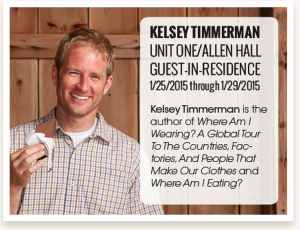
Still, I stared. Was he wearing underwear beneath his boxer shorts? Or was the button flap on his boxers the only thing keeping “him” in? In grade school locker room terms, I had crossed the line from just a normal guy enjoying his huevos rancheros to becoming a full-fledged crotch watcher.
To make things even more awkward, I think the co-ed with ol’ Boxer Britches noticed my staring and whispered something to him. And since I’m the guest-in-residence here for the week my picture is plastered all over the place: at the front entrance of the dorm, at the cafeteria, on the flatscreen TVs, and on pretty much every door.
Let the nicknames begin!
Talk & Tea
Other than the dining room fashion, which I’m finding interesting, I’m having a great stay. I’ve got me own apartment in the dorm just across from the rec center, and I’m enjoying getting to know some of the students.
I’ll be giving a lecture each night at 7PM in the basement near the cafeteria, followed by tea in my room. Some night I hope to organize a pizza order from the best place in town at an unreasonable hour while playing video games. I have goals, people!
Here’s the lineup:
All events take place in Allen Hall, 1005 W. Gregory Drive, Urbana.
Sunday, January 25
7pm- The Education of a Glocal: From Farm Boy to Global Citizen and Back Again (South Rec Room)
Kelsey’s high school had a drive your tractor to school day. It was highly unlikely that he would become a vagabonding SCUBA instructor on a path to a writing career. Kelsey will share his journey and the important role his college experience and education played.
Monday, January 26
7pm – Where Am I Wearing? A Global Tour to the Countries, Factories, and People That Make Our Clothes (South Rec Room)
In his first book, WHERE AM I WEARING? Kelsey traveled the world to find out where his clothes came from. Visiting garment factories in Asia and Latin America, he humanizes the issues of globalization and provokes us to check our tags and think about where our clothing comes from.
9pm – Tea Time in the guest apartment – come hang out with Kelsey
Tuesday, January 27
7pm – Where Am I Eating? An Adventure Through the Global Food Economy (South Rec Room)
America now imports twice as much food as it did a decade ago. What does this increased reliance on imported food mean for the people around the globe who produce our food? On his four-continent farming adventure, Kelsey explored how our eating habits impact the lives of the people who produce our food, touching on topics such as workers’ rights, global food insecurity, fair trade, slavery, and immigration.
9pm – Tea Time in the guest apartment – come hang out with Kelsey
Wednesday, January 28
7pm – The Facing Project and the Science, Art, and Power of Storytelling (South Rec Room)
Confronting issues from homelessness to human trafficking to autism to dyslexia and more, The Facing Project combines the passions of writers, artists, educators, students, nonprofits, and business leaders to help people build community and learn from the stories of their neighbors.
9pm – Tea Time in the guest apartment – come hang out with Kelsey
Thursday, January 29
7pm – Finding Your Axis of Awesome & Living Your Story (South Rec Room)
When we act from the intersection of our passion, curiosity, experience, and skill, we can do awesome things. Kelsey will guide students through a discussion on operating from the axis of awesome and living your best story.
9pm – Tea Time in the guest apartment – come hang out with Kelsey
And Friday at the Y
On Friday I’ll be kicking off the Friday Forum speaking series at the University YMCA. I speak at noon at Latzer Hall.
January 21, 2015
The Thank You notes that I carry & carry me
Last week I Skyped with a class at the Notre Dame Academy in Park Hills, Kentucky, that read WHERE AM I WEARING? I’m always happy to Skype with classes reading one of my books. I often do these Q&A sessions for $0, but payment comes in many forms.
Last night after returning from two days in Ferguson seeding a Facing Project, a package from the class was waiting on me. There were pajamas for the kids because I shared that each night after bath I have Harper check the made in label on her pajamas. There was a moleskine with an awesome quote followed by a message from Amanda Staggs, the class’s teacher.

Every gift was thought out and full of meaning. It’s gestures and encouragement like this that fuel me. I doubt my work will change the lives of the people I write about, but maybe, just maybe it changes those exposed to it. And the change in readers and audience members, may change the lives of the children of the farmers and factory workers I’ve met around the world.
Thanks for not being “grumpy about the whole situation”
Here are some of my favorite lines (some slightly out of context) from the letters:
Thank yous from each student were also included in the package. I read every single one of them. Here are some of my favorites:
I have never found much interest in non-fiction reading, but your book has made me see the good side of it.
Your book made me want to travel to places I never thought I would want to go.
… not only did it get us out of class, but it was also really cool talking to you.
When you finish watching Marco Polo on Netflix, you should watch Supernatural. It’s fantastic.
We also like when you talked about Netflix and your love for My Little Ponies.
You were so charismatic and funny and you could’ve easily been grumpy about the whole situation.
I have always wanted to travel the world, but I always though it was about seeing the sights and doing fun activities. You have made me realize thatwhen traveling, it is best to focus on learning about the different cultures.
We loved your story about … the cocaine leaves!
We’re going to keep in mind to go anywhere BUT Europe…
One of us is no longer afraid to fly!
Go Colts!
Once you create a thing, you can’t control what that thing will mean to people or what impact it will make. That said, I was really pleased wtih many of the takeaways the students had.
I’m always a little disappointed when someone reads EATING or WEARING and simply says, “I’m going to be a better consumer!” I do think it’s improtant to be responsible consumers, but I’d rather create travelers and thinkers than consumers. I don’t want people to read my books and want to buy stuff; I want them to go places, explore their own curiosities, and never stop asking questions.
At the bottom of the Moleskine note was a p.s.: “The students wanted to sign your notebook so that you could take them with you (in some small way) on your next adventure.”
Don’t worry, I will.
Also, Supernatural is fantastic and My Little Ponies is awesome!
January 12, 2015
What the heck I’m talking about….

If you are wondering what it is that I talk about when I travel around corrupting folks from the stage, or if you’d like to invite me to speak at your event and want a better idea of what I talk about, this is for you!
Whether from the page or the stage, I’m addicted to telling stories. I’ve delivered way more than a hundred keynotes to audiences from 3 (I was related to two of them too!) to 7,000 (I don’t think I was related to anyone). I typically custom frame a talk to fit the audience, but I know that folks like to have a clearer idea of the subjects I talk about and my approach. So below is my best attempt to pigeon hole the talk I typically give.
If you are interested in inviting me to speak, email hi@kelseytimmerman.com.
What the heck I’m talking about
Where Am I Eating? An Adventure Through the Global Food Economy
America now imports twice as much food as it did a decade ago. What does this increased reliance on imported food mean for the people around the globe who produce our food? On his four-continent farming adventure, Kelsey worked alongside the farmers who grow coffee for Starbucks in Colombia but haven’t heard of Starbucks, met and freed a slave in Ivory Coast, and hung out with the farmers responsible for 2/3rds of the apple juice on American shelves. Kelsey shows how our eating habits impact the lives of the people who produce our food, touching on topics such as workers’ rights, global food insecurity, fair trade, slavery, and immigration. Kelsey does not argue for or against the globalization of food, but personalizes it by observing the hope and opportunity, and sometimes the lack thereof, which the global food economy gives to the world’s poorest producers.
Where Am I Wearing? A Global Tour to the Countries, Factories, and People That Make Our Clothes
When journalist and traveler Kelsey Timmerman wanted to know where his clothes came from and who made them, he began a journey that would take him from Honduras to Bangladesh to Cambodia to China and back again. WHERE AM I WEARING? intimately describes the connection between impoverished garment workers’ standards of living and the all-American material lifestyle. By introducing audiences to the human element of globalization—the factory workers, their names, their families, and their way of life—Kelsey bridges the gap between global producers and consumers.
Going Glocal: Searching for Community in a Globalized World
We are all connected, from what we wear to what we eat. Kelsey explores the global connection we have with global farmers and factory workers, and argues that while we need to be responsible consumers, we are more than just consumers. Our skills, passions, experiences, trials, and tribulations, uniquely positions each of us to produce a positive impact on people and planet. Believing that with great opportunity comes great responsibility, Kelsey encourages audiences to become active local and global citizens.
Opportunity & Exploitation in the Global Economy
A Honduran garment worker risked his life and left his young daughters to seek opportunity in the United States. But isn’t the garment factory an opportunity? A college-aged Ghanan is trapped on a cocoa farm as a slave in Ivory Coast where he says he’s treated worse than a donkey. But did he choose this slavery? Kelsey challenges audiences to see the complexities of our global economy, and encourages them to fully exploit their opportunities to make a positive impact.
The Facing Project: Building Community Through Storytelling (co-presented with J.R. Jamison)
Stories bind us. They connect us to our past and guide the narrative of our future. In a world connected more than ever before, the hallmarks of community—newspaper memberships, voter turnouts, community organizations—have all been in decline for decades. Many of us have lost sight of our community and our stories. To reunite the two, Kelsey Timmerman and J.R. Jamison co-founded The Facing Project to re-connect people through stories to strengthen their communities. From homelessness to human trafficking to autism to dyslexia and more, The Facing Project is in communities across the U.S. to combine the passions of writers, artists, educators, students, nonprofits, and business leaders to build community and learn from the stories of their neighbors.
January 6, 2015
Harper at 2,190 days old
“It’s my birthday!” Harper announced in our bedroom at 2 AM.
Today Harper turns 6. And you gotta respect her enthusiasm for the day and for life in general. A month from now, I’ll be 36 (I’m Harper +30), and I’ll want to sleep in on my birthday
But I’m younger now than I was before she arrived.
I read children’s books about talking animals and magic. We’re also making our way through the Harry Potter series.
I color, still not very well. There is something really meditative about it.
We pick on Annie together.
We crack toot jokes more than we should.
We play hide and seek and tag.
We go on bike rides.
We giggle.
We sing duets from Frozen.
We have dance parties.
We play video games. About a year ago we started playing Lego Star Wars on PlayStation 2, our most up-to-date game system, which I’ve had since 2000. In 2000, I had time for games. But then I graduated college and started working, traveling, and writing. Although I wanted to play games, I didn’t. Games were for kids and I had things to do.
Harper got a Wii U for Christmas. Yesterday I went to the video game store to buy Lego Harry Potter and the clerk caught me up on 15 years of gaming technology and trends.
As Harper lives her childhood, I get to be a kid again.
Yet each year marks the passing of another 365 days of childhood. I can go from 0 to sappy in like a millisecond, but I don’t want to wish for her to freeze in time like some creepy Anne Rice baby vampire. Because watching her grow up is an amazing experience.
Yesterday, Harper’s brother Griffin, 3, fell asleep in Annie’s lap. Harper asked Annie if she could hold him while he slept. (Annie captured the moment in the picture above.) Harper has also started to put Griffin to bed on occasion. Griffin is a special little man who is going to need a big sister to look after him. He’s lucky to have Harper.
She keeps me young and she makes me look forward to watching her grow up.
December 11, 2014
Your Country Needs You to Study Abroad & Travel
This past Tuesday I had the best excuse to turn down any and all meeting requests.
“Sorry, I’ve got a meeting at the White House.”
The White House invited 100 travel bloggers to begin a dialog on how to increase the amount of students who study abroad. While 50% of students enter college with the desire to study abroad only 10% actually do. And of that 10% most are white and most go to Europe.
The administration made the case that getting Americans, especially young Americans, out into the world is a matter of national security and economic strength.
From Assistant Secretary Evan Ryan’s remarks:
“It is crucial for our country’s next generation of leaders to travel, live, work, intern or volunteer abroad in order to gain the skills needed to understand and operate within the global political and economic landscape of the 21st century. It is in America’s national interest, writ large, to build and sustain a globally minded and internationally literate workforce, not just for government, but for private industry and society more broadly.
Americans who study abroad become unofficial ambassadors for our country, defining American values and debunking stereotypes. They gain critical perspectives and begin to establish networks that enhance their individual prospects in the global marketplace and their future potential as global problem-solvers.”
China is winning at travel
I’ve never quite looked at travel from such a purely national interest point of view before. Several of the speakers from the administration who addressed us referenced China, and that there are nearly as many Chinese students studying in the United States as there are total American students studying everywhere. China just overtook the United States as the largest economy in the world. So much of present day and future global business runs (will run) through China.
(Note: I’ve written books on the global fashion and food industries and both took me to China. Pretty much any book on the global economy would involve research in China.)
While the global financial crisis led to the United States looking inward, the influence of China continues to grow. The best example of this is that in the past few years I’ve been mistaken as a Chinese man in several countries in Africa and also in Central America.
Travelers build connections with the rest of the world. China is building more connections than the United States, and that’s why President Obama wants more American students to study abroad and more of us to travel. To do so, the State Department announced a new office dedicated to promoting study abroad.
When we Travel, We Change Each Other
We heard from a lot of really smart people with really fancy titles. They offered great quotes from world leaders and a few original ones themselves. We heard from the director of the Peace Corps and from two hosts of shows on the Travel Channel. But for me, nothing captured the impact travel makes more than the presence of two of my fellow attendees: Rolf Potts and Alex Montoya. 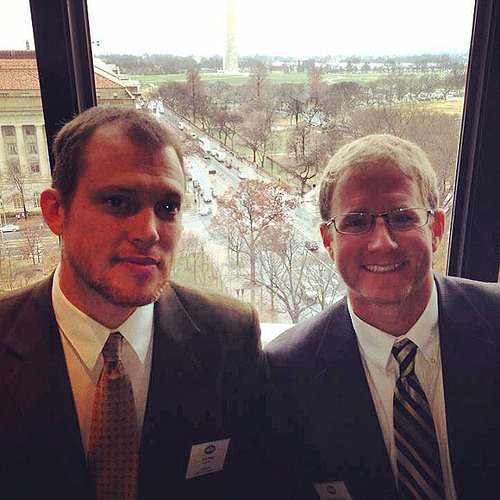
You may have heard of Rolf. He’s the author of Vagabonding and Marco Polo Didn’t Go There. I first came across his work when his story Storming the Beach appeared in The Best American Travel Writing 2000. The story featured Rolf’s attempt to infilitrate the set of the Leonardo DiCaprio’s film the beach in Thailand. I loved the gonzo-journalism way that he told the story.
I studied that story and thought, “I’d like to do that.”
From that point forward my stories began to have quests, tasks, and purposes. For instance, I went to Honduras because my favorite T-shirt was made there. I had adventures worth writing about and then I thought ala Rolf Potts I would try to infilitrate the factory in Honduras where my T-shirt was made. I came face-to-face with Amilcar, a worker from the factory, who was about my same age. That’s when things got real, as the kids say.
I started to see how interconnected we are with the rest of the world, and I was curious to more fully explore that interconnectedness. That led to the obsessions which became my books Where Am I Wearing? and Where Am I Eating?. These books have allowed me the opportunity to share my stories from the page and the stage at 100+ college campuses across the country where I encourage students to travel and to study abroad.
 One of those students was Alex Montoya at West Texas A&M University, which selected Wearing for their readership program (every freshman was supposed to read it and write an essay). Alex is a first generation college student who thought study abroad and travel were beyond his means.
It had been more than four years since I visited WTAMU and met Alex as a freshman. Overlooking the White House from the top of the W hotel during breakfast, Alex told me that the readership program made him want to travel. He worked three jobs his freshman year to afford to study abroad in Europe. He wasn’t done. He applied for and received a Benjamin A. Gilman International Scholarship through the Bureau of Educational and Cultural Affairs, which paid for him to study and work in Shanghai.
During the White House briefing Alex sat on a panel with Evan Ryan, Angel Cabrera (the president of George Mason University), Carrie Hessler-Radelet (the Director of the Peace Corps), and Travel Channel host Samantha Brown.
He wasn’t even nervous. He was articulate and passionate about the power of travel to change lives because it had changed his.
I sat in the audience in awe of Alex and the moment when he said that when you travel time slows and you get to step away from the busyness of our day-to-day lives and think about important things, about what we want to do with our lives, and how we can make an impact on others.
I scribbled in my moleskine notebook proud that maybe I played a small part in Alex’s journey. Two-seats down from me, Rolf did the same.
More Info on Study Abroad
For more info on study abroad opportunities offered by the U.S. State Department including the Gilman Scholarship visit http://exchanges.state.gov/.
#StudyAbroadBecause
If you have a reason you think students should study abroad, please join me in sharing them on Twitter using this awesome app:
/>
Patent
pending,
target="_blank">Hyperactivate
November 24, 2014
Grandma Betty is washing bananas in heaven

Betty holding our son Griffin.
Annie’s grandma, Betty Ludwick, recently passed away. She was 93.
She listened and she loved. She humbly led a life that led others to listen and love. If you spent five minutes with her, you felt like one of her grandchildren. That’s why I was so honored to read the tribute below written by Betty’s three granddaughters at her funeral.
Stephanie, Emily, and Annie did an amazing job writing this. It is touching and funny, and most of all it’s Betty. Even if you weren’t lucky enough to meet her, I think you’ll enjoy it.
In Memory of our Grandma, Betty Ludwick
March 10, 1921-November 13, 2014
By: Stephanie Pfefferkorn, Emily Taylor, and Annie Timmerman
If you knew our grandma, you know she was beautiful. Inside and out. She truly had a heart of gold.
If you knew our grandma, you know she hated to throw anything away. She took reduce-reuse-recycle to a whole new level. Even though she had drawers of flatware, she still scrubbed plastic spoons, forks, and knives as if they were family heirlooms. At Christmas time, we had to open presents verrrrrrry carefully so she could reuse the paper the following year. You may have thought she was being ecologically trendy, but she was really just being cheap.
If you knew our grandma, you know she spent most of her day in her kitchen. She loved to cook for people. Even if you showed up unexpected, it was impossible to leave without a full belly and a doggie bag. Potpie, apple butter, dilly beans, last of the garden, and mince meat pies were just a few of her specialties. Her deep freeze contained enough food to feed a small army.
If you knew our grandma, you know she had a busier social life and better memory than her children or grandchildren. She loved to go out with friends, and she was always up for dinner at the Mexican restaurant. She could spend hours recalling stories of her childhood. Whenever we needed to know who married whom, or whose uncle’s brother’s daughter’s stepson just graduated, Grandma knew.
If you knew our grandma, you know she loved God and her church family. She read her Bible daily and rarely missed Sunday service or Wednesday evening Bible study.
If you knew our grandma, you know she was extremely sanitary. She scrubbed her bananas before she peeled them. Her purse was always equipped with wet wipes and her underwear freshly bleached.
If you knew our grandma, you knew not to call between 7 and 8 p.m. on a Saturday night. She was watching Lawrence Welk.
If you knew our grandma, you know she loved her family. She saved every newspaper article that mentioned the names of any of her grandchildren. During high school sports, we could always hear her notorious grunt (insert grunt sound) each and every time we bumped, set, or spiked the ball. She went to every ball game, every birthday party, graduation, baby shower, baptism, family reunion, and wedding. And it was never a burden, but always a privilege.
If you knew our grandma, you know she never went a day in her life without her hair done, lipstick on, and earrings in. Even in the nursing home, men were still hitting on her. One man told her she was the most beautiful woman in the world. She smiled ear to ear.
If you knew our grandma, you know you were blessed.
November 20, 2014
I met Temple Grandin!

My hair wasn’t brushed, neither were my teeth.
I wondered down zombie-like to the hotel’s continental breakfast. My eyes weren’t really working yet, but it wasn’t hard to discern that Temple Grandin was sitting in the lobby on the phone.
If you aren’t familiar with Temple Grandin, she’s sort of a patron saint of the autism community. Born with autism, Temple has been able to make an impact seeing the world from a different perspective. She was played by Claire Danes in a movie and is a rockstar speaker at events across the country.
SHE IS A BIG DEAL, especially to parents like me with a child on the autism spectrum.
I didn’t want to lurk. Lurking is creepy, so I went in to eat breakfast. A few minutes later Temple came in, and I asked if I could join her at the table.
“Of course.”
She was spending the day at Cal-Poly Pomona (where I talked to first year students the night before) talking with Vet Science classes. A couple of filmmakers following her day were also at the table.
The filmmakers asked me what I was doing there, and I gave the briefest version of “what I do” that I’ve ever given. I didn’t want to talk. I wanted to listen.
“Temple,” I said. “As a father with a child on the spectrum, I just want to thank you for your work. You give me and so many others hope.”
She nodded in thanks and then said, “Tell me about your son.”
I did.
“How many hours of one-on-one therapy does he get a week?” She asked.
“About 30.”
“Great.”
Since Griffin has a speech delay she focused on speech and rattled off things we should be doing or trying: talk slow, give him time to respond, do a lot of turn-taking play.
She had a lot to give. And that is what was absolutely amazing. Our conversation wasn’t caught up in what I do or what she does or about the weather or hotel. It was about Griffin. She genuinely wanted to help me help him.
Lucky for her, I had to cut our conversation short because I was late for a Skype chat with a class reading WEARING in Pennsylvania. I could’ve sat there all day.
And then she gave me this gift (not an exact quote): “You’ve got to push him. I didn’t start speaking until I was four. At his age I had severe autistic symptoms. He sounds like he is doing a lot of great things.”