Kelsey Timmerman's Blog, page 19
May 6, 2015
Why We Should Neither Be Anti- or Pro-GMO, but Support Chipotle
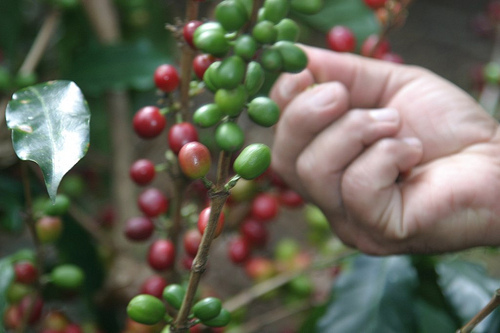
There is a scientist crossing coffee trees with scorpion venom in South America.
While this sounds like a great start to a new comic book series, I’m not sure I’d want to start my mornings with that cup of coffee. Would you? I’d rather not grow a tail by lunch. Like where would I find pants?
This fear of mine isn’t based on any rational scientific understanding, but simply from watching and reading science fiction movies. That said, I’m okay with that. It sounds creepy and as long as there are other options, I will continue to choose non-scorpion venom coffee.
In my book Where Am I Eating? I met Dr. Alvaro Gaitan, the head of plant pathology at the Cenicafe research center in Colombia. He showed me a glowing room filled with genetically modified seedlings. Such plants are often referred to as genetically modified organisms, or GMOs.
According to Alvaro, the world isn’t ready for genetically modified coffee yet; there’s simply no market for it. However, as the changing climate continues to threaten the coffee supply and the price of a cup of coffee increases, consumers will be more open to the notion of GMOs.
Our outrage has a price ceiling.
At Cenifcafé, they just cross coffee with coffee. But without labeling or proper regulation it could be difficult for us to know what we are consuming in the future.
Chipotle Says NO to GMOs!
Last month Chipotle announced that they were going GMO-free (except for their high fructose corn syrup-laden Coca-Cola soft drinks). Consumers were demanding it. Chipotle stock shot up after the announcement.
Now in the interest of full disclosure: I freaking love Chipotle! I’m a chicken burrito with black beans and all the spicy fixings kind of guy. And I’ll often (despite knowing how horrible it is for my health) wash my burrito down with a Coke. Chipotle is fast food that doesn’t make me feel like poop thirty minutes after eating it. I plan road trip routes around Chipotles.
The New York Times says Chipotle’s decision to eliminate GMOs from their food is one based on listening to consumers and not scientists.
Many scientist believe that GMOs don’t pose a risk to human health. This from a study in the Journal of the Royal Society of Medicine:
Foods derived from GM crops have been consumed by hundreds of millions of people across the world for more than 15 years, with no reported ill effects (or legal cases related to human health), despite many of the consumers coming from that most litigious of countries, the USA.
But many believe the verdict is not out on the science of GMOs impact on human health.
From Consumer Report:
“A joint commission of the World Health Organization and the Food and Agriculture Organization of the United Nations has established a protocol for evaluating the safety of GMOs, which it says have the potential to introduce toxins and new allergens (or increase levels of existing ones), or cause nutritional changes in foods and other unexpected effects. Other developed nations have used those guidelines in their mandatory premarket safety assessments for genetically modified organisms. But the Food and Drug Administration doesn’t require any safety assessment of genetically engineered crops, though it invites companies to provide data for a voluntary safety review.”
GMOs having the potential to “introduce toxins and new allergens” or “cause . . . other unexpected effects” leaves me with plenty of concern as does the FDA’s lack of a safety assessment. Given the choice to consume a GMO or non-GMO food, I’d choose the latter. Of course more than 70% of processed food contains GMOs.
(Another confession: I realize that I consume plenty of GMO foods like the mini-Chips Ahoy cookie I just ate while writing that last paragraph.)
I’d like to see more assessment of GMO foods before they hit the market. Personally I feel like the health concern is valid. But . . .
I’m Pro-GMO
Apparently, you are either for or against GMOs. Any debate that becomes “You are either with us or against us” does not leave much room for nuance.
I’m pro- and anti-GMO.
I don’t think altering the genetics of a plant is inherently wrong or a bad thing. Last week Mark Lynas, a researcher with the Cornell Alliance for Science, wrote an Op-Ed in the New York Times titled “How I got converted to GMO Food.”
Lynas actively campaigned for years against GMOs. But it was experiences meeting farmers like the ones he met in Bangladesh growing GM eggplants that changed him. The GM eggplants didn’t require the use of pesticides and were helping the farmer lift his family out of poverty, or at least that is the hope.
“In a rational world,” Lynas writes, “Mr. Rahman would be receiving support from all sides. He is improving the environment and tackling poverty.” Yet the GM eggplants are controversial and environmental groups are fighting hard to get the plant banned. There was even concern of violence against the farmers growing the plants.
“I, too, was once in that activist camp,” Lynas continues. “A lifelong environmentalist, I opposed genetically modified foods in the past. Fifteen years ago, I even participated in vandalizing field trials in Britain. Then I changed my mind . . . After writing two books on the science of climate change, I decided I could no longer continue taking a pro-science position on global warming and an anti-science position on G.M.O.s.”
So Lynas goes from being anti-GMO to pro-GMO. Just like that? What?
Apparently if you are for one GMO, you must be for all GMOs. If you’ve seen the wonder of a GM eggplant changing lives and offering hope in Bangladesh, you must also be for Roundup Ready corn.
The lack of a middle ground on all modern-day issues drives me crazy. Like, I understand if you are a die-hard Ohio State Buckeyes fan you must hate Michigan, but on most other issues, truth, reality, and reason exist somewhere in the middle.
I’m Anti-GMO
I think GMOs could help farmers combat climate change. Gasp! The Anti-GMO movement must hate me!
But I have plenty of concerns about GMOs.
Genetically modifying organisms is just another way that we, the human race, are trying to out-engineer our immense impact on the planet. Trying to control nature might work for a bit, but nature has proven to be quite uncontrollable (see the fictional example of Godzilla, and the all too real example of Hurricane Katrina flooded by water held above street level).
When agribusiness finds a profitable GM crop, it will exploit that crop as much as possible, diversity be damned. If GMOs further promote monocultures, which I believe they do and will because agribusiness is about making money and not growing food, that’s not a good thing. The more we rely on a single crop, the more at risk we are if that crop fails or a new pest or disease destroys that crop.
GM crops have led to a ten-fold increase in weed killer usage. The most famous GM crops are Roundup ready corn and soybeans. Roundup isn’t good for people or planet.
And now weeds are becoming “superweeds” and resisting common weed killers. So more weed killer is being applied and a search for new and more chemicals is underway. Experts call this the technology treadmill. The more chemicals and inputs you use, the more chemicals and inputs you need to use in the future.
What Really Scares Me
I feel like the main issue isn’t GMOs themselves, but the mega agro-chemical companies that produce them for large-scale agriculture. More money can be made producing GMOs for high-input farming than developing GMOs that require fewer inputs (fewer sales of chemicals) to poor Bangladeshi farmers.
In this way GMOs take us further from sustainable, low-input farming–farming that my grandfather would recognize, farming that has a more positive impact on people and less of an impact on our planet. And that is the main reason I applaud Chipotle for taking a stand against GMOs.
I don’t think we should be afraid of GMOs or science, but we should be afraid of an industry that has a huge impact on our health and our planet making business decisions based on short-term profits.


May 5, 2015
What’s Missing from John Oliver’s Garment Industry Argument
If I had a dollar for everyone who pointed me to John Oliver’s takedown of the global garment industry on Last Week Tonight, I would be able to buy-out the nearest H&M store of its cheap inventory.
I’m not complaining. I’m glad so many saw the piece and honored that they thought of me and my work.
But overall, I was disappointed with his argument. There wasn’t a single mention of the word “poverty” or of the lack of opportunities that exist in countries like Bangladesh.
Any story, segment, or piece on the global garment industry that doesn’t mention the word “poverty” is simply focusing on symptoms.
A factory accepting an underage worker is a symptom, but the fact underage worker has to have a job is the problem.
A factory collapsing is a symptom of an industry experiencing rapid unrestricted growth, but workers recognizing that the factory they work in and not having a voice to speak out is a problem.
John does make some really great points:
“Kathie Lee did not solve everything.”
Today, Kathie Lee, who became the face of sweatshops after it was discovered children were involved in producing her clothing line in the 90s, hosts the TODAY Show and marvels at the cheap fast fashions her guests feature. Yet the atrocities and labor wrongs of the industry have only grown in size and severity.
Regarding GAP John points out that: “A company trying as hard as it can has been not infrequently connected to labor violations in multiple countries over two decades.”
And his best point: “This is going to keep happening as long as we allow it.”
Because it has kept on happening and it will keep happening until we focus on the actual problems impacting the lives of garment workers.
I’d also like to see more focus on giving workers a voice like I mentioned in my last post.
April 24, 2015
Will Mobile Phones Prevent the Next Rana Plaza Disaster
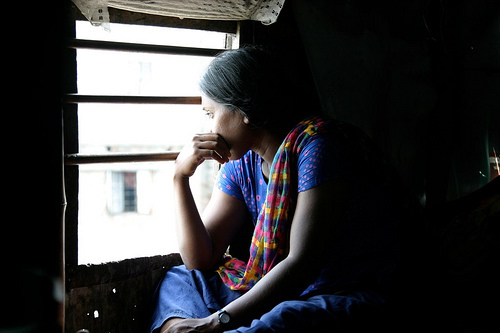
(Arifa, a single mother of three children, and a garment worker I met while traveling in Bangladesh)
One moment Reshma Begum was sewing. The next she was falling from her station on the second floor into the basement of the Rana Plaza garment factory in Savar, Bangladesh.
She lost consciousness. She awoke to cries of help that gradually silenced. Her clothes were shredded, everything was dark, and her hair was stuck in the rubble. She ripped her hair free and scavenged the dark crevices on her hands and knees finding four crackers, a small bottle of water, and the occasional puddle to quench her thirst. She probed her surroundings with a pipe for pockets of air.
This was her life. This was her living for seventeen days (as described to CNN).
—
Reshma was the last survivor pulled from the Rana Plaza garment factory, which collapsed two years ago.
More than 1,100 Bangladeshi mothers and fathers and sons and daughters died in the largest garment industry disaster in history.
After Rana Plaza I was disheartened to hear the discussion of how to prevent future disasters and labor wrongs in the industry limited to: What can we do as consumers? What should brands do? What should governments do?
Few were asking what I felt to be the most important question: How do we give workers a voice?
Reshma and her co-workers saw the cracks in the walls the day before the factory collapsed, but they sat at their machines like good, silent workers because they couldn’t afford to lose a day’s wage or their jobs. Besides, who would listen if they did speak up?
—
In order to improve the state of the global garment industry two things have to happen:
1) Workers need to feel empowered to speak up;
2) We (governments, brands, retailers, and consumers) need to listen.
In 2007 I traveled to Bangladesh for a month visiting with garment workers, sharing bowls of rice on the floor in their ramshackle apartments, playing cricket in the streets with their kids, teaching aunts and uncles how to play ultimate Frisbee, and most of all I listened.
I listened to the struggles they faced as some tried to support their family on a monthly wage of $24 when rice to feed a family of four cost $15.
My experiences meeting apparel workers in Bangladesh, Cambodia, China, Honduras, and Ethiopia are documented in my book Where Am I Wearing? A Global Tour to the Countries, Factories, and People That Make Our Clothes. Since the first edition I’ve paid close attention to the garment industry now that I had friends who worked in it. And one of the most positive developments in the industry that I’ve seen in the past decade gives workers a voice and allows those voices to be heard—LaborLink.
LaborLink gives workers a free and anonymous method of reporting factory safety issues, mistreatment, or any other concerns they may have via their mobile phones.
Using LaborLink Reshma and her co-workers could have reported their concern through the Worker Help Line (known as Amader Kotha in Bangla) operated by the Alliance for Bangladesh Worker Safety. The 3rd-party reporting channel could alert emergency services, inspectors, and the factory owners to address the concerns immediately. Brands that source from the factory can also be alerted. A failure to address the concern could put the factory’s business relationships at risk.
Today the help line is available to 500,000 workers at 280 factories in Bangladesh, and in 16 other countries. The Alliance offered this account in their February 2015 newsletter of how it works in Bangladesh:
“In one factory, a worker called to report that an electrical panel was uncovered. The worker, who observed loose wires as well, was concerned that a spark could ignite a fire at any time. The worker had informed management before calling the Helpline but no action had been taken. After Helpline Representatives informed Alliance staff, factory management was immediately notified. Still no action was taken to address the report of the hazard. After another call to the factory— this time with a request that the electrical panel be fixed within the day—the electrical panel was fully repaired. The Helpline was able to inform the worker that the problem had been resolved.”
I spoke to Hearth Franzese, LaborLink’s Executive Director about the role of Helpline-like services in the future of global manufacturing.
“Within five years,” Franzese said, “every electronic and apparel company should have some kind of technology-enabled worker voice component strategy as part of their core supply chain.”
Each call and text to LaborLink produces a data point around a concern or issue, and Franzese believes that ultimately a wealth of data will fuel predictive analytics that allow problems to be addressed before they are problems at all.
Last year I was chatting with a high-level executive at a brand that obsesses over its environmental and social impact. I asked him why was it that the environmental movement in manufacturing is going strong, but there is so little focus on the workers and how they are treated. He told me every decision they make as a company to reduce their environmental impact saves them money in the long run, but addressing social issues costs them.
Franzese believes LaborLink could help address this concern. She told me the costs of higher wages and safer factories will be offset by retaining workers. Hiring and training a new worker can be expensive, so increased worker input on what they are happy and unhappy about can positively impact a factory’s bottom line.
In the wake of Rana Plaza major companies, such as Walt Disney, Cisco, and American Eagle Outfitters, are embracing LaborLink’s technology. Vodafone released a report highlighting that their mobile-reporting initiative, Worker Panel, could lead to livelihood benefits for 18 million workers of up to $2.1 billion annually.
That’s $116 per worker, which might not seem like a lot. But tell that to Arifa, the single mom of three kids I met in Bangladesh who was earning $24 per month in 2007. Tell that to the thousands of Bangladeshis who lost loved ones in disasters over the past decade.
Mobile technology that gives workers a voice, and a voice that is listened to, could have prevented the Rana Plaza collapse altogether. And I would no longer wonder if my friends were killed in the most recent industry disaster, and you would no longer have to wonder if someone died making your blue jeans.
April 22, 2015
3 Earth Day stats every American should know & 1 video celebrating the end of the world
Earth Day marks the second anniversary of the first edition of WHERE AM I EATING? Writing a book on the global food economy opened my eyes to the impact man and agriculture have made on Earth. Here are three stats from the book that every American should know:
The ecological footprint of an average American is 23.6 acres. That means we consume what 23.6 acres of our planet can produce. If all 6.5 billion earthlings were Americans, we’d need five planets!
One American consumes as much as 32 Kenyans.
According to Jared Diamond, the bestselling author of Collapsed, if the world were made up of all Americans, it would be as if we shared the planet with 72 billion people.
And in case we don’t get our shit together and start lessoning our impact on our planet, here is a video John Oliver’s Last Week Tonight team put together to mark the end of our species and planet. [Warning: You could be sucked into a vacuum of cat videos]
April 6, 2015
When not to ask me about Indiana politics & other thoughts from running a half-marathon
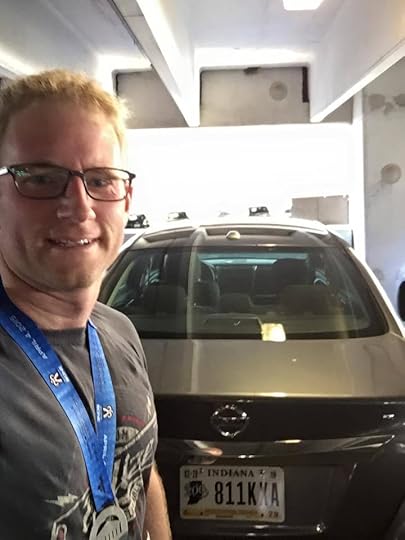
Runs With Politics
“What do you think about this new law in Indiana?” The man in the white hat asked.
I was on mile 9 of the Charlottesville half-marathon. And although I had spent much of the previous week speaking about the RFRA law my home state had passed and even more time dealing with people boycotting the state (and an organization I’m a part of), I did not want to talk politics.
You know, I really don’t like to talk politics with strangers at any point in time, but most definitely not while I’m running up a hill during a half-marathon for which I only ran five training runs. Another runner near me wasn’t sure what the man was talking about and asked me to explain it to her.
I ran in silence.
The man in the white hat explained it to her and then offered his opinion.
“My silence isn’t disagreement,” I said, because I did agree with his opinion that the discriminatory nature of the law was horrible. That’s all the words I was willing to give to the discussion.
My silence was exhaustion from running and with the topic in general.
As folks from other states have criticized and spurned Indiana over the RFRA law, I’ve made a little side hobby of exploring stupid laws in their states. At the time, I distracted myself from tripping White Hate by wondering what laws White Hat’s state had in place.
After doing some research at dumblaws.com, here’s what I would’ve like to have asked him:
“Sir, could you kindly explain why it is illegal in Virginia to have sex with the lights on, bribe anyone unless you are a politician, why children aren’t allowed to trick-or-treat, or why no animals can be hunted on Sundays except raccoons (and only them until 2PM), and why it is illegal to tickle women?”
(note: I realize that these laws are silly and shouldn’t genuinely be compared to a law that discriminates against an entire group of people.)
My Opinion of the RFRA Stuff
People lost their minds. Lawmakers proved how out of touch they were with society and much of the response and backlash was less “look at me standing up against injustice” and instead more “look at me taking this opportunity to grandstand.” At least that is how I read it. After it all shook out though, the GLBT+ community gained official state-recognition as a group protected by non-discrimation laws.
In terms of GLBT+ rights it was one step back for a week and two steps forward.
In terms of Indiana’s image . . . ouch!
The Run
The run itself went better than expected. This was my first official half-marathon. I ran the NYC full in 2009 and a hand full of 13.1+ miles runs in training for it. Publicly, I didn’t have much of a goal for the half other than to finish. Secretly, I hoped to finish under a 10-minute mile and within like 45 minutes of my Facing Project, co-founder, J.R. Jamison (we spoke at Washington & Lee University on Thursday and Friday).
I ran a 8:45 pace for the first 11 miles and then hit a wall and hills the last two miles. My final time was 2:02:42 and my pace was 9:22. Considering my marathon time was 4:40 and I’m six years older, that’s pretty good. I finished within 4 minutes of J.R. which I’m declaring a victory! Overall, this was pretty speedy for me, but I can’t really pretend I did that awesome.
Several times near the end, I’d look at other runners and marvel at how slow they were going, how loud their footfalls landed, and how close to death they looked. Then I realized that these were the runners who were passing me and I must’ve looked worst than they did.
With running and justice, the journey isn’t always pretty, but one step in front of the other regardless of how loud or sluggish will always, eventually, get you across the finish line.
February 19, 2015
636 miles from “The Girl”
“I wish I could do better by you,
’cause that’s what you deserve
You sacrifice so much of your life
In order for this to work.
While I’m off chasing my own dreams
Sailing around the world
Please know that I’m yours to keep
My beautiful girl”
- City and Colour
I’m in Northfield, MN, 636 miles from Muncie. Tomorrow I’ll stand on a stage and share my stories with a few hundred students at Carleton College. None of it would be possible without the girl.
I could be the King of Sap and rule over Sapland with all of my sappiness, but I try to avoid that. Annie is “the girl” for me and she knows it. She allows me to chase my dreams, sail around the world, and I’ll always be hers.
(Thanks Kira Childers for introducing me to this song.)
February 18, 2015
Where Am I Speaking: Winter/Spring 2015 Edition – Champaign, Dallas, Kingsville (TX), Northfield (MN), Rock Hill, Chico, Terre Haute, Gainesville, Springfield (MO), Ft. Wayne, Portland (IN), Daleville (IN)
These are my winter/spring dates so far. A few other events are pending. If you are nearby, stop in and say hi. I’ll buy you a beverage of your choice unless there are like 15 of you and then, well, I’ll sit beside you.
2/25 – 2/29 University of Illinois
I’m going back to college! Well, at least for a week. I’ll be chatting at and with students each night, and I’ll be living among them. Fingers crossed that I get my own bathroom. I still suffer nightmares involving the bathroom in my freshman dorm. I’ll be talking about both of my books, how I got started, the Facing Project, and about the Axis of Awesome.
2/7 – 2/10 First Year Experience Conference (Dallas, TX)
I’ll be hanging at the Wiley booth. My books have been selected at 30+ university common reader programs, so this is basically a family reunion at this point. I’ll reconnect with people here with whom I’ve shared canoes and bathrooms. I can’t wait! Plus, Wiley will probably by me dinner.
2/25 Texas A&M-Kingsville, TX
WEARING was selected as the schools freshman common reader.
2/20 Carleton College (MN)
I’m not just the speaker, but the CONVOCATION speaker. That sounds more legit. My favorite title is still “endowed lecturer.”
3/3 & 3/4 Winthrop University
EATING was selected as the university’s freshman common reader. I’m really looking forward to this visit. They selected WEARING a few years ago and I traveled with some of their students to Guatemala. Looking forward to catching up with friends and making some new ones.
3/6 Chico State Human Trafficking Awareness Conference Chico State, CA
This is a student led conference, which makes it that much cooler. I spoke at the conference a few years ago and enjoyed getting to meet the students. Chico is also the home of Sierra Nevada beer, which is nice. Anyhow, back to the conference . . . here are the details:
The fourth annual Stop Trafficking of Persons (STOP!) Conference, organized by the student club of the same name, features daily film screenings, discussions and presentations around the subject of human trafficking, including activity in the Chico community. Students have been working for months to bring awareness to this important issue, said club president Courtney Hudson.
“We are lucky enough to have connections with local law enforcement, survivors, authors and specialists who are willing to speak at our conference,” Hudson said. “Last year we had a little over 1,000 attendees, which we are hoping to surpass this year.”
The March 4 training by trafficking survivor Phelps is aimed at supporting local efforts to protect and care for at-risk youth. Trafficked as an adolescent in Fresno, California, Phelps is now a human rights activist and author of “Runaway Girl: Escaping Life on the Streets” and will share her experiences and insights with attendees.
According to the Polaris Project, an organization working to end trafficking, in 2010 an estimated 27 million people were enslaved across the world, and the trafficking industry profited nearly $32 billion annually. Eighty percent of transnational victims were women and girls; 2 million children each year were exploited by the global commercial sex trade.
3/10 Human Rights Day Indiana State University Terre Haute, IN
This is my second time speaking at this event geared toward area high school and college students. The last time I spoke the tornado warnings went off mid-talk. Barring an act of God, I’ll be speaking at 9:30 AM.
3/11 University of Florida Gainesville, FL
Author Kelsey Timmerman will discuss the book Where Am I Eating? which tells stories of the farmers and fishermen around the world who produce the food we eat, explaining what their lives are like and how our habits affect them. The talk will be on Wednesday, March 11 at 7 p.m. in the Reitz Union.
Contact: Kevin Baron
Website: http://www.bobgrahamcenter.ufl.edu/event/where-am-i-eating-kelsey-timmerman
Location: Reitz Union
3/15 Earth Care Coalition Ft. Wayne, IN
At 3PM somewhere because nowhere is not a very good place to make a presentation.
3/16 Jay County Library Portland, IN
I’ll be talking about Where Am I Eating at 6PM
3/21 Rural Urban Talk Daleville, IN
I’ll be talking about a country mouse talking about the push-pull of the country and the city on farmers around the world. Not sure what time yet.
4/7 Missouri State Springfield, MO
7:00 PM – 9:00 PM, Plaster Student Union, Robert W. Theater
Kelsey will be speaking about being an ethical consumer and being aware of where products that one buys come from. He enlightens people on how their purchases affect societies all over the world!
4/9 & 4/10 Miami University Oxford, OH
I’m still waiting on firm details, but I’m really looking forward to speaking at my alma mater.
Where Am I Speaking: Winter/Spring 2015 Edition – Champaign, Dallas, Kingsville (TX), Northfield (MN), Rock Hill, Chico, Terre Haute, Gainesville, Springfield (MO)
2/25 – 2/29 University of Illinois
I’m going back to college! Well, at least for a week. I’ll be chatting at and with students each night, and I’ll be living among them. Fingers crossed that I get my own bathroom. I still suffer nightmares involving the bathroom in my freshman dorm. I’ll be talking about both of my books, how I got started, the Facing Project, and about the Axis of Awesome.
2/7 – 2/10 First Year Experience Conference (Dallas, TX)
I’ll be hanging at the Wiley booth. My books have been selected at 30+ university common reader programs, so this is basically a family reunion at this point. I’ll reconnect with people here with whom I’ve shared canoes and bathrooms. I can’t wait! Plus, Wiley will probably by me dinner.
2/25 Texas A&M-Kingsville, TX
WEARING was selected as the schools freshman common reader.
2/20 Carleton College (MN)
I’m not just the speaker, but the CONVOCATION speaker. That sounds more legit. My favorite title is still “endowed lecturer.”
3/3 & 3/4 Winthrop University
EATING was selected as the university’s freshman common reader. I’m really looking forward to this visit. They selected WEARING a few years ago and I traveled with some of their students to Guatemala. Looking forward to catching up with friends and making some new ones.
3/6 Chico State Human Trafficking Awareness Conference Chico State, CA
This is a student led conference, which makes it that much cooler. I spoke at the conference a few years ago and enjoyed getting to meet the students. Chico is also the home of Sierra Nevada beer, which is nice. Anyhow, back to the conference . . . here are the details:
The fourth annual Stop Trafficking of Persons (STOP!) Conference, organized by the student club of the same name, features daily film screenings, discussions and presentations around the subject of human trafficking, including activity in the Chico community. Students have been working for months to bring awareness to this important issue, said club president Courtney Hudson.
“We are lucky enough to have connections with local law enforcement, survivors, authors and specialists who are willing to speak at our conference,” Hudson said. “Last year we had a little over 1,000 attendees, which we are hoping to surpass this year.”
The March 4 training by trafficking survivor Phelps is aimed at supporting local efforts to protect and care for at-risk youth. Trafficked as an adolescent in Fresno, California, Phelps is now a human rights activist and author of “Runaway Girl: Escaping Life on the Streets” and will share her experiences and insights with attendees.
According to the Polaris Project, an organization working to end trafficking, in 2010 an estimated 27 million people were enslaved across the world, and the trafficking industry profited nearly $32 billion annually. Eighty percent of transnational victims were women and girls; 2 million children each year were exploited by the global commercial sex trade.
3/10 Human Rights Day Indiana State University Terre Haute, IN
This is my second time speaking at this event geared toward area high school and college students. The last time I spoke the tornado warnings went off mid-talk. Barring an act of God, I’ll be speaking at 9:30 AM.
3/11 University of Florida Gainesville, FL
Author Kelsey Timmerman will discuss the book Where Am I Eating? which tells stories of the farmers and fishermen around the world who produce the food we eat, explaining what their lives are like and how our habits affect them. The talk will be on Wednesday, March 11 at 7 p.m. in the Reitz Union.
Contact: Kevin Baron
Website: http://www.bobgrahamcenter.ufl.edu/event/where-am-i-eating-kelsey-timmerman
Location: Reitz Union
4/7 Missouri State Springfield, MO
7:00 PM – 9:00 PM, Plaster Student Union, Robert W. Theater
Kelsey will be speaking about being an ethical consumer and being aware of where products that one buys come from. He enlightens people on how their purchases affect societies all over the world!
4/9 & 4/10 Miami University Oxford, OH
I’m still waiting on firm details, but I’m really looking forward to speaking at my alma mater.
February 8, 2015
Ball State Students, Want to Come to Costa Rica With Me?
Who wants to go to Costa Rica? Yep, like everyone.
This summer I’ll be joining a Ball State Class from May 21-28 to visit banana, pineapple, coffee, and cocoa farms in addition to just soaking up all that Costa Rica has to offer. The class is a Summer I program and will include a few weeks of class using my books WHERE AM I WEARING and WHERE AM I EATING as the course texts.
Seriously, this is like the best class ever.
The last time I was in Costa Rica, I spent all of my time working on a banana plantation and visiting with banana workers. I met some great people, but there is so much of Costa Rica I didn’t get to explore. So…come and explore it with me!
The deadline to sign up for the course is March 1.
All the details about the course be found here and here is a longer course description:
SOC 328: Socialization and the Social World (3 credits)
Three hours of course credit can be earned for SOC 328, a UCC Tier 2 Course – Natural and Social Science Domain.
Students with credit in SOC 328 can opt for credit in SOC 355 and their projects will focus on the sustainability learning objectives.
This program represents “Year 3” of a four year cohort experience of the class of 2016 sponsored by Freshmen Connections. In “Year 1”, students read the Freshman Common reader “Where am I Wearing?” by Kelsey Timmerman. In “Year 2” students were invited to read “Where Am I Eating?” which was the Sophomore read. “Year 3” gives students a chance to join Kelsey Timmerman for a 1 week study abroad experience where they will look at the issues that he described in his books. In “Year 4” students will be invited to develop a Community Action Project proposal with the top three proposals receiving scholarships. Juniors will be given priority enrollment status but all students are invited to apply. Open to all majors.
Program Description:
This program will give students an opportunity to observe the effects of globalization first hand in Costa Rica. The course begins by asking students “How do you as a consumer know if your food and clothing purchases are helping or harming an emerging economy like that of Costa Rica?” How does our consumption of pineapple, chocolate, and coffee impact the sociocultural, economic, and environmental systems of the region? How can we best use our consumption habits to foster positive development in the region?
This Summer I course will include an 8 day trip to Costa Rica during Week 3 of the session (May 21 – May 28). We will begin on campus with a review of the globalization and sustainability literature. Students will identify the topic that they wish to explore and begin their research. After students have completed their preliminary exploration, we will travel to Costa Rica in order to tour numerous sites of sustainable agriculture and tourism. We will then return to campus to complete our reports and make our recommendations.
Some experiences will include: an exploration of the Sarapiqui region to explore the interconnections between community development and biodiversity; a visit to the Corsicana Pineapple farm to see what organic monoculture food production looks like and analyze the cultural and social impact; a visit to CoopeSaraiqui which is a coffee co-op and learn more about their community projects; a visit to La Fortuna to learn about the challenges and opportunities posed by sustainable tourism; a visit to a rainforest organic chocolate farm to learn about cocoa production and the efforts of the local Community development Association. Finally, we will visit the Tarcoles River where we will learn about the impact of tourism, development, and large scale agriculture on water quality and water treatment strategies.
February 6, 2015
What 36 feels like
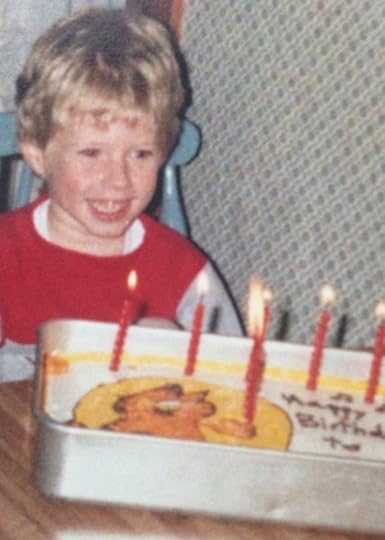
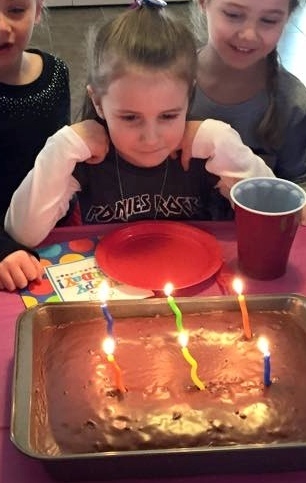
Today I turn 36.
Gone are the mid-decade milestones: the 16s, the 21s, and the 25s (rental car). Now it’s all about the decades, until social security, which will be at least 67, but probably later.
Retirement? Never!
I used to tell my Grandpa Wilt that I graduated college and then retired. That I was living life backwards and traveling while I was full of questions, curiosity, energy, and the capability to sit and stand in one place on buses, planes, and boats for obscene amounts of time.
And when I was working, I was SCUBA diving. I joked that I was going to be a boat captain. Grandpa was a common sense company man with a suit and a tie and a healthy retirement.
Grandpa didn’t lived long enough to see what became of all my traveling. His hard work helped fund my first trip into the World. Grandma and Grandpa gave all the grandkids $5,000 when they graduated college. Even I wouldn’t have guessed that that investment would carry me to 36, and led to a meaningful career telling stories.
If birthday wishes could come true, I’d wish he were here for a few days to read my books and talk over coffee. I wish we could talk about raising kids, and about his time in Europe and Korea in the military. I wish he could introduce my kids to his funny phrases because they are indeed “farts in skillets.”
From Then to Now
My daughter Harper just turned six. I remember six.
When my parents were 36, I was 11. I clearly remember when they were 36.
I remember when my grandpa retired.
What does 36 feel like? It feels like the first birthday that is less about me and more about those who came before and those who come after.
I feel younger, reliving a childhood through my kids, Griffin and Harper.
I feel youthful. I have more energy now than ever. I credit meaningful work, CrossFit, and not having kids under three.
I’m old enough to know that there is so much I don’t know.
I’m old enough to realize, I’m neither invincible or immortal, which empowers me to enjoy the small moments that make up a day and a life.
As I near middle age, I look to my kids and see the future, and I look to my parents and see the past. I see that I carry my family’s story from then to now.
And for that I feel honored.