
Barbara Rainey's Blog, page 20
December 6, 2021
Parenting Children With “Disabilities”

Of our two sons, one was more athletic, while the other was more scholastically inclined. The younger one’s first word was, “ball.” The older one started reading before age five. They could not be more different.
Instead of playing basketball for hours on the court Dennis built for the boys (because that’s what he did in his childhood), Samuel found a tennis racket and began hitting balls against the brick wall underneath the basket. It became clear he’d found his sport.
We enrolled him in lessons and then in competitions. By early seventh grade he was ranked in the state and playing for number one status in his age division. In a tournament to determine new rankings, Samuel almost had his opponent beat, but missed one point and then on the next serve lost the match. He was disappointed, of course, but we hoped this was just the beginning. Parents dream big for their kids!
That day was indeed the beginning. But it was not the start of a dream tennis career.
A couple weeks later Samuel’s coach asked to speak to me when I picked him up after his lessons. He explained that Samuel wasn’t getting to balls he used to return with ease. “Something’s not right,” he said.
Immediately I lined up appointments for our son. The early diagnosis was unclear, so we went to Mayo Clinic, where neurologists confirmed Samuel had Charcot-Marie-Tooth, a slow deterioration of the nerves to the lower legs.
After returning home Samuel wanted to keep playing tennis and I agreed 100 percent. I designed a pair of tennis shoes with elastic support from ankle to toe to help him lift his feet so he could run and not fall as often. But six months later it was clear he would never run again.


I’ll never forget the grief and heartbreak. Dennis and I went for a walk the day the truth finally became clear to me. Five minutes into the walk I sat on a log, fell forward into a fetal position, and cried uncontrollably, with groans from a place so deep within I never knew it existed.
Learning to adjust
For the next six months or longer Dennis and I mourned. Our athletic son had lost his greatest strength. He never liked school and now it was worse. In his own grief he struggled even more in class. As our most active kid he started getting in trouble.
We knew he was mourning, but what 13-year-old knows how to process catastrophic loss? We didn’t know how to help him either. It’s impossible to prepare for something like this. So, we leaned on God, prayed constantly, asked for wisdom, made mistakes, talked to those wiser and more skilled, and trusted God to use this tragedy for good in ways impossible to see in the moment.
As the months moved slowly forward we wondered how Samuel would handle high school. Would he go to college? Would he ever get married? What kind of career could he have? Would he be confined to a wheelchair one day? And most of all we wondered what God was doing and what He had planned by giving our son a real incurable life-altering physical disability.

All parents have high hopes for their children. We want life to be easy for them. We want a pain-free existence as much as is possible. We desire all these things because our children are extensions of us. “Every child is a piece of his mother’s heart walking around outside her body,” said author Jean Fleming. And it is true. Even today when my children suffer or are in pain I feel it as if it was my own.
When Samuel was diagnosed Dennis and I both longed to give him our legs. Dennis even asked if there was a transplant surgery of some kind. We would have sacrificed happily because we love our son enough to give our lives for him.
Limitations are common to all
We don’t have just one child with a disability. Our oldest daughter is dyslexic. Our adopted daughter, though not diagnosed with a disability still had her own very real obstacles through no fault of her own. Our other three have no official diagnosis but are none-the-less limited by DNA deficiencies and by relation to Adam and Eve.
My brother’s son is autistic. Another nephew is on the spectrum. A dear friend’s son at 21 is living with ulcerative colitis which greatly limits his lifestyle as an otherwise healthy young man. My daughter Laura’s best friend has a son with Down syndrome. Another friend’s daughter has three children, all diagnosed with the rare condition PANS.
Even the most intelligent among us may be geniuses or near genius but lack ordinary common sense. Like one of Dennis’s professors at Dallas Theological Seminary who had a photographic memory but forgot that he had driven his car to a speaking engagement in Houston. Afterward, he left the hotel, taxied to the airport and flew home. When he arrived he phoned his wife to come get him and she asked what he did with the car! C.S. Lewis also had a photographic memory but struggled with spelling his whole life. Go figure.
But the whole truth is that all of us are born with multiple limitations. We have no idea how much we lost in terms of intelligence, our five senses, physical and emotional abilities when Adam and Eve “fell.” All of humanity is “disabled” in some way. As I learned from my sister-in-law disabilities are really diff-abilities; different abilities.
The most important point of this entire post is this: None of your children or grandchildren are without disabilities. All of them have limitations, and this is good. Recognizing our own flaws and helping our children recognize theirs is an important step to acknowledging our need for a savior.
The greatest tragedy of all is not being born with a disability but living without knowing one’s brokenness and need for the Savior, Jesus Christ.
A single mom wrote about all that her 16-year-old son was missing since his father had died, summarizing: “Such are the children of the kingdom of God—all are missing arms or limbs, all are cracked vessels. Out of such raw material God is pleased to build His kingdom, the better to show the power is from Him.” Paul taught that we are all jars of clay, formed from dirt. All by God’s good design.
Here are six ways to embrace and give thanks for the disabilities and weaknesses God has woven into your children for their good and His glory.
1. Pray that your children would know they are sinners in need of Jesus. This was one of my frequent prayers for my children. I was especially concerned for my oldest and my youngest who were both people pleasers. They didn’t rebel much or instigate sibling rivalry. I knew they could be deceived into thinking they were good on their own merit. And Satan would work to convince them of that.
Our sin nature is so quick to defend our own perceived goodness and to measure ourselves against others who appear to be inferior than we. That was my own story. My three brothers were always fighting and getting into trouble. To avoid my father’s displeasure and occasional anger I was the good girl and never did anything to rock the boat.
Though I was eager to receive Christ as a college student, it was not because I felt sinful. In my own view I was not really “wicked and depraved” as the Bible declared. It wasn’t until my 40s that I saw the depth of my own depravity and was convinced how desperately I needed Jesus’ sacrifice on the cross for my sins.
“None is righteous, no, not one; no one seeks for God. … no one does good, not even one,” Paul wrote in Romans 3:10-12. Believe it and pray your children believe it too.
2. Give thanks for every limitation and disability you discover and teach your children to do the same. God commands us to “give thanks in all circumstances; for this is the will of God in Christ Jesus for you” (1 Thessalonians 5:18). Embrace God’s design. He knows what He’s doing and He has beautiful plans for your child’s life.
3. Beware of constantly telling your children they can do anything and be anything they want. This may surprise you because everyone today believes this, but it’s not wise or biblical parenting. The truth is your children can’t do or be anything they want. God has given them limitations on purpose to help guide them to His good and perfect plan and design.
An important part of your job as a parent is helping your children learn how to discern God’s directions for their lives. A favorite verse of mine is Ephesians 2:10, which says, “For we are His workmanship, created in Christ Jesus for good works, which God prepared beforehand …”
4. Teach them to look for His design for their lives, not to find their own way. God their Maker wants to use the talents, desires, and yes, the disabilities He has given in ways that He has planned. Teach them to work with God and how He has crafted them. Remind them, “Your hands have made and fashioned me” (Psalm 119:73). And pray they will not be lured by the culture into thinking they know better than God. Sadly, too many children and adults today strive in thousands of ways to be all they imagine, many with tragic results.
5. Teach your children and grandchildren that no one is perfect except Jesus. It’s another trap of our present culture to strive for perfection in our looks, our image, our identity, our jobs, our families, and more. The pressure is killing people. Literally. The sooner we acknowledge we are fallen and will never find perfection on our own, the sooner we will release the pressure and turn to Jesus. “There is salvation in no one else …” Peter declared in Acts 4:12.
6. Remember God delights to show His power and glory. John 9 tells an amazing story for our instruction. Jesus passed by a man born blind and the disciples asked whose fault it was, supposing there was a logical human explanation. But Jesus replied “It was not that this man sinned, or his parents, but that the works of God might be displayed in him” (John 9:3). Jesus then healed this man and all who saw glorified and worshipped Him.
So too in our lives God has plans and purposes that will reveal His miraculous power and care for us that we might glorify and worship Him.
God causes good
Through our own children and from watching others with disabilities, I’ve learned the pains and losses from these “gifts” that we would change or wish away are the very things God wants to use to purify, strengthen, and mold our kids into His image.
On the Wednesday before Thanksgiving 2015, Samuel and his family came early for some time with Dennis and me before we gathered with extended family the next day. He and his four kids and wife wanted to hike Pinnacle Mountain near our home; at 1,000 feet it’s small by western standards, but it is still a challenging hike, especially near the top. Samuel has surprised doctors over the years with his remaining ability. He wears titanium leg braces, has learned to play golf and is able to walk normal distances. On this day he wanted to climb Pinnacle.
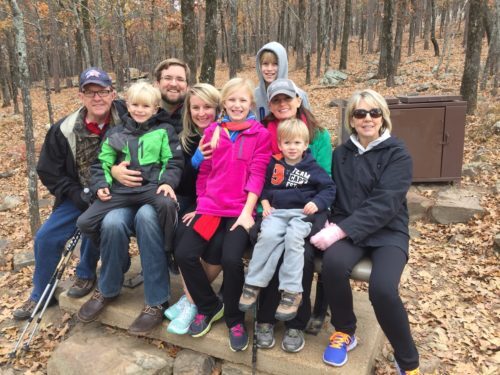
With his well-used walking sticks he kept up on the lower part of the trail without too much difficulty. But as we climbed higher the ascent proved more difficult. I’ll never forget his oldest son, who was 12, choosing to position himself a couple steps behind and below his dad. Peterson was paying attention not to his own enjoyment but to his dad and his difficulty negotiating the trail.
Finally, we arrived at the boulder field, the last section before the summit, and Samuel knew he couldn’t finish. He sat on a rock and his youngest son joined him. He sent the rest of us to the top, enjoying the satisfaction that he’d made it as far as he did. He was grateful and didn’t focus on what he couldn’t do.
Samuel is a godly man, a great husband and father, and by training and occupation an outstanding marriage and family therapist. (I’m biased but I know it’s true. We hear reports.) He is also a speaker with his wife, Stephanie, at Weekend to Remember marriage getaways. There is no question in my mind and heart that God purposed his disability to form a man of great compassion, understanding, and wisdom.
I also believe his divine limitations spared him from temptations or difficulties far worse. We vastly underestimate the protection of God in circumstances that appear to hold us back.
Would a world of only perfect people be better?
In 2005 I read an article I’ve never forgotten by a mom of four; her youngest was born with multiple physical and mental disabilities. Writing with great wisdom, she was reflecting, even then, on the growing trend to terminate pregnancies determined to be Downs or other birth defects.
“What would a society look like if everyone were ‘normal,’ if we never had to make provisions and exceptions for people who are deaf, blind, mute or lame? I didn’t have to look farther than my own family. My children are among the most unselfish people I have ever known. All three have made sacrifices, too many and too big to count, for their disabled sibling. One would think this would have made them bitter and discontented. Amazingly it has done exactly the opposite. They are thankful, giving, and tolerant to difficult and unlovely people.
“Could people have that balancing effect on society as a whole? How would love and compassion develop among people who were only surrounded by the lovely and intelligent?
“I wonder if our advanced technologies successfully eliminate the weak and needy, will future scholars, theologians, politicians, and poets ponder: ‘Why has our society become less loving, so selfish, so intolerant, so uncommitted to anything outside of individual gain? Why are we so full of selfish ambition and vain conceit? Is this ‘perfect’ society a place where any of us would want to live?’”
Sadly I’m afraid we are living in that society today. We no longer believe the truth of the Bible which teaches in Psalm 139:13, “For you formed my inward parts; you knitted me together in my mother’s womb. I praise you for I am fearfully and wonderfully made.”
God doesn’t forget, never sleeps, makes no mistakes. Many assume He doesn’t see or care because He doesn’t show up in the dramatic ways we want, but Acts 17:26-28 reminds us that He is control: “ … and He made … every nation of mankind to live on all the face of the earth, having determined their appointed times and the boundaries of their habitation, that they would seek God … for in Him we live and move and exist …”
Disabilities and limitations are not mistakes. They are gifts to help us see God, know Him as He is and to teach us to be compassionate and gracious to others. And knowing Him is worth the losses of today because one day, He will make “all things new” (Revelation 21:5).
And my son will run and jump and skip and dance and rejoice in His Maker!
And we will rejoice, too!
If you enjoyed this, be sure to read some other blog posts where Barbara wrote about trusting God despite disabilities:
“Hope After Unhappy Holidays” “Give Thanks by Praising”
The post Parenting Children With “Disabilities” appeared first on Ever Thine Home.


November 29, 2021
Did Advent Sneak Up on You?


Advent began yesterday, the first of four Sundays leading to Christmas. If you are like me, it always sneaks up and leaves me feeling behind from the start.
Maybe it’s because I like to savor Thanksgiving and our once-a-year gathering with extended family that makes me reluctant to move on to Christmas before the Thanksgiving weekend is even over.
I suppose I’m in a tiny minority of those who didn’t do all their Christmas decorating over the Thanksgiving weekend … I just can’t. It’s too much too soon for me. And it obscures my focus on gratitude, which is crucially important.
But Advent reminds us of a much different kind of anticipation for Christmas than the commercialized, consumer-focus of our world. It began last Sunday and it’s okay if you, like me, missed it.
Looking forward to Santa is emphatically not the central theme of Christmas; instead it’s longing for and anticipating the coming of Christ. For many multiplied centuries God’s people waited and hoped for the Messiah who was promised. Praying for His coming; O Come, O Come, Emmanuel.
Anticipation is not just for children, but is a crucial element of grown-up, mature faith. For what is faith if it is not expectation? Believing that God will fulfill His promises without seeing that fulfillment is its essence.
We so easily forget how long God’s people waited for His first coming. For thousands of years God gave clues through a steady stream of messages delivered by His prophets hinting at the time and place where Jesus would come. He was preparing the way.
But then there was a 400-year pregnant pause of silence until “the fullness of time had come” (Galatians 4:4).
As I wrote in the opening stanza of the book, What God Wants for Christmas, this long wait had become a very dark period of time:
Twas the week before Christmas
But nobody knew.
No stockings, no ornaments,
No gifts or good news.
All the world had lost hope
All the people felt fear.
Now listen, I’ll tell you
Why Christmas came near.
When Emmanuel came He was so much more than anyone anticipated. Far more than an earthly king who would deliver them from the tyranny they had endured for centuries, Jesus came to deliver them and us from our bondage to sin. Even better, He came to be with us forever, the meaning of the name Emmanuel.
He is not a God who is wandering the galaxies, but He is here, still on earth, living within all who have welcomed Him into the home of their hearts.
Marking the Sundays of Advent is a way we can practice this same patience. I love to tell moms, “It’s better to do even one lesson than never start and therefore do none.”
Like stringing pearls on a cord one by one, God linked beautiful hints of His gift to come one by one for His people to cling to in hope. Some of those pearls of recognition were the names of the promised Messiah in each stanza of the wonderful hymn, “O Come, O Come Emmanuel”:
O Come, Thou Rod of Jesse …
O Come, Thou Dayspring …
O Come, Thou Key of David …
O Come, Adonai, Lord of might …
Watching and waiting for this coming One, the Man of many names, grew patience in His people. And God is doing the same in His people today … growing our patience as we wait for His second Advent. Like the people of the Old Testament who waited for thousands of years we have now waited two thousand years since Jesus ascended to heaven declaring He will return in the same way.
Jesus told us to have faith like a child. At Christmas we can become a child again as we allow anticipation to grow in our faith. As we wait for the day of His birth, remembering that He will come again. Our faith also grows as we continue to believe Him even though we continue to wait and long for His promised return.
Do you know Him?
Will you welcome Him, the miracle of Christmas?
Will you sing “O Come, O Come, Emmanuel” as a prayer from your heart?
Grow anticipation in your faith as you continue to wait on His coming and use an Advent devotion to help you and your family practice trusting Him this Christmas season.
Come quickly, Lord Jesus!
If you enjoyed this, check out some other Christmas posts by Barbara:
“A Christmas Rescue” “Unhappy Holidays: How to Find Specks of Light in the Darkness of Winter” “Be Present”
Also, be sure to download Barbara Rainey’s new eBook, Why We Need Gratitude Now More Than Ever!
The post Did Advent Sneak Up on You? appeared first on Ever Thine Home.
November 22, 2021
Giving Thanks Means Speaking Thanks
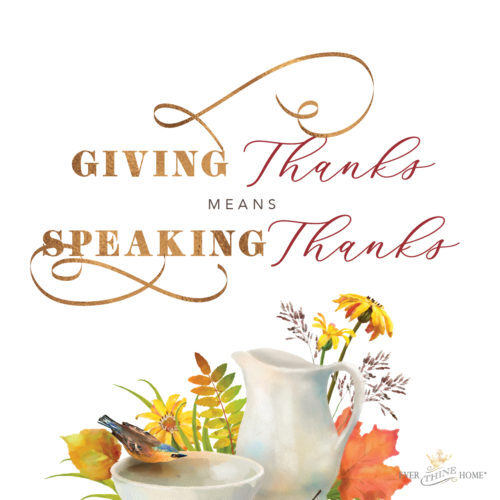
Only three days remain before the day which annually reminds us to express gratitude.
Have you ever thought it’s not just an attitude of gratitude that’s important?
What are you doing to make sure you and yours find ways to actually verbalize thanks to God for all He has given us?
“Every good and perfect gift is from above, coming down from the Father of lights,” declared James the brother of Jesus, who then adds, “with whom there is no variation or shadow due to change” (James 1:17). That means God never changes. Period. So all good gifts in your life come directly from the hand of God who is ever the same in His goodness toward you.
Giving thanks to an unchanging God is what I need in this ever-changing world.
Here is a common scenario that helped me understand the importance of putting my gratitude into real words and speaking them out loud to God in prayer or in thanksgiving around our table every year.
Imagine sending a wedding gift to an engaged couple who live in another state and never getting a thank you note. I’ve experienced this and I wondered if the gift got lost in the mail or if the bride was too busy, too self-focused or maybe she hated what I sent. I’m sure there was a good reason she forgot to send a thank you for the gift I spent time and money buying to celebrate their happy day. Or maybe the new bride had an attitude of gratitude. Perhaps she thought that was enough. I didn’t give the gift so I’d get a note in the mail, yet there is some expectation that a gift should be acknowledged, right?
Because we know God is perfect and possesses all the big “omni” attributes—like omniscient, omnipresent, etc.—we overlook the fact that He is a Person of emotion. He feels love, sadness, anger, and more just as we do, or rather we experience those emotions because we are made like Him, in His image.
But the point in only having an attitude of gratitude is that our lack of verbalizing our thanksgiving might feel to God like neglecting to send a thank you note for the kindness of a gift. Except the neglect needs to be multiplied by six billion people who don’t say thank you for much at all relative to what we’ve been given. Point taken?
On Thanksgiving I want to reflect the words of Revelation 7:12, which says, “Amen! Praise and glory and wisdom and thanks and honor and power and strength be to our God forever and ever. Amen!” Let’s express gratitude by verbally thanking God for everything you can think of.
Will you join me in making a list of ways you can thank God? Strive to do this every day. Every month. All year long!
And to help you and all you gather with this week actually put this into practice, go to our ETSY store and download one of our Thanksgiving gratitude cards. Print them on your home printer and invite all who will share your table to put into words their gratitude. You still have time!
Be courageous and try it. Yes, there may be some discomfort doing this with your family, but it’s good for us and God more than deserves our words of thanksgiving on this annual holiday.
Be sure to download Barbara Rainey’s new eBook, Why We Need Gratitude Now More Than Ever!

The post Giving Thanks Means Speaking Thanks appeared first on Ever Thine Home.
November 19, 2021
Friends & Family Fridays #11


Happy Thanksgiving everyone!
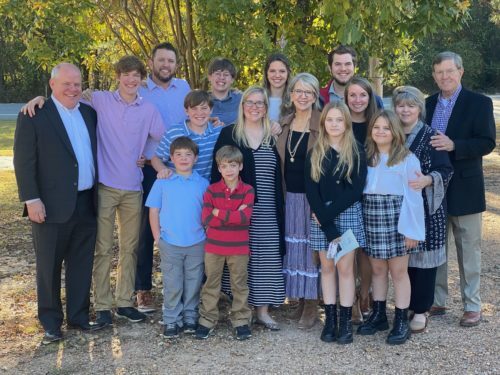
I’m sending this month’s letter a week early because Thanksgiving is next week and I’ll be with family. And I’m so excited that we will have four of our six kids and their families coming to be with us! Only two weeks ago we thought we’d have none, so “hooray for me”! I’ll send photos in early December and you can watch for some on Instagram and Facebook.
My days have been exceptionally full since last month’s letter, with little signature touches of God’s presence sprinkled throughout, glimpses that are almost easy to miss. I’m reading again a devotion book I love called The Valley of Vision and a line I read last week illustrated this perfectly: “May I never confine my spiritual walk to extraordinary occasions, but acknowledge Thee in all my ways.”
It is easy for me to think God has gone silent on ordinary days full of laundry, errands, and other mundane work, but He is always working. And I’m learning if I pay attention I’ll see evidences of His orchestrating, providing, guiding, and revealing Himself to me. I’m working on paying attention.
Here’s a quick bullet list update of my life since last month:
The three weeks since my brother went Home have been a flurry of decisions, texts, phone calls, and work, much of it good in many ways. Because of his declining health, upkeep on the farm was neglected and that has taken my focus since I live nearest. His memorial service was Sunday the 14th.
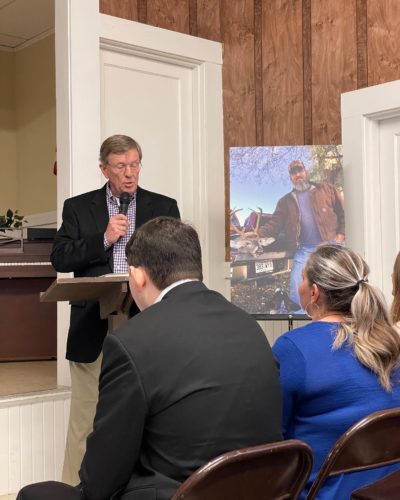
The trial I mentioned back in June is still ongoing. We are more resolved to our position of being unable to fix it, and more at peace with waiting to see what God is doing. But it continues to pop up, reminding us that spiritual battle is real. Last week was one of those reminders. We are praying God will deliver and make clear His way forward.I finished our second eBook, titled Why We Need Gratitude Now More Than Ever. It was emailed to all of you but of course we had issues with the mailing and links. Are we surprised our enemy didn’t want a book on being thankful to our God to reach all of you and be shared widely? No, we are not. Here is a link to the free download if you missed it.
With all of this I’m still a seminary student—a descriptor I’m not yet used to! One of those glimpses of God’s providence is the pace of class work slowed during the weeks after my brother’s death. Now I’m beginning work on my end of class paper which is due Dec 16.
I want to give you a quick taste of what I’ve already learned from the assigned passage in Ephesians that is the focus of this paper. Chapter two and verse 19 begin with these words: “So then you are no longer strangers and aliens …”
Last week those words “strangers and aliens” caught my attention as words that were repeated often throughout the entire Old Testament. I did a word search and looked up the meaning in my Blue-Letter Bible app and observed many interesting facts and details:
Though the word “strangers” is not used in Genesis 3 in God’s pronouncement of discipline on Adam and Eve, their rebellion and despising of God’s way made them strangers to Him and resulted in their expulsion from the Garden. Adam and Eve were exiled from God’s holiness because of their sin. He had chosen them, created them for a relationship, but they rejected Him and became strangers to His ways.In Genesis God chose Abraham to begin a line of people who would be His own, through whom He intended to bless the nations of the earth. But they too were infected with Adam’s disease and God sent them to Egypt to be strangers in that land (Genesis 15:13).But God loves the strangers and aliens Many times in the Old Testament He says, “You shall not wrong a stranger or oppress him,” or, “nor shall you gather the fallen fruit of your vineyard; you shall leave them for the needy and for the stranger,” and, “The stranger who resides with you shall be to yu as the native among you, and you shall love him as yourself” (Exodus 22:21, Leviticus 19:10, Leviticus 19:34, NASB).In the Psalms stranger s are often those who are enemies of God and His people.In the books of the prophets they are the foreigners who will occupy the houses and cities of Israel when God sends them into exile.In the New Testament Jesus added a surprising twist to the concept which I imagine shocked the disciples when He said, “For I was hungry and you gave Me something to eat; I was thirsty, and you gave me something to drink; I was a stranger and you invited me in” (Matthew 25:35, NASB). God a stranger ? Yes, in this world He was.Jesus also uses the term when teaching the parable we all know about the sheep who hear His voice, saying, “A stranger they simply will not follow, because they do not know the voice of strangers” (John 10:5, NASB).Paul then writes his letter to the Ephesians, who were young believers in Jesus as Messiah, summarizing the historical understanding of this word and concept for both Gentiles and Jews. “Remember that you were … separate from Christ, excluded from the commonwealth of Israel, and strangers to the covenant of promise, having no hope and without God in the world,” (Ephesians 2:12, NASB).
Everyone who does not believe in Jesus–those who are still rebelling, dismissing, refusing His offer of salvation—are strangers and aliens. They are all outside the family of God.
“So then,” Paul concludes this chapter of the letter, “you are no longer strangers and aliens, but you are fellow citizens with the saints, and are of God’s household …” And I want to add lots of exclamation marks and emojis of praise hands and celebratory symbols.
What a wonder that I have been chosen to belong to God’s household, and even more to be called His daughter.
This story is the essence of all we celebrate when we give thanks on Thanksgiving Day.
This is the story wrapped up in the Babe in the manger.
This is the story we exult in at Easter.
One day we will fall on our faces before Him when we see Him face to face. And He will lift us up and smile and say, “Welcome Home, my child.”
May you and yours make the effort at your Thanksgiving celebration to focus on genuine heartfelt gratitude to God for choosing you and all who know Him.
Hugs to all of you,
Barbara
Click here to download my new eBook, Why We Need Gratitude Now More Than Ever
The post Friends & Family Fridays #11 appeared first on Ever Thine Home.
November 15, 2021
Why Gathering for Thanksgiving Matters … and Always Will
Our youngest child was just a toddler. Our oldest was double digits but not yet a teen. We were spending Thanksgiving as we had the previous six years at a conference we hosted for singles in Colorado called the Keystone Kaper.
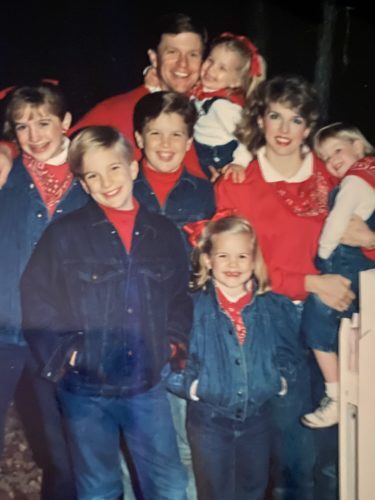
While the event was always amazing ministry and fun for our kids to learn to ski, it was not ideal family time. My husband was in charge—speaking, greeting attendees and other speakers—and generally pre-occupied by his job. While I understood and supported his work, my heart was longing for a way to begin to build memories and traditions for our family.
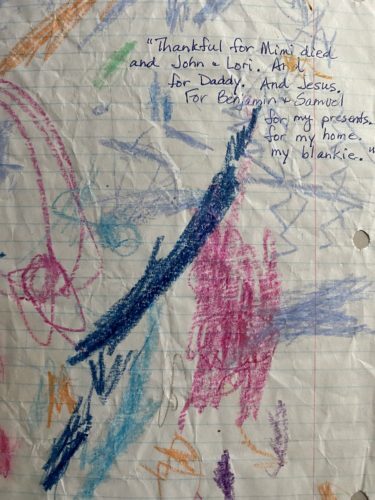
In our rented condo that year, I read a few stories to our children about the spiritual history of our country. After I finished I asked all six to write or color what they wanted to thank God for in their lives.
Our toddler told me what she was thankful for, I wrote her words, and she scribbled on the notebook paper. It was a short, simple little devotion time, and though I didn’t know it then it was the beginning of a 30-plus-year tradition for our family.
A new era of holiday decisions
Last year was the first in decades that we missed our favorite family tradition. Did you too? Thanksgiving celebrations for almost everyone were upended in 2020.
One year later we are still finding our footing on shifting sand. Like any trauma survivor who evaluates life with new eyes, many of us are re-evaluating why we do what we do. Most churches, for example, have not yet recovered their pre-2020 attendance—members are still reluctant to gather in large groups, families have become accustomed to watching online in pajamas, while others have decided church attendance just isn’t important in their lives anymore.
Family holiday gatherings are being questioned, too. Some family members remain anxious about crowds, but for others the break last year opened the door to new ideas or options.
Americans are fiercely independent. We are also addicted to comfort and to the pleasures of ease. So this year traveling “over the river and through the woods to grandmother’s house” has lost its nostalgic magnetism. It has lost its obligation. And for some this year, Thanksgiving just isn’t as important as it once was.
While new possibilities can be good, I’m concerned we might lose the invisible benefits of gathering, especially with family.
Our family has experienced these invisible benefits over the years. After we concluded our season of hosting singles conferences, we were free to travel on Thanksgiving to my mother’s farm where the rest of our family had started gathering several years before. Now, 30-plus years later, I see the importance of those yearly connections, specifically Dennis’s and my personal attachment to my nephews and nieces. And though our kids only saw their cousins once a year, those annual investments of time built lasting relationships. Bonfires, four-wheeler rides, jokes, and always chocolate chip cookies turned into teenage conversations in the kitchen with Uncle Dennis after Grandma and Grandpa went to bed.
In 2019 Dennis led the four newly married cousins in our rendition of the newlywed game. Nearly 40 of us crammed in the living room of the 100-year-old farm house laughed hilariously for two hours, including my mother who had just turned 94! None of us will ever forget it.


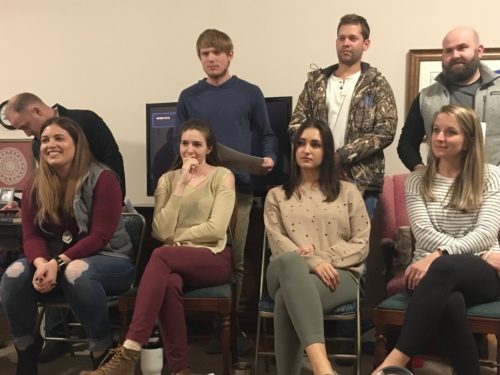
I would have never imagined then how attached I’d feel to these now 20- and 30-something nieces and nephews today with only a once-a-year opportunity to be together. I love them like my own kids.
Who thought up families anyway?
God created families. It was his idea in Genesis. And He imagined both biological, spiritual, and families formed by adoption as God made clear through Paul when he wrote, “In love He predestined us for adoption to Himself as sons through Jesus Christ” (Ephesians 1:5). We are related to our families of origin by blood and bonding. And we are related by the blood of Christ to brothers and sisters in the faith.
God is our Father. He bought us with the blood of His Son and it matters to Him that His children gather together in His name. This theme is woven throughout the Bible like a red ribbon through a garland of green. Gathering is not insignificant to God, for He tells us plainly, “For where two or three are gathering in My name, there am I among them” (Matthew 18:20).
Five reasons gathering with family matters at Thanksgiving
God established annual feasts and ceremonies. He instituted these occasions for His people to keep them connected to Himself and each other. He knew then and now that all humans are “prone to wander” so He built annual gatherings into the rhythm of life. And He declared them mandatory in Exodus 23:14: “Three times in the year you shall keep a feast to Me.”Our annual holidays (Thanksgiving, Christmas, and Easter), which are all rooted in deep spiritual significance, keep us connected to God and one another. Though our holidays are not instituted by God, Christmas and Easter have been commemorated annually since the third century after Christ, and Thanksgiving is about gratitude which is profoundly Biblical.
Repetition is healthy. We need the repetition of familiar routines even when life changes as it has these last two years. The daily, weekly, and annual habits of our lives become a liturgy of worship … what we give ourselves to declares what we value.
Humans need annual habits, holidays which pull us out of the ordinary … out of that which drains life to that which gives life. Gathering with family is never perfect, but it matters. And repetition begets traditions. Annual holidays, a contraction for the original holy days, become traditions.
Gathering together creates opportunities for bonding. Sharing fun, conversations, activities, and cooperating in cooking meals all create memories to be treasured. Memories feed our souls, renew and ground us. Traditions work like glue to keep nuclear and extended families connected. And yes, traditions include the foods we eat, the activities we share, the places we gather because they are part of those repeated habits which give life to our values.
God’s annual gatherings of His people included certain foods, locations and ceremonies and three of the seven required a pilgrimage to Jerusalem. And attendance was mandatory. God knew if given the choice His children would find more fun things to do with their holiday time.
We will always need annual occasions to focus on God. Period. The Psalms remind us over and over that God’s people always tend to forget Him: “They forgot His works and the wonders that He had shown them … But they soon forgot His works; they did not wait for His counsel … They forget God, their Savior” (Psalm 78:11; 106:13, 21). Thanksgiving gives us a regular opportunity to remember God and to vocally and collectively thank Him. It is good for our faith. Being connected is necessary to our rootedness, our sense of unity and belonging. Without family, whether biological or adopted by Christ or by parents, we become isolated, alone, bereft of relevance in this world. Our church family and our family of origin provide what no one else can. Both are essential to our well-being. Many of the ills in our present-day world are a result of isolation, lostness, rootlessness, and the terror of having no answer to the question, “Does anyone care if I’m not here?”
Memories live long in families
Over the years at the farm we’ve had lots of laughs as we remembered times … like the year we arrived, late as usual, and after all eight of us spilled out of the packed SUV my dad announced, “I always thought it was the in-law kids who were late, now I see it’s my own kids who are always tardy!”
Or the year Dennis, ever the tease, sent our nephews, ages 8-11, out on a “snipe hunt.” If you don’t know how to hunt snipes, it’s an old technique for teasing boys and getting a good laugh when they come home empty-handed. All you need is a banana for bait and a paper sack.
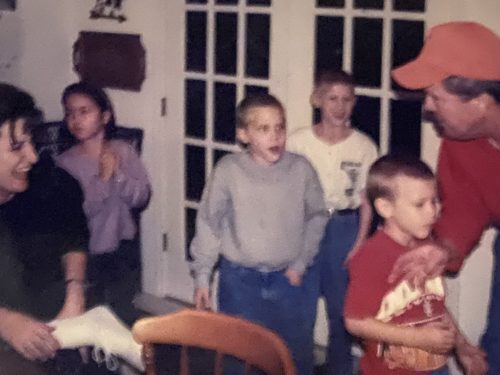
We all remember my nieces as teenagers sitting at the kitchen table till midnight, ready to hit online Black Friday sales and then showing us their bargains the next morning. And we all remember my mom, Gramma, sitting up way past her bedtime in her chair in the kitchen, sleepy but with a case of FOMO before it became a thing. (FOMO means fear of missing out!). Until her 90s she sat in her corner chair listening to the banter and the laughter, saying little but clearly loving watching everyone … together … enjoying the moments.
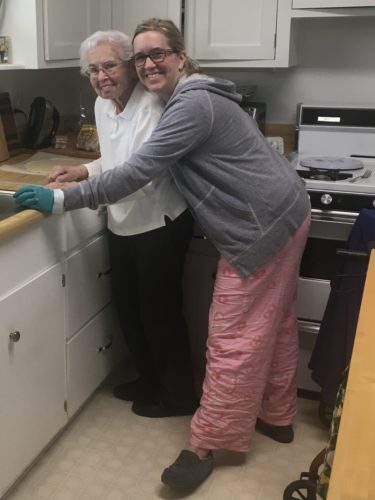


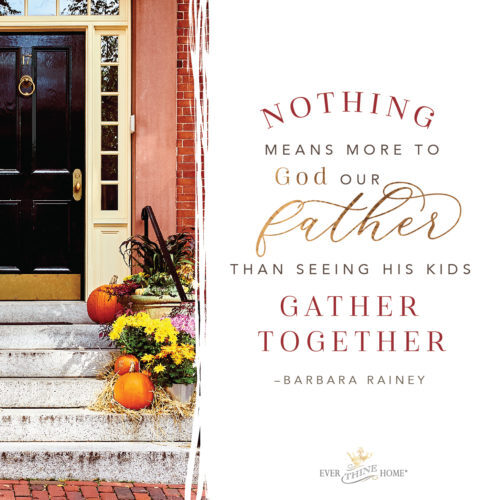
Nothing means more to a parent.
Nothing means more to God our Father than to see His kids gather.
I hope you will gather with some biological or spiritual family members this year. Change is inevitable and necessary. Traditions cannot remain the same forever. But some traditions must never change. Gathering to give thanks, to celebrate the birth of Christ, and to celebrate the Resurrection of Christ must remain.
If you enjoyed this, read some additional posts by Barbara on the same topic:
“Time to Gather” “Come, Ye Thankful People, Come”
The post Why Gathering for Thanksgiving Matters … and Always Will appeared first on Ever Thine Home.
November 8, 2021
Seven Books That Shaped and Guided My Parenting


Books have been a significant part of my life in more ways than I can describe, including how Dennis and I parented our six. The recommendations of others introduced me to some of the best books in many categories including parenting, so here are the seven that most shaped our parenting. All are full of timeless content and available online.
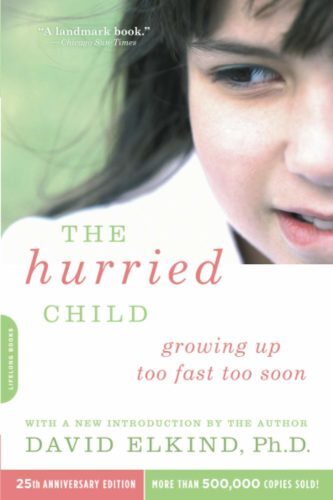
The Hurried Child, by David Elkind. Professor Elkind helps parents focus on the pressures our culture places on children: preschool for all kids, lessons in competitive sports at earlier and earlier ages and the potentially dangerous influence of screens. Elkind challenged the new values of my generation by writing about the importance of children being allowed to be children, free to learn and grow at their own pace without the pressure of lessons and graded accomplishments.
Our first three kids were under five when I discovered this book, and I felt a strong sense of “this is right.” I wanted the best for my kids and Elkind gave me the courage to say no to the adult peer pressure I felt to start enrolling my preschoolers in classes. Today as I watch my little grandson play in the dirt with his trucks, stack pieces of scrap wood to make ramps and roads, and let his imagination freely grow, I remember my own kids doing the same in our backyard. And it makes me happy to watch his free play knowing how good it is for his development.
The book is available in a newly updated 25th anniversary edition which addresses all that parents face today. Twenty-first century children need their parents to this read book now more than ever.

What is a Family? by Edith Schaeffer . Written with a wholistic view of family life rather than tackling how-to topics, What is a Family? paints a portrait of the values that shape a family. The chapter titles answer her title question: “The Birthplace of Creativity” … “A Formation Center for Human Relationships” … “A Shelter in the Time of Storm” … “A Perpetual Relay of Truth” … “A Museum of Memories.”
Schaeffer gave me a vision for how Dennis and I could both create and control the environment that is home. I quoted her often when speaking, marked paragraphs that I reread over and over, and eventually wore the cover off the book!
Her introduction beautifully describes the vision God has for Christian families: “A Christian family is a mobile blown by the gentle breeze of the Holy Spirit. Each member of the family, as he or she is born again, is indwelt by the Holy Spirit.” As time marches on the family is “constantly changing from year to year, with the mix never the same—agewise, interestwise, talentwise, intellectwise—never static, always with new discoveries … blown by the breeze of the Holy Spirit.”
This book is a timeless treasure worth owning for every Christian family.

Honey for a Child’s Heart, by Gladys Hunt. I’ve mentioned this book in other blog posts. Reading to and with children, often out loud, has value beyond measuring emotionally, relationally, spiritually and intellectually. Hunt lists dozens of great books for different age groups; chances are you’ll find books you’ve never heard about. Be sure to purchase the latest edition of this book, updated to 2021.
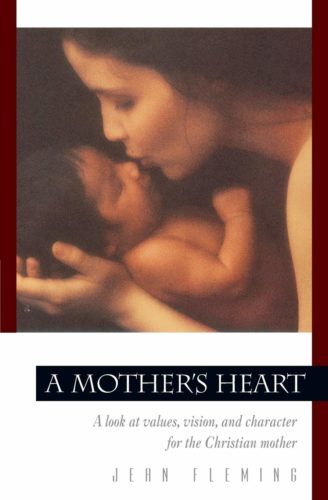
A Mother’s Heart, by Jean Fleming. This book taught me a life changing truth: “Children are a piece of a mother’s heart walking around outside her body.” This statement by Fleming explained so much when I was mommy to my six, and it still applies today as my kids are all adults. I understand now it will always be true. The book is available but not in large quantities. If you can’t find it I’d also recommend my friend Sally Clarkson’s books, especially The Ministry of Motherhood.


The Hiding Place, by Corrie ten Boom and God’s Smuggler, by Brother Andrew . These are not parenting books but I include them because they were significant to me for casting a vision for the kind of faith I wanted to grow in my children. We read these books out-loud together when my kids were middle schoolers. I also worked to expose our six to other believers of strong faith to support and strengthen their fledgling relationship with God.
Also in this category were Elisabeth Elliot’s books on her childhood that told stories of missionaries visiting their family and telling God stories from their adventures in other countries. This inspired Dennis and me to do the same. We loved having other adults who loved Jesus come have dinner and talk about their relationship with Him with our kids listening. It was one of the best things we did to help our kids grow their faith.

Mothers and Sons: Raising Boys to be Men , by Jean Lush. This book became a handbook for me with my two sons. Even though I had three brothers I felt clueless about how to raise my boys to be men. This book gave me lots of ideas, as well as the vision and courage to guide my sons to serve others, work hard, and protect those who needed their help and strength. I believe it’s a must read for every mom of boys. The Bible, by God Himself. You could also title this book, “How God Parents His Children.” I saved this one for last for because it’s most important. There are stories, ideas and examples on almost every page of this living book.
One verse that was crucial for Dennis and me was Proverbs 6:16, which starts with the words, “There are six things the Lord hates …” Now that’s a show stopper of an introduction! Don’t you want to know that list? I did when I first read this verse as a parent.

And when I read the first items on the list—“haughty eyes” and “a lying tongue”—I knew these were my marching orders as a mom. If God hates these attitudes and actions in His kids then I needed to hate them (hate the behavior not the child) too. That meant I shouldn’t tolerate them in my children’s hearts and character. I hope this is a teaser and that you will find this Scripture passage and read the list with your spouse or on your own if you are a single parent. Make a plan for what you will do when these things show up in your kids’ lives and attitudes.
Another parenting verse I found that was also significant was, “All Scripture is breathed out by God and profitable for teaching, for reproof, for correction and for training in righteousness that the man of God may be complete, equipped for every good work” (2 Timothy 3:16). Do you see the application for moms and dads? This is how God parents us: repetitive teaching, lots of corrections (which means both explaining what is right and restoration to an obedient state and a resolved relationship with you) and reproofs (i.e. it means teaching evidence or proof of why lying is wrong and telling the truth is right, for example) and training (instruction on what to do next time). This verse gave us a pattern to follow, and we did.
We followed plenty of additional passages in the Bible, but I don’t have space to list them. Some of them are in our book, The Art of Parenting. Others you’ll have the privilege of discovering on your own.
Parents today are facing different challenges today than we did in our generation, but the parenting principles of Scripture that God wants us to follow are the same over the centuries. Why? Because every child is born rebellious and needs parents who will love well by guiding, correcting, training and showing them what it looks like to follow God. Our world needs the children of today to become the godly leaders of tomorrow.
Hope these books help and inspire! And I’d love to hear which ones were most helpful!
Be sure to read Barbara’s post about reading to your children, plus a suggested reading list, in
“The Delight of Reading with Your Kids.”
The post Seven Books That Shaped and Guided My Parenting appeared first on Ever Thine Home.
November 1, 2021
Why We Need Gratitude More Than Ever
When the Covid-19 pandemic arrived in early 2020, did any of us have any idea how much it would still be affecting us in the final months of 2021? How it would disrupt our lives, our communities, our nation, our world?
Unsettled describes life since March of 2020. But sometimes unsettled feels too mild an adjective to describe the seismic changes the world has experienced. Our collective Covid suffering is a very unwelcome add-on to lives already checkered with more than enough hardships.
Which leaves us questioning, “Where is God?” and “What is He doing?” in the midst of this ongoing chaos.
This will be the backdrop again this year in our annual season of gratitude—the weeks leading up to the Thanksgiving holiday. And though feelings of gratefulness may not be bubbling over in our lives, still … more than ever, we need to practice gratitude.
A friend named Ney Bailey wrote a wonderful book called Faith Is Not a Feeling in which she defines faith as simply taking God at His Word:
You and I can either grow accustomed to listening to our feelings, thoughts, and circumstances, letting them control us, or we can be in the habit of taking God at His word despite our feelings and life experiences. We need to choose with our wills to believe that His Word is truer than our feelings.
Choosing to express thanksgiving to God for everything in our lives—whether we value each person as a gift or a difficulty, each circumstance as a blessing or a calamity—is one of the best ways to express our faith. We who “make a claim to godliness” (1 Timothy 2:10) can welcome these next few weeks as an opportunity to both train our children to be more grateful and also quicken our own hearts to generous and genuine thanksgiving to God and to others. All in spite of how we feel.
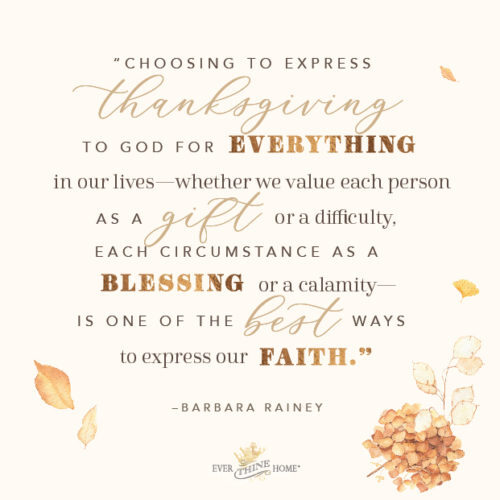
But first we adults must tune our hearts to thanksgiving.
To help us develop a more grateful heart, I’ve put together an eBook titled, Why We Need Gratitude More Than Ever. Inside this book, you will find four chapters that feature an historical story that highlights a different aspect of giving thanks to God. My hope is that through this eBook you are guided and coached in developing a stronger faith and in modeling a grateful heart for your family and for everyone you know. And you might consider reading the stories to your children ages seven and older for family devotions as you approach Thanksgiving.
This post is part of Why We Need Gratitude More Than Ever. I would love for you to download the full eBook! I think you will be encouraged as we head into the holiday season.
Happy gratitude month!
Ever His,
Barbara Rainey
The post Why We Need Gratitude More Than Ever appeared first on Ever Thine Home.
October 29, 2021
Friends & Family Fridays #10


Hello friends!
This was a month we won’t soon forget and this letter to all of you … not what I anticipated in early October. The month began with our plans in place; I checked things off day by day, marking lines through my listed to-dos with great satisfaction. Made me feel in control. Always does.
Monday October 18 began as planned, but by nightfall concern crept in like a cloud bringing darkness and blotting the light of the sun.
My brother Tom, six years younger than I and a widower, was in the hospital over that weekend for a minor procedure and expected to go home Monday. Ever reluctant to communicate on a personal level, my brother’s last text that evening was, “Still here. Maybe home tomorrow.”
Mid-day Tuesday I called to see if he’d made it home. No answer. Again midafternoon and then after dinner I left another message and sent one last text. No reply. The cloud of concern changed during the night of frequent wakefulness to a cloud of anxiety.
In the middle of the night we often imagine the worst. Do you too? I imagined scenarios of Tom running off the road into a deep ditch … or suffering a heart attack walking up the stairs to his house. Then I thought maybe he he’d developed sepsis or a staph infection or some other unforeseen turn for the worse. By Wednesday morning I decided to call his doctor’s office to at least find out if he was discharged or not. With my mother gone and his only son living in Texas, my brother had no family nearby (except me two hours north) and no neighbors nearby. The farm is remote.
After no success with the doctor’s number I called the hospital and learned with shock that he was in ICU. Thus began a flurry of activity as we packed, texted my other brothers and family, asked for prayers, and drove to the hospital in the small town of Camden.
Upon arrival we learned that Tom had developed pneumonia and couldn’t breathe. His doctor said it was a bad case. With the gentleness and flexibility of a country doctor he told us Tom’s odds were less than 50-50. As family began to arrive, the small local hospital relaxed the rules to let us go in to see him one at a time even beyond official visiting hours. On Thursday we began our visits, but he was sleeping most of the time and was on a breathing machine to help him expel CO2. On Thursday night just after midnight his heart stopped. He was resuscitated and then it stopped twice more before morning.
My brother was gone. It was sudden, unexpected, head-shaking unbelievable.
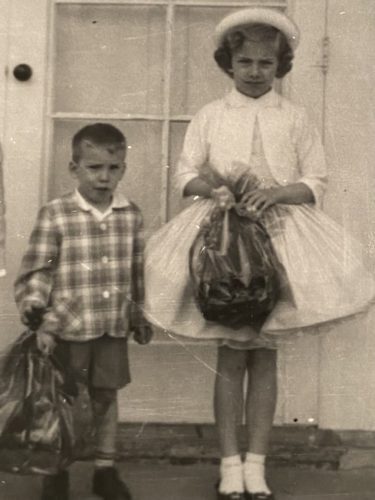
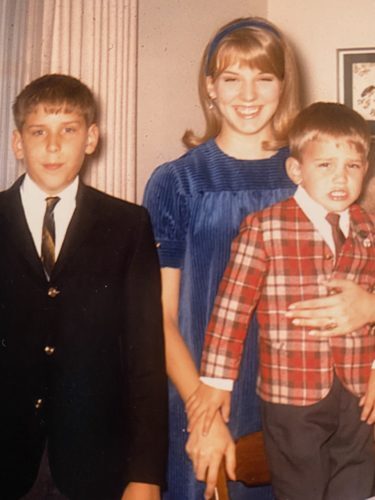
One of Tom’s lifelong friends, Jimmie, a natural evangelist converted from a wild life he shared with my brother in their 20s, arrived late Thursday. In one of our conversations Friday I asked about Tom’s salvation. Jimmie assured me Tom believed and was saved. He said my brother read his Bible every day … my stinker little brother never told me! But I had heard hints of faith from him off and on the last few years. Jimmie’s words encouraged me that my assumptions were correct. Tom had prayed with me and received Christ as his Savior when he was 18 and it was sincere and real in that season of his life. Jimmie’s words confirmed for me that Tom was with Jesus and nothing could be better for him.
The days since Tom’s death have been a whirlwind. Countless decisions, scrambling to figure out how to feed the crowd at the farm, conversations and phone calls and texts, and generally living on high alert day after day. It was exhausting. Everything else had to be necessarily paused. And I’m still in that mode, but with many decisions now made the exhale is starting.
A memorial service to thank God for the life of my brother is now planned for the 14th of November. For a small farming community we’ll have a really large crowd, requiring more planning and organizing and preparation. But even that is good and part of God’s perfect plan for us.
In spite of the shock and loss I’m amazed at the reminders I’ve seen of God’s sovereign control:
Tom developed pneumonia in the hospital where he had immediate help and not at home alone and isolated.“Pneumonia,” his doctor said, “is an old man’s friend.” I’d never heard this saying but he told us it’s a painless way to die. You go to sleep and never wake up. So grateful for that gift of a painless departure.Psalm 139 has long been a favorite of mine. God knew when my brother “lay down or sat down and when he got up again” (verses 2-3). He was never alone. God formed “his inward parts” and he was “wonderfully made” (verse 14). And most amazing of all is that God wrote in His book, “every one of them, the days that were formed for him, when as yet there was none of them” (verse 16). His 66 years were all ordained by a good Father.When Tom’s heart failed the doctors and medics got it started again but they could not add another day to his life, for God had numbered them and his time here was over.God.Is. In. Control. What a comfort!And so we who are left are reminded that our days too are numbered. Like my brother we have no idea what that end date is. King Solomon said, “It is good to go to the house of mourning because the living take it to heart” (Ecclesiastes 7:2), which means those of us left behind are reminded that we must make our days count.
The question is always, will we? Are there changes we must make to make sure our fewer days make a difference? It’s been good for me to evaluate.
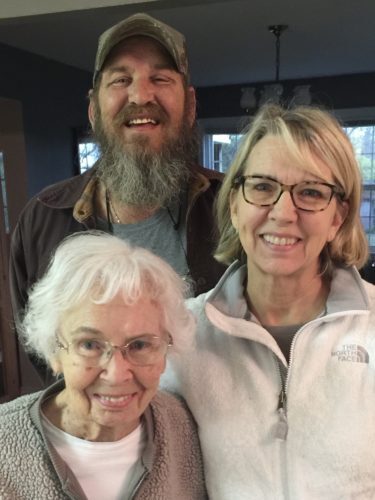
In other news, our granddaughter Gabrielle, aka Gabby, is playing this week for the state soccer title with her high school team. My grandson James is giving me his Saturday this week to do some needed work in the farm house as we prepare for the memorial and then Thanksgiving which will be here soon. I’ll post photos on Facebook and Instagram if you want to see. Somewhere in this mix Dennis and I are hoping to squeeze in another one-day road trip before the fall leaves are gone. It’s been a late season this year so we may try next week.
With EverThineHome, we are sending another ebook on Monday. This one, appropriately, is about gratitude. I hope you’ll download it and read it for yourself or to your kids or grandkids.
And I’m eager to start sharing some of what I’ve been writing on a topic I’ve been thinking about for years: disappointment with God. Are you interested?
Lastly, thank you all for the many comments you posted on my article “How to Forgive Your Parents.” It was so encouraging.
Forgiveness, too, is a very needed topic.
With deep gratitude for each of you.
Ever His,
Barbara
The post Friends & Family Fridays #10 appeared first on Ever Thine Home.
October 25, 2021
How to Forgive Your Parents


A sweet friend has been struggling with her childhood and what she experienced from her parents. Like many of us when we become adults, get married, and begin raising our own families, she sees clearly as a mom of two all the mistakes her parents made.
I understood because I felt the same way when I was in her season of life.
In my late twenties and early thirties, I blamed my parents as the source of all that troubled me. I found them guilty for my shyness, insecurity, fears, and for not teaching me to know God as a child. My lack of confidence in relationships, my weakness in resisting the influence of friends, and my inability to be comfortable and confident in who I was … it all seemed to be their fault.
That I might be responsible in some way never occurred to me. Nor did I have eyes to see that God could be using my perceived losses and weaknesses for my good. Years later God showed me that being left out of the in-crowd was actually a protection from harmful activities those kids were involved in.
How my perspective changed
The change in my heart toward my parents began when I learned over time bits and pieces of their stories. I knew from experience as a child, for example, that my paternal grandmother Lillie was an unhappy and often angry woman. My brothers and I were afraid of her. But I never thought about how her anger and unhappiness impacted my father as a child.
When I learned that my grandmother’s mother died when she was eight and her first-born son died as an infant, my heart began to feel compassion toward her. She also suffered from irregular heartbeats which the doctors all dismissed as “in her head” or caused by her “inferior” female emotional state. Being a woman was, for many, difficult in the early 1920s. There were no counselors, no woman’s ministries, no books about any of the issues she lived with.
My grandmother Lillie was just one of four broken, flawed, sinful parents who shaped the two people who gave life to me. Parents like mine, I realized, try to do their best, but often they don’t know what they’re doing or why. I didn’t know what I was doing as a parent much of the time either.
We have so much to learn from Jesus
I’ve learned many of Jesus’ words are widely recognized but rarely practiced. One of the most remarkable of all is His prayer for His killers as He hung on the cross: “Father, forgive them for they know not what they do” (Luke 23:24).
Even in His agony Jesus saw them for who they were; deceived, misguided, mistaken men, following the wrong leader. He knew that if they saw Him as He is, God Almighty high and lifted up in all His glory, they would have been flat on their faces before Him instead of railing at Him as they killed Him. In His darkest and most painful moments, as He was brutally tortured and murdered, Jesus modeled the way forward for His followers to forgive as He did.
To my young friend I texted:
“I’m sure you know now after six years of parenting how many things you have done that you regret, how many emotions you feel unable to control. Like all parents you, too, struggle with losing your temper or parenting out of fear. Right?
“So did your parents. They too did not know what they were doing. They too made mistakes, some perhaps were intentional, but probably most were not. Just as couples walking down the wedding aisle cannot imagine harming or being harmed by their beloved, so most parents love their children and would never intentionally harm them if they understood what their words or actions were causing within their child.
“Sadly you will harm your kids, too.”
All parents make mistakes and harm their children even though they don’t want to and are often unaware of the harm being done. It’s unavoidable. We are all too broken. And one day your children will have the choice to forgive you or not forgive you and become angry and bitter.
So here are three simple-to-say but hard-to-do steps for forgiving your parents:
Learn their stories. Try to see your parents as people with stories of heartache, failure and pain who need to be accepted as they are. Ask God to help you see them as He does. Do you know any of the experiences that shaped your parents? If you don’t, start asking questions to get to know who they were and what life experiences shaped them. You too might discover compassion blossoming in your heart toward them. Make a list of the things they did right or the things they did that you are thankful for. Focus on what is good, honorable, and true about them. Making a list of positives will help you shift your eyes from all the negatives, creating a more balanced view. Forgive them as Jesus forgave. Pray the same prayer He prayed for His killers, “Father, forgive them for they know not what they do.” As an act of your will, stop blaming them and release them from the debt you feel they owe you.And if you dare, one of the very best gifts you can give your parents is your list of what you are grateful for. Take that list and turn it into a written tribute, a gift of honor, a tangible way to obey the fifth commandment: “Honor your father and mother, that your days may be long in the land …” (Exodus 20:12). My husband, Dennis, wrote an entire book about honoring parents and included examples of tributes people have written to their parents.
Writing a tribute to my parents was one of the hardest things I’ve ever done because it was so difficult to let go of blaming them. But it was also one of the best things I’ve ever done. Writing my list into a story form and reading it to them (through buckets of tears) set me free from the bondage I was in. It opened the door to a much freer and healthier relationship for the rest of their lives.
We are living in world full of divided relationships marked by disagreements and discord. We who belong to Christ, who have been born again by His death on the cross, should not allow our relationships to look like those who don’t have the power of Christ to redeem.
I pray you will take Jesus at His word when He says:
“I am the resurrection and the life …” (John 11:25). If God can resurrect a dead Jesus, He can resurrect lifeless relationships with parents.“You will know the truth’ and the truth will set you free” (John 8:32). When we know the truth about our parents and ourselves (we too are sinners and need forgiveness) we can be set free.“By this all people will know that you are My disciples, if you have love for one another” (John 13:35). Our broken, divided family relationships are ruining our witness to the world and breaking the heart of God. The last verse of the Old Testament is a warning: “ … and he will turn the hearts of the fathers to their children and the hearts of children to their fathers, lest I come and strike the land with a decree of utter destruction” (Malachi 4:6).“Nothing is too hard for you” (Jeremiah 32:17). God can do anything with willing hearts in His surrendered people.May you discover the joy of freedom and forgiveness with your parents.
If you enjoyed this post, be sure to read more about honoring your parents:
“Honoring Your Parents for What They Did Right” “The Forgotten (and Sometimes Forsaken) Commandment: The Best Gift You Will Ever Give to Your Parents”The post How to Forgive Your Parents appeared first on Ever Thine Home.
October 18, 2021
When Kids Ask Too Many Questions
“What is hair made from?”
“Do lizards go to heaven?”
“Why do we stop at red lights?”
“Who’s your mom’s mom?”
“Why do I have to tell Jesus what I did wrong when He already knows?”
In our house with six kids, a menagerie of outside pets, and two often exhausted parents, our kids’ questions kept us on our toes and sometimes pushed me to the edge. Questions ranged from cute to confounding.
And I bet you, too, deal with more than one child asking questions at the same time. And always, it seems, when mom is busy with other tasks.
Nothing like trying to finish preparing dinner and explaining where babies come from! Or juggling laundry and a sibling’s homework and answering the question, “How small are the people on the radio?” Or talking on the phone taking care of something important, and hearing that little voice asking, “Why did the fox kill our baby chickens?”
Phew. And it didn’t stop at bedtime: “Does God sleep?” … “What does His bedroom look like?” … “Is He really real?”
It always seemed the lights-out hour was delayed because that’s when my kids wanted to talk. No doubt it was often a delay tactic, but I also knew they asked questions because they saw I was focused on them as I tucked in each one for the night and prayed for them.
My kids were smart. They knew I was distracted much of the other time during the day. So I tried to patiently answer a few questions at bedtime. Even one honest answer of one question from each of my six made for a long, drawn-out bedtime many nights.
Was it even worth the time? Why did this matter in my home? Does this matter in your home?
One of my favorite writers, Edith Schaeffer, said the family is a perpetual relay of truth. Perpetual. What a great word for the race of parenting!

When you engage your children’s questions you are participating in a relay of life.
As their first and most important teacher, you are helping them learn about every subject related to God’s world. But most importantly you are teaching them about God Himself by what you say and how you live.
Here are four helpful training tools to equip you as a parent while you relay the truth to your children:
1. Look to the God who called you to be a parent. Even though you are learning as you go, you are not alone. Jesus prays for us (Romans 8:34) and so does the Holy Spirit (Romans 8:26,27)! Learn to depend more and more on the willing help God is so eager to give you for this race.
Ask Him how to answer those faith questions that leave you shaking your head incredulously. Ask Him about the other ones, too, since He is Creator and Lord over all. He delights in our questions to Him … unlike we mortals who too frequently become impatient!
And teach your children to ask God all their questions, too. Guiding them to talk to God about everything is one of the most important skills you can teach.
2. Look to parents who have gone before you. I hope that in sharing my experiences, you can see that you are not the only mom who’s ever been embarrassed from your 2-year-old’s bathroom stall query, “Momma, is that a man in the girl’s bathroom? … But why is her hair so short?”
Like every athlete who is strengthened by the cheers of the crowd in the stands, so we are also surrounded by a cloud of witnesses watching us run our race. They have finished their laps in the relay of truth and are cheering for us as we finish ours. We also have those of us still on earth who have finished our parenting journey and want to be your mentors, cheerleaders, and prayer support.
3. Look to those running this relay beside you. Sometimes you just need to know you’re not the only one confounded and embarrassed by your child’s questions. Be willing to share honestly with your friends and listen to their stories too. Find time to laugh about some of the crazy and embarrassing moments while reminding each other how important the questions are.
4. Don’t leave all the asking to your kids. While it is important to focus on your children’s questions and answer them authentically, it is also important to ask your children questions. Ask how they feel when going through a difficult time. Help them articulate their emotions. Empathize, affirm, hug, and lead your children to the source of all truth.
You can thank Jesus that He knows our every sorrow, feels our griefs, and will someday make everything right. Read verses from the Bible to show your children how much Jesus loves us and cares for us. And show your child where to find them in their own Bibles.
Another idea is to choose to sometimes turn the questions back on your children when they asks you “why?” Make it a dialog. You don’t have to answer every question. Let their imagination craft an answer. Don’t carry the burden of having to have all the answers. Sometimes asking questions is just a game kids play, so enter into their fun and let them be silly!
The relay race of truth
Passing the truth to the next generation is a relay race more important than any Olympic contest because the rewards last for eternity. The goal is that your children will run the race without stopping, without falling, without dropping the baton, and they will continue passing it on to their children’s generation.
Your home is the training facility for your children’s future. Answering questions and even admitting, “I don’t know, but let’s ask God to help us understand,” are part of modeling authentic faith for your children.

Your home is a relay of truth. And you’re going for the gold of a lasting legacy that withstands the test of time.
If you enjoyed this post, be sure to read some other content from Barbara on parenting:
“What Are You Teaching Your Children?” “How to Build a Relationship With Your Child”The post When Kids Ask Too Many Questions appeared first on Ever Thine Home.
Barbara Rainey's Blog

- Barbara Rainey's profile
- 24 followers

