Jean Collen's Blog, page 3
October 27, 2023
Twentieth Anniversary of Anne Ziegler’s Death. 22 June 1910 – 13 October 2003


June 28, 2023
ONLY A ROSE – RADIO SERIES – 1980.
June 25, 2023
THE RECORD CONTRACT, a short story by FIONA COMPTON.
Gingerly Heather Craig nibbled on the thin slice of dry toast and drained her cup of weak black tea. The morning sickness was getting worse and she didn’t know if she could hide her pregnant state from Malcolm for much longer. She was relieved that she had an appointment with her gynaecologist that morning, and not a moment too soon.
Mrs Hubbard bustled into the dining room with the first post. Malcolm’s agent had forwarded the week’s fan mail, so she put the pile of letters at Malcolm’s place. The pile was not quite as high as it had been four or five years earlier, but it was still sizeable. In contrast, Heather received a few accounts and the weekly letter from her mother. Heather noticed that the month’s copy of Gramophone had arrived, probably containing the anticipated review of Malcolm’s first long-playing record.
Heather decided to read the review before Malcolm came down for breakfast. He was due at the recording studios later that morning for his regular recording session. She had difficulty in locating the review as it was much shorter than she had anticipated. As she read the brief review her nausea returned, this time brought on by shock and dismay. One sentence stood out above all the others.
“Only Malcolm Craig’s most ardent fans will enjoy this innocuous collection of highly forgettable songs.”
Heather heard Malcolm’s footsteps on the staircase and hurriedly hid the periodical under her chair. This spiteful piece was the last thing he needed to see before his recording session and the Watford concert that evening.
“You’re up early, darling,” he remarked as he planted a kiss on the top of her blonde head. “Have another cup of tea and keep me company while I eat.”
Malcolm poured some strong tea into her cup, but she knew she would not be able to take a sip of it.
Malcolm glanced perfunctorily through his post.
“No sign of the Gramophone ?” he asked casually.
“Perhaps it’ll come by the second post.” Heather tried to sound light and cheerful, willing her warring stomach to settle down. She bent down and somehow managed to hide the offending periodical under her red dressing gown, before fleeing from the table. Just in time she managed to reach the privacy of the bathroom before nausea overwhelmed her completely. Malcolm would have to wait until tomorrow before he faced some unpleasant reading.
-0-
It was March 1951 and Malcolm Craig’s recording contract was due for renewal. The ritual was always the same. Each year, for the last twenty years, Frank Downey, the managing director of the famous BRG recording studio in Wigmore Street, would arrive before the session and invite Malcolm into his office to sign the new contract when he had finished his work. The business concluded, Downey would offer him a tot of his excellent single malt whisky.
“How are you, Malcolm?” Frank Downey greeted Malcolm Craig effusively. “Would you mind calling into my office after your recording session? I have some business to discuss with you.”
Malcolm Craig recorded the eight selected songs in less than three hours. He was an excellent sight-reader, so all he needed was a brief run through with the eminent accompanist, George Manning, before he was ready to lay the cake on the table.
He listened to the takes with his producer and George Manning, then, satisfied with the morning’s work, made his way up to Frank Downey’s sumptuous office to find the gentleman already hovering at the door ready to greet him.
Downey ushered Malcolm to the plush leather chair facing his large oak desk. Usually the contract was lying on the desk waiting for him, a gold Schaeffer pen near at hand, ready for him to sign on the dotted line. But today the desk was bare and Malcolm speculated about the empty desk and why Downey appeared so fidgety and uncomfortable.
“Is the contract late?” Malcolm asked, trying not to show concern.
“That’s what I wanted to discuss with you, Malcolm,” Frank began. “What with the advent of the LP and changes in people’s taste since the war, your records are just not selling the way they used to.”
Downey watched Malcolm’s rugged face slowly lose its colour. He really had not reckoned on the man passing out on him.
Despite his pallor, Malcolm spoke in measured tones.
“Frank, I’ve known you too long to listen to a lot of soft soap. Are you telling me you’re not renewing my contract?”
“I’m so sorry, Malcolm. I fought against it of course, but I was outvoted.”
As though to console Malcolm, he added brightly, “You’re not the only one to suffer – we’re not renewing the contracts of many of our gifted pre-war artistes. They’re all still in good voice, but there’s no demand for them these days. I’m really sorry.”
Malcolm’s legs were trembling. Despite being nearly fifty, and one of Britain’s’ greatest and most versatile tenors, he was close to tears. He was still in the prime of his vocal life, and here he was being discharged like an indolent office boy. He was due to sing at a concert in Watford that evening. After this blow he would need all his professional expertise to carry the engagement off successfully.
He rose to his feet, willing himself to leave with dignity before he broke down.
“There’s nothing more to be said then,” he said baldly. “No doubt you’ll send any money owing to my agent.”
“Please don’t leave like this, Malcolm! Have a whisky with me for old time’s sake,” pleaded Downey.
What was there left to discuss now that he had no contract binding him to the company? The whisky would choke him. He turned on his heel and walked out of the office, and left the building without a word of farewell to anyone. He gained the privacy of his Wolseley, lit a forbidden Capstan and drew on it deeply. Concert and radio dates had been falling off a bit lately, but he and Heather relied on the steady income from his recordings to keep them in comfort. What was he to tell her?
He made his way to his comfortable home in Hampstead, aware that he would probably never drive the same route again. He wondered whether his voice, the splendid gift he had taken for granted since childhood, could be failing him. But that couldn’t be right. He had just heard the recordings he had made that very day. His voice sounded better than ever. As he edged the big car slowly up the driveway, he glimpsed Heather, in tiny pink shorts and a bright seersucker top, sunbathing on a deck chair near the rose bower.
He had met Heather in a concert party in Margate, a few years after he had signed his first record contract, a gorgeous blonde of twenty, with sea green eyes and a complexion like a ripe peach. Her stunning looks and charm excused the fact that her voice, though pretty and sweet, was merely run of the mill. She had managed to make a stage career for herself because of her looks and charming personality.
They had fallen in love, and spent every free moment together, mingling with the holidaymakers licking cornets, while their children were having special treats seated on the staid donkeys on the beach. The light-hearted atmosphere on the seafront contrasted with their seaside lodgings where they were surrounded by elderly corseted widows in the dining room and the lounge.
They were married at the end of the season and Heather was only too happy to stop attending audition calls to take on her new role as Malcolm’s dutiful and loving wife. In those heady days he was in great demand for West End musicals, oratorios, Masonic Concerts, recording and broadcasting for the BBC, Radio Luxembourg and Radio Normandy.
Malcolm’s successful singing career gave them all the luxuries of life, but their mutual desire for children remained unfulfilled. Heather had twice fallen pregnant, but had miscarried both times. They eventually accepted that they would be childless and transferred their thwarted parental instincts to their two Scotties, Whisky and Soda.
Malcolm emerged from his reverie and watched Heather as she lounged, half-asleep in the sun without a care in the world. The two dogs had been cavorting around the garden, always with half an eye on their beloved mistress, but now they bounded in his direction to greet him with an effusion he found difficult to reciprocate that day.
-0-
Heather had kept her appointment with her gynaecologist. Dr Urquhart, an elderly Scot, did a thorough unhurried examination to which Heather submitted with stoicism. She had been through such inspections before to no avail. At the age of forty she had not held out very great optimism that she could have a child at such an advanced stage of life.
“I can safely say your pregnancy is going smoothly, Mrs Craig,” he said with a rare smile. “You’ll have to take things easy for you are not young as far as child-bearing is concerned and you have had two problem pregnancies before, but if you look after yourself I see no reason why you shouldn’t carry this infant to full term.”
-0-
“Darling!”
Heather had seen Malcolm’s car at last and hurried to him, eager to kiss him and tell him her glad news right away, but her elation evaporated at the sight of his haggard face.
“Did you sign your new contract?” she asked uncertainly, knowing before he spoke that all was far from well.
“There is no new contract,” Malcolm murmured under his breath. “I’m finished at BRG. I’m sorry, darling.”
Heather took his hand in hers, hurt to see her usually cheerful uncomplicated husband so downcast.
“It doesn’t make sense. You’ve never sounded better. Did Frank give you an explanation? There must be a mistake.”
“They’re getting rid of a lot of us pre-war singers because public tastes have changed. The British public prefers crooners these days. I fear my days as a singer are numbered.”
“Nonsense! As soon as other companies hear you’re free they’ll jump at you,” said Heather hopefully.
“I don’t think so,” replied Malcolm dejectedly. “I’m getting an old man.”
“Rubbish!” she said. “You’re not even fifty. You have years ahead of you as a singer.”
“I’m too upset to talk about it. I still have to get through that concert in Watford tonight, though I don’t know if I’ll have the strength to do so.”
Her heart went out to him in his misery. She decided to postpone her news until after the concert. The copy of the Gramophone was under her side of the mattress. It would be a while before she would produce it. He didn’t need another knock for a while.
Malcolm bathed and changed, then sat on his favourite chair in the drawing room, absentmindedly stroking one of the Scotties, idly regarding the Spanish cabinet, the Chappell grand piano, the Wilton carpets, and the fine antiques, all the beautiful possessions he and Heather had acquired from the money he had earned over the years. How could they afford to go on living like this now his career was on the wane?
He was surprised to see Heather emerge in her low-cut red evening gown – always his favourite – with the diamond necklace he had given her for her last birthday gleaming at her throat.
“‘You take my breath away Heather,” he remarked with a gentle smile. “I didn’t know you were going out this evening.”
“I’m going out with you to your concert,” she replied. “It’s a long time since I heard you singing in public. You‘re still the greatest tenor in Britain whether you have that contract or not.”
He knew she was being kind but he was comforted by her presence on the trip to Watford. The concert was sold out, and a group of ardent fans was waiting for him at the stage door of The Playhouse.
Thousands admired his voice, but this small coterie of fans bought all his records, collected his press cuttings, and travelled to all his concerts up and down the UK if they had money to spare. Over the years, he had developed a personal relationship with them and he and Heather sent them Christmas cards, and sometimes complimentary tickets for one or other of his appearances.
Singing had certainly given him an insight into vagaries of human nature he would never have experienced had he been voiceless and working in the family butchery alongside his two older brothers.
Heather watched him brace his shoulders to face his fans with good grace. Although it was the last thing she felt like doing, she smiled as she wafted quickly through the crowd, knowing it was Malcolm they really wanted to talk to.
“Hello, Geraldine. Don’t tell me you’ve come all the way from Manchester just for tonight. David and Veronica – lovely to see you again.”
Malcolm was always genuinely pleased to greet his loyal fans. Tonight especially it cheered him to see their friendly faces glowing with pleasure at his kind words.
“We couldn’t believe that review in the Gramophone, ” said Veronica. “I’ve already written to the editor to say that it was a disgraceful criticism. The reviewer ought to offer you an apology.”
“The review? You mean the review of my LP record?”
For the second time that day, Malcolm’s face lost all its colour.
“Was it very bad?” he asked in a small voice.
“Quite uncalled for,” said David, as the others nodded their agreement. “But don’t you worry, Malcolm. We think you’re still the greatest tenor in the world – never mind just in Britain. We’ll all be buying your LP.”
Malcolm tried to smile.
“I hope you enjoy the concert. I’ll probably see you all afterwards. God bless you for being here tonight.”
He went to the Green Room to warm up with George Manning, who had played for him at BRG earlier that day, and had booked him for tonight’s concert.
“I’m so sorry about the contract, Malcolm,” George said. “Frank was distressed when you left so suddenly.”
“Not half as distressed as me!” replied Malcolm dryly.
He caught a glimpse of his beloved Heather sitting in the prompt corner and raised his hand to her. Even without the record contract and news of the bad notice in the Gramophone, he was still the luckiest man alive to have such a beautiful and loving wife. As he walked onto the stage, the audience rose to cheer him before he had even sung a note. He was engulfed in the warmth of their sincere affection.
He raised his hand and immediately they sat down, waiting in silence for the recital to begin. George began playing the opening bars of Schubert’s To Music . Malcolm’s earlier ordeal had put him on his mettle. He sang better than he had ever done before. They were stamping for him at the end and he sang several encores, finishing with I leave my heart in an English Garden from Dear Miss Phoebe by Harry Parr-Davies. The show had opened at the Phoenix Theatre the year before and was still running.
Although his mood had lifted, he dreaded the mayoral reception, but it was in his honour so it would be bad manners to disappoint the guests and go straight home as he longed to do.
When he and Heather entered the reception, the guests applauded, although most of them were not music lovers, but the well-heeled influential great and good of Watford. To Malcolm’s surprise, he saw George, already settled with his whisky and soda, chatting easily to Frank and Lucille Downey. He thought he had seen the last of Frank for a long time and he certainly didn’t want any more of him now, but Frank was bounding towards him relentlessly.
“I’ve never heard you sing better,” he told Malcolm effusively.
“So why is my contract not being renewed?” enquired Malcolm.
“We may still be able to offer you a bit of work on an ad hoc basis here and there, with all the music we’ll be putting on to the LP format. That’s what I had wanted to tell you before you rushed off this morning. After all, aren’t you one of the most versatile tenors in Britain today?”
Frank Downey was relieved to see that Malcolm was slightly mollified by his remark, although he said nothing.
Heather and Malcolm left the party early. He longed to shut out the world of fans, admirers, detractors, and record producers, without giving a thought to singing. He wanted to relax with Heather in his arms.
When they were in bed, Heather said, “I have some news, but it might not be as welcome as I thought it would be when I saw Dr Urquhart.”
“You’re not ill?”
Malcolm realised that the cancelled record contract was nothing in the scheme of things compared with his darling Heather being in poor health. Now that he looked at her properly, she did look rather pale and drawn.
“I’m pregnant, darling. I have been for a few months but I thought I was starting the menopause early so I didn’t say anything until I saw Dr Urquhart today. He seems to think I’m over the danger period, but I’ll have to take things very easy for the rest of my pregnancy.”
Malcolm took Heather gently in his arms and kissed her, all thoughts of the lost record contract and the bad review forgotten.
“I’ll make sure you take things easy, darling,” he said. “The contract pales into insignificance when I think of holding our baby in my arms at last.”
It had been a funny old day with highs and lows as wide as his extraordinary singing range. He was glad it had ended on a high, he thought, as he lay close to Heather.
Towards the end of 1951, he signed a lucrative record contract with Mellotone Records. A week later Heather gave birth to their adorable little boy.
Fiona Compton. Updated 8 September 2021.
June 24, 2023
FIONA COMPTON: FICTION

My name is Jean Collen and I have published a number of non-fiction books about the famous British duettists, Webster Booth and Anne Ziegler.
 Webster Booth and Anne Ziegler.
Fiona Compton is the pen name I use for my fiction writing. I have published 6 fiction books on Lulu.com. All these books – paperbacks and e-books – may be seen at: FIONA’S STORE – FICTION WITH A MUSICAL THEME FIONA’S STORE – FICTION WITH A MUSICAL THEME
My first novel was I Can’t Forget You, written in 1977 and revised and published in 2010.

Apr 16, 2015 This review was included by PEARL HARRIS when the book was first published on Aug 21, 2010
Once I started reading Fiona Compton’s romantic novel, I could not put it down. I soon became involved in the emotions and events of the main characters’ lives. Derek Bailey attracts females and trouble wherever he goes, due to his charisma and talent. How the women in his life deal with subsequent events must touch a chord in the heart of every female reader who has ever fallen prey to the charms of a philanderer. The writing style is flowing and the dialogue authentic. Place descriptions set the scene firmly in 20th-century Britain. I particularly enjoyed the Scottish dialect (the author having been born in Scotland, this too is genuine!)and the descriptions of daily life in London. This is no run-of-the-mill romantic novel. Due to the author’s musical knowledge, “I can’t forget you” has a depth and authenticity lacking in most novels of this genre. You will not want to put this book down before discovering what the final outcome of the hero’s romantic entanglements is to be.
At the same time, I published a collection of short stories – The Song is Ended and Other Stories.

I am most grateful to mjpotenza and Pearl Harris for taking the trouble to write reviews for various books.
Here are two reviews:
By mjpotenza
Any fan of short stories will enjoy this selection of entertaining tales by Fiona Compton. The author presents women’s viewpoints, emotions, and experiences accurately and uniquely. The women characters are interesting, complex, and sympathetic (the men are mostly cads). One wonders how much is autobiographical. The writing is descriptive and precise. The style flows nicely, making for easy and pleasant reading. The Wedding Singer,Miss Stratton Disappears, and The Sunset Gleams, to name a few, all have the right combination of humour and sadness. In short, these well written stories are very enjoyable.
By Pearl Harris
10-Sep-2011
Each short story in this collection is refreshingly different and will touch a chord in the heart of most female readers. All the characters are masterfully and realistically portrayed. Many of the incidents depicted are those which affect all women at various times in their lives and with which the reader can readily empathise. Some bring a chuckle and a feeling of optimism, others a feeling of sadness. All left a lasting impression on me. Fiona Compton’s voice is a charming mix, evidence of her Scottish, South African and musical roots. These stories particularly appeal to me as an expatriate South African, as many of them richly evoke the South African lifestyle. However, all are timeless in their own right and certainly worth reading by both women and men, whatever their nationality.
I have published four novels in the Malcolm Craig series.The first novel in the series is called Just the Echo of a Sigh
It was published at the end of 2013.

Oct 12, 2015
I thoroughly enjoyed “Just the Echo of a Sigh” – the first in a series about famous English tenor, Malcolm Craig, and his complicated love life. Obviously written by an author with extensive musical knowledge, the novel transports the reader back to the era in Britain before World War II, with rare glimpses into the lifestyle of those times. Ms. Compton has a rare gift – she brings her characters to life through their dialogue and her fine description. I look forward to reading many more of her novels.
The second novel in this series about Malcolm Craig is called Faint Harmony

Oct 14, 2015 Having thoroughly enjoyed “Just the Echo of a Sigh” – the first in this series by Fiona Compton – I could not put “Faint Harmony” down until the last line. Ms. Compton’s characters are living and breathing – and her knowledge of the musical scene in Britain after the beginning of World War 2 lends authenticity to the description of her characters and of those times. I can highly recommend all 3 novels in this series to readers, with interests especially in music, Britain, South Africa and the not always idyllic lives of the rich and famous.by Pearl Harris
I published my third book in the Malcolm Craig series towards the end of August of 2015. It is called Love Set to Music

Jan 13, 2016
Fiona Compton has pointed out that the novels in the Malcolm Craig series are partly novels with a key and partly biographical/autobiographical novels. She has written these books under a pen name, presumably because she did not want to write the story as rather sensational fact, but preferred to write it as a mixture of fact interspersed with fiction. Possibly she wrote the Malcolm Craig series in this way so that she would not hurt or embarrass family and friends of the protagonists. I found “Love Set to Music” most interesting. I imagine that the character of Kate Kyle is Fiona Compton herself, thinly disguised. Neither Kate Kyle nor Malcolm Craig are covered in glory and some might consider their spring/winter relationship unseemly even over fifty years later. They obviously felt deeply for one another and Malcolm Craig’s wife, Marina Dunbar, was not without blame. I look forward to reading the final book in the series and sincerely hope that it will reach a satisfactory conclusion otherwise the emotion generated by the affair which changed the life of Kate Kyle/Fiona Compton radically without bringing her lasting happiness would have been a meaningless waste of time.
by Jean Collen.
I highly recommend all 3 novels in this series by Fiona Compton. In her easy flowing style, the author draws the reader into the lives of the various characters and the environment in which their destinies cross. I could empathise with the emotions experienced by the vulnerable young Kate and did not stop reading until the last line. I await the 4th novel in this series….. Review by Pearl Harris.
 A lovely comment about the Malcolm Craig series from Suzanne West.

This is the fourth and final novel in the Malcolm Craig series. The stormy marriage of Malcolm Craig and his wife, Marina Dunbar eventually reaches the point of no return. They have to decide whether to remain married for the sake of their “sweethearts of song” image in the eyes of the public, or go their separate ways at last. In 1965 Kate Kyle, the young woman who is the object of Malcolm’s attentions, is so distressed and hurt at the course of events that she decides that the only course open to her is to leave the country and try to make a new life for herself in the United Kingdom.
Jan 13, 2016 I read the 4th in this series without being able to stop until the very last line. Fiona Compton traces the thoughts and emotions of her various characters realistically and with special insight. Seeing the story unfold from the different viewpoints makes fascinating reading. I highly recommend this competent novelist and hope to see more of her writing in future. Review by Pearl Harris.
All my books are available in paperback and as ebooks. lulu.com/spotlight/fiona_compton
Fiona Compton
April 6, 2023
RUTH ORMOND – 6 APRIL 1945 T0 1 MAY 1964.
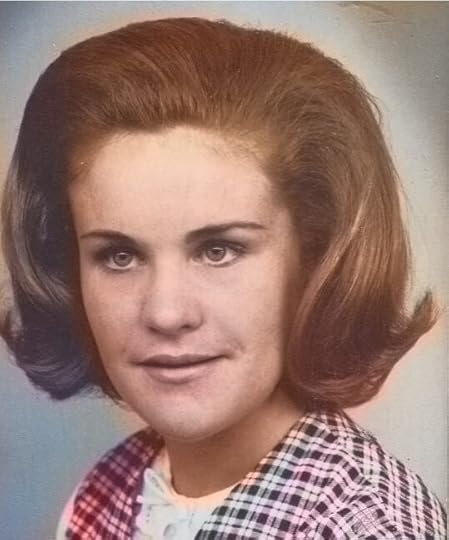 Ruth Ormond. 1964.
When I was accepted into the SABC choir at the end of 1961, Anne and Webster told me to look out for another of their young students, a girl called Ruth Ormond, who was already singing soprano in the choir. I would recognise her by her piercing blue eyes and honey coloured hair. Anne said she was a hard worker and very intense about her singing. When I met Ruth at the interval of my first rehearsal, she said that Anne and Webster had told her that I was tall, dark and serious looking, and they were very fond of me.
From then on we sat together during the choir break and regaled one another with tales about our lessons with Anne and Webster. We were both originally from Glasgow; we loved singing; and we adored Anne and Webster, the way the majority of our friends adored the latest pop singers like Tommy Steele, Cliff Richard and Elvis Presley. But we were in the lucky position to interact with our idols when we went to the studio for our lessons.
She was a year and a half younger than me, still at Parktown Girls’ High, a short plump girl with deep-set blue eyes. She was outwardly confident, brave and full of fun, with two older sisters, while I, an only child of elderly parents, was shy and diffident, taking a while to warm to strangers. Although we had contrasting personalities, we immediately became the greatest friends.
In 1962, her family fortunes changed when her mother won ₤40 000 on the Rhodesian Sweep. It doesn’t sound like a fortune today, but in 1962 it seemed like untold riches. Her parents celebrated the win with a trip back to Scotland, the purchase of an imposing black Rover car, and the installation of a kidney-shaped swimming pool in the back garden of their Parkwood home.
I went to her house in Torquay Road to swim in the new pool and she visited me in Juno Street, Kensington where we spent our time singing solos and duets to my piano accompaniment, reading aloud extracts from plays, and sometimes recording our efforts on the Philips reel-to-reel tape recorder which my parents had bought me to help with my singing studies. Although we lived a fair distance apart, we made up for the distance by speaking on the telephone for hours on end, in the days when a call, no matter how long, cost no more than a tickey (threepence) a time.
By early 1964, she had passed the matriculation examination and was preparing to go to Cape Town University to do a BA (Music) degree. I had completed my ATCL in October of 1963 and had started teaching my first pupils in Anne and Webster’s studio on the day they were not in. I put my teaching skills to further practical use by giving Ruth some harmony lessons so that she would be up to standard with theory when she started her course at Cape Town. I knew I would miss her very much when she went to ‘Varsity, but she would be back for the July holidays and we had promised to write to each other.
Just before she left for Cape Town, I spent a happy day at her home in Parkwood. We swam in the kidney-shaped pool for the last time and later her mother took us to a pleasant tea garden in Bryanston for lunch. The midday symphony concert was on the English Service and I was impressed at Mrs Ormond’s ability to identify every composition correctly before the title was announced on the radio. I could see where Ruth had inherited her love of music.
Ruth settled down in the University residence of Baxter Hall. She was a good correspondent and told me about her singing lessons with Madame Adelaide Armhold. Madame Armhold wanted Ruth to concentrate on breathing exercises for the next six months.
In April, I passed my LTCL exam and obtained honours in the Higher Local Piano exam.
On Friday morning, 1 May 1964, I received a letter from Ruth. She had remained in Cape Town during the Easter holidays and had celebrated her nineteenth birthday on 6 April. The Easter holiday was short so it hardly seemed worth while for her to return to Jo’burg when she had only just settled in at Baxter Hall. In her letter she told me, ‘Before you can cough it’ll be July and I’ll see you again’.
That evening I was going to sing at a concert with the Sylvia Sullivan Choristers. I was waiting for my lift when the phone rang. It was Ruth’s sister Caroline to tell me the awful and unbelievable news that Ruth had suffered a cerebral haemorrhage that morning and had died within an hour of developing an excruciating headache.
Ruth had always been fit and healthy. She had never missed a day at school. Stunned, I phoned Anne and Webster’s number and spoke to Webster. He was devastated with the news and did not talk long. It was too late to put off the lift, so my parents had to make my excuses. A short while later Anne phoned and spent a long time on the phone talking to me about Ruth. We were deeply saddened at the loss of a very dear person. She had been like a sister to me. Anne was ashamed that she had not found time to answer Ruth’s letter from Cape Town.
I saw her mother several times after Ruth’s death. She gave me some of Ruth’s music, and a photograph taken shortly before Ruth went to Cape Town. Her parents established a memorial prize for first year singing students in her name at Cape Town University.
After Ruth’s death my life became more sombre and earnest. I was no longer a giddy naïve teenager. I had to grow up fast and face life as an adult. I have had little contact with the Ormonds over the years since Ruth’s death, but I will always remember her as one of my dearest friends.
Today is her birthday. She would have been 78 years of age today but although I am now an old woman with aches and pains, she will always be the lively teenager she was when I knew her all those years ago.
Jean Collen
6 April 2023.
February 28, 2023
May the Good Lord Bless and Keep You.
January 30, 2023
FREDA DAVIES/BOYCE AND ALYS TAYLER – the Knysna connection.
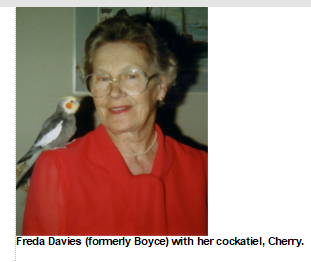
Freda Boyce and her father, Fred Cropper rented the first floor of Anne and Webster’s home in Knysna. They were originally from London where Fred had owned an antique business in Bishopsgate. During World War 2 Freda had driven a truck for the RAF, taking RAF pilots to nightly raids on Germany and collecting them when they returned to the air base afterwards. Sadly, not all the pilots returned safely. She must have been a very young woman when she did this responsible work.
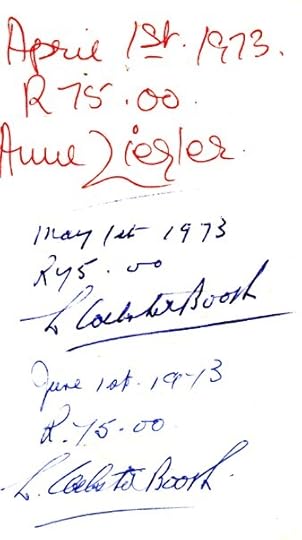
They emigrated to South Africa after the war. Freda had divorced her husband and in the early 1970s she and her father shared Anne and Webster’s first floor flat, paying R75 a month for it. At the time Freda was working for an Estate Agent in Knysna. Along with the letters, Freda sent me the rent book for the property.
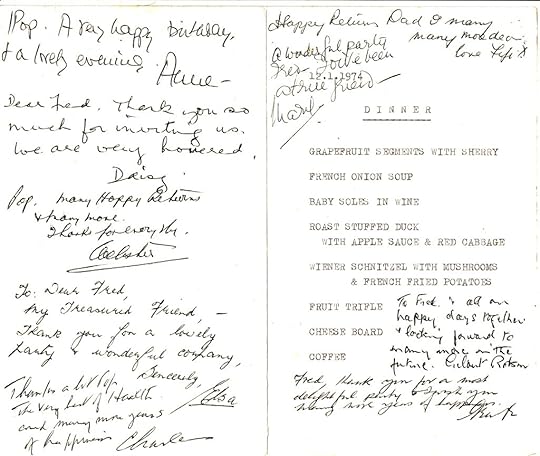
They became very friendly with Anne and Webster. Freda had arranged a dinner party for her father’s birthday at the Imperial Hotel in 1972 and Anne and Webster had been guests. They called him ‘Pop’.
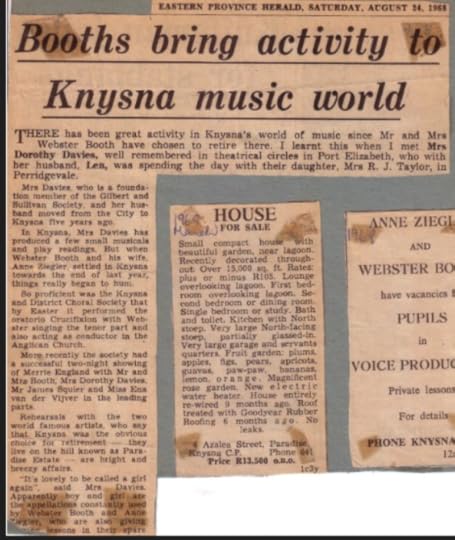
Although Anne and Webster left Knysna to live in Somerset West in 1975 they kept in touch with Freda, who had by this time married widower, Len Davies, in Knysna. His first wife Dorothy had been a stalwart in the Knysna and District Choral Society. In fact, I had come across this article in the Port Elizabeth Herald when the SA Oranje docked in Port Elizabeth when I was returning to South Africa in August of 1968. Although they had not been long in Knysna at the time it looked as though they were hoping to sell their first house.
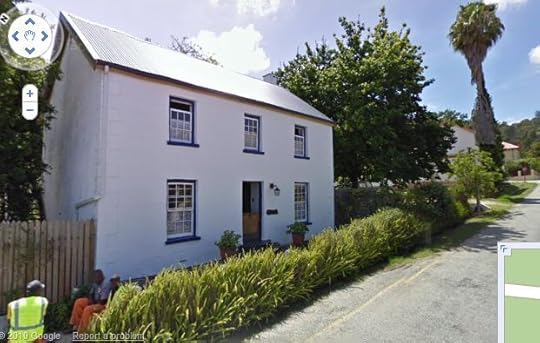
They purchased the second house, a settler’s cottage, and it was there where Freda and her father had lived.
They purchased the second house, a settler’s cottage, and it was there where Freda and her father had lived on the upper floor.
Alys Tayler was the daughter of Len and Dorothy Davies. Before she and her husband emigrated to New Zealand she had some association with Anne and Webster in Knysna and when they went to Port Elizabeth to direct Lady Audley’s Secret for PEMADS, a musical in which Anne and Webster themselves had appeared in the UK shortly before moving to South Africa.
ALYS TAYLER FROM NEW ZEALAND WRITES:
When our family made their annual trip from Port Elizabeth to my parents on Leisure Isle, Knysna, over the Christmas holidays, my mother very kindly paid for me to have three singing lessons with Anne. Despite being quite famous overseas and in South Africa, both Anne and Webster were gracious and friendly.
She called him “Boo” which I thought was short for Booth.
I learned a lot of unusual singing techniques from Anne, notably how to produce upper register high notes on uncomfortable vowels, e.g. “sea” incorporating the “oo” sound and to go very lightly on the sibilants like “s” and “c” at the end of a word – and everything worked! Although it was over 30 years ago I remember most of what I was taught.
They produced a pantomime in Knysna with Anne playing principal boy but as she was also producer, musical director and lighting technician, her health and her glorious voice suffered. Shortly before Christmas they put on a concert wherein Webster rehearsed and conducted items from the Messiah, singing with the massed choir, then turned around to render the tenor solos. The last item of the concert was community singing and the first song that Webster announced was: “It’s the wrong way to tickle Mary”. Stunned silence at first, then gales of laughter! Yes, you guessed it – It’s a long way to Tipperary.
The musical Lady Audley’s Secret was the first show produced by Anne for PEMADS in Port Elizabeth in 1971 and I was so happy to be given the part of Alicia, the second lead. The actress playing the part of Lady Audley was Elizabeth Shires who later took the lead in Oklahoma.
It was a period show and Liz and I had to wear full crinolines. When I was rushing along a narrow passage from the dressing room up the stairs to the stage, I nearly knocked Anne over with my big dress. She was not at all amused! What did impress her was when I was centre stage on a chair, crying my eyes out and singing “Sorry her lot…” I pulled out a little hankie, wiped my eyes – and wrung it out! Much laughter.
A couple of years later Anne and Webster were commissioned to produce another pantomime in the Opera House, Port Elizabeth and this time I had a part in the chorus. A vivid memory of rehearsals in the PEMADS theatre was Webster completely losing his temper with Peter, the publicity agent. Peter had designed the front page of the programme and the flyers with Webster’s name (as musical director) underneath Anne’s as producer – in smaller letters!! How he raged at Peter for that, in front of the entire cast. And Anne gave her husband her full support – as she did throughout their marriage.
What a privilege to have known such a wonderful, talented couple.
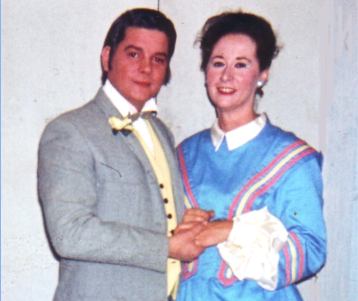 Alys Tayler and Ted Mayhew in PEMAD’s production of ‘Lady Audley’s Secret’ (1971).
When I was writing my book ‘Sweethearts of Song’ in the early 2000s, I was surprised to hear from Freda Davies. By that time Len had died. She had a collection of letters from Anne and Webster and she offered to let me have them if they would help me with writing the book. Naturally I was delighted to receive them and to see things from a different point of view.
Anne had told me about the kind act Freda performed for the Christmas of 2001. Here is an extract from my book about it.
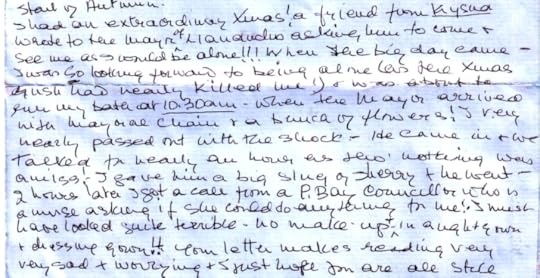
‘For the first time Anne was set to spend Christmas day entirely alone with only Toby for company. Freda Davies, her old friend from Knysna, was horrified at this, and wrote to the Mayor of Llandudno about it, telling him that she thought it a disgrace that a star like Anne Ziegler should spend Christmas all by herself.
At 10.30 am on Christmas morning the Mayor, in his mayoral chain, carrying a beautiful bouquet of flowers, and accompanied by his entourage, arrived at Anne’s door. Anne was still in her dressing gown and devoid of makeup but, ever a star, she invited him in, and gave him a glass of sherry to thank him for his thoughtful act.’
Anne’s account was in a letter to me, early in 2002:
By that time I got to know Freda she was not in the best of health. She had the first hip replacement done on medical aid which had been fairly successful but needed the other hip to be done also. As there was not enough money left she had the second hip done by a government hospital. Sadly, this operation was not successful. She was in a lot of pain and could not walk easily any more.
We spoke to each other on the phone and corresponded regularly in the days when the postal system in South Africa still functioned. She was forced to move from her pleasant retirement complex in Port Elizabeth to a cheaper one and she was not in a good way towards the end of her life. I was sorry not to have met her as she was a very kind and pleasant person. She had enjoyed my book and arranged for me to send her several other copies for her family and friends.
Jean Collen 30 January 2023.
January 25, 2023
JOAN TAPPER – FRIEND AND FAN OF ANNE AND WEBSTER.
I ‘met’ Joan Tapper through the internet after Anne’s death and she was kind enough to write a piece for my book. Anne had told me all about her when I visited her in 1990. Although they had met quite late in life, Joan was a very good friend to Anne after Webster’s death. Joan had taught the piano at her home in Mold for many years. She wrote to me and was kind enough to send me some of her delicious home-made Welsh toffee every year at Christmas time, not to mention some beautiful photos of Anne and Webster. She was delighted when my book, Sweethearts of Song was published in 2006 and arranged for a local bookshop to purchase several copies and display them in the window!
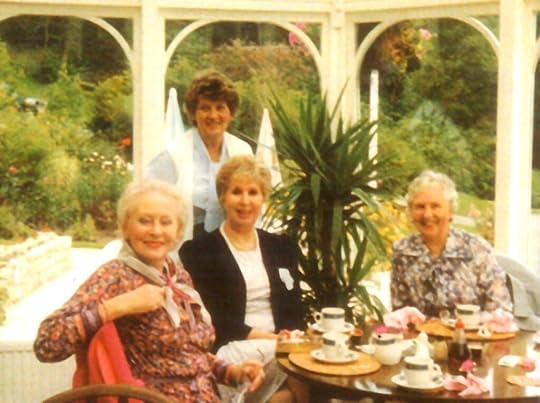
A birthday party for Anne at Joan Tapper’s home in Mold, with Jean Buckley and Joan. A friend (whose name I do not remember) is standing behind them. This was probably taken in the late 1980s.
JOAN TAPPER FROM MOLD, NORTH WALES WRITES:
Living on a farm in rural North Wales in the thirties and forties with only a wireless for entertainment, I remember hearing two of the most glorious voices I had ever heard. Looking in the Radio Times I saw that they were Anne Ziegler and Webster Booth. From then on, I never missed a programme, revelling in the beauty of those God-given voices. Then, it suddenly came to an end, as if they had disappeared into thin air.
The years passed on, and in the late nineteen-seventies I was watching the Welsh National Eisteddfod in South Wales on the television, and out of the blue a voice on the stage gave a welcome to Anne Ziegler and Webster Booth, who had just returned from South Africa to live in North Wales. I was so shocked to hear their names that my head nearly popped through the screen. For the first time I saw them in person and I was so excited.
On a snowy February Sunday afternoon, they visited our local Theatr Clwyd to sing and give their life story. I made a tray of my Welsh toffee, tied with a pink ribbon and flower, and took a copy of their song Tomorrow from Sweet Yesterday accompanied by a letter introducing myself! I asked the pianist if he would give them to Anne and Webster and if they would kindly autograph the song. That snowy Sunday afternoon was the beginning of a lovely friendship.
Webster loved my jams and chutneys, and whenever I sent them a parcel of homemade goodies and garden vegetables, Anne used to say he was like a child in a brantub. Sadly, Webster died in 1984 and Anne devoted her life to her little Yorkshire terrier, Bonnie.
She valued my friendship very much, with both of us having musical interests, and looked forward to our regular Sunday morning chats and many laughs.
My friend Allun Davies, a singing teacher from Neath, South Wales, stayed with me every year on holiday, and we took Anne out for lunch with several of her fans. As she grew older, she just wanted Allun and I to take her out on our own. She loved chatting about the great singers gone by, and loved Allun as he made her laugh so much.
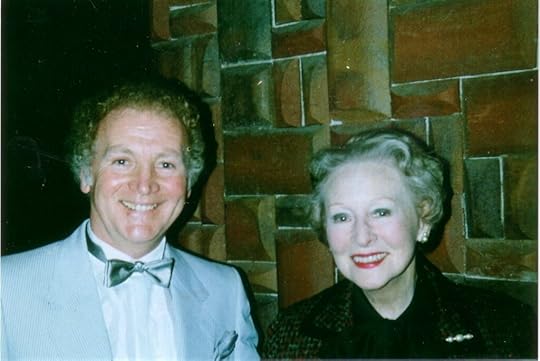 Alllun Davies and Anne (late nineteen-eighties).
We visited Anne on 2 August 2003 and took her a box of goodies. She was very frail and not able to come out with us, but we made her laugh and she enjoyed herself. We told her not to come to the door with us as she was rather unsteady. When we got to the car she was in the window, net curtains pushed back, a beaming smile on her face and blowing kisses to us. Allun and I sat in the car, looked at each other and both of us felt this was her curtain call.
She passed away in October 2003.
A friend took me to the service at Colwyn Bay Crematorium and I took Fragrant Cloud, her favourite rose, from my garden and Sally Rayner placed it on her coffin.
With sad eyes I could hear them singing that lovely Maori song Now is the Hour. as the curtains drew slowly round the coffin.
As well as possessing glorious voices, they were such a charming, lovable couple, and I feel very honoured to have met them and formed such a cherished friendship, never to be forgotten.
Joan Tapper.
Joan died several years after Anne. Anne had her eightieth birthday in June 1990 and Joan arranged a small picnic party in August to be held at Erdigg Hall near Wrexham for Anne as a late celebration of her birthday. Joan provided French champagne and a wonderful meal, and Anne was treated like royalty.
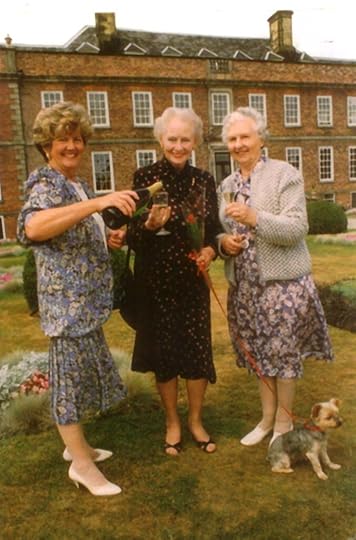 At Erdigg with Joan Tapper, Bonnie and another friend at the birthday celebration.
Jean Collen. 25 January 2023. Joan’s comments were from my book, Sweethearts of Song: A personal memoir of Anne Ziegler and Webster Booth.

BRIAN WILLEY who died on 17 January 2023.

I was very sad to hear of the death of Brian Willey on 17 January 2023. He worked for the BBC for over forty years. He started working there as a young man on the ITMA show with Tommy Handley and there was a lovely photo of him doing some of the sound effects for the show.
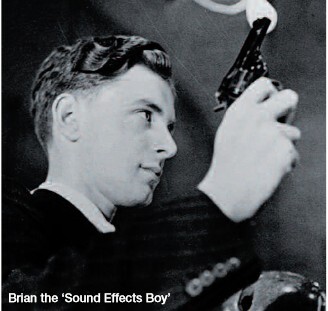
Here is the piece he wrote in my book, Sweethearts of Song: A Personal Memoir of Anne Ziegler and Webster Booth in 2006:
Brian Willey from Esher, Surrey wrote:
During the 1950s I was a radio sound engineer for the BBC and frequently had the pleasure of working with Anne Ziegler and Webster Booth. The weekly programmes were recorded in a temporary studio the BBC were using – the Criterion Ballroom. Its entrance was on the left-hand side of Lower Regent Street just down from Piccadilly Circus, London.
On those occasions they were accompanied by the BBC Revue Orchestra conducted by Frank Cantell. The recording sessions were about three hours long and always a great delight. They were a most charming couple and totally professional in their work.
Years later I became a producer and responsible for the Public Concert engagements of the BBC Concert Orchestra. I can’t recall the exact date, but somewhere around 1980, I had arranged a concert in the Astra Cinema in Llandudno, North Wales and, much to my surprise, discovered that Anne Ziegler lived nearby.
Well I just had to invite her to appear in the show and she was delighted to have been remembered. (However could I forget!) On the night of the transmission she walked on to the stage looking as elegant and beautiful as ever and sang Ivor Novello’s We’ll Gather Lilacs . What memories that brought back to the audience – and me. I can remember having quite moist eyes during the performance – and what an ovation she got. There were screams of “Encore” for more, but that was more than enough for her. She took many bows and left the stage to a continuing tumult of cheers and applause. What a night that was. She lived to the great age of 93 – dying in October 2003 – and I sincerely hope that her final years were comfortable.
Anne referred to this concert in a letter she wrote to me. She had gone to South Africa in 1985 but the trip had not been a particularly happy one. She was taken ill and had to return earlier than planned.
Because of her early return she was able to accept an invitation to appear in a cinema in Llandudno on 2 November for a live concert broadcast on Radio 2 to celebrate fifty years of the BBC in North Wales. This is the concert to which Brian Willey refers in his article in Memories of Anne Ziegler and Webster Booth and tells of the great ovation Anne received when she sang.
Anne wrote,
“I was treated like royalty and I felt really ‘“wanted”’ again.”
Brian wrote a number of articles about musical and theatrical personalities in The Best of British Magazine. I must look them out again. When the magazine was no longer available in South Africa he often sent me scans of these articles. He was kind enough to listen to some of the podcasts I did about Anne and Webster.
https://www.podomatic.com/podcasts/booth-ziegler/episodes/2013-05-18T12_57_12-07_00
May Brian rest in peace and may his family be comforted.
Jean Collen 25 January 2023.

January 7, 2023
TEACHING SINGING IN SOUTH AFRICA.
Shortly before Anne and Webster left the UK a small advert had appeared in the Musical Times.
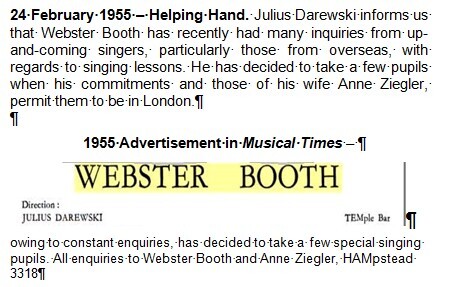
Whether Webster had ever taken any pupils while he was still in the UK, I do not know. He and Anne were very busy in 1955 so I cannot imagine that he had time to fit in pupils into the bargain. They went on a tour of the Cape in October of that year and, at the request of Percy Tucker, had agreed to return to South Africa to do a further more extensive tour of the country districts in January 1956.
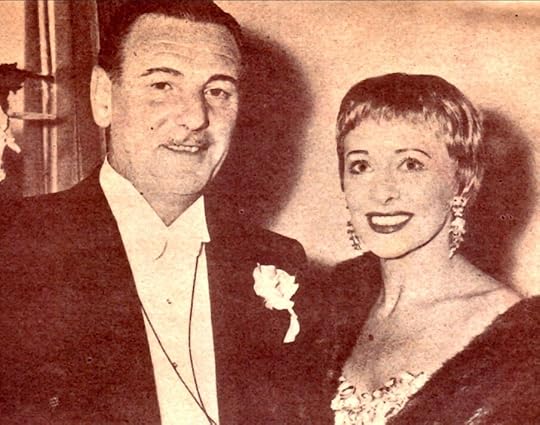 Anne and Webster at a concert in 1957, Anne had her hair cut in an ‘Italian Boy’ style. She was the talk of Johannesburg!
Because of worsening tax problems they decided to emigrate to South Africa and left the UK in July of 1956, intending to settle permanently in the country, not realising that there was not really enough first-class professional work for them after the initial excitement of their arrival. Most South Africans wondered why a successful couple like the Booths had chosen to settle in the country. Most assumed that they had not been doing as well in the UK as before and that was why they had moved to South Africa. Few knew about the income tax demands.
Eventually they realised that they could not live comfortably on their performances alone and would have to turn to teaching to augment their income. Neither had taught singing before. Despite their extensive singing and acting experience, neither had professional musical qualifications. Anne had reached Grade 8 in her piano studies.
They found a pleasant studio in the centre of Johannesburg, on the eighth floor of Polliack’s Corner and decided to rent it at a very reasonable fee. Several other musicians and the Madge Wallace modelling school, had studios in the same building, including pianist, Nigel Dennis, a fellow emigré from the UK whom they knew from the BBC.
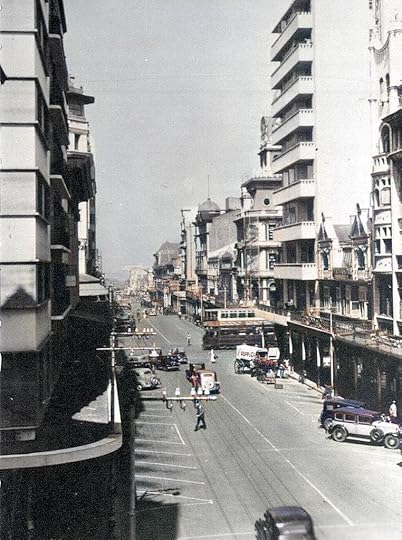 Polliack’s Corner, the building with the balconies to the right of the photo. Anne and Webster’s studio was on the eighth floor. Corner Pritchard/Eloff Streets, Central Johannesburg.
 Balconies of Polliack’s Corner, lighter coloured. As it is today.
They applied to join the South African Music Teachers’ Association but were refused admission as 1) They had no teaching experience and 2) They had no teaching diplomas!!
I always thought the association should have made an exception from their rigid rules in Anne and Webster’s case! Surely years of success on the stage in all forms of musical entertainment could have made up for their lack of teaching experience?
They opened their studio in February 1957 and entertained many curious Jo’burg musical celebrities. They had created a wall of photographs above the studio couch showing many of their successes and their illustrious friends from their days in the UK. They had a beautiful Chappell Grand piano and a length-size mirror in the studio. They insisted on bashful pupils regarding themselves in this mirror to make sure they were keeping their tongues flat, dropping their jaws on the high notes and adopting a suitable facial expression depending on the songs they were singing.
Articles appeared in the Jo’burg newspapers about the occasion.
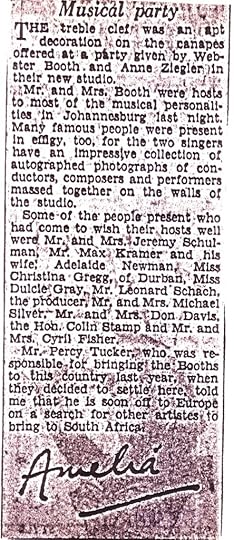
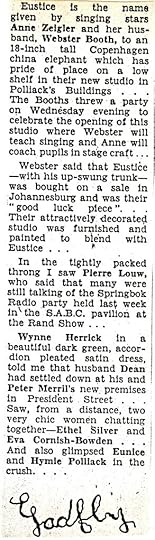
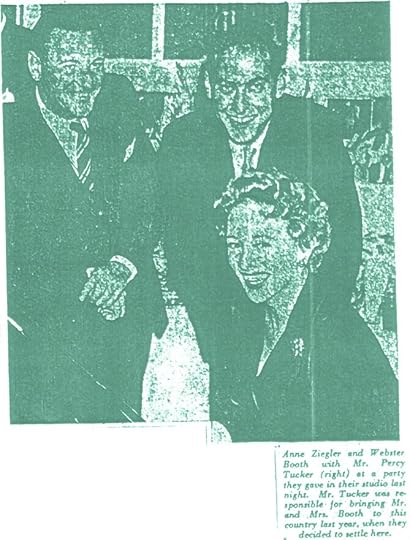 This awful photo (from a microfisch) shows Anne, Webster and Percy Tucker at the opening of the studio.
 Percy Tucker who brought Anne and Webster to South Africa in 1956. He died recently in Cape Town from Covid complications at the age of 92.
Unfortunately, they initially asked London prices for lessons and attracted very few pupils. Mabel Fenney, who had sung Jill-all-Alone with them in a production of Merrie England in East London, Border Region, was one of their first serious pupils. She won the teacher’s scholarship in the Unisa competition and was able to go to Berlin to study at the Hochschule there. She was the temporary music teacher at Jeppe High School for Girls in Kensington, Johannesburg in 1960 and it was there that I came into contact with her and, after hearing her tales of studying with Anne and Webster, I decided that I too would like to study singing with them when I finished school. By that time they had reduced their fees so that they had quite a number of pupils by the time I began studying with them in 1961.
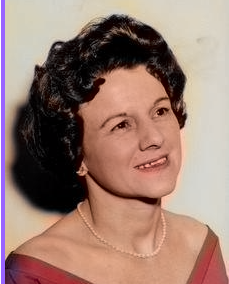 Mabel Fenney (later Perkin) in 1960.
Webster didn’t like teaching much. From early childhood he had an outstanding voice and everything came very easily to him. He really couldn’t understand why some people had vocal difficulties and he probably didn’t know how to fix them either!
Anne was the one who had worked hard at singing to correct her own vocal faults. She always said that he was the one with the great voice while she was nothing but a two-a-penny soprano. This probably made her a better teacher as she could understand how best to help struggling singers. She also had the most work to do in the studio as she accompanied the singers and played for them when they sang at eisteddfodau or in examinations. By 1964 I was playing for their pupils at some of the events so this gave her a bit of a break.
Webster was a very heavy smoker while Anne did not smoke at all. It didn’t seem to worry me when I was young but I don’t think I could have survived in the smoke-laden atmosphere of their studio today.
I studied with Anne and Webster for five years and did my ATCL and LTCL singing diplomas under their tutelage. I was delighted when they asked me, at the age of nineteen, to be Webster’s studio accompanist when Anne was away on other engagements. Although we had our ups and downs, we remained close friends for the rest of their lives and, as you can see, they certainly exerted a very strong influence on my own life. Anne was kind enough to leave me a legacy when she died in 2003.
They taught in Jo’burg until they went to live in Knysna in 1968, and to Somerset West in 1975. When they returned to the UK they had a few pupils in Penrhyn Bay but by that time the rise of their unexpected ‘third career’ meant that they were soon appearing all over the UK and Ireland as though they had never been away from the country for twenty-two years.
7 January 2023. Jean Collen.