Jean Collen's Blog, page 9
March 13, 2021
FRANK WAPPAT INTERVIEWS ANNE ZIEGLER IN 1998 and a sample of my recent YouTube videos.
I was delighted to hear Anne’s interview with Frank Wappat from October 1998. I had not heard it before and it is hard to believe that it took place 23 years ago. I was glad to supply the photos for the video.
I have added a few more YouTube videos I have created. My channel on YouTube is Duettists. You will find many more of my recordings on YouTube. Below is just a small sample of them.
__ATA.cmd.push(function() { __ATA.initDynamicSlot({ id: 'atatags-26942-604c755e98292', location: 120, formFactor: '001', label: { text: 'Advertisements', }, creative: { reportAd: { text: 'Report this ad', }, privacySettings: { text: 'Privacy', } } }); });

March 4, 2021
BOOK TASTER: DO YOU REMEMBER ANNE ZIEGLER AND WEBSTER BOOTH? by Pamela Davies and Jean Collen.
Jean Collen wrote the following chapter about the Booth’s time in South Africa: EARLY DAYS IN JOHANNESBURG.
Anne Ziegler and Webster Booth settled in South Africa in the middle of 1956. In November 1955 they had toured the Cape with the Cape Town Symphony Orchestra, and then returned to the UK to fulfil engagements over Christmas. Towards the end of January 1956 they were back in South Africa to appear in the major cities in the Transvaal, Kimberley, Bloemfontein, Port Elizabeth, East London, Durban and Pietermaritzburg, before doing a tour of the country districts of the Transvaal. They also went to various countries north of South Africa. In this second tour they were accompanied by Arthur Tatler on the piano.
 Anne and Webster, Johannesburg (1962)
A great fuss was made of them when they came to Johannesburg in 1956. There was even a notice in The Rand Daily Mail advising people of the time of their plane’s arrival at 5.50 pm on Saturday afternoon 28 January. They were entertained by the Mayor, Leslie Hurd, in the mayoral parlour. The Mayor spoke to the assembled gathering of local celebrities about the fact that he shared a Christian name with Webster as Webster’s first name was also Leslie.The critics were rather severe in their judgement of their Johannesburg recital, viewing them as ballad singers rather than operatic singers, although both Dora Sowden from The Rand Daily Mail and Oliver Walker from The Star agreed that Anne and Webster knew how to charm their audiences. The writers of the “women’s pages” were much more enthusiastic. Amelia from the Women’s Journal in The Star gave a fulsome report of one of their concerts on 20 February 1956: “When the two appeared in the City Hall on Thursday night the crowd was screaming to stamping stage with enthusiasm even though the artistes had been most generous in their encores Miss Ziegler wore one of the lovely crinolines which she always chooses for stage appearances. This one had a black velvet bodice and a skirt of gold and black tissue brocade. With her diamond jewellery she was a scintillating figure under the lights.”
They had made up their minds to settle in the country and returned to the UK merely to sort out their affairs and make arrangements to have some of their belongings shipped to South Africa. On their return by the Union Castle ship, The Pretoria Castle, they stayed for several months at Dawson’s Hotel in Johannesburg while they looked around for a suitable place to live. They eventually found a pleasant flat at Waverley, just off Louis Botha Avenue in Highlands North, where they lived until they bought their first house in Craighall Park. They were lucky to obtain the services of Hilda, who hailed from the island of St Helena, to be their housekeeper. Hilda remained with them during their eleven years in Johannesburg.
 Starring in: A Night in Venice (1956)
They had an engagement to star in A Night in Venice with the Johannesburg Operatic Society in November, and Webster was asked to sing the tenor solo in Beethoven’s Ninth Symphony at a Symphony concert. The work was presented as part of the Johannesburg Festival to celebrate Johannesburg’s seventieth birthday. Sir Malcolm Sargent, who had conducted Webster at several London concerts the previous year, was the conductor at the Johannesburg concert, while other soloists were Webster’s old friend, Betsy de la Porte (contralto), whom he remembered from his early days at Masonic dinners, Frederick Dalberg (bass) and the young coloratura soprano, Mimi Coertse, who was beginning to make her name in Vienna.
Rather incongruously, Webster took the Tommy Handley part in a series of ITMA scripts acquired by the South African Broadcasting Corporation (the SABC). This thirteen-week series was entitled Light up and Laugh, sponsored by Gold Flake Cigarettes, and produced by the Herrick-Merrill production house.
Although Anne had driven a car in her youth she had allowed her British driving licence to lapse after she married Webster. They realised that it would be necessary for them to run two cars in South Africa, so Anne had to do a South African driving test. The Booths had brought two cars from the UK: a sea-green Zephyr Zodiac and a pale blue Hillman convertible.She was taught to drive again by an Afrikaans ex-traffic policeman. At her first lesson he made her drive along Louis Botha Avenue, in those days the main road from Pretoria through the suburbs into Johannesburg. There was a bus boycott on at the time. Thousands of people were walking along Louis Botha Avenue from the townships of Alexandra and Sophiatown to their work places in the city centre. Anne was very nervous, fearing that she might knock somebody down. Despite the adverse circumstances of her first driving lessons she soon passed her test and proved to be an excellent driver. She went on driving until shortly before her death in 2003.
In the first year or two after their arrival in South Africa they were fêted by everyone, invited to all the society parties, and offered all kinds of engagements. Anne took her first non-singing part in Angels in Love, the story of Little Lord Fauntleroy and his mother, Dearest, the role played by Anne. They had appeared in Spring Quartet in Cape Town under the direction of Leonard Schach almost as soon as they left the ship, and replayed their parts in A Night in Venice to Durban audiences. They even went to East London in the Border coastal region to sing at the city’s Hobby Exhibition, and they were often heard on the radio. Not only did they do frequent broadcasts but their records were played constantly by other presenters, who marvelled that such a famous couple had chosen to settle in South Africa.
In 1957 they opened their school of Singing and Stagecraft at their studio on the eighth floor of Polliack’s Corner at the corner of Eloff and Pritchard Streets in the city centre. They held a party to celebrate the opening of the studio and invited musical and society glitterati, who eagerly crammed into the studio for the occasion and were suitably impressed by the array of pictures of Anne and Webster, taken with internationally famous friends and colleagues, adorning one of the studio walls. The original plan was that Webster would teach singing, while Anne would teach stagecraft, but in the end they both taught singing, and Anne acted as accompanist to the students. At first they did not attract many students as their fees were much higher than those of local singing teachers. Eventually they reduced the fees and managed to attract more students.
In 1963 Anne said that all the local Johannesburg celebrities and socialites who had tried to cultivate them when they first arrived in South Africa, soon left them alone once they realised that they were not as wealthy as they imagined them to be, and that they actually had to work for a living and were not free to attend the races and other such leisure activities.
Anne and Webster had never taught singing before. They had been far too busy performing in the UK to have had the time or the inclination to teach, although in 1955 Webster had placed an ad in The Musical Times in the UK, which intimated that he would consider taking a few singing pupils. Neither had formal music teaching qualifications but Anne was a competent pianist, and they adopted common sense methods of teaching singing, which had stood them in good stead during their own careers.
Anne always said that singing was merely an advanced form of speech. They concentrated on good breathing habits and on using correct vowel sounds. The basis of “straight” singing was that one sang through the vowels and attached consonants at the beginning and end of the vowels to create good diction. There were five vowels: ah, êh, ee, oo and oh, and from these vowels all words could be sung. Diphthongs in words such as “I”, were created by a combination of two basic vowels – in this case – ah and ee. They were very particular about dropping the jaw on higher notes. One of their exercises to master this technique was based on the sounds “rah, fah, lah, fah”. It was also essential to keep the tongue flat in the floor of the mouth just behind the teeth, and an exercise on a repeated “cah” sound was good for training the tongue to remain flat and not rise in the mouth to bottle up the sound. The “mee” sound was produced as one would sing “moo”, so that the vowel was covered and focused, rather than spread. The jaw had to be dropped on all the vowels in the upper register, including the “ee” and “oo” vowels, which one is inclined to sing with a closed mouth. They also emphasized that words like “near” and “dear” should be sung on a pure “ee” vowel, rather than rounding off the word so that it sounded like “nee-ahr” or “dee-ahr”. The voice should be placed in a forward position, “in the mask” as Anne always said, so that it resonated in the sinus cavities. They did not dwell on the different vocal registers unless they detected a distinctive “change of gear” from one register to the other.
Webster continued his oratorio singing in South Africa. Drummond Bell, who had conducted the JODS’ production of A Night in Venice the year before, was the organist and choir master at St George’s Presbyterian Church in Noord Street. He asked Webster to sing in The Crucifixion at Easter 1957. He also sang the part of the Soul in The Dream of Gerontius in Cape Town later that year. The conductor was the young organist Keith Jewell (then aged 27). It was the first time that the work was performed in South Africa. Webster always held Keith Jewell in very high regard, and he appeared as guest artiste in Anne and Webster’s “farewell” concert in 1975.
He and Anne also sang in performances of Messiah at several Presbyterian churches towards the end of 1957, and Webster adjudicated at the Scottish eisteddfod in November. Astutely he awarded the young soprano, Anne Hamblin 95 per cent for her singing. She was to do well in her singing career in Johannesburg and is still remembered for her part in Jacques Brel is Alive and Well and Living in Paris in the nineteen-seventies. Webster sang regularly in various oratorios at the annual Port Elizabeth Oratorio Festival, conducted by Robert Selley, and, in Pietermaritzburg did and Elijah for Barry Smith (1963) and The Creation (1964) at Pietermaritzburg for Ronald Charles, successive directors of music for Michaelhouse School in the early sixties.
Anne and Webster appeared frequently in various advertisements on screen and in the press. Early in Anne’s career she had modelled for an advertisement for Craven A cigarettes. She had learnt a valuable lesson at this assignment when the photographer told her that the photograph would mean nothing unless she smiled at the camera with complete sincerity, despite the fact that she had never smoked a cigarette in her life. They had also endorsed Ronson cigarette lighters in the late nineteen-forties and made an advert to promote Parker pens.
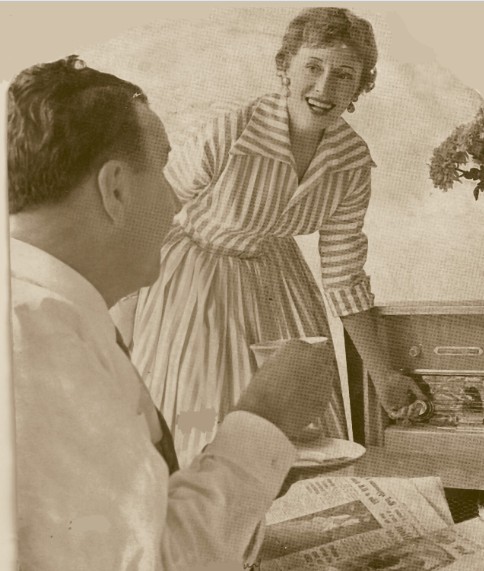 Advert for Lourenco Marques Radio (1960)
In late 1957 they were featured in an advert for Lloyd’s Adrenaline cream. According to the advertisement, this cream had given Webster relief from the excruciating sciatic pain he had suffered on their fleeting visit to Calgary to appear in Merrie England. Apparently, Anne used the cream whenever she had an attack of fibrositis. Anne also endorsed Stork margarine (although the last thing she enjoyed was cooking and baking), a hair preparation and a polish. Webster appeared on film as a French boulevard roué in an ad for a product I have now forgotten, and they were featured in an advertisement listening avidly to Lourenco Marques radio, and celebrating a special occasion with a glass of Skol beer. For this last ad Webster was obliged to grow a beard!
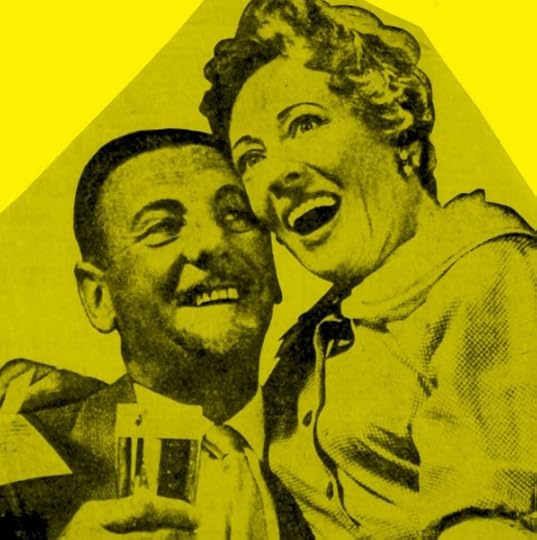 Advertising Schol Beer.
1957 and 1958 were very busy years for the Booths in South Africa. In 1958, for example, they went from one production to another in as many months: Waltz Time in Springs; Merrie England in East London; Vagabond King in Durban; and Merrie England again in Johannesburg. Anne was also principal boy in pantomime in East London at the end of that year.
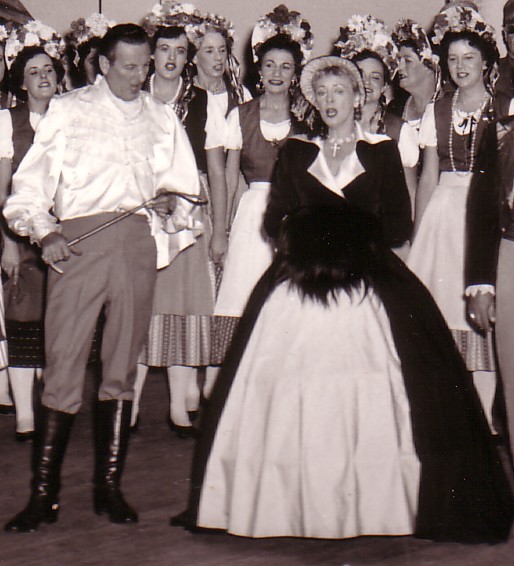 Waltz Time, East London. 1958.
But 1959 was not quite as busy. They were asked to appear in East London again, this time in Waltz Time, and Anne was the Fairy Godmother in The Glass Slipper for Children’s Theatre in Johannesburg towards the end of the year.From then on they built up their teaching practice and began directing musicals for amateur societies in various parts of the country. In 1959 they did an interesting Sunday afternoon programme on Springbok Radio entitled Do You Remember? in which they told the story of their lives, based on their autobiography, Duet. They also recorded their popular duets in Afrikaans that year. By the nineteen-sixties they were no longer appearing regularly in musicals although Anne took the unsuitable part of Mrs Squeezum in Lock Up Your Daughters, a restoration musical by Lionel Bart at the end of 1960. Her big song in the show was entitled When Does the Ravishing Begin? A very far cry from We’ll Gather Lilacs!
In 1963, aged 61, Webster took over the role of Colonel Fairfax – the juvenile lead – in The Yeomen of the Guard for the Johannesburg Operatic Society. He had not been JODS’ original choice, but was asked to take over the part at very short notice. In 1964 Webster and Anne appeared in a Cape Performing Art’s Board (CAPAB) production of Noel Coward’s Family Album, a one act play in Tonight at 8.30. It could hardly be called a musical although there was some singing in it. They appeared in a number of straight plays in the nineteen-sixties. Webster was the Prawn in The Amorous Prawn and took the small part of the Doctor in a very long and serious play called The Andersonville Trial. They played Mr and Mrs Fordyce in the comedy, Goodnight Mrs Puffin at the beginning of 1963 and, just before they left Johannesburg for Knysna, Webster was the non-singing Circus Barker in the Performing Art’s Company of the Transvaal’s (PACT’s) production of The Bartered Bride, while Anne played the wife of a circus performer in The Love Potion for the same company at the same time.
They remained in Johannesburg until the middle of 1967. Anne was suffering from hay fever, which was becoming worse the longer she remained in Johannesburg. There were times, especially at night, when she could hardly breathe. Anne had a number of allergy tests done, but these did not pinpoint the exact cause of her hay fever. They decided to move to the coast in the hope that her hay fever would ease, and in the hope of a more peaceful life as they grew older. At the beginning of 1967 they went on a coastal holiday. They thought Port St Johns in the (then) Transkei was very attractive but slightly too remote for them. The village of Knysna on the Garden Route was more to their taste. They bought a house in Paradise, Knysna and returned to Johannesburg to put their affairs in order and plan their move to the coast.

It must have given them a sense of déjá vu to receive such a warm great welcome in Knysna. Anne’s hay fever vanished within a few weeks and she concluded that dust from the mine dumps in Johannesburg had been the cause of the hay fever. They were soon as busy as ever, with concerts, ranging from oratorio with the Knysna and District Choral Society, to variety concerts with local artistes, and pantomimes, in which Anne not only played principal boy once again, but wrote the scripts into the bargain. They started teaching and trained several talented singers, in particular soprano, Ena van der Vyver, who sang in many performances with them.
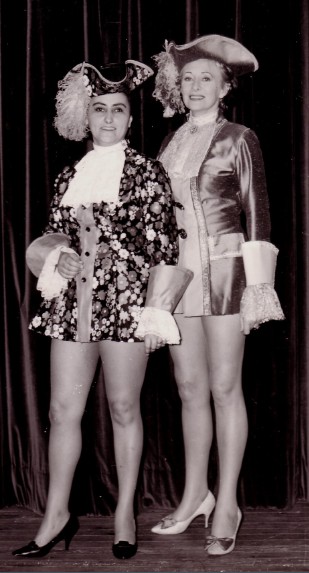 Ena van der Vyver and Anne in a Knysna panto.
Webster Booth – directing “Mikado” in Guild Theatre, East London (1973)
 Webster directing “The Mikado” in East London (1973)
Anne was also asked to produce several shows for the Port Elizabeth Musical and Dramatic Society, and Webster produced The Mikado in East London in 1973.
Anne’s friend Babs Wilson-Hill (Marie Thompson) visited them in Knysna from the UK, and, in 1973, Anne went to Portugal and the UK to spend a holiday with her and to appear in a British TV show at the same time. Anne and Webster were getting older and Anne longed to return home to the UK.
 Babs Wilson-Hill (Marie Thompson) in her lovely garden in Old Colwyn, North Wales (aged 94)
Babs realised that although Anne and Webster were keen to return to the UK, they could not afford to buy or rent accommodation there. She kindly offered to buy a property for them where they would be able to live rent-free for the rest of their lives. The offer was too good to refuse. At the beginning of 1978 they left South Africa to return to the UK. Having given their farewell concert a few years earlier they did not expect to perform again, but they were soon in demand by fans who had not forgotten them from over twenty years earlier. Thus they embarked, on what Anne termed, their “third” career.
Jean Collen © 22 July 2011
 __ATA.cmd.push(function() { __ATA.initDynamicSlot({ id: 'atatags-26942-60415386b97e4', location: 120, formFactor: '001', label: { text: 'Advertisements', }, creative: { reportAd: { text: 'Report this ad', }, privacySettings: { text: 'Privacy', } } }); });
BOOK TASTER: DO YOU REMEMBER ANNE ZIEGLER AND WEBSTER BOOTH? by PAMELA DAVIES.
Extract from: DO YOU REMEMBER ANNE ZIEGLER & WEBSTER BOOTH? This book tells the late Pamela Davies’ story of her keen admiration of Anne Ziegler and Webster Booth in the forties and early fifties. Shortly after Anne and Webster returned to the UK from South Africa in 1978, Pamela began corresponding with Anne and became good friends with her. The book includes THE BODY OF WORK OF ANNE ZIEGLER AND WEBSTER BOOTH, compiled and edited by Jean Collen. Jean has listed many of their engagements on stage, screen, radio o and television from 1924 to 1994. She has also written the section about the Booth’s time in South Africa.
Pamela Davies wrote the first chapter, as follows:
First Recollections
My first clear memory of Anne Ziegler and Webster Booth goes back to the wartime years, in particular to 1944, when as a teenage evacuee from the London bombings I went to live in the country with a music-loving couple who tuned in regularly to the series Songs from the Shows. The music, drawn from stage and film was performed by a number of artistes, including Anne and Webster. I do, in addition, have a hazy recollection of Anne singingThe Pipes of Pan the previous Christmas.
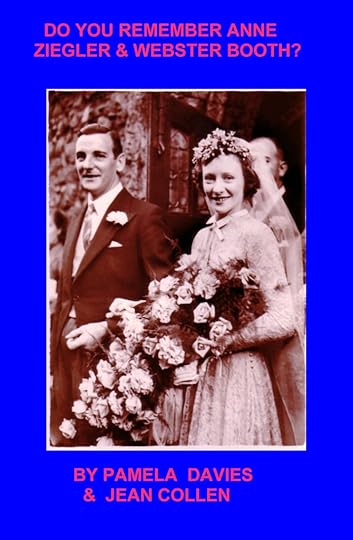
From the start I was fascinated by the tuneful music they sang and by the beautiful blend of their delightful voices: Anne’s bright, bell-like soprano, effortlessly lovely on pianissimo high notes, and the mellow sweetness of Webster’s tenor. They sang in English and their diction was meticulous so that the words were crystal clear. Although their music was largely operetta, musical comedy and Victorian drawing room ballads, it was obvious that they were trained singers and musicians, applying themselves seriously to material however light, or even, as some might maintain, trite it was.
It was a pleasant surprise to see their photograph for the first time in Radio Times. Although loving their singing, I had rather feared (with Dame Nellie Melba and Enrico Caruso in mind) that Anne could be a large-boned portly soprano and Webster a short stocky tenor; but no: the photo showed Anne to be a dainty fair-haired lady with a pretty face, wide forehead and pointed chin, and Webster a dark, handsome gent, whose sizeable nose actually gave character to his face: certainly not an Errol Flynn type “pretty boy”.
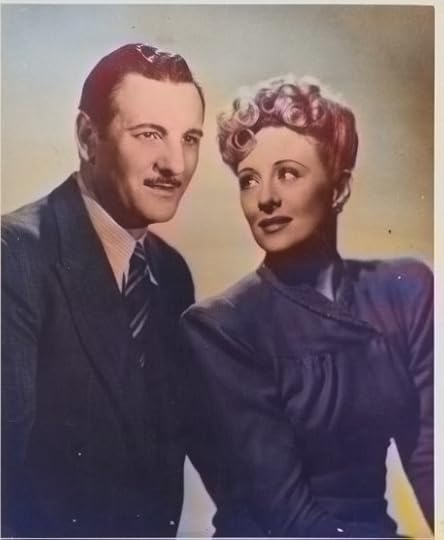 Webster Booth and Anne Ziegler (circa 1945).
In addition to Songs from the Shows they performed in programmes with, for example, the BBC Midland Light Orchestra, Albert Sandler and his Palm Court Orchestra in Grand Hotel, and in Music Hall, where they introduced their own songs and duets.
As I knew nothing of their previous stage careers, their pleasant well-modulated speaking voices came as another agreeable surprise: they had neither the upper class, so-called “Oxford” drawl, now almost extinct, (in which “tower” and “spire” are pronounced “taa” and “spa”), nor had they the marked regional accents promoted by the BBC today. Their speaking voices were a happy middle way, acceptable and comprehensible to everyone. Not all singers have acceptable speaking voices: one has only to consider that delightful soprano, Dora Labbette whom Anne had made her model, and who sounded like Grandma Buggins, and the great Australian soprano, Joan Sutherland who, normally placid, refused point blank to do the original version of Carmen with spoken dialogue at Covent Garden, because she was self-conscious about her “Aussie” accent.
Anne and Webster therefore would take part in broadcasts of various musical plays: some radio versions of film successes, such as the MacDonald-Eddy New Moon, others specially written for radio like The Laughing Lady, a soulful tale set in the days of the French revolution. The hero, a French aristocrat, played of course by Webster, spends his last night in the prison cell with his beloved, Anne, before going to the guillotine, while she, singing of course, returns to her elderly husband!
So from early on I was fascinated by them: they exercised a particular magic. But beyond this I had a special reason to be everlastingly grateful to them. During the last phase of the war and Hitler’s rocket bombs, V2s, I had gone home to London for Christmas. One evening I persuaded my mother, who had a wartime day job, to leave her work in the kitchen and to join us in the sitting room to listen to Music Hall featuring Richard Murdoch and Kenneth Horne, and Anne and Webster. Soon afterwards an enormous explosion half wrecked the house. Having dived automatically under the great iron table, known as a Morrison shelter, we were all safe. But the kitchen door was blown down the garden, and the cabinet where my mother had been standing a few minutes before, was pierced with great slivers of glass, like arrows. What would have happened to her without Anne and Webster, I shudder to think.
After this my heart warmed to them. They were more than mere celebrities, two of the many stars in the firmament, objects of passing curiosity. I wanted to know about the real flesh-and-blood people behind the glitz of show business. Chat programmes and newspaper and magazine articles provided some useful clues: Anne was the decision maker, insisting that they practise, while Webster attended to the business side. His accountancy training must have been useful. “She makes the bullets and I fire them,” he said. He liked cooking and she gardening; moreover she was a meticulous housewife, with a spick and span house, not permitting a speck of ash on the carpets. Both loved animals, especially dogs, and would have liked a farm with dozens of animals when they retired.
Around this time I wrote a letter of appreciation to them, and was gratified to receive a lovely studio portrait of them in the film Demobbed, and to learn that the postal order to cover costs had been added to their animal charity collecting box. A Desert Island Discs programme in which Webster declared he would never have the heart to trap small animals for food raised him still further in my estimation.
On the subject of fan mail, I once wrote to them and with the confidence of a teenager included lists of musical plays I thought they should undertake and songs they should sing! They did eventually sing one of these – Forever, a waltz from Oscar Straus’s Three Waltzes – but whether it was in response to my suggestion I shall never know.
My interest in Anne and Webster was fuelled by the uncanny number of people I met who either knew or had met them. To mention only a few: my musical friends who had introduced me to Songs from the Shows happened to encounter them coming out of an antique shop by Exeter Cathedral, and showed us with pride a sheet of paper bearing Webster’s beautiful rounded hand and Anne’s bold erratic one. She was naturally left-handed but as a child she was made to write with her right hand. One day, travelling on the London Underground, I got into conversation with an elderly woman who had been Anne’s dresser in a London show. My singing teacher’s daughter was Anne’s understudy and played the part of her maid in And So to Bed – more of this anon. A colleague of mine was a near neighbour of theirs in North Finchley and would enliven us with tales of their activities.
They lived in Torrington Park, an affluent, leafy road of large houses. As we, too, lived in north London, not far away, I took a couple of walks past Crowhurst, their house, regarding it with awe-struck eyes as a kind of enchanted castle, and hoping to spot the magic prince and princess. In fact it was a fascinatingly picturesque house with various unexpected little eaves and windows, its huge garden protected by a dense rather prickly hedge, through which a wrought iron gate and several steps led down to the front door – but of course I ventured no further than the road outside. On the second occasion I was rewarded by the sight of the magic prince, watched by a small black dog and …cleaning his car!
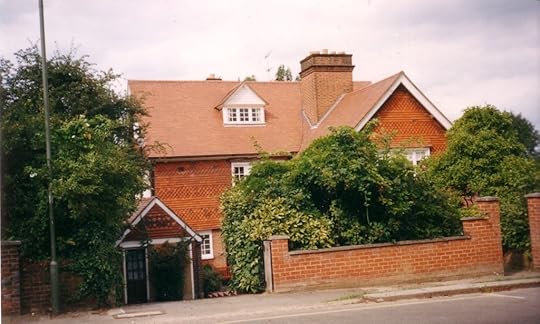 Crowhurst, Torrington Park.
 Soon afterwards the large house and garden proved too much for them, and they moved to old Hampstead, to Frognal Cottage, which Anne described as a “sweet doll’s house” – maybe it was in comparison. Anyway it was certainly far more manageable. From the road one saw a smart and pretty three-storey house with bay windows and two front doors, the one on the right marked “Tradesmen”. Railings separated the small front garden from the street. On the ground floor were the kitchen and dining room leading to a small paved rear garden; on the second floor the sitting room and one bedroom; on the floor two further bedrooms and a bathroom. It was essentially a Georgian style town house.
Incidentally, in a nearby block of flats lived the great contralto, Kathleen Ferrier, who was to die so tragically young.
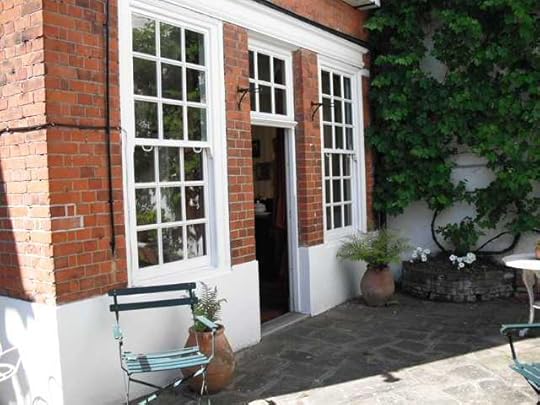 Frognal Cottage, Frognal.
Book Taster: Sweethearts of Song: A Personal Memoir of Anne Ziegler and Webster Booth
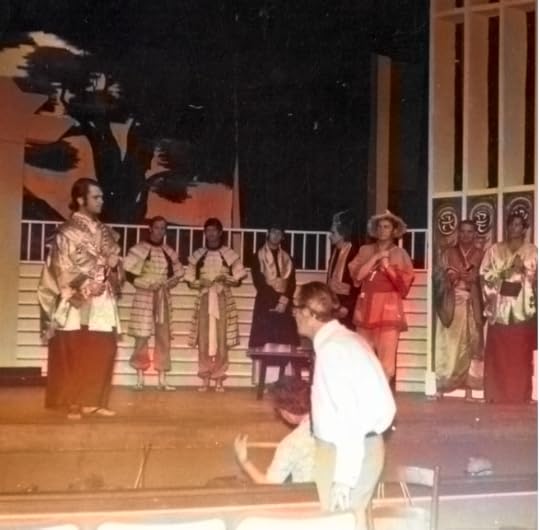 Webster, directing “The Mikado”. Photo: Pearl Harris.
CHAPTER SIXTEEN
THE EAST LONDON PRODUCTION OF THE MIKADO
Although Anne had told me to write to let them know how I was getting on in England, she had never replied to any of my letters, but Webster and I had corresponded regularly via Poste Restante while they were in Jo’burg. After they moved to Knysna in the middle of 1967 there were no more letters from Webster.
On my return to Johannesburg in August of 1968, Margaret Masterton and I spent an evening at Martin Croesser and Natie Weinstein’s’ Hillbrow flat with Dudley Holmes. Dudley had recently been on a visit to Knysna and told me that when he and Webster were in the kitchen washing the dishes, Webster had asked him if he had any recent news of me. He wondered if I was still in England or whether I had returned to South Africa. At least he had not forgotten me despite ceasing to write to me in the UK.
My friend Pearl Hodgman, was living with her Mother on their farm just outside of East London on the Eastern Cape coast. I had met her on board the SA Oranje, and while she was living in Johannesburg she introduced me to her cousin Errol Collen. Pearl was the first person I had met since Ruth’s death with whom I developed a comfortable and close friendship. Errol and I were married in 1970, and in 1973 we moved from Johannesburg to East London, where I had obtained a music teaching post at Selborne College.
Whilst we were still in Johannesburg, Pearl wrote to tell me that Webster was to produce The Mikado at the Guild Theatre for The East London Light Operatic Society and the Hebrew Order of David. Webster had held auditions for principal parts towards the end of 1972 and one of his decisions caused some commotion before the production even went into rehearsal.
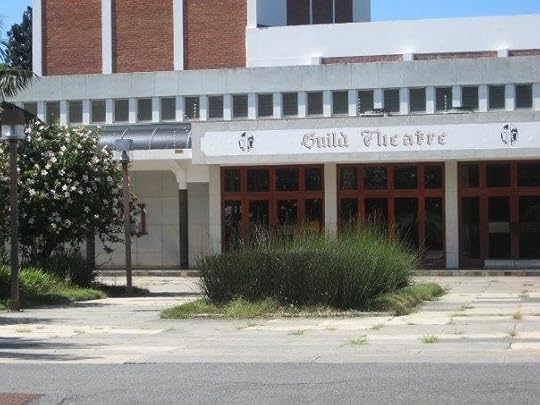 Guild Theatre, East London
Pam Emslie had appeared in earlier East London productions in which Anne and Webster had starred in the nineteen-fifties, but she had laryngitis at the time of the auditions and could not sing. On the strength of what he remembered of her singing he gave her the part of Yum Yum in preference to those who sang at the audition. A local East London singing teacher and some of her pupils had taken umbrage at this decision and refused to play any further part in the show.
I had worked in professional theatre in Johannesburg and the UK, but I was very keen to take part in this show because of Webster’s involvement in it. Pearl spoke on my behalf to the musical director Jean Fowler, who had taught her piano when she was a child. Mrs Fowler agreed that I could join the chorus, provided I learnt all the music before I arrived.
After my first rehearsal Mrs Fowler asked me to sing soprano, although I was far from being one, because the soprano chorus line was rather weak – so much for learning all the alto lines by heart! I had over a month of singing rehearsals before Webster flew down from Knysna to produce the show. I did not tell anyone in the show that I had known him, nor what I had been doing in Johannesburg and the UK. I was not quite sure what Webster’s reaction to me might be.
I had not seen Webster for seven years and at the age of twenty-nine, seven years is a long time and I had seen many changes in my own life. But when he appeared at his first production rehearsal he looked much as I remembered him. At the time he was seventy-one, a few months older than my father.
After the rehearsal I joined a sizeable queue of people eager to talk to him. When it came to my turn I stood in front of him without saying anything, realising that I had probably changed more than he had done in those intervening seven years. Perhaps he might not even recognise me! I was thinner, and my teased manicured coiffure of the mid-sixties had given way to a mane of long dark hair. He looked at me silently for a long time, peeling away the years like layers of onion skin. To everyone’s surprise he kissed me warmly and said, “Bless your face.”
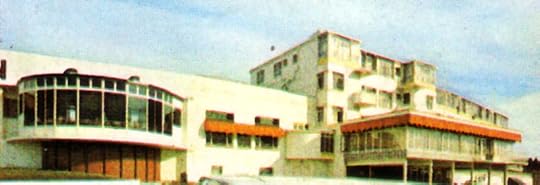 King’s Hotel, East London.
He was staying at the King’s Hotel on the beach front and he invited me to tea the following afternoon. I felt rather shy at seeing him on his own, but it did not take long before we were getting on as well as we had ever done, filling in the gaps of the years since our last meeting, when I had bade him a tearful farewell before leaving for the UK.
 Jean Collen in “The Mikado”, Guild Theatre, East London, 1973 Photo: Pearl Harris.
He told me about being the musical director for the panto Anne had produced in Port Elizabeth the previous December, and how he had opted for a small ensemble with an organ, rather than an orchestra to accompany the singers. He confessed that he was rather nervous about producing The Mikado on his own as this would be the first show he had produced without Anne being there to assist him. After the production Anne was going to England for five weeks to do a TV show in London, and to spend some time with her friend Babs Wilson-Hill (Marie Thompson) – first in Portugal and then in Colwyn Bay and London.
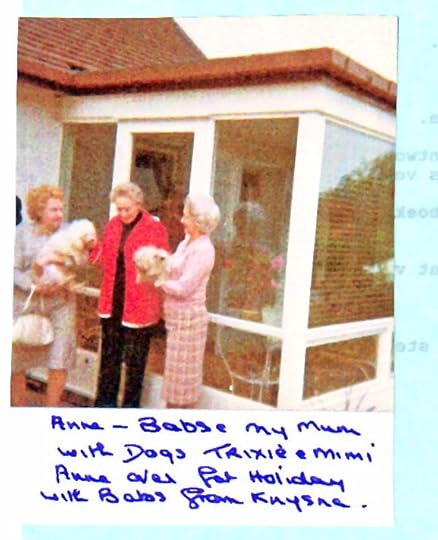 Anne and Babs with Jean Buckley’s mother on her visit to the UK in 1973.
He told me that their life in Knysna had degenerated into a constant round of housekeeping, party-going and dog-walking. They had hoped to move to Port Elizabeth but so far they had been unable to sell their house.
He also told me about their trip to England in 1969. The Inland Revenue had not flung them into jail the moment they stepped on to British soil as they had once feared. It looked as though the tax they owed had been written off, and they might be able to return to the UK if they could afford the cost of living there. His sisters were old-age pensioners now, struggling to make ends meet on their meagre pensions.
The Mikado rehearsals continued. There were some competent performers amongst the principals. I was particularly impressed with Jimmy Nicholas as Ko Ko, Irené McCarthy as Katisha and Bernie Lee as Pooh Bah. I became friendly with June Evans, Rose Atherton, Brenda Robinson, Louise Forrester, Zena Wolk and Cecile Sole. One of my matric music students from Selborne College, Stephen Smith, was playing the oboe in the orchestra, along with Commandant Hugh Hewartson, my music teaching colleague, on the clarinet.
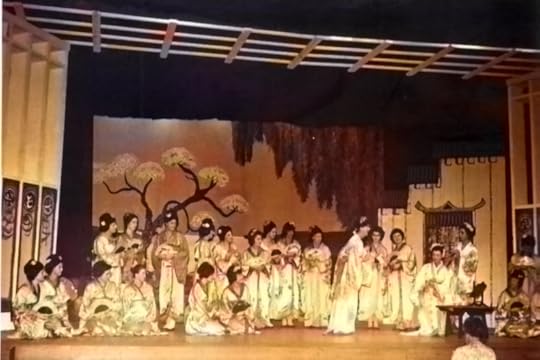 A scene from the Mikado. Jean Fowler is in front, conducting the band. Photo: Pearl Harris.
I was used to the tight discipline of professional productions, so the laissez-faire attitude of some of the chorus surprised me. I was also accustomed to being shouted at; being manhandled by irate producers; and working till all hours of the morning to get some small detail absolutely right. But people in this show took offence at Webster’s mildest reprimand.
There was some tension between Jean Fowler and Webster. On one occasion he suggested that the tempo of a piece could be taken at a slightly faster pace. In front of the entire company she shouted, “Mind your own business. I’m the musical director and I’ll be the one to decide what tempo to use.”
At one particular rehearsal he lost his temper completely and shouted at the top of his voice, bringing all his vocal technique into play. When he drove me home after this stormy rehearsal he apologised for his bad mood, but told me that their attitude made him sick to the stomach, and he was in despair about the entire production. I was sad that at an age when most other people were taking things easy, he had to suffer such anguish and be treated with such disrespect by people who could never hope to achieve a fraction of what he had achieved in his own career.
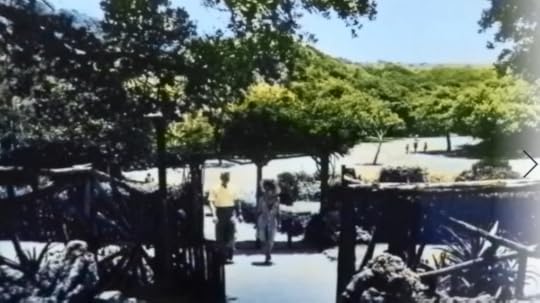 Merina Glen, East London
Between rehearsals Webster was in a more relaxed mood when we met for tea, or for lunch in the Red Rooster Restaurant in the basement of the King’s Hotel, or for drinks with Errol one evening.
On several occasions we went to Marina Glen across the road from the beachfront, where we had tea and homemade cream scones. On the day after Noel Coward died we sat at Marina Glen, watching the ships sailing to and from East London harbour, while he reminisced about various meetings with Noel Coward, and the Noel Coward duets he and Anne had sung over the years.
Errol and I had been in the UK during December where I had found a book called The Wireless Stars, which included photographs of people they had worked with at the BBC, and a photograph of Anne and Webster themselves leaning over the railing of the ship as she set sail for South Africa. He was fascinated with my book, but alarmed to realise how few people they had known in those days were still alive. Apart from them, Arthur Askey, Elsie and Doris Waters and Jack Warner, everyone else was dead.
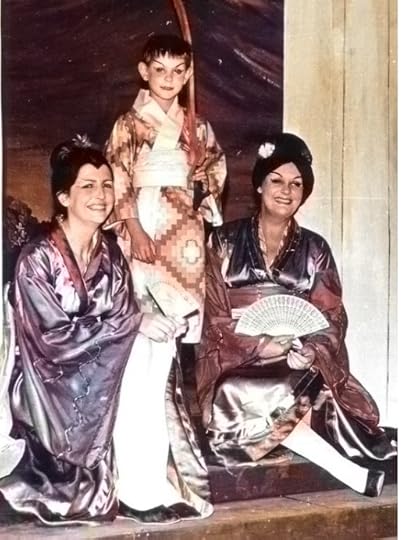 Me, June Evans and her son, Neil. Photo: Pearl Harris.
During one of our meetings he told me that they had written to Hugo Rignold when he came out to South Africa to conduct and had been hurt not to receive a reply. In the days before Hugo Rignold became a famous conductor, he had played the violin in the Fred Hartley Quintet. Webster had broadcast regularly with the Quintet in the nineteen-thirties and had been great friends with Hugo Rignold. He was convinced that Hugo would have contacted them had he actually seen the letter and wondered whether it had been kept from him. I could not help thinking that this hurtful rebuff was similar to the one I had endured when my letters to him were returned to me in mid-1967.
Anne came to East London for the last week of production. She had driven herself and Silva, their Cairn terrier, from Knysna in the Vauxhall Viva station wagon. The car broke down in Humansdorp and she had to wait for several hours to have the car fixed. She was eager to reach East London before dark and consequently received a speeding ticket for R19 (nineteen rands) on her way through Grahamstown.
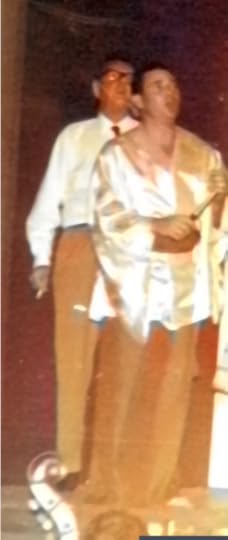 Webster looking at something from the wings. Photo: Pearl Harris.
I felt rather apprehensive about meeting her again, but I need not have worried. She kissed me warmly when I met her at her first rehearsal. Although she looked a bit older she was as sweet to me as when I had first met her.
Silva, the little Cairn terrier pup Anne had brought to our house in 1963 at the time of their Silver Wedding, was ten years old now, and was delighted to see me also. Anne told everyone in the cast how I had been the first person to see Silva – or Squillie – as they called her. She told me of the recent death of Lemon, their beloved Maltese, and how Webster had been in tears for days after Lemmy died. Lemon had always adored him and had followed him everywhere.
There was more trouble over the production. The stage manager cancelled one of the principal rehearsals without any notice, saying he could not work on the sets unless he had the theatre entirely free. Webster had been furious and walked out in disgust. I told Anne that I would not have blamed him had he walked out ages before, for some people in the company had treated him very badly.
The animosity against them both was almost palpable. At one rehearsal I sat next to Anne, fondling Silva. When things went wrong on stage she made disgusted comments to me under her breath. She turned to Webster and told him to write down all the mistakes so that he could point them out after the rehearsal. For some reason he did not want to do this, so she said, “All right then; bugger it all up.”
By this time everyone knew that I was friendly with Anne and Webster and some took pleasure in making disparaging remarks about them to me. I suggested that the show might improve if they actually listened to what he had to say. When I went to fetch water for Squillie, people were even criticising the poor dog, saying that she was far too fat!
But, as the opening night approached, the atmosphere seemed to lighten. Webster was more relaxed – or resigned – about the show. At the dress rehearsal he appeared onstage just before the girls’ chorus of Braid the Raven Hair in Act II. He stopped, looked into my eyes for a moment, and put his fist on my nose in a playful gesture.
At the end of the dress rehearsal Anne told everyone encouragingly that the show was going well. She had written to Freda Boyce in Knysna on 30 March:
“The show is not nearly as bad as Leslie thinks – the costumes are lovely – the sets are appalling – but are being completely repainted by a new crew! So I think if they can remember their dialogue it will be a very good show. Yum Yum is very good and so is Nanki-Poo – in fact they are all very competent.”
At the opening night Webster wore his evening suit and Anne looked as beautiful as always in her red evening dress and mink stole. At interval Webster came backstage and patted my face, saying that the show was going very smoothly.
After the finalé Webster came on stage to make his witty producer’s speech to great audience applause and laughter. I had to steel myself not to weep. Despite the rows and ructions between Webster and some of the company, it had been lovely to see them. I would miss them when they returned to Knysna.
When the curtain came down, some of the cast, earlier differences forgotten for a moment, went forward to shake hands with him and congratulate him on the production. When I appeared he took hold of my hand, kissed me and told me to phone them in Knysna.
On my way out they were standing together, ready to leave for the party with the powers-that-be and the principals, to which the chorus had not been invited. Anne called me over to kiss me goodbye. I told her how lovely it had been to have seen her again, and that I hoped we would meet at some future date. Webster took my hand and kissed me yet again, saying, “Goodbye, darling. Take care.”
There had been a suggestion that Webster might return for the last-night party, to which the chorus had been invited, but he did not appear. Instead, a gentleman, whose name I cannot remember, made a speech about how wonderful the show had been apart from being marred by “professional tantrums”. A token gift of a pen, embossed with the title and date of the show, was given to each member of the chorus, but I was so incensed by this slur that I refused to collect my pen when my name was called.
There had been more backbiting in this show than I had ever encountered on the professional stage, but it had been worth putting up with the drama to spend some time with Anne and Webster.
March 2, 2021
QUEEN MOTHER VISITS WHEATHAMPSTEAD SECONDARY SCHOOL (1967)
 Bedford Square where the ABRSN was situated in 1966.
I left South Africa and went to the United Kingdom at the beginning of 1966. I lived in London and worked at the Associated Board of the Royal Schools of Music which was then situated in Bedford Square until I obtained a teaching job in Wheathampstead later that year.
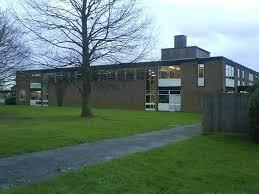
I taught music and drama at Wheathampstead Secondary School, Herts from 1966 to 1968 and have fond memories of the children I taught. My colleague, Vera Brunskill was a flautist and had a recorder group. She and I taught ourselves to play the guitar and worked with groups of children who were keen to learn the instrument in the days when the Beatles were all the rage. I have a recording of a number of the children who were keen enough on singing bto give up their break to come in to the music room to work at their singing. In particular I remember Reginald Dyke and Denis Andrews, who sang duets together, Sheila Faulkner, Mary Rose, Simon Hedley, and Jeanette Wright. I wonder where they are now!
Wheathampstead Secondary School library. Mrs Vera Brunskill (flute), Jean Campbell (Collen) (guitar) and children playing and singing Cheelo, Cheelo, a song made popular by Miriam Makeba..
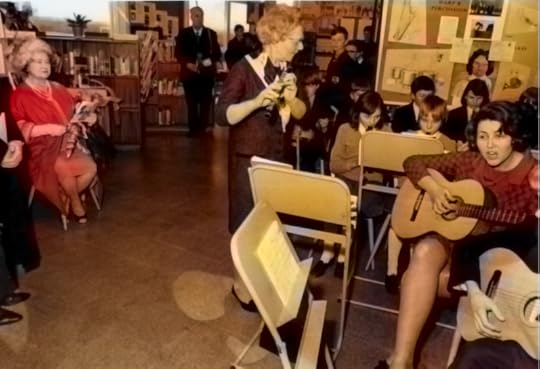
I directed several plays at the school and enjoyed the improvised drama classes, where everyone let their imaginations run wild, although imagination was often tempered with TV series of the time, notably Till Death Us Do Part!
I took part in the St Albans Operatic Production of Princess Ida in early 1967.
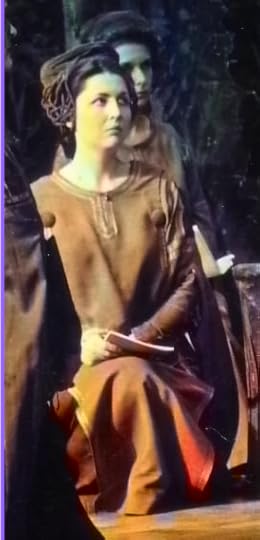 Princess Ida 1967.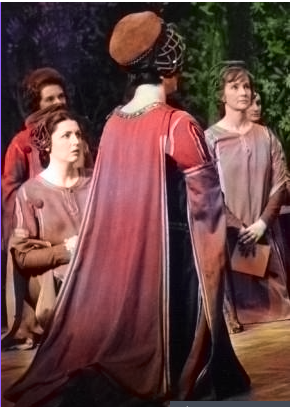
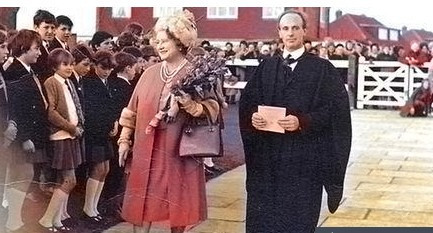 Queen Mother arrives at the School with Mr Thomas (Head master)
From the Herts Advertister.
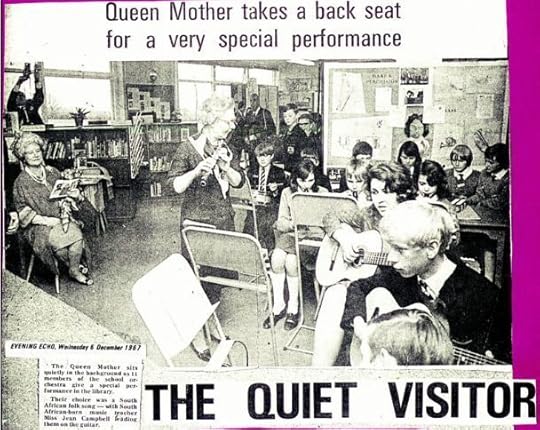 St Alban’s Advertiser.
During the time I was there the school was officially opened by the Queen Mother towards the end of 1967. We all spent a great deal of time practising our curtsies for the moment when the headmaster, Mr JD Thomas would present us to the Queen Mother. Her private secretary, Sir Martin John Gilliat, who was employed by the Queen Mother for 37 years, came to the school several months before her visit to ascertain what she would discuss with each person being presented to her.
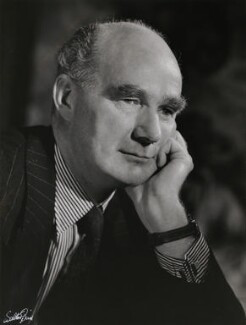 Sir Martin John Gilliat, private secretary to the Queen Mother for 37 years.
Although I am British by birth, I had lived in South Africa and had studied singing with Anne Ziegler and Webster Booth, who were living in Johannesburg at that time. I was told that the Queen Mother would discuss South Africa and my association with Anne and Webster, whose singing she had always enjoyed. In fact they had been Queen Mary’s favourite variety act and she had requested them to sing on the occasion of her eightieth birthday.
The day of the visit was very exciting for staff and students alike. The music pupils and I played and sang Cheelo Cheelo, a South African folk song made popular by Miriam Makeba, for the Queen Mother in the school library. I still have several photographs of us in that performance, and being presented to her afterwards. She was very charming and I’m sure everyone who was present will remember that memorable day fifty-two years ago.
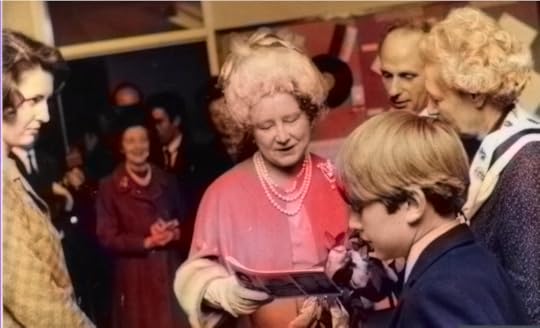 Queen Mother looks at the music score in the library after the performance.
Me, Mrs Covey-Crump (in background) Queen Mother, Mr J.D. Thomas, Vera Brunskill. I returned to South Africa in 1968, where I met my husband and married in 1970. I kept in touch with some of the children for a while, and with Vera Brunskill until the early 1990s. I was sorry to hear that the school in Butterfield Road is no longer there, and that it closed in 1987 under controversial circumstances, as it began with great promise and had so many wonderful open-hearted children and staff.
Jean Collen Updated 2 March 2021.
December 18, 2020
Webster Booth and Anne Ziegler: Gramophone and Discography.
Webster Booth and Anne Ziegler: Excerpts from ‘Gramophone’ & Discography” was first published in 2009. It was made up of articles and reviews about the recordings made by Webster Booth and Anne Ziegler (1929 to the present). In this new edition in 2020, the discography section has been updated and includes an almost complete discography of their solo and duet recordings. Webster Booth made a number of recordings with the HMV Light Opera Company, and some recordings with companies other than HMV.
Thanks to the Kellydatabase.org I have even discovered recordings made by HMV which were never released. I am grateful to John Rogers, a member of the Webster Booth-Anne Ziegler Appreciation Group on Facebook for giving me access to his list of B recordings on HMV which include recording dates, release dates, and dates of deletion.
I had intended to publish this updated discography on Lulu.com but the format for publishing there has changed and I have no idea how to “embed fonts” so I have chosen to place the file here instead. It is also available on the Internet archive at:
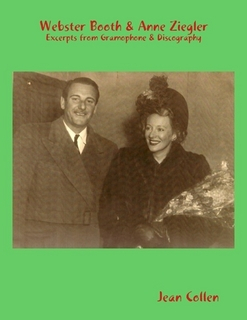 The final edition of the discography of Anne Ziegler and Webster Booth.
Jean Collen 18 December 2020.
__ATA.cmd.push(function() {
__ATA.initDynamicSlot({
id: 'atatags-26942-5fdc6a6c787bd',
location: 120,
formFactor: '001',
label: {
text: 'Advertisements',
},
creative: {
reportAd: {
text: 'Report this ad',
},
privacySettings: {
text: 'Privacy settings',
}
}
});
});
November 23, 2020
WEBSTER BOOTH’S LAST RECORDING IN THE UK.
In November 2019 I discovered a Webster Booth record on Ebay, one of the few records not in the possession of the Webster Booth-Anne Ziegler Appreciation Group on Facebook. It was a recording Webster had made for Decca in 1952 during his brief association with the company after his long-standing contract with HMV had not been renewed. In fact, it was the last recording he made in the UK before going to South Africa in 1956.
[image error]St Stephen’s, Dulwich
The record was: He bought my heart at Calvary (Hamblin) and Sanctuary of the Heart (Ketèlbey) with the choir of St Stephen’s Church, Dulwich, accompanied by Fela Sowande (organ) Decca F9921. Apparently Albert Ketèlbey was born Ketelby but adopted the grave accent – as an affectation?? You might be interested to read about the organist at the following link: https://en.m.wikipedia.org/wiki/Fela_Sowande?fbclid=IwAR1yD9Qtd8loTHQxywmS65bDoXTRDIILHbaA4xTKPDiEhJX2a_M-IoUl0bY
[image error]Fela Sowande – organist
[image error]The Sanctuary of the Heart (Ketelby)
[image error]He Bought My Soul at Calvary (Hamblen)
I asked John Marwood if he would be willing to bid on this rare record and he was lucky enought to win it. He and Mike Taylor, the other administrators of the group, both live in Portsmouth and as John’s home is a short walk away from Mike’s I hoped that Mike would be able to copy the record for us. Unfortunately Covid-19 put in an appearance and everyone was in lockdown for a number of months so the record remained with John for nearly a year.
In the meantime, Peter Wallace, another member of our group, was going to Scotland and had offered to take photos of my father’s birthplace as his own father had also been born in Dumbartonshire. I mentioned the record to Peter and he kindly offered to copy it for us. John parcelled it up carefully and sent it to him in North Yorkshire a week ago. Miraculously, the record reached Peter safely and he told me that the surface was in good condition. Last night I was delighted to receive the MP3s from Peter – he had not only copied the recordings but had restored them meticulously into the bargain. I am very grateful to him for doing this for me.
After the uncertainty and misery of the Covid-19 pandemic it was a thrill for me to have these recordings in my possession. I had often wondered why Webster’s contract with HMV had not been renewed in 1951, but this recording with Decca proved that it was certainly not because his voice was failing!
The recording is rare, so I am not making it known generally. I have appreciated the small number in our already small group who supported me when I made numerous medleys for want of new recordings by Anne and Webster. I have also noted that quite a number passed my posts by – possibly with a shudder! The link to the recording is: clyp.it/w1h35cxh If you wish to download the recording please contact me. As it is, we only need 14 more of Webster’s recordings to make our collection complete.
Jean Collen 23 November 2020
September 26, 2020
THE WEBSTER BOOTH-ANNE ZIEGLER APPRECIATION GROUP
The group has been running on Facebook for nearly six years and I am very sorry that I have decided to archive it now. In the beginning it attracted quite a few members and we were very lucky to have Mike as a member. He had collected a number of Anne and Webster’s 78 rpm recordings and restored them to a very high standard. He shared the recordings with the group and we had all Anne and Webster’s duet recordings available, and most of Webster’s solo recordings, including many rare recordings. In another post in this blog I have mentioned the recordings we are still looking for.
As time went by, Mike did not play as active a part in the group as before while several enthusiastic members died. I did my best to keep the group running but as we did not have any new recordings available people began to lose interest in the group as I began creating medleys which were probably not to everyone’s taste. Until a few years ago I would have six or seven likes to my posts. Peter Wallace, who ran The Golden Age of British Dance Bands, occasionally posted cuttings about the Booths from The Radio Pictorial which featured commercial radio broadcasts from continental stations such as Radio Normandy and Radio Luxembourg.
Until a few years ago I would have six or seven likes to my posts, while I could see (as administrator of the group) which members had looked at the posts but had not “liked” them – usually about 20 of the 55 members. A while ago I had removed inactive members, so the 55 members remaining were ones I thought might still be interested in the group.
Since the pandemic, those who actually look at the posts without liking them have been reduced to 7 or 8, so I have come to the conclusion that very few people are still interested in the group – hence the archiving of it. I did not delete the group as there is still a great deal of information there and members are able to look through it, listen to recordings of the Booths and related artists, and look at pictures and previous posts. John Marwood and Mike Taylor are still administrators of the group and one of them might decide to “unarchive” it if there is a renewed interest in it.
I would like to thank members who took an interest in it occasionally by “liking” or commenting on what was posted!


Here is some information about the group.
Welcome to this group for admirers of the singing and the careers of British duettists Webster Booth (1902 -1984) and Anne Ziegler (1910 – 2003) and related artists. We will add duets and solos by Anne and Webster and related artists, share photos, links to related sites, and information about them.
Please feel free to post, start discussions, add videos, recordings and ephemera featuring Anne and Webster and related artists, comment, ask questions – and answer them if you can.
I began my singing studies with Webster and Anne at their studio in Johannesburg at the end of 1960 when I was 17 years old. Early in 1963, they asked me if I would accompany for Webster in their studio when Anne was unavailable to do this. That was certainly one of the most fulfilling and life-changing experiences of my life. I did my associate and licentiate diplomas with them and we remained close friends until their deaths – Webster in 1984, and Anne in 2003. They played a very important part in my life and I will always remember them with love.
Anne and Webster were an unassuming couple who did not boast about their achievements. I found out much more about these when I began researching their careers after Anne’s death in 2003 and published my book, Sweethearts of Song: A Personal Memoir of Anne Ziegler and Webster Booth . I have since written a second edition of this book. It contains more information and is longer than the first edition. All my books about Anne and Webster may be seen at: http://www.lulu.com/spotlight/duettists
[image error]
I started this group hoping to keep the memory of their lives, voices and careers alive and have gladly shared recordings, photos, and other ephemera here and I hope that the group will continue long after I am dead and gone. I had bequeathed my collection to the Museum of English Literature in Grahamstown, South Africa but because this museum has changed direction lately they are not interested in the collection any more..
John Marwood and Mike Taylor are the other administrators of the group. Mike has shared his restored collection of 78rpms. We are very lucky to have these restorations in our collection. You will be able to hear many rare recordings featuring Anne, Webster, and artists with whom they were friendly or with whom they worked. If you look at the group photos many have links to these recordings, which may be downloaded for your own pleasure (and NOT for commercial usage).
If you wish to contact me off-line, my email is: booth-ziegler@outlook.com
RELATED ARTISTS:
Essie Ackland, Arthur Askey, Isobel Baillie, George Baker, Owen Brannigan, Basil Cameron, Alfredo Campoli, Gwen Catley, Noel Coward, Joan Cross, Harry Parr Davies, Bebe Daniels, Peter Dawson, Mary Ellis, Maurice Elwin, Nancy Evans, Kathleen Ferrier, Flotsam and Jetsam/ Malcolm McEachern, Will Fyffe, Gert and Daisy, Olive Gilbert, Leon Goosens, Harry Gordon, Martyn Green, Frederick Grinke, Herbert Greenslade, Olive Groves, Garda Hall, Joan Hammond, Tommy Handley, Fred Hartley, Stanley Holloway, Tom Howell, Winifred Lawson, Evelyn Laye, Janet Lind, David Lloyd, Mark Lubbock, Ernest Lush, Ben Lyon, Malcolm McEachern, George Melachrino, Gerald Moore, Elsie Morrison, Alice Moxon, Heddle Nash, Oscar Natzke, Robert Naylor, Dennis Noble, Ray Noble (pre USA), Ivor Novello, Derek Oldham, Geoffrey Parsons, Rawicz and Landauer, Gladys Ripley, Stuart Robertson, Eric Robinson, Stanford Robinson, Albert Sandler, Malcolm Sargent, Elsie Suddaby, Richard Tauber, Inia te Wiata, Tommy Trinder, Jack Warner, Harry Welchman, Harold Williams.
Other artists from the same period, but not necessarily related to Anne and Webster in any way: Jack Buchanan, Gracie Fields, Layton and Johnstone, Melville Gideon, Jessie Matthews, Gladys Moncrieff, Anna Neagle.
Webster and Anne on the Russell Harty TV show (1981)


Webster on Saturday Night Revue (1937)


Webster and Anne in The Faust Fantasy (1935(


Jean Collen – October 2015.
Updated 26 September 2020
//
September 22, 2020
SWEETHEARTS OF SONG
[image error]Some years ago, I received a lovely letter about the book from a gentleman in Ireland. I shared it originally on the fourteenth anniversary of Anne’s death.He had recently read my book, Sweethearts of Song: A Personal Memoir of Anne Ziegler and Webster Booth. He attached various photos of Penrhyn Bay, North Wales which he had taken during his trip. [image error]
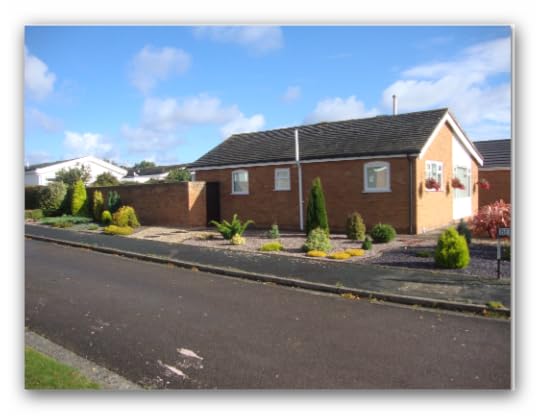
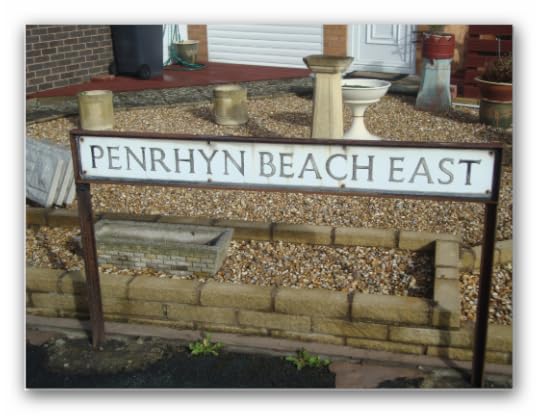
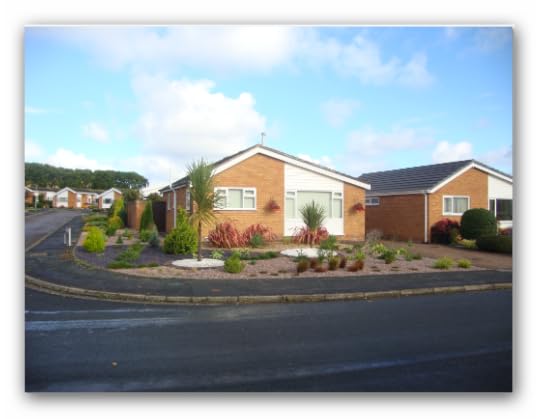

Part of his note reads as follows:
“All thanks to you, I spent a really moving day rambling the highways and byways of Penrhyn Bay. To be standing outside Anne and Webster’s house was an extraordinary feeling and for me a real privilege. Looking at the house, and then walking on the beach, all the time internally hearing their wonderful music, and feeling a real sense of gratitude to them both for all the joy they brought to countless millions over the years with their unique gifts, their unique talents. And yes, as I looked out on Penrhyn Bay, and then further East to Rhos on Sea, Colwyn Bay, Llanddulas and Abergele, I would see in my mind’s eye, the beautiful Anne in her youth, as well as her undoubted beauty in her later years. It is, as you well know, a spectacular landscape: Snowdonia to the South, the Ormes to the West, and to the North the Irish Sea stretching as far as the eye can see—–all quite something, and a beautiful and moving backdrop to remember both Anne and Webster.
So once again, many thanks, not only for your wonderful book but also for a memorable windswept day in Penrhyn Bay.”
It was good to know that my book had given him pleasure and had motivated him to pay a visit to Webster and Anne’s final home.
My book, Sweethearts of Song: A Personal Memoir of Anne Ziegler and Webster Booth has been updated and enlarged and is available as a paperback and as an ebook.
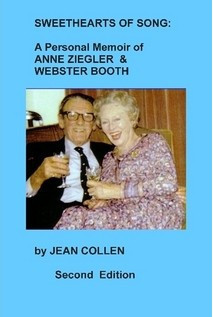 https://www.lulu.com/spotlight/duettists
Jean Collen 22 September 2020.
[image error]Penrhyn Bay.
July 28, 2020
BILL CURRY (26 March 1931 – 28 July 2015)
Memories of my dear friend, the late Bill Curry.
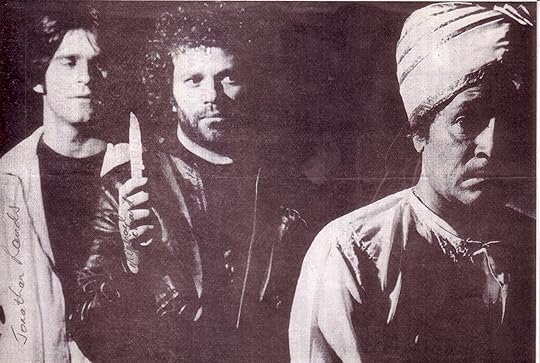
Many years before I met Bill Curry I saw him in a play at the Laager in the Market Theatre, Johannesburg. The play was called The Indian Wants the Bronx, a three-hander with Michael Richard, Jonathan Rands, and Bill as the eponymous “Indian” being brutally harassed by two yobs at a bus stop in downmarket New York. A few years later I saw him again in Athol Fugard’s A Lesson from Aloes, with Marius Weyers and Sheila Holliday. On both occasions I was deeply impressed by his fine acting at the. Market Theatre, Newtown, Johannesburg
St Andrew’s, Ocean Street, Kensington. Photo: Rev. Fr. Stewart Peart
It was an unexpected pleasure to find him reading the lessons at the 7.30am service. He and I had arrived at St Andrew’s at about the same time in 1993. I had been appointed as the music director there and after the Nine Lessons and Carol Service, he had congratulated me on the choir’s singing. I discovered that he had played the organ in Cape Town many years before my early fumblings on the instrument as a piano-organist. He was always willing to play the organ if I was ill or away. Later still he joined the choir, first as a bass, later as a tenor. He often took the men in the choir for special rehearsals when we were working on something difficult. I do not know how I would have managed without his constant support, kindness, and enthusiasm.
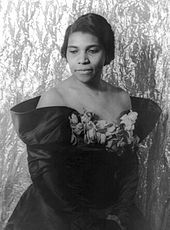
I was delighted when he asked me to give him some vocal tuition. He visited me each week at my home in Derby Road, Kensington and he worked diligently at everything I gave him. We played Schubert duets on the piano and often interesting conversation got the better of us and we would find that considerable time had passed without a note of music being played or sung. He told me about an amusing encounter at the Festival Hall when he was studying at the Central School in London in 1956. He had gone to hear a recital by the great contralto, Marian Anderson. The woman next to him assumed that he was Indian and asked what he thought of Western music. Bill replied in his pristine actor’s voice, “Madam, I have known no other!” Marian Anderson (contralto)
St Andrew’s presented a Christmas in July dinner and he gave some infectious performances for the entertainment of the guests with him singing and me accompanying him.
I was very sad when he told me he had decided to sell up in Kensington and return to the Cape where he had been asked to stay in a cottage on the property of Adrian Kohler and Basil Jones who ran the Handspring Puppet Company in Kalk Bay. He had been instrumental in helping them when they were launching their company in the 1980s. In recent years the Handspring Puppet Company have become internationally famous with their creation of the War Horse for the play and film. Before he left Johannesburg he gave me his vast collection of LPs and a number of books and scores.
I missed his warm presence and his life-enhancing personality when he moved to the Cape. He appeared in a play at the Kalk Bay Theatre for Nicholas Ellenbogen and played the grandfather in the film, A Boy Called Twist, a South African adaptation of the Dickens’s book. We exchanged letters and phone calls for a while and I had hoped to visit him in his new home, but that visit did not materialise.
Earlier this month I was sad to hear that he was ill and in the frail care section of a home for the elderly. Yesterday I had news of his death at the age of 84. I will never forget our wonderful friendship. May he rest in peace.
I had a call from Jill in Cape Town to let me know that Bill’s Memorial Service will take place on Tuesday, 4 August at 4pm at Holy Trinity Church, Kalk Bay.
30 July 2015
It is now five years since Bill’s death and we are in the midst of a coronavirus pandemic. I wonder what he would have made of it. He is sadly missed, but always remembered by me.
28 July 2020
Bill and Denise Newman in a play in Cape Town in 1981.


Bill Curry 26 March 1931 – 27 July 2015
 Bill Curry and Denise Newman in a play in 1981.
 The late Jonathan Rands, Michael Richard, and Bill Curry (1981)
Many years before I met Bill Curry I saw him in a play at the Laager in the Market Theatre, Johannesburg. The play was called The Indian Wants the Bronx, a three-hander with Michael Richard, Jonathan Rands, and Bill as the eponymous “Indian” being brutally harassed by two yobs at a bus stop in downmarket New York. A few years later I saw him again in Athol Fugard’s A Lesson from Aloes, with Marius Weyers and Sheila Holliday. On both occasions I was deeply impressed by his fine acting.[image error] Market Theatre, Newtown, Johannesburg
 St Andrew’s, Ocean Street, Kensington. Photo: Rev. Fr. Stewart Peart
It was an unexpected pleasure to find him…
View original post 568 more words