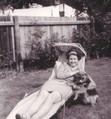
Jean Collen's Blog, page 31
December 12, 2011
About Me
My name is Jean Collen (nee Campbell). I was born in Glasgow towards the end of the Second World War, an only child of elderly parents. We flitted periodically between the UK and South Africa on Union Castle liners, so my childhood was rather unsettled.
I went to ten different schools, always the new girl with the odd accent, always trying to make transitory new friends and catch up with different syllabi and different subjects. If there were international schools in those days, my parents did not know about them, or possibly could not afford the fees! Despite these difficulties, I matriculated in Johannesburg, four months after my seventeenth birthday.

Jean Collen (1965)
Despite being quiet and reserved, I showed unexpected talent for acting, singing and mimicry, and studied music from an early age. After I left school, there was a settled period in Johannesburg when I studied singing with Anne Ziegler and Webster Booth, the English duettists. They had immigrated to South Africa in 1956, and opened a studio of singing and stagecraft. They asked me to accompany for Webster in their studio when Anne (who accompanied the students as well as teaching them) was away. They were a profound influence in my life, even after they returned to the UK to live in North Wales in 1978. Webster died in 1984 and Anne and I were still friends, forty-three years after I first went to their studio. She died on 13 October 2003, aged 93. They published a joint autobiography, Duet in 1951 and after Anne's death I wrote a biography, detailing their lives from 1951 to the present, entitled Sweethearts of Song: A Personal Memoir of Anne Ziegler & Webster Booth. It is mainly people older than myself who remember them in their hey-day before and after the Second World War.
Under their guidance I did my Associate and Licentiate singing diplomas, and then went to London to do my piano Licentiate at Trinity College of Music. There I taught music and drama, and appeared in a number of shows. After some years, I returned to South Africa, met my future husband, Errol, a translator and editor, and have remained here ever since, with occasional trips back to my homeland. I have been married for over forty years. I am the mother of a grown-up son and a married daughter, and am grandmother to two young boys.
Before I retired I taught classical piano and singing in my own studio and was musical director at St Andrew's Anglican Church, Kensington. My interests are music, theatre, history, reading and writing, current affairs and politics in South Africa and the UK.
I have always been an avid reader and have written all my life, although with no great purpose until recently: letters, reports, diaries, minutes and University assignments. In my first degree, I majored in History of Music, History and English Literature, and completed a postgraduate degree in History.
Apart from writing several books about Webster Booth & Anne Ziegler I have written a number of short stories. At fifteen, I read E M Delafield's Diary of a Provincial Lady. I was impressed with this fictional diary, written in the present tense in slightly mocking, self-deprecatory tones. Our English teacher had told us to write a daily diary if we wanted to improve our writing style, so I kept a diary regularly for seven years, at first slavishly trying to emulate the voice of E M Delafield's diarist, later lapsing into my own voice, minus the sardonic overtones, but always in the present tense. Since then, I have kept temporary diaries during extraordinary, exciting or traumatic times of my life, but generally life does not seem exciting enough now to merit a daily diary entry.
In my early thirties, I wrote an unnamed novel, with a great opera-singer as hero, evolving through different stages of his life and career. I spent a lot of time writing it: the first drafts in longhand, the final version on a creaky manual typewriter. A few friends read it and appeared to enjoy it, but I put it away without even attempting to send it to a publisher or agent.

I Can't Forget You by Jean Collen
Only recently I looked at the novel again. My writing flowed more easily then than it does today and the story moves at a good pace. I decided to work on this novel and published it on http://www.lulu.com/duettists in 2010 along with a volume of short stories.

Jean Collen today

The Song is Ended & Other Stories by Jean Collen
I had thoughts of writing a Roman à clef for several years and took the opportunity to turn these thoughts into a novel during the National Novel Writing Month (NaNoWriMo) of November 2011. The synopsis is as follows:
This novel has strong leanings to a Roman à clef (a novel about real life, overlaid with a façade of fiction). It was written during November 2011 for NaNoWriMo, and traces the life and career of singing luminary, Malcolm Craig. He is a great tenor and has success in his career, but his private life is far from tranquil. The book returns to earlier days and traces the course of his life from the 1920s to the beginning of World War Two. It is the first novel in a series about Malcolm Craig's life.
I managed to complete the first part of what I hope will be an ongoing series of novels about tenor, Malcolm Craig and published it on Lulu recently. The title of this novel is Just the Echo of a Sigh. I intend to work on further volumes of this series in the coming months.

JUST THE ECHO OF A SIGH by JEAN COLLEN








December 10, 2011
BOOK EXTRACT NANOWRIMO: JUST THE ECHO OF A SIGH
10 December 2011
I have published my NaNoWriMo novel Just the Echo of a Sigh on Lulu. An extract from the book appears below.
JUST THE ECHO OF A SIGH by JEAN COLLEN
30 November 2011
I finished my novel today and have submitted it to NANOWRIMO. I managed to write 52,424 words during the month of November. It was certainly a very good exercise in discipline. I have had ideas for this novel floating around in my mind for some time, but this was the first time that I made a determined effort to form them into a story. There is probably quite a lot of work still to be done on it before it is fit for public consumption but it certainly gave me some satisfaction to finish it in time and have it validated earlier today.
The synopsis of the novel is as follows: This novel traces the life and career of singing luminary, Malcolm Craig. He is a great tenor and has success in his career, but his private life is far from tranquil. The book returns to earlier days and traces the course of his life from the 1920s on.

Nanowrimo. Completion of "Just the Echo of a Sigh".
15 November 2011
I am halfway through the month and have managed to write 34664 words of the novel, Just The Echo of a Sigh. Here is an extract from the beginning of the novel.
PROLOGUE
"Your tiny hand is frozen, let me warm it into mine.."
Malcolm Craig cast his eyes over the first few rows of the audience in St Mary's Church Hall. There were few signs of the latest liberated fashions of the twenties amongst this staid middle-aged crowd, clad in sombre colours. The only vanity Malcolm noticed was that most of the ladies were sporting cumbersome hats, which blocked the view of the stage to those seated behind them. Not many flappers, with bobbed hair and close-fitting cloche hats, to be found here. He was reaching the climax of the aria from La Bohème when he caught sight of Felicity at last. She was further back than he had expected, seated demurely between her stern father and her scrawny twittery mother.
Malcolm was going to London the following week to begin rehearsals for the new season of the touring King's Opera Company. Despite his outstanding voice, his singing would be confined to the chorus, with only the occasional small role to fulfil, and although he would be given leading parts to understudy it was unlikely that any of the principals would be taken ill and give him the chance to substitute for them.
He took the last note of the aria in a delicate falsetto, and the audience erupted into cheers for Mr and Mrs Craig's gifted son. He acknowledged the applause gracefully and drew his accompanist, his old Church organist and choirmaster, who had known Malcolm since his early days as a mellifluous boy alto, forward to receive his share of appreciation for the performance. He looked directly at Felicity and was gratified to notice that she was applauding wildly. With the lights up, he could see that her face was flushed and her eyes were shining. She was aglow with the unaccustomed excitement of the occasion. All this applause was for her young man who had acquitted himself beyond everyone's expectations in his solo recital.
Tea would be served after the concert. Already the Church ladies were gathering in the hall kitchen, competing with the applause as they clattered the cups and saucers into position on the long trestle tables. The last thing Malcolm wanted to do was to make polite conversation with Felicity and her parents over a cup of weak lukewarm tea and a slice of dry seed cake. He wanted Felicity to himself, to hold her tightly in his arms and watch her rejoice in his good fortune. But he knew he would have to break the news of his change of career to everyone first. He joined his parents and his older brothers and sisters, as they waited for the tea to be served.
"That was wonderful, Malcolm," said his mother proudly. 'You're as good as a real professional now. It was wonderful of you to sing for your old friends at St Mary's."
His father growled in agreement and his sisters and brothers crowded round him, eager to be associated with their talented and attractive young brother, who towered above his parents and his siblings.
"Glad you all enjoyed it," he replied nonchalantly. "But I could do with more than tea after that lot!"
The vicar creaked up the stairs to the hall stage during the tea. He called authoritatively for silence so that he might give his prepared vote of thanks to Malcolm. He announced triumphantly that the Church had raised a considerable amount towards the Organ Fund from the proceeds of the concert. Gloved hands applauded warmly, if mutely, and Malcolm smiled modestly, acknowledging the gratitude of the congregation.
Malcolm's old school mates approached him diffidently. When they were younger they had been his boon companions, cheering themselves hoarse in support of the local football team, but now his gift set him apart, although he himself had not changed for he had always been able to sing.
He reached Felicity at last, relieved to see that her parents were momentarily away from her, doing their duty by mingling with their middle-aged, middle class companions.
"That was beautiful, Malcolm," Felicity whispered, as he reached for her hand, warm through her glove, quite unlike the tiny hand of his recent aria. "My stomach was turning over with excitement when I listened to you. Were you singing just for me?"
"Always for you, darling," he replied hoarsely.
Her red hair shone like a bright cap on her well-shaped head. She looked pretty, pert and modern with her new hairstyle, but Malcolm regretted the loss of her unruly curls, which she had pinned up with pretty tortoiseshell clasps. On the few occasions they had managed to be alone together he had delighted in freeing her hair from the clasps and running his hands through the luxuriant curls as he held her close.
CHAPTER ONE
Malcolm had met Felicity Gregory when they spent several years in the same class at Parsons Road Infant School. Felicity was a few weeks older than him, the daughter of a local teacher. She was a confident little girl with green eyes and a shock of curly red hair which her mother struggled every day to tame into two tight, stout, beribboned plaits before Felicity set off for school with her satchel over her shoulder. She was the opposite of her dull conventional father, whose two claims to fame were that he had been the first member of his family to complete a Master's degree at Cambridge and had written the words of the school song at the newly established school in Aston, where he would eventually become headmaster.
As a seven-year old, Malcolm was the leading light in St Mary's Church choir, despite the choir master's disapproval of putting one chorister ahead of the others, especially a seven-year old who was far from perfect in other ways. But Malcolm had such a remarkable voice and was musically advanced far beyond his years, so Dr Bernard found it difficult to do anything else but put him forward. Two years later, Dr Bernard reluctantly suggested to Malcolm's parents that Malcolm should do a voice test for one of the great cathedrals, where he would receive free education and excellent training in music and choral singing. At the age of nine, Malcolm was accepted and became head chorister in his last year there, just before his beautiful boy's alto voice broke.
Rather sadly Malcolm was forced to return to war-torn Birmingham after spending four years at the Cathedral. By that time Malcolm had set his heart on making singing his career, but his parents were unhappy at this idea, fearing that he would not be successful enough to make a living at singing. He was depressed at not being able to do more than croak out a tune, and waited impatiently for three anxious years to see whether he would still have an exceptional adult voice.
The Craig's eldest son, Edgar had completed his hairdressing apprenticeship in Brighton before the war, and, after a stint in the forces, had joined his father in his business and would eventually take over from him. Their middle son Frank was still in the navy, but was set to do his board exams in accountancy after the war ended. Without consulting Malcolm, the Craig's decided to send Malcolm to do a commercial course in preparation for the steady and lucrative career of chartered accountant they planned for him.
"Your brother will be doing his board exams when the war is over and he's discharged from the navy, and soon you'll be able to follow the same path," Malcolm's father told him. "Of course you can always sing in your spare time. You can join the Church choir again and sing in the local operatic society, but accountancy is a good steady profession. You and Frank could go into partnership together once you've finished your articles and had some solid experience with a reputable firm. I've spoken to Mr Gregory. He's agreed to take you for the commercial course now your voice has broken."
Malcolm was not a rebellious boy and went along with his father's wishes, hoping that if he was as good a singer as he prayed he might become after the three years of enforced silence ordered by his Cathedral choir master, one day he could still become a professional singer despite the dreary plans his father had made for his future. The very idea of singing in the local choir again after he had been head chorister at one of England's finest cathedrals, or joining the local amateur operatic society, composed of many middle-aged matrons and a few middle-aged men, made him shudder. He wasn't being big-headed but he knew that his voice was special and unless he could use it to the best of his ability his life would hardly be worth living.
He paid half-hearted attention to his studies in accountancy and related subjects, such as Spanish, which was regarded as an important language for commercial undertakings, and during the silent years while he waited impatiently for his adult voice to reveal itself, he whiled away his spare time playing goalie in the school football team, and shouting himself hoarse at West Brom or Aston Villa matches on Saturday afternoons. During those songless years his great consolation was to support the old team as avidly as he had done as a boy. He owed his first loyalty to the Baggies, the team his father and brothers supported, but he could not help but be fascinated at the superior prowess of the suave Sam Hardy, the brilliant Aston Villa goalie. He sometimes thought that if, by some miserable mistake of nature, he did not develop a good adult voice he could always consider football as a career and follow his idol as goalie at the Villa, but whatever happened he knew he could not bear to spend all his adult life balanced precariously upon an office stool totting up endless rows of figures and balancing books…







October 31, 2011
Life in Johannesburg and Kensington, Fifty Years Ago.
I was born in Scotland and lived on and off in the United Kingdom for some years as well as in other places in South Africa, but I have lived in the suburb of Kensington, Johannesburg for most of my life since 1957.
I came to South Africa from Scotland with my parents when I was five years old and spent my early years in Vanderbijl Park, a small town in the Vaal Triangle, where we knew most people. I cycled to the Vaal High School, coasting at speed down Faraday Boulevard in the morning and struggling uphill in the heat of the early afternoon.
In 1957 my parents made a sudden move to Johannesburg when my father was offered a job at Rogers- Jenkins with an old work colleague. The engineering company was situated in the Jeppe Dip of Main Street. Even in those days my parents were worried about the high crime rate in Johannesburg in comparison to our relatively crime-free small town. They put our furniture into storage and we lived at the Valmeidere Private Hotel in Roberts Avenue opposite Jeppe Boys' High until we found somewhere permanent to live. I transferred to Form II (Grade 9) at Jeppe Girls' High for the last term of that year. I was 13 years of age at the time the world was marvelling at the sight of Sputnik circling the earth each night.
My parents thought the roads in Kensington were far too busy for me to ride my bicycle to school, so I caught the tram instead. The tramlines were in the middle of the road, so I prayed that oncoming cars would slow down long enough to give me time to reach the tram and mount its steep iron steps. On the first day at my new school I dodged the oncoming traffic as I walked halfway into the middle of Roberts Avenue to board the tram, and clung to one of the overhanging leather straps as the tram hurtled unsteadily down Roberts Avenue towards my new school.
The conductor played a big part on the trip. He forced his way through the passengers to collect money for fares, giving tickets and change from the elaborate stainless steel machine attached around his neck with a leather strap, shouting, "Move further down the car," to allow yet more people to squeeze into the tram on its peak-hour journey. "Hold tight, please! Move forward in the car. Kaartjies asseblief. All tickets please.." The ticket was to be guarded with one's life in case the dreaded ticket inspector came on board. I didn't know what the punishment would be if I lost my ticket, but I thought it must be jail at least, if not death by hanging.
In those days there was no such thing as off-the-shelf school dresses or gym slips. My mother had to buy material and take me to a recommended school dressmaker to be measured for my new uniform so I had to wear my Vaal High uniform until the new uniform was made. Girls in my new class eyed me curiously. One asked in hostile tones why I hadn't gone to Queen's High as the Vaal High uniform I wore was almost identical to that of Queen's High. A kinder girl took pity on me and asked me to join her and her friends to eat my sandwiches with them at break.
On the first day I wore my brand new Jeppe Girls' High School uniform, I carried my regulation panama hat adorned with a band in school colours. At the Vaal High, hats had not been a compulsory part of the uniform, although my mother had always insisted I should wear one to protect my pink and white Scottish complexion from the harsh sun of the Transvaal High Veld.
The only vacant seat on the tram that morning was next to a large, fierce-looking Jeppe girl who sported a severe pudding basin haircut under her hat. She had a prefect badge attached to the front of her green school dress. She glowered at me in disgust, seemingly at a loss for words. I summoned up a watery smile, hoping to break the ice.For some reason she was extremely annoyed with me and I had no idea why. Eventually she managed to speak through her rage.
"Why aren't you wearing your hat? You are letting the school down. Put it on at once."
"I'm new. It's my first day wearing my uniform. I didn't know I had to wear it," I muttered, pulling the offending object onto my head, the elastic tight under my chin.
The girl softened slightly.
"If you weren't new you would be in detention this afternoon, writing out two hundred lines. Never let me see you without it again."
I learnt that it was a mortal sin to be seen without one's hat at Jeppe Girls' High! Apart from the fact that the girls don't have to wear hats any more, uniforms of the Jeppe schools have not changed much in the last fifty years but they can be bought off the shelf now. The hard-working Kensington dressmakers of days gone by have long since vanished.
The red tram trundled on its way to school down the hill in Robert's Avenue, past the suburban houses, interspersed with the Methodist Church on the right, the Kensington Hall on the left and the old low-rise, facebrick block of flats on the corner of Juno Street, which was used as an exterior shot on Egoli, M-Net's erstwhile soapie.
Soon I was venturing further afield on the tram, even braving the trip to the crowded city on Saturday morning. Kensington remains much the same today as it was in 1957 with its neat suburban houses, the Jeppe Schools, the Kensington Clinic, known then as the Kensington Sanatorium and run by nuns, who later moved upmarket to the Kengray Clinic in Parktown, now renamed again as the Wits University Donald Gordon Medical Centre, the first private academic hospital in South Africa.
On the way to the city– "going into town" – the tram passed through the suburbs of Fairview and Jeppestown. Unlike Kensington these suburbs have changed in character over the years. In 1957 Jeppestown was made up of old run-down houses. Often the inhabitants could be seen sitting on their stoeps, which gave directly onto the Main Street pavement. Some of the people I could see from the tram were often in advanced stages of inebriation. Boys had their hair slicked back in the latest ducktail style, while girls had lips plastered with pale pink lipstick, and peroxided fringes and side burns. The residences of the Fairview Fire Station, where only the old tower remains today, looked respectable in the midst of the dilapidated houses.
Nearer town was a big Chinese grocery store called Yenson's. People came from all over Johannesburg to shop at Yensons because things were very reasonably priced. Then the tram swept along its tracks on Main Street into the city centre with its smart shops, such as Ansteys, John Orrs and Stuttafords. Upmarket ladies of leisure from the suburbs, complete with matching hats, gloves, seamed stockings and hair newly set (sometimes blue-rinsed) whiled away their time, while their maids, gardeners and nannies kept their homes, gardens and offspring in pristine condition.
These matrons met their friends for morning tea in one of the big department stores. Starched tablecloths, silver cutlery, pleasing crockery and an attentive waiter who probably knew his clientele by name served them. They drank tea or coffee and selected fancy cakes from three-tiered revolving plates to the strains of a discreet pianist or Hammond/Lowry organist playing popular tunes of the day. They were further entertained with a dress show of the latest fashions on sale in the shop. The mannequins paraded round the tearoom, discreetly informing each table of the cost of these creations, which could be purchased in the dress department of the store.
Thrupps, the upmarket grocery store had a branch next to John Orr's in Pritchard Street, so the ladies often rounded off their morning in town by calling in at Thrupps to discuss the cost and quality of the Stilton cheese with the grocers, and take some delicacy home as a treat for their hard-working husbands to round off their evening meal.
The centre of the city has probably changed in character more than any other part of Johannesburg. Many of the buildings remain, but they are used for different purposes today. The smart department stores have either closed or moved to shopping malls in the suburbs. The businesses which remain in the city have their solid security gates firmly locked at closing time. The city hall with its fine organ, was the venue for symphony and lunch-hour concerts fifty years ago. The symphony concerts are now presented at the Linder Auditorium in Parktown, and there are very few concerts held at the city hall these days. Even the fine central library has been closed for renovations recently. I wonder if it will every open again.

We moved into a flat in Samad Court at the corner of Queens Street and Langermann Drive. Samad Court is still here, but the flats were turned into offices some years ago. In the middle of 1958 we returned to the UK and when we came back my parents bought a house in Juno Street. We lived next to the tennis courts and bowling greens of the Kensington Club – I passed there the other day and it looks as though the tennis court next to our old house has disappeared. I wonder what will take their place.

Our home in Kensington (1959)
Our house had a coal stove in the kitchen where the food was cooked and we had a coal fire in the sitting room so we were never cold in winter as we often are today when we are trying to cut down on electricity usage, and there's a shortage of gas for heaters. Periodically we would have coal delivered to our cellar from Mac Phail's, whose slogan was "Mac won't Phail you".
My mother had an account with the local butcher and Ford's grocery store and she placed orders at these shops by phone. She had leisurely discussions with the butcher about the best cuts of meat, and with Mr Ford about the quality of his fruit and vegetables. These orders were delivered to the house, and a quart of milk arrived from the dairy early each morning. I seem to remember that bread was also delivered, hot from the bakery. My closest friend at school was Daphne Darras, whose father owned the big plant nursery at the corner of Juno Street and Kitchener Avenue, the site of the Darras Shopping Centre today.

Jacaranda time in Juno Street.
There were two cinemas in Kensington in 1957 – the Regent in Langerman Drive where Kentucky Fried Chicken is today, and the Gem at the other side of Kensington, bordering Fairview. I remember seeing Julie Andrews in Mary Poppins at the Regent many decades ago.
My father took our dog for a walk every evening and sometimes he would walk to the library at Rhodes Park which was open until 8pm in those days. If he was still alive I don't suppose he would risk taking these evening walks now.
Saturday mornings
On Saturday morning, the town was crammed with shoppers and cinema-goers. In 1957, girls wore wide skirts with starched hooped petticoats so it was a real crush walking along the pavement with all those skirts brushing against each other. Shoes with pointed toes and high thin heels made walking precarious, not to mention setting us up for corns and bunions by the time we reached middle age. My mother was adamant that I should wear sensible shoes with tickey (small) heels rather than hurple around in three-inch heels, probably putting my insides and my spine out of alignment into the bargain.
The Jo'burg cinemas were impressive art deco palaces, but the décor was enshrouded in a smoky fug, in an era when smoking was still allowed in cinemas – but not in theatres. I certainly wouldn't survive in a fug like that now with smoking banned in public places, but it didn't worry me then. We saw Debbie Reynolds in Tammy and the Bachelor in the Coliseum in Commissioner Street, where the interior was created like a fairy castle with little turrets and windows on the walls, and the ceiling a night sky of deep blue, glimmering with stars.
There was also the Empire and Her Majesty's. Both these cinemas were sometimes used as venues for live shows, variety, musicals and opera. Stars like Johnny Ray, Tommy Steele, Tommy Trinder, Max Bygraves and Cliff Richard graced the stage of one or other of these theatres in the fifties.
The first variety show I saw in Johannesburg was British comedian, Tommy Trinder at His Majesty's. I was mesmerised. "If its laughter you're after, Trinder's the name," was his by-line. We sat in the dress circle and I was so excited by the experience that I missed my footing on the deeply carpeted steps at the interval, and, to my deep mortification, I rolled all the way down, unable to bring myself to a halt until I reached the bottom of the steps.
A year or two later, Cliff Richard came out to do some shows with The Shadows at the Empire. I didn't really like that kind of music but I went into the city with some school friends to find a mob of people blocking Eloff Street outside the old Carlton Hotel where he was staying. They were all screaming for their idol, "We want Cliff…". At last the crowd was rewarded when he appeared briefly on the balcony of the hotel to wave rather diffidently at the massive crowd to the accompaniment of cheers and howls of mad adulation from his besotted fans, who were oblivious of the fact that they were causing a massive traffic jam in the centre of the city at rush-hour.
The Music Studios
After I left school I took music lessons in town. I studied singing with famous British duettists, Anne Ziegler and Webster Booth in their studio on the eighth floor of Polliack's building in Pritchard Street just off Eloff Street, and piano with Sylvia Sullivan whose studio was in Edinburgh Court in Von Brandis Street diagonally opposite the Jeppe Street post office.


Sylvia Sullivan Chorister. I am in the middle, wearing a hairband.
Anne Ziegler & Webster Booth (1963)

Sylvia Sullivan with her great-niece
In those days most music teachers of any repute had studios in town and their pupils travelled by bus from all over Johannesburg. My parents bought me a leather music case and I was always interested to recognise fellow aspirant musicians with similar cases to mine on the way to their music lessons at one or other of the studios. These days music teachers work from their homes in the suburbs and pupils are usually taken to their lessons by car.
Sylvia Sullivan was a highly qualified and gifted teacher of singing and piano. She took her work very seriously and expected her pupils to do the same. She was very strict but always gave credit where it was due. She was at her studio for early morning lessons, then off to teach class music at Parktown Girls' High School and Nazareth House, then back to the studio for more lessons after school finished, until late in the evening.
Mrs Sullivan had a suite of rooms in Edinburgh Court, with grand pianos in the two bigger studios, and uprights in the smaller ones so that pupils could put in some last minute practice before their lessons. In addition to their private lesson she expected her pupils to go in to her studio early on a Saturday morning to work at ear tests, sight-reading and duets. Once a month she held a performance day when everyone had to play or sing to her and fellow pupils – quite an ordeal – but it got us used to performing in public and at examinations. The morning was rounded off with choir practice as members of the Sylvia Sullivan Choristers.
Anne and Webster had a large, airy studio, with an inter-leading office, and a tiny kitchen in the narrow hall, where pupils waited for their lessons if they arrived early. They had a Chappell Grand piano and a full-length mirror, so that pupils could look at themselves while they were singing, not only to make sure that their posture was good and they looked pleasant, but that they were opening their mouths on the high notes and singing with flat tongues no matter what vowel they sang. On the wall were innumerable pictures of themselves with various well-known celebrities, taken in their hey-day when they had been top of the bill on the variety circuit and, in addition, Webster had been one of the foremost oratorio soloists of his generation in the United Kingdom.
Changes in Kensington
Houses in Queen Street and parts of Langerman Drive are largely used for business purposes today. I remember two elegant houses at the corner of Langerman Drive and Queen Street when they were large private residences. Windy Brow has been used for various business ventures, while the other was demolished completely to make way for a garage, but most of the original Kensington houses are still standing. Kensingtonians are lucky that the CBD shifted to Sandton rather than to the East, so the suburb has not changed as much as many other Johannesburg suburbs.
When I look back on the South Africa of my youth and compare it with South Africa today things have changed so much that I sometimes feel as though I am living in a different country. But although there have been many, changes in Kensington, some for better, some for worse, it is still much as I remember it fifty years ago and retains an ongoing sense of community for its inhabitants.
Jean Collen ©
March 2010







October 28, 2011
BOOK TASTER: A SCATTERED GARLAND (1930s)
Snippets from A Scattered Garland: Gleanings from the lives of Webster Booth and Anne Ziegler, (1930-1934) by Jean Collen
3 April 1930 Drury Lane, The Three Musketeers - On Friday, March 28, 1930, was presented here a romantic musical play in two acts adapted from the novel of Alexander Dumas, music by Rudolf Friml, lyrics by Clifford Grey, book by William Anthony McGuire…the whole under the direction of Sir Alfred Butt.
.. Much of Rudolf Friml's music is rendered ably by Miss Lillian Davies, a stately Anne, with studied vocalisation in a somewhat elaborate solo My dreams, and in a melodious trio Love is the sun, with the sprightly and charming Constance de Bonacieux of Miss Adrienne Brune and the romantic Buckingham of Mr Webster Booth, singing suavely also in a solo, Queen of my heart. (The Stage)

Webster Booth as Duke of Buckingham & Lilian Davies in "Three Musketeers"
This was Webster's debut on the West End stage. He played the Duke of Buckingham for only three months. because Sir Alfred Butt could not obtain his release from a previously signed Blackpool summer show contract with Ernest Butcher. His part was taken over by Yorkshire tenor, Robert Naylor.
18 April 1930 MESSIAH, Hackney Central Hall – Hackney Choral Society, Webster Booth (tenor) (From Webster's score of Messiah)
12 June 1930 to September 1930 – Muriel George and Ernest Butcher returned to the Central Pier,Blackpool, last Thursday with a new company with the exception of their faithful and talented accompanist, Ethel Brigstock.
.. Webster Booth delights with his fine rendering of A Wand'ring Minstrel and Queen of My Heart, and Rosamund Belmore scores with her singing and dancing.
Webster continued singing Queen of My Heart, with which he had scored a success in The Three Musketeers, in the Blackpool summer show. He once mentioned that he was one of only a few singers allowed to perform Gilbert and Sullivan songs (before the end of Gilbert's copyright) without the permission of the D'Oyly Cartes. Presumably he was taking advantage of this privilege in Butcher's Blackpool summer show.
19 June 1930 Popular songs – Webster Booth is making a prominent feature of The World is Waiting for the Sunrise at his engagements.
21 December 1930 MESSIAH - Blackheath Methodist Church, Webster Booth (tenor) (Webster's score of Messiah)
22 January 1931 – Advert in The Stage -
PADDY PRIOR, SOUBRETTE-ENTERTAINER
Offers invited for summer, First class Resident or Touring
CP.37 Arundel Mansions, Fulham SW6 Fulham 6026
1931 Address: Webster Booth, 151 Biggin Hill, Upper Norwood, London
February 1931
IN THE HIGH COURT OF JUSTICE PROBATE DIVORCE AND ADMIRALTY DIVISION (DIVORCE)
Between Leslie Webster Booth (Petitioner) and Winifred Dorothy Booth (Respondent) and Trevor Davey (Co-respondent)
TAKE NOTICE that a Petition has been filed in this Division endorsed with Notice to you to appear and answer the charges in the Petition of Leslie Webster Booth of 151 Biggin Hill, Upper Norwood, in the County of London, praying for a dissolution of marriage. In default of your so appearing, you will not be allowed to address the Court, and the Court will proceed and hear the said Petition proved and pronounce sentence. AND TAKE FURTHER NOTICE THAT for the purpose of the aforesaid within one month after the date of this Publication an appearance must be entered at the Divorce Registry, Somerset in respect thereof AND TAKE FURTHER NOTICE THAT House, Strand, London. W INDERWICK, Registrar, Solicitors for the Petitioner:-W H Speed & Co., 18 Sackville Street, London, W1 (Times archive)
May to September 1931-1932, 1934 SUNSHINE CONCERT PARTY
Summer Theatre, Shanklin. Powis Pinder 25 June 1931, At Shanklin - Sunshine are again in possession of the Summer Theatre on Shanklin esplanade, and are entertaining audiences drawn from all parts of the island with a show in keeping with their title. Security of tenure is a factor in the success achieved by Powis Pinder. No company in the island appears in a better stage setting, no show is brighter dressed, and the natural consequence is that the ensemble is always pleasing to the eye. This is one of the advantages of being able to produce on the same expansive stage with an accumulation of properties year after year. Of course, there are other things equally important to success. There is much good humour from Arthur Askey, a live wire, who seems to bubble over with fun…
Webster Booth, a powerful tenor, sings with marked dramatic effect, and Margery Peck, soprano is heard to much advantage. The company include Michael Strong, a violin soloist, who is a master of technique, and is very happy in light descriptive pieces. Gladys Merredew, more vivacious than ever, makes a welcome return and is especially successful in smart duets in which she and Arthur Askey engage in repartee.
There is great fun in the many sketches and burlesques in which fine work is
put in by Bernard Lee. Unobtrusive work at the piano by Kathleen O'Hagan is most helpful to the artistes, and her own arrangements of popular syncopated melodies delight the audience.
19 March 1932 MESSIAH, Birmingham Town Hall, with Webster Booth (tenor) (Webster's score of Messiah)
5 May 1932, Items – The Bellingham Club had a concert, arranged by Louis Richards, on April 30, the programme including: Frederica Little, Lena Copping, Paddy Prior, Webster Booth, Graham Diprose, and Eric Mason, with Emil Phillippe at the piano.
This is the first time Paddy Prior and Webster Booth were billed together. They had met earlier at a concert at the Concert Artistes' Association. Paddy had been in the audience and Webster had impressed her with his singing of One Alone. They were introduced to one another after the concert.
10 October 1932 Remarriage – Webster Booth and former wife, Winifred Keey married other partners in the last quarter of 1932. Webster married Dorothy Annie Alice (Paddy) Prior on 10 October 1932 at Fulham Registry Office, where he had married Winifred Keey in 1924, and Winifred married James L Haig.
The couple lived at 5 Crescent Court, Golders Green Crescent, NW11. They were listed separately in the telephone book as Webster Booth, tenor, Speedwell 6608; and Paddy Prior, soubrette-entertainer, Speedwell 6608 Although Webster eventually spent most of his time with Anne Ziegler at her flat in Lauderdale Mansions from 1937, Paddy and Webster remained listed in the telephone book at the same address until their divorce was made final in October 1938.
13 October 1932, Wedding Bells – Paddy Prior and Webster Booth were married at the Fulham Register Office last Monday. A reception followed before the bride and bridegroom left for a honeymoon at Newquay, and several professional friends were in attendance to toast the happy couple.
28 November 1932 – A grand musical matinee performance was held yesterday in aid of the League of Mercy and the Royal Free Hospital at the Palladium. Harry Hudson's Melody Men played and the following artistes appeared:-Miss Louise Londa, Miss Adela Verne, Miss Desiree Ellinger, Miss Esme Beringer, Mr. Thorpe Bates, Bratza, Mr. Webster Booth, the Gresham Singers, Mr. Edward Slaughter, Mr. Cyril Clency, and Flanagan and Allen. Lady Newnes arranged the performance and the stage direction was undertaken by Mr. Victor Marmont.
Webster Booth was a life governor of the Royal Free Hospital. (Who's Who in Music ,1937)
23 March 1933 - The Crescent Chapter met at the Mitre Hotel, Hampton Court, on March 14, and was entertained by Betsy de la Porte, Lena Copping, and Webster Booth.
Betsy de la Porte was a South African soprano. Webster said she wasted no time as she always knitted while waiting her turn to sing at Masonic dinners.
18 May 1933, Pavilion (RM, LH Harker) – Murray Ashford's Piccadilly Revels completely change their programme during their second week's stay. A novel feature is a topical quartet In Merrie England Now, presented by Webster Booth, George and Kenneth Western, and Edgar Sawyer, who are also heard in individual numbers of merits. The Euphan Maclaren Dancers, Marion Charles, and Isolde, Alexis and Carlo, are seen in pleasing dance numbers, and Paddy Prior and Violet Stevens are excellent entertainers… (The Stage)
21 September 1933 – Bills for the month of October at the Palladium are equally strong and are as follows: October 1: Debroy Somers and his Band, Garda Hall, Olive Tyson, Webster Booth, Leslie Jones, Leonard Henry (compère), Marriott Edgar, Raie da Costa, Stainless Stephen, Felgate King and Elsa Mayfair, Jane Carr.
NSL concerts at the Finsbury Park Empire will start on October 1, with the winning band of the Crystal Palace Band Contest, Webster Booth, Bertha Willmott, Fred Gwyn, and Edith Baldry.
The season at the Lewisham Town Hall will start on October 8; October 22: Callender's Band, Olive Tyson, Webster Booth, Peter Barnard, Felgate King and Elsa Mayfair, Leonard Henry (compère), Bennett and Williams, and Geoffrey Dupree. (The Stage)
1934 Anne Ziegler was born, Irené Frances Eastwood, the youngest child of Liverpool cotton broker, Ernest Eastwood and his wife, Eliza Doyle. Her father lost money during the cotton slump of the early thirties so Irené went to London to find theatrical work to support herself and help her newly hard-up family. She took Anne Ziegler as a stage name when she signed a contract to appear in the musical play, By Appointment which starred the soprano, Maggie Teyte. The show was not successful and closed after three weeks.
May 1934 WEEK-END CONCERTS _ _ MR. CEDRIC CUNDELL – IRENÉ EASTWOOD. Miss Irené Eastwood, who gave a song recital at Wigmore Hall on Friday evening, has an attractive soprano voice with an extensive range, through which she can move with ease and control. She took some time to warm to her work, and through the whole of her first group – operatic arias from Mozart, Handel, and Beethoven, sung in English – her intonation was often seriously at fault, but this was, nevertheless, the part of the programme which gave the most favourable impression of her as a singer of taste, her performance of Gentle Morpheus from Handel's Alceste being particularly charming in its gentleness, while a song from Fidelio suggested some dramatic power. Ravel's Scheherazade suite was beautifully sung except for an ugly portamento, but the latter part of a long programme inclined to monotony, partly through the lack of variety in her voice, partly through her sophisticated treatment of sophisticated matter in a number of songs by Berners, John Heath, Goossens, and Walton. She should guard against a trick of beginning nearly every note piano and increasing its volume after the start, irrespective of its position in a phrase. This gives a disturbing unevenness both to the texture of the music and the quality of her voice. Mr. Charlton Keith was at the piano, while Mr. John Tobin accompanied her in a number of his own songs… (Times archive)
22 May 1934 Midland Regional Programme – 21.15 PURITAN LULLABY, an Operetta; Book and Lyrics by James Dyrenforth; Music by Kenneth Leslie-Smith; with Natalie Hall, George Baker, Webster Booth, Renée de Vaux, Arabella Tulloch, Phoebe Hodgson, Charles Barrett, Dennis Hoey, Leslie Bradley, Vivienne Chatterton, and Peter Penrose (by permission of Sydney Carroll); the Revue Chorus and BBC Theatre Orchestra, conducted by Stanford Robinson. London Regional Programme
14 June 1934, At Shanklin – Motor cars from all over the Isle of Wight were maneuvering for position on Shanklin Esplanade on the opening night of Sunshine at the Summer Theatre. This was in itself a tribute to the attraction of a Powis Pinder's show, and the audience, made up in about equal proportions of visitors and residents were appreciative of the high standard maintained in the entertainment…
The company is staging vocal music. Webster Booth had a great reception for his rendering of Love's Wishes, and Molly Elvar was also very successful. With a pleasing stage presence, much vivacity, and a capacity for hard work, Paddy Prior should prove a popular comedienne. (The Stage)
Paddy Prior (soubrette, dancer and comedienne) obtained a job in the show in 1934, two years after her marriage to Webster Booth. Arthur Askey was in the same concert party for several seasons.
11 October 1934 - At Folkestone, at the Leas Cliff Hall, Folkestone, Vari Varieties evenings are proving successful. Last Saturday, October 6, the programme included Paddy Prior, Webster Booth, Teresa Watson, Arthur Askey, Kathleen O'Hagan and Eldridge Newman and the Municipal Orchestra.
CABARET 1934-1935 - As Webster had done before her in the late twenties, Anne sang at a variety of Joseph Lyons venues on and off for two years: Regent Palace Hotel, the Popular Café in Piccadilly, The Strand Corner House, the Trocadero, the Café de la Paix, and the Monico. One of her fellow cabaret artistes was Leslie Hutchinson (Hutch).

Webster Booth & Anne Ziegler filming "The Faust Fantasy" (1934/1935)
December, 1934 Shooting of the film, Faust Fantasy
Anne (Marguerite) and Webster (Faust) began filming the Faust Fantasy. Webster had been married to Paddy Prior for just over two years, but meeting Anne spelt the end of this marriage almost before it had begun. He had taken joint engagements with Paddy and these continued for some time after he met Anne. As late as 28 May 1936 he attended Vi Stevens' and Bryan Courage's wedding with Paddy. Soon after he met Anne he recommended her to the BBC, and less than a month later she sang in the broadcast of Kenneth Leslie-Smith's Love Needs a Waltz.







October 26, 2011
Vanderbijl Park: Oliver Lodge and Vaal High (1955 – 1957)
I was much happier at the Oliver Lodge than I ever was at Hendrik Vanderbijl. The children were friendlier, the teachers calmer and more approachable. My friends, Patricia and Pamela Webb were at the school although in different classes to me. I left behind Mrs Verhoop, as well as two girl bullies called Kathleen and Merle, who had made my life miserable at Hendrik Vanderbijl, not to mention leaving behind the snooty offspring of the founding fathers from "down the river". Apart from the children who would go on to Potchefstroom Boys' or Girls' High as boarders, I would meet my old class (including the bullies) again when I went to the Vaal High the following year. I had always been conscientious and done reasonably well at school, but none of the staff at the Hendrik Vanderbijl had ever taken any great interest in me. As an only child, I was inclined to be a reserved loner.
In my new class at the Oliver Lodge, I made friends with Penelope Berrington and Lyndith Irvine who were "only" children like me. I sat at the back of the class behind Pierre Leibbrandt and his friend Tony van Houten. All the girls liked Pierre because he was good-looking with deep blue eyes and an interesting gold filling in one of his front teeth. Apart from his looks, he also had very good manners and was reputed to be the only boy in the class who did not hit girls – a big plus factor as far as the girls were concerned. Pierre went on to Potchefstroom Boys' High the following year, and, only recently, I discovered that Tony married Bridget Laurence, who had been in my class at Hendrik VanderBijl.
I particularly liked our class teacher, Mr Webster, who taught the entire class how to do 45˚ writing. After my earlier disaster with Mrs Hicks and the blot, I was surprised to discover that I was quite good at writing like this. Instead of smearing my left hand over my writing, I learnt that I could write as neatly as everyone else by turning my book at an angle. No more blots for me!
Our English teacher was Mrs Parks, a gentle and mild person, who never had to raise her voice to discipline the class. She gave us some memorable poetry and speeches from plays to copy into our anthology books and recite by heart. I still remember reciting Young Lochinvar and The Quality of Mercy speech from The Merchant of Venice.
During the July holidays of 1955 we went on holiday to the Ferndale Hotel in Margate in the trusty Prefect and had a very enjoyable time there, despite the car's struggle on the steep hills on the old South Coast road. One morning, because of the strong undertow of the current, I drifted far out to sea on a rubber lilo and had to be rescued by my father, who thought he had seen the last of me. The residents of each hotel in Margate wore different colours of beads and could be identified by the beads they wore.

Children at the Ferndale, Margate (1955)

Ferndale Hotel, Margate (1955)
All the hotels were in healthy competition with one another and the guests easily made friends with one another. Most people we knew went on an annual holiday to the coast with their families for two or three weeks in those days. I don't think many people could afford to take their family to stay in an hotel with full board for such a length of time today as the cost would be far too expensive for the average family.

My parents (right). Note my father's white beads!
The following month was my twelfth birthday. For the first time since I had been in Vanderbijlpark I invited a few friends to a matinee of The Student Prince at the Astor, followed by a tea party at the flat. I still remember Anne Blyth as the pretty barmaid and handsome Edmund Purdon who took the part of the prince because Mario Lanza had put on too much weight to be allowed to appear in the film himself. Only his voice remained on the soundtrack to which Edmund Purdon mimed convincingly.
Towards the end of the year we wrote exams and I played the piano for a musical entertainment our class put on for the school. The class practised songs to be sung at the year-end prize giving. I particularly remember singing the Welsh folk song, The Ashgrove. I was rather alarmed when Mr Webster and Mr Kloppers (the headmaster) called me to the office and gave me a letter for my parents. I have never been filled with confidence so I assumed that this note was to tell my parents that I had failed my exams and would have to remain in Standard 5 for another year. My parents read the note, but left me none the wiser about its contents. I went to the prize giving feeling rather nervous. To my surprise I received two certificates for courtesy and academic ability and finally a silver cup and the Dux Scholarship for that year. The letter had been a special invitation to my parents to attend the prize giving because of the Dux Scholarship award. That would never have happened at the Hendrik Vanderbijl!

Me with my silver cup at Oliver Lodge (1955)
I went to the Vaal High School the following year. The school was still housed in prefabs next to the Oliver Lodge while the permanent school was being built. I was back with many of my old classmates from Hendrik Vanderbijl once again. This was 1956, the year we were meant to return to the UK and our voyage on a Union Castle liner had been booked. Then came the Suez Crisis. For some reason my father thought Egypt would attack ships at sea so the tickets were cancelled, despite my father having sold the Prefect and given up the flat and presumably sold all our furniture.

Parents, me and Mrs Watts, Cape Town 1956

My parents and me, Cape Town (1956)
We went to Cape Town for a long holiday instead, staying at the Esplanade Hotel in Sea Point, where a number of Senators' widows were permanent residents. I met a girl called Erica Gericke, also a pianist and we both played the piano in the residents' lounge. I hope we didn't upset the elderly residents, but they seemed to enjoy our playing. We also visited my mother's cousin John McKee and his family in Plumstead several times. Then we returned to Vanderbijlpark where my father was able to go back to work at Iscor once again. We rented a house at the corner of Stephenson and Parsons Street.
I remember feeling really depressed at the time, possibly because of all the big changes in my life. Perry Como had a hit called Hot Diggetyon the LM hit parade. Instead of starting a new life in the UK as I had expected to do, I returned to the Vaal High and made friends with Mary Ann Schutte, who lived opposite us. Our house in Stephenson Street had a big garden filled with fruit trees and I made a tree house in the largest tree at the bottom of the garden. I spent a lot of time reading by myself up in my tree house and sampling the fruit from the various trees.

My class at the Vaal High (1956)
We listened to plays on the large radio with the green cat's eye each evening. My parents must have bought more furniture for the house after selling up everything for our aborted return to the UK. I remember visiting Lubner's furniture shop in Vereeniging with a pungent smell of good wood to select new furniture. My father had to work shifts on his return to Iscor. Day shift was from 6 am to 2 pm, afternoon shift from 2 pm to 10 pm and night shift from 10 pm to 6 am. No wonder he suffered from insomnia as he grew older with such a disturbed sleep pattern. He gave up smoking in 1956, so he was not in a very good mood for quite a few months after that, but he was never tempted to smoke again.
Mrs Anderson was one of our teachers at the Vaal High. She had been at university with the famous South African actress, Margaret Inglis, mother of Prue and Sam Leith who have both made names for themselves in the UK . She did a production of Alice in Wonderland with our class. Jacqueline Keenan was Alice. Just as it had been at the Hendrik Vanderbijl, no auditions were held for the play. She chose likely children and I was not one she considered. I was quiet and reserved – presumably she didn't think I could act.
The following year the Vaal High moved to its permanent site quite a distance away. I went to school by bicycle, freewheeling recklessly down Faraday Boulevard in the mornings and struggling uphill all the way home to the old township in the heat of the afternoons.

Fellow guests at the Berkeley, Old Fort Road - Maisie Weldon and Carl Carlisle
We managed to go to Durban for our annual holiday. We stayed at the Berkeley Hotel in Old Fort Road where Maisie Weldon and Carl Carlisle were staying during their tour of South Africa. We had seen them in their act at the Amphitheatre, where they mimicked singers such as Vera Lynn and re-enacted a scene from a Harold Lloyd film. Maisie Weldon was the daughter of music hall comedian, Harry Weldon who had been a member of Fred Karno's army along with Charlie Chaplin. They had done a lot of work dubbing all the voices for Tom Arnold's ice shows. They were very pleasant to us – through them I was quite stage struck!
Mrs Anderson was producing another play with our class that year. It was called A Little Bit of Fame and Glory. One of the characters was a middle-aged aunt of the film-actress heroine, who arrives at her smart London flat and embarrasses her in front of her upmarket friends with her hearty northern ways and strong regional accent. The play called for a Lancastrian accent. Mrs Anderson was at a loss as to who could do this part. I said that I could probably do it with a Scottish accent. She gave me a chance to try the lines. Everyone was astounded that quiet, diffident Jean took the part in the manner born. The play was a great success. We did it for the school, for the Women's Institute, and Mrs Anderson entered it in a play competition in Vereeniging. I still have the certificate we were awarded for the performance.
After the play was finished Mrs Anderson invited the cast to a curry dinner at her elegant home "down the river", where Penelope and I had gone each week for extra Latin lessons when German was discontinued at the Vaal High. We usually had the lessons in her beautiful garden and her manservant had come out to serve us with tea and thinly-cut tomato sandwiches. She was an excellent Latin and English teacher and I thoroughly enjoyed catching up with all the Latin the others had learnt the previous year.
My father was not happy doing shifts at Iscor and being chivvied to learn Afrikaans. John Corrigan who had worked at Iscor, was now working at Rogers-Jenkins, an engineering firm in the Jeppe Dip of Johannesburg. He offered my father a job there and my father decided to take it. It was the last term of Form 2. I had to leave the Vaal High, where I was quite happy, and move to Jeppe Girls' High in Johannesburg.







September 29, 2011
GENERAL INFORMATION

Services offered
Copy for websites and blogs
Typing of hand-written and typed manuscripts to Word documents (for example books, articles, short stories)
Posts for social media such as Facebook or Twitter
Reports
Letters
Manuscripts, such as books and short stories
Articles
Minutes of meetings
Theses, dissertations, assignments
Assessment of unpublished articles, stories and novels
Editing
Editing should be done before the document is proofread as it might be necessary to revise sentence construction, change a word for a more suitable one, and sometimes omit repetitive words and sentences in order to make the document suitable for publication.
Proofreading
This is the last stage of preparing a document for submission or publication. It involves close reading in order to correct mistakes in spelling, punctuation, consistency of style, and consistency of the lay-out of headings, paragraphs, margins, fonts and font size. These mistakes may have been missed during the editing process.
Writing
I could write an article for you if you send me a rough draft of it. I would hone this draft into something suitable for submission and publication. I do NOT, however, write and research essays or books for you to present as your own work. I merely embellish your draft so that it is written in a professional manner.
Assessment of work
If you ask friends to read your short story, article or novel, and ask them to tell you honestly what they think of it, they are usually too polite to criticise it for fear of losing your friendship forever!
I offer you an impartial assessment of your writing, which would include comments on style, grammar spelling and construction. I would tell you whether the piece held my interest and whether I think it would be worth submitting it to a publisher.
Please contact me for a free quotation:
Write to me at jean2371@hotmail.co.za
Telephone: South Africa (011)615-5569 (land-line)
Cell/Mobile: South Africa 083-741-6142
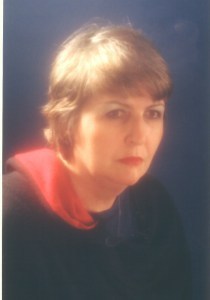
Jean Collen: writer, editor and proof-reader
Although I spent most of my life as a musician and teacher of classical singing and piano, I have always enjoyed writing. After reading a book by E. M. Delafield, entitled Diary of a Provincial Lady I began keeping a diary in the same style when I was in Form 4 (Grade 11) at Jeppe High School for Girls, Kensington, Johannesburg, aged about 15.
In the 1970′s I did a BA degree, majoring in History and History of Music, and obtained a distinction in the latter course. At the same time I began writing my first novel, I Can't Forget You. I completed a BA (Honours) in History in 1982. In the early nineties I decided to do a third major in English. All these qualifications were obtained at the University of South Africa (UNISA).
After the death of Anne Ziegler in 2003, I wrote a book about my association with her and Webster Booth, entitled Sweethearts of Song: A Personal Memoir of Anne Ziegler and Webster Booth. After the publication of this book in 2006, I wrote further books about Anne and Webster, polished my novel, I Can't Forget You, which had remained in a drawer since the late 1970′s, and published a volume of short stories, entitled The Song is Ended & Other Stories.
I retired from my position as Musical Director at St Andrew's Church, Kensington in 2005 and recently retired from teaching singing and piano, which gave me more time to concentrate on writing, proof-reading and editing.
I live in Johannesburg with my husband, Errol Collen, a writer, translator (English/Afrikaans), editor and proof-reader who holds an MA degree (cum laude) in linguistics from UNISA (1980). He has had nearly forty years of experience as a language practitioner. See his website at: ERROL COLLEN – TRANSLATOR
On Facebook: ERROL COLLEN – TRANSLATOR
Errol Collen

Writer, translator, editor, proof-reader
We accept International payments via PayPal and and South African payments by bank transfer.
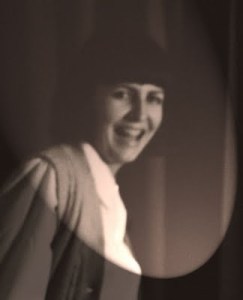
This blog also advertises books I have written and published on http://www.lulu.com/duettists If you live in South Africa I can supply these books in ring-binding at cheaper price.
I began my singing studies with famous British duettists Anne Ziegler and Webster Booth, when I was seventeen. Two years later they asked me to act as studio accompanist for Webster, when Anne – who usually accompanied the students – had other commitments. I completed the ATCL and LTCL singing diplomas with Anne and Webster and remained friends with them until their deaths.
When I was living in the UK I completed the LTCL diploma in piano at Trinity College in 1968.
I appeared in concerts, musicals and operas in South Africa and the UK and have taught singing and piano for many years. I recently retired as musical director at a local Anglican Church after thirteen years.
I wrote a first draft of my novel, I Can't Forget You in 1977 and only recently edited it and published it on Lulu. Currently I am retired from teaching singing and piano but I continue to write. I have done my best to promote the names and voices of Anne Ziegler and Webster Booth on the internet. Read more about the lives and careers of Anne and Webster on my blog:
http://ziegler-booth.blogspot.com
Look and listen to my uploaded videos featuring Anne and Webster on my Duettists Channel at
http://www.youtube.com/duettists
I run the WEBSTER BOOTH-ANNE ZIEGLER YAHOO GROUP at: http://uk.groups.yahoo.com/group/booth-ziegler

Click to join booth-ziegler
.







Placido Domingo signs a record contract with Sony.
I was most interested to read in the Australian based Limelight magazine that Placido Domingo had signed an exclusive record contract with Sony at the age of 70. I made the following comment on the matter:
My Comment:
This is excellent news. I hope that Placido Domingo will have a chance to record as much of the baritone operatic repertoire as possible while his voice is still in good shape. It is rare for a tenor to change to baritone at this late stage of his career, but Domingo always had a baritonal quality in his tenor voice, so I am delighted that he is able to carry on his stellar singing career at a time when most singers have retired.







Working from home or working for a boss?
Georgina Guedes wrote an article about working from home on News 24 today called Working From Home Truths. She pointed out the unseen disadvantages of working from home, although at the end of the article said that she still prefers the independence of being her own boos as a freelancer rather than going out to work for a company and be answerable to a boss. I made the following comment:
This is an excellent article and certainly highlights many of the pitfalls of working from home. I would add the uncertainty of a steady salary and the fact that no matter how long you do regular work for a company, you are still a freelancer so you are not entitled to any benefits. The company is not even obliged to let you know if there is no further need of your services. They just don't bother contacting you again. Heaven help you if you go on holiday for a few weeks. You could find that your replacement freelancer has taken over all your work while you were away!