Jean Collen's Blog, page 26
December 30, 2012
MEMORIES OF KENSINGTON by Carol Billings (Guest Blogger)
I was very glad to receive this interesting article from Carol Billings. She too had grown up in Kensington and shares her memories of life in the suburb in this article. Jean Collen
MEMORIES OF KENSINGTON by CAROL BILLINGS
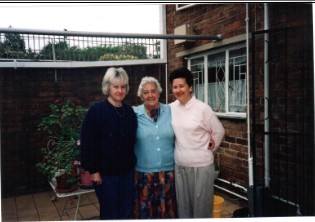
Taken in Benoni in 1998.
Alison Birch and Carol Billings with their mother (1998)My sister Alison Birch forwarded the link on ‟Kensington‶ to me, to read and to reminisce about, which both my husband and I did. I also passed it on to other people who have lived there, or in the surrounding suburbs, as we knew they would also enjoy reading your article. Growing up in Kensington in the 1950s and 1960s was certainly very special.
Our father’s parents lived in Apollonia Street in Fairview, and later moved to 80 Langermann Drive, which we see on Google Earth now houses a veterinary practice.
Our mother’s parents were originally from Rochdale in Lancashire and went to South Africa where they married in St. George’s Cathedral, Cape Town on the 9th December, 1908. Our uncle was born in Bloemfontein, and when granny was expecting our mother, she returned to the UK where she gave birth to her in Blackpool. They then returned to South Africa.
Grandfather had been working for British Railways, and worked for the South African Railways when they settled in South Africa. When they moved to Kensington, they lived at 33 Orwell Street.
Our mother did voluntary work for St. John’s Ambulance, and this is where she met our father. When World War Two was declared, our mother volunteered for the South African Military Nurses, and because she was still very young, our grandparents had to give their consent for her to do so. She started off nursing at Entabeni Hospital in Natal, and was then drafted to work in the desert at Quassein in Egypt. This work played a very important part in her life, and until her death in 1999 she was the secretary of the South African Military Nurses’ Association in Johannesburg. She returned to Egypt for the 50th Anniversary of the Battle of El Alamein Celebrations, and also went with the Association to Delville Wood in France for a Memorial Service.
Our parents married at St. Mary’s Cathedral, Johannesburg on the 24th January, 1948. Alison was born in April, 1949, and I was born in July, 1950, at the Marymount Maternity Home. This hospital is now a place for people suffering with Schizophrenia and Bi-Polar Disease. Sadly our father passed away in February, 1951, when I was only 7 months old. He had Rheumatic Fever when he was young, and this had weakened his heart. He was an Aeronautical Engineer, and lectured at the Johannesburg Technical College in Eloff Street.
Alison and I both attended Jeppe Preparatory School, and then went onto Jeppe Girls’ High.When our father passed away our grandparents sold their home in Orwell Street, and moved into our house at 152 Roberts Avenue. They looked after us during the day whilst mother went to work at Colgate Palmolive, where she remained for 39 Years.
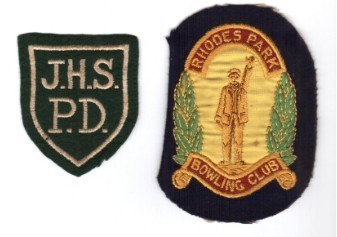
Badges
I recall vividly that Alison and I caught the tram to Jeppe Prep each morning, and returned on another one after school each day. As we got a bit older, we asked our grandparents for permission to join our friends in buying slap chips from the fish and chip shop in Fairview called Little Beaver, and we would walk home down Roberts Avenue together with our friends eating our chips.
Our blazer badges for Jeppe Prep had the letters JHSPD embroidered on them, and all the children in Kensington used to say, ‟Jolly Hot Sausages, Penny a Dozen!” Jeppe Prep was a wonderful school and the students all knew each other and supported each other. We participated in a lot of sports and other activities while we were there.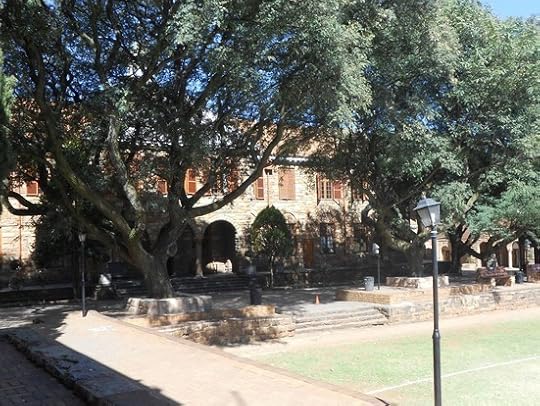
I left Jeppe Prep at the end of 1962, and sadly at this point, the girls went onto Jeppe Girls’ High, and the Boys to Jeppe Boys’ High. However we always supported our old school friends whenever there was a rugby match, or swimming gala. The girls would also go to the dances at the Jeppe Boys’ School, and vice versa. The Jeppe Boys High School had boarders and one of the houses for the boarders was called Tsessebe House. It was intended that the girls’ school would also have boarding facilities, but this plan never materialised.
At Jeppe Girls’ High, we wore a fancier blazer than at Jeppe Prep, and we were teased by many as it was black with white stripes and, as a result, we were often called the Zebras. Mother always used to complain as these blazers were very expensive because of the stripes, and we got them from McCullough and Bothwell. One of the ladies who made the Jeppe Girls’ dresses comes to mind: June Harris. June was also very involved at St. Andrew’s Church. At both schools the girls wore white panama hats in summer, and black felt hats in winter. The Jeppe Schools were incredibly proud of their uniforms, and I recall having very strict dress inspections on a regular basis. Your dress had to be so many inches above your knee, and heaven help you if it was too short!. We would always take off our belts, so that our dresses appeared slightly longer. Your hair had to be tidy, off your face, and tied back at all times.
I attended Jeppe Girls High from Standard 6 in 1963 until Standard 8 in 1965, and I then left and went on to the Johannesburg Commercial College in Johannesburg. There we wore a black and white small checked pleated skirt, with a black blazer, and a straw basher. When I left Jeppe 4 other girls joined me at the College, where we did a Commercial Matric.
When one speaks of Kensington, so many places and things come to mind.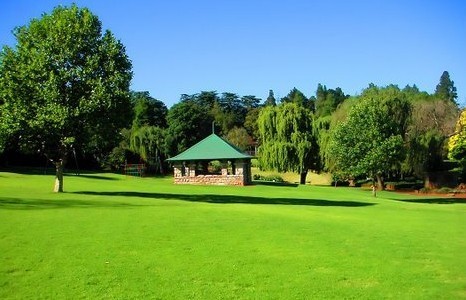
Rhodes Park was a really beautiful nature garden, and we used to go to the swimming pool often, as in those days most people did not have pools at home. Even the Jeppe girls used to go to do their swimming practice at that pool although I’m not quite sure why they did not use their own pool to practise for galas. When we were at Jeppe Prep we would go to Jeppe Boys High to swim, as the Prep did not have their own swimming pool at that time. At the weekend there were always lots of people visiting the park. There was equipment for children to play on, and one was able to walk around the beautiful gardens. They had horticulturists working permanently in the gardens of Rhodes Park. There was a bandstand, and on Sunday there were different bands playing there. Crowds sat on the lawns listening to the beautiful music.
We often watched the baseball games there. There was a physically disabled man, whom everyone called Coach, and there were two families of boys from Kensington who did exceptionally well in baseball: the Tew brothers, and the Coulson brothers. There were also a lot of sand banks in the part, and children loved to bring cardboard boxes to the part, and slide down these embankments.
There was a bowling green, and our grandfather was a member of the club. We always attended the club’s Christmas parties which were fantastic. I had a friend who was a member of the Rhodes Park Tennis club so I would often play on those courts with her, and in turn she would come to the tennis club in Juno Street where my sister and I were members. I had another friend whose parents were members at the Fotheringham Park Club in Malvern, and again I would go with them, and she would come with me to my club.
Every Christmas a Carol Concert would be held in Rhodes Park. One year the Reverend Risdon from St Andrew’s was so busy directing the music and getting everyone to sing that he nearly fell into the fish pond! I fondly recall all the candle lights, and the stunning sound of all the Christmas Carols, echoing throughout Rhodes Park.
The tearoom in Rhodes Park was another firm favourite with us, and their cream scones and tea were a real treat. At one stage the Arnold Family ran the tearoom. The tearoom was also a very popular venue for wedding receptions. There were always brides having their photos taken in the park, particularly around the fish pond. My late mother-in-law was a dressmaker, and wedding-dress specialist. They lived in Ocean Street and she made many dresses for Kensington brides.
We used to visit the Library at Rhodes Park a lot too. Not only did we take out books to read, but we spent many hours there doing projects for school. One always found a friend there also busy working on a project.
We attended St. Andrew’s Anglican Church. The church had a very high steeple, and the children always loved climbing up the stairs to the very top. The church bells were rung regularly. On Friday afternoon there was a Youth Club at St. Andrews, and many children from Kensington attended the club even if they were not members the church.

The cross on St Andrew’s Church, Ocean Street, Kensington.
In those days the Mayor of Johannesburg, Mr Atwell and his family, lived in Ocean Street. On Shrove Tuesday, we would also go up to a church in Malvern, and we would have ‟Pancake Races‶ in the street.
Kensington also had numerous Cubs, Brownies, Girl Guides and Boy Scouts packs at different venues. My sister and I were Guides with the 26th Johannesburg Pack, and we used to have our weekly meetings in the church grounds in Onyx Street.
Nels Rust was the dairy situated in Bez Valley, and they did deliveries to all the houses with horse-drawn carts. Milk and orange juice were still delivered in glass bottles. Fotheringham’s Bakery at the top of Marathon Street did home-deliveries of bread. Some men rode around the suburb on oxwagon, selling fruit and, while others rode bicycles selling green mielies, and shouting ‟Green Mielies‶ as they rode along.
The Kensington Castle was well-known in Kensington and was a private residence. The Kensington Hall was another historical building. At one stage the Foster Gang hid in the koppies in Kensington near there.
At the bottom of Protea Street, a block of residential flats, called Astra House, were erected for war veterans as homes for when they returned from the war to civilian life. We moved to these flats after our grandparents passed away. We were able to rent a flat in this complex because mother had nursed with the S.A.Military Nurses during the war. Shortly after we moved there, construction work was started on the Strathyre Girls Home for the Salvation Army next door to Astra House. The Jukskei River was also situated at the bottom of Protea Street, creating a border between Kensington and Cyrildene.
There were numerous well-known businesses in and around Kensington in those days – Marie Distiller’s hairdresser in Fairview, Dave and Johan’s for hair in Bez-Valley, Dolly’s Hats in Bez Valley, to name but a few. My sister remembered a few businesses at the Lancaster Shopping Centre, opposite Jeppe Girls’ High.The butchery was originally owned by three brothers, but later only by one brother – Brian Gungarine and his wife Dawn. My husband’s late brother René and his friend Dudley actually worked in this butchery.
Dr. Yudelman was a very well-known dentist, who practised in Kensington for many years. When we last heard he was still working and his son had joined the practice.
After leaving Johannesburg Commercial College, I started working for the Schlesinger Organisation in Braamfontein. They were situated in the very modern glass, coffin-shaped building at the top of Rissik Street, overlooking Johannesburg Station. My office was on the 20th floor of this Building, and I had stunning views of Johannesburg from my window. Mr I.W. Schlesinger had begun the Schlesinger Organisation in Johannesburg, and his son John, and his two cousins Sylvan and Julian, and another two directors Aubrey Harmel and Manfred Moross took over the running of the Organisation in later years. Schlesinger Organisation owned a lot of the cinemas and theatres in Johannesburg.
The Academy Theatre was at the top of Rissik Street and we used to love going to watch live shows there, starring wonderful actors like Rex Garner. Talented musical artists visited South Africa in the 1960s, such as the Everley Brothers, Demis Roussos, B.J. Thomas, Francoise Hardy, The Kinks, The Seekers, Johnny Mathis and Max Bygraves. South Africa also had very good local artists, and we enjoyed watching their shows too. Des and Dawn Linberg, 4 Jacks and a Jill, The Bats, The Staccatos, and the Dealians come to mind. When we were young we went to restaurants where we could dance, such as The 252 Tavern, Ciros where the Bats often played, Archies in Hillbrow and the Criterion in Benoni, to name but a few.
On a Sunday we often went to a resort at Van Wyks Rust to watch the talent show there. Well-known South African musicians, such as Dennis ‟The Cat”, Dennis McLean, Gene Rockwell, and Jody Wayne often appeared there.
We were married at St. Andrew’s Church in November, 1969, and both our children, Byrone and Lauren, were christened in St. Andrew’s Church.
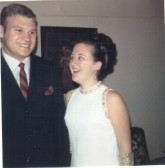
Photograph taken at a friend’s wedding in 1969.
My husband Peter and his family lived on the corner of Protea Street, and Cumberland Road. He attended Kensington South School, and then went onto Queens High School, which was still situated on Langermann Drive. In later years that school became part of the Military and the new Queens High was built at the bottom of Queens Street towardsCyrildene. When Peter left Queens High he studied at the Witwatersrand Technical College in Smit Street, Braamfontein, where he qualified as a Master Butcher and Polony Maker.
We live in Cape Town now, but still have family on the Billings’ side who live in Derby Road, next to Leicester Road School, and when we visit Johannesburg, which is sadly not that often, we pop in to say hello, and we find that Kensington is still a very sought-after and beautiful suburb of Johannesburg.
Carol Billings (Guest Blogger)


December 24, 2012
“WEBSTER BOOTH” by Ane Madisyn
I was amazed to see this book on auction on EBay this evening. The description states, “Please note that the content of this book primarily consists of articles available from Wikipedia or other free sources online.” The description continues with part of my Wikipedia article! Webster Booth
While I understand that my Wikipedia article is an open source document, I hold copyright on everything I have written in my blogs, here and at http://ziegler-booth.blogspot.com This person has obviously copied all my material! My only consolation is that she wants $55 for a 92 page book. My most expensive book, A Scattered Garland: Gleanings from the Lives of Webster Booth and Anne Ziegler, available at: LULU containing over 400 pages, sells for £14!
http://cgi.ebay.com/ws/eBayISAPI.dll?ViewItem&item=350677479948&ssPageName=ADME:B:SS:US:1123


December 22, 2012
A Scattered Garland: Gleanings from the Lives of Webster Booth and Anne Ziegler – compiled and edited by Jean Collen
By Jean Collen View this Author’s Spotlight
I have updated and enlarged my book, A Scattered Garland. It is available in print and as an ebook at Lulu.
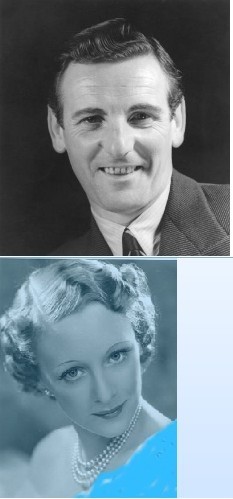
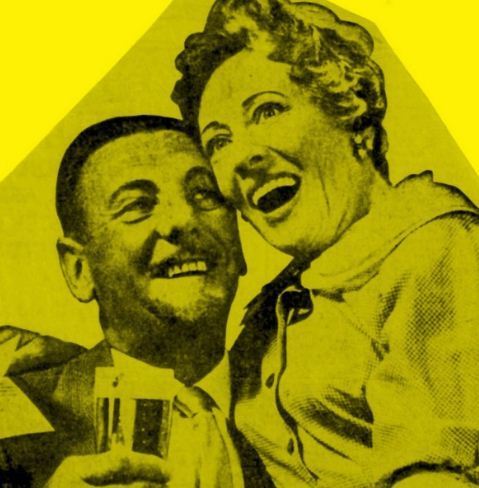
The book is a compilation of newspaper snippets, articles and criticisms, taken from a wide variety of sources, interspersed with my own comments expanding on particular events.
Although the book is primarily an informal reference work rather than a story or biography, it shows the progress of Anne and Webster’s careers. It gives an interesting picture of the early career of Webster Booth after he left the D’Oyly Carte Company before he was firmly established on the road to success.
[image error]
Author of “A Scattered Garland”.
Jean Collen – author and compiler.
Leslie Webster Booth was born on 21 January 1902, the youngest son of Edwin and Sarah Booth (née Webster) of 157 Soho Road, Handsworth, Staffordshire. His father was a ladies’ hairdresser and his mother, born in Chilvers Coton in the Nuneaton district, was the daughter of John and Hannah Webster, silk weavers,who later became school teachers when the silk trade collapsed.
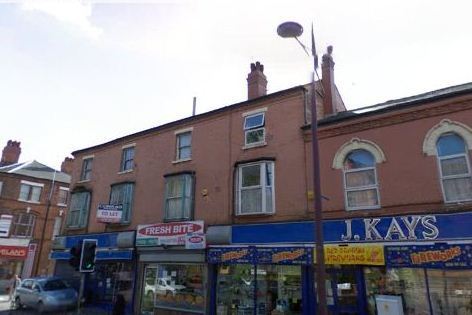
Birthplace of Webster Booth.
157 Soho Road, Handsworth as it is today. The family lived in the two upper storeys above the hairdressing shop.
Leslie Webster Booth as a young man
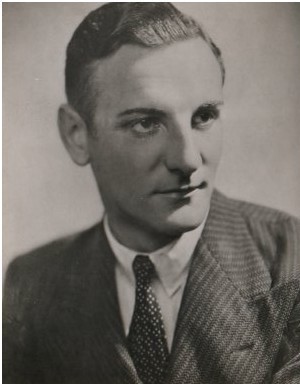
.
Leslie Webster Booth as a young man in the Buster Keaton film, The Invader.
[image error]
In the Buster Keaton film, “The Invader” (1934)

Webster Booth’s home in 1927. Photo: Mike Collen
43 Prospect Road, Moseley (Photo: Mike Collen) The home of Webster Booth in 1927.
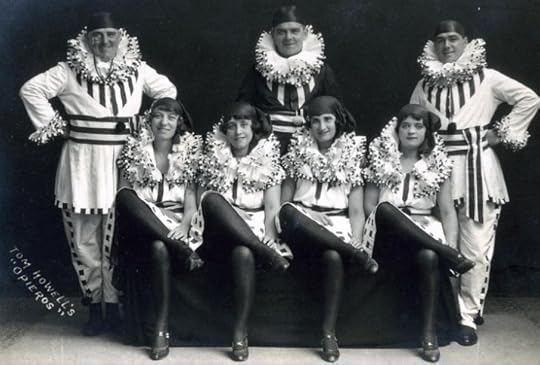
The Opieros before Webster Booth joined them in 1927/
The Opieros with Welsh baritone Tom Howell in the middle of the group. Anita Edwards (soprano) is top right. This photo was taken before Webster Booth joined the Opieros in 1927.
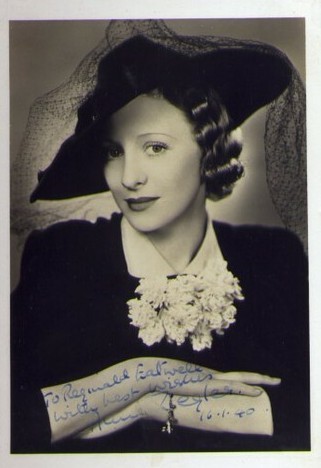
Irené Frances Eastwood (Anne Ziegler) was born on 22 June 1910, the youngest child of Ernest and Eliza Frances Eastwood (née Doyle) of 13 Marmion Road, Sefton Park, Liverpool. Her father was a cotton broker, and her mother, born in Bootle, was the daughter of James and Elizabeth Doyle. James was an architect, who designed the Grand Hotel, Llandudno.
Irené’s father lost most of his money during the cotton slump of the early thirties so Irené went to London to find theatrical work to support herself and help her struggling family. She took “Anne Ziegler” as a stage name when she signed a contract to appear in the musical play, By Appointment.
Marmion Road, Sefton Park, Liverpool as it is today.
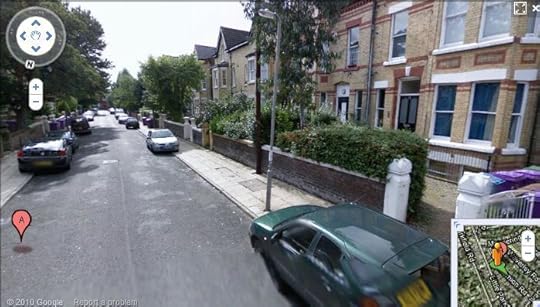
Anne Ziegler’s childhood home in Liverpool
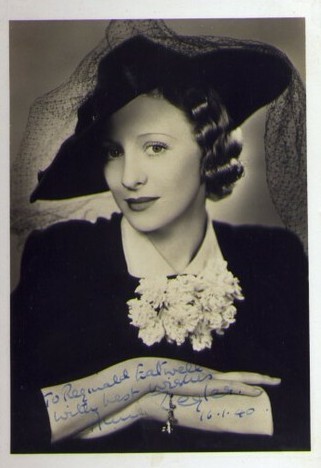
Anne Ziegler as a young woman.
The book also lists a variety of engagements of his second wife, Paddy Prior, who went on the stage as a dancer, comedienne and soubrette while still in her teens. When she and Webster married they undertook a number of joint engagements, but these ceased towards the end of 1936 when their marriage broke down because of his relationship with Anne Ziegler.
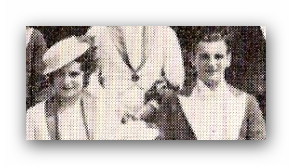
Paddy Prior and Webster Booth in 1933 – Scarborough
Paddy Prior and Webster Booth (1933)

Stage advert (1920s)
Webster and Anne went on to attain international fame, while Paddy’s career remained static. She was a competent and talented performer and was rarely out of work, but she did not progress beyond after-dinner engagements, musicals, pantomime, concert party and occasional radio and television broadcasts.
Webster was not eligible for military service during the war. He and Anne reached the height of their fame during the war on the Variety Circuit and in several lavish musicals and films, while Paddy worked for ENSA and entertained at home and in the Middle East. She and her friend, Bettie Bucknelle left for Australia in 1948. Paddy’s brother Hubert had settled in Sydney, so presumably she went to Australia to join him. Although Bettie Bucknelle sang on Australian radio and was a regular vocalist with Jay Wilbur’s band, I have been unable to find any details of Paddy Prior’s work in Australia.
The compilation covers Anne and Webster’s musical and theatrical ventures from Webster’s first professional engagement with D’Oyly Carte in the early nineteen-twenties to Anne’s final broadcast towards the end of the century. The book is over 400 pages in length and is liberally illustrated.
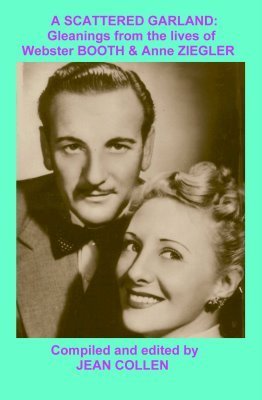
Compiled and edited by Jean Collen
Buy a print copy of the book for £14.00 at the following link: Print copy: A Scattered Garland

EBook version of this book.
Download the EBook for £6.00 at the following link:
EBook copy of A Scattered Garland


December 19, 2012
BOOK TASTER: A SCATTERED GARLAND
The book is a compilation of newspaper snippets, articles and criticisms, taken from a wide variety of sources, interspersed with my own comments expanding on particular events.
Although the book is primarily an informal reference work rather than a story or biography, it shows the progress of Anne and Webster’s careers. It gives an interesting picture of the early career of Webster Booth after he left the D’Oyly Carte Company before he was firmly established on the road to success.
It also lists a variety of engagements of his second wife, Paddy Prior, who went on the stage as a dancer, comedienne and soubrette while still in her teens. When she and Webster married they undertook a number of joint engagements, but these ceased towards the end of 1936 when their marriage broke down because of his relationship with Anne Ziegler.
Paddy Prior and Webster Booth (1933)
Below: One of Paddy’s advertisements in The Stage (1920s)

Webster and Anne went on to attain international fame, while Paddy’s career remained static. She was a competent and talented performer and was rarely out of work, but she did not progress beyond after-dinner engagements, musicals, pantomime, concert party and occasional radio and television broadcasts.
Webster was born in 1902 so was not eligible for military service during the war. He and Anne reached the height of their fame during the war on the Variety Circuit and in several lavish musicals and films, while Paddy worked for ENSA and entertained at home and in the Middle East. She and her friend, Bettie Bucknelle left for Australia in 1948. Paddy’s brother Hubert had settled in Sydney, so presumably she went to Australia to join him. Although Bettie Bucknelle sang on Australian radio and was a regular vocalist with Jay Wilbur’s band, I have been unable to find any details of Paddy Prior’s work in Australia.
The compilation covers Anne and Webster’s musical and theatrical ventures from Webster’s first professional engagement with D’Oyly Carte in the early nineteen-twenties to Anne’s final broadcast towards the end of the century. The book is over 400 pages in length and is liberally illustrated.
Leslie Webster Booth was born on 21 January 1902, the youngest son of Edwin and Sarah Booth (née Webster) of 157 Soho Road, Handsworth, Staffordshire. His father was a ladies’ hairdresser and his mother, born in Chilvers Coton in the Nuneaton district, was the daughter of John and Hannah Webster, silk weavers,who later became school teachers when the silk trade collapsed.
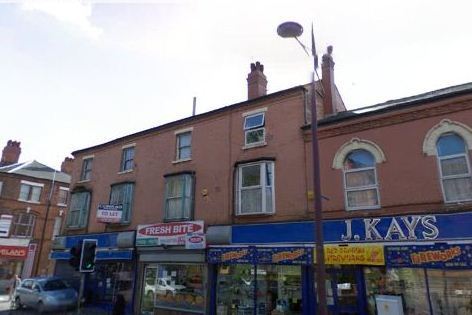
157 Soho Road, Handsworth as it is today. The family lived in the two upper storeys above the hairdressing shop.
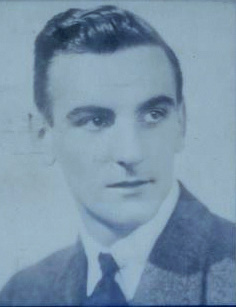
Leslie Webster Booth as a young man
.
Irené Frances Eastwood (Anne Ziegler) was born on 22 June 1910, the youngest child of Ernest and Eliza Frances Eastwood (née Doyle) of 13 Marmion Road, Sefton Park, Liverpool. Her father was a cotton broker, and her mother, born in Bootle, was the daughter of James and Elizabeth Doyle. James was an architect, who designed the Grand Hotel, Llandudno.
Irené’s father lost most of his money during the cotton slump of the early thirties so Irené went to London to find theatrical work to support herself and help her struggling family. She took “Anne Ziegler” as a stage name when she signed a contract to appear in the musical play, By Appointment.
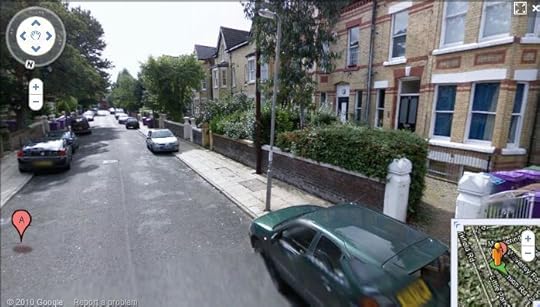
Marmion Road, Sefton Park, Liverpool as it is today.
Anne Ziegler as a young woman.
1923-1927 – Webster Booth made his professional stage debut with the D’Oyly Carte Company at the Theatre Royal, Brighton on September 9th 1923 as a yeoman in The Yeomen of the Guard and remained with the company for four and a half years. While he was with the company he sang in the chorus, played small parts and understudied leading tenor roles. Eventually he realised that, despite his remarkable voice, the only way he would advance was if he remained in the company long enough to “fill dead men’s shoes”. While with D’Oyly Carte he appeared in the chorus of a silent film of TheMikado in 1926 and went on the company’s tour of Canada in 1926/1927. Webster was known by his birth name, Leslie Booth, but after he left the company he soon adopted the stage name of Webster (his middle name and his mother, Sarah’s maiden name) Booth.
Print copy:

EBook version of this book.


December 4, 2012
Book Reviews
 A Week in Winter by Maeve Binchy
My rating: 4 of 5 stars
This is the last book Maeve Binchy wrote before her death. I own all her books and am very sorry that I will no longer receive a new Maeve Binchy for Christmas. This book is about the various guests who spend a “Week in Winter” at Chicky’s newly-established hotel situated in a remote area on the West coast of Ireland. All the guests arrive with a variety of problems to solve, and most of them benefit from their stay at the Stone House, where the only leisure activities are walking and bird watching.
Maeve Binchy’s writing is as warm and gentle as ever, and she succeeds in creating each character in her book so that one’s interest is held in their history. I recommend this book to anyone who wants to read a satisfying yet undemanding book during the holiday season and beyond.
 The Time of Our Lives by Imogen Parker
My rating: 4 of 5 stars
I had nearly finished this book before I realised that many of the characters from the Palace Hotel of Kingshaven were every day versions of prominent members of the Royal Family! I won’t tell you anything more about this, but it should increase your interest in the book if you work out who these characters represent as you read.
What put me off the scent was because I thought Michael Quinn, his wife and young lover were the central characters of the story although they have no connections with Royalty at all!
Imogen Parker’s book commences at the time of the Coronation in 1953 and the first volume ends at the time of the moon-landing in 1969. Each chapter tells of events in a particular year, so there is not much close cohesion in the plot of the novel.
Imogen Parker writes fluently and the novel certainly held my interest throughout this long novel (543 pages). This is the first part of a trilogy and I look forward to reading the next two novels in the series.
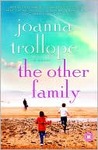 The Other Family by Joanna Trollope
My rating: 4 of 5 stars
I am always amazed at how well Joanna Trollope creates her varied settings in her novels – in this case, the North East of England,from where the recently dead musician Richie originated. Richie lived and worked in the North East with his first wife and son, then left them abruptly to go off to London with a younger woman, with whom he had three daughters. The northern and southern families are devastated by his sudden death and each one finds it difficult to move on with life without the presence (or absence) of likeable, but thoughtless Richie.
The book deals with the different ways in which members of both families handle the forced and unforced changes to their lives as a result of Richie’s death. As usual, the book is extremely well written and held my interest from beginning to end.
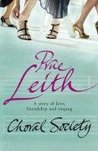 Choral Society by Prue Leith
My rating: 2 of 5 stars
The book is entitled “Choral Society”. This book is formulaic. Three women meet in a choral group. At the beginning of the book each woman has a short-coming. By the end of the book they have resolved their problems in one way or another.
As a musician who has conducted several choirs in my career I thought this book would be of interest to me. Admittedly the three main characters meet because they join a choral group, but the book deals with their separate lives and we hardly hear much about the choral society at all, except that the scratch group starts off singing Gospel songs and later is rehearsing for a performance of “Messiah”.
I have the impression that the three women are extensions of Prue Leith herself. One is a food-writer and, as in previous novels, there is far too much about cooking methods and ingredients, and descriptions of the meals the various characters eat. There are also too many details about the clothes they wear and the names of contemporary dress designers. There is even a very detailed description about a medical procedure to remove excess fluid from one of the character’s knees!
Prue Leith might have had a different editor for this book than for her earlier novels. How could the editor have overlooked so much slang, clichés, and a whopper about “the laird in the manse” which upset my Scottish sensibilities. Doesn’t everybody know that a minister inhabits a manse? What was a laird doing there?
Admittedly there was a performance of “Messiah” towards the end of the book, but it appeared to be done by chorus only without any mention of soloists. Her nebulous description of this performance reminded me of a description of a performance by a string quartet in one of Mary Wesley’s books. When she mentioned a conductor of the said quartet, I refused to go on reading it.
After the disappointment of this book I doubt whether I’ll be buying any more of Prue Leith fiction, although my cooking might benefit from reading one of her cookery books!
 The Soldier’s Wife by Joanna Trollope
My rating: 4 of 5 stars
Another excellent novel by Joanna Trollope. In this novel she examines the difficulties faced by soldiers returning from a dangerous tour of duty in Afghanistan. One would imagine that reunions with wives and families at home would be joyous for everyone concerned, but in this novel, this is not the case.
Joanna Trollope explores the difficulties faced by soldiers and the families who have waited to welcome them at home. In this day and age it is not enough for many soldiers’ wives to be home-makers, living for the day their husbands return safely. Some are highly educated and feel frustrated that the successful careers they enjoyed before marrying into the military cannot be fulfilled.
As in most of her other novels, Joanna Trollope manages to examine these problems with sympathy for all concerned. I need not add that she writes beautifully and creates well-rounded and distinctive characters in a few paragraphs. This is a very satisfying novel and I recommend it.
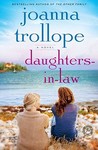 Daughters-in-Law by Joanna Trollope
My rating: 4 of 5 stars
I have enjoyed most of Joanna Trollope’s novels and this one is no exception. She has an excellent writing style and is always entertaining. She is at her best describing the dynamics of family relationships and excels in defining each character clearly and laying bear the niggling tensions between family members.
In this novel the parents of three sons, each married to a very different woman, try to play too large a role in their sons’ lives, as well as in the lives of their families. The plot shows how the sons eventually manage to cut their parents’ apron strings and take their place in the adult world. After reading this book I am not struck by the dramatic significance of each twist and turn of the plot, but by the subtle nuances of it.
 Relish – My Life on a Plate by Prue Leith
My rating: 4 of 5 stars
I have just finished reading Prue Leith’s lively autobiography and I enjoyed it very much. I am not particularly interested in cookery, but I have fond memories of seeing Prue Leith’s mother, the brilliant South African actress, Margaret Inglis in “Separate Tables” when my family and I were on holiday in Durban in 1957.
Prue Leith is four years older than me and grew up in South Africa so we shared similar childhood experiences. I found the account of her early years in South Africa, and later years in France and the UK fascinating. With most autobiographies and biographies, the years of struggle are usually far more interesting than the years of success, as the successful years often amount to no more than a brag-list of achievements and awards.
Although Prue Leith discussed her many achievements, her story held my interest to the end of the book, as her personality and humanity shine through in her writing. Despite success, fame and riches, Prue suffered her fair share of setbacks and she does not skim over the setbacks as others embarking on writing the story of their lives might have done.
Not only did Prue succeed as a cook and caterer, but she has published a number of novels in the later part of her life. I have only read one of them but intend to read the others in due course.
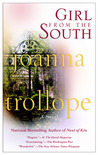 Girl from the South by Joanna Trollope
My rating: 3 of 5 stars
I did not enjoy this book quite as much as I enjoyed many other Joanna Trollope novels I have read. Perhaps it was because it was partly set in Charleston in South Carolina, and all the other novels have typically English settings with restrained English characters. I thought the author handled the American characters very well and created the atmosphere of the South very well, but, perhaps because I am set in my ways and thought I knew what to expect from Joanna Trollope, I would have preferred another Aga-Saga!
View all my reviews Death Comes to Pemberley by P.D. James
My rating: 4 of 5 stars
I thought that P.D. James captured the style and mood of Jane Austen’s writing in this book. She assumes that one has a thorough knowledge and understanding of “Pride and Prejudice” as she makes many references to Jane Austen’s book and even introduces characters from “Emma” towards the end of the book. The plot of “Death Comes to Pemberley” was slow-moving as one might have expected in a Jane Austen novel which concerned the minutae of the every-day life of the gentry; nearly three quarter’s of this book is taken up with the happenings of several days, seen from the points of view of the characters concerned in the murder. This necessitated a great deal of repetition of the events.
Jane Austen would probably never have concerned herself with something as distasteful as a murder, while P.D. James had to limit herself to a rather unremarkable murder mystery, quite different from the complicated modern mysteries she has written previously. After the mystery was solved I found the epilogue redundant to the plot. Why did Darcy and Elizabeth have to spend considerable time explaining to each other exactly why they acted as they did in “Pride and Prejudice”?
I enjoyed the book and admired P.D James ability to write in the style of Jane Austen, but I hope she continues to write classic murder mysteries and doesn’t repeat the Jane Austen experiment.
 Passenger to Frankfurt by Agatha Christie
My rating: 2 of 5 stars
This book by Agatha Christie was different from the murder mysteries. It was written in 1970 and reminded me of Buchan’s “Thirty-nine Steps”, in that it was an adventure story where the aims of the people involved were unclear to me, and therefore fairly meaningless. The best part of the book was the quotation by Jan Smuts preceding the story: “Leadership, besides being a great creative force, can be diabolical…” I thought that this quotation could be applied to quite a few diabolical leaders, past and present.
I waded through this book, hoping that I would eventually be gripped by this tortuous tale, but I’m afraid I gave it up when I was half way through. I am too old to waste time reading books which are uncongenial and meaningless to me. I am glad that Agatha Christie did not continue writing novels like this but returned to writing tales of the detective exploits of Hercule Poirot and Miss Marple in the few remaining years of her life.
 Love and War in London: A Woman’s Diary 1939-42 by Olivia Cockett
My rating: 4 of 5 stars
This book focuses on the wartime diary of Olivia Cockett, which she wrote for Mass Observation. It is edited by Robert Malcolmson. Olivia was 26 when war broke out and is a singular young woman in that she had been working in a clerical position since she was 17 and having an affair since that age with a married man in his thirties, whom she met at work.
Olivia is a very intelligent young woman who read widely. She was not afraid to tackle authors such as James Joyce, T.S. Eliot and Bertrand Russell and preferred serious music to the light music she heard on the radio. Her liberal outlook on life is the opposite to the conventional outlook of her Man. Because they were unable to marry – even their attempt for him to obtain a divorce goes wrong – she has had two illegal abortions before the war.
She describes routine and unusual events of her life during the war concisely and without emotion or self-pity. Once I became used to her style of writing I found the book a fascinating insight into the life of an ordinary, yet, in many ways extraordinary, young Londoner during the war. I would recommend it to anyone who is interested in civilian life at that time.
 Tulip Fever by Deborah Moggach
My rating: 3 of 5 stars
I have read nearly all Deborah Moggach’s novels and enjoyed them very much, but I put off reading “Tulip Fever” as it seemed very different from her modern novels. Apparently the book was inspired by various Dutch paintings which are shown in the book and is set in 17th century Amsterdam.
The plot is rather far-fetched, bordering on fantasy, quite unlike her other well-crafted modern novels. One has to suspend belief at the twists and turns of the plot and none of the characters are well-rounded. Perhaps she meant them to be as one-dimensional as the subjects featured in the paintings. Although there were references to streets in Amsterdam, Dutch phrases, Dutch names and characters whose main diet was herring, I did not get a rich sense of time or place in this novel.
I’m glad I read the book, but I do not think it is Deborah Moggach’s best novel and it might disappoint her admirers.

 Letters and Diaries of Kathleen Ferrier by Christopher Fifield
My rating: 4 of 5 stars
From 1949 to 1951 Anne Ziegler and Webster Booth lived at Frognal Cottage, Hampstead, opposite 2 Frognal Mansions, where Kathleen Ferrier lived. The Booths became friends with Kathleen when they met her walking on Hampstead Heath as they were out walking their Cairn terrier, Smoky. Webster had been booked to sing a Messiah with her in 1951, but they were both very disappointed when she had to cancel this performance because of her illness. I was singing much the same repertoire as Kathleen when I began studying with the Booths in 1961 and they often lent me her recordings from their own record collection. Thus, although Kathleen had died tragically young when I was a child, I always felt a close affinity with this wonderful woman with the unique contralto voice of the twentieth century.
I was rather disappointed to find that Kathleen Ferrier’s diaries were little more than concert dates, occasionally with brief remarks about how a particular engagement went. On reflection, she was working hard so would have had little time to write substantial diary entries at the end of a busy day.
The letters more than compensated for the brevity of the diaries. She wrote many business letters to keep her very busy career in order. While many singers might have longed for more engagements, Kathleen Ferrier was overwhelmed with offers, to the extent that she often had to turn engagements down and beg for a few days respite from her agent, Emmie Tillet. She could certainly never have undertaken such a demanding career had she been married with children. Her letters show that her extensive American tours in the late 1940s involved exhausting travel arrangements. She had to pay for her own advertising, travel, accompanist and accommodation on these tours, so she hardly made a fortune at £50 a concert.
Her affectionate, informal letters to her sister, Winifred, her father and other friends were always bright, self-deprecating and humorous. Her letters of thanks to acquaintances were always appreciative and polite. Even when she turned down songs which had been sent to her, or engagements she could not undertake, she did so in a kindly way.
Once again, it was sad to see her grave illness taking hold so that she eventually lacked health and strength to write her own letters and relied on her help-meet, Bernie to write on her behalf.
There is a good bibliography,an extensive index of works in Kathleen’s repertoire, another of places, venues and festivals, as well as a general index.
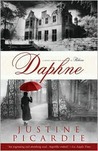
My rating: 4 of 5 stars
This was an interesting and unusual novel covering several strands: the narrator’s research into Daphne du Maurier’s work; Daphne du Maurier researching the Brontes in order to write a biography of Branwell Bronte; and Symington, the disgraced Bronte expert. I found it interesting how the author interwove fictional fact with the narrator’s own story, showing similarities between all the characters of her novel. It has encouraged me to reread my collection of du Maurier novels, and to look at Branwell Bronte in a new light. I would recommend this book as a well-written, gripping and unusual novel.
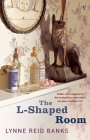 The L-Shaped Room by Lynne Reid Banks
My rating: 5 of 5 stars
This is one of my favourite books, which I read a few years after it was first published in 1960. It will be difficult for young readers to credit that fifty years ago it was considered a disgrace for a woman to have a baby out of wedlock and that her parents might disown her for doing so. The heroine of “The L-Shaped Room” even intends to keep her baby, which would have been unthinkable for most girls in 1960, when they were sent to homes for unmarried mothers and had their babies taken away from them at birth to be put up for adoption.
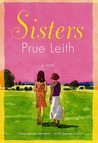 Sisters by Prue Leith
My rating: 4 of 5 stars
I bought this book a year or two ago and had initially given up reading it after a few pages. I decided to try it again recently and was pleasantly surprised to find that I enjoyed it very much. Perhaps some of my enjoyment stemmed from growing up in South Africa at much the same time as Prue Leith did herself and remembering her illustrious mother, the late Margaret Inglis, who was one of South Africa’s greatest actresses of her generation.
Prue Leith had many cookery books published in the earlier part of her life. In the comparatively new genre of novel-writing she is very competent and the book held my interest. Perhaps she might have considered giving the sisters in questions more distinctive names – Carrie and Poppy can easily be mixed up. Carrie is not entirely likeable for most of the book, but (as in the advice given in most writing courses)she changes for the better as the book progresses.
My only criticism is that Prue Leith spent too much time discussing the food the characters were eating – or cooking! I suppose this is understandable as she made a great name for herself as a cook and restaurant owner.
“Sisters” is not great literature but it is a very enjoyable novel. Now that I have read it I look forward to reading more novels by Prue Leith.
 The Middle Ground by Margaret Drabble
My rating: 2 of 5 stars
I am finding the book quite absorbing, although, since it was written in 1980, the feminist and political views expressed by the characters seem rather dated, in the light of hindsight. I expect they were considered quite unusual at the time. Later: I am afraid that as the book progressed I began to lose interest in the main character’s increasingly peculiar life, friends and acquaintances. I finished the book with difficulty and was very disappointed in it as Margaret Drabble has written some excellent novels and is usually one of my favourite authors. I fear this book is not in the same class as others she has written – or perhaps I lacked the intellect to enjoy it.

I have just read the fascinating story of three lively young South African girls who went to Europe in the 1960s to spend a year travelling from place to place without spending too much money on their travels. They made use of youth hostels and managed to go from one place to another by hitching rides. Admittedly they had strict rules about hitching so they never came to any harm. Somehow I don’t think it would be possible to do the same trip today as everything is so much more expensive and the South African Rand has diminished in value. The book is well-written and extensively illustrated. I recommend this book to anyone who would like to learn more about the girls’ fascinating European adventure all those years ago. The book is available in print and Kindle editions.


November 26, 2012
Pronunciation and phrases – PET HATES!
My latest pet hate is “to NOT”! Why are many respected South African writers and radio journalists using “to NOT”? The latest example of this appears in Times LIVE this very morning, “to not participate in a film”! Surely it should be “not to participate in a film”? One of my correspondents mentioned that he hears the same expression from friends living in the UK. Surely this expression makes habitual use of the dreaded split infinitive? Answers on a postcard (or on this page) please!
I was having a discussion about annoying expressions and mispronounced words with some of my Facebook friends yesterday. What set me off was hearing a newsreader on Talk Radio 702 refer to an envoy as an ONvoy. For some reason this appears to be the received pronunciation for the word on this radio station as I heard a senior and highly experienced newsreader using it later that evening. The Africa correspondent on the station is guilty of pronouncing envoy as ONvoy and irrevocably as irreVOCably. He is an experienced journalist and old enough to know better!
As a classical musician I am disturbed at the way some announcers mispronounce the names of composers, soloists and works when they advertise a symphony concert. Someone who gives the impression of being highly cultured and literary made an idiot of herself pronouncing the name of the composer, Antonín Dvořák. Admittedly it might be a difficult name if she didn’t know how to pronounce it, but she should have done her homework before she read the ad on the air.
Various broadcasters, who should know better, freely make use of the following pronunciations: EELectricity, CAMbridge, CaTAGory, EuROWPean, IrreVOCable, instead of electricity, Camebridge, category, EuroPEAN and irrevocable. In the bad old days in South Africa, pre-1994, the English Service of the South African Broadcasting Corporation employed a language adviser, so if ever there was any doubt about how a word should be pronounced, she was there to help, and if she heard someone mispronounce a word, she was there to criticise and correct! Perhaps South African radio stations should consider employing such a person today before their supremely self-confident broadcasters mangle the English language any further.
Surely broadcasters should set an example to others with regards to correct pronunciation. English is not the first language of the majority of people living in South Africa, so they should not be misled by hearing bad pronunciation on the radio.
Irritating expressions:
At this moment in time – instead of now, or even at the moment
For free – Why not use free or for nothing?
At grass roots level
On the ground
Basically
Paradigm shift
I speak under correction
Have you any pet hates? Please let me know and I’ll add them here.


November 5, 2012
MY PARENTS: MARGARET MCPHAIL KYLE AND DAVID MCINTYRE CAMPBELL
My parents: Margaret McPhail Kyle and David McIntyre Campbell

David McIntyre Campbell and Margaret McPhail Kyle
My mother was forty-two when I was born in a maternity hospital in Balshagray Road, Knightswood in Glasgow in the middle of the second world war. I was an only child, although a number of years before I was born my mother had given birth to a son who had only survived for a few hours. My first home was in Manor Road, Old Drumchapel, a pleasant mock tudor semi, with a fair-sized garden.

Manor Road, Old Drumchapel, Glasgow
My parents had travelled extensively before the war. Before the First World War, my father David had moved from Alexandria in the Vale of Leven to New York City with his mother, Effie (short for Euphemia) a children’s nurse. Her aunt Jeanie McGregor had emigrated to the States some years before, so my grandmother had a relative living in New York to give her support in her new life. For a time all went well. My father joined the Boys Brigade and started having violin lessons. I have a letter from Effie to her sister, Nellie in Falkirk, saying how much she enjoyed listening to him play.

Euphemia McIntyre Campbell and David McIntyre Campbell
Sadly, Effie developed cancer and was in and out of hospital. She died at the early age of 33. My father was twelve years old when he was orphaned and alone in a strange country. Aunt Jeanie was a spinster who had to work for a living, so she could not look after a young boy. It was decided that he should return to Effie’s married sister, Nellie, married to widower, Bob Balfour, who had a number of grown-up children.
Aunt Jeanie accompanied David back to Scotland in April 1915. They were due to sail on the Lusitania and went to the docks hoping to get a berth at the last minute. There was a big queue on the pier, each person hoping to get a passage back to Britain. After a long wait there were only a few ahead of them in the queue so they thought they would be lucky enough to be allotted a berth. To their dismay, they and the others remaining were turned away because the ship was full. They were told to return the following Friday to sail on the Transylvania.

Sinking of RMS Lusitania.
The Lusitania was sunk by a German torpedo off the coast of Ireland and over a thousand of the two thousand on board, including Van der Bilt the millionaire, lost their lives. David and Aunt Jeanie were given a berth the following week on the Transylvania. Luckily they had an uneventful voyage home on this ship and when they heard of the disaster, they were thankful they had escaped the disaster and possibly death.
I dare say it was a big task for Bob Balfour to take his young bereaved nephew by marriage into his home. He already had children, most of them older than David. Aunt Nellie, a woman much younger than Bob, was already in a precarious position as their step-mother. Bob’s children Elizabeth (Bessie), Christine (Chrissie), and John had not taken kindly to her taking their mother’s place in the home, and they took even less kindly to her young nephew being foisted on them. Aunt Nellie may have felt more sympathy and love for David, as her sister’s orphaned son, than for her resentful step-children, who were not much younger than her, but she had to treat them all with fairness and defer to the wishes of her husband.

Nellie and Bob Balfour about 1918
David was an intelligent boy. When the pain at the loss of his young mother subsided, and he had reverted with alacrity to a Scots accent to avoid teasing by his peers over his New York accent, he applied himself to his studies He was a good swimmer and harrier. He won a scholarship to Falkirk High School and it was decided that when he left school he would serve articles in a lawyer’s office. This was too much for the aggrieved children of Bob Balfour. They feared their father’s money would be used up if he had to support David through his law studies. There was no money for him to continue his violin lessons, but he enjoyed music and started to play the piano by ear. He could play all the popular tunes of the day after hearing them once or twice, but he always played them in the difficult key of D flat, on all the black notes.
By the time David was fifteen he could take the resentment of his step-cousins no longer. He decided to give up his dream of becoming a lawyer rather than depend on Uncle Bob’s charity. He always appreciated what Bob and Nellie did for him, but there remained a certain coldness between him and Bob’s children. He also had an Uncle Duncan McIntyre, his mother’s brother, whose son, was my father’s cousin George. My father had an austere and hard life because he was an orphan. George, on the other hand, was well cared for by his indulgent parents.

George McIntyre and his parents, Mary and Duncan
My father had a particular friend in Falkirk. My mother and I visited his aunt Minnie who taught music in Falkirk and had spent many years playing the piano in the local cinema for silent movies. She gave me a demonstration of the music used at particular junctures of the film. Another friend was ‘Fattie’ Cowan, whose father had something to do with Cowan’s toffee.
Instead of serving articles, he moved to Glasgow and was apprenticed to Cowlairs in Springburn, where great railway engines were built. At fifteen he moved into digs there and never returned to Falkirk for longer than a few day’s visit.
It was in Springburn where David met Margaret Kyle, a pretty girl with big blue eyes and auburn hair. She too had left school at fifteen to work as a cashier in the Cooperative Society. Being a cashier stood her in good stead. As long as I can remember she could calculate the total of items bought in a shop before the cashier had time to ring them up on the cash register. She had a younger brother, Bill. She was a lively popular girl, with a string of boys in pursuit of her at dances in the neighbourhood. Her parents, Jeanie and Alex Kyle had lived in Springburn most of their married life. Alex was a blacksmith’s hammerman. Jeanie was a lively Glasgow woman, a McGowan, from a big family of sisters. I particularly remember her sister, my Great-Aunt Charlotte Reid, who retired to a little cottage in Millport on the Clyde with her husband, Jock, and all my mother’s numerous cousins, Cathy Keelan and my second cousin, Jessie Reid, whom we visited periodically when we were in Scotland.

My mother is the pretty young woman towards the right of the photograph.
Alec was a keen member of the local Labour Party. My mother remembered him coming home from work and talking in revolutionary terms about the class system, workers’ rights, strikes, unusual for a gentle man like him. I remember him as a quiet kindly man with blue eyes. He was always keen on football. I think he might have played for Petershill when he was a young man.

My grandparents, Jane and Alec Kyle In Canada in the 1930s
My mother went to the socialist Sunday School in Springburn, where the hymns were not religious, but about things like ‘pie in the sky when you die’ to music of the hymn ‘The sweet bye and bye.’ When my mother was a young woman she met the Scottish grandees of the Labour party. The name I remember is Jimmy Maxton, with whom she danced at one of these gatherings in the Springburn Hall.
For some reason my mother Margaret and her family suddenly emigrated to Brisbane in Australia in 1921. Once again a branch of her family had already moved there. Aunt Ina Standfast, my mother’s cousin who was to be her bridesmaid at her wedding and numerous members of her family named Wilkie: (Tom and his daughter, Marion) lived in Ipswich, a small town near Brisbane.
My father completed his apprenticeship at Cowlairs in 1923 and must have been quite besotted with my mother, for he too decided to emigrate to Australia. As far as I remember he found a job with the railways and was stationed in Ipswich. He and my mother were married in Brisbane from the home, named Bishopbriggs, of Margaret’s parents in 1925. From the photographs it looks as though it was quite an elaborate wedding, complete with bridesmaids carrying shepherds crooks, my mother in a headdress reminsicent of the one worn by Elizabeth Bowes-Lyon at her wedding several years earlier.

Parents’ wedding in Brisbane 1925.
Everyone seemed to enjoy living in Australia. My father acquired a piebald pony called Tommy and rode him all over the place. I am not sure why they decided to return to Britain. It was obviously a lot easier to move from country to country then than it is today. They were not long in the UK before they went to Canada in the late twenties, possibly to escape the depression.
My father worked as an insurance agent for the Sun Life of Canada Insurance.

Agnes Mathieson production for Sun Life of Canada.
He had been offered a job in his trade, but had been told that they expected him to pass on information about the activities of the other employees. My father refused to act as a spy and turned the job down at a time when thousands were pounding the streets in the extremely cold weather, and depended on a meal at a soup-kitchen to keep body and soul together. In Toronto there were more cousins of my mothers, the Mathiesons. There is a picture of Agnes Mathieson, a formidable lady, noted as the producer of a play staged by ‘The Sunlife players’.
While they were all living in Canada they attended evening classes and met a number of radical intellectuals with communistic leanings, in a country where there were signs on the doors ‘No Jews, Scottish or Irish need apply’. Once again, the family seemed to be quite happy in Canada. They bought their first car, and there are pictures of my mother and friends on a summer holiday standing before their car, dressed in fashionable flowing trouser suits. There is also a photograph of Uncle Bill, my mother’s brother, looking very cold in the thick winter snow.

Uncle Bill Kyle in Canada.
When the rest of the family returned to Britain, Bill stayed on in Canada. He came over to Britain on the Queen Mary before the war and presented my grandmother with a caseful of dirty shirts to be laundered. Not long after his visit, he stopped writing home and, although my mother tried for years to find him again, she never did. My grandparents must have been deeply saddened by his disappearance, and my mother dreamt of making contact with him once again. Was he killed in the war or in a road accident? Had he taken offence with his family and deliberately ended all contact with them? Every attempt to trace my uncle failed, so the only image I have of him is as a pleasant young man, playing a football game in hot Australia, and standing in hat, scarf and overcoat, cold outside the door of his Canadian home.
My parents had attended workers’ educational classes in Toronto and continued this practice in Glasgow, where they met Naomi Mitcheson and James Barke. My father took up art when he was about forty and studied part time at the Glasgow School of Art. The teachers gave the part time students a full art training with much attention on anatomy and perspective. He became a very competent part time artist, doing many pencil drawings of friends, colleagues and family, with excellent likenesses. He also cut silhouettes and did a number of woodcarvings and plaster of paris works. He continued sketching people and doing self portraits virtually until the day he died.
When my parents returned from Canada they bought two general shops, selling groceries, sweets and fruit, one in Apsley Street, Partick, where my grandfather worked, the other in Springburn where my parents worked with the help of a ‘girl’. One of the ‘girls’ was called Helen and is pictured in a photograph with my father, showing the produce of the shop, neatly set out on the shelves, with prices marked by my mother in bold figures. As far as I remember the shops were sold shortly before the war, as my father had anticipated the outbreak of war and planned what he would do when war was declared.

Father and Helen in the shop in Springburn before the war.
My father was born in 1902 and tried vainly to volunteer for the navy. The powers that be decided that he should work in a reserved occupation, creating munitions for the war. He worked at night in Barr and Strouds, a place camouflaged as something more innocuous for fear of a bombing raid when a munitions factory would be a prime target. As a small child I imagined that he had worked for a Baron Strouds during the war.
I have no memory of how the war affected me, although my parents shared stories with me as I grew up. Mrs Agnes Woodhead was our neighbour in Old Drumchapel. She had a little girl, Annette, six years older than me. Mrs Woodhead’s husband and younger brother served in the home guard. On the night of the big German raid on Clydebank both were killed. My parents kept in touch with Agnes for many years, and I was delighted to meet her in 1990, still living in the same house in Manor Road forty-seven years after my birth. She married a Welsh cabinet maker some years after the war and became Agnes Harper. She had a second daughter, Moira who married Sandy. They in turn had two delightful daughters. When I visited them all in Glasgow they made me feel very welcome. After many moves in my life, it was good to think there was a family living in the same place who still remembered my birth and had fond memories of my parents.

Annette Woodhead (Wallace) aged 6.
I often wish we had stayed in my home country. I felt at ease there, as though I belonged. For the first five years of my life I had the same accent as everyone else. I was surrounded by loving parents, maternal grandparents, aunts and uncles, who referred to me admiringly as ‘wee Jean’. We had a player-piano at our home named Sunnyhurst, 3 Southview Terrace, Bishopbriggs, and I soon learnt to put the different piano rolls into it and do a fair mime of ‘playing’ it to the amazement of passers by who heard the music and thought there was a child genius at the piano.
Next door to Sunnyhurst was a delightful old widow, Mrs Renfrew. I can remember visiting her by myself and playing all kinds of games with her. My mother recalled going in to her house to fetch me to find us both jumping from the couch on to cushions on the floor!
My maternal grandparents came to stay with us and we moved to another house called Quarryknowe, Kirkintilloch Road, also in Bishopbriggs. Perhaps it was a bigger house to accommodate my grandparents. Like Sunnyhurst it was a bungalow with a nice garden. My father had ‘chuckies’, smooth white stones put on the path leading to the front door. I remember he had a fine oak bureau in one of the rooms where he sat long into the night doing his insurance books.

Kirkintilloch Road, Bishopbriggs.
My grandma was still a lively handsome woman who enjoyed going out to the pictures and the variety theatres. She had lots of friends and when I look at the photographs of her as a young woman I see that I resembled her more than I ever resembled my small blue-eyed mother, who took after her father, my grandpa, Alec Kyle. He was a gentle kind man with faded blue eyes and a balding head. He died of a heart attack when he was in his sixties as he was on the way home on a tram after watching a football match. Somehow all this drama was kept from me, although they were living with us at the time. I can’t remember being told that he had died and I certainly was not allowed to attend his funeral, although I had loved him very much.


October 29, 2012
LIFE IN KENSINGTON AND JOHANNESBURG FIFTY YEARS AGO
I was born in Scotland and lived on and off in the United Kingdom for some years as well as in other places in South Africa, but I have lived in the suburb of Kensington, Johannesburg for most of my life since 1957.
I came to South Africa from Scotland with my parents when I was five years old and spent my early years in Vanderbijl Park, a small town in the Vaal Triangle, where we knew most people. I cycled to the Vaal High School, coasting at speed down Faraday Boulevard in the morning and struggling uphill in the heat of the early afternoon.
In 1957 my parents made a sudden move to Johannesburg when my father was offered a job at Rogers-Jenkins with an old work colleague. The engineering company was situated in the Jeppe Dip of Main Street. Even in those days my parents were worried about the high crime rate in Johannesburg in comparison to our relatively crime-free small town. They put our furniture into storage and we lived at the Valmeidere Private Hotel in Roberts Avenue opposite Jeppe Boys’ High until we found somewhere permanent to live. I transferred to Form II (Grade 9) at Jeppe Girls’ High for the last term of that year. I was 13 years of age at the time the world was marvelling at the sight of Sputnik circling the earth each night.
My parents thought the roads in Kensington were far too busy for me to ride my bicycle to school, so I caught the tram instead. The tramlines were in the middle of the road, so I prayed that oncoming cars would slow down long enough to give me time to reach the tram and mount its steep iron steps. On the first day at my new school I dodged the oncoming traffic as I walked halfway into the middle of Roberts Avenue to board the tram, and clung to one of the overhanging leather straps as the tram hurtled unsteadily down Roberts Avenue towards my new school.
The conductor played a big part on the trip. He forced his way through the passengers to collect money for fares, giving tickets and change from the elaborate stainless steel machine attached around his neck with a leather strap, shouting, “Move further down the car,” to allow yet more people to squeeze into the tram on its peak-hour journey. “Hold tight, please! Move forward in the car. Kaartjies asseblief. All tickets please..” The ticket was to be guarded with one’s life in case the dreaded ticket inspector came on board. I didn’t know what the punishment would be if I lost my ticket, but I thought it must be jail at least, if not death by hanging.
In those days there was no such thing as off-the-shelf school dresses or gym slips. My mother had to buy material and take me to a recommended school dressmaker to be measured for my new uniform so I had to wear my Vaal High uniform until the new uniform was made. Girls in my new class eyed me curiously. One asked in hostile tones why I hadn’t gone to Queen’s High as the Vaal High uniform I wore was almost identical to that of Queen’s High. A kinder girl took pity on me and asked me to join her and her friends to eat my sandwiches with them at break.
On the first day I wore my brand new Jeppe Girls’ High School uniform, I carried my regulation panama hat adorned with a band in school colours. At the Vaal High, hats had not been a compulsory part of the uniform, although my mother had always insisted I should wear one to protect my pink and white Scottish complexion from the harsh sun of the Transvaal High Veld.
The only vacant seat on the tram that morning was next to a large, fierce-looking Jeppe girl who sported a severe pudding basin haircut under her hat. She had a prefect badge attached to the front of her green school dress. She glowered at me in disgust, seemingly at a loss for words. I summoned up a watery smile, hoping to break the ice.For some reason she was extremely annoyed with me and I had no idea why. Eventually she managed to speak through her rage.
“Why aren’t you wearing your hat? You are letting the school down. Put it on at once.”
“I’m new. It’s my first day wearing my uniform. I didn’t know I had to wear it,” I muttered, pulling the offending object onto my head, the elastic tight under my chin.
The girl softened slightly.
“If you weren’t new you would be in detention this afternoon, writing out two hundred lines. Never let me see you without it again.”
I learnt that it was a mortal sin to be seen without one’s hat at Jeppe Girls’ High! Apart from the fact that the girls don’t have to wear hats any more, uniforms of the Jeppe schools have not changed much in the last fifty years but they can be bought off the shelf now. The hard-working Kensington dressmakers of days gone by have long since vanished.
The red tram trundled on its way to school down the hill in Robert’s Avenue, past the suburban houses, interspersed with the Methodist Church on the right, the Kensington Hall on the left and the old low-rise, facebrick block of flats on the corner of Juno Street, which was used as an exterior shot on Egoli, M-Net’s erstwhile soapie.
Soon I was venturing further afield on the tram, even braving the trip to the crowded city on Saturday morning. Kensington remains much the same today as it was in 1957 with its neat suburban houses, the Jeppe Schools, the Kensington Clinic, known then as the Kensington Sanatorium and run by nuns, who later moved upmarket to the Kengray Clinic in Parktown, now renamed again as the Wits University Donald Gordon Medical Centre, the first private academic hospital in South Africa.
On the way to the city– “going into town” – the tram passed through the suburbs of Fairview and Jeppestown. Unlike Kensington these suburbs have changed in character over the years. In 1957 Jeppestown was made up of old run-down houses. Often the inhabitants could be seen sitting on their stoeps, which gave directly onto the Main Street pavement. Some of the people I could see from the tram were often in advanced stages of inebriation. Boys had their hair slicked back in the latest ducktail style, while girls had lips plastered with pale pink lipstick, and peroxided fringes and side burns. The residences of the Fairview Fire Station, where only the old tower remains today, looked respectable in the midst of the dilapidated houses.
Nearer town was a big Chinese grocery store called Yenson’s. People came from all over Johannesburg to shop at Yensons because things were very reasonably priced. Then the tram swept along its tracks on Main Street into the city centre with its smart shops, such as Ansteys, John Orrs and Stuttafords. Upmarket ladies of leisure from the suburbs, complete with matching hats, gloves, seamed stockings and hair newly set (sometimes blue-rinsed) whiled away their time, while their maids, gardeners and nannies kept their homes, gardens and offspring in pristine condition.

Pritchard Street, Johannesburg, looking towards John Orr’s Department Store (far right).
These matrons met their friends for morning tea in one of the big department stores. Starched tablecloths, silver cutlery, pleasing crockery and an attentive waiter who probably knew his clientele by name served them. They drank tea or coffee and selected fancy cakes from three-tiered revolving plates to the strains of a discreet pianist or Hammond/Lowry organist playing popular tunes of the day. They were further entertained with a dress show of the latest fashions on sale in the shop. The mannequins paraded round the tearoom, discreetly informing each table of the cost of these creations, which could be purchased in the dress department of the store.
Thrupps, the upmarket grocery store had a branch next to John Orr’s in Pritchard Street, so the ladies often rounded off their morning in town by calling in at Thrupps to discuss the cost and quality of the Stilton cheese with the grocers, and take some delicacy home as a treat for their hard-working husbands to round off their evening meal.
The centre of the city has probably changed in character more than any other part of Johannesburg. Many of the buildings remain, but they are used for different purposes today. The smart department stores have either closed or moved to shopping malls in the suburbs. The businesses which remain in the city have their solid security gates firmly locked at closing time. The city hall with its fine organ, was the venue for symphony and lunch-hour concerts fifty years ago. The symphony concerts are now presented at the Linder Auditorium in Parktown, and there are very few concerts held at the city hall these days. Even the fine central library has been closed for renovations recently. I wonder if it will every open again.

We moved into a flat in Samad Court at the corner of Queens Street and Langermann Drive. Samad Court is still here, but the flats were turned into offices some years ago. In the middle of 1958 we returned to the UK and when we came back my parents bought a house in Juno Street. We lived next to the tennis courts and bowling greens of the Kensington Club – I passed there the other day and it looks as though the tennis court next to our old house has disappeared. A half-built building has taken its place.

Our home in Kensington (1959)
Our house had a coal stove in the kitchen where the food was cooked and we had a coal fire in the sitting room so we were never cold in winter as we often are today when we are trying to cut down on electricity usage, and there’s a shortage of gas for heaters. Periodically we would have coal delivered to our cellar from Mac Phail’s, whose slogan was “Mac won’t Phail you”.
My mother had an account with the local butcher and Ford’s grocery store and she placed orders at these shops by phone. She had leisurely discussions with the butcher about the best cuts of meat, and with Mr Ford about the quality of his fruit and vegetables. These orders were delivered to the house, and a quart of milk arrived from the dairy early each morning, and a fresh loaf of bread with a tiny label stuck to it was delivered periodically by a local bakery.My closest friend at school was Daphne Darras, whose father owned the big plant nursery at the corner of Juno Street and Kitchener Avenue, the site of the Darras Shopping Centre today.

Jacaranda time in Juno Street.
There were two cinemas in Kensington in 1957 – the Regent in Langerman Drive where Kentucky Fried Chicken is today, and the Gem at the other side of Kensington, bordering Fairview. I remember seeing Julie Andrews in Mary Poppins at the Regent many decades ago.
My father took our dog for a walk every evening and sometimes he would walk to the library at Rhodes Park which was open until 8pm in those days. If he was still alive I don’t suppose he would risk taking these evening walks now.
Saturday mornings
On Saturday morning, the town was crammed with shoppers and cinema-goers. In 1957, girls wore wide skirts with starched hooped petticoats so it was a real crush walking along the pavement with all those skirts brushing against each other. Shoes with pointed toes and high thin heels made walking precarious, not to mention setting us up for corns and bunions by the time we reached middle age. My mother was adamant that I should wear sensible shoes with tickey (small) heels rather than hurple around in three-inch heels, probably putting my insides and my spine out of alignment into the bargain.
The Jo’burg cinemas were impressive art deco palaces, but the décor was enshrouded in a smoky fug, in an era when smoking was still allowed in cinemas – but not in theatres. I certainly wouldn’t survive in a fug like that now with smoking banned in public places, but it didn’t worry me then. We saw Debbie Reynolds in Tammy and the Bachelor in the Colosseum in Commissioner Street, where the interior was created like a fairy castle with little turrets and windows on the walls, and the ceiling a night sky of deep blue, glimmering with stars.

Colosseum, Commissioner Street, Johannesburg
There was also the Empire and Her Majesty’s. Both these cinemas were sometimes used as venues for live shows, variety, musicals and opera. Stars like Johnny Ray, Tommy Steele, Tommy Trinder, Max Bygraves and Cliff Richard graced the stage of one or other of these theatres in the fifties.
The first variety show I saw in Johannesburg was British comedian, Tommy Trinder at His Majesty’s. I was mesmerised. “If its laughter you’re after, Trinder’s the name,” was his by-line. We sat in the dress circle and I was so excited by the experience that I missed my footing on the deeply carpeted steps at the interval, and, to my deep mortification, I rolled all the way down, unable to bring myself to a halt until I reached the bottom of the steps.
A year or two later, Cliff Richard came out to do some shows with The Shadows at the Empire. I didn’t really like that kind of music but I went into the city with some school friends to find a mob of people blocking Eloff Street outside the old Carlton Hotel where he was staying. They were all screaming for their idol, “We want Cliff…”. At last the crowd was rewarded when he appeared briefly on the balcony of the hotel to wave rather diffidently at the massive crowd to the accompaniment of cheers and howls of mad adulation from his besotted fans, who were oblivious of the fact that they were causing a massive traffic jam in the centre of the city at rush-hour.

Old Carlton Hotel, corner Eloff and Market Streets, Johannesburg. Demolished in 1964.
The Music Studios
After I left school I took music lessons in town. I studied singing with famous British duettists, Anne Ziegler and Webster Booth in their studio on the eighth floor of Polliack’s building in Pritchard Street just off Eloff Street, and piano with Sylvia Sullivan whose studio was in Edinburgh Court in Von Brandis Street diagonally opposite the Jeppe Street post office.


OK Bazaars, corner Pritchard/Eloff Streets, Johannesburg

Sylvia Sullivan Chorister. I am in the middle, wearing a hairband.
Anne Ziegler & Webster Booth (1963)

Sylvia Sullivan with her great-niece
In those days most music teachers of any repute had studios in town and their pupils travelled by bus from all over Johannesburg. My parents bought me a leather music case and I was always interested to recognise fellow aspirant musicians with similar cases to mine on the way to their music lessons at one or other of the studios. These days music teachers work from their homes in the suburbs and pupils are usually taken to their lessons by car.

Anne Ziegler & Webster Booth (1956)

School of Singing and Stagecraft, Eighth Floor, 69 Pritchard Street, Johannesburg
Sylvia Sullivan was a highly qualified and gifted teacher of singing and piano. She took her work very seriously and expected her pupils to do the same. She was very strict but always gave credit where it was due. She was at her studio for early morning lessons, then off to teach class music at Parktown Girls’ High School and Nazareth House, then back to the studio for more lessons after school finished, until late in the evening.
Mrs Sullivan had a suite of rooms in Edinburgh Court, with grand pianos in the two bigger studios, and uprights in the smaller ones so that pupils could put in some last minute practice before their lessons. In addition to their private lesson she expected her pupils to go in to her studio early on a Saturday morning to work at ear tests, sight-reading and duets. Once a month she held a performance day when everyone had to play or sing to her and fellow pupils – quite an ordeal – but it got us used to performing in public and at examinations. The morning was rounded off with choir practice as members of the Sylvia Sullivan Choristers.
Anne and Webster had a large, airy studio, with an inter-leading office, and a tiny kitchen in the narrow hall, where pupils waited for their lessons if they arrived early. They had a Chappell Grand piano and a full-length mirror, so that pupils could look at themselves while they were singing, not only to make sure that their posture was good and they looked pleasant, but that they were opening their mouths on the high notes and singing with flat tongues no matter what vowel they sang. On the wall were innumerable pictures of themselves with various well-known celebrities, taken in their hey-day when they had been top of the bill on the variety circuit and, in addition, Webster had been one of the foremost oratorio soloists of his generation in the United Kingdom. When I was nineteen they asked me to accompany for Webster in the studio when Anne had other engagements. Acting as his studio accompanist was one of the highlights of my life. I remained close friends of Anne and Webster and Sylvia Sullivan until their deaths.
Changes in Kensington
Houses in Queen Street and parts of Langerman Drive are largely used for business purposes today. I remember two elegant houses at the corner of Langerman Drive and Queen Street when they were large private residences. Windy Brow has been used for various business ventures, while the other was demolished completely to make way for a garage, but most of the original Kensington houses are still standing. Kensingtonians are lucky that the CBD shifted to Sandton rather than to the East, so the suburb has not changed as much as many other Johannesburg suburbs.
When I look back on the South Africa of my youth and compare it with South Africa today, things have changed so much that I sometimes feel as though I am living in an entirely different country. But although there have been many, changes in Kensington, some for better, some for worse, it is still much as I remember it fifty odd years ago and retains an ongoing sense of community for its inhabitants.
Jean Collen ©
Updated – October 2012


October 2, 2012
A Scattered Garland: Gleanings from the Lives of Webster Booth & Anne Ziegler – compiled and edited by Jean Collen
A Scattered Garland: Gleanings from the lives of Webster Booth and Anne Ziegler, uploaded on Lulu in November 2008, is a compilation of newspaper snippets, articles and criticisms, taken from a wide variety of sources, interspersed with my own comments expanding on particular events.

Compiled and edited by Jean Collen
Although the book is primarily an informal reference work rather than a story or biography, it shows the progress of Anne and Webster’s careers. It gives an interesting picture of the early career of Webster Booth after he left the D’Oyly Carte Company before he was firmly established on the road to success.
It also lists a variety of engagements of his second wife, Paddy Prior, who went on the stage as a dancer, comedienne and soubrette while still in her teens. When she and Webster married they undertook a number of joint engagements, but these ceased towards the end of 1936 when their marriage broke down because of his relationship with Anne Ziegler.
Webster and Anne went on to attain international fame, while Paddy’s career remained static. She was a competent and talented performer and was rarely out of work, but she did not progress beyond after-dinner engagements, musicals, pantomime, concert party and occasional radio and television broadcasts.
Webster was born in 1902 so was not eligible for military service during World War Two. He suffered from a kidney complaint so could not have the necessary injections for travelling to war zones abroad. He and Anne reached the height of their fame during the war on the Variety Circuit and in several lavish musicals and films, while Paddy joined ENSA and entertained at home and in the Middle East. She and her friend, singer Bettie Bucknelle, left for Australia in 1948. Paddy’s brother Hubert had settled in Sydney, so presumably she went to Australia to join him. Although Bettie Bucknelle sang on Australian radio and was a regular vocalist with Jay Wilbur’s band, I have been unable to find any details of Paddy Prior’s work in Australia.
The compilation covers Anne and Webster’s musical and theatrical ventures from Webster’s first professional engagement with D’Oyly Carte in the early nineteen-twenties to Anne’s final broadcast towards the end of the century. The book is over 300 pages in length and is liberally illustrated.
Jean Collen
September 4, 2012
Book Reviews
The Time of Our Lives by Imogen Parker
My rating: 4 of 5 stars
I had nearly finished this book before I realised that many of the characters from the Palace Hotel of Kingshaven were every day versions of prominent members of the Royal Family! I won’t tell you anything more about this, but it should increase your interest in the book if you work out who these characters represent as you read.
What put me off the scent was because I thought Michael Quinn, his wife and young lover were the central characters of the story although they have no connections with Royalty at all!
Imogen Parker’s book commences at the time of the Coronation in 1953 and the first volume ends at the time of the moon-landing in 1969. Each chapter tells of events in a particular year, so there is not much close cohesion in the plot of the novel.
Imogen Parker writes fluently and the novel certainly held my interest throughout this long novel (543 pages). This is the first part of a trilogy and I look forward to reading the next two novels in the series.
The Other Family by Joanna Trollope
My rating: 4 of 5 stars
I am always amazed at how well Joanna Trollope creates her varied settings in her novels – in this case, the North East of England,from where the recently dead musician Richie originated. Richie lived and worked in the North East with his first wife and son, then left them abruptly to go off to London with a younger woman, with whom he had three daughters. The northern and southern families are devastated by his sudden death and each one finds it difficult to move on with life without the presence (or absence) of likeable, but thoughtless Richie.
The book deals with the different ways in which members of both families handle the forced and unforced changes to their lives as a result of Richie’s death. As usual, the book is extremely well written and held my interest from beginning to end.
Choral Society by Prue Leith
My rating: 2 of 5 stars
The book is entitled “Choral Society”. This book is formulaic. Three women meet in a choral group. At the beginning of the book each woman has a short-coming. By the end of the book they have resolved their problems in one way or another.
As a musician who has conducted several choirs in my career I thought this book would be of interest to me. Admittedly the three main characters meet because they join a choral group, but the book deals with their separate lives and we hardly hear much about the choral society at all, except that the scratch group starts off singing Gospel songs and later is rehearsing for a performance of “Messiah”.
I have the impression that the three women are extensions of Prue Leith herself. One is a food-writer and, as in previous novels, there is far too much about cooking methods and ingredients, and descriptions of the meals the various characters eat. There are also too many details about the clothes they wear and the names of contemporary dress designers. There is even a very detailed description about a medical procedure to remove excess fluid from one of the character’s knees!
Prue Leith might have had a different editor for this book than for her earlier novels. How could the editor have overlooked so much slang, clichés, and a whopper about “the laird in the manse” which upset my Scottish sensibilities. Doesn’t everybody know that a minister inhabits a manse? What was a laird doing there?
Admittedly there was a performance of “Messiah” towards the end of the book, but it appeared to be done by chorus only without any mention of soloists. Her nebulous description of this performance reminded me of a description of a performance by a string quartet in one of Mary Wesley’s books. When she mentioned a conductor of the said quartet, I refused to go on reading it.
After the disappointment of this book I doubt whether I’ll be buying any more of Prue Leith fiction, although my cooking might benefit from reading one of her cookery books!
The Soldier’s Wife by Joanna Trollope
My rating: 4 of 5 stars
Another excellent novel by Joanna Trollope. In this novel she examines the difficulties faced by soldiers returning from a dangerous tour of duty in Afghanistan. One would imagine that reunions with wives and families at home would be joyous for everyone concerned, but in this novel, this is not the case.
Joanna Trollope explores the difficulties faced by soldiers and the families who have waited to welcome them at home. In this day and age it is not enough for many soldiers’ wives to be home-makers, living for the day their husbands return safely. Some are highly educated and feel frustrated that the successful careers they enjoyed before marrying into the military cannot be fulfilled.
As in most of her other novels, Joanna Trollope manages to examine these problems with sympathy for all concerned. I need not add that she writes beautifully and creates well-rounded and distinctive characters in a few paragraphs. This is a very satisfying novel and I recommend it.
Daughters-in-Law by Joanna Trollope
My rating: 4 of 5 stars
I have enjoyed most of Joanna Trollope’s novels and this one is no exception. She has an excellent writing style and is always entertaining. She is at her best describing the dynamics of family relationships and excels in defining each character clearly and laying bear the niggling tensions between family members.
In this novel the parents of three sons, each married to a very different woman, try to play too large a role in their sons’ lives, as well as in the lives of their families. The plot shows how the sons eventually manage to cut their parents’ apron strings and take their place in the adult world. After reading this book I am not struck by the dramatic significance of each twist and turn of the plot, but by the subtle nuances of it.
Relish – My Life on a Plate by Prue Leith
My rating: 4 of 5 stars
I have just finished reading Prue Leith’s lively autobiography and I enjoyed it very much. I am not particularly interested in cookery, but I have fond memories of seeing Prue Leith’s mother, the brilliant South African actress, Margaret Inglis in “Separate Tables” when my family and I were on holiday in Durban in 1957.
Prue Leith is four years older than me and grew up in South Africa so we shared similar childhood experiences. I found the account of her early years in South Africa, and later years in France and the UK fascinating. With most autobiographies and biographies, the years of struggle are usually far more interesting than the years of success, as the successful years often amount to no more than a brag-list of achievements and awards.
Although Prue Leith discussed her many achievements, her story held my interest to the end of the book, as her personality and humanity shine through in her writing. Despite success, fame and riches, Prue suffered her fair share of setbacks and she does not skim over the setbacks as others embarking on writing the story of their lives might have done.
Not only did Prue succeed as a cook and caterer, but she has published a number of novels in the later part of her life. I have only read one of them but intend to read the others in due course.
Girl from the South by Joanna Trollope
My rating: 3 of 5 stars
I did not enjoy this book quite as much as I enjoyed many other Joanna Trollope novels I have read. Perhaps it was because it was partly set in Charleston in South Carolina, and all the other novels have typically English settings with restrained English characters. I thought the author handled the American characters very well and created the atmosphere of the South very well, but, perhaps because I am set in my ways and thought I knew what to expect from Joanna Trollope, I would have preferred another Aga-Saga!
View all my reviewsDeath Comes to Pemberley by P.D. James
My rating: 4 of 5 stars
I thought that P.D. James captured the style and mood of Jane Austen’s writing in this book. She assumes that one has a thorough knowledge and understanding of “Pride and Prejudice” as she makes many references to Jane Austen’s book and even introduces characters from “Emma” towards the end of the book. The plot of “Death Comes to Pemberley” was slow-moving as one might have expected in a Jane Austen novel which concerned the minutae of the every-day life of the gentry; nearly three quarter’s of this book is taken up with the happenings of several days, seen from the points of view of the characters concerned in the murder. This necessitated a great deal of repetition of the events.
Jane Austen would probably never have concerned herself with something as distasteful as a murder, while P.D. James had to limit herself to a rather unremarkable murder mystery, quite different from the complicated modern mysteries she has written previously. After the mystery was solved I found the epilogue redundant to the plot. Why did Darcy and Elizabeth have to spend considerable time explaining to each other exactly why they acted as they did in “Pride and Prejudice”?
I enjoyed the book and admired P.D James ability to write in the style of Jane Austen, but I hope she continues to write classic murder mysteries and doesn’t repeat the Jane Austen experiment.
Passenger to Frankfurt by Agatha Christie
My rating: 2 of 5 stars
This book by Agatha Christie was different from the murder mysteries. It was written in 1970 and reminded me of Buchan’s “Thirty-nine Steps”, in that it was an adventure story where the aims of the people involved were unclear to me, and therefore fairly meaningless. The best part of the book was the quotation by Jan Smuts preceding the story: “Leadership, besides being a great creative force, can be diabolical…” I thought that this quotation could be applied to quite a few diabolical leaders, past and present.
I waded through this book, hoping that I would eventually be gripped by this tortuous tale, but I’m afraid I gave it up when I was half way through. I am too old to waste time reading books which are uncongenial and meaningless to me. I am glad that Agatha Christie did not continue writing novels like this but returned to writing tales of the detective exploits of Hercule Poirot and Miss Marple in the few remaining years of her life.
Love and War in London: A Woman’s Diary 1939-42 by Olivia Cockett
My rating: 4 of 5 stars
This book focuses on the wartime diary of Olivia Cockett, which she wrote for Mass Observation. It is edited by Robert Malcolmson. Olivia was 26 when war broke out and is a singular young woman in that she had been working in a clerical position since she was 17 and having an affair since that age with a married man in his thirties, whom she met at work.
Olivia is a very intelligent young woman who read widely. She was not afraid to tackle authors such as James Joyce, T.S. Eliot and Bertrand Russell and preferred serious music to the light music she heard on the radio. Her liberal outlook on life is the opposite to the conventional outlook of her Man. Because they were unable to marry – even their attempt for him to obtain a divorce goes wrong – she has had two illegal abortions before the war.
She describes routine and unusual events of her life during the war concisely and without emotion or self-pity. Once I became used to her style of writing I found the book a fascinating insight into the life of an ordinary, yet, in many ways extraordinary, young Londoner during the war. I would recommend it to anyone who is interested in civilian life at that time.
Tulip Fever by Deborah Moggach
My rating: 3 of 5 stars
I have read nearly all Deborah Moggach’s novels and enjoyed them very much, but I put off reading “Tulip Fever” as it seemed very different from her modern novels. Apparently the book was inspired by various Dutch paintings which are shown in the book and is set in 17th century Amsterdam.
The plot is rather far-fetched, bordering on fantasy, quite unlike her other well-crafted modern novels. One has to suspend belief at the twists and turns of the plot and none of the characters are well-rounded. Perhaps she meant them to be as one-dimensional as the subjects featured in the paintings. Although there were references to streets in Amsterdam, Dutch phrases, Dutch names and characters whose main diet was herring, I did not get a rich sense of time or place in this novel.
I’m glad I read the book, but I do not think it is Deborah Moggach’s best novel and it might disappoint her admirers.
Letters and Diaries of Kathleen Ferrier by Christopher Fifield
My rating: 4 of 5 stars
From 1949 to 1951 Anne Ziegler and Webster Booth lived at Frognal Cottage, Hampstead, opposite 2 Frognal Mansions, where Kathleen Ferrier lived. The Booths became friends with Kathleen when they met her walking on Hampstead Heath as they were out walking their Cairn terrier, Smoky. Webster had been booked to sing a Messiah with her in 1951, but they were both very disappointed when she had to cancel this performance because of her illness. I was singing much the same repertoire as Kathleen when I began studying with the Booths in 1961 and they often lent me her recordings from their own record collection. Thus, although Kathleen had died tragically young when I was a child, I always felt a close affinity with this wonderful woman with the unique contralto voice of the twentieth century.
I was rather disappointed to find that Kathleen Ferrier’s diaries were little more than concert dates, occasionally with brief remarks about how a particular engagement went. On reflection, she was working hard so would have had little time to write substantial diary entries at the end of a busy day.
The letters more than compensated for the brevity of the diaries. She wrote many business letters to keep her very busy career in order. While many singers might have longed for more engagements, Kathleen Ferrier was overwhelmed with offers, to the extent that she often had to turn engagements down and beg for a few days respite from her agent, Emmie Tillet. She could certainly never have undertaken such a demanding career had she been married with children. Her letters show that her extensive American tours in the late 1940s involved exhausting travel arrangements. She had to pay for her own advertising, travel, accompanist and accommodation on these tours, so she hardly made a fortune at £50 a concert.
Her affectionate, informal letters to her sister, Winifred, her father and other friends were always bright, self-deprecating and humorous. Her letters of thanks to acquaintances were always appreciative and polite. Even when she turned down songs which had been sent to her, or engagements she could not undertake, she did so in a kindly way.
Once again, it was sad to see her grave illness taking hold so that she eventually lacked health and strength to write her own letters and relied on her help-meet, Bernie to write on her behalf.
There is a good bibliography,an extensive index of works in Kathleen’s repertoire, another of places, venues and festivals, as well as a general index.
My rating: 4 of 5 stars
This was an interesting and unusual novel covering several strands: the narrator’s research into Daphne du Maurier’s work; Daphne du Maurier researching the Brontes in order to write a biography of Branwell Bronte; and Symington, the disgraced Bronte expert. I found it interesting how the author interwove fictional fact with the narrator’s own story, showing similarities between all the characters of her novel. It has encouraged me to reread my collection of du Maurier novels, and to look at Branwell Bronte in a new light. I would recommend this book as a well-written, gripping and unusual novel.
The L-Shaped Room by Lynne Reid Banks
My rating: 5 of 5 stars
This is one of my favourite books, which I read a few years after it was first published in 1960. It will be difficult for young readers to credit that fifty years ago it was considered a disgrace for a woman to have a baby out of wedlock and that her parents might disown her for doing so. The heroine of “The L-Shaped Room” even intends to keep her baby, which would have been unthinkable for most girls in 1960, when they were sent to homes for unmarried mothers and had their babies taken away from them at birth to be put up for adoption.
Sisters by Prue Leith
My rating: 4 of 5 stars
I bought this book a year or two ago and had initially given up reading it after a few pages. I decided to try it again recently and was pleasantly surprised to find that I enjoyed it very much. Perhaps some of my enjoyment stemmed from growing up in South Africa at much the same time as Prue Leith did herself and remembering her illustrious mother, the late Margaret Inglis, who was one of South Africa’s greatest actresses of her generation.
Prue Leith had many cookery books published in the earlier part of her life. In the comparatively new genre of novel-writing she is very competent and the book held my interest. Perhaps she might have considered giving the sisters in questions more distinctive names – Carrie and Poppy can easily be mixed up. Carrie is not entirely likeable for most of the book, but (as in the advice given in most writing courses)she changes for the better as the book progresses.
My only criticism is that Prue Leith spent too much time discussing the food the characters were eating – or cooking! I suppose this is understandable as she made a great name for herself as a cook and restaurant owner.
“Sisters” is not great literature but it is a very enjoyable novel. Now that I have read it I look forward to reading more novels by Prue Leith.
The Middle Ground by Margaret Drabble
My rating: 2 of 5 stars
I am finding the book quite absorbing, although, since it was written in 1980, the feminist and political views expressed by the characters seem rather dated, in the light of hindsight. I expect they were considered quite unusual at the time. Later: I am afraid that as the book progressed I began to lose interest in the main character’s increasingly peculiar life, friends and acquaintances. I finished the book with difficulty and was very disappointed in it as Margaret Drabble has written some excellent novels and is usually one of my favourite authors. I fear this book is not in the same class as others she has written – or perhaps I lacked the intellect to enjoy it.
I have just read the fascinating story of three lively young South African girls who went to Europe in the 1960s to spend a year travelling from place to place without spending too much money on their travels. They made use of youth hostels and managed to go from one place to another by hitching rides. Admittedly they had strict rules about hitching so they never came to any harm. Somehow I don’t think it would be possible to do the same trip today as everything is so much more expensive and the South African Rand has diminished in value. The book is well-written and extensively illustrated. I recommend this book to anyone who would like to learn more about the girls’ fascinating European adventure all those years ago. The book is available in print and Kindle editions.