Jean Collen's Blog, page 22
May 6, 2017
Broadcasts by Webster Booth (1927 – 1935)
JOIN: THE GOLDEN AGE OF WEBSTER BOOTH-ANNE ZIEGLER AND FRIENDS ON FACEBOOK
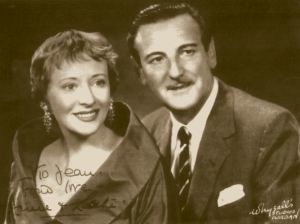
Webster Booth took part in many BBC broadcasts from 1927 onwards. If he appeared in an extended series I have not listed every broadcast, for example, he appeared in many programmes with Fred Hartley and his Novelty Quintet and with Charles Ernesco and his Quintet so only a few of those broadcasts are recorded here. I will post the broadcasts in several sections, as follows: 1927 – 1935, 1936 to 1939, 1940-1956. Broadcasts with Anne Ziegler appear in my Ziegler-Booth blog. If you can add any additional information please contact me.
For some reason, he was banned from broadcasting on the BBC from 1932 – 1934 – possibly because of his divorce from Winifred Booth (née Keey) although he was not the guilty party! It was Fred Hartley who brought him back to the BBC in 1934.
Webster in an early broadcast. 
24th November 1927
Daventry -5 XX – 12.00 The Daventry Quartet; Margaret Minor (Contralto); Webster Booth (Tenor)
LIGHT MUSIC – 5GB Daventry (Experimental), 7 December 1927 18.45
THE ALFRED CAVE SEXTET; A. E. ROGERS, (Baritone) ; WEBSTER BOOTH (Tenor)
LIGHT MUSIC – 5GB Daventry (Experimental), 18 February 1928 18.50
THE GERSHOM PARKINGTON QUINTET with DOROTHY LEBISH (Contralto) and WEBSTER BOOTH (Tenor)


THE VICTOR OLOF SEXTET – 5GB Daventry (Experimental), 6 April 1928 21.10
9.18 WINIFRED DAVIS; 9.26 SEXTET; 9.42 WEBSTER BOOTH; 9.50 SEXTET

A STUDIO CONCERT – 5XX Daventry, 5 November 1928 15.25
ANNE LIDDELL (Contralto) WEBSTER BOOTH (Tenor), ANTHONY COLLINS (Viola)
THE OPIEROS – 2ZY Manchester, 6 April 1929 19.50 TOM HOWELL’S CONCERT PARTY Relayed from the Central Pier, Blackpool

A BALLAD CONCERT – 5XX Daventry, 6 November 1929 12.00
LEVA LEACH (Contralto), WEBSTER BOOTH (Tenor)

A CONCERT – National Programme Daventry, 13 March 1930 15.45
FANNIE MOSS (Mezzo-Soprano), WEBSTER BOOTH (Tenor), THE CHELSEA OCTET
ORGAN RECITAL – National Programme Daventry, 7 November 1930 12.30 by RUSSELL W. K. TAYLOR , F.R.C.O. Sub-Organist, SOUTHWARK CATHEDRAL Relayed from ST. MARY-LE-BOW. WEBSTER BOOTH (Tenor)


30th December 1930 Television Programme (Sound 261.3 M) (Vision 356.3 M)
11.0-11.30 am – Pauline and Diane Instrumental Entertainers; Webster Booth, (Tenor)
A BALLAD CONCERT – Regional Programme London, 20 October 1931 12.00 EDITH DELANEY (Soprano), GWLADYS GAUSIDE (Contralto), WEBSTER BOOTH (Tenor), EDERN JONES (Baritone), MAY JARDINE (Pianoforte)
FRED HARTLEY and his NOVELTY QUINTET – Regional Programme London, 10 March 1934 21.10 with WEBSTER BOOTH (Tenor) and MARIO DE PIETRO (Banjo)
FRED HARTLEY AND HIS NOVELTY QUINTET – Regional Programme London, 24 March 1934 18.30 with WEBSTER BOOTH (tenor) and PHYLLIS EVENS (soprano), Hugo Rignold (Violin)
Webster Booth sings Roses of Picardy with Fred Hartley and his Quintet.
A BALLAD CONCERT – 29 March 1934 15.50 Regional Programme London, Margaret Bissett (contralto), Webster Booth (tenor) (National Programme)
4th April 1934 –Scottish Regional listeners will, at 8.30 tonight, be entertained by a broadcasting version of the operetta THE LILAC DOMINO arranged and produced by Gordon McConnel. The cast includes Harry Welchman, Webster Booth and Barbara Couper.
8.30 THE LILAC DOMINO, an operetta; broadcasting version founded upon the libretto by Harry B Smith and Robert B Smith; music by Charles Cuvillièr; adapted and produced by Gordon McConnel; with Harry Welchman, Natalie Hall, Frederick W Lloyd, Betty Huntley Wright, Webster Booth, Alfred Wellesley, Claude MacConnell, Sydney Keith, Abraham Sofaer, Barbara Couper, the Eight Step Sisters; the Wireless Chorus (Section C) and the BBC Theatre Orchestra, conducted by Stanford Robinson. (London Regional Programme)HARRY WELCHMAN and NATALIE HALL – 2BE Belfast, 6 April 1934 21.20 in THE LILAC DOMINO – An Operetta. Broadcasting Version founded upon the Libretto by HARRY B. SMITH and ROBERT B. SMITH, Music by CHARLES CUVILLIER. THE EIGHT STEP SISTERS, THE WIRELESS CHORUS (Section C) and THE B.B.C. THEATRE ORCHESTRA, Conducted by STANFORD ROBINSON
Act I: A Casino on the Riviera
Act II: Garden of the Count’s Villa, overlooking the Mediterranean
Act III, Scene I : Georgine’s Room.
Act III, Scene 2 : The Casino Terrace on a Carnival Night
Adapted and Produced by GORDON MCCONNEL
Conductor: Stanford Robinson, Producer: Gordon McConnel
Characters
Le Comte de Sorize, a multi-millionaire: Frederick W. Lloyd
Leonie d’Andorget (Georgine’s Friend): Betty Huntley Wright
Elliston, the Count’s Nephew: Webster Booth
Prosper Woodhouse, a gambler: Alfred Wellesley
Maximilian, a Waiter: Claude MacConnell
Norman Cahnain, another Gambler: Sydney Keith
The Honourable Andre d’Aubigny, a Young Englishman: Harry Welchman
Carabana,Conductor of a Spanish Gypsy Orchestra: Abraham Sofaer
La Baronne de Villiers, Georgine’s Chaperone: May Agate
Georgine, the Count’s Daughter: Natalie Hall
7th April 1934 –Scottish Regional Sunday 3.0 Fred Hartley and his Novelty Quintet, with Webster Booth; George Melachrino (Solo Saxophone) National Programme
22nd May 1934 -Regional Programme Northern, 21.15 A New Operetta by the Authors of Love Needs a Waltz – NATALIE HALL in PURITAN LULLABY Book and Lyrics by JAMES DYRENFORTH, Music by KENNETH LESLIE –SMITH THE B.B.C. THEATRE ORCHESTRA and THE REVUE CHORUS. Conducted by STANFORD ROBINSON
CHARACTERS
The Story of Miles Standish, John Alden, and Priscilla is told by Mrs. Fane (VIVIENNE CHATTERTON), to her son Tommy (PETER PENROSE) (By permission of Sydney Carroll)
Miles Standish: George Baker
John Alden: Webster Booth
Priscilla: Natalie Hall
Mistress Willett: Renée de Vaux
Mistress Culpepper: Arabella Tulloch
Mistress Snodgrass: Phoebe Hodgson
Hobomok: Charles Barrett
Wattawamat: Dennis Hoey
Goofe Gitch: Renée de Vaux
Bushy Beaver: Leslie Bradley
Webster Booth sings Always from The Puritan Lullaby
Another Melodious Operetta by the Composer of The Circus Princess, AUTUMN MANOUEVRES – Regional Programme London, 9 October 1934 21.00
A Romantic Episode, freely adapted from the Hungarian original Music by EMMERICH KÁLLMÁN. The action of the story takes place in early October, at Magda’s country house on the great plain of Hungary.
THE REVUE CHORUS, THE B.B.C. THEATRE ORCHESTRA, Conducted by STANFORD ROBINSON
CHARACTERS
Colonel von Lohonay: Gordon McLeod
Stefan: Raymond Newell
Viktor: Webster Booth
Magda: Hermione Gingold
Treska: Lily Birawer
Baroness Lizzi: Mabelle George
Wallenstein: Harold Clemence
The Orderly: George Ide
Hussar Officers: Pascoe Thornton: John Miller
Friends of Magda: Frances Clare, Beatrice Gilbert
FRED HARTLEY – National Programme Daventry, 10 October 1934 20.45
presents THE MUSIC BOX –OLIVE GROVES (soprano), WEBSTER BOOTH (tenor), ALFREDO CAMPOLI (violin) , LILY PHILLIPS (violoncello), FRED HARTLEY (pianoforte)
11th October 1934 –National Programme –8.00 AUTUMN MANOUEVRES freely adapted from the Hungarian original; Music by Emmerich Kallman, with Gordon McLeod, Raymond Newell, Webster Booth, Hermione Gingold, Lily Birawer, Mabelle George, Harold Clemence, George Ide, Pascoe Thornton, John Miller, Frances Clare, Beatrice Gilbert: the Revue Chorus, the BBC Theatre Orchestra conducted by Stanford Robinson.
THE B.B.C. THEATRE ORCHESTRA – Regional Programme Northern, 4 November 1934 18.30 (Leader, MONTAGUE BREARLEY ) Conductor, STANFORD ROBINSON. WEBSTER BOOTH (tenor)
(London Regional Programme)
FRED HARTLEY and his NOVELTY QUINTET (SERIES) – Regional Programme London, 12 November 1934 18.30 with WEBSTER BOOTH (All items arranged Fred Hartley )
13th December 1934 -6.30 – SONGS FROM THE RADIO SHOWS – NO 2 , a Selection of Music that has been specially written for Broadcast Shows: the BBC Variety Orchestra and the Chorus, conducted by Stanford Robinson: Reginald Purdell, Anona Winn, Wynne Ajello, Raymond Newell, Webster Booth: the Dancing Daughters (trained by Rosalind Wade): the New Harmony Trio: compered by John Watt. (The London Regional Programme)
THE LIFE OF OFFENBACH – Regional Programme Northern Ireland and Scotland, 7 January 1935 21.00. The first performance of a Potpourri by Dr. Artur Kulka and Dr. Julius Burger Produced and conducted by STANFORD ROBINSON, SUZANNE BERTIN (soprano), GLADYS PALMER (contralto), WEBSTER BOOTH (tenor), STEARN SCOTT (bass), and a small cast of players. THE WIRELESS CHORUS, THE B.B.C. THEATRE ORCHESTRA. Leader, Montague Brearley (From Regional)
8th January 1935 -8.0 THE LIFE OF OFFENBACH (Repeat)
January 17 1935 ROYAL PHILHARMONIC CONCERT (Felix Weingartner) Choral Symphony (Beethoven) Janet Hamilton-Smith, Margaret McArthur, Webster Booth, William Parsons and the BBC Chorus at Queen’s Hall.
[image error]William Parsons (Bass)
24th January 1935 -8.0 OUR TOWN; written by L du Garde Peach, composed by Ernest Longstaffe, produced by Ernest Longstaffe, with Lawrence Baskcomb, Miriam Ferris, Alma Vane, Webster Booth, Ernest Sefton, Philip Wade, J Hubert Leslie, The Revue Chorus and The Orchestra, conducted by Ernest Longstaffe.
Regional Programme London, 21 February 1935 21.15 THE MUSIC OF KENNETH LESLIE-SMITH – to lyrics by James Dyrenforth
NATALIE HALL (Soprano), WEBSTER BOOTH (Tenor)
THE B.B.C.THEATRE ORCHESTRA, Leader, MONTAGUE BREARLEY, Conductor,
STANFORD ROBINSON[image error]
Meet the Prince: Eight Hours for Working, When your Ship comes in,
Love Needs a Waltz: Dear little Diary, Love will right the wrong
Puritan Lullaby: Canterbury Fair, Always, A Hymn to Her
Old Words to New Music: I couldn’t tell you why, Low Down Spirit Blues
Inquest on Columbine:The Ball Scene, When I Saw You
Regional Programme London, 17 April 1935 20.45 INQUEST ON COLUMBINE
A Love Story in Music founded on COMPTON MACKENZIE ‘S novel: Carnival.
Words by JAMES DYRENFORTH; Music by KENNETH LESLIE-SMITH; Orchestration by JULIUS BÜRGER. THE B.B.C. THEATRE ORCHESTRA, Conductor, STANFORD ROBINSON
Inquest on Columbine will be repeated in the National programme tomorrow night.
Characters
The Coroner: Andrew Churchman
Maudie: Hermione Gingold
Maurice Avery: Webster Booth
Castleton (Fuzz): Frank Drew
Zachary Trewhella (a Cornish farmer): Robert Easton
Jenny Pearl: Tessa Deane
Maudie: Linda Parker
Irene: Marie Cohen
Florrie: Leila Boxill
Madge: Elsie Hay
Betty: Janet Powell
Doris: Irene Brightman
Josie: Gwendoline Catley[image error]
Agnes: Jean Roper
Regional Programme London, 27 May 1935 20.30 WINNIE’S HOUR
A Variety Entertainment devised by HARRY HEMSLEY, Produced by ERNEST LONGSTAFFE and sponsored by Harry Hemsley ‘s Famous Radio Children: Winnie, aged 41 years, Elsie, aged 7 years, Horace.
Specially featuring: CLARICE MAYNE, RUPERT HAZEL and ELSIE DAY, WEBSTER BOOTH, BILLIE BAKER, HARRY HEMSLEY and LEONARD HENRY THE BBC VARIETY ORCHESTRA
Conductor: ERNEST LONGSTAFFE
29 May 1935 From Daventry: A Musical Comedy Potpourri with Webster Booth, Paddy Prior, Harry Bidgood and Sydney Jerome.[image error]

REGINALD KING AND HIS ORCHESTRA – National Programme Daventry, 21 September 1935 16.15 WEBSTER BOOTH (tenor)
24th September 1935 -In the Scottish National programme at 8.40 PURITAN LULLABY an operetta by James Dyrenforth and Kenneth Leslie-Smith, will be presented, a month those taking part being George Baker, Webster Booth, Natalie Hall and Stuart Robinson.
8.40 THE PURITAN LULLABY, An operetta, Book and Lyrics by Leslie Dyrenforth, Music by Kenneth Leslie-Smith, with George Baker, Webster Booth, Natalie Hall, Renée de Vaux, Arabella Tulloch, Phoebe Hodgson, Walter Horsbrugh, Stuart Robertson, Ethel Lodge, Malcolm Graeme, Mary Hinton, Jack Clayton; the BBC Theatre Orchestra and the Revue Chorus, conducted by Stanford Robinson.Production by PETER CRESWELL
Regional Programme Northern Ireland, 25 September 1935 19.45 repeat of The Puritan Lullaby
The Story of Miles Standish , John Alden and Priscilla, is told by Mrs. Fane (Mary Hinton), to her son Tommy (Peter Penrose )
Characters
Mrs Fane: Mary Hinton
Tommy: Peter Penrose
Miles Standish: George Baker
John Alden: Webster Booth
Priscilla: Natalie Hall
Mistress Willett: Renée de Vaux
Mistress Culpepper: Arabella Tulloch
Mistress Snodgrass: Phoebe Hodgson
Hobomok: Walter Horsbrugh
Wattawamat: Stuart Robertson
Goofe Gitche: Ethel Lodge
Bushy Beaver: Malcolm Graeme
RECITAL BY WEBSTER BOOTH – Regional Programme Midland, 5 October 1935 19.30
THE BBC THEATRE ORCHESTRA – Regional Programme London, 18 October 1935 21.00 Leader, MONTAGUE BREARLEY, Conductor, STANFORD ROBINSON, WEBSTER BOOTH (tenor)
THE OXFORD NEW THEATRE ORCHESTRA – Regional Programme Midland, 3 November 1935 16.30, Conducted by WILLIAM BRIGHTWELL. WEBSTER BOOTH (tenor)
MARIA ELSNER in THE COUNTESS MARITZA – Regional Programme Scotland, 6 November 1935 20.45 A Broadcasting Version of the Operetta by JULIUS BRAMMER and ALFRED GRÜNWALD. Music by EMMERICH KÁLLMÁN THE B B C CHORUS AND THE B B C THEATRE ORCHESTRA, Conducted by STANFORD ROBINSON, The Operetta arranged for broadcasting by MARK H. LUBBOCK , DAPHNE LIMMER, English libretto and production by GORDON MCCONNEL (From Regional) This operetta will be broadcast in the National programme at 8.0 on Friday.
Characters
Countess Maritza: Maria Elsner
Prince Moritz Dragomir Populescu: Bobbie Comber
Baron Kaloman Zsupan: Leslie French
Count Tassilo Endrody-Wittemburg: Webster Booth
Lisa, his sister: Betty Huntley Wright
Karl Stephan Liebenberg: Jack Minster
Princess Bozena Cuddenstein zu Chlumetz: Gladys Young
Ilka von Dambassy: Heather Boys
Tschekko (an old servant of Maritza): Gordon McLeod
Manja (a young gypsy girl): Margaret Lauder
8th November 1935 -8.0 THE COUNTESS MARITZA (Repeat)
THE BBC THEATRE ORCHESTRA – Regional Programme London, 1 December 1935 18.30 Leader, MONTAGUE BREARLEY, Conductor, STANFORD ROBINSON, WEBSTER BOOTH (tenor), THE BBC REVUE CHORUS and ORCHESTRA
DANCING THROUGH – National Programme Daventry, 14 December 1935 20.30 with OLIVE GROVES, BETTY WARREN, ESTHER COLEMAN, WEBSTER BOOTH, and GERALDO AND HIS GAUCHO TANGO ORCHESTRA. One hour of music, highly concentrated; eighteen years of melody telescoped into sixty minutes! In this programme Geraldo and his Orchestra hope to play non-stop 170 tunes that have been popular between 1918 and 1936. As usual, the titles will not be announced.
Jean Collen copyright 2005
Updated 2017.



April 23, 2017
SHEET MUSIC FEATURING SONGS SUNG BY WEBSTER BOOTH AND ANNE ZIEGLER
Sheet Music featuring (or associated with) Anne Ziegler and Webster Booth
Webster Booth sang Chalita (Victor Schertzinger) in the late twenties at various Lyons Cafés.

Webster Booth took the role of the Duke of Buckingham in The Three Musketeers (1930) at the Theatre Royal, Drury Lane. He made his West End Debut in the production.

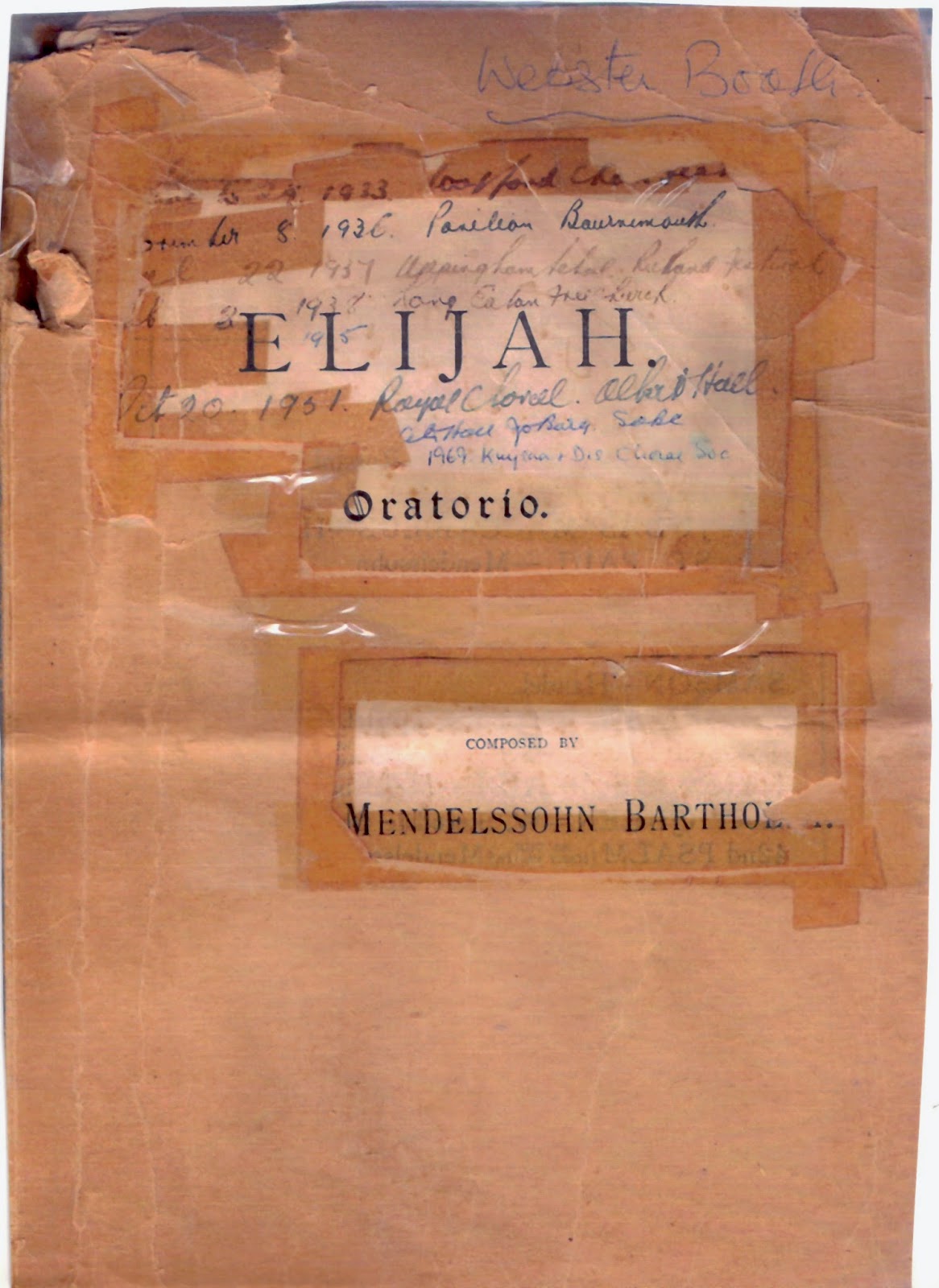
Front cover of Webster’s score of Elijah (Mendelssohn) listing a few of his performances in the oratorio.
Ye People, Rend Your Hearts/If With All Your Hearts
The front pages of Webster’s score of Messiah (Handel) given to him by his father Edwin Booth. Many of Webster’s performances are listed here.


My Star (Bassett Silver) sung, recorded and broadcast by Webster in the 1930s.
[image error]Faust (Gounod)
Webster and Anne in The Faust Fantasy (1935)
[image error]
Webster appeared in the film The Robber Symphony in 1935
[image error]
Anne appeared in the musical Virginia by Arthur Schwartz at the Center Theater, New York in 1937.

Say That You Care from Me (Joseph White) was a song featured by Anne Ziegler in 1935.
 Lilac of Louvaine was sung by Anne and Webster in the Blackpool show On With the Show produced by Lawrence Wright/Horatio Nicholls in the summer of 1940.
In 1941 Anne and Webster appeared at the London Palladium in George Black’s Show . Below are two songs the sang in the show. My Paradise (Harry Parr Davies)
My Paradise


Anne and Webster starred in a revival of The Vagabond King (Friml) at the Winter Garden Theatre, London in 1943. Their theme song Only a Rose is from the show.
Anne and Webster played strolling players in the film Waltz Time (Hans May) (1945)

 They starred in the musical play Sweet Yesterday (Kenneth Leslie-Smith) at the Adelphi Theatre, Strand in 1945.
Morning Glory

They starred in the film The Laughing Lady (Hans May). (1946)
Love is the key
They made a recording of Throw Open Wide Your Window with music by Hans May.

They recorded Dearest of All (Vernon Lathom Sharp) in the late 1940s. Vernon Lathom Sharp lived in East London, South Africa until his death in the 1990s.

Here is Richard Tauber singing Dearest of All
They discovered Blue Smoke when they were touring New Zealand in 1948 and made a recording of it as a duet.


When they returned to the UK in 1978 and began singing again (although they had given their farewell concert in Somerset West, Cape in 1975), they often sang Ah yes, I remember it well from Gigi, the song made famous by Hermione Gingold and Maurice Chevalier in the film.
Hermione Gingold and Maurice Chevalier singing the song from the film.
Jeannie C August 2012


April 22, 2017
RUTH ORMOND (1945 – 1964)
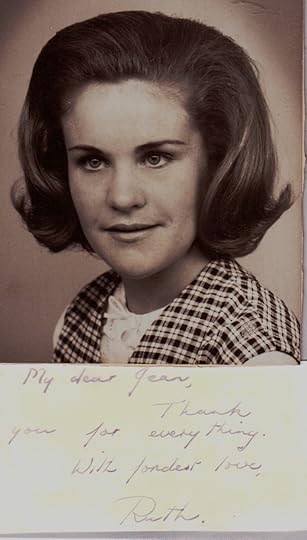
My friend, Ruth Ormond, 1963 
By early 1964, Ruth had left Parktown Girls’ High School, passed the matriculation examination and was preparing to go to Cape Town University to do a BA (Music) degree. I completed my ATCL practical singing diploma in October of 1963 and had started teaching my first pupils in Anne and Webster’s studio on the day they were not teaching there themselves. I put my teaching skills to further practical use by giving Ruth some harmony lessons so that she would be up to standard when she started her course in Cape Town. I knew I would miss her very much when she went to ‘Varsity, but she would be back for the July holidays and we had promised to write to each other.
Just before she left for Cape Town, I spent a happy day at her home in Parkwood. We swam in the kidney-shaped pool for the last time and later her mother took us for lunch to a pleasant tea garden in Bryanston which was quite rural in those days. The midday symphony concert was on the English Service of the SABC and I was impressed at Mrs Ormond’s ability to identify every composition correctly before the title was announced on the radio. I could see where Ruth had inherited her love of music.
Ruth settled down in the University residence of Baxter Hall. She was a good correspondent and told me about her singing lessons with Madame Adelaide Armhold. Madame Armhold wanted Ruth to concentrate on breathing exercises for the next six months.
In April, I passed my LTCL exam and obtained honours in the Higher Local Piano exam.
On Friday morning, 1 May 1964, I received a letter from Ruth. She had remained in Cape Town for the short Easter holidays and had celebrated her nineteenth birthday there on 6 April. The Easter holiday was short so it had hardly seemed worth her returning to Jo’burg when she had only just settled in at Baxter Hall. In her letter she told me, “Before you can cough it’ll be July and I’ll see you again.”
That evening I was going to sing at a concert with the Sylvia Sullivan Choristers. I was waiting for my lift when the phone rang. It was Ruth’s sister Caroline to tell me the awful and unbelievable news that Ruth had suffered a cerebral haemorrhage that morning and had died within an hour of developing an excruciating headache.
Ruth had always been fit and healthy. She had never missed a day at school. Stunned, I phoned Anne and Webster’s number and spoke to Webster. He was devastated with the news and could not talk for long. It was too late to put off the lift, so my parents had to make my excuses for I certainly was not in a fit state to sing at a concert that night. A short while later Anne phoned and she spent a long time on the phone talking to me about Ruth. We were deeply saddened at the loss of a very dear person. She had been like a sister to me.
I saw her mother several times after Ruth’s death. She gave me some of Ruth’s music, and the photograph that appears at the top of this post. It was taken shortly before Ruth went to Cape Town. Her parents established a memorial prize in her name at Cape Town University. Each year it is awarded to the most promising first year singing student.
After Ruth’s death my life became more somber and earnest. I was no longer a giddy naïve teenager. I had to grow up fast and face life as an adult. I have had little contact with the Ormonds over the years since Ruth’s death, but I will always remember Ruth as one of my dearest friends.
Jean Collen 22 April 2017.


March 29, 2017
WEBSTER BOOTH AND ANNE ZIEGLER IN SOUTH AFRICA (1956 – 1978)

Webster Booth and Anne Ziegler immigrate to South Africa (July 1956)

The Hillman Minx outside their flat in Waverley, Highlands North, Johannesburg (1956)

[image error]Night in Venice (1956)
“Night in Venice” (Strauss) with Johannesburg Operatic Society, 1956

Durban Whysall Studios (1957)
[image error]
[image error]Merrie England in East London and Johannesburg (1958)
[image error]Waltz Time, East London 1959
[image error]Anne with Dame Flora Robson at rehearsal for “Lock Up Your Daughters” (1961)
“The Amorous Prawn” (1961) with Joan Blake, Simon Swindell. Victor Melleney (producer) extreme right.

“Goodnight Mrs Puffin” with Jane Fenn at Alexander Theatre, Johannesburg (1963)
[image error]
 Webster as Mr Fordyce and Jane Fenn as Mrs Puffin in “Goodnight Mrs Puffin” (January 1963)
“Colonel Fairfax” in “Yeomen of the Guard” at Alexander Theatre, 1963 (Johannesburg Operatic Society)

At the wedding of actress Margaret Inglis (1962/63)
In the studio, Pritchard Street (1963)


“The Bartered Bride” (PACT) 1966
Move to Knysna in 1967.
Silva and Spinach on the couch at Knysna (1970) Photo: Dudley Holmes

[image error]In the garden in Knysna (1968) Photo: Dudley Holmes.

[image error]At the beach at Knoetzie (near Knysna) Photo: Dudley Holmes.
Directing “The Mikado” in East London, Border (1973


Move to Somerset West, Cape (1975)

House in Picardy Avenue, Somerset West. Photo: Dudley Holmes


March 30, 2015
Going, going, gone …
Thank you for this interesting article. I���m very sorry indeed to hear of the words that have been expunged from the OUP junior dictionary. It suggests that the editors of the dictionary assume that children are not going outdoors to play or to pick bluebells any more but are glued to their computers reading about ���so-called��� celebrities. Very sad indeed!
via Going, going, gone ….


December 29, 2014
2014 in review
The WordPress.com stats helper monkeys prepared a 2014 annual report for this blog.

Here’s an excerpt:
The concert hall at the Sydney Opera House holds 2,700 people. This blog was viewed about 12,000 times in 2014. If it were a concert at Sydney Opera House, it would take about 4 sold-out performances for that many people to see it.
Click here to see the complete report.

Derby Road, Kensington


November 19, 2014
IMMINENT CLOSURE OF BOOTH-ZIEGLER YAHOO GROUP

[contact-form] I posted the following message to members of the Booth-Ziegler Yahoo Group yesterday:
This group has been running for over 4 years and has 37 members, although only about 6 or 7 members ever comment. I know that people are busy and haven’t always got time to join in discussions so I’m wondering whether I should close the group and create a mailing list for those who would like to be informed about things I post on the internet about Anne and Webster. Any
I sense that there has been even less interest in this group over the last 6 months. I am getting older and am not in the best of health, so although I had hoped that the group would continue despite everything, I really think it is time to call it a day. If you would like to be added to my mailing list, please contact me off-line and I will make a note of your email address to add to the list. In that way I should have a mailing list composed of people who are still interested in Anne and Webster. Even if you did not belong to the group, you may send me a message with your email address if you want to be added to my mailing list.
Thanks to those who have commented and supported me in the 4 years since this group has been running. Unless anything happens, I shall close this group formally in a month’s time.
Jean Collen (19 November 2014)


September 3, 2014
A MEMORY OF DAWSON’S HOTEL, JOHANNESBURG

Webster and me. Photo taken in the early 1960s.
Dawson’s Hotel in Johannesburg was once an establishment of importance in the life of the city and remains one filled with wonderful memories for me. In its heyday, it was one of the city’s best hotels, with perhaps only the Carlton and Langham Hotels being grander. In 1956 the British singing duo, Anne Ziegler and Webster Booth, moved to South Africa. They spent their first three months in Johannesburg living at Dawson’s Hotel while they looked around for suitable permanent accommodation.
It was in April 1963 that I first acted as Webster’s accompanist in their singing studio on the eighth floor of Polliack’s Bulding at the corner of Eloff and Pritchard Streets.

Polliack’s is the building on the right with the balconies.
At the time, Anne was away on a trip with broadcaster Leslie Green and I had been delighted and honoured when they asked me to take her place as studio accompanist. During some free time in the studio, Webster asked me if I would like to have lunch with him at Dawson’s. In turn, he accepted my invitation for him to have dinner with me and my parents at our home after we finished our work in the evening.
Tuesday was the red-letter day when Webster took me to lunch at Dawson’s Hotel. After the final morning student lesson was over, Webster announced for the world to hear that “Jean and I are going to blow the family savings today. I’m taking her to Dawson’s.” The poor student looked envious and said, “Oh, I wish I was coming with you. I have to go back to the office on an apple!”
As Dawson’s Hotel was just around the corner from the studio, we walked there. On our walk to the hotel, Webster seemed oblivious of the curious glances of the lunchtime throng doing double-takes as they recognised his famous face. We were ushered into the sumptuous Edwardian dining room on the first floor as though we were royalty. We were greeted by the head waiter who hovered around Webster and then directed us to the best table at the window.
Naturally Webster was at home in this setting. After all, he had frequented the grandest hotels of Europe, the Antipodes and Britain and was used to being fussed over. I, on the other hand, a teenager in a bottle green velvet dress, felt gauche and young, as indeed I was at that time. After studying the menu, Webster ordered grilled trout and I ordered a fish dish also. He had a gin before lunch and was quite disappointed when I refused anything alcoholic. At that stage of my life, the only time I had drunk an aperitif was when my father poured me a thimbleful of sherry on special occasions.
During our meal Webster told me how he and Anne had lived at Dawson’s until they found their flat at Waverley, Highland’s North. Sadly, he also told about several members of the hotel management, who had theatrical connections, who for unknown reasons had seemingly turned against them.

Anne Ziegler & Webster Booth (1956) outside their flat at Waverley, Highlands North.
I enjoyed my fish dish very much and felt very much the grand lady having lunch with a world famous singer in that wonderful dining room. Later, over coffee, we had petits fours. Webster insisted I should eat as many as I wanted. I found out later that they were soaked in brandy, so I did not go entirely without alcohol that day.
I remember coming out of that wonderful hotel into the afternoon sunshine and sauntering back to the studio. Fortunately, there was only one pupil due that afternoon. As we waited, Webster soon fell asleep on the couch while I sat in a chair a fair distance away reading Duet, their autobiography, which he had brought in for me to read the week before.

“Duet” by Anne Ziegler and Webster Booth, published 1951.
When Webster woke up, he put on one of the reel-to-reel tapes containing his sacred and oratorio recordings. I remember listening to How Lovely Art Thy Dwellings, The Lost Chord, Abide With Me, and Sound an Alarm. I was entranced and sometimes near to tears by the beauty of his singing.
Over the years, whenever I went back to Dawson’s Hotel with others, I could not help but recall my first visit with Webster and remember our lunch. Unfortunately, because of the high crime rate in central Johannesburg today, I have avoided going into the city for the past ten years. Imagine my sadness when I found Dawson’s hotel on a Google Street map recently and learned that it is no longer occupied. The building is now but a shadow of its former self. It has been abandoned and is dirty and in a state of abject decay. I suspect that it has now become home to squatters and serves merely as a place of shelter from the elements. What a sad end to an elegant hotel, which I will always remember for the happy time I spent there with Webster as a teenager.

Dawson’s as it is today – no longer a hotel and pretty dilapidated. The Edwardian Restaurant was on the first floor.
Jean Collen 3 September 2014.


August 5, 2014
GARDA HALL – SOUTH AFRICAN SOPRANO (1900 – 1968)
GARDA HALL (1900 – 1968)
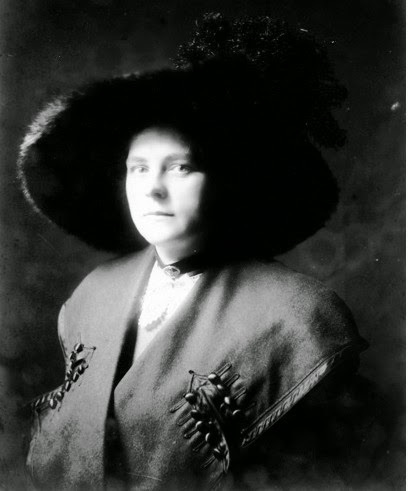
Today South African soprano, Garda Hall, is hardly remembered in South Africa where she was born, or in the United Kingdom where she lived for most of her life and had a distinguished career as a singer. The only reason why I know anything about Garda Hall at all is that Webster Booth mentioned that he had sung and recorded with her on several occasions. Her descendant, Quentin Hall, who lives in Western Australia, has shared some of his extensive family research with me so I thought I would write a short article about his distinguished ancestor.
Garda Hall was born in Durban, Natal in 1900 in the middle of the South African War. Garda was given the unusual middle name of Colenso, presumably in commemoration of the Battle of Colenso in 1899. Her parents were George Ernest Hall (1869 – 1933), originally from Torquay, Devon, and Maude Kate Amy Breeds (1878 – September 1959). Quentin presumes that George and Maude married in South Africa rather than the UK and the Breeds surname suggests to me that Garda’s mother was a South African of Dutch origin, rather than British.
Garda moved from Durban to Pietermaritzburg when she was seven years of age and attended the private Girls’ Collegiate School there. Her father owned a bicycle shop in Pietermaritzburg called Hall’s –The Cycle Specialists and sold it to renowned cyclist, Jimmy Jowett when the family settled in England. The cycling business remained Hall’s – The Cyclist Specialists until 1952 when Jimmy eventually changed the name of the business to Jowett Brothers.

HALL’S – THE CYCLE SPECIALISTS

JOWETT BROTHERS
Garda was not noted for her musical prowess at school. Apparently the music teacher told her that she was singing out of tune and asked her to leave the music class! It should be pointed out that some children who sing out of tune begin to sing in tune as they mature. Despite being good enough to be accepted at the Royal Academy of Music in 1920 and doing well there, several critics remarked on occasional lapses of intonation when she became a professional singer.
In 1920, she boarded the Norman Castle in Durban with her mother, who was 41 at the time.
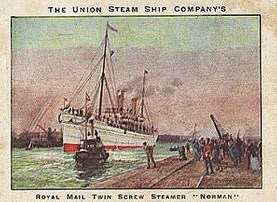
NORMAN CASTLE
They arrived in Southampton on 9 August 1920 and Garda began her vocal studies at the Royal Academy of Music in London at the beginning of the new term in September, taking lessons with the renowned singing teacher, Frederick King who trained many notable singers including Norman Allin, Miriam Licette, Carmen Hill and Robert Radford. T. Arnold Fulton, the Scottish organist and choral director of the London Select Choir and the choir at St Columba’s Church in London where he was organist and choir master, acted as studio accompanist to Frederic King at the Royal Academy. Some years later Arnold Fulton moved to South Africa and taught singing based on the methods he had learnt from Frederic King.
Garda obtained the diplomas of ARAM and LRAM. Interestingly, she apparently trained as a mezzo soprano at the Academy, yet sang as a lyric soprano during her subsequent career as a singer. She was awarded the Gilbert Betjemann Gold Medal at the Academy for operatic singing in 1923.
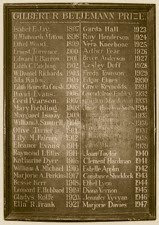
GILBERT R. BETJEMANN PRIZE WINNERS. Garda Hall (1923)
Not long after she graduated, she sang at the first Grand Ballad Concert of the season at the Guildhall, Plymouth on 29 September 1923, and in 1925 she made a triumphant return to Pietermaritzburg and Durban and gave several successful recitals while she was there. The closing item which she sang at the Pietermaritzburg concert was Poor Wand’ring One from The Pirates of Penzance. I wonder what her disapproving music mistress at ;the Collegiate School thought about this! If she had left South Africa as a second-rate, sometimes out of tune mezzo, she had returned to the country of her birth as an engaging lyric soprano. At the time of her trip her parents were living in Winkelspruit on the South Coast of Natal, but by 1930 the whole family moved to 137 King Henry’s Road, South Hampstead, the address where Garda remained until her death in 1968.
Towards the end of that year Garda sang in Burnley in aid of the Police Convalescent fund. Two of her fellow artistes were distinguished singers of the day – Muriel Brunskill (contralto) and Tudor Davies (tenor). At a concert the following year, the critic remarked on her clean-cut articulation (in English and French) and her ability to sing a comfortable high E. However, he disapproved of “an almost continuous vibrato which adversely affected her intonation”. He suggested that she should work on her breathing to correct this fault – shades of that music mistress in Pietermaritzburg!
1926 was an auspicious year for Garda as she began recording for His Master’s Voice (HMV). One of her notable recordings was the Mozart Requiem with the Philharmonic Choir and orchestra, conducted by Charles Kennedy Scott on 6 July at the Queen’s Hall.Other singers on the recording were Nellie Walker, Sydney Coltham and Edward Halland. She was also bridesmaid at the wedding of baritone Roy Henderson and Bertha Smyth in March. The couple had met when studying at the Royal Academy, presumably at the same time as Garda herself.
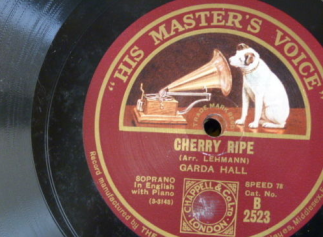
CHERRY RIPE (Arr. Lehmann)
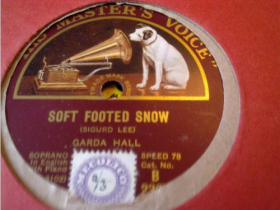
SOFT FOOTED SNOW (Sigurd Lee)
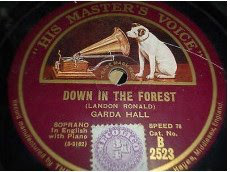
DOWN IN THE FOREST (Landon Ronald)
During the twenties, Garda was making a name for herself as a popular concert singer, recording artiste and broadcaster, although critics were still concerned about her violent vibrato and doubtful intonation as opposed to her vocal good points of agility and wide range. She was singing with the finest singers of the day, as can be seen in this article of 1928:
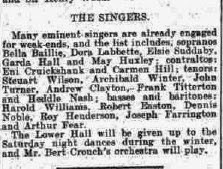
Eminent singers (1928)
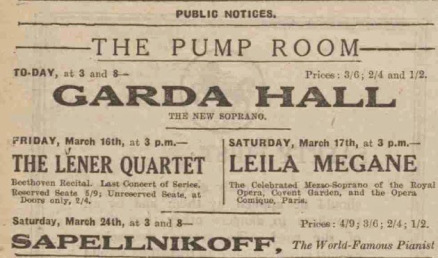
Advertisement for Bath Pump Room.
On 6 March 1930 Webster Booth was establishing himself on record, radio, as the Duke of Buckingham in the West End production of The Three Musketeers, and as a tenor soloist in oratorio, but he was still entertaining at dinners and benefit concerts, such as one at the Finsbury Town Hall for the Clerkenwell Benevolent Society, where South African soprano, Garda Hall was one of the other entertainers. Charles Forwood, who was to become the permanent accompanist of Anne Ziegler and Webster Booth when they went on the variety stage in 1940, accompanied at this concert.
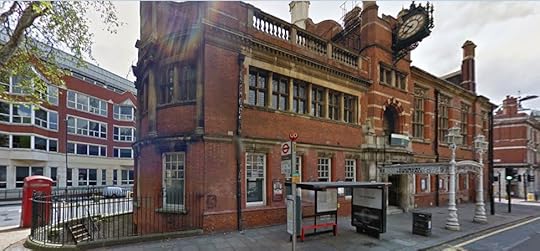
OLD FINSBURY TOWN HALL
A newspaper cutting on 20 March 1930 reads as follows: The Clerkenwell Benevolent Society benefited to a considerable extent as a result of a concert at the Finsbury Town Hall on March 6. There was a generous provision of talent, among those to please a large and enthusiastic audience being Garda Hall, Doris Smerdon, Gladys Limage, Doris Godfrey, Hilda Gladney Woolf, Maidie Hebditch, Webster Booth, Ashmoor Burch, Charles Hayes, Fred Wildon and Lloyd Shakespeare, with Charles Forwood as accompanist. It is interesting that some of these names are still remembered today, while others are completely unknown.
Later in that year, Garda returned to South Africa and her parents came to England on board the Gloucester Castle to make their home with her. For a short time they lived at 142 King Henry’s Drive, Hampstead, but later moved to 137 King Henry’s Drive, where she remained until her death in 1968.
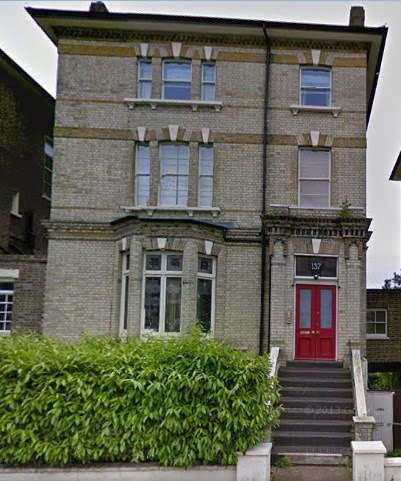
THE HALL HOUSE IN HAMPSTEAD.
In March 1932 Garda took part in a broadcast of popular opera with another South African singer who had made a career in the UK, the contralto Betsy de la Porte. In the same year she sang in a concert devoted to Viennese music at the Pump Room in Bath. The conductor was Edward Dunn, and baritone George Baker, Webster’s great friend and mentor, was the other soloist. Several years later, Garda suggested to Edward Dunn that he should apply for the position of musical director of Durban Opera. He was chosen from 200 candidates and remained in South Africa for the rest of his life. The last I heard of him was when he was conducting the Johannesburg Philharmonic Society and giving lectures on musical appreciation in the sixties.
In May 1932 Garda made a 12 inch recording of Musical Comedy Gems (1) and Musical Comedy Gems (2) with George Baker (C2412) of songs from The Chocolate Soldier, The Desert Song, Rose Marie and The Merry Widow.
George Baker and Garda Hall
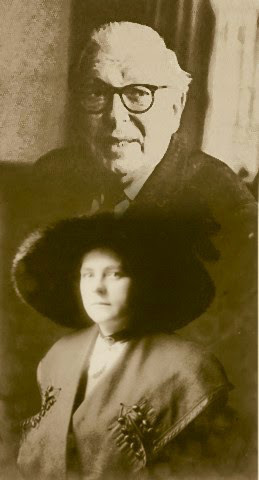
GEORGE BAKER (BARITONE) AND GARDA HALL
On 22 May 1933, Frederic King, Garda’s singing teacher at the academy, died at the age of 80, and on 1 October of the same year, Webster was on the same bill as Garda Hall at the Palladium. Other performers on that bill were Debroy Somers and his band, Leonard Henry (compère), Raie da Costa (the brilliant South African pianist who died at an early age) and Stainless Stephen. Webster had also been booked to sing at the National Sunday League concerts at the Finsbury Park Empire, and the same artistes as those at the Palladium were due to perform at the Lewisham Town Hall later in October.
On 15 March 1934 Garda Hall sang in Torquay with the Municipal Orchestra there and the short newspaper article announcing the date pointed out that her father had been a Torquay man. She sang an aria from Die Fledermaus at the Queen’s Hall on the last night of the Promenade concerts on 6 October 1934, conducted by Sir Henry Wood.
On 5 December 1935, Garda Hall, Webster and George Baker sang in a concert version of Gounod’s Faust and the Beggar’s Opera at the Playhouse, Galashiels on the Scottish Borders. The Galashiels Choral Society (concert master: Robert Barrow) and orchestra were conducted by Herbert More.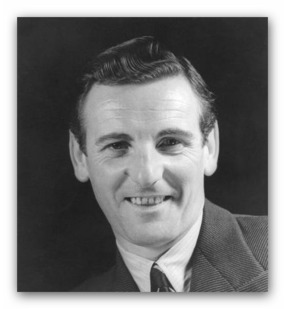
The following year Webster sang with Garda again on 16 September at a Shrewsbury Carnival Concert. Other performers were Ronald Gourley (entertainer) and the Alfredo Campoli Trio.
In May 1937 Theatreland at Coronation Time was released featuring Stuart Robertson, Garda Hall, Webster Booth and Sam Costa. The critic in Gramophone remarked, “Mr Booth sings gloriously, Mr Robertson defiantly, Miss Hall charmingly, while Mr Costa contributes a fleeting reminiscence of a more sophisticated and yet oh so simple entertainment.” The 12”78rpm, HMV C2903 cost 4/-.
There is an entry for Garda Hall in Who’s Who in Music (1937): Hall, Garda ARAM, LRAM. Born Durban, educated at Royal Academy of Music. Betjemann Gold Medalist. Singing, Chamber music, oratorio, operatic. Recreation: gardening. Address: 137 King Henry’s Road NW3. Telephone: Primrose 4436
Garda continued singing during the war, often at CEMA concerts and in oratorio. She sang Messiah at the Albert Hall, Nottingham in December 1940.
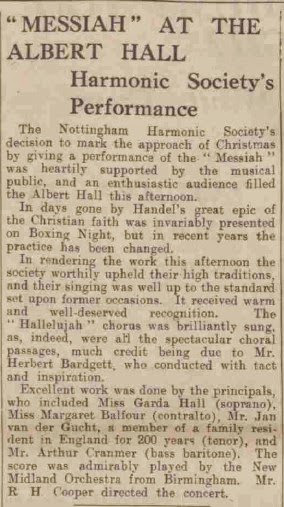
MESSIAH IN NOTTINGHAM
27 March 1942
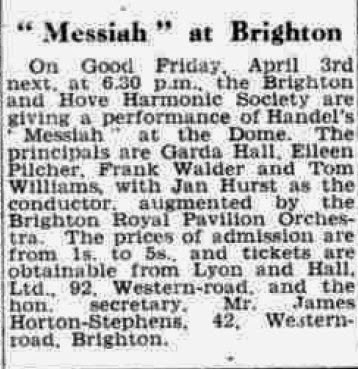
MESSIAH AT BRIGHTON
22 January 1943
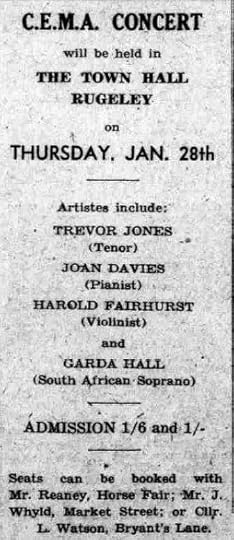
CEMA CONCERT
The final cutting about Garda Hall appeared on 5 January 1945.
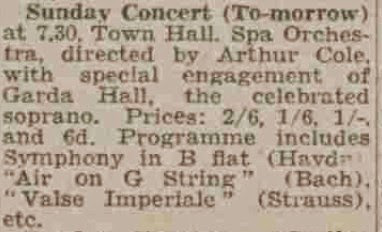
Sunday concert
I could find nothing more about her, apart from her entry in the Musicians Who’s Who in 1949, which was much the same as the 1937 entry. In 1945 she was 45 years of age so I cannot believe that she retired from singing at such an early age. Perhaps she taught singing after she retired from the concert platform, although there is no proof of this. Her mother died in the late 1950s and she herself died on 7 June 1968. She did not marry. If anyone has further information about Garda Hall, I would be very glad to hear from you.
BIBLIOGRAPHY
A Horse, a Singer and a Prince – two busy months in the life of Pietermaritzburg Bill Bizley
British Newspaper archive
Quentin Hall of Western Australia for genealogical research on his relative, Garda Hall
Jean Collen
©
5 August 2014
GARDA HALL


July 14, 2014
A Look at Behind the Lines

This sounds like a fascinating and unusual study.
 Originally posted on Royal Philharmonic Orchestra's Blog:

RPO resound’s year of Behind the Lines activities culminates in a four-day creative Summer School this August. Hannah Nepil finds out more.
What was Elgar’s favourite ice cream flavour? And was he ever burgled? These were two of the questions posed by children taking part in Behind the Lines, a year-long education project run by the Royal Philharmonic Orchestra and Westminster Music Library, exploring the music of the First World War. And luckily, Elgar specialist Simon Baggs fielded the answers excellently: whilst there is no documentary evidence about Elgar’s favourite flavour, he could regularly be seen coming out of Woolworths in Worcester with an ice! And he was burgled once, in 1918, by two ex-policemen.
The project began last October, and carries on until summer this year – coinciding with the 100th anniversary of July 1914, when the War broke out. Adults, children and teenagers of all musical…
View original 377 more words