Jean Collen's Blog, page 19
August 24, 2018
WEBSTER BOOTH AND ANNE ZIEGLER – MERRIE ENGLAND
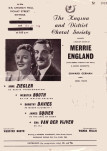
Webster and Anne had a long association with Merrie England by Edward German. Anne had played the May Queen in an amateur production in Liverpool when she was still in her teens and had sung Bessie’s Waltz Song from the work when she did a test for HMV in the mid-1930s.
[image error]
Bessie’s Waltz Song (test record for HMV)
Merrie England Vocal Gems (with Webster Booth)
24 April 1939 Another concert by the Glee Club – Merrie England. Eight years ago 16 music lovers met in a recreation room at North End and formed the nucleus of the Portsmouth Glee Club, now a well-known organisation. The first concert they produced in the Guildhall took the form of a Coronation presentation of Merrie England. That was on April 14, 1937. Since then they have given numerous performances and on Wednesday next will give a concert of the music by Sir Edward German. Olive Groves and Webster Booth, the opera singer will take part. Programme consists of excerpts from Merrie England, Nell Gwyn dances, which will be played by the orchestra, and a complete concert selection of A Princess of Kensington. This last-named will be performed by the full chorus and orchestra of the Glee Club under the direction of Mr Harold Hall.
20 November 1940 – Oldham Evening Chronicle
This performance, conducted by Ernest Craig in the darkest days of the war, was in aid of the Mayor’s Spitfire Fund. The Avro Works in Chadderton, just down the road was, of course, an important centre of aircraft production, although they made bombers, not fighters. Anne Ziegler and Webster Booth, fairly recently married and among the most famous variety duettists of that time took part. Tickets rapidly sold out and a second performance had to be arranged in the evening.
Merrie England – Captivating Singing in Oldham.
So great was the demand for seats to hear the concert performance of Merrie England by the Oldham Musical Society and well-known soloists at the Odeon Theatre on Sunday that it was necessary to repeat it in the evening. Originally the intention had been to have only an afternoon performance. Both houses were full, and the audiences were enthusiastic.
This light opera, Edward German’s masterpiece, abounds in beautiful and easily remembered melodies and in gay and happy choruses. It was in these choruses that the members of the Musical Society, of whom 79 were to be counted on the platform (27 of them men) excelled. They have seldom been heard to better advantage and appeared to enjoy the performances as much as did the audiences. They were accompanied by an orchestra of 23 players led by Alfred Barker, under the baton of Mr Ernest Craig, ARCM.
The principal soloists were: Anne Ziegler, Bessie Collins, Webster Booth and Arthur Copley.
24 June 1952 – Merrie England was performed at Priory Park, Chichester. Leslie Rands and Marjorie Eyre played the Earl of Essex and Jill-All-Alone in a week’s run of Merrie England in aid of charity in Priory Park, Chichester, Leslie’s birthplace. Webster Booth (Sir Walter Raleigh) and Anne Ziegler (Bessie Throckmorton) were also in this production, the remainder of the principals being drawn from the Chichester and Bognor Regis Amateur Operatic Society and Societies from the surrounding districts.
Signing autographs at Priory Park.
[image error]
31 January 1953 – Northern Miner Luton’s Coronation pageant to be held in the grounds of Luton Hoo, one of England’s stateliest homes, from June 9 till June 15, will be one of the largest events of its kind ever staged in Britain. There will be more than 1000 performers, all in Elizabethan costume for this special version of Merrie England. The setting of the pageant will represent Old Windsor, with an impressive reproduction of the castle in the background.
A special feature will be an illuminated water curtain, which will screen the stage from the auditorium before the performance. The famous Luton Girls’ Choir will take part in the pageant and other well-known singers will support the principals – Anne Ziegler and Webster Booth. Mounted performers will be dressed in full uniform of the Yeomen of the Guard, and ballet, folk-dancing will be demonstrated by experts.
17 April 1953 – Calgary Herald. Merrie England Presentation. British Stars Feature in Choral Society Debut. When the Calgary Choral Society makes its first public appearance in the Stampede Corral on May 9, two of Britain’s brightest singing stars, Webster Booth and Anne Ziegler will be there to sing the leading tenor and soprano roles of the society’s Merrie England presentation…
The roles of Sir Walter and Bessie will be played by the British singers, who are making a special air trip to Canada for the production.
The two artists are probably the most popular singing team in the British concert stage today. They are familiar with the principal roles in Merrie England and having sung them on many occasions.
Webster Booth has been singing since he was a small boy. He began his singing career as a boy soprano in Lincoln Cathedral. When his voice broke he returned to his native Birmingham and took a job as a clerk in an accountant’s office.
Their trip to Canada in May will inaugurate the Calgary Choral Society which was organised last September by the Calgary Kiwanis Club. Music for Merrie England will be provided by 50 musicians drawn from the Calgary Symphony Orchestra.
The Calgary Choral Society has 188 male and female voices and from this group several have been selected to sing title roles in the production…
Conductor of the choir is Harold Ramsay, director of Mount Royal Conservatory of Music and organist and choir master at Wesley United Church…
28 April 1953 – Ottawa Citizen. British Stars Flying 8,800 Miles to Sing – by the Canadian Press. London – Webster Booth and Anne Ziegler, Britain’s top man-and-wife operatic team, will ditch a well-earned holiday to fly 8,800 miles to a one-night stand in Calgary.
Calgarians can thank a longstanding friendship between the British couple and Harold Ramsay, former BBC organist who founded the Calgary Choral Society under the sponsorship of the Calgary Kiwanis Club.
Ramsay said wistfully in a letter describing a musical play he is producing: “I only wish you and Anne were free.”
The couple immediately gave up plans for a three-week holiday in France and will appear in the opening performance on May 9 of Merrie England, a Tudor production well suited to the coronation of the second Elizabeth. They will be the only professionals in an otherwise all-Canadian cast…
Calgarians will be the more appreciative of Ramsay’s success because the Booths have leading roles in this country’s coronation summer entertainment plans.
The Calgary appearance will be one in a series of Merrie England performances. The first in the United Kingdom is scheduled to begin on June 1 at Newport, Wales. One of the biggest will be at the country home of Sir Harold Wernher at Luton Hoo, Bedfordshire.
Bulldozers have processed three acres for a vast open-air stage that will hold a cast of 1,000, of which 300 will be on horseback. Forty-one microphones have been installed to accommodate audiences of about 21,000 expected every day in a week-long festival starting on June 8.
It will be Miss Ziegler’s first trip to Canada. Booth last visited the country in the ‘20s when the D’Oyly Carte Opera Company toured North America.
They will have three days’ holidays here before leaving for Calgary and will make a few radio, and possibly a television appearance before returning by sea.
[image error]
11 May 1953 – Calgary Herald. Merrie England show pleases 6,000 persons (by Shirley McNeill). From the opening chorus of Merrie England at the Stampede Corral on Saturday night, the audience of 6,000 people who went to hear the premiere performance of the Calgary Choral Society showed by their applause that they approved heartily of what they heard.
Much of the success of the concert must be credited to singing stars Webster Booth and Anne Ziegler, who came all the way from England to appear with the society. This accomplished vocal team turned in performances that were polished and professional throughout…
But the man who deserves perhaps the greatest share of laurels for the success of Merrie England is Harold Ramsay, who in a few short months conducted the Calgary Choral Society to the high standard of musical accomplishment which they gave the audience on Saturday evening.
It was Mr Ramsay’s job to conduct the choir as well as the 50 members of the Calgary Symphony Orchestra who gave instrumental support to the singers. This double duty was commendably performed.
One of the most rousing songs from Merrie England, the finale to the first part, It is a Tale of Robin Hood was unfortunately distorted by loudspeakers, particularly for those members of the audience seated directly beneath them.
The chorus and the four soloists combining voices in this rousing finale were all too powerful a singing combination for the public address system set up to carry to all corners of the vast Corral. The microphones, however, were a necessary evil. Without them, it is doubtful if the concert would have been clearly audible to the entire audience…
The singing courtship of Anne Ziegler and Webster Booth as Bessie Throckmorton and Sir Walter Raleigh was romance of a high calibre, particularly so in such songs as Bessie’s Who Shall Say? and Raleigh’s The English Rose, one of the loveliest songs in the entire light opera.
With the concert version of Merrie England over, Miss Ziegler and Mr Booth delighted the audience with an aria from Faust, a medley of Viennese waltz songs and a comic performance of the popular Wunderbar
Before singing this song from Broadway, the team had been presented with big white cowboy hats by Art Baines, president of the Calgary Kiwanis Club which sponsored the concert. Miss Ziegler, wearing a black and gold hoop-skirted gown, tossed aside a feather hair adornment and, assuming a genuine western air, donned the 10-gallon hat to the delight of the audience.
17 May 1953 – Merrie England. Calgary, Canada; Kiwani’s Club presented Anne and Webster in one performance of Merrie England in the incongruous setting of the Rodeo Stadium, Calgary. They were treated to a memorable luxurious train journey through the Canadian Rockies to Montreal. They arrived in Liverpool from Montreal on Friday 29 May 1953 on the Canadian Pacific liner, Empress of France, where a Coronation Dinner was held on Wednesday, May 27 1953.
Although the show in Canada was a great success, the trip was spoilt when Webster suffered a severe bout of sciatica in his hip. He could barely move his right leg.
Luton’s Merrie England – Complete arrangements have been made for the Harold Fielding and Luton Coronation Pageant Committee production of Merrie England at the historic Luton Hoo house, nightly from June 9-13. With Webster Booth and Anne Ziegler will be Redvers Llewellyn, Nancy Evans, Graham Clifford, Betty Sagon, Amanda Rolfe, the Luton Girls’ Choir and the Irish Guards Band, conducted by Captain CH Jaeger. The producer is H Powell Lloyd.
June 1953 – Merrie England, Crescent Cinema, Leatherhead. Leatherhead Dramatic & Operatic Society’s 1953 Coronation production starring Webster Booth as Raleigh and Anne Ziegler as Bessie Throckmorton.
8 June 1953 – Merrie England, Luton Hoo Anne and Webster, the Luton Girls Choir. There were over 600 singers in the chorus, 200 dancers and 50 men on horseback. A massive 250 foot stage was created beside Luton Hoo lake for the performances.
Merrie England at Luton Hoo.
[image error]
Douglas Fairbanks Junior with Anne, Webster and other cast members of the Luton Hoo production of Merrie England.
[image error]
Luton’s Merrie England – Complete arrangements have been made for the Harold Fielding and Luton Coronation Pageant Committee production of Merrie England at the historic Luton Hoo house, nightly from June 9-13. With Webster Booth and Anne Ziegler will be Redvers Llewellyn, Nancy Evans, Graham Clifford, Betty Sagon, Amanda Rolfe, the Luton Girls’ Choir and the Irish Guards Band, conducted by Captain CH Jaeger. The producer is H Powell Lloyd.
June 1953 – Merrie England, Crescent Cinema, Leatherhead. Leatherhead Dramatic & Operatic Society’s 1953 Coronation production starring Webster Booth as Raleigh and Anne Ziegler as Bessie Throckmorton.
8 June 1953 – Merrie England, Luton Hoo Anne and Webster, the Luton Girls Choir. There were over 600 singers in the chorus, 200 dancers and 50 men on horseback. A massive 250-foot stage was created beside Luton Hoo lake for the performances.
Webster and Anne moved to South Africa in 1956 and did two more full productions of Merrie England in 1958, one in East London and the final one in Johannesburg.
16 – 21 June 1958 – Merrie England , City Hall, East London. Anne and Webster, with Jimmy Nicholas, Mabel Fenney, Pam Emslie and others.
[image error] [image error]
3 November 1958 – Merrie England – Anne and Webster know the show backwards.
Any Monday, Wednesday or Friday Evening of the past few weeks, Fox Street (corner of Eloff) has been ringing with loud, lusty singing of God Save Queen Elizabeth sic.
It is not a new anti-republican movement but Johannesburg Operatic and Dramatic Society rehearsing Merrie England. And as one passing listener remarked the other night: “With things going as they are, it’s likely we shan’t ever again hear this kind of production here, isn’t it?”
This production of Merrie England, which opens at the Reps Theatre on November 12, has more to it than this “last ever” interest. For one thing, it has a cat. Jill-All-Alone (Marian Saunders) one of the characters of Edward German’s operetta has to sing a ditty to her cat. She is accused of witchcraft and Sputnik (owned by a member of the chorus) is as black as any witch could wish.
Used to noise. He comes from a musical household where (as his owner explained) he has been used to noise since kittenhood. At rehearsals, he lies in the laps of young ladies and purrs pleasantly.
Co-producers Anne Ziegler and Webster Booth are themselves a treat to watch. Anne, who plays Bessie Throckmorton has every little error taped: “You looked like a sack of potatoes there. Don’t stand as if you were at a South African tea-party – girls on one side, men on the other.”
How do they manage it almost without glancing at the text? “We know it backwards,” says Anne. DLS (Dora Sowden)
12 to 29 November 1958 – Merrie England, Reps Theatre, Johannesburg JODS. Anne and Webster starred and produced the show, with Marian Saunders, June Bass, Nohline Mitchell, Kenneth Anderson, Len Rosen, and Dudley Cock, conducted by Drummond Bell.
14 November 1958 – Merrie England
All behaved well in Merrie England. Rand Daily Mail. Contrary to all misgivings, Sputnik the cat behave beautifully in Merrie England at his premiere. He seemed a little timid but he clung prettily to Jill All-Alone (Marian Saunders) and he looked once or twice at the audience as if told when to turn.
That was also the manner of the whole production. Everyone behaved beautifully, went through the paces well, and if there was some first-night timidity, it had worn off before the final curtain.
One day someone (an American perhaps) will revise the libretto, pep up the music and make a great musical out of it. There may be those then who will feel about it as the quartet of singers fell about Cupid dressed up – that they “wouldn’t complain if he was a naked child again.”
There was too much sauntering about by the principals, too much preparation for the onset of a song, too many obvious smiles and bows.
Yet there was much excellent material both in the piece and in the performance. Len Rosen, when he put weight into his voice made an amusing character of Walter Witkins, even though one couldn’t believe he was ever in Master Shakespeare’s company.
June Bass was a dainty minx as the May Queen, Nohline Mitchell the very figure of a stiff Queen Bess, and when she steadied up, as regal in voice. Kenneth Anderson made much of The Yeomen of England but his appearance more resembled Malvolio than Lord Essex.
Not surprisingly, Anne Ziegler and Webster Booth (also produced) were thoroughly at ease in their roles. Drummond Bell’s direction was as reliable as ever. DORA SOWDEN.
Tuneful English musical – an eyeful of pleasure – Oliver Walker – The Star. Odd’s fish, but what a punning rogue of a librettist we have here! Was he also yclept Edward German like the composer? Marry, it could well be, for, like the music, the words are at all times prettily true and truly pretty as if written in the shadow of a maypole…
Do not be put off by the “ie” in “Merrie”. This is old world stuff, but not olde worlde. The references to “Cupid’s garden” and the sweetness of the English roses are there. But not in any mimsy-pimsy way. And besides, Edward German’s music is made of sugar not saccharine.
Apart from a shortage of yeomen and bowmen to match the bevies of blooming dairy-maids, this is a spanking, handsome production behind whose liveliness of movement and apt “business” it is easy to detect the guiding hands of its two evergreen, debonair principals Anne Ziegler and Webster Booth.
Jerkined giant. What the men lacked in numbers they made up for in heroic stature. Dudley Cock was a tuneful giant in green jerkin. Emil Beth matched him in voice and presence, while Len Rosen’s Walter Wilkins was a veritable Malvolio in cross-gartered fantastical humour.
June Bass’s May Queen needed more lung-power and Marian Sanders’ Jill-all-alone was altogether too parlour-bred for a suspect witch. Nohline Mitchell’s Queen Bess was gowned and jewelled fit for a Holbein portrait but should spare the yellow makeup. She was one of the several new voices of excellent promise in a production that gave an eyeful of pleasure and was always easy on the ear.
1958 – Merrie England – Star Oliver Walker wrote an article concerning the flop of Merrie England, a show which had proved a great success in places like East London and Port Elizabeth. “JODS will lose its boots on what is voted a very tuneful colourful musical.”
He wondered whether English musicals of this type were losing their appeal with Johannesburg audiences.
JODS – Merrie England At a committee meeting of JODS, the Booths said that they hoped that one day they would get a full cast at rehearsals. Not the most propitious conditions under which to work when trying to create a success for the society.
1968 Knysna Ten years later the Booths presented a concert version of Merrie England in Knysna shortly after they moved to the village.


August 23, 2018
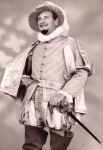
WEBSTER BOOTH AND GILBERT AND SULLIVAN.
Webster Booth and Gilbert and Sullivan.
As a young man, Webster Booth was serving articles as an accountant in Birmingham and taking singing lessons in his spare time at the Midland Institute with Dr Richard Wassall, the organist, and choirmaster at St Martin’s Church in the Bull Ring, Birmingham. He was a tenor soloist in the church and fulfilling engagements as tenor soloist in regional oratorio performances as far apart as Wales and Scotland.
Interior of St Martin’s Church, the Bullring, Birmingham
[image error]
In 1923 the D’Oyly Carte Opera Company came to Birmingham and he managed to obtain an audition with New Zealander, Harry Norris, the D’Oyly Carte conductor. Harry Norris was impressed with Webster’s voice and on his recommendation, he was summoned to see Rupert D’Oyly Carte in London. He was meant to audit a firm’s books in South Wales. Instead, he decided to throw caution to the wind and went to London for the audition instead. He sang five or six songs to an unreceptive D’Oyly Carte and his general manager, Richard Collett.
‘I became increasingly anxious. It was like singing to two mummies…
”I think he’ll do,” Mr D’Oyly Carte said in a rather pained voice, thinking, no doubt, that here was yet another name one the pay-list.
“I should think so, sir,” was the reply.
‘Thus unenthusiastically was I welcomed into the Profession of the Stage.’ (Duet, p. 34)
Although he had been doing well in accountancy, he abandoned his job with little regret to become a professional singer, making his debut with the company as one of the Yeomen in The Yeomen of the Guard at the Theatre Royal, Brighton on 9 September 1923.
In 1924 he married Winifred Keey, the daughter of Edgar Keey, his former headmaster at Aston Commercial School. Winifred borrowed £100 from a relative, with no intention of repaying it, and used the money to follow Leslie to London against her parents’ wishes, or possibly, even without their knowledge. They might have approved of the match had Leslie remained a respectable accountant like his elder brother, Norman, but they were against her taking up with a chorus boy in the D’Oyly Carte. Her family had no more to do with her, partly because of her defiance of their wishes and partly because she had borrowed such a large sum of money under false pretences from a member of the family. Because they disowned her they never knew that she and Leslie had married or that she gave birth to a son, and, thinking the worst of her, imagined that she and Leslie were living together in sin.
Winifred and Leslie’s son, Keith was born the year after their marriage on 12 June 1925, and his birth was registered in Birmingham North.
6 August 1925 – Borough, Stratford. Interest remains unabated in the D’Oyly Carte company, now in the second of their two weeks’ engagement at this theatre. On Tuesday The Yeomen of the Guard was staged, and met with the usual enthusiastic reception from an audience who obviously enjoyed every number. Encores were frequent. The entrance of Mr Henry A Lytton as Jack Point was naturally the signal for an outburst of applause, which was fully justified by his consistently fine work in this well-written role. His apt mingling of humour and pathos is amongst the best things he has ever done. As the other strolling singer Miss Winifred Lawson made a distinct success, singing and acting with real talent. Happily cast also were Mr Leo Sheffield as the grim gaoler and Miss Aileen Davies as Phoebe. Miss Bertha Lewis made a capital Dame Carruthers, whose chief song was rendered artistically; and Miss Irene Hill scored as Kate. Mr Sydney Pointer’s agreeable voice helped him to make Colonel Fairfax a prominent figure, and Mr Darrell Fancourt was a strong Sergeant Meryll. Others who shared in the success were Mr Joseph Griffin as Sir Richard, Mr Herbert Aitken as Leonard, and Mr Leslie W. Booth as the First Yeoman. The stage director is still Mr J.M. Gordon and Mr Harry Norris is the touring musical director.
In 1926 Doctor Malcolm Sargent (as he was then) took over as conductor for the London season at the Prince’s Theatre and Leslie considered that to be one of his happiest and most fulfilling times with the company. It was then when he asked Sargent to listen to his voice and tell him whether he thought he could make it as an opera singer. Sargent told him that if he did not have a private income he should forget about singing in opera as the pay was very poor.
18 November 1926 – D’Oyly Carte Canadian Visit. It has been arranged for the D’Oyly Carte principal company to visit Canada at the end of the season at the Princes on December 19. The company will embark for Canada in the steamship Metagama on the 24th. The tour will open in Montreal on January 4. Mr Richard Collett, the general manager of the company, will be in charge of the tour.
After a stay of two weeks in Montreal, the company will proceed to Toronto and thence to Winnipeg, staying in each of these cities for a fortnight. There will also be visits to Lethbridge, Calgary, Regina, Saskatoon, and Victoria, the capital of Vancouver Island. The tour will end at Montreal in the middle of May. The Mikado, The Gondoliers, The Yeomen of the Guard, and HMS Pinafore will form the repertory. The leading principals, with the exception of Miss Elsie Griffin, will take part in the tour. Miss Griffin’s place will be filled by Miss Irene Hill. Misses Bertha Lewis, Winifred Lawson, Aileen Davies, Messrs Henry A Lytton, Darrell Fancourt, Leo Sheffield, and Charles Goulding are included in the company.
Webster Booth sang Your Tiny Hand is Frozen at the ship’s concert, so impressing principal soprano Winifred Lawson that she was not at all surprised when he soon rose to fame after he left the company.
He stayed with the company for four and a half years but made no great advancement from singing in the chorus, small parts and understudying the tenor principal roles. In Duet, his joint autobiography, with Anne Ziegler, he complained that the only way he would advance in the company was to wait patiently to fill “dead men’s shoes”. Despite this observation, he was one of the few singers allowed to record individual songs from the Gilbert and Sullivan repertoire without prior approval of the D’Oyly Carte family.
His recordings of Take a Pair of Sparkling Eyes and A Wand’ring Minstrel under the baton of gifted conductor, a fellow native of Birmingham, Leslie Heward, who died tragically young, remain unsurpassed and are now available on CD.
Leslie was away on tour for fifty weeks of the year and Winifred, left alone with her small son, was estranged from her parents although living in the suburb of Moseley in the same city. Leslie had suspicions that all was not well at home when he arrived home from a tour with D’Oyly Carte to find Keith sitting by himself on the doorstep. Winifred had left her small son to his own devices while she went dancing. Several years later, she suddenly deserted Leslie and his son.
Leslie searched for Winifred in every town where he happened to be singing, but despite desperate attempts to trace her, he never found her, and eventually divorced her in 1931, citing Trevor Davey as co-respondent. Leslie was granted custody of Keith, who decided on his sixth birthday that he never wanted to see his mother again.
After the stability of a regular – if small – salary from D’Oyly Carte, he was now a freelance performer with a small son to support and no regular money to his name. In the D’Oyly Carte Company he was known as Leslie W. Booth, but now he adopted his middle name and became known as Webster Booth on stage, although his family and close friends continued to call him Leslie for the rest of his life. One of his boyhood nicknames was Jammy, and he once signed a photograph “Yours sincerely, Kingy”!
[image error]
26 May 1939 – Gilbert and Sullivan The scheme of the London Music Festival is designed to embrace all the chief musical activities of the metropolis and it was proper that the popular concerts given by Mr Ernest Makower at the London Museum should have their place in it. The concert given on Wednesday evening was an unusual one, though Mr Makower never keeps to any beaten path in his selection of music for performance. It was felt that no English festival would be really complete if Gilbert and Sullivan was not represented in it. So, with the permission of Mr D’Oyly Carte, Dr Sargent arranged a programme of selections from the famous comic operas. In a preliminary talk, Dr Sargent apologised for going against Sullivan’s expressed wish that his operatic
music should not be performed in concert form.
But no excuse was necessary to justify the admirable singing of the extracts by Miss Irene Eisinger, Mr Webster Booth, and Mr George Baker. We do not often hear Take a Pair of Sparkling Eyes so well sung in a theatre. Miss Eisinger’s songs reminded us that Sullivan’s heroines descended at no great distance from Mozart’s soubrettes, whom we are accustomed to hearing her sing so delightfully. It was good too to hear the music played by the Boyd Neel orchestra, whose contributions included the delightful patchwork overture, Un Ballo and the Iolanthe overture. There was, as usual, a large and enthusiastic audience.
1953 – The Story of Gilbert and Sullivan (film). Robert Morley, Ian Wallace, Owen Brannigan, Harold Williams and voices of Webster Booth, Elsie Morrison, John Cameron.
Webster was annoyed at the billing he was given in this film. He did not appear in it but his voice was dubbed for Colonel Fairfax in the scene from The Yeomen of the Guard and in the final section singing an echoing version of A Wand’ring Minstrel.
The Story of Gilbert and Sullivan
January 1962 When the copyright on Gilbert’s words was lifted at the end of 1961 Webster was asked to present a Gilbert and Sullivan series of programmes on the English Service of the South African Broadcasting Corporation.
[image error]
1963 Only a few weeks before The Johannesburg Operatic Society was due to open with The Yeomen of the Guard the committee decided that they needed a stronger Colonel Fairfax than the person originally cast in the role. Webster (aged 61) was asked to take over what is essentially the juvenile lead. He was a great success in the role.
[image error]
14 June 1963 (from my 5-year diary)
[image error]
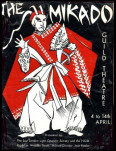
4 to 14 April 1973 – The Mikado, Guild Theatre, East London, The East London Light Operatic Society, Pamela Emslie, Colin Carney, Bernie Lee, Leigh Evans, Irene McCarthy, Jim Hagerty and Jimmy Nicholas, produced by Webster Booth. The musical director was Jean Fowler.
I had moved to East London at the beginning of 1973 and joined the show at the last minute. I had a very happy reunion with Webster.
Jean Collen 23 August 2018.

August 2, 2018
SWEET YESTERDAY – 1945
[image error]While Sweet Yesterday by Kenneth Leslie-Smith was a popular show and would have run for a much longer time had Webster Booth and Anne Ziegler agreed to transfer to a new theatre in December of 1945, it was not a very happy experience for them. In fact, Anne nicknamed it Dreadful Yesterday and was only too happy when it came to an end. From the beginning, they were dissatisfied with the way the show was directed and annoyed that the actor, Hugh Morton, whom they considered to be excellent in his role, was peremptorily dismissed by producer, Lee Ephraim.
[image error]
Possibly the best part of the run was when Germany surrendered and Webster, as the leading man, made this joyful announcement to their Glasgow audience and told them that a Bank Holiday had been declared for the following day.
They were invited to appear in the Victory Royal Command performance on their seventh wedding anniversary, 5 November 1945. It was usual for the theatre where they were performing to close on that occasion but Ephraim refused to close the Adelphi and expected them to do the first act before going on to the Coliseum for the Command performance. Naturally, they refused to do so.
[image error]
On the last night of the production, 8 December 1945 there was a rowdy crowd in one of the boxes. Webster stopped the show and addressed the audience: ‘“Ladies and gentlemen, I am sorry, but we cannot continue until the occupants of that box have retired.”
‘I then sat on a table and, I fear, left Anne standing and looking terrified. I was very much upset.
‘Loud shouts came from all over the house: “Put them out!”… “Carry on!”… “Stop that noise there!”…
…’We finished the show in deathly silence from the box and amidst tremendous applause from the audience… I ordered that the curtain should not be raised as I had reason to believe that a demonstration was to be made by certain people.’ (Duet p. 174)
References to Sweet Yesterday in my book: A Scattered Garland. At the top of the tree. MY BOOKSTORE
26 January 1941 – BBC A new historical romance entitled Sweet Yesterday, by Philip Leaver, with music by Kenneth Leslie-Smith, will be produced in the Home Service programme on January 26. The threatened invasion of Britain by Napoleon inspires the theme of the play. The part of Napoleon will be taken by Philip Leaver. In 1945 this radio musical was turned into a musical play with Anne and Webster as its stars.
29 March 1945 – Scotsman. Edinburgh. Sweet Yesterday premiere: This romantic play of espionage in Napoleonic days is set in London, Calais, and Paris in June, 1805, with elaborate staging and magnificent costumes, the colourful splendour of which is sheer delight.
The plot concerns Louise Vareenes, her fiancé, Captain Edouard Labouchère, and Sir John Manders, an English diplomat, who had been sent from London to Paris on a secret mission in the guise of a Dutch diamond merchant. Louise recognises Sir John, whom she had known in London when she was living there as a refugee during the Revolution; but she does not give him away in a scene at a gay party in Sans-Gêne’s residence in Paris. Edouard, slightly tipsy, gives away information regarding a plan of Napoleon’s against England, and his indiscretion leads to his arrest. Sir John, who also loves Louise, plans for her sake Edouard’s escape from prison. After a great deal of plotting, court intrigue, and swordplay, he finally manages to get the young couple safely away from France, making Louise promise to deliver his message to the Prime Minister in London, revealing Napoleon’s plan. He himself does not manage to escape and is shot while waving to them from the window.
The music of the show is delightful, and the cast could not be better. Webster Booth and Anne Ziegler as Edouard and Louise, are the romantic couple, and their superb singing is a joy. They received a warm welcome on opening night. Solos and duets were heartily applauded and encored. Hugh Morton’s polished acting as Sir John Manders calls for special praise. Doris Hare’s supreme artistry as Sans-Gène makes her performance an outstanding triumph. Mark Daly as Cabouchon, a policeman, appears in many amusing disguises and sings several numbers with characteristic skill. Philip Leaver plays Monsieur de Vigny, prefect of police, cleverly.
A large chorus and attractive ballets are arranged by Frank Staff, with décor by Clifford Pember, and costumes designed by Alec Shanks. Esmé Church is to be congratulated on her production. The orchestra is under the direction of Herbert Lodge.
[image error]
27 April 1945 Sweet Yesterday at Alhambra, Glasgow – To the Alhambra comes a new musical play, Sweet Yesterday. In Sweet Yesterday, which will run for a fortnight are those popular singers, Anne Ziegler and Webster Booth, which alone would ensure any play’s success…
May 1945 – Sweet Yesterday. Lee Ephraim has arranged to present the musical play, Sweet Yesterday, by Phillip Leaver, with music by Kenneth Leslie Smith, and lyrics by James Dyrenforth, and Max Kester, at the Adelphi, on Thursday, June 21. This play, which is finishing a short tour, was originally produced at the Empire, Edinburgh on March 27. Anne Ziegler and Webster Booth will reappear as the romantic couple in the principal parts of Louise and Edouard. Other members of the cast are Doris Hare, Hugh Morton, Mark Daly, Gwen Lewis and Philip Leaver.
14 June 1945 – Sweet Yesterday. Next Thursday has now been decided on for the re-opening of the Adelphi with Lee Ephraim’s presenting of Sweet Yesterday, Phillip Leaver’s musical play of the days of Trafalgar, which has been on a very successful tour since its production at Edinburgh in March. Anne Ziegler plays the French heroine with Webster Booth as a captain who gives away Napoleon’s plan for the invasion of England. Reginald Tate, just returned to the stage from the RAF, is the British ambassador, who helps the young lovers to escape, at the cost of his own life. Hugh Miller is De Vigny; Doris Hare plays Madame Sans-Gêne of merry memory. It is at a party in her house that the trouble happens. Kenneth Leslie-Smith’s music is said to be delightful.
Thursday 21 June 1945 – Ego 8, James Agate, pp 139-140. Why are the moderns afraid of standing up to the ancients, since we are always being told that they are better? People get furious when I compare today’s writers of operettas with yesterday’s. Why do they funk reference to Offenbach, Strauss, and Sullivan, or even Planquette, Messagér, and German, since they hold the theatre of the present to be better than that of the past? I will tell them. Even they would recognise, say, as Sullivan and nobody except Sullivan, if they heard it thrummed on bazookas in the Fiji Islands.
But would they recognise as indubitable Leslie-Smith any extract from Sweet Yesterday, tonight’s affair at the Adelphi, if they heard it poured out by, say, Frankie Schubert’s Otiose Tahitians in some Tyneside Palais de Danse? I doubt it. I suggest they would vaguely attribute it to the school of composers which, between the two wars, supplied the pseudo-Viennese drama with its sound-equivalent. I note that the programme attributes the orchestration to a Mr Ben Frankel, who has certainly seen to it that the score is lush to saturation-point. What harps and tumbrels! What wild ecstasy!
And for the bored critic what struggles to escape! I suppose it would be naughty to ask our modern panegyrists who did the orchestration for Offenbach and those others? The essence of grand opera being to fill a void with teeming nonsense, I didn’t expect this grand operette – all about spying under Napoleon – to do more sensibly.
Webster Booth and Anne Ziegler in good, and oh so frequent voice, Reginald Tate and Hugh Miller exuding nobility and acumen. Doris Hare as a Sans-Gêne born within the sound of the Bow Bells. Wherefore in the Sunday Times on Sunday I shall suggest deletion of the line: “Does France move against England?” The answer could only be: “If it does, it will be civil war!” No, I shall invite these Mossoos and Madarms to toast each other at the boofy at Booloyne without insisting on their nationality.
22 June 1945 – Times: Adelphi Theatre, Sweet Yesterday, Book by Philip Leaver. Music by Kenneth Leslie-Smith. The costumes are gaily Napoleonic; the music, if derivative, is gaily derivative. and there is the pretty cape-and-sword romance of Sir John’s hazardous journey to France in search of a lady who is, unfortunately, betrothed to another. The final scene of the gallant Englishman helping the Royalist pair of lovers to escape while he himself stays to die may seem to contain an intolerable deal of noble behaviour, yet it is tempered perhaps by the willingness of the heroine, a Frenchwoman, to convey to Pitt the fateful tidings that Villeneuve has sailed from Cadiz and will shortly reach Trafalgar. She at first demurs; but the gratitude of a heroine is quickly found to outweigh dull patriotic scruples. These are trifling matters.
The French woman is Miss Anne Ziegler, and she sings delightfully; and her lover, though something of a romantic stick, is Mr. Webster Booth, who also sings delightfully. The dashing Sir John is Mr. Reginald Tate. and though he does not sing at all, he wears his cape and carries his sword with grace and dash. Neither does Mr. Hugh Miller sing, but he is a darkly handsome, well-mannered. and quickwitted policeman, oddly enough assisted in his spy hunting by the blandly amiable Mr. Mark Daly, who sings a number of songs in mellow traditional style. The entertainment seems in the beginning to be nothing in itself, but merely to reflect other things of the kind; yet it grows under the practiced guidance of Mr. Jack Hulbert in glitter and grace.
24 June 1945 – James Agate, Sunday Times: “Mr Webster Booth and Miss Anne Ziegler sing delightfully and very, very often.”
[image error]
28 June 1945 – Stage. Sweet Yesterday, Adelphi: On Thursday of last week Lee Ephraim presented here the musical play by Phillip Leaver, with music by Kenneth Leslie-Smith, and lyrics by James Dyrenforth, Max Kestler and Phillip Leaver, entitled Sweet Yesterday. It is far too long, but it offers the attractions of good singing, good acting, and good dancing. Some of his more conventional melodies are very easy on the ear. There is a march-time song and chorus, entitled Morning Glory, with an irresistible lilt; and the theme song Sweet Yesterday, the love duet Tomorrow, and other numbers are sure to be widely popular. Click on the link below to listen:
On the whole, the music is far superior to the lyrics. Before considering individual performances it has to be said that Jack Hulbert’s production is masterly. On a not excessively big stage, he achieves some brilliant ensembles. Webster Booth and Anne Ziegler act with any amount of dash and zest as the French lovers, and their singing is always delightful. Yet it is a peculiarity of this production that the best parts are not those of the principals.
Reginald Tate as the self-sacrificing Englishman, and Hugh Miller as his policeman opponent, have nothing to sing but something to act, and they act very well. Doris Hare plays Sans-Gêne on broad – sometimes almost too broad – comedy lines, and Mark Daly brings to the part of a rather vaguely defined assistant police-chief a ripe sense of comedy, a remarkable clarity of enunciation as comic singer, and considerable agility as dancer.
The programme is not very helpful to those anxious to identify all the cast; but some of those who appear to deserve special praise are Marjorie Baker, Franklin Bennett, Rupert White, Paula Grey, and Sheila Reynolds. Frank Staff and Cleo Nordi must be praised for a singularly pretty ballet. The costumes and décor of Alec Shanks and Clifford Pember have been already praise; and Herbert Lodge conducts with judgement. (Stage)
29 June 1945 – Spectator Sweet Yesterday is the best musical play London has seen for a long time. It has an excellent plot and can boast of some real acting on the part of Doris Hare, Reginald Tate, Hugh Miller and of Webster Booth as the romantic hero. Its patriotic sentiment is genuinely moving, and the singing of both Anne Ziegler and Webster Booth is distinctly above the average. When I add that, in addition to these merits, the music by Kenneth Leslie-Smith has style and distinction and is well orchestrated by Ben Frankel, I hope my readers will understand that nobody with a taste for musical plays should miss this quite exceptional one. It is
July 1945 – Spectator Extracts from musical plays rarely survive isolation as gramophone recordings since they depend so much upon the visual glamour of their stage settings: Tomorrow and Life Begins Anew from Sweet Yesterday, sung by Anne Ziegler and Webster Booth, are no exception; but in any case these make a bad choice, the number that deserved recording was Morning Glory, sung by Webster Booth and chorus. It is characteristic both of impresarios and recording companies that they rarely know when they have a good thing or the opposite.
31 July 1945 – Robbery. During the run of Sweet Yesterday on July 31 Anne and Webster had their home burgled. The following day details of the burglary appeared in the newspapers. This was not the first burglary at their home. They had been burgled in early 1944, and some time later Webster’s Talbot car was stolen from the garage and was later found abandoned and damaged.
3 August 1945 – Nottingham Evening Post Thieves broke into the home of Anne Ziegler and Webster Booth, the musical comedy singers, at Barnet, and got away with jewellery valued at about £500.
September 1945 – Sweet Yesterday special matinee. A special matinee performance of Lee Ephraim’s musical play Sweet Yesterday, starring Webster Booth and Anne Ziegler, is to be given at the Adelphi Theatre on Tuesday, September 4, at 2.15pm to benefit the Institute of Journalists’ Pensions Fund, which provides pensions for journalists who through age and incapacity are no longer able to follow their profession. Tickets, which can be obtained from the usual agencies or the Adelphi Theatre, are the ordinary theatre prices.
[image error]
Stage Door records have just released a double CD featuring two songs from Sweet Yesterday: LOST WEST END VINTAGE 2 – LONDON’S FORGOTTEN MUSICALS
Jean Collen 2 August 2018.
July 9, 2018
SOUTH AFRICA (2)
Later years in Johannesburg
Anne and Webster had never taught singing before. They had been far too busy performing in the UK to have had the time or even the inclination to teach, although an advert had appeared in the Musical Times in the middle of 1955 indicating that Webster was considering accepting a few selected pupils. As far as I know, he did not teach anyone in the UK as they decided to settle in South Africa shortly afterwards.
[image error]Musical Times 24 February 1955 Singing lessons.
Neither had formal music teaching qualifications but Anne was a competent pianist, and they adopted common sense methods of teaching singing. Above all, they had far more experience of singing professionally at the highest level than anyone else in South Africa who boasted teaching diplomas.
Anne always said that singing was merely an advanced form of speech. They concentrated on good breathing habits and on using correct vowel sounds. The basis of “straight” singing was that one sang through the vowels and tacked consonants to the beginning and end of the vowels to create good diction. There were five vowels: ah, eh, ee, oo and oh and from these vowels all words could be sung. Diphthongs in words such as “I”, were created by a combination of two basic vowels – in this case – ah and ee.
They were very particular about dropping the jaw as notes went higher in pitch. One of their exercises to master this technique was based on the sounds “rah, fah, lah, fah”. It was also essential to keep the tongue flat in the floor of the mouth just behind the teeth, and an exercise on a repeated “cah” sound was good for training the tongue to remain flat and not rise in the mouth to bottle up the vocal sound. The “mee” sound was produced as one would sing “moo”, so that the vowel was covered and focussed. The jaw had to be dropped on all the vowels in the upper register, including the “ee” and “oo” vowels, which one is inclined to sing with a closed mouth. They also emphasized that words like “near” and “dear” should be sung on a pure “ee” vowel, rather than rounding off the word so that it sounded like “nee-ahr” or “dee-ahr”.
The voice had to be placed in a forward position, “in the mask” as Anne always said, so that it resonated in the sinus cavities. They did not dwell on the different vocal registers unless they detected a distinctive “change of gear” from one register to the other.
Webster continued his oratorio singing in South Africa. Drummond Bell, who had conducted the JODS’ production of A Night in Venice the year before, was the organist and choirmaster at St George’s Presbyterian Church in Noord Street. Anne and Webster sang in Messiah at various Presbyterian Churches for Drummond Bell in November 1956 and 1957. It was at the 1957 performance of Messiah at St James Presbyterian Church, then in Mars Street, Malvern, when I, as a thirteen-year-old, heard them sing for the first time. Webster had sung in The Crucifixion at Easter 1957 for Drummond Bell. He also sang in The Dream of Gerontius in Cape Town later that year. The conductor was the young organist Keith Jewell (then aged 27). It was the first time that the work was performed in South Africa. Webster always held Keith Jewell in very high regard, and he was to appear as guest artiste in Anne and Webster’s “farewell” concert in Somerset West in 1975.
[image error]
Webster adjudicated at the Scottish eisteddfod in November 1957. Astutely, he awarded the young Anne Hamblin 95 percent for her singing. She was to do well in her singing career in Johannesburg and is still remembered for her part in Jacques Brel is Alive and Well and Living in Paris in the nineteen-seventies. Webster sang regularly in various oratorios at the annual Port Elizabeth Oratorio Festival, conducted by Robert Selley, and did Elijah at Pietermaritzburg for Barry Smith, director of music at Michaelhouse School in 1963 and The Creation for Ronald Charles, who took the position of director of music for Michaelhouse in 1964.
Anne and Webster appeared frequently in various advertisements on screen and in the newspapers. Early in Anne’s career she had modelled for an advertisement for Craven A cigarettes. She had learnt a valuable lesson at this assignment when the photographer told her that the photograph would mean nothing unless she smiled at the camera with complete sincerity, despite her never having smoked a cigarette in her life. They had also endorsed Ronson cigarette lighters in the late nineteen-forties.
In late 1957 they were in an advert for Lloyd’s Adrenaline cream. According to the advertisement, this cream had given Webster relief to excruciating sciatic pain he had suffered on their fleeting visit to Calgary to appear in Merrie England. Apparently, Anne used the cream whenever she had an attack of fibrositis. Anne also endorsed Stork margarine, a hair preparation for middle-aged women and a floor polish. Webster appeared on film as a French boulevard roué in an ad for a product I have now forgotten, and they were featured in advertisements listening avidly to Lourenco Marques radio, and celebrating a special occasion with a glass of Skol beer. For this last ad Webster was obliged to grow a beard!
[image error]1961 Advertising Skol beer
[image error]Listening to LM Radio
1957 and 1958 were very busy years for the Booths in South Africa. In 1958, for example, they went from one production to another in as many months: Waltz Time in Springs; Merrie England in East London; Vagabond King in Durban; and Merrie England again in Johannesburg. Anne was also principal boy in pantomime in East London at the end of that year.
But 1959 was not quite as busy. They were asked to appear in East London again, this time in Waltz Time, and Anne was the Fairy Godmother in The Glass Slipper for Children’s Theatre towards the end of the year.
From then on they built up their teaching practice and began directing musicals for amateur societies in various parts of the country. In 1959 they did an interesting Sunday afternoon programme on Springbok Radio entitled Do You Remember? in which they told the story of their lives, based on their autobiography, Duet.
By the nineteen-sixties, they were no longer appearing regularly in musicals although Anne took the part of Mrs Squeezum in Lock Up Your Daughters, a restoration musical by Lionel Bart at the end of 1960. Her big song in the show was entitled When Does the Ravishing Begin? A very far cry from We’ll Gather Lilacs. In 1963, aged 61, Webster took over the role of Colonel Fairfax – the juvenile lead – in The Yeomen of the Guard for the Johannesburg Operatic Society at short notice. He had not been JODS’ original choice, but was asked to take over the part when the society decided that the singer in the role could not cope with it. In 1964 Webster and Anne appeared in a Cape Performing Art’s Board (CAPAB) production of Noel Coward’s Family Album, a one-act play in Tonight at 8.30. It could hardly be called a musical although there was some singing in it.
They appeared in a number of straight plays in the nineteen-sixties. Webster was the Prawn in The Amorous Prawn and took the small part of the Doctor in a very long and serious play called The Andersonville Trial in 1962. They played Mr and Mrs Fordyce in the comedy, Goodnight Mrs Puffin at the beginning of 1963 and, just before they left Johannesburg for Knysna, Webster was the Circus Barker in the Performing Art’s Company of the Transvaal’s (PACT’s) production of The Bartered Bride, while Anne played the wife of a circus performer in The Love Potion for the same company at the same time.
They remained in Johannesburg until the middle of 1967. Anne was suffering from hay fever, which grew acuter the longer she remained in Johannesburg. There were times, especially at night, when she could hardly breathe. Anne had a number of allergy tests done, but these did not pinpoint the exact cause of her hay fever. They decided to move to the coast in the hope that Anne’s hay fever would ease, and in the hope of a more peaceful life as they grew older.
At the beginning of 1967, they went on a coastal holiday. They thought Port St Johns in the (then) Transkei was very attractive but slightly too remote for them. The village of Knysna on the Garden Route was more to their taste. They bought a house in Paradise, Knysna and returned to Johannesburg to put their affairs in order and plan their move to the coast.
3 Knysna and Somerset West
It must have given them a sense of déjá vu to receive such a great welcome in Knysna. Anne’s hay fever vanished within a few weeks and she concluded that the dust from the mine dumps in Johannesburg had been the cause of it.
They were soon as busy as ever, with concerts, ranging from oratorio with the Knysna and District Choral Society, to variety concerts with local artistes, and pantomimes, in which Anne not only played the principal boy once again but wrote the scripts into the bargain. They started teaching in Knysna and trained several talented singers, in particular the soprano, Ena van der Vyver, who sang in many performances with them.
Anne was asked to produce several shows for the Port Elizabeth Musical and Dramatic Society, and Webster produced The Mikado in East London in 1973.
[image error]Mikado rehearsal East London 1973 Photo Pearl Harris
Anne’s life-long friend Babs Wilson-Hill (Marie Thompson) visited them in Knysna from the UK, and Anne went to Portugal and the UK to spend a holiday with her and to appear in a British TV show at the same time. Anne and Webster were getting older and Anne, in particular, longed to return home to the UK.
In 1975 they moved to Somerset West, believing that the cost of living there was lower than in upmarket Knysna. They bought a cottage in Picardy Avenue with a beautiful view of the mountain, but despite being nearer to Cape Town they were not offered much radio work and did not find many singing students. Webster ran the Somerset West and District Choral Society and presented several oratorios, but he was not even paid for his work with this society.
In 1976 there was civil unrest in South Africa, particularly in Johannesburg and Cape Town. Babs realised that Anne and Webster were keen to return to the UK, but could not afford to buy or rent accommodation there. She kindly offered to buy a property for them where they could live rent-free for the rest of their lives. The offer was too good to refuse. At the beginning of 1978 they returned to the UK and, to their surprise, soon embarked on their “third” career.
Jean Collen 9 July 2018.
July 7, 2018
MOVING TO SOUTH AFRICA
1 Early days in Johannesburg
Anne and Webster had toured the Cape towards the end of 1955 with the Cape Town Symphony Orchestra and returned to the UK so that Webster could fulfil oratorio engagements over Christmas.[image error]8 November 1955 [image error]
[image error]The Booths arrive back in the UK from their South African tour on 12 December 1955.
Towards the end of January 1956, they were back in South Africa to appear in major cities in the Transvaal, Kimberley, Bloemfontein, Port Elizabeth, East London, Durban, and Pietermaritzburg, before doing a tour of the country districts of the Transvaal. In this second tour, they were accompanied by Arthur Tatler on the piano. There was even a notice in The Rand Daily Mail advising people of the time of their plane’s arrival at 5.50 pm on Saturday afternoon 28 January. [image error]
They were entertained by the Mayor, Leslie Hurd, in the mayoral parlour. The Mayor spoke to the assembled gathering of local celebrities about the fact that he shared a Christian name with Webster.
The critics were rather severe in their judgement of their recital, viewing them as ballad singers rather than operatic singers, although both Dora Sowden from The Rand Daily Mail and Oliver Walker from The Star agreed that Anne and Webster knew how to charm their audiences. The writers of the “women’s’ pages” were much more enthusiastic about them. Amelia from the Women’s Journal in The Star gave a fulsome report of one of their concerts on 20 February 1956:
“When the two appeared in the City Hall on Thursday night the crowd was screaming to stamping stage with enthusiasm even though the artists had been most generous in their encores.
Miss Ziegler wore one of the lovely crinolines which she always chooses for stage appearances. This one had a black velvet bodice and a skirt of gold and black tissue brocade. With her diamond jewellery she was a scintillating figure under the lights.”
They had made up their minds to settle in the country and returned to the UK merely to sort out their affairs and make arrangements to have their belongings shipped to South Africa. They travelled onboard the Pretoria Castle to Cape Town in July 1956. Before they went to Johannesburg they appeared in Spring Quartet in Cape Town under the direction of Leonard Schach.
[image error]Dawson’s Hotel 1972. Thanks to Frans Erasmus for allowing me to use this photo
A great fuss was made of them when they came to settle in Johannesburg. They stayed for several months at Dawson’s Hotel in Johannesburg while they looked for a suitable place to live. They eventually found a pleasant flat at Waverley, just off Louis Botha Avenue in Highlands North, where they lived until they bought their first house in Craighall Park several years later. They were lucky to obtain the services of Hilda, who hailed from the island of St Helena, to be their housekeeper. Hilda remained with them during their eleven years in Johannesburg.
[image error]Anne and Webster in the Hillman Convertible outside their flat in Waverley, Highlands North (1956).
They had an engagement to star in A Night in Venice with the Johannesburg Operatic Society in November, and Webster was asked to sing the tenor solo in Beethoven’s Ninth Symphony at a Symphony concert. The work was presented as part of the Johannesburg Festival to celebrate Johannesburg’s seventieth birthday. Sir Malcolm Sargent, who had conducted Webster at several concerts in London the previous year, conducted the concert, while the other soloists were Webster’s old friend, Betsy de la Porte (contralto), whom he remembered from his early days singing at Masonic dinners, Frederick Dalberg (bass) and the young coloratura soprano, Mimi Coertse, who was beginning to make a name for herself in Vienna.
[image error]Anne and Webster in “A Night in Venice” for the Johannesburg Operatic Society”.
Rather incongruously Webster took the Tommy Handley part in a series of ITMA scripts acquired by Springbok Radio, the commercial station of the South African Broadcasting Corporation (the SABC). This thirteen-week series was entitled Light up and Laugh, sponsored by Gold Flake Cigarettes, and produced by the Herrick-Merrill production house.
Although Anne had driven a car in her youth she had allowed her British driving licence to lapse after she married Webster. The Booths had two cars at their disposal in Johannesburg: a sea-green Zephyr and a pale blue Hillman convertible. Anne had to do a South African driving test and was taught by an Afrikaans ex-traffic policeman. On her first lesson he made her drive along Louis Botha Avenue, the main road from Pretoria through the suburbs into Johannesburg. There was a bus boycott on at the time. Thousands of people were walking along Louis Botha Avenue from the townships of Alexandra and Sophiatown to their work places in the city centre. Anne was very nervous, fearing that she might knock somebody down. Despite the adverse circumstances of her first driving lessons she soon passed her test and proved to be an excellent driver. She went on driving until shortly before her death in 2003.
In the first year or two after their arrival in South Africa they were fêted by everyone, invited to all the society parties and offered all kinds of engagements. Anne took her first non-singing part in Angels in Love, the story of Little Lord Fauntleroy and his mother, Dearest, played by Anne. They replayed their parts in A Night in Venice to Durban audiences. They even went to East London to sing at the city’s Hobby Exhibition, and were heard often on the radio. Not only did they do frequent broadcasts but their records were played constantly by other presenters, who marvelled that such a famous couple had chosen to settle in South Africa.
In 1957 they opened their school of Singing and Stagecraft at their studio on the eighth floor of Polliack’s Corner. They held a party to celebrate the opening of the studio and invited musical and society glitterati, who eagerly crammed into the studio for the occasion and were suitably impressed by the array of pictures of Anne and Webster, taken with internationally famous friends and colleagues, adorning one of the studio walls.
[image error]Polliack’s Corner, Pritchard Street – the building to the right with balconies. The studio was on the eighth floor.
The original plan was that Webster would teach singing, while Anne would teach stagecraft, but in the end they both taught singing, and Anne acted as accompanist to the students. At first there were not many students as their fees per month were much higher than those of local singing teachers. Eventually they reduced the fees in order to attract more students. I began having singing lessons with them at the end of 1960 after I had finished school. The fee was £4-4-0 a month.
[image error]
In 1963 Anne told me that all the local Johannesburg celebrities and socialites who had tried to cultivate them when they first arrived in South Africa, soon left them alone once they realised that they were not as wealthy as they imagined, and actually had to work for a living, and were not free to attend the races and other such “society” activities.
Jean Collen 7 July 2018
June 13, 2018
WILLIAM PARSONS – BARITONE
Several years ago I heard from Maria Ray, the niece of the eminent baritone, William Parsons. I was interested to find out that he had appeared with Webster in various oratorios.
Photo of William Parsons, courtesy of Maria Ray.[image error]
References to William Parsons in my book, A Scattered Garland: Gleanings from lives of Webster Booth and Anne Ziegler , compiled by Jean Collen
17 January 1935 – Queen’s Hall, London. Royal Philharmonic Concert: Choral Symphony (Beethoven) Janet Hamilton-Smith, Margaret McArthur, Webster Booth, William Parsons and the BBC Chorus, conducted by Felix Weingartner. [image error]
The Ninth Symphony (Beethoven) – The second part of the season will declare itself open on Thursday when symphony concerts are resumed at the Queen’s Hall. The Royal Philharmonic Society will give a performance of the Ninth Symphony, conducted by Dr Weingartner. The soloists at the Philharmonic concert are Miss Janet Hamilton-Smith, Miss Margaret McArthur, Mr Webster Booth, and Mr William Parsons; Dr Weingartner will conduct the BBC chorus and will preface the Ninth Symphony with Beethoven’s first.
The Times – Royal Philharmonic Society The Ninth Symphony. To hear the First and the Ninth Symphonies in one programme is an inspiration. If one man’s mind could increase its span in 25 years to the extent shown by a comparison of the two finales, then no one need despair. The resemblance in kind is as striking as the difference in degree, in spite of the fact that Beethoven employed a chorus in the late work and used but a modest Mozartian orchestra in the early. In No. I the violins grope, only much more briefly, for their theme just as the violoncellos do more searchingly in No. 9. And whereas a little scholarly ingenuity might demonstrate that the symphonic movement of No. 1 is directly descended from the ensemble of Italian Opera Buffa, we have it on Wagner’s authority that the choral variations of No. 9 lead back into music-drama. But it is more fitting now to abandon these speculations and to pay tribute to a very great, though not perhaps a flawless, performance of the two symphonies at Queen’s Hall last night under Dr. Weingartner.
The flaws need not be specified beyond questioning the orchestral balance – the choir was conspicuously good in this respect: thus the drummer, using a hand stick, gave an admirably crisp rhythm, but too prominent a sound, while in the slow movement the horns seemed unduly retiring. Dr. Weingartner’s tempo for the trio of the scherzo did not seem too quick but was actually slightly out of proportion to the rest of the movement. But by a similar discrepancy in the choral movement he ingeniously made it possible for the choir to sing all their notes – and sing them they did – so giving the impression of speed without hurry. Another pleasing subtlety of tempo was to be observed in the Minuet of the first symphony, when at the reprise there was just the slightest increase in tension.
The soloists had the great merit of making a quartet, though Miss Janet Hamilton-Smith must be singled out for a special word of praise because she had the right kind of tone, at once clear and rich, and so used her soprano voice that every note told without effort: Mr. Webster Booth, the tenor, and Miss Margaret McArthur equally proved their ability to brush aside all the difficulties of Beethoven’s vocal writing. Mr. William Parsons only just failed to do so in the opening recitative, which if not technically is dramatically exacting – elsewhere he was admirable. The B.B.C. Chorus, fresh from a performance of the same work at the Promenades last week, were worthy of all praise. It was therefore a singularly homogenous and inspiring performance. And the mighty oak looked all the nobler for having the acorn side by side with it.
19 January 1935 – Western Morning News. Royal Philharmonic Concert – the Ninth Symphony. The orchestral playing left nothing to be desired and the choral singing was first class. The BBC Chorus having sung the work under Sir Henry Wood last week was well primed. The quartet consisted of Miss Janet Hamilton-Smith, Miss Margaret McArthur, Mr Webster Booth, and Mr William Parsons – a young team whose names are not very familiar to us, but whose engagement was well justified. The enthusiasm at the end was tremendous, and Dr Weingartner was presented with a laurel wreath.
February 1935 – Musical Times. Royal Philharmonic Society. The concert that reopened the season on January 17 was almost a great one, but not quite, because Doctor Weingartner and the orchestra were not on ideally intimate terms in Beethoven’s first and ninth symphonies. (Unless memory is at sea this was the first time that the London Philharmonic Orchestra as a whole had played either of these works). What Weingartner did to the symphonies was, however, great interpretation. He rose to consummate mastery in the choral movement, which he made one and inevitable.
The BBC Chorus, either inspiring or inspired by the conductor, or more probably both, sang with surpassing brilliance. In the solo quartet Mr William Parsons was joined by three less-known singers on the principle, no doubt, that the great ones are wasted on such music and so short a duty. Miss Janet Hamilton-Smith, Miss Margaret McArthur, and Mr Webster Booth demonstrated that the less-known are also less likely to reduce Beethoven to farce by an ensemble of wobbles.
23 November 1936 – Leeds – Week of Choral Concerts. The week will be a full one from the point of view of choral concerts. Tomorrow Bach’s Mass in B minor will be sung by Leeds Philharmonic Society with Elsie Suddaby, Astra Desmond, Steuart Wilson and
William Parsons for principals, Sir Edward Bairstow conducting. On Wednesday, Bradford Old Choral Society, conducted by Mr Wilfred Knight, will sing Handel’s Acis
and Galatea, and Elgar’s Banner of St George in a miscellaneous programme shared by Olive Groves, Webster Booth and Bernard Ross…
15 December 1936 – Messiah, Albert Hall, Nottingham.
Nottingham Harmonic Society, Lilian Stiles-Allen (soprano), Mary Jarred (contralto), Webster Booth (tenor), William Parsons (bass) conducted by Leslie Heward.
[image error]
Memories of Hiawatha at the Royal Albert Hall.
22 December 1941 – Yorkshire Post Eastbrook Hall was again filled to capacity on Saturday, when the Bradford Festival Choral Society, assisted by the Northern Philharmonic Orchestra, gave its annual performance of Handel’s Messiah. Two changes had been made in the artists since the names were first announced. Perhaps the most important was the change in conductor, Mr Roy Henderson taking the place of Dr Malcolm Sargent, who was conducting the Royal Choral Society in London.
Mr Henderson, who was making his first appearance in Bradford as conductor, created a distinctly favourable impression. Obviously full of energy and enthusiasm himself, he showed that he was able to convey his feelings to the members of the chorus, who responded nobly to his many exacting demands. All the choral numbers were excellently sung, some fine climaxes being achieved. The rehearsals evidently bore fruit, for the singers were replicas of the conductor, singing with intelligence, while the diction throughout was exceptionally good.
Occasionally, Mr Henderson appeared to allow enthusiasm to get the better of him and at such times the speeds tended to be quicker than those to which we are accustomed, but audience as well as singers enjoyed the thrill of it all.
The four solo artists reached a consistently high level. Miss Joan Cross used her flexible voice exceedingly well in Rejoice Greatly, while her legato singing in Come Unto Him was very effective. Miss Muriel Gale’s rich full-toned voice was heard to great advantage especially in O, Thou That Tellest and He Shall Feed His Flock. Mr Walter Widdop, (who took the place of Mr Webster Booth) proved to be a great favourite. His opening solos were somewhat marred because Mr Henderson did not make the accompaniments flexible enough; but the latter items were very enjoyable. Mr William Parsons, who had the assistance of Mr John Paley in The Trumpet Shall Sound, showed his dramatic power, especially in The People that Walked in Darkness.
Mr H.S. Hurst was at the organ, of which instrument much more frequent use might have been made for its tone to act as a contrast to that of the orchestra.
30 December 1939, Plymouth Guildhall
[image error]
18 August 1941 Dartington Hall Acis and Galatea
[image error]
7 December 1943 – Yorkshire Post – Huddersfield Choral Society.
Huddersfield Choral Society are to perform Handel’s Messiah at Blackpool Opera House on January 2. Dr Malcolm Sargent will conduct the Liverpool Philharmonic Orchestra, and the principals will include Mary Jarred, Webster Booth and William Parsons.
Anne Ziegler was the soprano soloist on this occasion.
2 January 1944 – Messiah. 2.30pm New Opera House, Blackpool. Festival performance in aid of the Mayor’s Services Welfare Fund. Anne Ziegler, Mary Jarred, Webster Booth, William Parsons, with Huddersfield Choral Society, Liverpool Philharmonic Orchestra (Ena Baga at the organ) conducted by Dr Malcolm Sargent
4 January 1944 – Yorkshire Post Huddersfield Choir at Blackpool Two hundred and forty members of the Huddersfield Choral Society visited Blackpool on Sunday to give what proved to be a memorable performance of Handel’s Messiah. An audience of more than 3,000 which packed the New Opera House in the Winter Gardens showed great enthusiasm at the close and gave the choir, the Liverpool Philharmonic Orchestra, the principals, Anne Ziegler, Mary Jarred, Webster Booth and William Parsons and the conductor, Dr Malcolm Sargent, an ovation. The choir were in best voice and under Dr Sargent’s inspiring leadership provided a most artistic performance.
After the performance, the Mayor of Blackpool (Councillor J. Parkinson) and Dr Sargent warmly supported a suggestion voiced by Mr Frank Netherwood, the president of the Society that the success of the society’s first appearance in Blackpool should lead to further visits.
29 October 1947 Albert Herring (Britten)
[image error]
Here are William Parsons and Thea Phillips singing “Waltzes from Vienna”.
May 15, 2018
Dinner with Webster and my parents at Juno Street, Kensington (1963)
I invited Webster to dinner with my parents during those two halcyon weeks when I was playing for him. As we sat
chatting in his car in front of my house in Juno Street, Kensington after he had driven me home one evening, I asked him, rather nervously, whether he would like to come to dinner with us one night the following week. I had not imagined that he would agree as he was probably quite tired after spending the day teaching in the studio in the city but to my great surprise he seemed delighted at the idea and agreed to dine with us on the following Tuesday, as we finished fairly early at the studio on that day.
As you will have read in a previous post, we had a memorable lunch at Dawson’s Hotel earlier that day. After he had taught Winnie, the only pupil who arrived for her lesson that afternoon, he drove me home in the Hillman and stayed to dinner with my parents. He took an immediate fancy to our dog, Shandy, whom he christened “my girlfriend,” and kept her on his knee for the rest of the evening.
[image error]Webster and Shandy – My girlfriend
My father offered him a whisky, and he informed us that whisky had never done him any harm so far. He teased me because I had refused a drink at lunchtime when we dined at Dawson’s Hotel. My father looked suitably alarmed at the thought of his innocent teenage daughter being plied with alcohol. No doubt he was relieved that I had turned down the offer.
[image error]My parents – David and Margaret Campbell.
[image error]Webster and me
Webster talked to my parents about Britain, and all the artists he and Anne had known and worked with during the war, people like Max Miller and Tommy Handley and many others. He looked so at home in our sitting room, smoking and drinking whisky, with Shandy on his lap. Who would have thought that he was a famous tenor with a world-beating voice? I didn’t know nearly as much about his illustrious career then as I do now, years after his death. Neither he nor Anne ever boasted about their achievements as so many lesser people do.
When he was about to go home and was standing on our balcony, which was enclosed with an indigo bougainvillea creeper in those days, my mother said, “Thank you for looking after Jean.” He regarded me fondly and replied, “I think it’s Jean who’s looking after me”. My heart was bursting with happiness to think of the perfect day I had spent with him.
Although I can remember that lovely day, fifty-five years ago, as though it were yesterday, it still saddens me to think that Dawson’s is no longer the plush hotel it once was, while my mother, father, Shandy, and Webster himself are all long dead and gone.
The next few days passed all too quickly and soon Anne was phoning the studio to say she had returned from her holiday with Leslie Green, the radio announcer. She had sent me a card from Fish Hoek and Webster had pretended to be cross because she had not yet written to him at that juncture.
[image error]Card from Anne.
On the last night of my accompanying stint, Webster drove me home, and said quite pensively, “I shall miss my Sylvia Pass next week,” referring to the route he took from Juno Street to his home in Buckingham Avenue, Craighall Park.
”I have enjoyed having you play for me, darling,” he added.
”So have I,” I replied fervently.
”We’ll see you on Tuesday at your lesson, dear,” he said.
The following day my great friend Ruth Ormond phoned to say that Webster had raved about me at her lesson that Saturday morning. He said I was a very good accompanist and the whole experience of playing for him had boosted my ego. I was a lovely girl and he had so enjoyed having dinner at my home and meeting my parents. Ruth had the impression that Anne was slightly put out by his unstinted enthusiasm.
“He seems very much taken with you,” said Ruth.
That afternoon I phoned Anne to welcome her home and we chatted for an hour about her trip, and how they had always dreamed of owning a smallholding in England, but they would never be able to afford one now. And so ended two wonderful weeks. I had enjoyed playing for the pupils, had acquitted myself creditably and had got to know Webster very well indeed. I thought that I would probably not be accompanying for Webster again. But luckily that was not the case. I went on accompanying for Webster in the studio for some time to come.
Jean Collen 15 May 2018.
February 16, 2018
JANET LIND Née REITA NUGENT (Dancer, singer and actress)
I was interested to hear an interview with Janet Lind done in Australia in 1979 on YouTube recently. It may be heard at the following link: https://youtu.be/Wyz3T2Zj6YY
She started her career in Australia as an acrobatic dancer under her birth name of Reita Nugent. I heard from Stephen Langley who uploaded the youtube video and he gave me a link to a British Pathé video of Reita Nugent doing some amazing dancing in 1928. Indian Rubber Muscles (1928)
Stephen commented as follows:
Thanks for your most informative account of her life – your blog really does her justice and the clippings are most interesting. I believe she was an extraordinary artist, and I agree that her recordings with Webster Booth reveal a great artist and natural talent. It was I who supplied the 1978 interview sourced from a deceased estate and put it on my YouTube site.
I I remember her well as I used to purchase 78s off her in the early 1980s. By then she ran a small second hand shop ( op-shop) and was not in the best of health. Years of chain smoking and I suspect alcohol consumption had aged her considerably although she maintained her poise.
She arrived in England via a long-running show in Berlin in the 1930s. Without any vocal training and unable to read a note of music, almost by chance she began singing, and changed her name to Janet Lind. She did numerous broadcasts on the BBC, not only as a singer with the big band of Louis Levy, but also as an actress in a number of straight plays.
[image error]An early broadcast in October of 1935.
The songs featured in the YouTube broadcast are with Louis Levy’s brassy big band and she is remembered today primarily as a regular vocalist with this band.
[image error]Louis Levy
1936. A letter in one of the Australian papers.
[image error] [image error]
She also made several recordings with Webster Booth for HMV in 1936 and 1937, and these are very much more pleasing to my ear than the songs she sang with Louis Levy’s band. Despite her lack of musical and vocal training she had an excellent natural voice. Click on the link to listen:
This Year of Theatreland (1936)
She flourished as a performer in England in the last half of the 1930s, often singing songs made popular by Jessie Matthews. She was billed as “the girl with a smile in her voice”.
[image error]Music from the Movies with Louis Levy and his Symphony Orchestra, Janet Lind and Robert Ashley.
[image error]21 January 1937
[image error]25 July 1939
She returned to Australia in 1940 with her husband, Mr Hall.
[image error]10 October 1940
[image error]8 April 1941
I am not sure how long she continued her theatrical career in Australia, but by the 1970s she was living in Melbourne and running an op- shop – some people called it an antique shop; others were less complimentary about it. In her 1979 interview she had no trace of an Australian accent. Presumably that is why she took part in a number of straight plays on the BBC in the 1930s.
Stephen added: A friend of mine recalls buying a pile of 78s from her in the late 70s and she sheepishly said…’I am on some of those’… He didn’t believe her at the time and only realised later that she had been a star. I also recall sitting in the studio at 3CR ( as an observer) a few days after she died and there was a big tribute to her from those who knew her better than I . I have this on a cassette somewhere so may try and upload it too.
Despite her theatrical and vocal success in earlier decades, in old age she was casual and deprecating about her achievements. Many other singers who studied singing earnestly would have given a lot to have had such a successful career!
Jean Collen
16 February 2018/updated 28 February 2018.
JANET LIND Née RITA NUGENT (Dancer, singer and actress)
I was interested to hear an interview with Janet Lind done in Australia in 1979 on YouTube recently. It may be heard at the following link: https://youtu.be/Wyz3T2Zj6YY
She started her career in Australia as a dancer under her birth name of Rita Nugent. She arrived in England via a long-running show in Berlin in the 1930s. Without any vocal training and unable to read a note of music, almost by chance she began singing, and changed her name to Janet Lind. She did numerous broadcasts on the BBC, not only as a singer with the big band of Louis Levy, but also as an actress in a number of straight plays.
[image error]An early broadcast in October of 1935.
The songs featured in the YouTube broadcast are with Louis Levy’s brassy big band. She is remembered today as a regular vocalist with Louis Levy’s band.
[image error]Louis Levy
1936. A letter in one of the Australian papers.
[image error] [image error]
She also made several recordings with Webster Booth for HMV in 1936 and 1937, and these are very much more pleasing to my ear than the songs she sang with Louis Levy’s band. Despite her lack of musical and vocal training she had an excellent natural voice. Click on the link to listen:
This Year of Theatreland (1936)
She flourished as a performer in England in the last half of the 1930s, often singing songs made popular by Jessie Matthews. She was billed as “the girl with a smile in her voice”.
[image error]Music from the Movies with Louis Levy and his Symphony Orchestra, Janet Lind and Robert Ashley.
[image error]21 January 1937
[image error]25 July 1939
She returned to Australia in 1940 with her husband, Mr Hall.
[image error]10 October 1940
[image error]8 April 1941
By 1941 she had returned to Australia with her husband. I am not sure how long she continued her theatrical career there, but by the 1970s she was living in Melbourne and running a shop – some people called it an antique shop; others were less complimentary about it. In her 1979 interview in 1979 she had no trace of an Australian accent. Despite her theatrical and vocal success in earlier decades she was casual and deprecating about her achievements. Many other singers who studied singing earnestly would have given a lot to have had such a successful career!
Jean Collen
16 February 2018.
February 15, 2018
WEBSTER BOOTH AND ANNE ZIEGLER BROADCASTS: 1927 – 1939
BBC broadcasts by Webster Booth and Anne Ziegler dating from 1927 to 1939. The information (including names of music contained in many broadcasts) comes from online editions of The Radio Times. The Genome project of the BBC has uploaded complete magazines from the 1920s and 1930s on to the internet and I have extracted all the entries featuring Webster and Anne’s broadcasts.When decades of the forties and fifties are eventually online I shall publish a second volume in due course.
[image error]
[image error]Charles Ernesco
What I find particularly interesting is the fact that many of these broadcasts include a list of the music performed. Webster Booth made regular broadcasts with Fred Hartley and his Quintet, and with Charles Ernesco and his Quintet.
[image error]Pianist, Fred Hartley.
[image error]Fred Hartley and his novelty quintet with Webster Booth – 1 July 1935.
[image error]Charles Ernesco and his quintet with Webster Booth.
Webster began broadcasting in 1927 but it was not until 1934 when Anne made her first broadcast from Liverpool, known then by her birth name of Irené Frances Eastwood.
[image error]Anne (as Irené Frances Eastwood) in The Wandering Scholar in Liverpool .
.[image error]
Irené Frances Eastwood makes her first broadcast from Liverpool. Nancy Evans also took part in this broadcast. She and Anne were studying with John Tobin at the time. They remained close friends all their lives.
[image error]
[image error]Nancy Evans and second husband, Eric Crozier. Her first husband was Walter Legge who later married Elisabeth Schwarzkopf.
[image error]Second wife of Walter Legge.
Once Anne moved to London and met Webster during the filming of The Faust Fantasy in December 1934, he introduced her to the powers-that- be at the BBC. Below is a still from the film in which Webster played Faust and Anne played Marguerite.
[image error]
Soon she was making many broadcasts, often taking the starring role in musical comedies and operettas. [image error]
Anne and Webster did not do regular broadcasts together until 1938 when Webster’s second wife, Paddy Prior sued him for divorce, citing Anne as the co-respondent. The divorce was finalised in October 1938 and Anne and Webster were married the following month.
The book is available as a PDF file or an EPub at the following link: Webster Booth and Anne Ziegler: Radio Broadcasts Volume 1
Jean Collen, 15 February 2018.