Jean Collen's Blog, page 13
April 22, 2019
PROGRAMMES AND ADVERTS – 1953 – AUGUST 1956
[image error]Elected Joint presidents of Concert Artistes’ Association.
Webster Booth was the guest of Roy Plomley on Desert Island Discs on the BBC Home Service on 3 April 1953.
.
[image error]Opening of Desert Island Discs script. Sadly the recording is not available on the BBC webpage.
[image error]11 April 1953 – hardly something to commend him!
[image error]Anne as Mistress Knight and Webster as King Charles II in And So to Bed.
[image error]24 April 1953 – a poor crit for And so to Bed
in Coventry.
[image error]Diamond Wedding anniversary of Anne’s parents April 1953.
[image error]
[image error]Anne and Webster went on an extensive tour of And So to Bed in the midst of many other commitments, particularly Merrie England in the Coronation Year.
[image error]Booths sing in concert version of Merrie England in Calgary on May 9 1953.
[image error]Merrie England at Luton Hoo with Douglas Fairbanks Junior
[image error]Merrie England at Luton Hoo.
[image error]
[image error]
[image error]
[image error]CAA dinner 1953 Anne and Webster as presidents.
[image error]Advert – 1954
[image error]8 April 1954
[image error]15 April 1954
[image error]30 April 1954
[image error]16 May 1954
[image error]
[image error]May 1954
[image error]Hiawatha concert had been cancelled for lack of interest. It was replaced by an extract from Aida.
[image error]21 September 1954 – Attack of Shingles. Far from “staying indoors for four or five days,” the pain troubled him periodically for many years to come.
[image error]28 October 1954
[image error]24 November 1954 – Victoria Congregational Church, Derby from Webster’s score.
[image error]15 December 1954
[image error]Webster’s score 10 December 1954
[image error]
[image error]
[image error]31 December 1954
[image error]I do not know whether Webster and Anne had any singing pupils in the UK.
[image error]
[image error]27 May 1955 Gilbert and Sullivan concert.
[image error]29 April 1955 – Sir Malcolm Sargent’s birthday concert.
[image error]
[image error]24 June 1955 – St Andrew’s Hall, Glasgow.
[image error]
[image error]27 July 1955. Anne and Webster were presented to Princess Alexandra.
[image error]13 August 1955 Promenade Concert.
[image error]13 October 1955 Lady Audley’s Secret.
[image error]Lady Audley’s Secret – Wimbledon Theatre.
[image error]25 October 1955
[image error]November 1955 0n the way to South Africa for tour of Cape Province.
[image error]12 December 1955 – Arriving back in the UK again.
[image error]15 December 1955 Messiah, Huddersfield.
[image error]Huddersfield Town Hall
[image error]Return to South Africa for a further tour.
[image error]2 February 1956 Crit by Dora L. Sowden in Rand Daily Mail.
[image error]On “platteland tour”. Having tea in Bethal with accompanist, Arthur Tatler.
[image error]
[image error]27 June 1956
[image error]Passenger List, Pretoria Castle – 12 July 1956.
[image error] On board the Pretoria Castle, 12 July 1956.
[image error]Signing the menu on board ship.
[image error]15 August 1956
Advertisements


April 21, 2019
PROGRAMMES AND ADVERTS – 1951 -1952
[image error]30 March 1952 – Merely Players at Drury Lane
[image error]23 March 1951
[image error]April 1951
[image error]May 1951 from a talk on the BBC.
[image error]HIAWATHA – Croydon – 31 May 1951
[image error]11 July 1951
[image error]12 July 1951
[image error]3 August 1951, Webster and Anne with accompanist, Geoffrey Parsons. Unfortunately the photo is very poor but the only one I could find of them together. Geoffrey Parsons went on to be the natural successor to Gerald Moore.
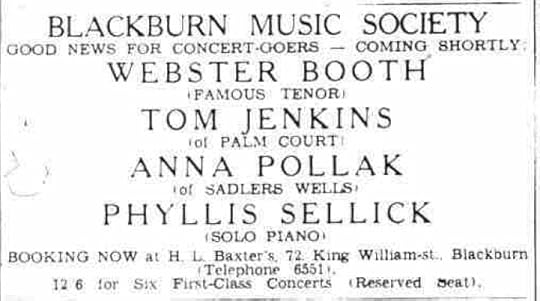 15 September 1951 – Blackburn
[image error]From Webster’s score – 20 October 1951
[image error]Duet – first published on `15 September 1951 by Stanley Paul.
The Booth’s joint autobiography was published in 1951 and is now long out of print. I digitised the book several years ago and John Marwood was kind enough to proofread it for me. It is now available in paperback and as an epub at: https://www.lulu.com/duettists
[image error]
[image error]16 October 1951.
[image error]
[image error]
[image error]Webster’s voice was heard twice – dubbed in a scene from Yeomen of the Guard and at the end, singing an echoey version of A Wand’ring Minstrel. He was not very pleased with his billing in the film.
[image error]22 January 1952
[image error]Creation 29 April 1952 – Sir Malcolm’s birthday.
[image error]May 1952 – Anne and Webster featured in an article in the magazine.
[image error]Photo in the John Bull article. Anne and Webster with Smokey.
[image error]22 June 1952
[image error]Anne in Merrie England at Chichester.
[image error]21 August 1952
[image error]27 October 1952
[image error]26 December 1952 – Warwick Castle. Webster’s second cousin, Trevor Luckcuck and a friend cycled to the event from their home in Solihull.
Advertisements
Programmes and Adverts (1949 – 1950)
1949 was not a very happy year for the Booths. Anne had to be admitted to hospital early in the year and Webster’s good friend, Tommy Handley died suddenly in January of that year. The great Wagnerian tenor, Walter Widdop died in September. In October, Edwin Booth, Webster’s father was taken ill at a Birmingham concert where Anne and Webster were singing and died there, only a few days after his eighty-third birthday. The family managed to keep the news from Webster and Anne until after the concert although they were worried because they had noticed that the family seats had been vacated.
[image error]13 January 1949 Funeral of Tommy Handley.
[image error]Webster and Leslie Bridgmont at Tommy Handley’s Funeral, Golders Green Crematorium.
[image error]
[image error]Memorial Service at St Paul’s – 9 February 1949. Tommy Handley Memorial Choir record The Long Day Closes and God be in My Head
[image error]21 April 1949
[image error]
[image error]
[image error]8 July 1949 Jersey Concert
[image error]Singing at a broadcast (1949)
[image error]7 September 1949 Funeral of Walter Widdop
[image error]17 October 1949 Death of Edwin Booth, Webster’s father.
[image error]Edwin Booth’s will. Irene Constance Louise Booth was Edwin Booth’s second wife.
[image error]
2 December 1949 Anne.
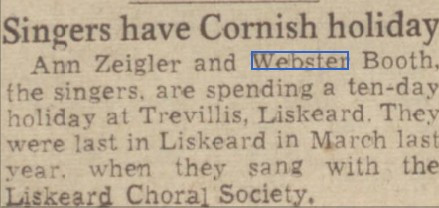 5 January 1950
[image error]12 January 1950 Town Hall, Cheltenham.
[image error]
[image error]
[image error]22 March 1950 Central Hall, Derby.
[image error]
[image error]9 April 1950
There was a great protest about this Sunday evening concert in Kirkcaldy. Even when the concert went ahead, the criticism of it was very bad! I wonder whether the bad crit was because the concert had taken place on a Sunday.
[image error]
[image error]May 1950
[image error]9 July 1950
[image error]23 September 1950 Cheltenham.
[image error]24 October 1950
[image error]
[image error]14 November 1950. Hull concert at Tivoli.
[image error]Anne and Webster
April 15, 2019
AUSTRALIAN TOUR – 1948
Anne Ziegler and Webster Booth were received in Australia with just as much enthusiasm as in New Zealand. Clarence Black, the Australian pianist from Adelaide remained their accompanist for the tour in Australia. They were guests of honour at countless civic and mayoral receptions throughout the country and Tasmania. Most of the photos here are taken from contemporary newspapers so are of a poor quality.
While most Australian critics agreed that their concerts were well-received and every auditorium was filled to capacity with delighted audiences, they felt that the lighter show music was more suitable to their light voices than the operatic excerpts and solos.
[image error]
[image error]
[image error]
[image error]
On 4th August Anne showed some of her wardrobe to the press:
[image error]
[image error]
[image error]
[image error]
[image error]
[image error]
CONCERT OF SHY KISSES, RAPT GAZES – Sydney critic
Love was comprehensively examined in the second programme given by the English singers, Anne Ziegler and Webster Booth, at the Town Hall on Saturday night. It was a programme of pretty bon-bons, the musical equivalents of pink ribbons and silver paper and St Valentine cards.
The audience was delighted. One difference between this sort of concert and a concert of serious music is that the audience listening to serious music is always deep in frowns and scowls and anguish of soul. The audience for these singers is all smiles – dreamy smiles, sentimental smiles, bitter-sweet smiles, nostalgic smiles. The singers make love sound as if it is made up entirely of honey and roses.
Mr Booth and Miss Ziegler, in their duets, gazed raptly upon each other, held hands, dated about in conventional operetta poses, and with all sang so sweetly that it seemed inevitable that a pink little Cupid should leap up from the piano and fire silver arrows at them.
ROSE FOR USHER
Miss Ziegler, who looked as pretty as a portrait, even went so far as to present an usher with a red, red rose and to bless his prosaic life with a shy, shy kiss when he brought her the first beautiful bouquet of flowers. Yet he slunk away from this enviable moment of rapture, as though unaware of a moment in paradise.
The voices are not outstanding, but they are better than most that have been heard in Australian musical comedy and operetta for some years. The singers know how to control the sweet natural tone in a way that will extract the last drop of sentimental unction from it.
Notable illustrations of this were their duets – Stay Frederick, Stay from The Pirate of Penzance, the waggishly comic presentation of The Keys of Heaven and the medley of ballads which included Until, Love’s Old Sweet Song and I Hear You Calling Me.
Clarence Black, their accompanist, played several well-worn solos in the certain knowledge that his choice of items would make his audience sigh with pleasure.”
[image error]13 August 1948 – Newcastle
[image error]
On the 16th August in Newcastle Anne lost her watch valued at £350. They reported the matter to the police but there was a happy outcome to this loss:

[image error]Concert in Newcastle City Hall.
[image error]Sydney Concert – 16 August 1948.
[image error]Reception in Gloucester Room of Australia Hotel, Sydney.
Unfortunately, Anne also lost a valuable diamond ring worth £900 in their suite at Hotel Australia, Sydney. The police were called in and someone sifted through all the bags of the vacuum cleaners, but this ring was never found. There were several newspaper photographs of Anne and Webster looking (in vain) for this ring.
19th August 1948. Anne and Webster are pictured scouring the floor of their hotel suite trying to find the lost ring. Some of the more unkind reporters suggested that the “lost ring” was a publicity stunt!
[image error]
[image error]20 August 1948. A less favourable Sydney criticism.

[image error]7 September 1948 – Brisbane concert and His Majesty’s Theatre.

Anne and Webster go through their music for one of their Australian performances.
[image error]
[image error]Brisbane Hotel flat.
[image error]Brisbane 29 August 1948.
[image error]2 September 1948 Woolongong
[image error]Adelaide concert 16 September 1948
[image error]16 September – Hobart concert.
[image error]

Webster and Anne meet the mayor of Adelaide’s daughter, Barbara McLeay at a civic reception in their honour.
[image error]
[image error]5 October 1948 – Perth.
[image error]
[image error]10 October 1948 Perth
[image error]

Before they left Australia after their extensive tour of the country, Webster had the last word about the critics in the following cutting:
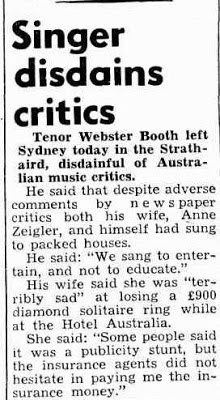
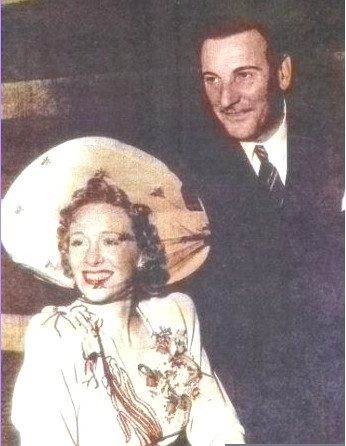
Anne and Webster arrived back in the UK on board the Strathaird after seven months away, on their tenth wedding anniversary, 5 November, just in time to do a broadcast on In Town Tonight.
Their film The Laughing Lady opened in Australia shortly after they left the country. Unfortunately, Australian critics were almost universal in their scathing comments about this film. It occurred to me that after being acclaimed and treated like Royalty on their extended tour of New Zealand and Australia in 1948, only ten years later they were living in South Africa in very much reduced circumstances.
Jean Collen©
May 2011. Updated 4 April 2019.
Bibliography:
Booth, W, Ziegler, A, Duet, Stanley Paul, 1951
Davies, P, List of New Zealand cuttings (1948)
New Zealand Newspaper Archive
Advertisements
NEW ZEALAND TOUR – 1948
List compiled by Mrs Pamela Davies, Church House, Great Comberton, Pershore, WR10 3DS Worcestershire, England.
Pamela Davies who collaborated with me in writing Do You Remember Anne Ziegler and Webster Booth? at the same time as my own book , Sweethearts of Song: A Personal Memoir of Anne Ziegler & Webster Booth (published at the same time by LULU ) was given a scrapbook of Australian and New Zealand press cuttings related to Anne and Webster’s tour there in 1948 from the late Jean Buckley.
[image error]Jean Collen 1991
[image error]Jean Buckley with Trixie
[image error]Pamela Davies
[image error]
[image error]
New Zealand list compiled by Mrs Pamela Davies, Pershore, England.
On the trip to Australia aboard the maiden voyage of the
Imperial Star
the ship called at various South African ports, so Anne and Webster managed to do two broadcasts each in Cape Town, Johannesburg and Durban. They picked up the ship again in Durban to sail on to Melbourne to meet their Australian accompanist from Adelaide, Clarence Black. Unfortunately their regular accompanist, Charles Forwood, was not in the best of health at this time, so chose not to travel with them on the tour.
Clarence Black studied piano and organ at the Elder Conservatorium of Music, Adelaide. When he graduated he became the organist at the Regent Theatre and gave organ recitals each Sunday afternoon. In 1951 he accompanied Peter Dawson (aged 69, but undiminished in voice and personality by advancing age) on his concert tour of Australia.
[image error]
[image error]
[image error]Broadcasting at the SABC in Johannesburg.
Broadcasting
in Johannesburg.
WORLD FAME: Attractive looking pair Ann Ziegler and her husband Webster Booth are known by their voices in every home possessing a radio. New Zealanders will shortly have the opportunity of seeing them in the flesh, for they are already headed for a tour of the Dominion. They are about to set sail from Liverpool with South Africa as their first port of call.
Arrival
in New Zealand 1948
Dominion (Wellington)/19/5/48 TWO ENGLISH SINGERS DUE NEXT MONTH
Webster Booth and Anne Ziegler shortly due in New Zealand will make their first appearance at the Town Hall on June 1 and 2. These two stars who have achieved popularity through their contributions to light opera, musical comedy, screen and radio entertainment are assured of a warm welcome in this country as apart from their value as entertainers there is always a certain curiosity as to their personalities.
Booth after leaving school was a clerk in a firm of Birmingham accountants. Before this he had sung in the choir of Lincoln Cathedral. His pleasing alto voice changed to tenor and after seeing the possibilities at the professional stage he applied for an audition, was given one and passed through the ranks as a tenor inEngland and Canada.
*Miss Ziegler has been known to the public since early childhood. She actually gave a recital in London while still in her teens*.
*This
section is completely inaccurate. She was
not
known
to the public in her childhood and gave a singing recital at the
Wigmore Hall, London when she was twenty-three years of age.
At one stage she was one of the best known of principal “boys” in pantomime in the provinces and crossed the Atlantic to play a leading part in the musical comedy Virginia .
Webster
went on to oratorio under Dr Malcolm Sargent with the Huddersfield
Choir and the Liverpool Philharmonic Orchestra. His career has been
almost meteoric.
Otago Daily Times, 26 May 1948 Otago Times.
SINGING DUO -TOUR OF NEW ZEALAND –
ANNE
ZIEGLER AND WEBSTER BOOTH
Two
of the most popular British singers, Anne Ziegler and Webster Booth,
are to make a tour of New Zealand in the near future.
Established favourites with a world audience through the medium of
their broadcasts and recordings, they are also well known on the
British stage and have made appearances in several films, the most
recent of which
The
Laughing Lady
has
still to be released in this country. Although ranked high as singers
of more serious musical forms both artists are equally well known in
the realm of musical comedy.
Their
partnership commenced with the film version of
Faust
and
their recent stage successes have included a revival of
The
Vagabond King
and
a new musical
Sweet
Yesterday
.
Oratorio, opera and the concert platform have all been covered by
this versatile duo.
Auckland Herald/29/5/48
Arrival from Sydney
[image error]Arrival in New Zealand.
[image error]New Zealand Concert Tour 1948.
[image error]Auckland Town Hall.
Wellington Town Hall
[image error]Wellington Town Hall.
[image error]Concert at Wellington town hall.
The Dominion (Wellington) 2 June 1948. Last Night’s Audience Were Enthralled. Finally, Tonight TOWN HALL 8PM – THIS IS YOUR LAST OPPORTUNITY TO HEAR WEBSTER BOOTH (Tenor) And ANNE ZIEGLER (Soprano) England’s King and Queen OF SONG With CLARENCE BLACK At the Piano. Ballads and Operatic Arias blended with Gems from Musical Comedy by Artists who “sing and act superbly” and who bring to the Concert Platform the romance and glamour of the Stage and Screen.
RESERVES
STILL AVAILABLE At Begg’s Today, 8/- and 6/- plus Tax, Also DAY
SALES AT 8/- plus Tax, And at the Town Hall tonight From 7pm
Direction: Begg’s Celebrity Artists Co.
2 June 1948 Evening Post ENGLISH SINGERS DOMINION OPENING CONCERT.
A
reception as enthusiastic as any seen recently in the Town Hall was
accorded the English singers Anne Ziegler and Webster Booth, and the
Australian pianist Clarence Black when they opened a tour of the
Dominion last night. A large audience was present.
3 June 1948 Re cocktail party the previous day, given at 33 Club in their honour attended by WB alone; AZ “indisposed”. Anne Ziegler Taken Ill : Last Night’s Concert Postponed.
Because of the sudden illness of Anne Ziegler, the Webster Booth-Anne Ziegler concert did not take place last night. Practically every seat in the Town Hall was filled when Mr C A Rendle representing the promoters announced the postponement.
Miss Ziegler became ill
between 5 and 6 pm. At first it was hoped that the sickness
would prove to be a passing one and even the doctor in attendance
thought that such might be the case, but after 7pm it was
seen that Miss Ziegler was still suffering, and in no condition to
make a public appearance. In these circumstances, there was no option
but to cancel the concert.
Those present were informed that it was hoped the concert would be held on Saturday night next, and all tickets and reserves would be good for that date. The audience took the announcement in good part.
This arrangement has been made
possible by the cancellation of the Nelson concert.
7 June 1948 Evening Post – second Wellington
concert on Saturday night in the Town Hall. Evening Post
CAPTIVATING PAIR – Anne Ziegler and Webster Booth
Of all the celebrity artists to visit New Zealand over the past few years possibly none have had the captivating stage manner so typical of the English singers Anne Ziegler and Webster Booth. At their second Wellington concert presented in the Town Hall on Saturday night, this popular couple shared all their songs with the audience rather than sung to them. Their unselfconscious miming and acting throughout both solos and duets won for them a staunch following among even the more staid concertgoers accustomed to the dignified impersonality of other artists.
They opened the programme with
the duet Stay,
Frederick Stay from The
Pirates of Penzance (Sullivan)
in which their voices blended perfectly. There was not one
false note among their choice of numbers, every item being of the
type for which they are best
known. Solos and duets were both
received enthusiastically by the audience, but it was in the duets
that they were accorded the greatest storm of applause.
One of the most popular duets was Deep in My Heart (from The Student Prince) and We’ll Gather Lilacs (from Novello’s Perchance to Dream) as an encore was another success. Their duo programme included The Love Duet (Madame Butterfly), Coward’s I’ll See You Again, Life Begins Anew (Sweet Yesterday) and Laugh at Life from their latest film The Laughing Lady. A medley of ballads which warmed the hearts of older members of the audience comprised Until (Sanderson), Love’s Old Sweet Song (Molloy) I Hear You Calling Me (Marshall) and Two Little Words (Brahe).
Miss
Ziegler’s first solo was her own arrangement Strauss’s Tales
from the Vienna Woods which
was superbly sung and she also sang One
Fine Day from
Puccini’s Madame
Butterfly.
Webster
Booth sang The
English Rose (German)
his recording of which is considered one of his best, The
Lord’s Prayer and Break
of Day from
the film Waltz
Time.
As
a climax to their programme and by popular request the two artists
presented their own arrangement of the traditional Keys
of Heaven.
They burlesqued it delightfully and the audience loved it.
As
accompanist Clarence Black was sympathetic and never intrusive and
his solo items proved so popular that he was recalled to play several
encores.
8 June 1948 Nelson Evening Mail. At the School of Music last night.
11 June 1948 Taranaki Daily News, Opera House, New Plymouth last night.
14 June 1948 Manawatu Evening Standard, Palmerston North Opera House on Saturday night. Their second and final concert in Palmerston North to be on Tuesday evening.
[image error]
15 June 1948 Wanganui Herald Wanganui Opera House last night.
18 June 1948 Hawkes Bay Herald Tribune, Hastings. Municipal Theatre, Hastings last night. To appear in Napier tomorrow night.
21 June 1948 Daily Telegraph, Napier. Napier Municipal Theatre on Saturday night.
[image error]
21 June 1948. Gisborne Herald. Talk given today by Webster Booth to members of Gisborne Rotary Club, where he complained about the lack of back-stage heating in New Zealand’s theatres.
22 June 1948 Gisborne Herald. Gisborne Opera house last night.
24 June 1948 Rotorua Post. Municipal Theatre, Rotorua last night. Interview given by Webster Booth today. The eleventh concert of their tour, the first concert with back-stage heating at Municipal Theatre, Rotorua.
25 June 1948. Wailatu Times, Hamilton. Theatre Royal, Hamilton last night.
29 June 1948. Northern Advocate. Whangarei Town Hall last night.
30 June 1948 Auckland Star. Town Hall, the first of two Auckland concerts.
6 July 1948 Timaru Herald. Theatre Royal, Timaru last night.
6 July 1948 Re great demand for tickets for recital on Wednesday, July 14th at Civic Theatre: followed by one at St James Theatre, Gore on Thursday July 15.
7 July 1948 Otago Daily Times Arrived Dunedin yesterday,
an interview on their arrival, and photo of Anne Ziegler and Webster Booth in their hotel lounge.
[image error]
7 July 1948 Evening Star, Dunedin. Another interview this morning apparently when Webster and Anne were at the Town Hall, inspecting the stage.
8 July 1948 Town Hall, Dunedin Otago Daily Times Otago Daily Times
COMMUNITY SING
A special attraction at the Sing to be held tomorrow in the Strand Theatre in aid of the Food for Britain campaign will be Mr Clarence Black, pianist and accompanist for Anne Ziegler and Webster Booth. Donations may be sent to Mr J F Himburg, Charles Begg, who with Mr A J Pettitt will assist Mr M P Desmoulins to lead the singing.
Town Hall last night (Dunedin) Otago
Daily Times
8 July 1948 CHARMING VOICES ANNE ZIEGLER AND WEBSTER BOOTH – EXCELLENT COLLABORATION
On the concert stage Anne Ziegler and Webster Booth are a law unto themselves.
Their programme at the Town Hall last night could hardly be described as a vocal recital for their stage technique was a combination of musical comedy and film art. That it had charm and musical qualities was undeniable, for the large audience was attentive and enthusiastic throughout. Anne Ziegler has a pleasant soprano voice which she used without effort, or forcing and she moves about the stage with an easy grace and charm born of habit.
Webster Booth has a fine tenor voice with excellent quality and carrying power in his high register and in his singing of The Flower Song from Carmen and The English Rose from Merrie England:
FLOWER
SONG (CARMEN) he
gave a glimpse of what he might do with such a voice had he chosen a
more serious musical career.
Anne Ziegler’s most serious contribution was They Call Me Mimi from La Bohème. It was, however in the duets that the audience found their greatest pleasure. The collaboration was excellent and though I found their gestures and movements on the stage somewhat meaningless there was a sophisticated charm about their deportment that disarmed criticism. They chatted informally, made jokes with
a local flavor and took the audience into their confidence. The response was all that could be expected and the artists frequently expressed their gratitude for the reception they received.
The pianist, Mr Clarence
Black, was a sympathetic accompanist even to lending a hand with
dramatic gestures in the duet The
Keys of Heaven:
KEYS OF HEAVEN https://clyp.it/ygd3sncd
He also played two groups of
solos with competence and musical feeling.
9 July 1948 Otago Daily Times Town Hall (Dunedin) last night
[image error]
9 July 1948 Otago Daily Times FINAL PERFORMANCE- OVERSEAS SINGERS – AUDIENCE CAPTIVATED
Anne Ziegler and Webster Booth captivated the large audience in their appearance at the Town Hall last night. Once again their duets revealed their greatest audience appeal and their musical comedy numbers, in particular, were received with a spontaneous and enthusiastic applause which compelled them to return to the stage again and again.
The Love Duet from Puccini’s Butterfly was their most delightful number in the first half of the programme, the pure tenor and pleasing soprano voices blending perfectly.
In One Fine Day after the interval Anne Ziegler again thrilled the listeners. To finish their programme the artist sang a medley of popular ballads. This started a clamour for encores which engaged the singers for some 15 minutes longer than the scheduled programme and the audience persisted in its attempts to recall them even after they had prepared to leave.
The pianist, Clarence Black, again proved a sympathetic accompanist and a talented solo performer.
.The concerts continued at various places until the end of July. After that Webster and Anne continued their tour to Australia.
New Zealand song recorded by Anne and Webster in 1948: BLUE SMOKE (RURU KARAITIANA)
Jean Collen 4 April 2019.
PROGRAMMES AND ADVERTS – 1946 – 1947
1946 and 1947 seemed to have been taken up by many concerts presented by Harold Fielding. One of the highlights of 1947 was singing in the broadcast to celebrate the eightieth birthday of Queen Mary. Apparently, Anne and Webster were favourites and she had asked that they should be included in the concert.
[image error]
[image error]
[image error]6 January 1946
[image error]
6 February 1946 VARIETY tour (Harold Fielding) Usher Hall, Edinburgh, Harold Fielding presents
WEBSTER BOOTH AND ANNE ZIEGLER, Radio’s Famous Romantic Vocalists. Usher Hall, Edinburgh, Only remaining tickets 4/- and 3/- unreserved,
Town Hall Sheffield, Usher Hall Edinburgh,
St Andrew’s Hall Glasgow,
Caird Hall Dundee, City Hall Newcastle.
Webster was taken ill with ‘flu at the Usher Hall concert. He appeared in the first half and was unable to continue singing after the interval, so Anne finished this concert on her own and played a number of subsequent venues without him.
When he arrived in Edinburgh yesterday he
was feeling unwell, and the medical advice he received was to return
to London. He endeavoured, however, to play his part in Edinburgh
last night, but it was necessary for Miss Ziegler to take the second
appearance on her own.
Mr Booth last night expressed to the
Courier and Advertiser
his extreme disappointment at being unable to come to Dundee. He was
returning to London this morning.
9 February 1946 – Glasgow Herald.
Celebrity Concert in Glasgow – Webster Booth Ill. by Our Music
Critic.
Celebrity
concerts in most cases are in a class by themselves, proclaiming
beforehand the visiting artists only and making no mention of the
music they will play or sing. This emphasising of the personal side
must have made all the more disappointing the absence last evening in
St Andrew’s Hall, Glasgow, of Webster Booth through illness. His
partner, Anne Ziegler, carried on bravely without him, and a crowded
audience gave her the usual warm reception, expressing this time
sympathy as well as pleasure.
Her repertoire is familiar to her host of admirers, who attend to hear their favourites. But the supporting artists might have had some publicity beforehand for their chosen numbers. Vina Barnden, a pianist new to Glasgow, played Chopin, Liszt, and a more modern group. She has nimble fingers, a light touch that did not on the whole give sufficient depth of tone to her interpretations, and a rather restless idea of rubato.
12 May 1946
[image error]
[image error]Laughing Lady
[image error]
[image error]
Harold Fielding concerts featuring
Webster Booth and Anne Ziegler:
30 July 1946 – Leas Cliffe Hall,
Folkestone. Fee £150
3, 4, August 1946 – Winter Gardens,
Margate, Fee £300 for two nights.
24 August 1946 – Theatre Royal, Dublin, with Beatrix Clare, Herbert Dawson, Webster Booth and Anne Ziegler, fee £250
8 September 1946 – New Opera House,
Blackpool fee £150
22 September 1946 – Winter Gardens,
Eastbourne
26 September 1946 – Leas Cliff Hall,
Folkestone
29 September 1946 – Pier Pavilion, Llandudno
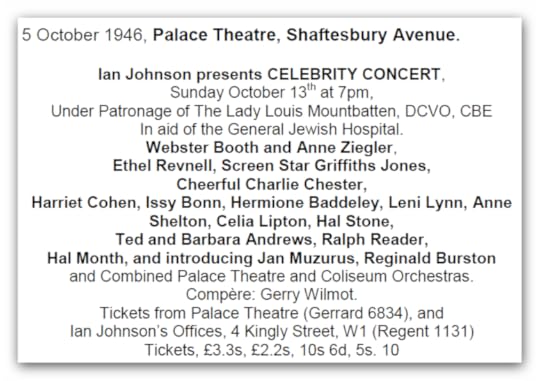
[image error]16 October 1946
16 October 1946 – Town Hall, Birmingham.
Concert presented by the Incorporated Guild of Hairdressers, Wigmakers and Perfumers.
Webster’s father, Edwin Booth and Webster’s brother, Edgar were hairdressers. Edgar was running Booth’s Ladies Hairdressers at 157 Soho Road, Handsworth, which had been the family home of the Booth family when Webster was born.
[image error]1 December 1946
[image error]
[image error]
[image error]12 May 1947
[image error]
[image error]
[image error]
[image error]10 December 1947
[image error]26 December 1947
April 14, 2019
THE ANNE ZIEGLER AND WEBSTER BOOTH STORY – PART ONE.
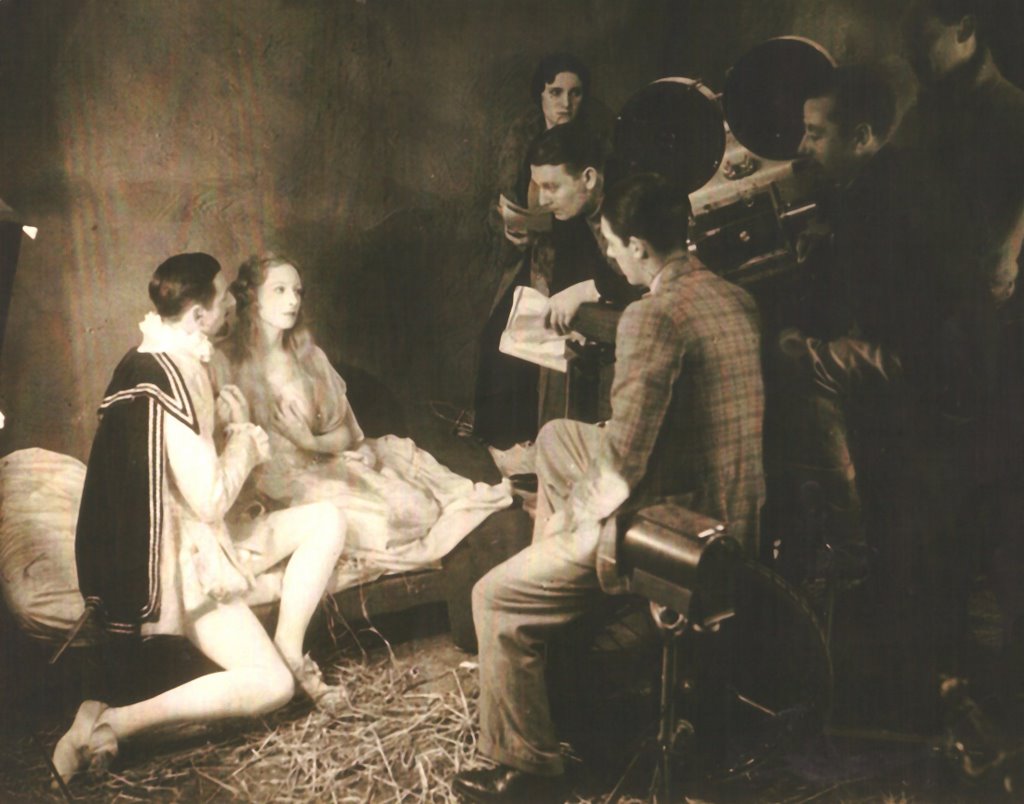
Anne Ziegler and Webster Booth first met during the filming of The Faust Fantasy in 1934/35
Anne Ziegler, the widow and singing partner of Webster Booth, died in Llandudno, North Wales, on 13 October 2003, at the age of 93. Her death brought an end to an era in British entertainment before and after the Second World War. Her death brings an end to an era for me also.
I was seventeen when I first met them at the end of 1960. They were already middle-aged, in the same age group as my parents, their top-flight stage career in Britain behind them. I was too young to have seen them at the height of their fame, but even then I thought them a shining couple, as I still do over fifty-nine years later.
Although I was too young to have seen them on stage in the days of their great success in the forties and early fifties, I believe their success was due to the wonderful blend of the voices, creating a special, instantly recognisable sound, and their contrasting good looks, she beautifully gowned, he in full evening dress. Above all, they were instantly likeable with charming personalities, and possessed an elusive ability to make people adore them.
In their day, in the thirties, forties and fifties, Anne Ziegler and Webster Booth were stars of stage, screen, radio, concert halls and variety theatres, and made over a thousand 78 rpms, either as duets or solos. Webster was also in demand as tenor soloist in oratorio: Handel’s Messiah, Jephtha, Samson, Acis and Galatea, Judas Maccabbeus, and Elgar’s Dream of Gerontius, to mention but a few. Before the Second World War, he had sung Coleridge Taylor’s Hiawatha’s Wedding Feast in full Native American costume, and in 1955 on the occasion of Sir Malcolm Sargent’s birthday concert, Sir Malcolm requested particularly that he should be the tenor soloist in the same work.
Webster became a Mason, and was a proud member of the Savage Club, where he often sang at their legendary Saturday night entertainments. These entertainments were arranged by Joe Batten, the eminent sound recordist and producer at Columbia Records. When Webster had something important to do he always wore his distinctive striped Savage Club tie to bring him luck. While still in his early thirties, Webster was made a Life Governor of the Royal Free Hospital in Hampstead.
Webster was also in demand as tenor soloist in oratorio: Handel’s Messiah, Jephtha, Samson, Acis and Galatea, Judas Maccabbeus, and Elgar’s Dream of Gerontius, to mention but a few. Before the Second World War, he had sung Coleridge Taylor’s Hiawatha’s Wedding Feast in full Native American costume, and in 1955 on the occasion of Sir Malcolm Sargent’s birthday concert, Sir Malcolm requested particularly that he should be the tenor soloist in the same work.
By the time he met Anne Ziegler during the filming of the colour film Faust in 1934, he was married to his second wife, Paddy Prior. He had divorced his first wife, Winifred Keey in 1931 after she had deserted him and their small son, and married Paddy Prior, a talented dancer, comedienne and soubrette in October 1932. The couple’s marriage was happy in the beginning and they appeared together in several concert parties, the Piccadilly Revels, Scarboroough in 1933 and Sunshine at Shanklin in 1934.[image error][image error]
Shortly after he met Anne Ziegler he took the lead in an ill-fated production of Kurt Weill’s A Kingdom for a Cow at the Savoy Theatre. His leading lady was the well-known French singer Jacqueline Francel. In Anne and Webster’s joint autobiography, Duet, he said that the play was probably ahead of its time in its handling of complex social issues, which made it too heavy for audiences of the day, who expected lighter fare in musicals. Apart from the unusual subject matter, rehearsals were stormy and the direction contradictory, so despite Weill’s pleasing music and a strong cast, the play closed after just three weeks. The London Dramatic Critic from The Scotsman gave the piece a good review, and mentioned that “Mr Webster Booth as the hero also deserves praise for his fine singing”.
Webster and Paddy Prior, his second wife.
Sadly, his marriage did not last after he met Anne. Paddy divorced him, naming Anne as co-respondent. He and Anne were married on Bonfire Night in 1938. Webster Booth soon formed a duet partnership with his wife in addition to his extensive recording, film, oratorio and concert work.
Webster was contracted to HMV for over twenty years and recorded more than a thousand solos, duets, trios and quartets. His lighter recordings include selections from Ivor Novello musicals with Helen Hill, Olive Gilbert and Stuart Robertson; Theatreland at Coronation Time with South African soprano Garda Hall, and Sam Costa; excerpts from Snow White with Nora Savage, conducted by George Scott-Wood, the composer of Shy Serenade. He made many anonymous recordings as a member of the HMV Light Opera Company. He was the “with vocal refrain” on a series of records made with Carlos Santana and his Accordion Band on the Brunswick label, and on a record of Chappell Ballads with Jack Hylton’s band. Carlos Santana was one of the many aliases used by Harry Bidgood. His better known alias was Primo Scala, the leader of another accordion band, but he did many other things like conducting film music and arranging music and while he was still at school he had written the music for his school song.
His recordings of the late nineteen-thirties and nineteen-forties encompassed oratorio, opera and ballads, as well as duets with Anne. Webster’s more serious recordings were often under the baton of Malcolm Sargent, Lawrance Collingwood, Basil Cameron or rwick Braithwaite with the Hallé, the Liverpool Philharmonic or the Royal Philharmonic Orchestras. His recordings with piano accompaniment were nearly always with the eminent accompanist Gerald Moore.
Webster enjoyed telling the story of a particular recording session with Gerald Moore. They had one more song to record before the session ended. The song was Phil, the Fluter’s Ball, and Gerald Moore suggested that they should see how fast he could play it and how fast Webster could sing it with clear diction. This was no problem for the finest accompanist in the world and for a singer who had spent four years performing Gilbert and Sullivan with the D’Oyly Carte Company. His oratorio recordings are particularly fine. The solos in Samson from the moving recitative O loss of sight and the following aria,Total Eclipse, to the fiery Why does the God of Israel sleep?, with its unrelenting Handelian runs, demonstrate how easily he moved from one mood to another, always singing with flawless technique and clear diction.
He made recordings with other distinguished singers of the day in operatic ensembles, such as the quartet from Rigoletto, with Noel Edie, Arnold Matters and Edith Coates, to the trio from Faust with Joan Cross and Norman Walker. He sang duets with soprano Joan Cross and baritone Dennis Noble from La Bohème and the Miserere from Il Trovatore with Joan Cross. He recorded duets with the baritone Dennis Noble from the Victorian and Edwardian Excelsior and Watchman, what of the night? to the brilliant extended scene in Rossini’s The Barber of Seville. He recorded the duet in Madame Butterfly with Australian soprano Joan Hammond.
When Joan Hammond first arrived in England from Australia, she had a sweet lyrical soprano voice. She sang her first Messiah in England with Webster as tenor soloist under the baton of Sir Thomas Beecham. But by the time they recorded the Madame Butterfly duet, several years later, Joan Hammond had become a dramatic soprano and her voice was very much bigger than it had been when she first arrived in England. Joan had to stand much further away from the microphone than Webster in order for the sound engineer to get the balance for the duet right. Webster also sang excerpts from Carmen with the Sadler’s Wells chorus and orchestra, with Dennis Noble, and with Nancy Evans, Anne’s old friend from Liverpool, as Carmen.
At the beginning of the Second World War, he recorded The Lost Chord at the Kingsway Hall in London, accompanied by the organist Herbert Dawson. As they were reaching the end of the song, the All Clear siren sounded, which meant they had to redo the recording to cut out the sound of the siren. There had been no air raids at that early stage of the war so presumably the sirens were being given a trial run. The blitz was yet to come and would destroy Webster’s beloved Queen’s Hall.
ANNE ZIEGLER (1910 – 2003)
Anne was born Irené Frances Eastwood in Liverpool on 22 June 1910. From over two hundred other hopefuls she was chosen for the part of Marguerite for the film, the Faust Fantasy: no doubt her blonde good looks and charming personality counted for nearly as much as her attractive lyric soprano voice. It was in the making of this film, which commenced shooting in December 1934, that she met Webster Booth, playing opposite her as Faust.
During the making of the film they fell in love , although at the time he was married to his second wife, Paddy Prior, and had a son, Keith, by his first marriage to Winifred Keey. Four years later, after his divorce from Paddy in times when divorce was not as common or acceptable as it is today, Anne and Webster were married on Bonfire Night in 1938.
During those intervening four years, Anne was an overnight success on radio in The Chocolate Soldier, sang in a concert party in 1935 called Summer Smiles during the summer season at Ryde, an engagement she did not really enjoy much. There she acquired her first devoted fan, a girl aged 15, who kept in close touch with her for the rest of her life.
She played principal boy in her first pantomime, Mother Goose, at the Empire Theatre, Liverpool, which starred George Formby. In this pantomime she met Babs Wilson-Hill, the principal dancer in the show, who was to remain her closest friend for most of her life. During the 1936 pantomime season she and Babs appeared in another highly successful pantomime, Cinderella, in Edinburgh, this time with the Scottish comedian Will Fyffe as the star attraction.
Anne and Webster were both extremely popular and prolific broadcasters on the BBC, as well as the various European commercial broadcasting stations geared to the British market, such as Radio Lyons, Radio Luxembourg, Radio Normandy and Radio Eireann. Glancing through copies of The Radio Pictorial, commercial radio’s equivalent of The Radio Times, one sees frequent articles about them. Radio stars in the thirties obviously held the equivalent status of pop stars today.
Despite Anne’s success on stage and radio, recording companies had not shown any interest in putting her voice on record. She made a test recording of the Waltz Song from Merrie England in 1935, a recording which Webster managed to obtain from HMV. Eventually she did make a few solo recordings and sang in a Noel Coward medley with Joyce Grenfell and Graham Payn, but the bulk of her recordings were duets with Webster. My favourite solo recording of Anne’s is Raymond Loughborough’s A Song in the Night, which she sang on a Pathé film short in 1936.
Webster went to New York with her, hoping to find some stage work of his own, but, despite his great voice, he did not make any impact on the cut-throat American musical world. He attended various auditions in New York as an unknown, while in England he was already an established performer in oratorio, recording, films, and the West End stage. He returned to England, crestfallen at his lack of success, and resumed his numerous engagements. Anne, in the meantime, was hailed as a Broadway star and offered a film contract in Hollywood, with the idea that she would be the successor to Jeanette McDonald. The offer was tempting, but she turned it down to return to England and marry Webster Booth when his divorce from Paddy Prior was made final.
For most of her life Anne maintained that marriage to Webster meant more to her than any Hollywood contract, although in later years she sometimes reflected on what her life would have been like had she accepted the contract and become a Hollywood star.
Even before Webster’s divorce was made final they formed a duet partnership on stage, in addition to their solo work. From April 1938 they were singing together for Clarkson Rose. This is an advert from September of 1938, the month before Webster’s divorce was finalised.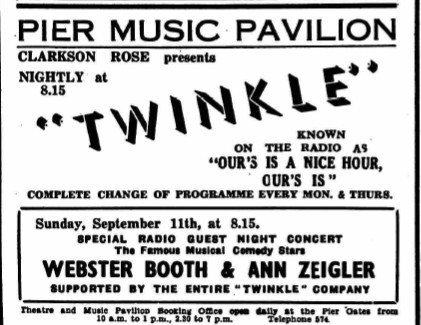
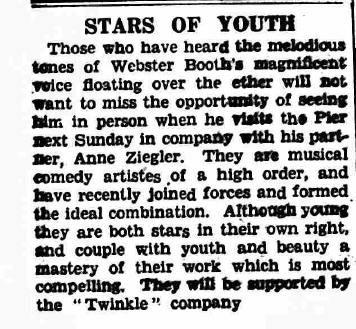
Their first duet recording was made in the year after their marriage in 1939 – If You were the Only Girl in the World, with A Paradise for Two on the flip side. Before this official recording she had sung with him as an anonymous soprano voice in a radio series in 1937 called The Voice of Romance. In this series he too was anonymous, but by this time, most people would have recognised his distinctive voice.
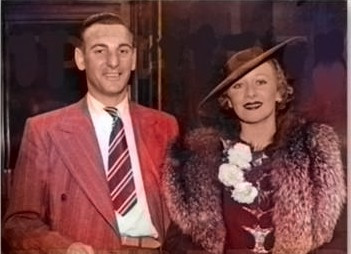
In 1940 they accepted an offer from agent Julius Darewski to join the variety circuit. The money was good and they were well received on the variety halls, always doing their act without the aid of a microphone. If Webster Booth’s voice filled the Albert Hall when he sang the tenor part in Coleridge-Taylor’s Hiawatha in Native American dress under the baton of Malcolm Sargent, the same voice, in harmony with his wife’s, filled the variety theatres from the London Palladium to all points of the United Kingdom.
They were the epitomé of glamour and romance. He was tall, dark and handsome. He was always in immaculate evening attire, she in a range of crinoline gowns, some designed by Norman Hartnell. Their act was interspersed with what seemed like off-the-cuff banter, but every word and move was meticulously planned, and the lighting plot carefully worked out for the most telling impact.
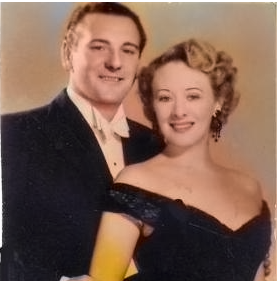
Apart from the usual operatic arias and musical comedy duets, Anne and Webster sang and recorded a number of ballads, arranged as duets, and an interesting and difficult arrangement of Chopin’s famous Nocturne in C sharp minor, arranged by Maurice Besley. As often as not Webster would arrange the duet part himself if none had been written.
Jean Collen COPYRIGHT 2005
Updated April 2019.
Join: The Webster Booth-Anne Ziegler Appreciation Group on Facebook.
[image error]Paddy Prior and Webster
[image error]Anne and Webster (1957)
Advertisements
April 11, 2019
FICTION by FIONA COMPTON
[image error]
List Price:$16.00 Price: $14.40 You Save: $1.60 ( 10% )Prints in 3-5 business days.
Derek Bailey is one of Britain’s finest tenors. He never forgets Elspeth McPhail, the young Scottish house-keeper who worked for him when he was starting his career in the thirties. Although he becomes famous and successful, his personal life is far from fulfilling. This novel covers Derek’s professional and personal life over a span of forty years including his two unsatisfactory marriages and his five-year affair with a young woman forty years his junior. This book was first written in 1977 and lay, half-forgotten, in a drawer for over thirty years. Fiona Compton took it out and revised it in 2010 and eventually published it. It was her first work of fiction and her first novel.
The review of the novel was written by translator and proofreader, PEARL HARRIS when the book was first published on Aug 21, 2010. Once I started reading Fiona Compton’s romantic novel, I could not put it down. I soon became involved in the emotions and events of the main characters’ lives. Derek Bailey attracts females and trouble wherever he goes, due to his charisma and talent. How the women in his life deal with subsequent events must touch a chord in the heart of every female reader who has ever fallen prey to the charms of a philanderer. The writing style is flowing and the dialogue authentic. Place descriptions set the scene firmly in 20th-century Britain. I particularly enjoyed the Scottish dialect (the author having been born in Scotland, this too is genuine!)and the descriptions of daily life in London. This is no run-of-the-mill romantic novel. Due to the author’s musical knowledge, “I can’t forget you” has a depth and authenticity lacking in most novels of this genre. You will not want to put this book down before discovering what the final outcome of the hero’s romantic entanglements is to be.
[image error]
[image error]
List Price:$15.00Price: $12.00 You Save: $3.00 ( 20% )Prints in 3-5 business days.
Although this collection of fifteen short stories is fictional, it reflects Fiona Compton’s wide experience of life. Thus there are stories about singers and accompanists, teachers and pupils, and older people trying to adjust to inevitable changes in their lives. Stories are set in South Africa and Britain, and take place on board ship, in schools, homes, studios or theatres. Several stories are loosely based on particular incidents in her life, but are still fiction rather than fact, such as Dux Scholar, Wise Words in the Chippy, Michelle, By Appointment, and The Song is Ended.
REVIEW: By Pearl Harris Oct 12, 2015
Each short story in this collection is refreshingly different and will touch a chord in the heart of most female readers. All the characters are masterfully and realistically portrayed. Many of the incidents depicted are those which affect all women at various times in their lives and with which the reader can readily empathise. Some stories bring a chuckle and a feeling of optimism, others a feeling of sadness. All left a lasting impression on me. Fiona Compton’s voice is a charming mix, evidence of her Scottish, South African and musical roots. These stories particularly appeal to me as an expatriate South African, as many of them richly evoke the South African lifestyle. However, all are timeless in their own right and certainly worth reading by both women and men, whatever their nationality.
This review was provided by mjpotenza: Any fan of short stories will enjoy this selection of entertaining tales by Fiona Compton. The author presents women’s viewpoints, emotions, and experiences accurately and uniquely. The women characters are interesting, complex, and sympathetic (the men are mostly cads). One wonders how much is autobiographical. The writing is descriptive and precise. The style flows nicely, making for easy and pleasant reading. The Wedding Singer, Miss Stratton Disappears, and The Sunset Gleams, to name a few, all have the right combination of humour and sadness. In short, these well-written stories are very enjoyable.
[image error]
[image error]
List Price:$15.00 Price:$13.50 You Save: $1.50 ( 10% )Prints in 3-5 business days, Just the Echo of a Sigh and Faint Harmony concentrate on the life and career of famous British tenor, Malcolm Craig and his tumultuous private life. He marries three times, but none of his marriages work out well. Even his third “perfect” marriage to soprano Marina Dunbar who becomes his singing partner, has many problems. The four novels in the Malcolm Craig series are a mixture of Roman à clef, and biographical-autobiographical novel, in other words, a novel about real life, overlaid with a façade of fiction. The four novels in the Malcolm Craig series are broadly based on fact, but many incidents are purely products of my imagination and do not pretend to be true. The first two novels included in this volume are based on my knowledge and research into the lives of “Malcolm Craig” and “Marina Dunbar” before I met them, overlaid with many fictional elements.
Pearl Harris wrote: I thoroughly enjoyed Just the Echo of a Sigh – the first in a series about famous English tenor, Malcolm Craig, and his complicated love life. Obviously written by an author with extensive musical knowledge, the novel transports the reader back to the era in Britain before World War II, with rare glimpses into the lifestyle of those times. Ms. Compton has a rare gift – she brings her characters to life through their dialogue and her fine description. I look forward to reading many more of her novels.
By Pearl Harris, Oct 14, 2015: Having thoroughly enjoyed Just the Echo of a Sigh – the first in this series by Fiona Compton – I could not put Faint Harmony down until the last line. Ms. Compton’s characters are living and breathing – and her knowledge of the musical scene in Britain after the beginning of World War 2 lends authenticity to the description of her characters and of those times. I can highly recommend all 3 novels in this series to readers, with interests especially in music, Britain, South Africa and the not always idyllic lives of the rich and famous.
[image error]
[image error]Love Set to Music/A Song for You and Me (Volumes 3 and 4 of THE MALCOLM CRAIG SERIES)
List Price:$15.00 Price: $13.50 You Save: $1.50 ( 10% )Prints in 3-5 business days.
Love Set to Music and A Song for You and Me, the last two novels in the Malcolm Craig series are set in South Africa from 1956 to 1966. Malcolm Craig and Marina Dunbar settle in the country after problems with the Inland Revenue in the United Kingdom. They open a studio in Johannesburg and start teaching in addition to their theatre work. Despite the “sweethearts of song” image of their marriage, their relationship remains stormy but matters are eventually resolved in a highly unexpected way. These last two novels are largely based on my own private experiences which I have recreated as fiction thanks to my memories, contemporary diaries, and a fair share of imagination. As to the “key” of these novels – some might work it out for themselves but I will never disclose it to anyone as long as I live!
REVIEW: By Pearl Harris
Oct 12, 2015, I highly recommend all 3 novels in this series by Fiona Compton. In her easy flowing style, the author draws the reader into the lives of the various characters and the environment in which their destinies cross. I could empathise with the emotions experienced by the vulnerable young Kate and did not stop reading until the last line. I await the 4th novel in this series…..
By Pearl Harris
Jan 13, 2016 I read the 4th in this series without being able to stop until the very last line. Fiona Compton traces the thoughts and emotions of her various characters realistically and with special insight. Seeing the story unfold from the different viewpoints makes fascinating reading. I highly recommend this competent novelist and hope to see more of her writing in future.
Fiona Compton/Jean Collen 11 April 2019
Read about the books at: FIONA’S STORE:
Advertisements
April 10, 2019
BOOKS ABOUT WEBSTER BOOTH AND ANNE ZIEGLER by JEAN COLLEN
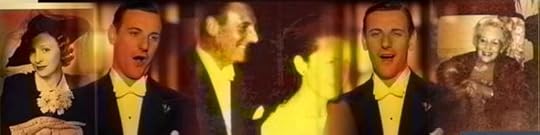
All my nonfiction books, written by Jean Collen are available at: https://www.lulu.com/duettists
All my fiction books written under the pen name of Fiona Compton are available at: https://www.lulu.com/spotlight/fiona_compton.
I began my singing studies with famous British duettists Anne Ziegler and Webster Booth, when I was seventeen. Two years later they asked me to act as studio accompanist for Webster. I completed the ATCL and LTCL singing diplomas and remained friends with them until their deaths.
Since 2006 I have written and published books about my former singing teachers and life-long friends, the famous British duettists, soprano, Anne Ziegler (1910-2003) and tenor, Webster Booth (1902-1984). The books are available as paperbacks and ebooks. The latest book is a digitised version of their joint autobiography, Duet which was originally published by Stanley Paul in 1951. I am most grateful to John Marwood for proofreading it meticulously. Currently, I am revising and enlarging my first – and most popular book – Sweethearts of Song: A Personal Memoir of Anne Ziegler and Webster Booth.
List Price:$16.00Price:$14.40You Save: $1.60 ( 10% )Prints in 3-5 business days
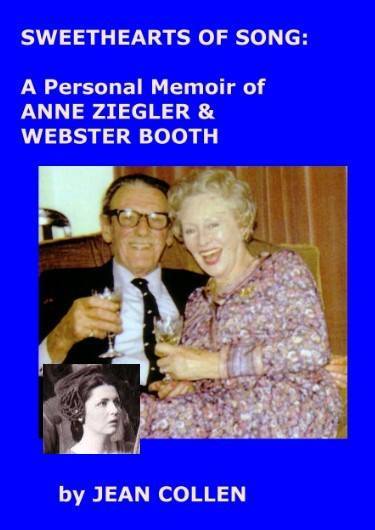
The book summarises Anne and Webster’s rapid rise to fame, which is already well documented in their own autobiography entitled Duet. (1951). The book’s main focus is on their lives and careers from 1956 in South Africa, their friendship with me, and their “third” career after they returned home to the UK in 1978.
Do You Remember Anne Ziegler & Webster Booth? (in collaboration with Pamela Davies of Pershore) (2006)
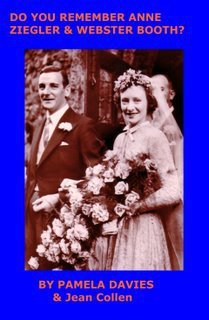
List Price:$16.57Price:$14.91You Save: $1.66 ( 10% )Prints in 3-5 business days. This book tells Pamela Davies’ story of her keen admiration of Anne Ziegler and Webster Booth in the forties and early fifties. Shortly after Anne and Webster returned to the UK from South Africa in 1978, Pamela began corresponding with Anne and became good friends with her. The book includes THE BODY OF WORK OF ANNE ZIEGLER AND WEBSTER BOOTH, compiled and edited by Jean Collen. Jean has listed many of their engagements on stage, screen, radio and television from 1924 to 1994.
A SCATTERED GARLAND: GLEANINGS FROM THE LIVES AND CAREERS OF WEBSTER BOOTH AND ANNE ZIEGLER (2008) in 4 volumes. The books are available as paperbacks and epubs.
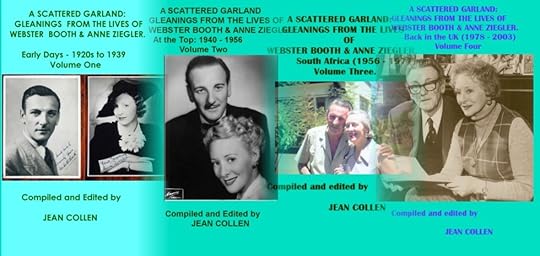
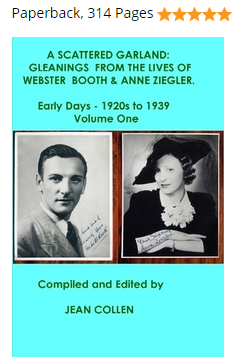
Price:$10.45 Prints in 3-5 business days. A Scattered Garland: Gleanings from the Lives of Webster Booth and Anne Ziegler was originally published in one volume but because of the additional material I have discovered the work now extends to four volumes: Volume 1: Early days (1920s – 1939)
Volume 2: Years at the top in the UK (1940 – 1956)
Volume 3 South Africa (1956 – 1977)
Volume 4: Back in the UK (1978 – 2003) and additional information.
The work includes articles, criticisms, cuttings, and extracts from the online archives of The Times, The Scotsman and The Stage, and other newspapers. In Volume 2, I have included material from New Zealand and Australian newspapers and in Volume 3 there is material from South African newspapers. Occasionally I have supplemented this material with my own notes. All my own writing is italicised. Book 1 contains information about the early days of their careers.
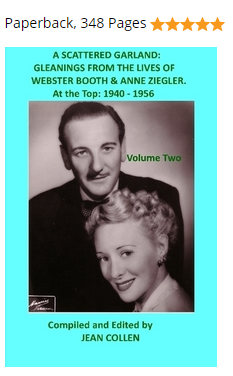
Price:$10.92 Prints in 3-5 business days. This is the second volume of A Scattered Garland: Gleanings from the Lives of Webster Booth and Anne Ziegler, and includes articles, criticisms, cuttings, and extracts from the online archives of The Times, The Scotsman and The Stage. In this edition, I have included extracts from New Zealand and Australian newspapers from the Booths’ extensive tour there in 1948. Occasionally I have supplemented these articles with my own observations. All my own writing is italicised.
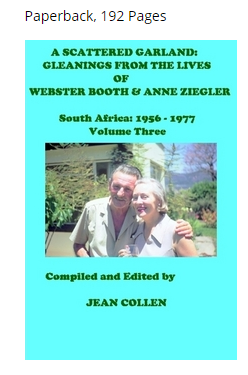
Price:$10.92 Prints in 3-5 business days. When I was 17 years old I began my singing studies with Anne Ziegler and Webster Booth in their studio on the eighth floor of Polliack’s Building in Pritchard Street, central Johannesburg, where they taught Singing and Stagecraft. A few years later I became Webster’s studio accompanist when Anne (who was accompanist as well as teacher) had other commitments. I studied with them for five years and did my Associate and Licentiate singing diplomas under their guidance. Despite several years when Anne and I were estranged, we remained friends until Webster’s death in 1984 and Anne’s in 2003. I published the story of my relationship with Anne and Webster on Lulu (http://www.lulu.com/duettists) in April 2006 in a book entitled Sweethearts of Song: A Personal Memoir of Anne Ziegler and Webster Booth. Because Volume 3 concerns my direct relationship with the Booths I have mentioned events briefly if I consider them to be relevant to the story.
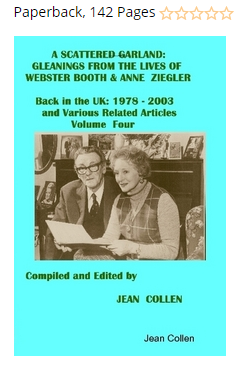
Price:$10.00 Prints in 3-5 business days. Volume 4 covers the last period of the lives of Webster Booth and Anne Ziegler. They returned to the UK in 1978 and were welcomed by fans who remembered them from the forties and fifties when they had been at the top of the tree. It also covers the sad time when Webster’s health was failing. He died in 1984 and Anne remained in the bungalow in Penrhyn Bay, North Wales for another 19 years until her death in October of 2003.
In this volume, I have written extensively about the life of Paddy Prior, Webster’s second wife. She was a very talented performer in her own right. After her brief marriage to Webster, she divorced him in 1938 because of his adultery with Anne. Sadly, the scandal of the divorce was soon forgotten and he and Anne achieved great success in the 1940s while Paddy’s own career remained static. I was glad to hear that she married again in Tasmania some years later.
I have updated the book about British radio and television broadcasts by Webster and Anne, dating from 1927 to 1994. The last broadcast was “The Webster Booth Story” presented by Robin Gregory in 1994, 10 years after Webster’s death. This book is available as a PDF only and may be seen at https://www.lulu.com/duettists.
[image error]
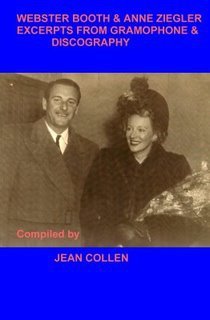
Webster Booth and Anne Ziegler: Excerpts from ‘Gramophone’ & Discography” (2009) List Price:$7.04 Price:$6.34 You Save: $0.70 (10%) Prints in 3-5 business days It is made up of articles and reviews about the recordings made by Webster Booth and Anne Ziegler (1929 to the present). The discography section has been completely revised and updated and includes an almost complete discography of their solo and duet recordings and some of their surviving radio broadcasts.
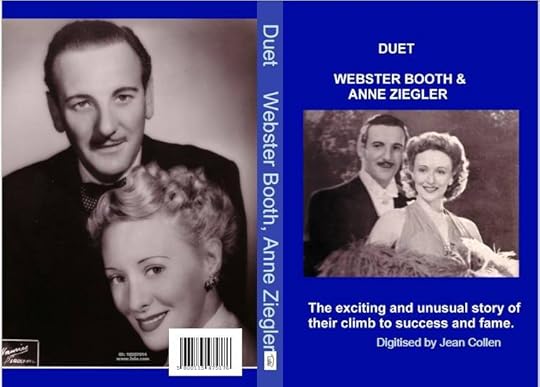
Price:$12.50 Prints in 3-5 business days. Duet, the autobiography of famous British duettists, Webster Booth and Anne Ziegler, was originally published by Stanley Paul in 1951. Sixty-five years later I have digitised the book and made it available as a paperback, epub and pdf book.
My sincere thanks to John Marwood who proofread the book most painstakingly for me. Webster and Anne tell the exciting story of their rise to fame, and their sensational romance. After Webster’s divorce from Paddy Prior, his second wife, he and Anne married and became the most popular duettists of their day, earning them the deserved title of “Sweethearts of Song”.

April 9, 2019
Charles Forwood, accompanist to Anne Ziegler and Webster Booth.
Charles Forwood was the Booths’ accompanist for over ten years and is mentioned in several places in Anne and Webster’s autobiography Duet, published in 1951. He was a number of years older than them and had been playing the piano from the early years of the twentieth century.
In the early 1950s Anne and Webster were earning £250 a concert and paying their accompanist £30 a week, as it was stipulated in their contracts that they should pay the accompanist out of their own pocket.
Pamela Davies, who wrote the book, Do You Remember Anne Ziegler and Webster Booth? mentions the part Charles Forwood played at the Harold Williams’ concerts, particularly one she attended in March of 1947:
[image error]
[image error]
[image error]Anne and Webster on stage at the Garrick Theatre, Southport with Charles Forwood playing the piano.
[image error]
P 129 Anne, talking about her mother: “During my song Mother had crept on and on to the stage until she could look through the window at me signing , and there she stood, quite visible from the auditorium, a small figure with a black feather in her black hat, and resting on a long black umbrella! She saw Charlie Forwood, our accompanist, look up at her from the piano with horror in his face, so to comfort him she nodded her head and waved to him, the audience by this time being very much more interested in her than in me!”
P 133 Webster: “Much depended on our accompanist, and it was at this point in our career that Charles Forwood joined us. Hayward Clarke was unable to come to Blackpool owing to a previous contract at Newquay. We asked Charles if he would take us on, not dreaming that he would, for he was a well-known accompanist and concert arranger in the city and West End, and we always felt honoured if a booking came through him – it always meant a first-class show. However, the war had robbed him of many of his engagements, and he felt that a summer at the seaside would be pleasanter than wartime London. He has now been our accompanist, friend, adviser and a stern coach for eleven years, having given up all his old connections to remain with us. In that time we have never had a word in writing in the form of a contract, nor ever needed one. How delightful in these days of forms and mistrust to be able to do business like that.”
P163 Anne: “During those difficult days of the war, and indeed ever since, everything has been made much easier for us both by Charlie Forwood, our accompanist. When I first knew Webster a booking from Charlie always gave real delight to us – accompanied by some trepidation, for though he was the perfect accompanist he demanded the very best a singer could do. Whether the audience was enthusiastic or not did not matter; only if we sang well enough to please Charlie’s own most critical taste would he put his hands on our shoulders and say, “Well done!” But if we did not breathe in the right place, or, as Charlie would say, “Paint the picture”, then he would make no comment, give us our music back, pay us – and we were down in the deeps of depressions for days!
Webster has told how Charlie joined us as our own accompanist at Blackpool in 1940. He is still with us. Now, as always, it doesn’t matter to him how the audience applaud. If we have sung well, he will still say, “Well done!” If he puts the music back in the case and says nothing, we still creep away like a couple of rebuked children.
He says his father, who was a printer, enjoyed the nickname of M.O.B. (which Webster says means Miserable Old Bounder), and Charlie loves to think that the same words apply to him. They don’t really; he just tries to make people think so. A perfect accompanist, as a coach he has probably forgotten more than most coaches today have learned. He used to play the violin in a string quartet on the White Star luxury cruises. If he took a studio and taught singing he would make a fortune. But he won’t. He won’t have a telephone at his old-world Surrey cottage – wise man! – and when we want to get in touch with him urgently we have to telephone the local grocer, who sends a message by the next passer-by. To us, he is our Rock of Gibraltar.”
When the Booths went on their tour to New Zealand and Australia, Charles Forwood did not think his health would stand the rigorous tour so an Australian accompanist from Adelaide, Clarence Black was their accompanist for the New Zealand and Australian trip.
Advertisements