Dan Leo's Blog, page 27
September 3, 2020
“The Bottle on the Table”
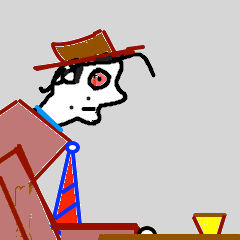
Philip poured the last of the fifth of Cream of Kentucky into the glass, but it was okay, because he had a full bottle right there next to the empty one on his night table.
He was sitting and drinking here propped up against the headboard of his bed in the Parker Hotel because yesterday morning Bob down the street at Bob’s Bowery Bar had finally cut him off.
He had staggered into the place shortly after it opened at 7 a.m., the first customer of the day, he sat at his usual stool, and the first thing Bob said to him was, “You can have one shot, Philip, but just one, and then you got to go.”
Philip didn’t say anything.
Bob poured the shot, and Philip looked at it.
“I hope I didn’t misbehave last night, Bob.”
“Not at all,” said Bob. “I just don’t want you dropping dead in here.”
Philip paused before replying. But then he said, “I understand.”
He took out his wallet, not without difficulty, but Bob said, “That’s okay, Philip. On the house.”
Philip took a pause. In the later stages of a binge he took many pauses, and this had been the longest binge of them all.
“Can I at least leave something for your trouble?”
“I don’t want your money, Philip.”
Philip understood. He put the wallet away, picked up the shot glass and drank it down.
“Thanks, Bob.”
“You’re welcome, Philip.”
A trip to the liquor store, then back to the hotel, and here he was the next afternoon, still sitting up in this bed, still drinking.
The funny thing was, the thing he couldn’t figure out, was why his brother hadn’t sent Joe out to find him and take him to the drying-out place yet. Maybe his brother and the rest of the family had finally had it with him. How many times had Joe taken him to that place? Six times, seven? That must be it, the family was fed up, and who could blame them?
Well, this just might be it then. He could feel himself just barely inhabiting his body. It was like his soul was shimmering just under his skin, and any moment – maybe after just one more sip of whiskey – his soul, his consciousness, his spirit, whatever, whatever Philip was, it would shimmer out of this wreck of a body and go off to wherever souls went to.
Someone was knocking on his door. Who could that be? Oh, it must be Joe, come for him at last. Thank God, or whomever.
The knocking sounded again.
“Come in,” called Philip.
He never locked the door. Why should he?
The door opened, but it wasn’t Joe the detective. It was a little old man, a shabbily dressed little old man, in fact it was a little old man he remembered seeing at Bob’s Bowery Bar. He was about five feet tall, with thick round wire-rimmed glasses and a cloth cap, and he had an unlighted small cigar in his mouth.
“Hello,” said Philip.
“Howya doing,” said the old man, and he came over to the side of the bed. He picked up the full bottle of Cream of Kentucky, looked at the label, then put it down again. He took the cigar out of his mouth.
“I’m a busy man, so I’ll get right to the point,” he said. “They call me Bert, Bowery Bert. And I am a guardian angel.”
“You’re my guardian angel?”
“I’m gonna have to disabuse you of a common misconception about guardian angels. There is no way in heaven there’s enough guardian angels to go around for every human being on the planet, and so we are each given territories. My territory is the Bowery, from Bleecker to Union Square.”
“I see –”
“You see nothing. You got no idea how much I got on my plate.”
“Um –”
“So, brass tacks. You see that bottle of Cream of Kentucky?”
“Yes.”
“You open that bottle and it’ll be the last thing you’ll ever do.”
“Okay.”
“That’s all I am gonna say, because we ain’t allowed to directly interfere in human affairs. The choice is yours, pal.”
Philip looked at the glass in his hand, which still held a few fingers of bourbon.
“Can I at least finish this glass?”
“Possibly. I ain’t making no promises, but, yeah, possibly.”
“Well, thanks. Thanks so much.”
“You’re welcome. And now I got to go. I am very busy. My schedule today you would not believe.”
“I can appreciate that.”
The little man stuck the cigar back in his mouth, turned, walked to the door, opened it, went out, closed the door.
Philip looked at his glass.
Had that really happened?
He put the glass on the night table, picked up his wallet that was lying there and opened it. He found the card, Joe the detective’s card. Would he be in his office? Well the only way to find out was to call. He shifted his legs off the bed. His shoes were down there on the floor, and he put his feet into them, but he didn’t tie the laces, because it seemed too complicated to do so.
Wearing only his trousers and his undershirt, he got up and went to the door, and went down the hall to the pay phone. He lifted the receiver from the hook, dropped a nickel in the slot, and, reading the number from Joe’s business card, he dialed.
{Kindly go here to read the "adult comix" version in A Flophouse Is Not a Home, illustrated by the one-and-only rhoda penmarq.}


August 27, 2020
"Home"
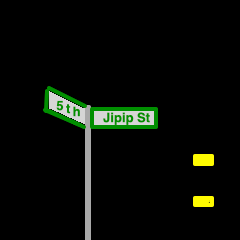
“Where the hell ya takin’ me,” said Mickey Pumpernickel.
“Keep your shirt on,” said his fellow ventriloquist’s dummy, Mr. Fleeber. “Like I said, it’s a surprise.”
“Where the hell are we anyway? It’s spooky round here.”
“We are at the mysterious junction of Chinatown, Little Italy, Greenwich Village, and Fifth and Jipip.”
“Looks like just another slum to me.”
“Shaddap, we’re here already.”
Mr. Fleeber turned off the narrow dark street into a narrower and darker cobblestoned alleyway. Halfway down the alley a faint light glowed down near the ground on the left.
“Wished I brought my switchblade,” said Mickey, “or my sap.”
“Relax,” said Mr. Fleeber, “you ain’t gonna need no switchblade nor no sap. I been here a million times and ain’t never had no trouble.”
“It’s that million-and-first time ya gotta worry about,” said Mickey.
They reached the pale light, which turned out to be a dirty low-wattage light bulb in a wire-mesh fixture down the steps of a basement areaway.
“What gives?” said Mickey.
“I told ya I was gonna pay you back for helping me and Mo out,” said Mr. Fleeber. “This is the payback. Come on.”
The little dummy went down the steps and Mickey went with him.
Under the light bulb was a small door, only about four feet high. The door had what looked like a little shuttered window in it. Mr. Fleeber pressed a button to the side of the door, and the two dummies waited for somebody to answer the buzz.
“You got one of them Philip Morris Commanders?” said Mr. Fleeber.
“Sure,” said Mickey, and he took out his cigarettes. He lighted them both up with a Hotel St Crispian match, and the shutter on the other side of the window in the door slid open.
“Whatta we gotta do, stand out here all night?” said Mr. Fleeber.
The shutter closed, the door opened, and who was it but the Constable from the Punch and Judy show.
“Ah, Mr. Fleeber, my friend!”
“Whatta ya know, and a hidey ho,” said Mr. Fleeber, and he shook hands with the policeman. “Constable, this is my pal Mickey Pumpernickel. Mickey, this is the Constable. He may be a cop, but he ain’t all bad.”
Mickey shook hands with the constable.
“Nice to know ya, pal,” said Mickey. “I seen your work a few times, up in Ottawa when I played the Pantages there in the old days.”
“As have I seen you, Mr. Pumpernickel. My pleasure.”
“We gonna stand out here jabbering, or we gonna get outside some drinks?” said Mr. Fleeber.
“Of course,” said the marionette. “This way, gentlemen!”
He waved the two dummies in, and after closing the door and turning the latch he led them down a short passage into a crowded and noisy barroom.
All the old gang was there, or, if not all of them, a lot of them, at least the ones who were working in the city. For a good ten minutes Mickey shook hands and said hello, to Punch, to Judy, to various Japanese and Chinese puppets he hadn’t seen in years, along with the entire cast of the Mabel Beaton Marionettes, and a few oddballs like Maxie Doolittle (of “Maxie and Joe” fame) and Stumpy Mulligan (“Monty & Stumpy”) and T-Bone (“Gracie Molloy and T-Bone”). No humans, just puppets, marionettes and dummies.
“Awright,” said Mr. Fleeber finally, “enough jawboning and glad-handing, let’s get some drinks,” and they shoved over to the bar.
“Two shots of Three-in-One oil,” said Mr. Fleeber to the bartender, “outa here.” And he laid a crumpled dollar bill on the bar.
“Hey, no,” said Mickey, “let me get this.”
He reached his hand into his pocket, but Mr. Fleeber put his hand on Mickey’s arm.
“You want that arm broke? Tonight the drinks are on me.”
“Gee, Fleeber –”
“Gee nothing. You and McGee helped me and Mo out when we was in the gutter, now we got a good gig over to Mitzi’s thanks to you guys, and tonight your dough’s no good here.”
“Gee.”
“Hey, next time we come in, then you can spend your money. But tonight? Do me the favor.”
The bartender (it was that big puppet used to work all the midwestern state fairs, Gabbo the Gorilla) laid down the shots.
“Here’s to you, pal,” said Mr. Fleeber.
Mickey and Mr. Fleeber raised their glasses and emptied them in one go.
Mickey felt a gentle touch on his shoulder, and he turned around.
It was that cute girl marionette from the French puppet show, Madelon. How long had it been? Not since back in ’45, when McGee and Mickey played Paris with the Special Services. She and Mickey had had a thing for a few sweet short weeks that spring. A good thing.
“Long time no see, Mickey.”
“Too long, Madelon.”
She hadn’t aged a day. Say what you want about marionettes and dummies and puppets, you take good care of them, they aged a hell of a lot better than humans did, and Madelon’s skin looked freshly painted and varnished, her lips as red as cherries, her dark eyes deep and black as the night.
And Mickey had a feeling this was going to be a very good night, a very good night indeed.
{Kindly go here to read the “adult comix” version in A Flophouse Is Not a Home, illustrated by the one-and-only Rhoda Penmarq…}

August 20, 2020
“The Code of the Dummies”
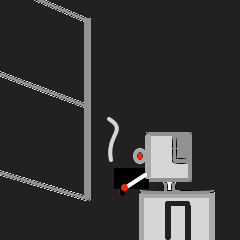
“Hey, Mickey, wake up.”
The dummy Mickey Pumpernickel had been sleeping the oblivious sleep of the just beside the ventriloquist Waldo McGee in their bed at the Parker Hotel, but somebody or something was tugging at his little arm and whispering in his little wooden ear.
“Wake up, ya lazy bum.”
Mickey opened his eyes, looked to his right, and who was there in the dim moonlight coming in from the open window but his fellow dummy Mr. Fleeber.
“What the hell?”
“Shhh, not so loud, you’ll wake up McGee.”
McGee was snoring to beat the band.
Mickey sat up, reached for the Philip Morrises on the night table.
“He ain’t gonna wake up,” said Mickey. “He got loaded at that Bob’s Bowery Bar last night, so he’s out like a light.”
He shook out a cigarette, lighted it with a Hotel St Crispian paper match.
“What the hell’s up, Fleeber.”
“I wanted to thank you.”
“For what?”
“For getting McGee to loan Mo that double sawbuck, and for putting in a word with Louie.”
“Don’t mention it. When we’re flush, our buddies ain’t never gonna have to sleep in no alleyway nor drink no canned heat, and if we can help a buddy out, we’re gonna help him out. That’s just the way we roll.”
“Stand-up guys.”
“We try to be, Fleeber. We try. So how’s it going.”
“That’s the other thing I wanted to tell ya. Louie got us a gig.”
“No kidding? Where at?”
“Little jazz joint over to MacDougal, name of Mitzi’s Tap Room.”
“I heard of the place.”
“Tiny little basement joint, but class, Mickey. The owner, Miss Mitzi, she don’t hire no ham-and-eggers. She’s had Charlie Parker playing there, Coleman Hawkins, Helen Hume, Pee Wee Russell. Class. Anyways, she likes to have somebody work the crowd in between the musical acts, so Louie sent us over, I turned on the charm, and presto, she hired us on the spot.”
“No kidding.”
“Wednesday through Sunday nights, ten bucks a night, plus Mo gets a free meal. She’s got a little kitchen, y’understand, limited menu, but good home-cooking, she’s always got a nice stew or a stroganoff in the crock pot.”
“That’s swell, Fleeber.”
“We start this Wednesday.”
“I wish you the best of luck, my friend. If we wasn’t working ourself we’d come out and give yez a little support.”
“I understand, man. And you can tell McGee, another week and he’s got that double sawbuck back.”
“Don’t worry about it. Get settled first. You guys still down at the Starlight flop?”
“Yeah. It ain’t so bad.”
“Not bad for a flophouse. Soon’s you get your first pay, move in here at the Parker. It’s cheap, it’s clean. No bedbugs, no termites.”
“Okay, I’ll tell Mo that.”
“You need a good room, Fleeber. It’s hard to put on a good show when you know you’re going home at night to a goddam flophouse.”
“Don’t I know it?”
“So first get a room here, make sure Mo is solid and on his feet, then when you get a little bit ahead, you can pay us back.”
“You’re a reet guy, Mickey.”
“I got my moments.”
“I just wanted to say thanks.”
“Well, you’re welcome, Fleeber.”
“And I’m gonna make it up to you.”
“That ain’t necessary.”
“For me it is. For me it is, Mickey.”
Mickey let it go. He knew what Fleeber meant. It was the code. The code of the dummies. If they didn’t look out for each other, who the hell else was going to? Nobody, that’s who.
“I’ll let you get back to sleep now,” said Mr. Fleeber.
“Awright. Careful getting back to the flop this hour of the night.”
“I’m always careful, buddy.”
“How’d you get in here, anyways?”
“Up the drain pipe, then onto the fire escape.”
“Okay. Just watch your step getting down, that pavement down there ain’t made out of cotton candy.”
“Gimme five.”
The two dummies shook hands, and Mickey watched as Mr. Fleeber went across the room, climbed up onto the chair next to the window and then up onto the window sill.
He turned and waved.
“Whatta ya know, and a hidey ho!” he stage-whispered, and then he was out the window.
Mickey sat there finishing his Philip Morris Commander. Would Mo Mosco blow this opportunity? For that matter, would McGee keep on the straight and narrow? Mickey hadn’t minded Waldo getting loaded last night, it was Monday, their night off; the guy deserved one night a week to get a little loose, and God knew he’d pay the price today. Mickey would have to kick his raggedy ass out of bed and down the street to Ma’s Diner to get a good healthy breakfast in him, best thing in the world on a morning after. A stack of blueberry pancakes, half a dozen of them home-cured bacon rashers of Ma’s, maybe a side of scrambled eggs and some of them fried and breaded green tomatoes, wash it all down with a pot of coffee, finish up with a big slice of peach pie with ice cream, then back to the hotel for a nap.
Mickey stubbed out his cigarette, then lay back down. Waldo was still snoring. Let him sleep.
And soon Mickey Pumpernickel was sleeping too, dreaming of that cute little French marionette Madelon…
{Please go here to read the “adult comix” version in A Flophouse Is Not a Home, profusely illustrated by the one-and-only Rhoda Penmarq…}

August 13, 2020
“The Secret Language of Dummies”
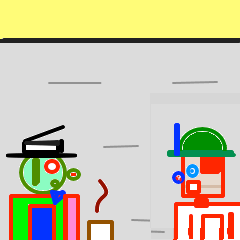
Waldo McGee was on his good behavior. He had a good steady job now at the Prince Hal Room in the Hotel St Crispian, and he didn’t want to blow it. After his last set he would pack up his dummy Mickey Pumpernickel in his suitcase, have his one free staff drink at the bar, one and done, and then catch a cab to Bob’s Bowery Bar for a nightcap. One bock beer, maybe two, and then back to his room just up the corner at the Parker Hotel.
But on this August night, as on most nights, Waldo woke up after only an hour or two of sleep. He lay there in bed, Mickey next to him, Waldo stared at the dark ceiling, he heard the elevated train roar by, and he knew there was nothing to be done but to go down the block to Ma’s Diner on Bleecker for a glass of milk and some pie.
Waldo got dressed, and with Mickey under his arm he went downstairs, past Zeke the night clerk asleep at his desk, and out to the street.
It was just five a.m., the sun had not come up, just a faint glimmering above the rooftops and the chimney pots of the Bowery.
The diner was empty except for Ma, sitting at the counter reading a movie magazine. She had just baked a fragrant batch of pies for the morning. Waldo asked for a slice of sweet potato pie, with fresh whipped cream and a glass of milk, and, picking up yesterday’s Federal Democrat from next to the cash register, he took a seat in the corner booth.
The news was bad, as it usually was, but Waldo knew he should try to keep up, because you never knew when you might read something you could turn into a bit for the act. Three sets a night, six nights a week, you had to try to keep the routine fresh for the regular punters. But the thing about the news was, it was all in the headlines, and there wasn’t much point in reading the whole articles. Waldo turned to the funnies, and he was reading Mutt and Jeff when somebody tapped on the window.
Could it be? Yes. It was. Mo Mosco. And looking a hell of a lot worse for the wear, but then Waldo doubted that he had looked much better himself a couple of weeks ago. Jeeze, when had he last seen Mo? Before the war?
Mickey gave Mo a “come on in” wave, and next thing you knew Mo was sitting across the table. He had a beat-up old suitcase, and he set it down on the seat next to him.
“Nice little joint here, Waldo. Real nice. Whatcha got there, pie? And I see you still got Mickey Pumpernickel.”
Mickey was sitting to the left of Waldo, on the window side.
“Long time no see, Mo,” said Mickey.
“Got an old friend of yours with me, Mickey,” said Mo, and he opened up the suitcase and took out his own dummy, Mr. Fleeber, and sat him up next to him across from Mickey.
“Whatta ya know and a hidey ho!” said Mr. Fleeber, his usual catchphrase. That hadn’t changed in twenty years.
Ma came over and stared at the two men and the two dummies.
“Now I seen it all,” she said.
“Hey, beautiful,” said Mr. Fleeber, Mo’s lips just barely twitching, “how’s about a nice hot cup of joe?”
“Sure, little fella. Anything else?”
“Nah, just a nice cup of joe, thank you very much. Hot, sweet and creamy, just like you, doll.”
“Get my friend a slice of pie, Ma,” said Waldo. “You like sweet potato pie, Mo?”
“Yeah, sure, but I ain’t really hungry, Waldo –”
Mo looked like he hadn’t eaten in a day or two or three. His skin was the color of an old gunny sack, and he had two or three days’ growth of salt-and-pepper beard.
“Make it another slice of sweet potato pie for my friend, Ma,” said Waldo, “with whipped cream, and get him a nice glass of milk, too, on my tab, including the cup of joe.”
“Gee, Waldo,” said Mo.
The two ventriloquists sat and talked about the old times, the last days of vaudeville on the old Pantages circuit, the hundreds of road houses and gin joints from the Catskills to the Ozarks, from Frisco to Key West. They each had another slice of pie and another glass of milk, and then they both began to doze.
“These guys,” said Mr. Fleeber.
“I know,” said Mickey.
“Living in the past.”
“You can’t do that,” said Mickey.
“No,” said Mr. Fleeber. “Once you do that you’re dead. You might still be walking around, but you’re dead. Dead inside.”
“You get Mosco cleaned up, you’ll get a gig,” said Mickey.
“Maybe,” said Mr. Fleeber.
“You got to try, Fleeber. You can’t give up.”
“I know that, Mickey. God knows I know that. But this guy.”
He jerked his little thumb at Mo, sitting there slumped with his stubbled chin on his chest.
“You think this jerk is much better?” said Mickey, pointing a finger at the sleeping Waldo. “But I pushed him, and I kept pushing him, and now we’re working, and if it’s up to me we’re gonna keep working.”
“That’s what I’m gonna do,” said Mr. Fleeber. “I’m gonna push Mosco. But, say, you know I hate to ask, but you think Waldo might front Mo a fin, maybe a sawbuck, just so’s we can get a flop, get a bath and a shave, maybe get the suit cleaned and pressed.”
“I don’t know about a sawbuck, but I’ll bet McGee’s good for a fin,” said Mickey.
“Gee, that would be great,” said Mr. Fleeber. “A flop, a bath and a shave, that’s all Mo needs. You watch, he’ll make the rounds and have a job tonight.”
Sitting at the counter, Ma looked over at the two ventriloquists. They looked like they both had fallen asleep, but they weren’t hurting nobody, so she would let them sleep for a while. It was almost six, and the breakfast trade would be coming in soon, so she got up to start making the pancake batter.
{Please go here to read the “adult comix” version in A Flophouse Is Not a Home, illustrated by the one-and-only Rhoda Penmarq…}

August 6, 2020
“Say There, Young Fellow!”

It had been Terry Foley’s luck (whether good or bad no one could say) to complete his modicum of required military service between the end of the Second World War and the beginning of the Korean police action, and ever since his honorable discharge he had been, with the help of the G.I. Bill, “working on his novel”.
Terry was a harsh critic of his own work, and he had summarily abandoned the entire 3,100-page first draft of his novel, set on an army base in Kansas, titled variously I Got the Olive Drab Blues; Last Call for Chow; Make Mine Khaki; and Ten-hut, Private Hooley! Terry had put a lot of time and effort into that draft, and for each sheet of completed typescript he had filled up God only knew how many pages of marble copybooks, and how many aborted sheets of expensive 20-lb typing paper had wound up in the waste basket or had been scissored up and converted into cigarette papers? But, let’s face it, who wanted to read about life on a dreary old army base in Kansas? It had been bad enough living through it all, let alone writing about it, and finally his own boredom and common sense won out. Terry shoved the whole enormous pile into his footlocker and began afresh with a saga of a young man from the provinces, fresh out of the service, who comes to New York City to become a novelist. He was four hundred pages into the first draft of this new approach now; working title: Say, There, Young Fellow!
Terry was twenty-four years old, and he was a virgin, he had no idea why. Well, no, actually he had a lot of ideas why, and these ideas were covered in detail in his novel. But could his novel be any good if his protagonist, Jerry Hooley, never lost his virginity? Would anyone want to read a Bildungsroman with no sex, let alone no romance?
The time of the year was August, a hot and oppressive August, but, Terry wondered, was there any other kind of August? He lived in a small studio apartment with no air-conditioning on Bleecker Street near the Bowery. One Wednesday afternoon a week he attended a summer creative-writing workshop at N.Y.U., but other than that his time was his own. Not counting his two years in the army he had never held a job since his boyhood paper route, and Terry was content to live off his modest government stipend and the odd ten-dollar bills sent to him by one or the other of his two grandmothers and four maiden aunts back in Ohio.
On a typical morning, shortly after the heat awakened him, usually between ten and eleven a.m., Terry would gather up his marble copybook and his #2 pencils and stagger downstairs and across Bleecker Street to the air-conditioned comfort of Ma’s Diner, and there he would while away the rest of the morning and afternoon and early evening drinking copious cups of coffee, eating up to four or five slices of Ma’s delicious pies, and scribbling away in his copybook. When he grew tired or when the creative afflatus abandoned him, he would read a book or someone’s abandoned newspaper or movie magazine, or simply stare out the window at the passing parade of humanity. In the evenings he would take public transportation uptown to the Thalia or across town to the Waverly on 6th Avenue and catch a foreign film or a 1930s screwball comedy; afterwards, his long day done, it was back onto the el or the bus and home to his tiny apartment.
One day in Ma’s Diner a young woman sitting on the next stool addressed him.
“Excuse me, but I see you in here every day, writing in that copybook. May I ask what you are writing?”
Terry was not used to being addressed by strangers, and it took him several moments to rouse himself from his reveries.
“If I am being intrusive,” the young woman said, “please feel free to say so.”
“Oh, not at all,” said Terry. “I am writing a novel.”
“Indeed?” said the young lady, who, despite the season, was dressed all in black, topped with a black beret. “May I ask what is the thrust, or theme, or argument of your novel?”
“To put it bluntly,” said Terry, “it’s about a young man who comes to the city to become a novelist. But, of course, it is about many other things as well.”
“Of course,” said the young woman. “This is really quite the coincidence, because you see I too am writing a novel.”
And she tapped the large black leather-bound notebook lying on the counter before her.
Terry wished he had one of those handsome nice notebooks, but what was the use, his bohemian mode of life precluded such extravagances. Maybe he should move to Mexico, where the cost of living was allegedly much cheaper, where he could afford nice leather-bound notebooks instead of these cheap dime store copybooks? He bet Ernest Hemingway didn’t write in cheap copybooks. Or did he? He must go to the library and look up that New Yorker profile. He couldn’t remember if Hemingway’s preferred writing materials were mentioned in that, although he seemed to recall reading somewhere that Hemingway used #2 pencils, so at least Terry had that part of the deal covered…
“Do you want to know what my novel is about?” said the young woman.
“Oh, sure,” said Terry.
“It’s about the journey of a young girl who goes from a Catholic girls’ school to Vassar, and then she graduates and comes to the city to pursue a career as a jazz poet, and, yes, to awaken to her womanhood. But of course it’s about loads of other stuff as well.”
Womanhood, awakening. Loads of other stuff…
Suddenly it dawned on Terry that here was a girl – and, a bonus, a pretty girl – initiating a conversation with him, in a diner, and that this was like a pivotal scene in a novel: the boy meets girl scene.
This was his big chance, possibly. A new chapter in his life as well as his novel. He must not blow it. He must say the right thing.
“I would love to read some of your book,” he said, which was not entirely true, but probably much preferable to saying what he was actually thinking. He wanted to take a quick moment to write the previous sentence down, but, no, he would just have to try to remember it and get it down later. He must try to stay in the moment.
For her part the young lady, whose name was Araminta Sauvage, was thinking: could this be the plot turn, mutatis mutandis, she had been searching for in her own novel, the working title of which she had recently changed from Virgins of Vassar to The Womb of the City?
This chap was not the best-looking fellow she had ever met, but, after all, what was more important: looks or brains? And wasn’t it high time that she (as well as her heroine, Amanda Bricolage) divested herself of her tedious so-called chastity?
“I’d be delighted to show you some pages of my novel,” she said. “But you must let me read some of yours.”
Yes! thought Terry, yes!
But what he said was, “Gee, that would be swell.”
{Kindly click here to read the “adult comix” version in A Flophouse Is Not a Home, illustrated by the one-and-only Rhoda Penmarq…}

July 30, 2020
"First Night"

“What’s the crowd like out there, Tony?”
“Good, Waldo, real good. I ain’t seen a crowd like this on a Tuesday since the World Series when we set up the extra TV sets at the bar.”
“Damn. Where’d all these people come from?”
“Beats me, but I’m glad they’re out there. Nothin’ I hate more than playing to a half-full room.”
“Jeeze.”
“Hey, don’t worry about it, Waldo. You’re gonna knock ‘em dead, Just give ‘em your twenty minutes, warm ‘em up good, then me and Shirley and the boys will do the heavy lifting till your next set.”
“I just wasn’t expecting a full house my first night,” said Waldo.
“You want a shot?”
“No, no shot, thanks though, Tony.”
“Awright, I’m gonna go out and play a few more solo numbers to lull them into submission, and then I’ll introduce you in about fifteen, so stick by the door.”
“Got it. Thanks, Tony.”
The canary Shirley De La Salle was putting on her make-up, and the bass player and the drummer and the guitar man were playing poker on a couple of beer crates set one on top of the other for a card table.
Waldo got up and cracked the door. The bar and almost all of the tables were full, and right there down front was a whole mob from Bob’s Bowery Bar. What the hell were they doing here? It was that young dame Araminta. Like a fool he had told her about his new gig, and she must have told the rest of the crowd. Didn’t they have nothing better to do on a Tuesday night? All her fellow poets were there: Hector Phillips Stone, the doomed romantic poet; Seamas McSeamas, the Irish poet; Howard Paul Studebaker, the western poet; Frank X Fagen the nature poet; Scaramanga, the leftist poet; Lucius Pierrepont St. Clair III, the Negro poet. That philosophical guy, the one everybody called the Brain, he was there, sitting right next to Araminta. That witty guy who wasn’t witty, the one they called Addison the Wit, even he’d shown up. Even the retired whore, Fat Angie, she was there, sitting next to Mushmouth Joe and that old guy they just called Wine on account of all he drank was Tokay wine. There was Philip the uptown swell, looking not too drunk for once, standing over by the service bar, saying something in the ear of the maître d’. Christ, Bob’s Bowery Bar must be like a ghost town tonight, and then, to Waldo’s horror, he saw that over at the bar even big Bob himself was here, next to Janet the waitress. And all of them were smiling, laughing, drinking and smoking, nodding their heads to Tony’s piano playing.
Waldo broke out in that all-too-familiar cold sweat under his brand-new second-hand suit. He closed the door and looked at Tony’s bottle of Cream of Kentucky over there on the shelf. Tony had said take a shot, hadn’t he?
He hesitated, then he went and grabbed Mickey Pumpernickel, went over to the john door, opened it, went in, closed it, went right over to the toilet, and threw up.
“You finished now?” said Mickey, a couple of minutes later.
“Yeah, I think I’m finished.”
“Then flush the toilet and throw some cold water on your face.”
Waldo flushed the toilet, sat Mickey on the seat, turned on the cold tap and splashed water on his face.
“Now rinse your mouth out, good.”
Waldo did what the dummy told him.
“There’s Listerine there, gargle good.”
Waldo gargled the Listerine, spat it out.
“Now one more rinse with the cold water.”
Again Waldo obeyed his dummy. The dummy knew best.
“Take out your Juicy Fruit.”
Waldo unwrapped a stick of gum, popped it into his mouth.
“You can’t give a good show if your mouth tastes like a garbage can.”
Waldo stood there, chewing, looking at his face in the mirror.
“Take out your comb, wet it, run it through your hair, just so’s you don’t look like you been sleeping in an alleyway.”
Waldo wet his comb, combed his hair.
“You want a cigarette? You got time for a cigarette.”
“No,” said Waldo. “I don’t want my throat to get dry.”
“Straighten your tie.”
Again Waldo did as he was told.
“You ready now?”
“Yeah, I’m ready.”
“You feel good?”
“Good as I’m gonna feel.”
“Good, now take a deep breath, go out there and wait outside the green room door and wait for Tony’s intro.”
“Right.”
“It’s a good crowd out there. Feed off the energy of the crowd.”
“Right.”
“Now go.”
Waldo picked up Mickey and went out of the bathroom. Shirley and the bass man, the drummer and the guitarist all turned away and acted as if they hadn’t been listening.
He went to the door that looked out on the Prince Hal Room and cracked it open. He felt good.
“Hey, Waldo.”
It was the canary, Shirley De LaSalle.
“Warm ‘em up good for us, man. You and Mickey both.”
“Yeah, sure, Shirley, we’ll do that.”
And, with Mickey Pumpernickel under his arm, Waldo went out, closing the door behind him.
{Please go here to read the “adult comix” version in A Flophouse Is Not a Home, illustrated by the one-and-only Rhoda Penmarq…}

July 23, 2020
“The Great Stream of Humanity”
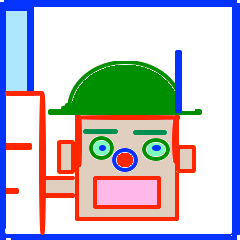
“Waldo goddam McGee,” said Louie.
“Hi, Louie,” said Waldo. “Thanks for seeing me.”
“And the puppet, what’s his name, Rickey Rumpelwurtz?”
“Ha ha, no, it’s Mickey, Mickey Pumpernickel.”
“Mickey Pumpernickel.”
“Yeah.”
“I seem to remember telling you both never to darken my door again, Waldo.”
“That was a long time ago, Louie.”
“But I still remember it like it was yesterday.”
“Hey –”
“I get you a great gig at the Mocambo, opening for Desi Arnaz, and you throw up on the stage.”
“I had eaten some bad shrimps.”
“You were drunk as a skunk.”
Waldo said nothing. What Louie said was true, and they both knew it.
“Sit down, Waldo.”
Waldo sat down in one of the chairs across from Louie’s desk, and sat Mickey on his lap.
“All’s I want is a chance, Louie.”
Louie relighted his cigar with one of those Blue Tip kitchen matches he used, the same kind he was using the last time Waldo had been in here ten years ago.
“You been working?”
“Pretty steady. Out in the midwest mostly.”
“What kind of joints?”
“Roadhouses. VFW clubs. Some Knights of Columbus affairs, Shriners, Elks. Kids’ birthday parties.”
“And you finally decided to come back to the big city.”
“It’s the only town that matters,” said Waldo.
“What about Los Angeles?”
“I never liked L.A., Louie. Too much sunshine or something.”
He didn’t mention that mobster Jimmy “the Weasel” Fratianno telling him to leave town on the next train if he didn’t want both his legs broke; was it Waldo’s fault that the Weasel was so sensitive about Mickey making jokes about his girl friend?
Louie took a long pause, then tapped a sheet of paper on his desk.
“All right, old time’s sake, Sal’s Big and Tall Men’s Shoppe, down on Mott Street. It’s a sidewalk job. We’ll set you up on a chair outside the door and you try to get big and fat guys to come in and buy some 2-for-1 suits.”
“You want me and Mickey to be sidewalk hawkers for a Big and Fat store?”
“Ten bucks a day, don’t turn up your nose, and if it works out, maybe I’ll find you some other jobs.”
Now Waldo paused. Ten bucks a shift was a lot of beer, and it would keep him in his room down at the Parker Hotel.
“What’s the hours?”
“9 a.m. to 7 p.m., an hour for lunch, and you’re off on Sundays. This is a good deal for a gig like this, Waldo, and all you got to do is stay halfway sober and don’t throw up on nobody.”
Waldo was about to say yes, but then he felt Mickey’s little elbow dig into his ribs.
He stood up, holding Mickey under his arm.
“What,” said Louie. “You too good for this?”
“The hell with you,” said Mickey. “We are performers, not sidewalk shills for cut-rate haberdasheries for fat slobs. We have shared the stage with Wheeler & Woolsey, Ted Healy, Lillian Roth, Jerry Colonna, and dozens of other top names. We got a brand new act we been honing in joints from Toledo to Topeka to Tuscaloosa, and we are ready to take back this town by storm. So take your little sandwich-board job and shove it up your big flabby ass. You ain’t the only agent in this town, and if you were any good you wouldn’t even be handling gigs like Sal’s Big & Fat Shoppe. But if I know you, they prolly offered you a deal on a couple suits, am I right? Nix to you, buddy, and tell ya what, if I don’t see you round I’ll see you square.”
Waldo and Mickey did an about face, but before they reached the door Louie spoke up.
“Hey, wait a minute.”
Waldo and Mickey turned around.
“What?” said Mickey.
“I never even saw your lips move, Waldo. Maybe just a little, but it was more like a nervous twitch. I mean that was really good.”
“That’s because Waldo’s a pro,” said Mickey. “We are both professionals.”
Louie paused for just a moment.
“Sit your Irish ass back down, Waldo. I think I might have something for you.”
Ten minutes later, with Mickey under his arm, Waldo walked out onto the crowded sidewalk in the bright hot sunlight. He took a deep breath, and then he quickly turned left, walked around the corner of the building and back a few feet into the alleyway. He bent over and threw up, and when he was finished he straightened up, sweating.
“Jesus Christ, Mickey, you like to scare the hell out of me in there.”
“But I got us the try-out, didn’t I?” said Mickey.
“Yeah, that you did, pal, that you did. Christ, I need a drink.”
“The hell with that noise. We’re gonna go down to Ma’s Diner, get some nutritious food in your stomach, then we go back to the room for a nap. Then you’re gonna take a shower, get dressed and go over to the Hotel St Crispian and we’re gonna get that job.”
“Just one beer.”
Mickey slapped Waldo, but not hard. “Ow,” said Waldo.
“I’ll ow you, ya bum. Now let’s get movin’.”
And off they went out of the alleyway and into the great stream of humanity.
{Kindly go here to read the “adult comix” version in A Flophouse Is Not a Home, profusely illustrated by the one-and-only rhoda penmarq…}

July 16, 2020
"Wake Up, McGee"

“Wake up, McGee, ya lazy bum,” said Waldo McGee’s dummy Mickey Pumpernickel. “Rise and shine, it’s a beautiful day out.”
“Aw, man, just let me sleep another hour,” said Waldo.
“You been sleepin’ sixteen hours, now get the hell up.”
“Sixteen hours?”
Waldo looked at the old alarm clock on the night table. Seven forty-eight.
“Better’n sixteen hours, ya bum,” said Mickey. “Now get up, get dressed, get some food in your stomach.”
“Food?”
“You ain’t ate in like forty-eight hours. You tryin’ to starve yourself to death?”
Waldo pulled himself up into a sitting position, adjusting the pillow behind him against the tarnished brass bars of the bedstead, and lifting Mickey onto his lap.
“Has it really been forty-eight hours?”
“It’s Monday mornin’. Saturday mornin’ you had a fried egg sammitch over at that Ma’s Diner, and you ain’t had nothin’ to eat since then.”
Waldo saw he still had some cigarettes on the night table, and he shook out a Philip Morris and lighted it up with a match from a Bob’s Bowery Bar matchbook.
“I liked that Bob’s Bowery Bar,” said Waldo. “That was a nice stopping place. Maybe we should head over there for an eye-opener.”
“It was a nice place, McGee, a real nice place, and that guy Philip what bought you all them drinks was a real gentleman.”
“That he was, Mickey,” said Waldo, “that he was. They don’t make gentlemen like that no more. Yeah, let’s head over there for an eye-opener. Maybe that guy Philip will be there.”
“Waldo,” said Mickey, “can I speak honestly?”
“Sure, pal.”
“Later we can go to Bob’s Bowery Bar. Later. But first, for Christ’s sake, please get some food in your stomach. Let me ask you a question. Do you want to wind up in the hospital again?”
“No.”
“’Cause I’m tellin’ ya, you wind up in the hospital again, you just might not come out of it alive. You want that?”
“No.”
“Then, please, get some breakfast in ya, a nice healthy breakfast, then we’ll head over to Bob’s Bowery Bar.”
“Okay, I guess you’re right, Mickey.’
“I know I’m right. Now get dressed.”
Not more than half an hour later, with Mickey Pumpernickel under his arm, Waldo McGee walked out of the Parker Hotel and into the bright warm sunlight of the Bowery. It was good to be back in the Big Apple. The sights, the smells. Down the block Waldo hesitated outside Bob’s Bowery Bar, but Mickey gave him a sharp slap in the face.
“No.”
“Just an eye-opener, Waldo, just a shot of Schenley’s to cut the phlegm, and a glass of cold beer to wash it down with.”
“You walk in that bar on an empty stomach, you walk in alone, because I will be done with you, forever.”
“Hey, you ain’t got to be like that, Mickey. It was only a suggestion. It was only like a, you know –”
“Tell your story walkin’.”
“Jeeze.”
“Move.”
“Awright, awright awready, I’m movin’. Jeeze, Mickey.”
“I’ll ‘Jeeze, Mickey’ you, you pathetic bum, now keep movin’.”
Waldo kept moving, down to the corner, then across Bleecker to Ma’s Diner.
The place was pretty full, but there was an empty stool at the counter, and Waldo took it, seating Mickey on his lap.
“I remember you,” said the Negro lady behind the counter. “The guy with the dummy.”
“Mickey Pumpernickel’s the name,” said Mickey, “and this piece of human wreckage is Waldo McGee.”
“Yeah, you told me that the last time,” said the lady.
“What’s your name, doll?” said Mickey.
“They call me Ma,” said Ma. “And I told you that last time too.”
“I beg your pardon, Ma,” said Mickey. “Sometimes Waldo here don’t remember so good.”
“Fried egg sandwich?”
“Y’know, Ma, Waldo’s feeling a mite more peckish than usual this mornin’. How’s about that Monday Morning Breakfast Special you got on the blackboard there for four bits?”
“What about it?”
“Pretty good?”
“If it wasn’t good I wouldn’t serve it.”
“Waldo’ll take that then.”
“How you want the eggs?”
“Sunny-side up, runnery.”
“Scrapple, sausage or bacon?”
“Scrapple, real crispy.”
“Home fries, grits, or hash browns.”
“Home fries.”
“Tomato juice or orange juice.”
“Neither. Too acid for Waldo’s delicate stomach.”
“You want me to sub something else?”
“Howzabout some extra toast?”
“Sure.”
“Coffee comes with too, right?”
“Bottomless cup, within reason.”
“Waldo’ll take a cup right away then, Ma, ya don’t mind, strong and hot, just the way Waldo likes his women.”
“Ha ha.”
Ma called back the order and poured Waldo a cup of coffee.
The young lady with the notebook sitting to Waldo’s left had been watching and listening to the above exchange with great interest.
“Doesn’t the dummy eat anything?” she said.
Waldo and Mickey both turned to look at her. She was a small young woman dressed all in black, with paper pale skin and dark red lips. She wore a black beret and she was smoking a cigarette.
“Never touch the stuff,” said Mickey. “I gotta watch my girlish figure.”
“I never eat a full breakfast myself,” said the young lady. “Just a couple of pieces of cinnamon toast usually.”
“What’s that you’re writing there?” said Mickey.
“I’m writing a novel. An autobiographical novel.”
“What’s it called?”
“Promise you won’t laugh.”
“I promise,” said Mickey.
“You both have to promise,” she said.
“I promise too,” said Waldo. It was the first time he had spoken in his own voice, and for some reason it sounded more artificial than the dummy’s voice.
“Virgins of Vassar,” said the young lady.
“Virgins of Vassar?” said Mickey.
“Yes,” she said. “Now please don’t laugh.”
“I ain’t laughing,” said Mickey, and he turned his head away, biting his lips, but Waldo’s face remained impassive.
“I think that’s a delightful title,” said Waldo, and he took his right hand away from Mickey’s back and held it over the dummy’s mouth, just to make sure the little bastard wouldn’t laugh at the young lady.
{Please go here to read the “adult comix” version in A Flophouse Is Not a Home, illustrated by the one-and-only rhoda penmarq…}

July 9, 2020
“The Ballad of Waldo McGee and Mickey Pumpernickel”
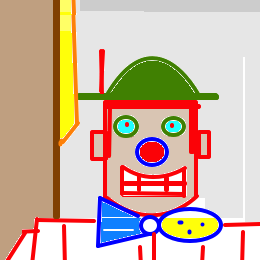
After twenty years in the marines and another twenty-some years running this joint, Bob figured he’d pretty much seen everything there was to see, but then one hot bright Sunday morning Waldo McGee came into the joint carrying his dummy Mickey Pumpernickel under his arm. He took a seat at the bar, with Mickey sitting on his lap. Mickey was just a ventriloquist’s dummy, but he looked more alive than Waldo did.
Bob came over and took the cigar out of his mouth.
“You don’t mind I brought my dummy in here, do you?” said Waldo.
“No, I don’t mind,” said Bob. “Long as he behaves himself.”
“Oh, you ain’t got to worry about Mickey,” said Waldo.
“Yeah,” said Mickey, and to be honest you could see Waldo’s lips moving just a little bit, but just a little, almost like it was just a nervous twitch. “It ain’t me you got to worry about. But this bum I ain’t so sure about. Keep an eye on this guy, mister.”
“Okay,” said Bob, “I will. Either of you want a drink?”
“Nothing for me,” said Mickey, “but this drunken bum will have a libation. How’s that basement-brewed bock you got on the blackboard there?”
“I don’t get too many complaints,” said Bob.
“Nickel a glass seems reasonable,” said the dummy.
“I like to think so,” said Bob.
“Give him a glass of that then.”
So Bob drew a glass of the bock and put it in front of Waldo, who had put a small handful of change on the counter. Bob took a nickel, went to the register and rang it up.
Just then Philip the uptown swell came in, sober, so far, and sat down next to Waldo and Mickey.
“Hi, Bob,” said Philip, taking out his cigarettes. “I think I’ll start with a Manhattan today.”
Philip always started one of his sprees with a Manhattan, but he always said it like it had just occurred to him. After he had taken his first sip, he sighed, and seemed to notice Waldo and Mickey for the first time.
“Hello,” he said.
“Hi,” said Mickey. “What’s your name, fella?”
“Philip. What’s your name?”
“Mickey Pumpernickel’s my moniker, and this drunken clown is Waldo McGee.”
The dummy extended his tiny right hand, and Philip, with only a moment’s hesitation, took it and gave it a shake.
“Pleased to meet you, Mickey. And Waldo.”
“Hi,” said Waldo. “I hope you don’t mind Mickey. He likes to talk.”
“Oh, not at all,” said Philip.
“See?” said Mickey, turning to Waldo. “This guy is a gentleman. You can tell. Unlike some people I could mention.”
Philip was willing to let it go at that. He never minded just sitting and drinking quietly, but the dummy spoke again.
“Maybe you seen us perform once or twice? We was regulars on the old Pantages circuit for years.”
“Vaudeville?”
“Yep. All across this land o’ liberty we worked. Also night clubs, burley-Q joints, Shriners conventions, VFWs, that kind of thing. Birthday parties, bar mitzvahs. Even got on the radio a few times. Waldo McGee and Mickey Pumpernickel?”
“No,” said Philip, “I’m afraid I don’t think I ever –”
“For better’n twenty years we worked steady, from New York to San Francisco, from Bangor, Maine, alla way down to New Orleans, and every two-bit whistle stop in between. It was not a bad life. But then this guy –”
The dummy jerked his tiny thumb at Waldo.
“Okay, Mickey,” said Waldo. “This gentleman don’t want to hear our whole life story.”
“I don’t mind,” said Philip.
“It’s a sad story, a story that’s been told a million times,” said Mickey.
“Haven’t they all?” said Philip.
“Hey, that Manhattan you’re drinking looks pretty good,” said Mickey.
“It is,” said Philip. “Would you like one?”
“I don’t drink,” said the dummy. “Never touch the stuff. But this guy,” he jerked his little thumb at Waldo, “I’m sure he wouldn’t turn one down.”
“Okay,” said Philip. “I say, Bob, would you make a Manhattan for, uh –”
“Waldo,” said Mickey.
“– for Waldo,” said Philip, “and I suppose I’ll have another too, please.”
“Thanks, mister,” said Waldo.
“Please, call me Philip.”
“Thanks, Philip.”
“See, McGee?” said Mickey. “A gentleman. The last of the dying breed.”
“Yes, I can see that,” said Waldo.
“Unlike some people I could mention,” said Mickey.
Waldo said nothing to this.
“Don’t mind him, Philip,” said Mickey. “He ain’t much of a talker. But me, I like to talk. You mind if I talk?”
“Not at all,” said Philip.
“You want me to shut up, you just say so.”
“Okay.”
Bob laid down the fresh Manhattans, and Philip paid for them.
The bar began to fill up with the usual Sunday morning crowd, and Philip and Mickey, and, to a much lesser extent Waldo, talked through the morning and early afternoon, until Waldo’s head suddenly began to nod to his chest.
“Uh-oh,” said Mickey. “Hey, it’s been great talking to ya, Philip, and thanks a lot for all the drinks, but I think rumdum here needs to take a nap, ya know what I mean?”
Waldo lifted his head with a weak smile.
“Yes, of course,” said Philip. “Nice talking to you fellows, too.”
“Maybe we’ll catch you in here some other time,” said Mickey.
“That well might be,” said Philip.
“Awright, Waldo,” said Mickey, “let’s get you back to the hotel before you get thrown outa here.”
And Waldo got up, and, carrying Mickey under his arm, staggered out into the hot bright sunlight of the Bowery.
{Kindly go here to read the “adult comix” version illustrated by the one-and-only rhoda penmarq…}

July 2, 2020
"St. Philip"
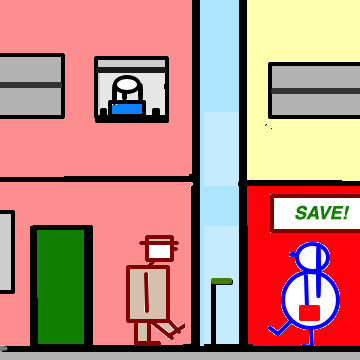
“Bleecker and the Bowery, comin’ up, pal.”
“Ah, so soon.”
Philip had been lost in a reverie, looking out the window at the warm sunny day, looking back over his largely misspent life.
“Where ya want me to stop.”
Here he was again, and he’d regret it when it was all over and he was back at the rest home, or at Bellevue or the drunk tank, but that was the future, and this was now, and it was time.
“I said where at, buddy.”
“Pardon?”
“Where exackly ya want me to let you out.”
“Oh, just let me out at Bob’s Bowery Bar over on the right there.”
“Bob’s Bowery Bar?”
“Yes.”
The driver pulled up at Bob’s. Someone was throwing up on the pavement, not in the gutter, but right on the sidewalk.
Philip got out his wallet, took out a ten-dollar bill and handed it over to the driver.
“Keep the change.”
“This is a ten.”
“I know. Keep it.”
“Why such a big tip?”
“Do you really want to know why?”
“That’s why I acksed.”
“Because you didn’t try to engage me in conversation.”
“Wow. Maybe I oughta learn to keep my trap shut more often.”
“Ha ha.”
“Hey, mister, before you get out, you mind I acks you anudder question?”
“No.”
“Why you getting out here, at Bob’s Bowery Bar?”
“I like this place.”
“I don’t get it.”
“I don’t get a lot of things either.”
“Nicely dressed well spoken gennulman like you. I don’t get it. Ten million bars in this town. Why this one.”
The driver had adjusted his rearview mirror so that he could look at Philip, who paused and thought before answering.
“Well,” he said, not knowing what he was going to say next, but then the man who had been throwing up on the pavement was looking into the passenger window at him.
“Hey, Philip,” said the man. “Long time no see.”
It was the hopeless drunk (well, one of the hopeless drunks) they called Tom the Bomb.
“Oh, hi, Tom,” said Philip.
“Hey, Philip, can ya spare me fifty cent so’s I can get a bottle of Tokay?”
“Come on in the bar with me, I’ll buy you a drink or two.”
“I can’t, pal. Bob flagged me for the rest of the day on accounta I peed myself.”
“Oh, that’s too bad.”
Philip still had his wallet out. He took out a dollar and handed it to Tom the Bomb.
“Wow, a whole buck! Thanks, Philip, you’re okay in my book, I don’t care what anybody says about ya.”
“Don’t mention it, Tom.”
Tom staggered away, happily.
“Friend of yours,” said the cab driver.
“Sort of,” said Philip.
“So you’re like St. Francis.”
“I beg your pardon?”
“St. Francis of Assisi. He was the patron saint of birds and dumb animals.”
“Yes?”
“You’re the patron saint of drunken bums.”
Philip took pause. Was that what he was?
“Wha’d he call ya – Philip?”
“Yes.”
“St. Philip. Patron saint of drunken bums.”
“Heh heh. Well, thanks for the ride.”
“You’re welcome.”
Philip opened the door and got out of the cab, closed the door.
“Hey, buddy!” yelled the cab driver.
Philip bent down so that he could see the cab driver’s face.
“Yes?”
“All God’s creatures are all God’s creatures.”
“Uh, yes, I suppose you’re right –”
“Even drunken bums.”
“Yes, I guess that’s true –”
“The birds. The squirrels in the park. The bums in the park.”
“Yes, uh –”
“You have a nice day.”
“I’ll try to.”
The driver put the car in gear and pulled out. Philip turned around. He started to take a step, but then he saw the puddle of liquid vomit Tom the Bomb had left on the sidewalk, and he sidestepped just in time.
St. Philip, patron saint of drunks. Maybe his life wasn’t entirely wasted after all.
Philip crossed the sidewalk and opened the door to the bar, and inside all was dim and smoky, but he could tell the joint was crowded, alive with laughing and shouting voices.
All God’s creatures.
Philip stepped inside, and the door closed behind him.
{Please go here to read the “adult comix” version, illustrated by the illustrious rhoda penmarq…}