Dan Leo's Blog, page 23
June 3, 2021
“The Devil Came to the Lower East Side”
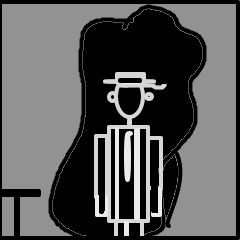
Gerry “the Brain” Goldsmith stood inside his door and listened to Addison’s footsteps recede down the hallway and fade away down the stairs.
Damn Addison!
There, he had said it, or, if not exactly said it, then thought it, and quite loudly and forcefully too, if one could be said to think loudly and forcefully.
Damn him!
Gerry was by nature the mildest of men, but all he could think was: Damn Addison, damn that tedious, pretentious, pathetic, completely humorless and self-absorbed son-of-a-bitch bastard.
Damn Addison, damn his eyes, and damn all he stood for!
And with that last silent imprecation, Gerry felt slightly better. He was a philosopher after all, and one did have to make an attempt to rise up above life’s minor annoyances. Life’s major annoyances were another matter, but, really, how bad was it after all that Addison had asked him to read the two-hundred and forty-eight pages of the “overture” of his novel-in-progress, in one night, when all Gerry wanted out of life at the moment was to go down to the bar like a gentleman and get his nightly half-a-load on?
Gerry went over to his writing table and looked down at that thick stack of typescript lying there next to the much less thick sheaf of his own work-in-progress.
He picked up the first page.
SIXGUNS TO EL PASO
A Novel of the Old West
by
So that was Addison’s real name? Funny, Addison must have told Gerry his actual name a couple of years ago, when they first met at Bob’s Bowery Bar, but that was right around the time when that movie All About Eve was popular, and so everyone started to call the fellow Addison the Wit, after “Addison DeWitt”, the character played so memorably in that film by George Sanders, and not because the guy was witty like Addison DeWitt, but because he was constantly trying to be witty, and constantly failing, abysmally. So, okay, the ass had a real name, but to Gerry and to everyone else in the crowd he was and always would be “Addison the Wit”, the witless wit, the crown prince of bores.
Oh, well, how horrible could this thing be?
Gerry looked at the first sentence. It was partially obscured by a coffee stain, but still legible.
“’There it is, yonder,’ he said to his horse, Pancho. ‘Down in that there town lies our destiny, old friend.’
“The horse, who was the color of a muddy stream in November, whinnied in response…”
Oh, God, no.
Two hundred and what? Two-hundred and forty-eight pages of this drivel?
No. Just no.
No.
He put the page down, flipped the stack of pages over at roughly the halfway point, and picked up another sheet of typescript.
“…the tumbling chaotic dreams of childhood, the memories of those harsh schoolmasters with their pointers used more for the reddening of tender boyish bottoms than for their supposed purpose of pointing to Latin declensions on the blackboard…”
Okay, so that was enough of that, and kudos to Addison for putting a childhood flashback into his western epic.
Gerry put the page back, turned the second half of the stack over onto the first half and picked up the final page.
“…had he learnt, in the burning churning of his soul, in the dark watches of his schoolboy nights, in the throbbing of his seed-heavy young appendage? That one day he would travel West, away from these cruel and oppressive schoolmasters and their thrashing sticks and probing ink-stained fingers…”
Good God, two-hundred and forty-eight pages in, and he was still in the schoolboy flashback? Addison was not only a bore and completely untalented, no, he was also quite mad.
Well, Gerry had had quite enough. He’d read bits of the beginning, the middle, and the end, which of course was not the end, because knowing Addison this book would probably clock in at no less than two thousand pages, which was probably only the first installment of a ten-volume roman fleuve…
He put the sheet down, grabbed his suit coat and his hat, and went out the door.
A few minutes later Gerry was pushing open the door of Bob’s Bowery Bar. It was not quite four-thirty, and so there were still a few bar seats open, and he went over and took one, over on the right near the men’s room.
“The usual, Brain?”
“Make it an imperial pint, Bob. I’ve got a thirst today.”
Bob went to draw the imperial, and someone touched Gerry’s left arm. It was that retarded guy, or maybe he wasn’t retarded, the one they called Gilbey the Geek.
“Hey, Brain, I seen the Devil.”
“What?”
“I seen the Devil. I seen God the other week, but last night I seen the Devil.”
“No kidding, Gilbey? Where’d you see him?”
“In my room, just like how I seen God. Except God was like this shimmering light, but the Devil was like this black hole.”
“A black hole?”
“Yeah, he was like this black hole in the ceiling.”
“Wow. That must have been scary.”
“It was. I felt like I was gonna fall into it, even though I know you can’t fall upwards, but that’s what it felt like.”
“So what did you do?”
“I just laid there and tried to press my body against my mattress so I wouldn’t float up into the black hole, and after a while the hole closed up again.”
“Thank God for that, Gilbey. Thank you, Bob.” Bob had laid down Gerry’s imperial pint. Gerry tapped the dollar he had put on the bar. “And get Gilbey whatever he’s drinking too.”
“I’ll just take a glass of bock,” said Gilbey.
“Coming up,” said Bob.
“Thanks, Brain,” said Gilbey.
“You’re welcome, Gilbey,” said Gerry, and then he said, “Oh, no.”
“What’s the matter, Brain?”
“Oh, Christ.”
“What is it, Brain? Now you look like you seen the Devil.”
“No, not the Devil, Gilbey.”
It was Addison, and he was approaching from the other end of the bar, and with a very serious expression on his face.
{Please click here to read the “adult comix” version in A Flophouse Is Not a Home, illustrated by the illustrious rhoda penmarq…}


May 27, 2021
“Even Oscar Wilde”

“It is a truth universally acknowledged, that all bores remain bores their entire boring lives.”
Sighing, Gerard (“Gerry”) Goldsmith, known to his companions in Bob’s Bowery Bar as “the Brain”, gazed at the sentence he had just typed on his ancient Royal portable.
Once again it had taken him an entire afternoon to produce one sentence of his professed life’s work, his “book of philosophical observations”, tentatively titled Pensées for a Rainy Day, Volume One. But it was a good sentence, hang it all, even if he did say so himself!
He stubbed out his latest Bull Durham of the day. Best to quit work now. Gerry did not believe that anything good came from forcing creativity. The trick was just to put yourself in the chair in front of the typewriter, roll yourself a cigarette, and see what came out. Nearly always, after an hour or two, something would come out, as it had today:
“It is a truth universally acknowledged, that all bores remain bores their entire boring lives.”
And wasn’t that the truth!
Not that Gerry considered himself a – what was the word for someone who was not a bore? A non-bore? An “interesting guy”? A “charming, amusing chappy?” Maybe there wasn’t a good English word for the opposite of a bore because everyone was boring after a certain point. Maybe even Oscar Wilde had worn out his welcome after a couple of hours of his constant and unrelenting wit.
Well, these were questions he could delve into tomorrow, unless of course he found them too boring by then.
Gerry glanced at his watch. Four o’clock! Good God, time to get over to Bob’s before all the barstools got taken –
But that very second Gerry heard something he so rarely heard: a knocking at his door.
“I say, Gerry, are you in there?”
“One moment, please.”
Gerry heaved himself up from his chair and traversed the six feet to his door in not quite a minute.
He opened the door (unlocked as usual, he had drunkenly lost his key just one too many times), and, speaking of bores, who was it but the fellow everyone called Addison the Wit, not his real name, but no matter, he was Addison the Wit for life now, and surely one of the most crashing bores Gerry had ever known. Addison lived down on the fifth floor, and he had been up here to Gerry’s tiny apartment a few times when Gerry had been too drunk to know any better and had a bottle to share, but this was the first time he had ever knocked on Gerry’s door out of nowhere.
“Oh, hi, Addison. What’s up?”
“I do hope I’m not disturbing you.”
He had a thick sheaf of paper held in both hands.
“Not at all,” said Gerry. “Just getting ready to run down to Bob’s for a bock or two.”
“I wonder if you would look at something for me.”
Oh, God, no.
“Uh,” said Gerry.
“Just a little something I’ve been working on,” said Addison.
He raised up the bulky mass of paper.
“If you would cast your discerning eye on these pages. Just let me know, you know, if you think I’m on the right path, so to speak.”
“What is it?” said Gerry.
“It’s a novel.”
“Ah.”
“A western novel.”
“Mm-hm.”
“It’s called Sixguns to El Paso.”
“Sixguns to El Paso?”
“Yes. But I am not married to the title, you understand. Don’t you like it?”
“Oh, no, Sixguns to, uh –”
“El Paso.”
“Sixguns to El Paso? Sounds like a good title for a western to me.”
“It’s a tale of vengeance.”
“Ah.”
“In the old west, of course.”
“Certainly.”
“I wonder of you could, as it were, just sort of leaf through it, just to see, um, oh, how shall I put it –”
“If it is alive?”
“What?”
“If it breathes?”
“If it breathes?”
“Yes, I think that’s what Emily Dickinson asked that editor guy Thomas Wentworth Higginson to tell her, when she sent him his poems. If they were alive, if they breathed.”
“Good God, I hope my novel breathes.”
“Oh, I’m sure it does, Addison.”
“Really?”
“Uh, yes.”
“That’s all I ask,” said Addison. “That my words breathe.”
“Well, isn’t that all that any of us writers can ask?”
“Shouldn’t it be any of we writers?”
“Maybe so, old boy, maybe so.”
Already Gerry knew that Addison’s novel would be dreadful, but of course he could never tell him that.
“So you’ll read it, Gerry?”
“Sure,” said Gerry, meaning he would glance through it just enough to pretend that he had read it.
“Gee, thanks, pal. The thing is, though, do you think you could read it tonight?”
“Tonight?”
“Yeah, it’s only two hundred and forty-eight pages, really just the introductory section of the novel, sort of a prelude or overture, like Proust if you will, but you see I want to get back to work on it first thing tomorrow, and so I’d like to have the pages back by the morning.”
“Tomorrow morning?”
“Yes. Also it’s my only copy, and so I feel nervous about not having it to hand, so if you could read it tonight that would be great.”
“Uh, okay.”
“Here.”
Addison handed Gerry the great floppy sheaf of typescript.
“You’ll take good care of it?”
“I certainly will, Addison.”
Gerry went back to his writing table and put the mass of paper down, next to the much smaller pile of his own work-in-progress.
“I guess that’s your own book on the table there?” said Addison.
Addison had stepped into Gerry’s little apartment.
“Yes, that’s it,” said Gerry. “Such as it is.”
“Well, if you ever want another point-of-view on it, I should be, uh, glad to look it over for you, Gerry.”
“Oh, the horror,” thought Gerry, but what he said was, “Well, I’m not quite ready to show it to anyone just yet, Addison, but, maybe someday –”
“Yes, of course,” said Addison, seeming patently relieved, and more than ready to change the subject.
{Please go here to read the “adult comix” version in A Flophouse Is Not a Home, illustrated by the illustrious rhoda penmarq…}

May 20, 2021
"Oblivion"

“Some days it’s like walking along the edge of a cliff,” said Edna, out of nowhere.
“Yeah,” said Philip, after only a slight pause. “I know what you mean.”
They were lying in bed in Edna’s new apartment. It was a Sunday morning in May and her second-floor windows were wide open onto the Bowery.
“It’s like there’s all this empty space out there, and all you have to do is jump off,” she said.
“Or fall off,” said Philip.
“Or get pushed off,” said Edna.
“Uh-huh,” said Philip.
“But we’re safe in here,” she said.
“Relatively,” said Philip.
She turned and faced him, with her her chin on her hand.
“Do you miss it?”
“The booze?”
“The boozing.”
Philip paused before answering.
“Well, yeah,” he said.
“What do you miss about it?”
“I think I miss the oblivion.”
“The oblivion.”
“Yeah. I would be going along, going to the office every day, living a relatively normal life, and then I would start to miss the oblivion.”
“The whoop-de-doo.”
“The call of the wild.”
“The edge of the cliff,” she said.
“Yeah. All of a sudden it would be time to step off the cliff.”
They were both silent for a minute. They were thinking about the cliff.
“Do you think we’ll ever jump off the cliff again?”
“Who knows?” said Philip.
She lay back on her pillow. The sounds of the street came through the windows. They were both reformed drunks, and there were probably two dozen bars within a two block radius of this building.
“Maybe we’d both be better off living in the country,” said Edna.
“Maybe,” said Philip. “But I like it here.”
“Me too,” said Edna.
“Samuel Johnson said that when a man is tired of London, he’s tired of life. I think I kind of feel that way about this town.”
“I’ll tell you one thing,” she said, “it took me about one month to get tired of the suburbs.”
“Do you think that’s why you started drinking?”
“It was one way to forget I was in the suburbs.”
Again they lay silent. The Third Avenue El came roaring by above the windows, rumbling down toward the Houston Street stop.
“Do you want to take a walk?” said Philip.
“Along the edge of the cliff?”
“Not too close to the edge. And maybe we can stop for brunch somewhere.”
“Hold the Bloody Marys?”
“Yeah, maybe hold the Bloody Marys,” said Philip.
She turned over on top of him and looked down into this face.
“I like not being hungover,” she said.
“Yeah, it’s pretty nice,” said Philip.
They made love one more time, and later they went for a long walk through the Village, then came back and had pancakes and sausages at Ma’s Diner.
{Kindly go here to read the “adult comix” version in A Flophouse Is Not a Home, profusely illustrated by rhoda penmarq…}

May 13, 2021
"It Ain't Nothing"
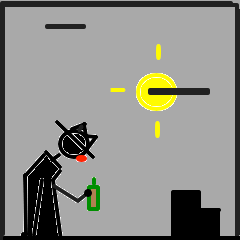
Father Frank, known as “the whiskey priest”, finished up his three-month jolt at the Tombs, walked up the Bowery to Bob’s and took a stool at the bar on this fine day in May.
Bob let him have a Cream of Kentucky and a bock on the arm, and all was well in the world.
Gilbey the Geek came over and sat on the stool to the father’s left. He had a greasy-looking glass in his hand with about a quarter-inch of flat bock in it
“Hey, Father Frank, d’ja hear the news?”
“What’s that, Gilbey?”
“I seen God.”
“Did you now?”
“Yeah. It was really something. He came to me one night when I was laying in the dark in my room. It was like this big shiny light. He stayed there for like a minute that seemed like forever, and he didn’t say nothing, but he didn’t have to I guess. And then he went away. But it was God all right, Father. I seen God.”
“That’s swell, Gilbey.”
“I guess you seen him plenty of times, being a priest and all.”
“Well, no, Gilbey, not per se.”
“I don’t know what per se means, Father.”
“It means, well, literally speaking I have never seen God.”
“I don’t know what literally speaking means, Father. I don’t got book learning like you, Father Frank. But I seen God.”
“Well, I should imagine that seeing God is much more important than book learning, Gilbey.”
“You think so, Father?”
“I do, Gilbey. I think you’re a very lucky man, my son.”
“Gee. I ain’t never had no luck before.”
“Well, you’ve got luck now.”
“It was only the oncet.”
“The oncet?”
“It was only the oncet I seen him.”
“Oncet is about one more time than most people have a chance to see the good lord.”
“You think so?”
“I’m pretty sure, Gilbey.”
“How was jail?”
“It was okay, Gilbey. A spot of jail now and then can do a man good, I think. Cuts down on the all day drinking, plus you’ve got the three meals and a cot.”
“That’s what I thought whenever I been in jail. It ain’t so bad. Except you can’t drink all day, like you said. It ain’t no worse than the flophouse.”
“No, it isn’t, Gilbey.”
“And you don’t even got to pay nothing for your meals and the cot.”
“This is true, Gilbey.”
“You think I’ll ever see God again, Father?”
Father Frank hesitated just a moment before replying.
“Yes, Gilbey, I think someday you will.”
“I see him I’ll say hi for ya.”
“Why thank you, Gilbey.”
“I’ll put in a good word for you. Tell him you always been all right in my book, even if you do get drunk and disorderly and sent down to the Tombs sometimes.”
“That’s – that’s –”
“It ain’t nothing, Father.”
“No, I think it’s something, Gilbey.”
“Well, you should know, Father Frank, you being a priest and all.”
“Yes, I suppose I should,” said Father Frank.
He signaled to Bob, and when Bob came over he asked him for another bock, and one for Gilbey. It was the least he could do.
{Please go here to read the “adult comix” version in A Flophouse Is Not a Home, profusely illustrated by Sister Rhoda Penmarq, S.S.J.}

May 6, 2021
“The Misunderstanding”
“Nothing is as great as you how you remember it, but many things were worse than how you remember them.”
Gerry “The Brain” Goldsmith stared at the sentence he had just typed. It had taken him all afternoon to come up with the sentence, but, hang it all, it was a good one!
His work-in-progress (currently titled Pensées for a Rainy Day; Volume One) was coming along apace. Almost ninety-two double-spaced pages completed in just over a year and a half, ever since he had decided to get serious about distilling the work of two decades of ruminations collected in those stacks of schoolboy copybooks piled on his shelves. It was true that he only averaged one completed sentence a day (Saturdays and Sundays off), but Gerry firmly believed that it was far better to write one good sentence than ten pages of nonsense.
For a few brief seconds he considered moving on to the next sentence, but quickly decided not to push it. Always leave some gas in the tank for the next day’s work, that was Gerry’s motto, or one of them.
As usual he left the page in his old Royal portable, one of his little methods for achieving a continuity from one day’s labor to the next.
Outside his window the Third Avenue El roared and rumbled on its way to the Houston Street stop.
Gerry leisurely rolled another Bull Durham, and then lighted it with a Blue Tip kitchen match.
Soon he would have his reward for his day’s work: a glass of the delicious basement-brewed bock around the corner at Bob’s Bowery bar. And after that glass, another, and so on…
Yes, his days held little apparent variety, but what was so great about variety? A philosopher (a man of letters, yes, say it, an artist) needed stability, a routine, and not to be running around madly all day and night. And, after all, didn’t each day bring something new, if only you kept your eyes and your ears and your mind open?
He gazed at his day’s production again.
“Nothing is as great as you how you remember it, but many things were worse than how you remember them.”
His youthful two post-collegiate years in Paris, living off his Harvard graduation money and his fifty-dollars-a-month remittance courtesy of Grandmother Goldsmith, that glorious time of – but, wait, had it really been all that glorious? No, let’s face it, he had been a shy young man, and he would go days at a time without speaking to anyone but a waiter, requesting another glass of wine or beer.
That first summer, sitting in the cafés, watching les jeunes filles stroll by. Why had he never attempted even once to pick one up? Well, it was too late now, and, really, what had he missed? He would never know of course, but, after all, who’s to say that even if he had had an affair, even once, if it would have been a good memory to have? And he was only forty-nine now after all, he still had time, perhaps, to have concupiscent relations with a woman, at least once, before he died.
No doubt when his book came out his publisher (he had his eye on Smythe & Son, although he had not yet approached that august firm) would arrange a “release party” for him. For once in his life he would be the center of attention, and perhaps a likely bookish woman would approach him, a copy of his volume in hand, requesting a personalized inscription. One thing would lead to another. She wouldn’t mind his pot belly, because she would be attracted to his mind…
Anyway, time for a bock!
Gerry put on his tie and his old Donegal tweed suit coat and his fedora, and left his tiny flat, not bothering to lock the door, as usual.
Gerry lived on the sixth floor, and he was just about to turn down the fourth-floor landing when he heard the scream.
What was that?
Again the scream, a woman’s scream.
Good God, was someone being murdered?
The noise came from behind him.
He turned, his head cocked, listening, and the scream sounded again. It seemed to be coming from the door one down to the left. That was the apartment of that nice young fellow Terry Foley. Could it be that Terry was in fact a murderer? Who would have suspected? Terry was another literary fellow, working on a long autobiographical novel (or so he said), but was he in reality a modern-day Raskolnikov?
Again the scream, a scream. Frightening.
Gerry was no hero, but could he just continue on down to the bar while some poor woman was being butchered?
No. If only for once in his life, he must take action in the physical world.
He walked, legs trembling, over to the door as yet another scream rang out.
He raised his fist, took a deep breath, and then pounded on the door with the heel of his hand.
A scream had just started again, but suddenly it halted, almost as if the woman had had her throat slit, or crushed.
He pounded again.
“Yes, who is it?” called a man’s voice, Terry Foley’s voice.
“It’s Gerry Goldsmith, Terry,” said Gerry, into the wood of the door. “I can hear you in there, and I warn you, I am not afraid to go find a policeman!”
“What the devil are you talking about?” said Terry’s voice.
“You know damned well what I’m talking about, Terry, and I’m not leaving here until you open up and let that woman out of there, provided she is still alive.”
“Are you insane, Gerry?”
“I assure you I am quite sane, Terry, but perhaps the more apposite question is, ‘Are you a homicidal maniac, Terry?’”
“What?”
“You heard me, man. Now open this door at once!”
Gerry heard padding footsteps. Would Terry have a knife, or a gun? Would he, Gerry, pay for being a good Samaritan by becoming Terry’s next victim?
The door opened a few inches.
Gerry could see thin young Terry standing there, clad only in boxer shorts. Behind him in Terry’s bed with the sheet drawn up to her neck lay young Araminta Sauvage, from down on the second floor. She was lighting a cigarette.
“Oh my God, Terry,” said Gerry, “I am so terribly sorry.”
“Jesus Christ, man,” said Terry. “You scared the shit out of us.”
“I am so terribly sorry.”
“Yes, you said that.”
“Hello, Mr. Goldsmith,” called Araminta.
“Hello, Miss Sauvage,” said Gerry. “I am so terribly sorry.”
“Yes,” she said. “I heard that.”
“Can you both please forgive me?” said Gerry.
“Jesus Christ, man,” said Terry, again.
“I forgive you, Mr. Goldsmith,” called young Araminta.
“Thank you, Miss Sauvage.”
“Can I close the door now?” said Terry.
“Yes, of course,” said Gerry, “and I do beg your pardon, but I thought –”
“Okay, fine, good day, Gerry.”
“Yes, and good day to you, Terry, and Miss Sauvage, and, please –”
The door closed.
“Carry on,” said Gerry, quietly.
{Please go here to read the “adult comix” version in A Flophouse Is Not a Home, illustrated by the illustrious rhoda penmarq…}

April 29, 2021
“Walking With the Big Man”
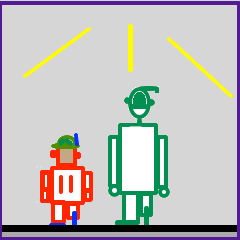
“I seen God last night,” said Gilbey the Geek.
“Oh, Christ,” said Angie the retired whore.
“Not Christ, Angie, but God.”
“Jesus, Mary and Joseph.”
“No, just God, Angie. The big guy. I seen him. Last night. In my room.”
“Listen, Gilbey,” said Angie, “No offense, but I just can’t take your idiotic bullshit right now, so do me a favor and just drink your bock and don’t talk to me.”
“All right, Angie. But I seen him. Last night. In my room. God.”
“You’ll be seeing stars you say just one more word, Gilbey. I swear to God.”
“That’s who I seen. God.”
“Shut the fuck up, Gilbey.”
“Well, okay, Angie. I was only saying.”
“Zip it.”
Even Gilbey could tell that Angie really meant it this time, so he turned away. The ventriloquist Waldo McGee was sitting there to Gilbey’s right, and as usual Waldo had his dummy Mickey Pumpernickel sitting on his lap.
“Hey, Waldo, guess what?”
“What’s that, Gilbey?”
“I seen God last night.”
“That’s great, Gilbey.”
“No, I really seen him. He showed up in my room.”
“That’s swell, Gilbey.”
“He was like all shiny,” said Gilbey.
“Shiny, huh?”
“Yeah, kind of like a big shiny light.”
“That’s really great, kid.”
“Yeah, I thought it was really something,” said Gilbey.
“Hey, Gilbey,” said Waldo, “I gotta go strangle the worm. Keep an eye on Mickey Pumpernickel for me.”
“I’ll keep an eye on him,” said Gilbey.
“Here, put him on your lap till I get back. And don’t let nobody touch him.”
“I won’t, Waldo.”
Gilbey sat Mickey Pumpernickel on his lap, and Waldo staggered off to the men’s room. This was Monday, Waldo’s one night off from his steady gig as compère at the Prince Hal Room over at the Hotel St Crispian on Bedford Street, the one night when he could let loose and tie what he called “a good old country load on”, and he was already halfway there at only six-thirty in the evening.
Gilbey heard a whisper: “Hey, Gilbey.”
Who was it? Was he hearing things? Or was it God, whispering to him?
“Down here,” Gilbey,” said the whispering voice.
Gilbey looked down, and Mickey Pumpernickel looked up at him.
“Don’t talk,” said Mickey, “or these bums in this joint will think you’re crazier than they already think you are. Just nod your head.”
“Okay,” said Gilbey.
“I said don’t talk. Just nod your head.”
“Sorry,” said Gilbey.
“What’d I just tell you? Now don’t say another word. Just nod your head.”
Gilbey just nodded his head.
“I heard what you said, Gilbey,” said Mickey Pumpernickel. “And I just want to say I believe you.”
Gilbey started to say something again but Mickey quickly cut him off.
“I said don’t say nothing.”
Gilbey said nothing.
“Just nod your head.”
Gilbey nodded his head.
“You, my friend,” said Mickey, “have been vouchsafed a very special gift. You have seen God. Now you want my advice? Clam up about it. Keep it to yourself. You don’t got to advertise it. But know this. That you are now one of the elect. One of the very few. I see you’re getting ready to say something again, but don’t. Just nod your head.”
Gilbey nodded his head again.
“Okay, that’s all,” said Waldo. “Now relax, enjoy your bock. Because you’re walking with the big man now.”
Gilbey nodded.
“You can stop nodding now,” said Waldo. “It looks weird.”
Gilbey stopped nodding.
“These bums in here,” said Mickey. “They don’t know nothing. But you do. And I do.”
Gilbey nodded.
“I said stop nodding,” said Mickey Pumpernickel. “Just sit there, and drink your bock.”
Gilbey remembered not to nod, and he took a drink of his bock.
He looked down at Mickey Pumpernickel and Mickey gave him a wink.
Mickey Pumpernickel understood.
{Please go here to read the “adult comix” version in A Flophouse Is Not a Home, illustrated by the illustrious rhoda penmarq…}

April 22, 2021
"The Real Me"

“Nobody knows the real me,” said Gilbey the Geek.
“Why would anyone want to know the real you?” said Angie the retired whore.
“I got a lot to offer,” said Gilbey.
“Yeah? Like what?” said Angie.
“I got wisdom,” said Gilbey.
“Oh, Christ,” said Angie.
“I know it don’t look like it, but I got wisdom,” said Gilbey.
“You got shit is what you got,” said Angie.
“That ain’t nice, Angie,” said Gilbey
“I ain’t paid to be nice,” said Angie. Once she had made her living by being paid to be nice. Now she sold flowers out of a cart on Delancey Street.
“It don’t hurt to be nice,” said Gilbey.
“I’m sorry, Gilbey. But sometimes the shit you say.”
“I know, Angie. But I can’t help it.”
They sat in silence for a minute, Angie drinking her Rheingold and Gilbey drinking his bock.
“Nobody knows the real me,” said Gilbey, again.
“Okay,” said Angie. “I’ll bite. What’s the real you, Gilbey?”
“I got dreams,” said Gilbey.
“What kind of dreams.”
“You got to promise not to make fun of me.”
“I can’t promise that, Gilbey.”
“All right, I’ll tell you anyway. My dreams is a world where I don’t never need no money, and where I can drink bock all day and not be hungover the next day.”
“That’s your dreams?”
“Yeah,” said Gilbey. “You think maybe someday my dreams will come true?”
Angie looked at the dumb bum with his trusting dumb face.
“Can I ask you a question, Gilbey?”
“Sure, Angie. I am an open book.”
“Were you always kind of retarded, like ever since you were a little kid?”
Gilbey cocked his head, and stared off into nothing out of the corners of his eyes. This meant he was thinking, or trying to think. Then he straightened out his head again and looked at Angie with his sad eyes like a puppy dog’s.
“Yeah, I guess I always been kind of retarded, Angie.”
“So it ain’t your fault,” said Angie.
“No, I guess not,” said Gilbey. “But you know something, Angie?”
Angie waited, but Gilbey didn’t say anything, so just to move things along she said, “What? What do I know, Gilbey?”
“Nobody knows the real me, Angie.”
Angie stared at him.
“Yeah, Gilbey,” she said. “You’re probably right.”
Bob came over. It was just another Monday afternoon in the bar. Outside the sun was shining, you could tell when somebody opened the door to come in, or, more rarely, to go out.
“You two okay?” said Bob. Their glasses were empty.
“I’ll take another one, Bob,” said Angie. “And give the wise man here another bock.”
Bob took their empties and went down to the taps.
“Gee, thanks, Angie,” said Gilbey. “I wasn’t trying to get a drink out of you.”
“I know that, Gilbey,” said Angie. “You ain’t that smart.”
“I ain’t that smart, but I got wisdom,” said Gilbey. “And I got dreams. It may not look like it, but I got a lot to offer, Angie.”
“Yeah?” said Angie.
“Yeah,” said Gilbey. “Nobody knows the real me.”
{Please go here to read the “adult comix” version in A Flophouse Is Not a Home, illustrated by the illustrious rhoda penmarq…}

April 15, 2021
“Love Is a Beautiful Thing”
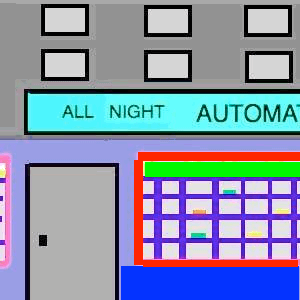
It was Bosco and Janey’s first anniversary, and they celebrated by doing what they did every day, which was getting their loads on at Bob’s Bowery Bar.
How well they remembered their first meeting, right here at Bob’s, when they had bonded one afternoon over Janey’s tokay and Bosco’s bock and bourbon. Janey had been buying, because Bosco was unemployed and Janey had a job working at the 24-hour automat over on Bedford Street, shoving sandwiches and pies into the little windows.
They tied the knot down at City Hall a month later, and Bosco moved into Janey’s room at the Sunshine Hotel.
Now they had been married a year, and they both knew everything there was to know about each other.
“We ain’t got much, Janey,” said Bosco. “But we got each other.”
“If I was still able to have a baby I would let you knock me up, Bosco, that’s how much I love you.”
“Yeah, but how would we bring it up?” said Bosco. “Me being a bum that can’t keep a job, and you just working at the automat and all.”
“We would find a way, Bosco. Love always finds a way, you big bum.”
“We could adopt a kid if you want.”
“Nobody would let us adopt a kid, you knucklehead.”
“Yeah, I guess you’re right,” said Bosco.
“Just do me one favor,” said Janey.
“Anything, babe.”
“When you croak, croak quick. I don’t want to see you dying slow in the charity ward.”
“Okay, Janey. I will do that. If I feel my croaking coming on, you know what I’m gonna do?”
“What’s that, Bosco?”
“I will walk right out to the middle of the Brooklyn Bridge and jump off.”
“Thank you, Bosco.”
“You’re welcome, Janey.”
“Just one thing.”
“What?”
“Don’t tell me about it first,” she said. “Just walk down to the bridge and jump off, but I don’t want to know ahead of time.”
“Okay,” said Bosco. “That’s what I’ll do. Maybe while you’re working at the automat, I’ll just go down the bridge and jump off, but I won’t tell you about it ahead of time.”
They sat silently, drinking, and then Janey spoke.
“Just leave me a note when you do it,” she said.
“A note.”
“Yeah, just a brief note, so I don’t worry where you are.”
“I get it,” said Bosco. “Just a brief note. But you know I ain’t much of a writer.”
“It don’t got to be Shakespeare, Bosco. Just a brief note, like, ‘Went down to the bridge. You know why. Love, and best of luck, Bosco.’”
“Short and sweet.”
“Short and sweet,” she said. “Just so I don’t worry you got run over by a truck or something.”
“I will leave a note,” said Bosco.
“But let’s hope that day don’t come soon,” said Janey.
“Yeah, we still got some good times left,” said Bosco.
“I hope the hell we do, Bosco,” said Janey.
“Look at them two,” said Angie the retired whore to Gilbey the Geek. “Lovebirds.”
“They’re in love, Angie,” said Gilbey. “And love is a beautiful thing.”
“What would you know about it, Gilbey?” said Angie.
“My mom loved me,” said Gilbey. “God rest her soul.”
Angie stared into her Rheingold, thinking of her own sainted mother.
{Please go here to read the “adult comix” version in A Flophouse Is Not a Home, illustrated by the illustrious rhoda penmarq…}

April 8, 2021
“Guilty”

It was just another drunken night at Bob’s Bowery Bar, a Tuesday night, not that it mattered a whole hell of a lot what night it was, because every night is a Saturday night when you don’t work for a living, or when you hardly work, or work just enough so you can get your load on every night of the week.
Hector Philips Stone, the doomed romantic poet, came out of the men’s room and went over to Janet, who was standing at the service bar waiting for Bob to fill her order.
“Hi, Janet.”
“Oh. Hi,” she said.
“Hey, Janet, Wednesdays are still your night off, right?”
“Yeah.”
“How about we get together tomorrow?”
“And do what?”
This was a question she had never asked before.
“Oh, I don’t know, maybe we could have dinner at Ma’s Diner?”
“Big spender.”
“We could go somewhere else if you like.”
She turned and stared at him.
“Why don’t you just say what you want, Hector?”
“Well, all right then, hang it all, Janet! We could go to my flat, and –”
“You call that a flat? I call it a room.”
“Well, I think the term is ‘studio apartment’.”
“Forget it, Hector.”
“Why are you acting like this?”
“I ain’t acting like nothing.”
“Are you angry with me about something?”
“All you do is drink and sleep and write your stupid poems.”
“Well, this is true.”
“You don’t give a shit about me.”
“That is not true.”
“Forget it, Hector.”
“But what did I do?”
“You didn’t do nothing except be you.”
“But what else can I be except me?”
“Nothing. And that’s why I ain’t gonna hang around with you on my night off, because I know what you want to do, and I don’t want to do it with you, or with nobody, so don’t feel bad.”
She turned away and picked up her tray of drinks and went off.
Hector stood there and watched her. He took out his cigarettes and lighted one up. What had he done? Or had he done nothing, and merely been himself, and that really was the problem?
It was too bad, because he was fond of Janet. He was pretty sure it had only been that one night that they had fully made love, if you could call it that, and, sure, he had been drunk, but that was to be expected, wasn’t it? Had he performed clumsily? As it was, he could barely remember even that one time. It had happened almost as in a dream, and he had fallen asleep, and when he woke up in the middle of the night she was gone, leaving only a small bloodstain on his sheet (which, to be honest, he had not even noticed until several days later). Had she gotten angry because he had fallen asleep, or, let’s face it, passed out? Had he snored? Had his breath smelled?
It was such a cliché to say it, but women were a mystery. He headed for the table where his friends the other poets sat, drinking and shouting.
He would write a poem about this. It was only through poetry that his life made sense.
On the way to the table he passed Janet who was on the way back to the service bar with her tray filled with empty glasses and bottles and an empty beer pitcher.
“Oh, I say, Janet, could you bring me and the fellows another pitcher of bock when you get a chance?”
Holding the tray in the upraised palm of her left hand she took the empty pitcher by its handle, and Hector stared in disbelief as she reared back and walloped him on the side of his jaw with it. The pitcher was very sturdy, and it didn’t break, but Hector went down, landing on his lean backside.
“Wow,” said Howard Paul Studebaker, the western poet, “you fellers see that?”
“Got him good,” said Frank X Fagen, the nature poet.
“The boy said something wrong,” said Lucius Pierrepont St. Clair III, the Negro poet.
“Glad it wasn’t me,” said Scaramanga, the leftist poet.
“Lover’s spat,” said Seamas, the Irish poet.
Hector sat there in the sawdust, rubbing his jaw, watching Janet stride over to the service bar. He didn’t know what he had done to deserve such treatment, but somehow he was sure that he did deserve it.
(Please go here to read the “adult comix” version in A Flophouse Is Not a Home, illustrated by the one-and-only rhoda penmarq…)

April 1, 2021
“Ladies First”
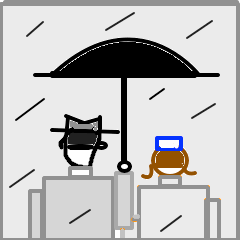
Miss Blotnick opened the door and came in, without knocking, as usual. Someday he would be picking his nose when she did this, and then they would both be sorry. She closed the door and came up to his desk and leaned over.
“It’s that dame again.”
“What dame?” said Philip, although he was pretty sure he knew already.
“The one from the mountains.”
“Oh?”
“Yeah.”
“Well, please show her in, Miss Blotnick.”
She looked at him as if she were about to say something, but then she turned around and went out, and half a minute later she showed Edna in. Philip had already come around from behind his desk.
“I guess you want I should shut the door, Mr. Philip,” said Miss Blotnick, seeming to imply that she would prefer not to.
“Yes, please, Miss Blotnick, you may shut the door.”
Edna was wearing a wet raincoat, and she carried a furled black umbrella.
“You still haven’t decorated.”
“No,” said Philip, “but I’m thinking about it.”
“You busy?”
“In general, or right now?”
“Now.”
“Not really. I was reading a book, actually, and hoping no clients would come in.”
“What are you reading?”
“The Naked and the Dead?”
“Sounds hilarious.”
“Heh heh.”
“Have you had lunch?”
“No.”
“Let’s go to Ma’s Diner.”
“Okay.”
Outside in the reception area Philip told Miss Blotnick he was going to lunch, and he took his topcoat and hat off the tree.
“It’s raining, you know,” said Miss Blotnick. “You can borrow my umbrella if you want, Mr. Philip.”
Her flowered umbrella stood in the cheap vase he had bought in Chinatown for an umbrella stand.
“Um,” said Philip, looking at the red and white and purple umbrella, because he still had some pride left.
“You can share my umbrella, Philip,” said Edna.
He put on his hat and coat, and they went out into the rain and started down the block toward Ma’s. Philip held the umbrella, and Edna slid her very slender raincoated arm into his. It occurred to Philip that in all the months they had known each other this was the closest they had ever come to touching each other’s flesh.
When they got to Ma’s Diner, Edna said, “Let’s cross the street. I want to show you something.”
They crossed at the corner, there was Morgenstern’s cobbler shop (“Shoes Re Souled While U Wait”), and Edna led him to the entrance of the tenement building next door. She opened her purse and took out a set of keys.
She unlocked the door, led him into the foyer.
“You can close up the umbrella.”
“What’s going on?”
“You’ll see.”
She led him into the hall and up the stairs. The building smelled old, of tobacco and soap. The stairs with their grooved rubber runners were worn, but they were clean. On the second floor Edna led Philip halfway down the hall, and she used her keys to open a door on the right.
“Come on in.”
He went in, and she closed the door behind him.
“What’s this, Edna?”
“It’s my new apartment. What do you think?”
It was what they called a shotgun flat, with a tub in the kitchen. It looked freshly painted, and the floor was waxed. At the far end must be the bedroom.
“I haven’t decorated yet either. But what do you think?”
“I don’t know what to think.”
“Don’t you love the tub right there next to the icebox?”
“Yeah, it’s a nice touch.”
“Put down that umbrella somewhere and take off your hat and coat.”
“What about lunch?”
“Lunch can wait.”
She was right.
{Kindly go here to read the “adult comix” version in A Flophouse Is Not a Home, illustrated by the one and only Rhoda Penmarq…}