Chris Chelser's Blog, page 8
January 1, 2017
Bare Bones: “The Screaming Staircase” (novel)
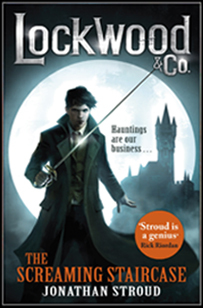 What: The Screaming Staircase by Jonathan Stroud (novel).
Why: Ghost story as ghost stories should be. You know, with actual ghosts.
Spoiler Alert: Low | Medium | HIGH!
Summary
London in an alternative universe. Over the past decades, ghosts have become a very real and increasingly worrisome Problem with a well-deserved capital P. They don’t just go bump in the night, either: direct contact will kill a living person. The catch? Only children can see the ghosts and fight them.
After a hunt in her hometown went deadly wrong, teenager Lucy Carlyle comes to London looking for a new job. Of the many ghost hunter agencies in the city, only the obscure Lockwood & Co will have her. Possibly this is because its only agents are Anthony Lockwood himself and his assistant George Cubbins, and both are Lucy’s age.
Their first hunt together ends apparently successful but with enormous collateral damage in the shape of a burnt-down house and a liability suit to match.
When their backs are against the wall, help is offered from a source that is as unexpected as it is unlikely. Still, beggars can’t be choosers, and so the trio sets off to investigate what may be the most haunted mansion in England.
Story Skeleton
The Lockwood & Co series is clearly aimed at young adults, but that doesn’t mean is doesn’t pack a punch for older readers. The plot is not too complicated, especially when you have read too many whodunits, but interesting enough to be entertaining. Extra reality credits for not glossing over the reality of authorities that crop up after a major incident!
I loved the haunting scenes. They were delightfully detailed and at times scarier than some adult horror novels I have read. Stroud’s twist of ectoplasm being lethal when touched adds an extra dimension of urgency that makes the danger posed by intangible ghosts a lot more real.
The only mild irritation was caused by the protagonists not acting their age. Teenagers behaving like miniature adults is a common issue in YA stories. Yes, these children have seen more of the world and are to some extend battle-hardened, but that excuse only goes so far.
Lesson learnt
Fourteen-year-olds don’t perceive the world as adults do. It jars me when such a young character acts like they are well into their thirties. That just feels wrong.
Even if a character involved is experienced, young brains function significantly different than the adult brain. Most notably, the younger a child, the less understanding they have of danger.
Just look at young adult drivers: they tend to over-estimate their ability to control the car. They are more likely to speed or make misinterpret the situation, resulting in a higher-than-average chance of being involved in a car crash. (There is a reason insurance companies charge young adult drivers more.)
YA protagonists are often shown making risk calculations, but those calculations are based on what their adult creator knows of life. A teenager may not stop to consider that risk, or even realise there is a risk in the first place. Even if they do, they may not think to take precautions that an adult would consider self-evident.
Of course, in YA stories the protagonists should be the same age as the intended audience. Likewise, some stories require the author to write characters much older than themselves. Nothing wrong with that, but do your research.
Age is more than a number on a character sheet: it represents a mind-set. So before writing characters much older or younger than yourself, find out how real people that age regard the world. Once you’re past 25 yourself, you’d be surprised how much you don’t remember about being a teenager!
More Bare Bones reviews here.
Het bericht Bare Bones: “The Screaming Staircase” (novel) verscheen eerst op Chris Chelser | Official Author Website.


December 29, 2016
The Art of Lifelines

Everyone knows them: a friend or family member who cannot stop talking about this singer or that painting or whichever books. They sing praise and gush over its details to no end, while you gaze at them in bewilderment and wonder which of their screws came loose.
That, my friends, is the effect of art.
“But my sister is a Justin Bieber fan. That’s not art!”
Well, that depends on how you define ‘art’.
By Definition
Before anything else, art is subjective. Countless discussions notwithstanding, it’s simply not possible to give a viable objective definition of concept. Even the definition of the word in the Oxford English Dictionary leaves rooms for interpretation:
“The expression or application of human creative skill and imagination, typically in a visual form such as painting or sculpture, producing works to be appreciated primarily for their beauty or emotional power.”
Yet many will concur that the likes of Jimi Hendrix, John Lennon or David Bowie are great artists, and not just because they are (long) dead. We enjoy watching our favourite actors perform on screen or on stage, or reading a book by our favourite author. These may not be tangible visual forms of art, as the Oxford Dictionary suggests, but they are art all the same.
So the heart of the matter must lie in the “beauty and emotional power” of a piece of art. A subjective matter if ever there was one!
Or is it?
On a summer night in a London street, someone showed me the common denominator that defines art. Empiric as I am, I put that factor to the test. With remarkable results.
Art In Entertainment
I love Star Trek. I’m not a hard-core Trekkie, but as a teenager, I devoured the reruns of the original 1960s series. This may or may not have had something to do with raging hormones and young William Shatner in Captain Kirk’s tight shirt, but that is beside the point. The point is this:
Recently I watched William Shatner’s documentary Captains when it popped up on Netflix. In it, he interviews the actors who played the captains that came after Kirk and asks how they experienced being part of this immense world. Out of genuine interest on his part, because back when he portrayed Captain James T. Kirk, Star Trek was ‘just’ a silly sci-fi series for what we would now call a ‘young adult’ audience.
Why would fans still cheer for him when he appears at conventions, 50 years after the series first aired?
Shatner found the answer not in the interviews with his fellow captains, but by talking to the people he came across during his travels to conduct the interviews. So many expressed their love for Star Trek and why the show appealed to them so much. For some it was the outlandish technology that inspired a career in engineering. For others the stories and the imagination gave much-needed relief from the daily sorrows of living with a severe handicap. But for all of them it came down to this: watching the adventures of Kirk and his crew had changed their lives.
To the fans Star Trek isn’t ‘just a silly sci-fi show’, but a thing of beauty and emotional power. In short, a form of art.
Gatekeepers Are Pointless
“How can a science fiction TV show ever be art?” Well, by being a thing of beauty. And beauty, as I´m sure you know, is in the eye of the beholder.
Every person is one of a kind. We all have our own background, dispositions and experiences that made us who we are at this moment. The mix of all the factors that have influenced our lives to date is unique for every person on the planet. Hence we are all unique.
That means that we all have a different concept of what we like or don’t like. What one considers to be ugly may be appealing to another. What one considers trite and boring may very well be a revelation to someone else.
So who is to say what is or isn’t art?
Look at my own experiences, I have found as many answers to life issues in cartoons like Transformers and Lego Ninjago as I did in Victor Hugo’s literary work Les Misérables. My life would have been noticeably different – I would have been different – if not for the insights that each of those creations provided. But that is no guarantee that anyone else struggling with the same issues will find the same answers by binge-watching hundreds of cartoon episodes or ploughing through nearly 1500 pages of nineteenth century prose.
The other way around is true, too. I have never understood all the fuss about Tolkien. I can’t get past page 70 of The Lord of The Rings, and not for lack of trying. The story, the style, the premise, the characters simply do not appeal to me. But while they have nothing to tell me, I do know several people in my direct environment for whom those books changed their outlook on life.
Who am I to claim that just because a work isn’t my cup of tea, it cannot be art? Who is anyone else make such a claim? Art should not be about gatekeepers. It is about lifelines.
Art should not be about gatekeepers. It is about lifelines.
“Throw Out A Lifeline”
In that London street two summers ago, I had the immense honour to meet the Australian actor Philip Quast after a play that he had performed in that night. I have adored his acting for years, but I hadn’t waited outside that venue for an autograph or photo. All I hoped for was an opportunity to tell him in person how profoundly his work had affected me.
During a brief chat, he asked me if I wrote at all, which I of course confirmed. He then not only signed my playbill, but also scribbled a title in a corner: “Throw Out A Lifeline”. There are many reason I still can’t thank him enough for that short meeting. This is one of them.
By sharing her pain through her work, she threw out a lifeline to those in her audience who had similar experiences.
The article’s author is Marsha Norman, an Australian playwright. It is a transcript from a speech in which she tells about how her audience responded to her work, and how she discovered that what she put into her work touched their lives without realising it. By sharing her pain through her work, she threw out a lifeline to those in who audience who had similar experiences. For these people, her work had a strong emotional power.
To them, her plays were more than a night out, more than entertainment. It was art.
A Web Of Lifelines
For many artists, creating their work (often fiction) is a way to create the second chance that life denies them, as Paul Theroux put it in the quote at the top. Often they try to save a loved one who in life is already beyond salvation. Making art is their way of coping with the world. They throw a lifeline.
For the audience, the artists’ public coping mechanisms help them cope with their own life in turn. They catch the lifeline.
But more than that, when the audience shows the artist their appreciation, they throw back a lifeline of their own – one for the artist to cling to. It is the dynamics between the artist and the audience during music concerts. It is readers leaving a book review. It is fan letters and people waiting in the cold outside a venue, just to say ‘thank you’.
The connection between artist and audience creates
a web of lifelines that benefit both.
Regardless of what kind of work triggered it or who made it, such webs of lifelines share a rare and wonderful feeling with everyone in them: to be recognised and appreciated. And ultimately, recognition and appreciation is what everyone hopes for in life.
Which is why any work that inspires even a handful of people to enjoy those feelings is a work of art.
(P.S. If you want to know just why I admire Philip Quast so much, just watch this video.)
Het bericht The Art of Lifelines verscheen eerst op Chris Chelser | Official Author Website.
December 19, 2016
The Boy Under The Bed
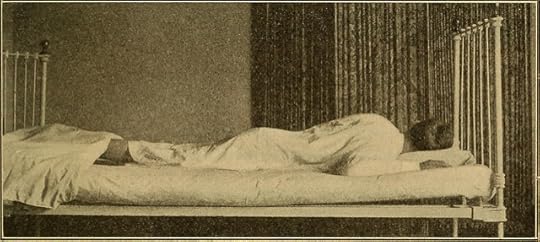
The first time I saw him was at 2 o’clock one morning.
My husband was already asleep when I sneaked into the bedroom. Unlike me, he works office hours, so I changed into my nightshirt without turning on a light. In the darkness, my fingertips searched the blankets for the hem of the sheet. As I do, something brushed my ankle.
Startled, I lifted my foot to nudge the blankets back. Only the blankets were hanging no further down than my calves. A prank? At the time my young son was lithe and mischievous enough to wriggle himself under our bed, but if it were him, he would have been giggling by now. No giggles. Not a sound except my husband’s snores, and he wasn’t within arm’s reach either.
Then what did I just feel?
I focused on scanning the room with my mind rather than my eyes. This wouldn’t be the first time we had unexpected visitors. For the most part we hardly notice them, but on occasion they do seek attention. My attention, usually. For various reasons.
My hunch was correct: there was something under the bed…
A brownish, bony corpse stared at my from under the bed with bulging white eyes. It grinned, but only for lack of lips. Most of the features are missing, but I could sense he was a young man, barely more than a boy. I sensed no malice from him, either. Only a vague desire to simply stay where he was for a while longer.
However frightening his appearance, he had no ill intent. Fine by me. I have had worse visitors than he, so I told him that if he stayed put and didn’t bother me, I wouldn’t bother him.
The next night he hadn’t moved. Or the nights that followed.
A week passed like this. Every night I would gauge the bedroom, and every night I would find him quietly staring back at me. My husband suggested the boy might leave off his own accord, given time, but I doubted it. We frequently have passers-by. They never stay more than a few days, but this one remained in the same spot, lying in the same position, with his white, unseeing eyes gazing out from under my bed.
One night, unable to sleep myself, I reckoned one thing might break the impasse: I asked him ‘why’.
His reply was instantaneous, if incoherent and made up of images instead of words. Murky puddles; grim shadows and the stench of unwashed men. I felt rather than heard the barrage of explosions besieging a poorly lit underground space enforced with wooden beams and corrugated steel. The boy sat in a corner, wincing every time an explosion shook the earth.
I knew where we were , and when. I knew the khaki uniform he wore: the treads of a British soldier in the Great War. That made sense. I have always been drawn to that time period and its ghosts are drawn to me.
The boy soldier beamed with delight when he realised that I recognised these surroundings. Almost enthusiastic now, he showed me how he died.
Another explosion, far too close. The ceiling rumbled, slid and caved in. The collapsing earth relentlessly rained down on him and his comrades. Then everything went dark; dark and silent. Blinded and pinned but not quite crushed, he struggled for breath, but his lungs filled with dirt instead. He was suffocating and scared. Scared of dying, and of dying alone.
His corpse was never discovered, never given a proper grave. He merely lay there in the dark, even after his had body stopped breathing and began to decay beneath that heap of mud. Small wonder he felt strangely comfortable in the narrow, enclosed space under my bed. Small wonder, too, that his ghost still resembled his corpse.
Again I asked him ‘why’. Why come here?
Though painfully quiet and shy these past nights, he now burst with energy and exuberance. Finally someone who listened to his story! Like a child that can’t wait to tell its parents, the neighbours and every random stranger all about an exciting new experience, so this young soldier just wanted tell someone about how he had died. That he had died.
I told him that it was all right to have been scared, but that he needn’t be scared anymore. Without moving from my pillow, I mentally extended a hand to help him up. It surprised me how quick he was to accept my help.
The instant he stood besides my bed, he still grinned, but no longer the forced grin of a skull. His uniform looked worn but undamaged and he sported full gear, his rifle resting against his shoulder and a lopsided Tommy helmet on his head. A bit uncertain about what his next step should be, he pleaded me to let him stay a while longer.
How could I refuse?
And so he is now looking over my shoulder while I write this. I made a Soulless Cry especially for him, too.
Where he goes from here, neither of us knows just yet. While he stays with us, perhaps he is willing to help me flesh out a story idea I have in mind, but for now, he is just thoroughly thrilled to share his story here with you.
(Please don’t hesitate to leave a comment. He would absolutely love that!)
Het bericht The Boy Under The Bed verscheen eerst op Chris Chelser | Official Author Website.
December 13, 2016
5 Signs Your House is Haunted
Hollywood and horror stories have graciously spoiled our conception of hauntings.
Unless your breath comes out in clouds and at least one wall drips blood, most people will not believe that strange occurrences are due to a real haunting by a real ghost. Ghost fans who decide to stay at a haunted hotel are disappointed if they do not see at least one clearly defined apparition. After all, anything less could simply be explained away, couldn’t it?
And there is the catch when it comes to your house…
According to the Oxford Dictionary, “to haunt” means nothing more than to frequent a place, even if that frequenting is usually done by the manifestation of a ghost.
The key therefore, is in how ghosts manifest.
After ruling out all other possible natural and artificial causes, there are five types of in-house occurrences that can alert you to a ghostly presence:
#1 Sensing Presences
The tingle down your spine, the eerie feeling that you are being watched, even when you know yourself to be alone. While this may well be the result of your imagination, it becomes harder to explain when others experience the same sensation.
Animals or small children might be found staring at a particular spot, often in various occasions. Your child would not be the first to ask: “Mummy, who is that lady in the corner?”
If so, count your blessings. It is much more frightening when they ask why that faceless creature is hanging from the ceiling and they point at a corner that, to you, looks empty.
#2 Minor Manifestations
Since ghosts are made of intangible energy, anything that is not solid is more easily manipulated. Electrical currents, light and temperature are favourites:
Lights flicker;
appliances turn or off by themselves for no discernible reason;
unnatural shadows in the room;
and of course the famous hot or cold spots are common minor manifestations, too.
While noticeable, this type of activity is still often overlooked. The human mind is incredibly flexible when it comes to devising explanations for apparently impossible events, so it is easier to blame the wiring for rogue currents than recognise the ghost’s activity for what it is.
Unless the activity steps up a notch…
#3 Voices and Apparitions
The glimpse of a person disappearing into a room – or through a wall. Someone standing by your bed, there one moment and gone the next. Or worse, they do not leave at all.
You may hear moans, whispers, sobs or screams, or a disembodied voice whispering something you may or may not understand. The voice may sound familiar, like someone you knew who has passed away. But remember, the mind is flexible and ghosts intangible, so do not be too quick to trust your body’s senses just yet.
#4 Things Going Bump
Now we cross into horror territory. Any object that is mobile may move: doors, curtains, picture frames tilting, lamps swaying, small items falling or turning up elsewhere than where they were left.
At this stage, the ghosts and their activity are seldom hostile and sometimes even helpful, although even ghosts seem to be unable to locate the car keys.
Ghosts will, however, go to great lengths to make you notice their presence. And you had better take note, before they resort to stronger measures.
#5 All-out Manifestation (a.k.a. the stuff films are made of)
Here we are, in downtown Amityville: hovering objects, blood stains, flying dinnerware, physical injury, people displaying odd behaviour, and all the other mayhem we have come to associate with ghosts and hauntings.
This kind of activity is as aggressive as it is rare. However, it is hardly ever caused by hellish demons or “pure evil”, as Hollywood would like us to believe. The true cause is much simpler.
Just imagine being so angry and upset that you scream, throw your phone across the room and punch the nearest person to vent your frustrations. A few technicalities aside, an angry ghost is usually the root of such a haunting, but your chances of discovering how to divert the fall-out that anger are slim at best.
Good News & Bad News
The good news is that the most chance you will have of experiencing a type #5 haunting inside your house is by turning on Netflix.
The bad news is that most ghosts manifest in such subtle ways that you may not even realise that your house is, in fact, haunted.
So when you next feel a shiver from a sudden draft, remember that closing the window may not keep out the source of that cold…
Blog Resolutions With Impact
As the darkest day of the year draws near, it is time to focus. Why wait until the New Year, when there is no time like the present to take stock and make changes?
I will be frank and admit that 2016 has been a terribly chaotic year. Not a bad year – quite the contrary – but it has been difficult to make heads or tails of anything, never mind get anything constructive done. As a result, my website and my writing have been all in an attempt to keep up.
All outdated and off-topic posts have been removed. In future articles, I will stick to the subjects closest to my heart:
ghosts, ghouls, and things that go bump inside our mind;
ancient places and forgotten history;
the craft of storytelling;
my stories, books and other publications.
On my “About” page, you will find a few links to show you around the website’s highlights.
My email letters to subscribers will pick up again, too, but from now on, off-topic outbursts and spontaneous shares will remain confined to my Facebook and Twitter – along with links to my blogposts, of course!
More to come soon. Until then, have a wonderful holiday season!
Love,

December 7, 2016
Writer’s Woes: Three Magic Words
Once a month I permit myself to discuss the dark side of being a (self-published) author.
In this month’s post rants about…
Three Magic Words
You know that nagging feeling that sets in after something broke your routines? It could be that you were forced to take a break from your workout schedule, missed a few regular meetings with a group, or had to interrupt your writing.
It feels like you’re in a car that is stationary and has to start moving again. Check the fuel consumption of a car when you get the opportunity. Whatever its usual mileage, it will use up a manifold in the first few seconds of pulling out.
After the wheels have started turning and the car is gathering speed, every next acceleration requires less and less fuel. The faster you go, the less energy you need to go still faster.
It’s getting started that always takes the most energy.
This effect causes what I call the Blank Page Syndrome. BPS hit me square in the face again after having to interrupt my writing for over two months, and for the past few weeks I struggled with getting started again.
That’s when this guy came to my aid.
Derek Doepker is a (writing) coach. He showed me a failsafe way of getting started: three magic words are all it takes, he said. And he was right! When you’re stuck on starting something – anything – this method will help you gather that first bit of momentum to get you going again.
Read the full article here: https://www.pickthebrain.com/blog/3-magic-words-overcome-overwhelm/
I’m not receiving any perks for posting this, just my hope that it will help others as much as it has helped me.
So whatever it is you keep postponing: apply the 3 magic words and go for it! Let me know in the comments how it went!
The Insecure Writer’s Support Group
A safe haven for insecure writers of all kinds!
December 6, 2016
Three Magic Words To Dissolve Lethargy
Once a month I permit myself to discuss the challenges of being a (self-published) author. In this month’s post:
Three Magic Words To Dissolve Lethargy
Do you ever struggle to gather the energy and momentum to actually get something done?

I’m quite certain you do, because it’s a very common problem. It is what makes us break away from a routine after we have been forced to interrupt it. Just imagine skipping your regular workout a few times – or any other good habit, for that matter. For some, even a night’s sleep is an interruption of life’s routine that makes getting out of bed in the morning nearly impossible.
This effect causes what I call the Blank Page Syndrome. And as it turns out, there is a terrifically easy way to solve it!
Stuck In Place
Blank Page Syndrome hit me right between the eyes again after I had to interrupt my routines for over two months. Eating home-cooked meals, exercising, doing the administration, sleeping regular hours, writing – all had ground to a halt. For weeks I struggled to get back into these routines. Without success.
It is much like a stationary car that must start moving. Whatever its usual mileage, it will use up a manifold of that in the first few seconds of pulling out. However, once the wheels start turning and the car gathers speed, every next acceleration requires less and less fuel.
In short, the faster you go, the less energy you need. It is gathering momentum that takes the most energy.
Gathering Momentum
We often mistake momentum for motivation. “If only I could motivate myself to…”. In that instant we already have that motivation, which is the desire to see something done. What we lack is the momentum we need to actually do it. But like the car that starts roling, once we have made that first start, we become more enthusiastic and are more inclined to continue: motivation follows momentum.
I was introduced to this invaluable insight by Derek Doepker. He is a coach, and he showed me a failsafe way of getting started. “Three magic words is all it takes,” he said. “Whatever it is, ask yourself: ‘Can I just…?'”
And it works!
Now when I have trouble getting up, I ask ‘can I just… turn back the covers?’, ‘can I just… sit up?’, ‘can I just…swing my legs off the bed?’ Minute actions, but once I have turned back the covers, sitting up is easy and swinging my legs follows naturally. Instead of fighting the constant lethargy (courtsey of chronic depression) for hours, I’m up and about within minutes. Truly a Godsend.
Momentum Everywhere
The brilliance of these three magic words is that they are applicable to absolutely anything:
Writing – Can I just open the file? Can I just read back the last paragraphs? Can I just write one sentence? Can I just complete that paragraph?
Workout – Can I just do this one exercise? Can I just do one more repetition? Can I just finish this set?
Exercise: Can I just take one flight of stairs? Can I just pump the tires of my bicycle? Now that it’s ready, can I just cycle to that store?
Dieting – Can I just leave this one cookie? Can I just have the salad this once? Can I just pass by the muffin shop this once?
Sometimes the answer is an honest ‘no, I can’t’, but that only happens when I truly cannot manage that next step at that exact moment.
To learn more, read Derek’s full article here.
So whatever it is you keep postponing: can you just… apply the three magic words? It is easier than you think.
Found your momentum? Please tell us where the three magic words brought you in the comments below!
The Insecure Writer’s Support Group
A safe haven for insecure writers of all kinds!
Het bericht Three Magic Words To Dissolve Lethargy verscheen eerst op Chris Chelser | Official Author Website.
Three Magic Words That Dissolve Lethargy
Once a month I permit myself to discuss the challenges of being a (self-published) author. In this month’s post:
Three Magic Words
Do you know the nagging feeling of having to do something, but being unable to gather the energy to actually do it? Actually, I’m certain you do, because it is a very common problem. It is what makes us break away from a routine after we have been forced to interrupt it. Just imagine skipping your regular workout a few times – or any other good habit, for that matter. For some, even a night’s sleep is an interruption of life’s routine that makes getting out of bed in the morning nearly impossible.
This effect causes what I call the Blank Page Syndrome. And as it turns out, there is a terrifically easy way to solve it!Blank Page Sundrome hit me right between the eyes again after I had to interrupt my routines for over two months. Eating home-cooked meals, exercising, doing the administration, sleeping regular hours, writing – all had ground to a halt. For weeks I struggled to get back into these routines. Without success.
It is much like a stationary car that must start moving. Whatever its usual mileage, it will use up a manifold of that in the first few seconds of pulling out. However, once the wheels start turning and the car gathers speed, every next acceleration requires less and less fuel.
In short, the faster you go, the less energy you need. It is gathering momentum that takes the most energy.
We often mistake momentum for motivation. “If only I could motivate myself to…”. In that instant we already have that motivation, which is the desire to see something done. What we lack is the momentum we need to actually do it. But like the car that starts roling, once we have made that first start, we become more enthusiastic and are more inclined to continue: motivation follows momentum.
I was introduced to this invaluable insight by Derek Doepker. He is a coach, and he showed me a failsafe way of getting started. “Three magic words is all it takes,” he said. “Whatever it is, ask yourself: ‘Can I just…?'”
And it works!
Now when I have trouble getting up, I ask ‘can I just… turn back the covers?’, ‘can I just… sit up?’, ‘can I just…swing my legs off the bed?’ Minute actions, but once I have turned back the covers, sitting up is easy and swinging my legs follows naturally. Instead of fighting the constant lethargy (courtsey of chronic depression) for hours, I’m up and about within minutes. Truly a Godsend.
The brilliance of these three magic words is that they are applicable to absolutely anything:
Writing – Can I just open the file? Can I just read back the last paragraphs? Can I just write one sentence? Can I just complete that paragraph?
Workout – Can I just do this one exercise? Can I just do one more repetition? Can I just finish this set?
Exercise: Can I just take one flight of stairs? Can I just pump the tires of my bicycle? Now that it’s ready, can I just cycle to that store?
Dieting – Can I just leave this one cookie? Can I just have the salad this once? Can I just pass by the muffin shop this once?
Sometimes the answer is an honest ‘no, I can’t’, but that only happens when I truly cannot manage that next step at that exact moment.
To learn more, read Derek’s full article here: https://www.pickthebrain.com/blog/3-magic-words-overcome-overwhelm/
So whatever it is you keep postponing: can you just… apply the three magic words? It is easier than you think.
Found your momentum? Please tell us where the three magic words brought you in the comments below!
The Insecure Writer’s Support Group
A safe haven for insecure writers of all kinds!
December 5, 2016
November 2, 2016
New: “After the Happily Ever After”
I’m terribly excited to announce that my short story The Thin Blue Breadcrumb Trail has been accepted for publication in Transmundane Press’ latest collection:
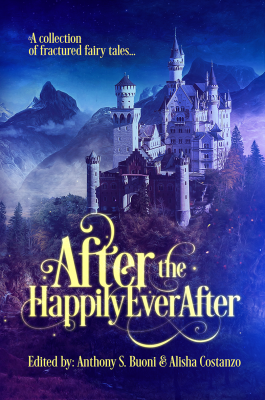
The happily ever after is never the end. The curtain doesn’t fall once love is recognized or evil is vanquished. Credits don’t roll once the giant is slain or the big bad wolf is boiled alive. Wicked stepsisters, malevolent rulers, and hideous creatures still have lives after their sinister roles play out; heroes, lovers, and dreamers often find their victories lead to more troubles.
Within these pages are more than seventy continuations, retellings, and eldritch stories that explore the dark forests, magical castles, and grotesque monsters After the Happily Ever After.