Chris Chelser's Blog, page 3
September 30, 2018
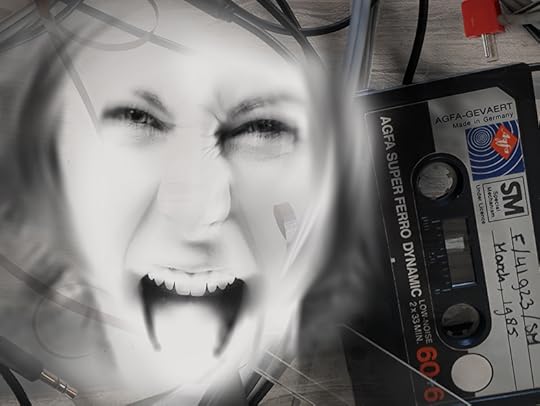
From The Archives: F/41923/SM

Other noises surfaced between the static, sometimes soft, sometimes louder. He tried to concentrate on possible words, but his mind refused. Twice he rewound the tape to listen again, but to no avail. All he heard were inarticulate sighs and whispers. Sometimes his filters hadn’t removed his own groans and snores, but these whispers were different. More frantic, going on and on.
Second cassette; same noise. Same whispers.
‘…me…’
Martin sat bolt upright. Did he just—?
‘…look…for me…’
Unmistakably a woman speaking. He could only make out snatches of words, but the voice rose.
‘…why…you looking…? …why are you looking… me?’
He extended a hand to rewind and confirm what he feared he had heard, but he didn’t dare to.
‘Why are you looking for me?’
This time the words burst from the speakers, clear as day. Martin tensed.
More static, then: ‘Why are you looking for me?’
She was displeased. Even the static sounded put out.
‘Why are you looking for me!’
All-out anger. His breath stuck in his throat.
‘Why are you looking for me!’
Her shrill scream drew out to a screech that echoed against the wall of his tiny ‘suite’. Years of hearing such cries kept him from stopping the cassette. He let it run, but he hid his face in his hands as the noise continued. More white noise, more whispers, until after an eternity, the tape on the cassette ran out and the boom box stopped by itself.
From The Kalbrandt Institute Archives – Book I: Hauntings
Het bericht From The Archives: F/41923/SM verscheen eerst op Chris Chelser.


Hybrid Animals: when gods create jigsaw puzzles
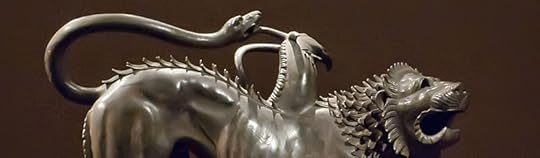
Hybrid animals are commonplace in mythology. Not the natural hybrids, like mules and ligers, but a seemingly random collection of animal and human body parts mashed together into a single being that may or may not be intelligent.
The best known of them were handed down from the ancient Greek and Mesopotamian cultures: satyrs, sphinx, lamassu, mermaids, angels, manticore and centaur apparently find their origins there. The list is immense, even without taking into account deities with the head of an animal as known to at least the Egyptian, Hindu and Aztec pantheons.
Very interesting, surely, but…
…where in blazes did humanity come up with this imagery?
Old As Time
Believe it or not, humanity’s fascination with hybrid animals is as old as humanity itself. Cave art has been found that depicts humans ‘merging’ with animals to obtain traits associated with them. This belief survived the ages and still exists in many natural religions.
This same theme features in many Asian legends, where gods assume – voluntarily or not – aspects of animal anatomy. These hybrid forms are symbolic of certain characteristics, typically in stories meant to convey moral values.
However, the horse-cow skeletons and six-legged sheep carcasses found at Stone Age burial sites take the concept of mix-and-match animals way beyond the realm of moral symbolism. Various archaeological digs discovered animal skeletons that had been reconfigured to create unnatural hybrids. As with any old customs otherwise unexplained, the scientists assume this was done to appease the gods.
But this explanation doesn’t address what gave early humans the idea to create such reconfigured animals in the first place. Never mind why they believed it would appease their gods.
Morbid Curiosity
The human imagination is wild, but not very inventive. It can piece together a new imagine from different bits of information, but it cannot create new information from scratch. But those pieces you do have can fit together in countless different ways. That is why if you haven’t seen a thing before and someone describes it to you, what you imagine is likely to be vastly different from what the one describing has in mind.
As such, mythology’s hybrids may have resulted from this awkward game of ‘pass the message’. In my opinion, the Greek centaur originated at least in part from someone describing the expert horse riders of Persia to people who had never seen a person on horseback before (not unthinkable at the time).
On top of that, the human mind is notoriously unreliable. It likes to fill in the gaps of what it doesn’t understand. What fantastical explanation might our ancestors have imagined after catching a glimpse of something they had never seen before?
Another, less outlandish explanation may have been early man’s encounters with bodily deformations. Imperfect twins and other (birth) defects are rare, but all the same natural occurrences. Could the sight of that have triggered someone to add an extra pair of legs to a sheep’s carcass? Possibly. Aside from being unreliable and deviously imaginative, the human mind is also morbidly curious.
Playing God
Basic biology and psychology go a long way to explain why human fascination with unnatural hybrid animals goes back so far into prehistory and is part of so many different cultures across the globe. What it doesn’t explain, however, is the recurring connection to higher beings: if these creatures are not gods themselves, they have been created by gods – or are a by-product of the deities’ less fortunate decisions.
But as Arthur C. Clarke said: “Any sufficiently advanced technology is indistinguishable from magic.”
Today, our modern science creates genetic hybrids in labs. Animals growing human body parts, human embryos with animal cells added. The moral discussion of biological and genetic engineering aside, technological progress and this morbid curiosity of ours allows us – even drives us – to create living, breathing hybrids.
Of course, Neolithic man living thousands of years ago didn’t have hi-tech laboratories. They created their hybrids post-mortem by rearranging the bones. But now man has the technology to play God.
Question is, are we the first to do so?
‘We are scientists. We go where the evidence takes us. The chance of that forked spine being a perfect storm is negligible. There is no damage but the wear and tear of exposure. No evidence of the bones having splintered or abraded, either pre- or post-mortem.’ He yanked her closer by her arm and traced the oddly shaped vertebra with his nail. ‘No accident can do this. This was engineered.’
If you enjoyed this post, please take a moment to leave a comment and share this article on social media. Thank you !
Het bericht Hybrid Animals: when gods create jigsaw puzzles verscheen eerst op Chris Chelser.
April 23, 2018
Contrary Writing Advice Untangled

Writing advice is everywhere. All influential authors have been quoted on their craft, and novice writers are bombarded with this curated wisdom. New to the craft? Got stuck? Prepare to be thrown a random selection of ‘writing truths’ and be convinced that these contain the solution to your problem.
It’s tempting to believe that “if this worked for these famous authors, it will work for me!”
Yes, it may. It may be that eye opener you needed. Or it will feel like forcing a square peg into a round hole: as painful as it is futile. That isn’t to say that writing advice is bad advice. Not at all. But we tend to elevate simple quotes to religious creeds, and too many writers stress themselves about not being able to comply.
Needless self-torment, because many of those truths are often quoted out of context or sorely misinterpreted. These are my three pet peeves:
“You can’t write if you don’t read.”
This one comes in different phrases quoted from various authors. While true at its core, this writing advice is prone to an extremely narrow interpretation of ‘reading’ which I believe is unjustified. A broader perspective on this might be more accurate – and easier to apply.
We all know that ‘garbage in = garbage out’. Often used to explain the poor results of automated systems, this equation is really a fact of life. For a writer, it translates into the need to take in quality information in order to produce quality writing.
What a writer needs is tools to tell stories and tell them well. Reading three novels a week helps to that end, but there is more than one way to gather those essential tools. My own methods include:
reading non-fiction on all kinds of subjects,
doing intensive research for my stories,
watching quality series and movies to dissect their methods,
asking for and listening to the experiences of other people (friends, family, strangers on the train, etc),
reading and conducting interviews,
attending writing courses, and
reading fiction.
Not only can quality information intake expand well beyond reading fiction, it should. Fiction is not the be-all and end-all, even for fiction writers. It is just one medium of many, and all of those can provide valuable skills and information.
“Write what you know”
The idea behind this one is that you cannot write about things you don’t know anything about. The problem arises when it is explained as “write only about things you have experienced first-hand.”
That sounds sensible enough. You can’t adequately describe what you don’t know, now can you?
Then you realise what the world would have missed out on if the likes of George Lucas or Tolkien had stuck to what they had experienced themselves. Many popular genres would be in deep trouble if this gem was supposed to be interpreted this way. Not to mention all the writers who are in violation!
Fortunately for them – and for us – the adage’s intention is less single-minded. The key to ‘write what you know’ is knowing a lot. That way your stories aren’t limited by your own experiences.
The key to ‘write what you know’ is knowing a lot.
Rather than dissuading you from writing what you want to write, this nugget of wisdom encourages you to read up on subjects you aren’t familiar with before you write about them. Now that is solid writing advice.
“Write every day”
From what I hear from other writers, this Holy Grail of writing advice makes the most casualties.
“To be a writer, I must write every day. If I don’t, I’m not a writer.”
For over a decade, my failed attempts to adhere to this rule demolished my self-confidence. A chronic condition made it physically and mentally impossible to write every day, but I wasn’t a writer unless I did. As a result, this piece of writing advice actually prolonged my condition, and thus my inability to write.
The thing is, many writers (even the accomplished authors) suffer from Imposter Syndrome. To convince themselves that they are indeed writers, they feel they must write every day. Some write every day because they feel better if they do.
But it isn’t set in stone. It’s a writers’ coping mechanism, not a prerequisite!
Now I find myself wanting to write every day. What was so destructive a year ago has become enjoyable. The rule didn’t change, but my circumstances did. As circumstances change, so do we – and what does or doesn’t work changes right with us.
The Art of Being an Artisan
Rather than repeat the clichéd quotes above, let’s conclude with their intention that a writer’s work benefits when that writer:
voraciously hoards quality information,
never stops learning,
reviews their writing methods as they and their circumstances change.
I believe that before all else, writing is a craft. Being dedicated to continuously polishing and enhancing of your skills is the mark of a good artisan. It improves not only your stories and your writing process, but ultimately yourself as a person as well.
Are you a writer? Do you want to practice in-depth storytelling techniques and learn how to write more productively? Then click here for the Story Mechanics Course which I’m launching together with a personal development coach this year!
Het bericht Contrary Writing Advice Untangled verscheen eerst op Chris Chelser.
April 16, 2018
Worldbuilding 2.0: Bridging Gaps With Historical Fiction
Past, future and wistful dreams seem to have little in common, but when it comes to writing fiction, these peas fit snugly in the same pod. So what does historical fiction have in common with sci-fi and fantasy?
Indeed, many an epic fantasy saga has been set in a twin of medieval Europe, but despite the opening credits of Star Wars starting with ‘long ago’, this space opera doesn’t qualify for the ‘historical’ genre label.
So where do these worlds meet? Exactly there: the worlds in which the stories are set.
Building Reality
Readers love to explore a brand-new world, and writers love to cater to that desire. That is easier for some than it is for others. Author of stories in a modern setting have their own challenges, but having to invent a world for their story isn’t one them. Since Walmart doesn’t stock prepped and ready-for use worlds full of magic or spaceships (or both), a genre writer will need to create one.
This ‘worldbuilding’ is a favourite pastime for writers. We draw maps, name the places, devise governments, cultures and belief systems, as well as indigenous flora an fauna. Doing this right is a lot of work. Too much, in some cases. Many a novice fantasy writer has been consumed by ever-refining the intricacies of their world, only to forget to actually write the stories.
Humanity has taken millennia to build our diverse global society. Writers seek to accomplish the same in a few weeks. Small wonder they take their cues from Earth’s reality: we all know (and love) medieval feudal systems and extra-galactic aliens who look remarkably human.
This isn’t laziness, it is sensibility. The human brain rejects what it cannot put into context, meaning that unleashing too much alien-ness on your audience will – what else? – alienate them. I once experimented with a world where most of our natural laws didn’t apply. Turns out it was impossible to relate to the characters, even for me.
Concluding: building a new reality is more complicated that many would think. But what has this to do with historical fiction set in Earth’s documented past?
A Different World
We humans tend to forget that our world is constantly changing. Today’s children don’t recognise a landline telephone, we can’t imagine what we’d do without cars. If you get ill, they don’t doubt that the doctor will prescribe antibiotics and you’ll get better. Especially younger people have trouble realising how fast things change:
As my son grows up today, smartphones are the norm.
When I grew up, the concept of Personal Computers first began to catch on.
When my father grew up, black-and-white TV was state of the art.
When my grandfather grew up, electricity and cars were new inventions.
When my grandfather’s father grew up, it was normal that families were big because children as young as the age of four had to work to provide income. Oh, and it was also normal that half of those children died before their fifth birthday.
When his grandfather grew up, the Industrial Revolution had yet to begin.
That is 7 generations, roughly 180 years. Yet how different each of those worlds was compared to the next closest. So much of what we consider normal today was inconceivable not even 30 years ago – and that is true for every generation.
History is a whole different world indeed. The further back you go, the more alien it becomes. Yet this is the world that writers of historical fiction must render comprehensible for their readers. And that requires as much worldbuilding as any fantasy land.
Reconstructing History
Whether you describe a Norwegian Ridgeback, the colour of magic or the plants and wildlife of Eurasia during the last Ice Age, a writer has a duty to make their story’s world as tangible as possible. Whoever claimed that reconstructing history was the easiest option ‘because you’ve got all these sources’ was lying through his teeth.
Juggling Sources
When writing historical fiction, research is essential. In order to create a credible version of the world as it existed centuries ago, accurate details go a long way. But research is not beatific: sources are invariably incomplete, inaccurate, biased, disputed or otherwise unreliable. Exaggeration and wilful omission were artforms of human communication well before the written word became commonplace.
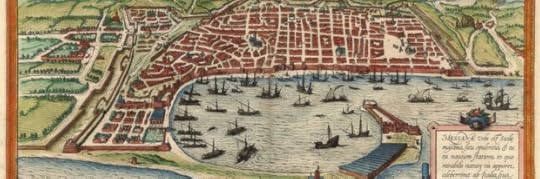
In some cases, reliable research is even outright impossible. For the files featured in The Kalbrandt Institute Archives I have interviewed people about their experiences in the Borneo jungle and used my own memories to recreate the mid-1980s. But I cannot interview a 13th century doctor about his medical practices or use Google Streetview to see what Messina, Sicily looked like when he was there.
The only option was to reconstruct parts of the city based on ancient maps, my knowledge of nearby Malta, and googling images of contemporary buildings that survived into our era. As for the events that took place in the autumn of 1347, all I had was a handful of evidently embellished accounts, most of them second-hand.
And that isn’t the only complication.
A Matter of Perspective
To transport the reader into the story, they have to see the story unfold through the eyes of its characters. Characters that view this alien ancient world as the most normal thing in existence. Except…the reader is a modern person with modern views.
That gap has to be bridged. By exposition. The question is: how much?
A fantasy writer expects to have to explain how magic works in her world. But the historical fiction author has to make a best guess as to how much their audience already knows. Will they understand the implication of a particular item or event when the characters mention it, or do they require a bit more explanation? The art of this genre is to err towards the latter without the reader taking note of the extra exposition.
Fact vs Fiction?
Well-researched facts are the supporting structure of historical fiction, but a house is more than a few walls and a roof. Everything between and around that structure is what makes a house a home – or turns a collection of facts into a story.
That is the joy of writing historical fiction: the artistic license you have to fill in the unknown gaps between the facts. Inaccurate or disputed sources can be interpreted as the author sees fit. Or left out altogether, if that serves the story best.
Because the story has to come before everything else. After all, historical fiction is just that: fiction.

Het bericht Worldbuilding 2.0: Bridging Gaps With Historical Fiction verscheen eerst op Chris Chelser.
April 9, 2018
Why You Can’t Kill Dragons (And Don’t Need To)
Wouldn’t it be wonderful to get rid of all obstacles in your life? Just imagine how much easier you could obtain your goals – money, power, love, success, self-actualisation – if only you could kill the dragons that stood in your way.
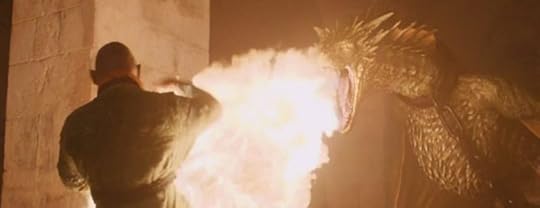 Source: HBO, Game of Thrones
But life is never that easy, is it? Still, there is hope. For those who dare, anyway.
Let’s say your goal is a treasure chest. To get to it, you must surmount obstacles. Not path is ever straight forward, and your path to the treasure leads into a deep, dark cave. And in that cave dwells a living, breathing dragon.
Now you have two options.
The Longest Road
Staring into the mouth of that cave, your first option is to backtrack. While the path forward is through that cave, you tell yourself there must be ways around. You may find one, too. Yet when you follow it, you soon end up before the exact same cave.
So you ask an experienced guide: you hire a coach to tell you how to scale your path and where to take which turn. A good coach will show you the most direct route (a bad one results in costly meandering) and help you reach your destination—
—at the mouth of, you guessed it, the same cave.
Next you decide to hire a helper. Someone to fight in your stead. But even if they do go in, they will not find your dragon. Their own, maybe, but not yours. Yours will still be waiting while you linger outside, getting no closer to your treasure.
There are no two ways about it: to find the treasure, you must go through that particular cave. You cannot evade that confrontation if you wish to reach your goals.
People can spend their days moving to and thro that cave: excuses, addictions, distractions. All means to keep moving without actually getting anywhere. At great cost in money, energy and time, they avoid having to face the dragon. Sometimes for a lifetime.
Many parables will tell you these evasive tactics are a waste of time because the cave is empty. There never was a dragon, only your fears.
What this take neglects is that to your mind, fears are only too real. The dragon is real. It may be big or small, but it has sharp teeth and a viciously flammable breath.
And what you want is right behind it…
Into the Dragon’s Lair
The other option is to go in – or did you forget there was a second option?
You’re shaking, terrified, but you go into the cave. Maybe you donned a harness, maybe you bring a friend who has your back. Maybe you even brought a sword. How you did it doesn’t matter: your first victory is that you went in at all.
The dark extends, but you know that sooner or later you will find that dragon – or it finds you.
When you are face to face with those fiery eyes, again you have a choice. But who has time to consider options?
You attack! A fierce fight ensues. At great personal cost, you battle the dragon. The dragon retaliates, of course, and proves a formidable opponent. For reasons you will soon understand, this beast will always be evenly matched to you.
So you fight, you bleed and you suffer. And again there are two possible outcomes. Either you lose – by retreating of, depending on the type of dragon, physically dying – or you win.
Let’s say that you win. You plunged your sword into that scaly breast and the dragon sags to the ground.
For all of a few moments.
As the big head rears and lets out a roar, you realise in terror that dragons are immortal! You may have won this round, but now you are right back where you started. Which is facing an irate dragon that is impossible to slay.
Conquering Without Shedding Your Blood
Go back to the moment you faced that dragon for the first time. What would happen if you didn’t attack? What if instead of charging, you took off your helmet and dropped your sword? Would the dragon hurt you? Maybe it will lash out, but dragons are intelligent.
More than that, this dragon knows you. It knows your strengths and weaknesses, in battle and in life. It senses what you will do next before you realise yourself.
Because this dragon, this adversary, is an inseparable part of you.
People often speak of vanquishing our demons. Something that is evil and must be destroyed. But how can you destroy something that is part of who you are without destroying yourself?
That is where the taming of dragons comes in.
When you see an animal that is hurt, and you wish to help it, is your first instinct to kill it? Doubtful. So approach your dragon as you would a feral animal. Not with hostility, but with respect for its strengths and the reasons it is irate. Get to know it. When you stop wanting to kill it – which is impossible – you can tame it. You might be able to befriend it, even, but at least you can cease the hostilities long enough to move past it and reach your goal: your treasure.
Truce and Treasure
We tend to get so wrapped up in battling our dragons that we forget why we an engaged in combat in the first place. We spend our lives fighting, often because we were raised that life is a battle. That you must fight for what you want or it isn’t worth having.
So rarely do we realise that this just isn’t true.
Yes, facing your dragons is scary. It takes constant effort to keep your relationship with them stable. But if you value you time and your energy – your life – maintaining that truce is worthwhile.
I have a host of dragons myself, some more dangerous than others. On occasion, I share my experiences with taming them, hoping you will find my methods useful. Because once you stop fighting your dragons to reach that treasure, every next cave on your life’s path will be less daunting.
What are your most vicious dragons? Let me know in the comments, so they can feature in a future Taming Dragons post!
Het bericht Why You Can’t Kill Dragons (And Don’t Need To) verscheen eerst op Chris Chelser.
April 2, 2018
Ghosts of The Ypres Salient
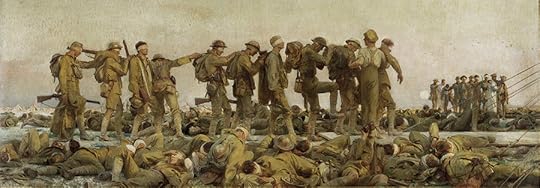
On November 11th of this year, a full century has passed since the Great War came to an end. The war that left a ravaged continent in the wake of millions of casualties. On the Western Front, names like the Somme, Verdun and the Ypres Salient have become synonymous to unprecedented loss of life.
After all that time, are there still soldiers on these battlefields? Not so long ago, many of them still walked the fields of Flanders and France. But since then, memories have become history. As their old haunts (literally) vanish and life goes on, many ghosts have disappeared. Many, but not all…
Whenever you visit the Belgian town of Ypres, keep an eye out for signs of people hanging about a lot longer than most tourists.
Sanctuary Wood, Hill 62
Our first stop is a small museum that is famous for the preserved trench system on its terrain. It is a popular spot that attracts many visitors every year, meaning that ghosts don’t tend to hang about. A safe place to start, it would seem.
Despite the absence of real ghosts, there are still ‘shadows’. These are memories that linger in the land itself, like photographs of the past superimposed on the present. From the corner of your eye, you can still see men lying under the improvised shelters of corrugated steel. Perhaps they were sleeping when the imprint was made. Or perhaps they were already dead.
Hooge Crater
Hooge Crater features a museum and a restaurant, with a small park at the back where you can find the craters that have named this site. The museum is well-worth visiting, but holds neither shadows nor ghosts. The park, however, is a different matter.
At the front of the park is an oddly cup-shaped meadow, possibly with some sheep. Beyond it is a large pond. Now look closer: the meadow consists of two shallow craters, left by the excessive shelling that pocked the landscape of the Salient. The pond is in fact two further craters, so deep that they filled up with water.
The small bush around the pond is riddled with shadows and wispy ghosts. Most of them want little to no contact and will frighten visitors if they can. The pool itself is foul and dark, like a cist pool. Gazing into the water, you may get a sense of people drifting just below the surface. The feeling is reminiscent of Tolkien’s Dead Marshes (not by accident, since Tolkien was a WWI veteran).
If this notion is scary and unsettling to you, you might want to skip the next stop.
Pool of Peace
This huge crater was created by one of the Messines Ridge mines, which were detonated on June 7, 1917 as a preparation for the Third Battle of Ypres. It is now a pond measuring over 120 metres across and at least 12 metres deep. For reference: build a four-story house on the bottom and the roof wouldn’t breach the surface.
The trees now lining the crater make the site look very tranquil indeed. However, it is hardly as peaceful as the name suggests. Approaching the edge of the water, you may get the distinct feeling of hands reaching up to grab your ankles. They may not succeed to pull you under, but it certainly won’t be for lack of trying.
It’s in such moments that you realise that this gorgeous pool is in fact a mass grave.
Hill 60
This crater landscape turned park is as beautiful as it is macabre. When you take a look at what happened here, it should come as no surprise that shadows and ghosts favour this place.
Throughout the war, the hill was repeatedly blown to pieces in heated underground tunnelling battles. Like what is now the Pool of Peace, Hill 60 was another site for the Messines Ridge mines. These mines were veritable mega-charges. The explosion on June 7th 1917 ripped the hill apart – killing all the men working in the tunnels when it did.
Small wonder then, that shadows of mutilated corpses abound. Soldiers from both armies walk the hillsides, not always aware that the war is over. A handful of German soldiers haunts one of the deeper indentations. They don’t realise they’re dead, never mind have any idea of where and when they are. All they are aware of is their anger and spite. It’s wise not to come too close.
Polygone Wood
A wonderful forest for a stroll by day, but out of bounds by night.
During the day you will mostly find quiet shadows here. In certain parts of the wood, the trenches are still visible – some as depressions in the ground, some as shadows in the landscape. The wood is also the home of Buttes Cemetery and the Australian Memorial. A number of graves is still inhabited, or at least frequently visited, by the resident ghost. As cemeteries come, this is a rather pleasant one. Together with the tiny Polygon Wood Cemetery across the road, the site is more intimate but no less impressive than war cemetery behemoth Tyne Cot.
But while Tyne Cot can become coolly inhospitable after sunset, the woods around Buttes cemetery come alive when the daylight goes. And not in a good way. Don’t be surprised to see dark figures move between the trees, homing in on any dawdling tourist to chase them out. Some of these ghosts are wraiths, and they’re very hostile. Horror-movie hostile.
Make no mistake: at night, this is their terrain. You have been warned…
Het bericht Ghosts of The Ypres Salient verscheen eerst op Chris Chelser.
March 26, 2018
5 Painful Truths About Mercedes’ Paris
Setting a story in history requires tons of research. It’s one of the reasons I love writing historical fiction. While writing The Devourer, I dug up numberous dark details that didn’t make it into the story, but some of them are too delightful not to share.
The year is 1858, and in Paris…
…drinking tea is a capital crime.
A cup of Earl Grey will not have turned too many heads, but the herbal infusion that Anne gives Mercedes is inherently illegal.
Today, ultra-conservatives are despised for their criminalisation of a woman’s right to her own womb. When we call these people ‘stuck in the 19th century’, we’re not far off the mark. In Mercedes’ time, contraceptives were equated to abortion and abortion was punishable as murder. Until the 1970s, French law dictated the death penalty for murderers.
That Mercedes has a good, medically sound reason for using contraceptives is of no consequence. Criminal law of the time didn’t account for mitigating circumstances. In his book Les Misèrables, French writer and statesman Victor Hugo propagated that there should be ‘a tear in the eye of the law’. But that book will not be published for a few more years, and the laws will not change for a few more decades.
And thus the threat Carmen eludes to is by no means an exaggeration: Mercedes is a criminal, destined for the guillotine.
…faux-gypsy fortune tellers make a fortune.
In the 19th century, the trope of the gypsy fortune teller is already so trite that various contemporary novels poke fun of it. My favourite example is Jane Eyre, where Mr Rochester disguises himself as a gypsy woman to coax some honest answers out of his guests.
This gypsy woman stereotype was so strong at the time, that anyone who wanted to make their own fortune telling rich people theirs made use of it. Likewise, Anne dresses up and puts on an accent to convince her customers that she is ‘the real deal’ and thus worth the money they pay her. These days, marketeers use methods that aren’t any less despicable to cajole people into buying items and services that they don’t really need.
But neither is Anne a true fraud. The card readings she does work by free association, a mental trick to get the mind to abandon an ‘idée fixe’ and consider different views or approaches on a situation. There is nothing paranormal about this. However, since psychology was not much more than a twinkle in the eyes of medicinal science, such concepts might as well have been magic.
…soon a whole island will be wiped clean.
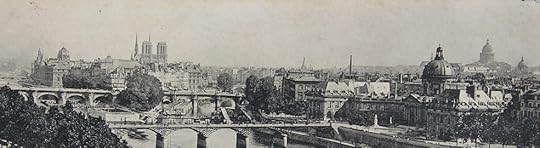
Unbeknownst to Mercedes and Anne, a few years from now, all houses on the Île de la Cité will be razed to the ground and their inhabitants relocated elsewhere in the growing city.
The old city centre, with the Cité at its core, were a maze of tiny, dirty streets that had been cesspools for diseases like cholera for decades, killing tens of thousands in the 19th century alone. To sanitise Paris as well as allow the city to cope with the increasing traffic and population growth, streets and bridges had to become wider, and old houses had to be replaced. And that is what Haussmann did – much to the detriment to the people who lost their shops and homes in his wake.
In the 1850s and 1860s, Baron Haussmann redesigned the inner parts of Paris. He constructed the boulevards and typical houses we now know and love, but which Victor Hugo called indistinguishable. To do so, the ancient – and often decrepit – heart of the city had to vanish. Only the Ancient Cloître remains.
A little piece of trivia: the street on the cover of The Devourer is actually a photo of rue Gervais Laurent, where Anne lives. It was taken in 1865, not long before it was demolished. Today, you will find the flower market in its place.
…Mercedes has less rights than a new-born baby.
This sounds ridiculous, but it was true. Women had substantial disadvantages of men to begin with, but married women had even fewer rights than that. Indeed no woman (and only few men) could vote, but that seems the lesser problem in the face of the facts.
A cursory overview of rights we now consider ‘normal’, but which Mercedes didn’t have:
She can’t own anything. No real estate, no items, no money. Even her sewing kit belongs to her husband Eric.
She isn’t permitted to enter into contracts or transactions. That means that, legally speaking, she can’t as much as buy groceries without Eric’s consent.
She cannot inherit. If someon had left her an inheritance, this would automatically become Eric’s property.
Had Danielle survived, Mercedes would not have had a say where her daughter was concerned.
She has no right to physical integrity: rape and abuse couldn’t legally exist within a marriage.
An unmarried or widowed woman had rights similar to those of a man, and a new-born baby girl could at the very least receive an inheritance. But a married woman was the legal and moral property of her husband.
Barbaric, right? Yet it took Western society until the second half of the 20th century before new laws amended all this.
…the city morgue is a family day trip.
In a large city, enough people die anonymously. Every week, unidentified bodies were recovered from the streets and from the river. Not always intact, some even less than half so, but always in need of a name. Hence Paris morgue organised public displays:
“Their unfortunate remains were displayed on slanted marble tables behind glass, inviting friends and families to claim the deceased. Word of the morbid (and free) exhibition of dead bodies quickly spread, and soon the morgue became a fixture on the Parisian social circuit, enticing the curiosity of men, women, even children from all social backgrounds.”
Like the catacombs are to this day, the morgue was a tourist attraction in the truest sense. A theatre open seven days a week from dusk till dawn. Disease, starvation and accidents left enough unattended corpses, but the major contributor to the proceedings was the Seine. Few people knew how to swim and even for those who did, the Seine was a notoriously dangerous body of water.
Plus, the fast-flowing river was a popular means of committing suicide: success assured. Those who disappeared under water might not resurface for days or weeks.
Just imagine what those corpses in the morgue’s displays must have looked like…
Het bericht 5 Painful Truths About Mercedes’ Paris verscheen eerst op Chris Chelser.
March 19, 2018
Savouring The Tears In The Writer
 Photo: Claudia Dea @Flickr
“No tears in the writer, no tears in the reader. No surprise in the writer, no surprise in the reader.”
This famous quote has pushed many an aspiring writer to improve their work. It is a perennial piece of writing advice, simply because it’s true: you can’t impart on others what you don’t feel yourself. Even a liar must be convinced of his own lie if he is to persuade others to believe it. And what are fiction writers but professional liars?
A convincing story is delightful because it feels real. But that conviction comes at a price – for both the writer and the reader.
Primal Responses
The key to understanding what makes a story convincing is understanding why this conviction works.
Strong emotions originate from the part of the limbic system (primal brain) called the amygdala. This gland is responsible for inciting strong and uncomplicated emotions such as fear and euphoria. When we get scared, it pumps our body full of chemicals that trigger cortisol and adrenaline, the stress hormones enabling us to fight or flee.
This stress response is either on or off. The amygdala is triggered, or it’s not. There is nothing in between. A biologically perfect system that has ensured the survival of animal life for millions of years.
However, it has one significant drawback:
“ But the exact same stress response kicks in when you imagine danger, also producing cortisol and adrenalin and pushing blood around the body. The same chemistry is produced regardless of whether the danger is real or imagined. ”
This is why you wake up sweating and panting after a nightmare. Your brain can’t tell that it was all inside your head. The human brain isn’t capable of distinguishing between reality and imagination.
When the amygdala perceives danger, you can’t convince it to ignore that perception. Likewise, when the amygdala does not perceive danger, it simply won’t trigger the corresponding chemicals and you don’t feel a thing.
Now while you can’t trick the amygdala, you can convince it. After all, the amygdala can’t tell if something is real. If you can make an imaginary scene so convincing that it might be real, the amygdala responds with those delicious hormones. And that reaction is what writers aspire to induce.
Bringing Tears in The Writer
It’s thanks to our brain confusing reality and imagination that we can become fully immersed in a book or movie. We feel as if we are there, living those adventures, facing those dangers – because our amygdala is convinced that we are. Is your amygdala is not convinced, then the story will leave you completely unperturbed.
The threshold of what does or doesn’t trigger the amygdala varies from person to person. Some readers are creeped out by Stephen King’s stories, but they leave me woefully indifferent. I can’t say why, but they just don’t do ‘it’ for me…pun not intended.
The only gauge a writer has of whether their stories will achieve the immersion effect is when their creation has that effect on themselves. Hence Frost’s quote. If the writer is emotionally involved by their own writing, then chances are other readers will experience the same involvement. (No guarantees, though. That is what beta readers are for.)
Involved Writing
To bring their readers great stories, writers habitually twist their own innards with the words they commit to paper. Small wonder that other author quotes equate writing to masochistic torture that no sane person would inflict on themselves.
Yet writers do just that. We type with fingers that are crooked with tension and ram at the keyboard to keep up with the high-speed car chase. We hold our breaths so the monster in the story won’t hear us. The ink spelling out freshly written words gets blotted by our own tears…
This may sound dramatic, but for many writers, the days this happens are the best writing days.
Inside Their Heads
To make matters worse, we don’t just transport ourselves to the time and place of the scene we’re writing. We get inside the heads of our characters. When the character in question is someone we can relate to, that can be a pleasant getaway from your own life. But the villain is a character, too.
When their worldview and moral compass diverges wildly from your own, that can cause true psychological distress. Our brain can’t tell it’s just our imagination at work. A storyteller must step into the characters’ minds and see the world through their eyes. Be convinced of what s/he conveys to the audience. Even when a part of him/her is beating on a glass wall and crying for those characters to stop doing all the wrong things.
The other day, I spend a few hours in the mind of a medieval doctor treating a patient. His methods are horrifying to our modern standards, but he is convinced that he is doing the right thing. And so I must be the liar who is convinced of what she knows to be a lie if I’m to make this scene convincing to my readers.
It’s like acting. The stage may be made of paper, but you’d better get into your role if you want to capture the audience!
The Price Writers Pay
As you can imagine, emotionally involved writing is exhausting. The more complex a story, the more details need to be checked and matched consistently. The larger a story’s cast, the more heads the writer has to crawl into without losing themselves. At times, writers may feel that living so many lives so intensely challenges their own sanity. The price for a good, involved story.
Not all writers go that deep. Formulaic action or romance novels are meant to be entertainment, not to incite strong emotions. Often referred to as ‘pulp fiction’, these stories don’t require their writers to delve into a deep emotional state. That formula method allows pulp fiction writers to to write multiple titles per year. What such stories lack in depth, they make up in quantity. That is that genre’s strength.
But sometimes tears in the writer are too high a price. Erich Maria Remarque’s All Quiet On The Western Front is heavily based on the writer’s own traumatic experiences in the trenches of WWI, yet the story feels oddly distant throughout. The same happened in certain passages of Robert Graves’s Goodbye To All That. Involved writing no longer serves a purpose if that would keep a story from being written at all.
The Price Readers Pay
As Frost’s quote suggests, there are two parties to this game. While the writer pays for immersing stories with tears and frustration, the reader pays for it in patience.
Writing a 275-page formulaic romance novel requires less time and emotional involvement than completing an 800-page epic fantasy novel with eight interwoven plotlines and a cast of dozens. That shouldn’t come as a surprise. Authors like G.R.R. Martin and Patrick Rothfuss don’t publish a new book every year, simply because their stories and writing style won’t allow it.
Even novellas and short stories might take months to complete. Some scenes are so intense, it is impossible to write more than a few lines or one paragraph per day. That may not be all the writer is working on, but those individual stories won’t be finished in the course of a few weeks.
Besdies, authors need reality checks as part of their work routine. Coffee, tea, light reading, a walk outside: anything to assure the amygdala that the danger it perceived while writing has now gone. Sometimes a few minutes or hours suffice, sometimes a writer needs a few weeks or even months.
So when you are eagerly awaiting the next publication of your favourite author, be patient.
This should go without saying, and for most people it does. But too many creatives get harassed by fans. Some supposed fans get so aggressive while hunting for their ‘fix’ that the creators leave the industry all together to escape the duress.
Don’t be that ‘fan’. Have patience and support your favourite storytellers. That way you can be certain that their next work will be everything you hoped for.
What book brought you to tears – reading it or writing it? Leave the title in the comments!
Het bericht Savouring The Tears In The Writer verscheen eerst op Chris Chelser.
March 12, 2018
Cat Fox: Interview with A Kalbrandt Psychic
The Author Interviews. This week: Catherine ‘Cat’ Fox, the agent responsible for the Kalbrandt Institute archives file F/44197/FCT as featured in Book I: Hauntings .

When I meet Cat Fox outside the café, her long black hair and ditto leather coat make her instantly recognisable. She arrived just before I did, she says, and quickly finishes her cigarette before we head inside. I ask her what she wants to drink.
“Just a quick coffee,” she says. “Black, one sugar. I’m off to the airport in half an hour. Catch my flight to Montreal. They called me in to investigate a haunted office building.” She doesn’t know much more than that. “The less I know, the more accurate my work,” she explains. “That’s why I make it a point not to be briefed beyond the absolute essentials.”
While we wait at a corner table for our order, I launch my first question.
You’re a psychic at the Kalbrandt Institute. How did you end up there?
“Like most agents, I was scouted. Sometimes people are made an offer to join based on their credentials in their field, but for psychics, it’s really a matter of being spotted. All psychic agents keep their eyes open for kindred spirits, so to speak. Sometimes when we work, we come across people with abilities that might be valuable to the Institute. We call that in, and one of the scouts goes to find out if they are interested. I was, so I sighed up.”
A job for life that some would say is suffocating.
“Look at me,” she scoffs, gesturing at her remarkable clothes and make-up. “If I wanted a regular job, I’d have to conform to the company standards. Hide myself. I’m not exactly college material, either, so it was either working two miserable jobs to make ends meet, or make good money doing something I’m actually good at.”
Far braver than I, she sips her still-scalding coffee.
“Given a choice between those options – and I was lucky to have that choice – I’ll gladly put up with the weirdness that goes on at the Institute.”
Speaking of weirdness: a lot of people think psychics are either frauds or have super powers. How do you feel about that?
“Superheroes we’re not,” she laughs around the rim of her cup. “But I get where it comes from. I mean, I connect with spiritual energy. I can talk to a building like I talk to you. Except when I ask you a question, everyone else can hear you reply.”
And buildings don’t talk back.
“They do! Only no one else hears it. So yeah, that makes it hard to prove that what I do is real. I constantly have to convince clients that, yes, I’m doing what they paid for. But I can’t prove it. Sometimes physical evidence will corroborate what the energy tells me, but most of the time that’s tenuous at best. Few ghosts manifest like they do in the movies, where the heroes get to see the ghost leave or whatever. It doesn’t work like that in real life.” She shrugs. “Well, I suppose on occasion it does, but I’m the only one who sees it.”
Do you train for your work?
“As in, practice in a controlled environment? Not possible. Like all spiritual energy, ghosts can’t be harnessed. So you learn on the job. The first few years, I always worked cases together with another psychic.”
Like an apprenticeship?
“Not really. More like how you learn to drive a car with the instructor sitting beside you.” She pulls out her smartphone to check the time. “I’ll need to go grab a taxi in a minute. One more question for the road?”
Sure: ever thought to give up smoking?
“Never seriously,” she says with a smirk. “I’ve seen too much crap to stay sane without being addicted to something. All things considered, smoking is the lesser evil.”
She slams down the rest of the coffee. “Sorry to run like this, but that flight won’t wait. Thanks for the chat. Call me if you want to do a follow up some time, okay?”
And with that she’s out the door. Through the cafe window, I watch her hail a cab, her long coat trailing behind her as if she is a superhero after all.
If you have any follow-up questions for Cat or her colleagues, leave a comment or drop me a line in the email!
Het bericht Cat Fox: Interview with A Kalbrandt Psychic verscheen eerst op Chris Chelser.
March 4, 2018
Taming Dragons: Jealousy
Our dragons lurk in the darkest parts of our mind, heart and soul. They go by many names, take on many different forms. But while they may be fearsome and dangerous, they needn’t be our enemies. Today’s dragon is called: Jealousy.
 Photo: Carlos Andres Reyes @Flickr
We all know how those birthday parties go. Someone asks: “So, how is business going these days?” and immediately your cousin tells about their new car, that promotion they got, and the tour through South-East Asia they will be going on next month.
You listen, dreading the moment they will ask: “And how about you?” Because your car is ten years old, you’ve had to put in extra shifts to increase your wages this month, and your summer holiday will be a camping trip.
Your innards churn, your throat constricts. “Why them, and not me?” whines a voice in the back of your head. Life isn’t treating you badly. Not at all, and you know it. Still, you feel sick at heart.
That is Jealousy for you. She is a vicious dragon, but you needn’t put up with her antics.
What wakes Jealousy?
I don’t want to spoil your relationship with your cousin, so let’s imagine two merchant ships instead. Two years ago, the Ahab and the Boromir set sail for distant shores. They have crossed the oceans, braved storms, fought pirates and faced hardship to trade foreign riches. When both ships return to port, their captains go to the tavern for a drink.
As the captains discuss their voyages, it becomes clear that the Ahab brought home a massive profit. Its sister ship Boromir didn’t have a yield quite so spectacular, but they did well enough.
The captain of the Boromir feels a little sting that he ‘lost’. Still, he knows that the Ahab’s crew worked as hard as did his own. Surely they have deserved their good results. So he congratulates his colleague, while in his mind, the Jealousy dragon continues to slumber.
In a perfect world, this is where the story ends. Like the captain of the Boromir, most of us can be happy for a friend or relative who reaps the spoils of their hard work. We may grumble because we feel we have worked just as hard, but in general, we can agree that if someone worked for their gains, they have earned it. Next topic.
But after quaffing down a few more ales, the captain of the Ahab tells about the shipwreck they encountered on a shore. No survivors, but several crates of precious goods lay up for grabs. A true windfall! They salvaged what they could and traded those wares for a handsome profit.
Now the captain of the Boromir slams his mug on the bar. He’s furious! The Ahab hasn’t earned its profit at all! No honest reward for honest work, but pure luck. They made that big profit on goods that were never theirs.
That’s immoral and undeserved, the captain of the Boromir thinks. That the Ahab yielded more profit is entirely unjustified!
So Jealousy wakes, whining: “Why the Ahab, and not me?”
Understanding Jealousy’s Nature
The jealous captain’s issue with the Ahab’s windfall stems from a combination of factors:
He is unhappy with where he is at: the Boromir didn’t make as much profit as he had hoped.
He doesn’t believe there is a solution to that unhappiness. His crew worked as hard as they could, he did the best possible deals, so he is convinced he has no right to desire a better result than what they got.
He believes that how the Ahab achieved their results is morally wrong. What they did was not criminal, but in our captain’s eyes it was morally reprehensive. And yet… he wishes he’d encountered that shipwreck himself.
As you can see, the core of the good captain’s Jealousy has nothing to do with the Ahab. Rather it is his own convictions that woke the dragon.
Windfalls and the Devil’s Luck
We have a warped perception of luck. When it comes to us, we feel we’ve earned it. When it comes to another, we envy them for it.
Lotteries demonstrate this like no other. When someone wins a large sum in a lottery, we are green in the face. “Why them? They didn’t earn that money. They have no right to it!” Yet we play that same lottery ourselves. Just in case we win the next draw.
The real problem, however, arises because our own moral objections clash with our desires. Taking the example of lottery again, breaking down such a clash in steps might look like this:
We feel we’re short on money and want more, but
we believe that ‘money is the root of all evil’ / ‘money is always short’ / ‘you should be happy with what you have’ / etc.
So we tell ourselves that ‘money should be earned’ and ‘winning the lottery is cheating’).
Then someone does win a ton of money in a lottery, and we feel cheated. Cheated and angry.
A Special Brand of Anger
That anger is a specific variety called jealousy. Jealousy is a perfectly normal human response to disappointment, but we shouldn’t lose sight of the fact that we are disappointed with ourselves. Like the captain of the Boromir was disappointed with his own results and angry that he hadn’t done more increase them more than he was angry at the Ahab for their windfall.
But humans are terrible at taking responsibilities for themselves. Rather than admit that we aren’t happy with our actions and the results they yielded, we try to convince ourselves we cling to that last step. We convince ourselves we have the moral high ground: at least we didn’t ‘cheat’ by winning a lottery. At least we work hard to earn our rewards.
It’s a cynical outlook that propagates the idea that luck is always undeserved. Even when we get lucky ourselves…
The Moral Equation
“But if people ‘get lucky’ over someone else’s back, that is reprehensive,” I hear you say. If it involved criminal activities, yes. However, what Jealousy calls ‘immoral’ is usually a normal thing to do.
The only difference is that she didn’t think of it.
Had the Boromir’s captain thought: “That’s a cool idea. I should think of that if ever we happen on a shipwreck,” he wouldn’t have begrudged the Ahab their spoils. But he does. He does, because he knows that if the Boromir found that shipwreck, he would have prayed for the lost souls and sailed on. He wouldn’t have thought to drop anchor and salvage the abandoned cargo.
The Ahab did what he wouldn’t have, and – petty as the human brain is – he is furious that he didn’t think of it first.
Taming the Dragon
At heart, Jealousy is you being angry at yourself. Fortunately, there are less destructive ways than anger and cynicism to deal with this green-eyed dragon:
As you may recall, when our two captains first entered the bar, Jealousy was still fast asleep. The captain of the Boromir congratulated his colleague on the Ahab’s wonderful results and decided that on next trip, he would endeavour to do better himself.
That is the end to strive for: both captains happy with their respective results, and happy for each other. No fight, no disdain. Just two colleagues sharing a drink and having a good time.
But jealousy woke when he was confronted with his own shortcomings. Not just his moral convictions got in the way, but his conviction that he cannot have what he desires. So of course he gets jealous when his colleagues achieves what he so desperately wants.
So, how to tackle Jealousy before she breathes her fire?
Knowing the cause is half the medicine. This requires introspection and hard work (and possibly a therapist), but it will be worth it.
Next time you feel jealous of someone, ask yourself:
What has the other gained, and is it something I want, too?
How did they gain it, and is that significant to me?
Why do I believe that this achievement/gain is out of my reach?
What can I do to help myself?
Remember that Jealousy is never about others. Instead, take good care of yourself. Overcome your Resistance and take the actions you need in order to reap the rewards you seek. Being happy with your own efforts makes it easier to be happy for others. It makes it easier to feel gratitude – and gratitude is a powerful emotion!
Not to mention that those birthday parties are much more pleasant when Jealousy sleeps ;).
Het bericht Taming Dragons: Jealousy verscheen eerst op Chris Chelser.