Chris Chelser's Blog, page 17
February 15, 2016
Childish Mistakes in Storytelling
This video deals with childish movie mistakes, but written stories are not immune to this sort of inconsistencies:


February 10, 2016
February 8, 2016
Book Review “Kalbrandt Institute Archives”
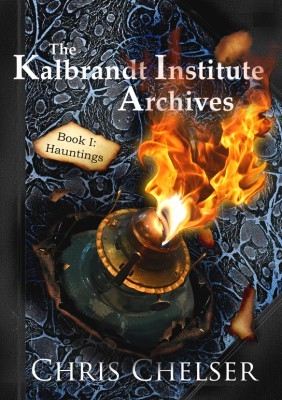 “SciFi & Scary Book reviews” has awarded
The Kalbrandt Institute Archives – Book I” a rating of:
5 out of 5 Cool-thulhu’s!
What they said:
I don’t want to give too much a way, so I’ll just say that the first story was unusual in its resolution, the second one was a take on a traditional haunting, the third had me imagining a demonic Mrs. Potts and Chip from Beauty and the Beast and unexpectedly filled me with compassion, the fourth was set in a very familiar setting that basically anyone over the age of 7 will recognize (though it was truthfully my least favorite of the bunch), and the fifth will leave you going “I knew something was off! I KNEW IT!”
February 5, 2016
February 3, 2016
Writer’s Woes: Define “Reading A Lot”
Once a month I permit myself to discuss the dark side of being a (self-published) author. In this month’s post rants about…
“You can’t be writer if you don’t read a lot!”
Nothing undermines my confidence as fast and as thoroughly as this adage.
Of all the sagely advice on writing and being a writer, this is the only one that makes me feel like a fraud. Because – and this is a confession I hate to make – I don’t read much. At least not fiction.
I will be the first to admit that I’m a fastidious reader. Few books draw me in deep enough to keep me reading after the first twenty pages. When a story has potential I will keep reading, sometimes up to two-thirds of the book, if the plot needs that long to take off, I cannot be bothered to read to the end.
However, when a book does appeal to me, I need no more than two days to finish it. If I can do it in one sitting, I will. Only drawback is that I do very little else besides, so I cannot pull such stunts too often lest I never finish writing another story of my own.
So I fall short in the “writing = reading” department. Way short. I know that, and I’m terribly ashamed of it.
Why do writers need to read so much? For a great many reasons, actually.
In order to write good stories, a writer needs to expand his/her knowledge of emotions and human behaviour beyond what they know. They need to expand their knowledge of other cultures, habits, legends, faraway places and the world in general. They need to expand their knowledge of the crafts of storytelling, character development and dramatic arcs. And not in the least do they need to expand their vocabulary by (re)learning words that other writers use.
All very valid and sensible reasons.
Still, I rarely read fiction. Instead, I:
devour encyclopaedias, both online and in print;
collect legends and folk tales from around the world and throughout the ages. Two-thirds of my extensive book collection is non-fiction, and half of those are on history and life in different cultures across time and space;
listen to real people telling their stories about the big problems and the small ones. And I take note of how they sound, what they say and what they don’t say;
compare the official news feeds with the responses on social media to discover what excites, alarms and moves different people;
dissect my favourite TV shows and all kinds of movies for storytelling techniques, do’s and don’t’s of character building, genre conventions, tropes, and how to instil credibility in a plot;
have two thesauri at hand when I’m writing, always comparing verbs or adjectives or nouns until I find the right word that particular sentence. In the process, I come across new words to add to my writer’s toolkit.
I rarely read fiction. That is true. There are more ways than one to hone your skills as a writer, and the best one is always: practice. Write, read back and mark the good and the bad qualities. Then write some more.
So do I really need to read more fiction?
Well, yes. I really do. If only for fun!
The Insecure Writer’s Support Group
A safe haven for insecure writers of all kinds!
January 26, 2016
Top 10 actors who died almost every time
Although I love actors who can pull off a convincing death scene on screen, I would prefer it if they did not extend that skill to their own lives… (No, I’m still not quite over the deaths of Bowie and Rickman.)
January 25, 2016
Ask the Author: “Why do you write?”
Every last week of the month, I’m answering readers’ questions.
Want to ask me something? Click here.
“Why do you write?”
The year is 1987. A little girl just pinched several sheets of typewriter paper from her parents’ study, folded them and stapled them together. Now she is filling the blank pages of her makeshift book with words and drawings. Her heroic Blue Lego astronauts are just battling the evil Black Spacemen, when they are drawn down a wormhole and into the clutches of the monster that roams the world on the other side…
It is safe to say that I began writing stories when I first learned to write full sentences. In school, we had a special workbook for that purpose. Only our teacher ever read these stick figure equivalents of storytelling, but that was enough to get me into trouble. Because I wrote about monsters, robots, fights, drama, and a host of other things that shouldn’t be on the radar of the average 6-year-old.
At 10, the girl has glued several workbooks together and drew a cover for the story she wrote inside. A story about a cursed playground, and a dragon who carried off and killed every child who played on the swings. Writing that death scene from the dying character’s point of view was actually quite cool!
I loved weird tales when I was young, and since I had always been a fan of visualisation, I adore the French graphic novels of the ‘70s and ‘80s to this day. Werewolves, mysteries, magic and ghosts fascinated me to no end!
Unfortunately, what I liked was not sanctioned for children’s books. Even fairy tales will sad endings were censored to show only enforced happiness. So I made up my own stories. Most stayed in my head, but some I penned down.
Then my parent bought an old Laser computer, which ran WordPerfect 5.1. And indeed, it was perfect!
Typing is so much faster than writing longhand! At last her hands can keep up with the speed of the film she sees in her mind. She is 13 now, and she types like the wind. No class, no instructions. She learned by spending endless hours at the keyboard, listening to the clicks of the keys as she writes about her favourite adventurous archaeologist. If Hollywood wasn’t going to make any more Indiana Jones film, she would have to write her own.
For twenty years, I wrote fanfiction – stories based on existing films, games and books. Short stories, longer stories, complete novels. At first I was not very good at transcribing the films I saw in my mind, but writing is a skill that can be honed with practice.
Nevertheless, I think that I gave up writing at least a dozen times. These frustrated spells never lasted more than a month, and before I knew it I was back at the keyboard, rattling away on some fic that was more often than not surrealistic, full of psychological drama, or both.
These were the stories that I wanted to read myself, but couldn’t find – or never enough, of them, anyway.
Even so, it took me the better part of two decades to trust that if I wanted to read the stories I wrote, other people might be looking for them, too.
So I write to create stories I can relate to.
I write so others who relate to those stories can read them, too.
I write because, in some twisted way, I must.
And I write for the clicking of the keys when I type. Such a lovely sound that is!
Until next time 

January 21, 2016
January 19, 2016
The Bare Bones of…’The Blacklist’ episode S2E5 (TV-series)
What: “The Blacklist” (TV series) episode S2E5 ‘The Front’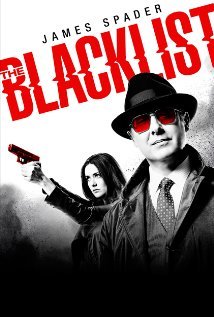
Why: Because this episode is a painful dissonant in this otherwise brilliant series which I can’t get enough of!
Spoiler Alert: Low | Medium | HIGH! Since it is one episode only.
Summary:
The overall story of The Blacklist concerns a high-profile gentleman criminal named Raymond Reddington, who voluntarily surrenders himself to the FBI. With an agenda, of course: he gives the FBI vital information on the world’s worst criminal elements, provided that the FBI team captures or otherwise eliminates them. Oh, and he will only speak with Special Agent Elizabeth Keen.
To be honest, season 1 blew me out of the water:
the acting is superb (especially ’s Reddington!);
the characters are diverse, and their behaviour is credible even when they make mistakes;
the cinematography and music creates a consistent and recognisable atmosphere;
and, most important for this review:
the suspense of the layered overall story arc and subplots is several notches above that of other popular cop shows like NCIS.
In short, I was thrilled to see season 2 popping up on our Netflix. And considering the events of season 1’s finale, the new season was off to a good start. Until we came to the fifth episode: “The Front (no. 82)”.
The briefest description is “Da Vinci Code meets Outbreak in 30 minutes”, with the balance of the episode’s total running time consisting of cheap sentimentality. It was so unlike what I had come to expect of this series that all through watching it, I kept waiting for the brilliant plot twist.
The story opens with a man and two women arguing over a bag. One woman refuses to give it up, the man and the other woman are determined to take it from her. In the ensuing struggle, the first woman stumbles from the pavement, onto the road and is hit by a passing car. Cue opening titles.
So far, so good. The woman was part of a militant environmental group called ‘The Front’. In the span of two minutes, Elizabeth and her team figure out the specifics of the organisation, and discover that the leader recently purchased an old painting that was stolen years earlier.
Since the painting isn’t valuable, he must have had another motivation. Too quickly, the FBI discovers what it is: a map and strange symbols are hidden beneath the painting’s pigments. Another too minutes later, the symbols are deciphered and the location on the map determined.
The map leads to the burial site of a monk who lived centuries ago, at the time of the Black Plague. Moreover, he brought the strand of pneumonic plague to what is now the USA, supposedly because back then it was far enough away from Europe to keep it safe. Except for him, because he contracted the disease and died. The bacteria are still in his bones and can be harvested… or so ‘The Front’ thinks, and the script doesn’t contest this.
Elizabeth chases the organisation’s leader to the gravesite, learns the body was moved… to an ancient church in the centre of Manhattan (Dan Brown might want to sue for the script nicking his trademark plot twist). Of course she is too late and ‘The Front’ leader obtains the bones. Oh, and distils the lethal disease from the marrow in a matter of hours. Plus the antidote, but we don’t know that yet, although we are told repeatedly that this strain of the plague is unaffected by antibiotics. Why would this be, considering that these dormant bacteria (which is a thing) was never exposed to antibiotics? If the scriptwriters know, they never tell us.
The goal of ‘The Front’, as it turns out, is complete eradication of humanity. They fabricate inhalers for their followers, so said followers will become living (although short-lived) contaminated agents to spread the air-born disease to all continents.
Cue the “Outbreak” part of the story: some contaminated members of the organisation are intercepted at airports, but it is too late to avoid an outbreak of pneumonic plague. Parts of New York are quarantined in a matter of minutes, it seems (pneumonic plague can indeed be lethal within hours, so the plot is moving on a tight schedule), but even so, one of Elizabeth’s colleagues becomes infected.
A cheap knock-off of the famous ‘Star Trek’ scene where Kirk and Spock, the later dying, are saying their farewells through a glass partition is narrowly avoided when Elizabeth boldly and stupidly opens the glass door to help her colleague, who besides being infected is also bleeding out from a shot wound. Cue cheap sentimentality, but we’re almost at the end of the episode.
Revelation! The leader of ‘The Front’ and his mistress (the other woman from the opening scene) had no intention of eradicating humanity entirely: they are safe in their compound in the middle of nowhere, with the miraculous and ridiculously speedy antidote, ready to repopulate the planet like Adam and Eve. Exposed, the leader opts for murder-suicide instead, while the antidote is distributed to everyone who got ill with absurdly speedy logistics. Elizabeth and her colleague are cured without ever displaying symptoms. Sure, people have died, but that’s only ever mentioned in the passing. The outbreak is contained, and so all is well that ends well.
Almost…
Story Skeleton:
As I said, this series has raised my expectations in terms of storytelling and characterisation to tremendous height, and it usually delivers. This episode was the first (and so far only) time that the story completely missed… Well, it missed everything, really.
Unlike the previous episodes, S2E5 had no depth, no suspense, no credible suspension of disbelief, and above all no sense of timing. Analysing the resulting monstrosity, I realised that all these flaws were interlinked and shared the same core problem:
Pacing.
The events were too rushed. Too much happened in too little time, both in terms of screen time and story time. All the secrets and mysteries were solved instantly, sometimes even before they were introduced, as if the scriptwriters were trying to head off any questions that the audience might ask.
As result, said audience was left with no time to wonder about what was going on or what might happen next.
That killed every ounce of suspense. Furthermore, the leading character of a series is never in real mortal danger unless it is season finale. This knowledge pretty much quelled any fear we may have had for Elizabeth allowing herself to be infected, but more than that we simply never had time to be afraid for her.
The story’s two very different setting and plot concepts, too many events… I’m almost convinced that this script was meant for a double episode. The Blacklist has double episodes in mid-season, so it may or may not have been pegged as a season finale story, but either way, squeezing all this into a itty bitty single episode did the story and the characters no justice. More’s the pity, because if presented in a more measured dose, it could have been much more entertaining.
Lesson learnt:
Pacing is an essential part of storytelling in the same way that timing is essential to a joke. Take things too slow, and the audience becomes bored and disinterested. Take it too fast, and the audience have no chance to become emotionally invested.
A good story alternates between slow-paced scenes and fast-paced scenes to increase our emotional investment. When done well, it can leave us breathless. For an expert example of how pacing can result in amazing, nerve-wrecking storytelling, I recommend watching the full 6-hour version of Das Boot.
In any book, film or tale, the storyteller takes us by the hand and leads us between the events and characters s/he has created. Whether we, the audience, stumble or not depends on whether the storyteller dawdles too much, or drags us by the hair kicking and screaming, or rather sets a natural pace. And the best stories make us forget that we are walking at all.
Again, the episode was a strange dissonant in this otherwise marvellous series. Perhaps I will do a ‘Bare Bones’ of The Blacklist again, this time for characterisation. Or maybe discuss it as an example of superb (sub)plot web weaving. I haven’t decided yet.