Chris Goff's Blog, page 64
July 28, 2016
BORSCHT WITHOUT THE BELT
S. Lee Manning: Kolya Petrov, the hero of my international espionage series, was born in Russia of ethnic Russian background with a Jewish grandmother on his mother’s side. (Under Jewish law, that makes him Jewish – which he frequently disputes in conversations with his fiancée or her family.) The book I’m currently writing takes place in Russia. So when I started to think about food for this round’s blog, I wanted to write about something to reflect my work-in-progress, to honor Kolya's heritages – and my own, as the granddaughter of four Jews who immigrated from the Pale of Russia at the start of the 20th century.
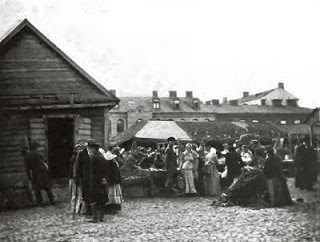
When I was a child, my parents had a particular favorite dish for lunch on hot summer days: cold borscht.
It would be a milkhigmeal – that’s Yiddish for a meal that contained dairy. Kosher rules forbid the eating of dairy and meat at the same meal – so no cheeseburgers, no glass of milk with your hot dog. Jews who keep strictly kosher not only don’t eat milk and meat at the same meal, they have two sets of dishes - one for milk, one for meat - two of silverware, sometimes two sinks, and even two refrigerators.
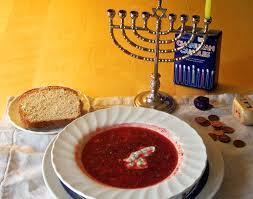 We didn’t keep the kosher rules for the most part. We had one set of everyday dishes. We didn’t eat the forbidden pork or shrimp in the house (although my mother loved a shrimp cocktail before a nice steak dinner at a good but highly unkosher restaurant). We didn’t always buy kosher meat either. We did observe a vague kind of separation of milk and meat – and those were the meals where the borscht would appear.
Those meals had a predictable formula. We’d eat tuna fish – fish can go with either milk or meat – and cottage cheese, sometimes blintzes, sometimes bagels with cream cheese. But before we dug into the tuna mashed with celery and clogged with mayo, my mother would pour a bowl of borscht for each of us.
It came out of a bottle in the frig – from one of those packagers of kosher food for Jews who couldn’t – or preferred not – to cook but who wanted to serve something ethnic. (My mother fit both categories.) It was a thin purple liquid, dotted with a few slivers of deeper purple things that I tentatively identified as beets. Feh! (That’s a Yiddish noise for disgusting.) I hated it. I would sit there stirring it, reluctant to bring even a spoonful to my mouth. “Here. It’s delicious.” My mother would plop a spoonful of sour cream into the bowl, turning the liquid from light purple to a creamy light pink, thus tripling its repulsiveness in my mind.
My father would look over at me. “It’s good."
I wouldn’t attribute my teenage rebellion completely to my parents’ false assurances of the deliciousness of the jarred borscht – but it may have been a contributing factor. Back then, I thought it was an exclusively Jewish dish, to be topped in disgustingness only by gefilte fish - if you don’t know what that is, ask me later. Borscht was a joke to be invoked by Jewish comedians at resorts in the Catskills.
Little did I realize in those young and foolish days that most massed produced canned or jarred products bear little resemblance to the food that is named on the label. So it is with canned peaches and asparagus. So it is with borscht.
It took a visit to New York City and a Ukrainian restaurant on Second Avenue in Manhattan to realize that borscht didn’t always come in a jar – that it wasn’t always tasteless – or disgusting. To the contrary, it was delicious. Nor was it even an exclusively Jewish dish. Like so many Jewish dishes, it was adapted from Russian or Ukrainian dishes and altered to satisfy kosher rules. As I understand it, the climate has a lot to do with the dish. Russia and the Ukraine use a lot of root vegetables in cooking, due to the short growing season that does not favor many of the vegetables found further south. The Jewish cold version has to be vegetarian if it’s going to be kosher to eat with dairy. Ukrainian and Russian versions usually have meat and include vegetables other than beets.
The problem is – I’d never made borscht. So I decided to crib a recipe from various sources and give it a shot. Since I’m giving a tip of my Rogue Women Writer’s hat to my own heritage as well as Kolya’s, I’m making it vegetarian. It’s on the stove as I type. I’m hoping that it comes out decent, because I’m planning to feed it to my non-Jewish husband. Here’s what I’ve done so far:
8 cups of water.Approximately 1 pound of fresh beets, chopped into slices. (Be careful. Those suckers really are purple, and they’re messy. Wear something that you don’t mind getting stained with squirting beet juice. I wore my bathrobe, already so stained it didn’t matter. More information than you needed, huh?)½ small head of white cabbage. (You could do purple, I suppose, but I believe in diversity of color.)1 large Vidalia onion¼ cup white wine vinegar¼ cup lemon juiceA lot of pepper (I don’t measure pepper. I just pour. You might want to be more judicious.)Some salt, but less than the pepper
Put everything in a pot. Bring to a boil. Cover, turn down and wait. Don’t make plans for the rest of the day.
Will check back when it has cooked down.
Tip: Do keep checking frequently. Don’t get so caught up in election year politics on television that you forget you have a pot of boiling liquid on the stove and have to rush in and turn off the fire before everything burns up. In case you do, not that I did anything of the sort, just pour a bunch more water into the pot, dump in more vinegar and lemon juice, don’t bother measuring and bring the whole mess up to boiling again.When the vegetables are soft, turn off the fire. Let the pot cool enough to refrigerate. Serve cold. Chop scallions or fresh dill to taste. Put tablespoon of sour cream in your husband’s bowl. Maybe in your own as well, but watch his reaction first.
Verdict. Delicious. A great dish for a hot summer night in Vermont.
Eat in good health.

When I was a child, my parents had a particular favorite dish for lunch on hot summer days: cold borscht.
It would be a milkhigmeal – that’s Yiddish for a meal that contained dairy. Kosher rules forbid the eating of dairy and meat at the same meal – so no cheeseburgers, no glass of milk with your hot dog. Jews who keep strictly kosher not only don’t eat milk and meat at the same meal, they have two sets of dishes - one for milk, one for meat - two of silverware, sometimes two sinks, and even two refrigerators.
 We didn’t keep the kosher rules for the most part. We had one set of everyday dishes. We didn’t eat the forbidden pork or shrimp in the house (although my mother loved a shrimp cocktail before a nice steak dinner at a good but highly unkosher restaurant). We didn’t always buy kosher meat either. We did observe a vague kind of separation of milk and meat – and those were the meals where the borscht would appear.
Those meals had a predictable formula. We’d eat tuna fish – fish can go with either milk or meat – and cottage cheese, sometimes blintzes, sometimes bagels with cream cheese. But before we dug into the tuna mashed with celery and clogged with mayo, my mother would pour a bowl of borscht for each of us.
It came out of a bottle in the frig – from one of those packagers of kosher food for Jews who couldn’t – or preferred not – to cook but who wanted to serve something ethnic. (My mother fit both categories.) It was a thin purple liquid, dotted with a few slivers of deeper purple things that I tentatively identified as beets. Feh! (That’s a Yiddish noise for disgusting.) I hated it. I would sit there stirring it, reluctant to bring even a spoonful to my mouth. “Here. It’s delicious.” My mother would plop a spoonful of sour cream into the bowl, turning the liquid from light purple to a creamy light pink, thus tripling its repulsiveness in my mind.
My father would look over at me. “It’s good."
I wouldn’t attribute my teenage rebellion completely to my parents’ false assurances of the deliciousness of the jarred borscht – but it may have been a contributing factor. Back then, I thought it was an exclusively Jewish dish, to be topped in disgustingness only by gefilte fish - if you don’t know what that is, ask me later. Borscht was a joke to be invoked by Jewish comedians at resorts in the Catskills.
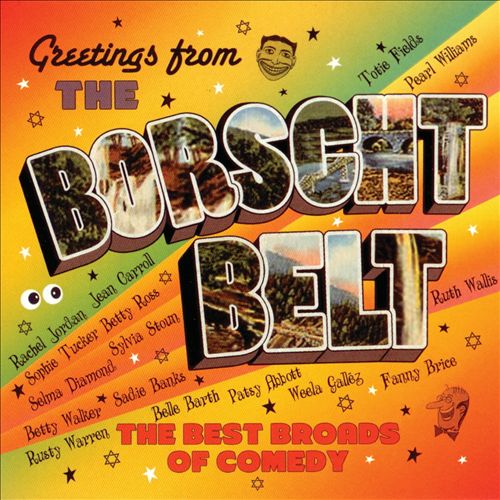
Little did I realize in those young and foolish days that most massed produced canned or jarred products bear little resemblance to the food that is named on the label. So it is with canned peaches and asparagus. So it is with borscht.
It took a visit to New York City and a Ukrainian restaurant on Second Avenue in Manhattan to realize that borscht didn’t always come in a jar – that it wasn’t always tasteless – or disgusting. To the contrary, it was delicious. Nor was it even an exclusively Jewish dish. Like so many Jewish dishes, it was adapted from Russian or Ukrainian dishes and altered to satisfy kosher rules. As I understand it, the climate has a lot to do with the dish. Russia and the Ukraine use a lot of root vegetables in cooking, due to the short growing season that does not favor many of the vegetables found further south. The Jewish cold version has to be vegetarian if it’s going to be kosher to eat with dairy. Ukrainian and Russian versions usually have meat and include vegetables other than beets.
The problem is – I’d never made borscht. So I decided to crib a recipe from various sources and give it a shot. Since I’m giving a tip of my Rogue Women Writer’s hat to my own heritage as well as Kolya’s, I’m making it vegetarian. It’s on the stove as I type. I’m hoping that it comes out decent, because I’m planning to feed it to my non-Jewish husband. Here’s what I’ve done so far:
8 cups of water.Approximately 1 pound of fresh beets, chopped into slices. (Be careful. Those suckers really are purple, and they’re messy. Wear something that you don’t mind getting stained with squirting beet juice. I wore my bathrobe, already so stained it didn’t matter. More information than you needed, huh?)½ small head of white cabbage. (You could do purple, I suppose, but I believe in diversity of color.)1 large Vidalia onion¼ cup white wine vinegar¼ cup lemon juiceA lot of pepper (I don’t measure pepper. I just pour. You might want to be more judicious.)Some salt, but less than the pepper
Put everything in a pot. Bring to a boil. Cover, turn down and wait. Don’t make plans for the rest of the day.
Will check back when it has cooked down.
Tip: Do keep checking frequently. Don’t get so caught up in election year politics on television that you forget you have a pot of boiling liquid on the stove and have to rush in and turn off the fire before everything burns up. In case you do, not that I did anything of the sort, just pour a bunch more water into the pot, dump in more vinegar and lemon juice, don’t bother measuring and bring the whole mess up to boiling again.When the vegetables are soft, turn off the fire. Let the pot cool enough to refrigerate. Serve cold. Chop scallions or fresh dill to taste. Put tablespoon of sour cream in your husband’s bowl. Maybe in your own as well, but watch his reaction first.
Verdict. Delicious. A great dish for a hot summer night in Vermont.
Eat in good health.


July 26, 2016
THE KICK OF A MOSCOW MULE ... OR, HOW GEOPOLITICS AND HISTORY AFFECT BOOZE

Gayle Lynds: A sense of nostalgia swept over me when I recently read a story in The New York Times about the comeback of the Moscow Mule, a bubbly mixture of ginger, lime, and vodka that launched the popularity of that oh-so-Russian spirit in the United States. The Mule, as it’s fondly known, has a surreptitious kick and a spicy taste but never screams VODKA. What’s particularly fascinating to me nowadays is the Mule’s relationship to how the United States and Russia feel about each other.
Which brings me to the next series of posts on Rogue Women — food and drink in espionage thrillers. My geopolitical interest is in the rebirth of the Moscow Mule — recipe to follow.
The history of the cocktail has a kick of its own: The story begins in the Cock ‘n’ Bull, a mock British tavern on the Sunset Strip in Hollywood which before its demise in 1987 attracted luminaries ranging from author Somerset Maugham and actor Richard Burton (who allegedly changed his favorite table each time he changed wives) to rock singer Rod Stewart and his soccer team.
But back in 1941, the bar owner had a double problem: He couldn’t sell the cases of Smirnoff vodka he’d bought or the bottles of ginger beer he’d ordered made. The bartender, Wes Price, said he was just trying to clear out the basement when he mixed them together and added some lime.
 At the same time, an immigrant named Sophie Berezinski was carting copper mugs she’d designed in her father’s copper shop back in the Soviet Union around California, trying to sell them. She’d brought some 2,000 with her and was worried “lest her husband toss them in a trash heap.” Seeing a marketing opportunity, the Cock ‘n’ Bull began serving Moscow Mules in her limited edition run.
 The popularity of the cocktail took off like a Soviet rocket, and the tiny company of Smirnoff went along for the lucrative ride as the vodka of choice for a properly made Mule. And then the Soviet Union became a U.S. ally during World War II, which made drinking the Mule seem almost patriotic.
But all of that changed with the arrival of the Cold War, along with McCarthyism and blacklisting in Hollywood. A rumor spread across the continent that Smirnoff was a Soviet vodka, and New York bartenders organized a boycott, despite the fact that Smirnoff was born in Bethel, Connecticut.
The Mule never regained its popularity . . . until now. When The New York Times says you’re back, you’re back. Which is strange, since the United States and Russia are at loggerheads in so many different areas it’s difficult to keep count. Oh, well. It’s a nice drink.
And its comeback has included the mugs. The family responsible has decided to get back into the business after 74 years with Mule mugs made to the same specifications as the ones brought over from the Soviet Union in 1941. They’re available from Moscow Copper. And this time customers don’t need to steal them from the bars.
The lesson? There are second acts in history, especially if booze is involved. All of this is also naturally inspiration for the spy novel I'm writing, which is set almost entirely in Moscow.
Esquire Magazine’s Recipe:
½ oz. lime juice
2 oz. vodka
4-6 oz. ginger beer
2–3 ice cubes
Squeeze lime juice into a Collins glass (or Moscow Mule mug) and drop in the spent shell. Add ice cubes, then pour in the vodka and fill with cold ginger beer (not ginger ale, although what the hell). Serve with a stirring rod.
Do you have any favorite drinks you met for the first time in a novel?
July 24, 2016
Sex and the Thriller
by Chris Goff
The Cold Hard TruthAt the Rogue Women Writer’s panel at ThrillerFest on July 8, Steve Berry (our panel master) raised the curtain on the gender disparity in writing International Espionage thrillers. It was a great discussion, with audience participation, and everyone could see that there are some problems.
#1, it’s difficult to get thriller reviewers to read our books.
#2, there seems to be a disparity in advances.
#3, it’s perceived that men are the predominate readers of International Espionage Thrillers and those men don't like reading books written by women.
Since readers are important for book sales, which influence reviews and advances, I decided to give #3 a fact check.
Research
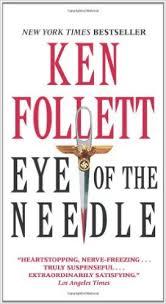
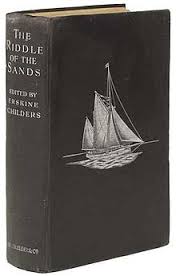
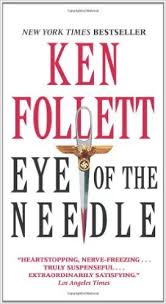
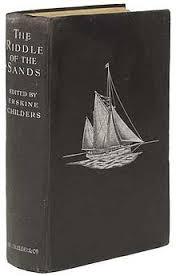 Every source I found seemed to support the allegation that International Espionage Thriller readers are predominately men, but none of those sources cited any stats that supported that belief. However, I did find a great blog on criminalelement.com, written by Linda Rodriguez, author of the Skeet Bannion novels, that spoke to the subject. She contends that thrillers and mysteries used to split along gender lines because "thrillers were originally written by, for and about men." To support the allegation, she cites the earliest thriller as The Riddle of the Sands by Erskine Childers, published in 1903 and states that "[the book] had not a single female character initially until his publisher forced [him] to add one.” She goes on to mention Ken Follett’s The Eye of the Needle published in 1978 as the first thriller with a female protagonist.
 According to Rodriguez, the books of the time all “shared elements of idealized male protagonists braving physical danger and escalating threat that built to cathartic endings of explosive violence.” Then she goes on to point out, by contrast, the mysteries of the same time period were dominated by female protagonist, written by women and read predominately by female readers.
Of more interest to me is that—according to Rodriguez—things have changed. She contends that thrillers have become more violent, with the offset of cozy mysteries at the other end of the spectrum, and claims that "women are the majority of readers throughout the spectrum...and women [also] write roughly half the books in the combined genres."
She's right.
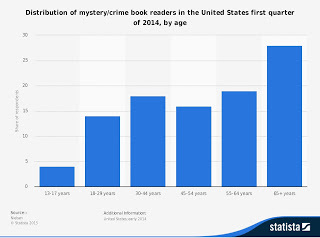
According to a 2015 US Media Audience Demographics report by MarketingCharts.com young readers (ages 18-33) read more fiction than the baby boomers (ages 46-64) and mature readers (ages 65 and older) combined. Female fiction readers read mystery/thriller/crime books at a much higher rate than male readers (57% compared to 39% even though it is the most popular genre for both genders), and mature fiction readers have stronger preferences for the mystery/thriller/crime genre overall (61% to 48%). Another interesting fact was that in 2015 all ten of the Top 10 favorite authors were mystery/thriller/crime genre authors—and all of them were men. There were also two romance authors listed—both women. The female readers to male readers ratio was huge (37% women to only 3% men).
 The take away?
There are no real statistics on who reads International Thrillers, but based on the blogs of the Rogue Women and comments by others, it appears to me that when women add sex to their thrillers, they are actually adding emotion and entanglements versus writing the more gratuitous James Bond-type of sex. Romantic sex gets messy, and may actually lead to the books being labeled Romantic Thrillers, Romantic Suspense or Romantic Mysteries, which—if the above survey is accurate—would likely be off-putting to men.
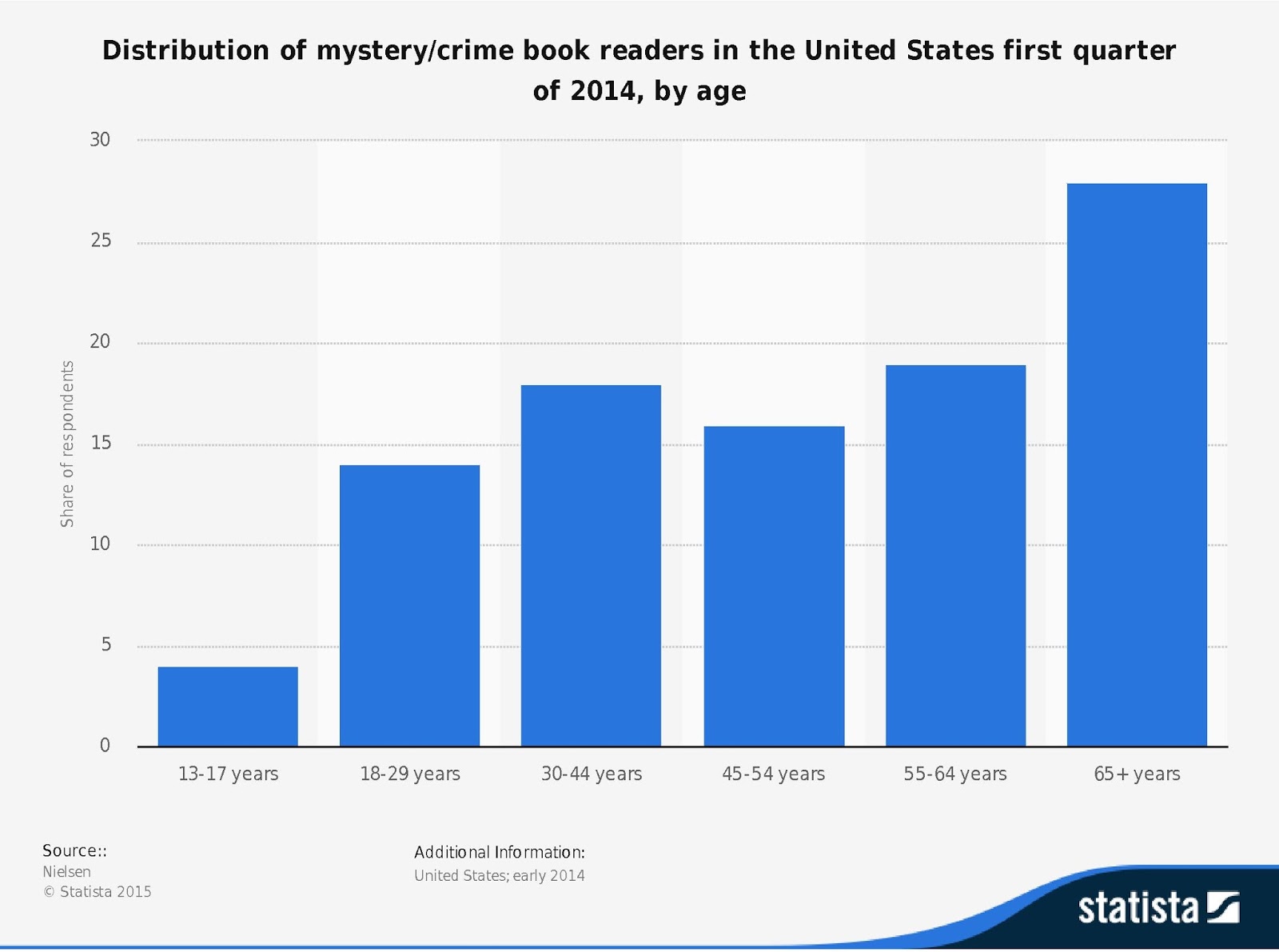
Another study I found does support the common allegation that women buy more books than men. In 2010, Sisters in Crime collaborated with Bowker's PubTrack Book Consumer research service to gather data on mystery readers. They found that 64% of the mystery readers were women, 35% were men. 47% were over the age of 60. The study also revealed that readers under 40 look for dark, suspenseful stories and don't distinguish mysteries as different from other genres, while readers over 60 are more loyal to authors or characters.
So, what does all of this mean for the Rogue Women Writers?
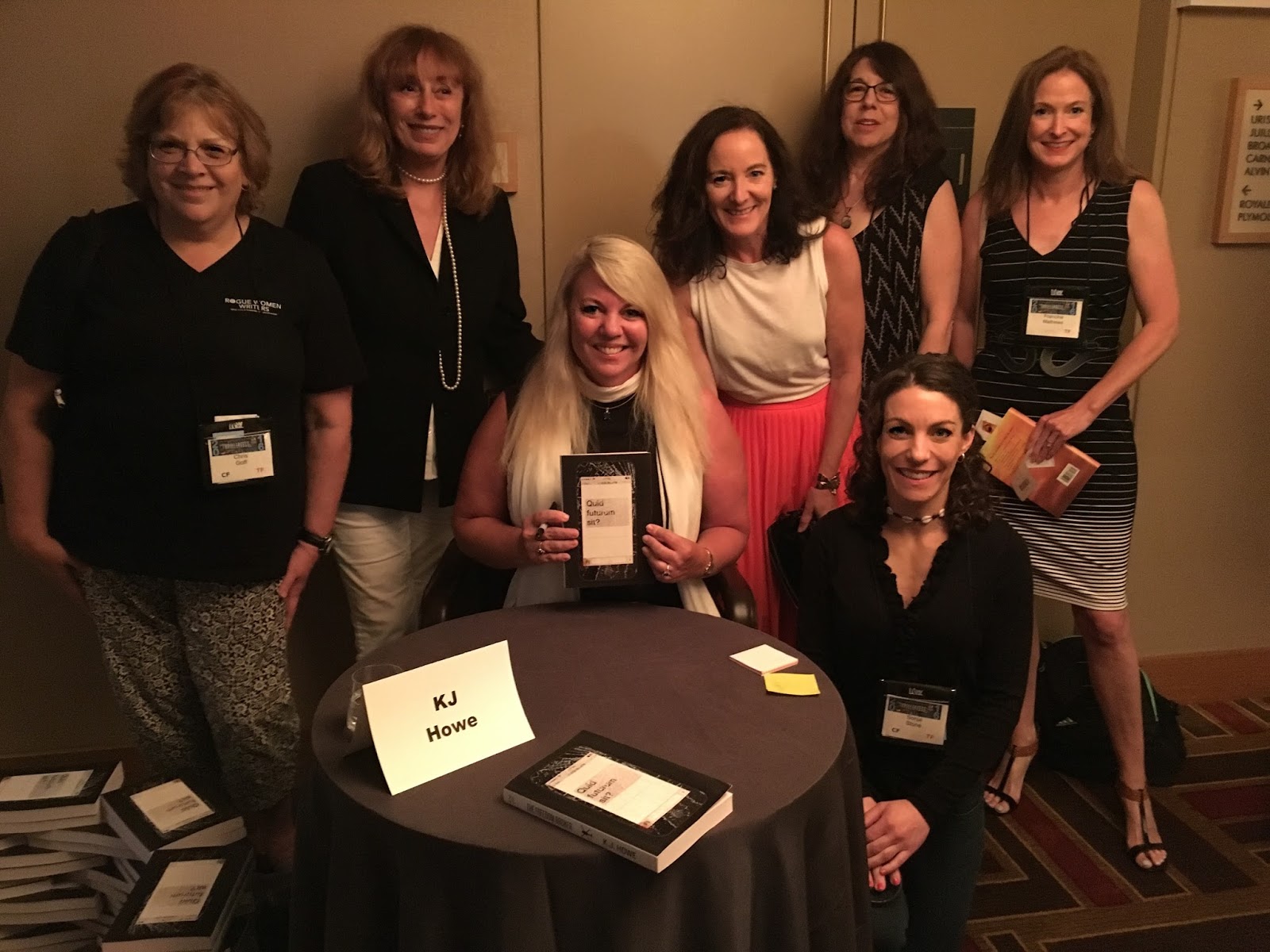
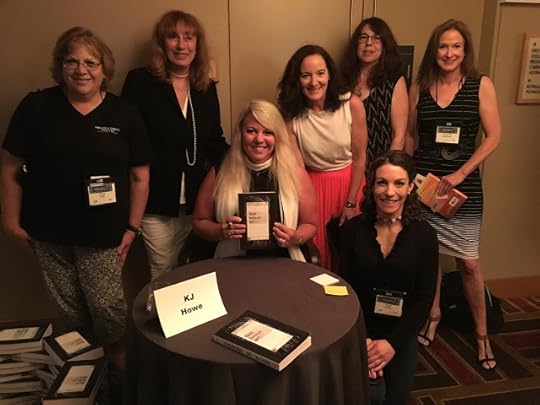 Rogue Women Writers (left to right): Christine Goff, Gayle Lynds, KJ Howe with ARC of new novel The Freedom Broker, Jamie Freveletti, S. Lee Manning, Sonja Stone (kneeling on floor), and Francine Mathews.Fact: we are writing in a traditionally male venue that above all lends itself to violence and action.
Fact: old stigmas of "men writing books by and for men" may not have totally faded.
Fact: women buy and read more mystery/thriller/crime fiction than men, though we don't know the percentages of men and women buying International Espionage Thrillers.
Which leaves me wondering...
#1, Do you think it may be perceived that men write better International Thrillers because it's believed that men stick to action, violence and gratuitous sex, while women writers are seen as bringing emotion and sensibility into their work, something male readers may find uncomfortable?
#2, Do you think it's possible that women, who buy more of mystery/thriller/crime fiction than men, buy books they perceive as bringing in more emotion and sensibility than books they fear may be strictly full of action, violence and gratuitous sex?
#3, Is there anything to do about it?
So back to sex in the thriller
When I need to write sex, I will. When I can fade to black and stick to my story, I will. What matters is the book and what best fits the story. Does it make me squirm? To be continued...
The Cold Hard TruthAt the Rogue Women Writer’s panel at ThrillerFest on July 8, Steve Berry (our panel master) raised the curtain on the gender disparity in writing International Espionage thrillers. It was a great discussion, with audience participation, and everyone could see that there are some problems.
#1, it’s difficult to get thriller reviewers to read our books.
#2, there seems to be a disparity in advances.
#3, it’s perceived that men are the predominate readers of International Espionage Thrillers and those men don't like reading books written by women.
Since readers are important for book sales, which influence reviews and advances, I decided to give #3 a fact check.
Research
 Every source I found seemed to support the allegation that International Espionage Thriller readers are predominately men, but none of those sources cited any stats that supported that belief. However, I did find a great blog on criminalelement.com, written by Linda Rodriguez, author of the Skeet Bannion novels, that spoke to the subject. She contends that thrillers and mysteries used to split along gender lines because "thrillers were originally written by, for and about men." To support the allegation, she cites the earliest thriller as The Riddle of the Sands by Erskine Childers, published in 1903 and states that "[the book] had not a single female character initially until his publisher forced [him] to add one.” She goes on to mention Ken Follett’s The Eye of the Needle published in 1978 as the first thriller with a female protagonist.
 According to Rodriguez, the books of the time all “shared elements of idealized male protagonists braving physical danger and escalating threat that built to cathartic endings of explosive violence.” Then she goes on to point out, by contrast, the mysteries of the same time period were dominated by female protagonist, written by women and read predominately by female readers.
Of more interest to me is that—according to Rodriguez—things have changed. She contends that thrillers have become more violent, with the offset of cozy mysteries at the other end of the spectrum, and claims that "women are the majority of readers throughout the spectrum...and women [also] write roughly half the books in the combined genres."
She's right.
According to a 2015 US Media Audience Demographics report by MarketingCharts.com young readers (ages 18-33) read more fiction than the baby boomers (ages 46-64) and mature readers (ages 65 and older) combined. Female fiction readers read mystery/thriller/crime books at a much higher rate than male readers (57% compared to 39% even though it is the most popular genre for both genders), and mature fiction readers have stronger preferences for the mystery/thriller/crime genre overall (61% to 48%). Another interesting fact was that in 2015 all ten of the Top 10 favorite authors were mystery/thriller/crime genre authors—and all of them were men. There were also two romance authors listed—both women. The female readers to male readers ratio was huge (37% women to only 3% men).
 The take away?
There are no real statistics on who reads International Thrillers, but based on the blogs of the Rogue Women and comments by others, it appears to me that when women add sex to their thrillers, they are actually adding emotion and entanglements versus writing the more gratuitous James Bond-type of sex. Romantic sex gets messy, and may actually lead to the books being labeled Romantic Thrillers, Romantic Suspense or Romantic Mysteries, which—if the above survey is accurate—would likely be off-putting to men.
Another study I found does support the common allegation that women buy more books than men. In 2010, Sisters in Crime collaborated with Bowker's PubTrack Book Consumer research service to gather data on mystery readers. They found that 64% of the mystery readers were women, 35% were men. 47% were over the age of 60. The study also revealed that readers under 40 look for dark, suspenseful stories and don't distinguish mysteries as different from other genres, while readers over 60 are more loyal to authors or characters.
So, what does all of this mean for the Rogue Women Writers?
 Rogue Women Writers (left to right): Christine Goff, Gayle Lynds, KJ Howe with ARC of new novel The Freedom Broker, Jamie Freveletti, S. Lee Manning, Sonja Stone (kneeling on floor), and Francine Mathews.Fact: we are writing in a traditionally male venue that above all lends itself to violence and action.
Fact: old stigmas of "men writing books by and for men" may not have totally faded.
Fact: women buy and read more mystery/thriller/crime fiction than men, though we don't know the percentages of men and women buying International Espionage Thrillers.
Which leaves me wondering...
#1, Do you think it may be perceived that men write better International Thrillers because it's believed that men stick to action, violence and gratuitous sex, while women writers are seen as bringing emotion and sensibility into their work, something male readers may find uncomfortable?
#2, Do you think it's possible that women, who buy more of mystery/thriller/crime fiction than men, buy books they perceive as bringing in more emotion and sensibility than books they fear may be strictly full of action, violence and gratuitous sex?
#3, Is there anything to do about it?
So back to sex in the thriller
When I need to write sex, I will. When I can fade to black and stick to my story, I will. What matters is the book and what best fits the story. Does it make me squirm? To be continued...
Sex and the Thrillerby Chris GoffThe Cold Hard TruthAt th...
Sex and the Thrillerby Chris Goff
The Cold Hard TruthAt the Rogue Women Writer’s panel at ThrillerFest on July 8, Steve Berry (our panel master) raised the curtain on the gender disparity in writing International Espionage thrillers. It was a great discussion, with audience participation, and everyone could see that there are some problems.
#1, it’s difficult to get thriller reviewers to read our books.
#2, there seems to be a disparity in advances.
#3, it’s perceived that men are the predominate readers of International Espionage Thrillers and those men don't like reading books written by women.
Since readers are important for book sales, which influence reviews and advances, I decided to give #3 a fact check.
Research
Every source I found seemed to support the allegation that International Espionage Thriller readers are predominately men, but none of those sources cited any stats that supported that belief. However, I did find a great blog on criminalelement.com, written by Linda Rodriguez, author of the Skeet Bannion novels, that spoke to the subject. She contends that thrillers and mysteries used to split along gender lines because "thrillers were originally written by, for and about men." To support the allegation, she cites the earliest thriller as The Riddle of the Sands by Erskine Childers, published in 1903 and states that "[the book] had not a single female character initially until his publisher forced [him] to add one.” She goes on to mention Ken Follett’s The Eye of the Needle published in 1978 as the first thriller with a female protagonist.
According to Rodriguez, the books of the time all “shared elements of idealized male protagonists braving physical danger and escalating threat that built to cathartic endings of explosive violence.” Then she goes on to point out, by contrast, the mysteries of the same time period were dominated by female protagonist, written by women and read predominately by female readers.
Of more interest to me is that—according to Rodriguez—things have changed. She contends that thrillers have become more violent, with the offset of cozy mysteries at the other end of the spectrum, and claims that "women are the majority of readers throughout the spectrum...and women [also] write roughly half the books in the combined genres."
She's right.
According to a 2015 US Media Audience Demographics report by MarketingCharts.com young readers (ages 18-33) read more fiction than the baby boomers (ages 46-64) and mature readers (ages 65 and older) combined. Female fiction readers read mystery/thriller/crime books at a much higher rate than male readers (57% compared to 39% even though it is the most popular genre for both genders), and mature fiction readers have stronger preferences for the mystery/thriller/crime genre overall (61% to 48%). Another interesting fact was that in 2015 all ten of the Top 10 favorite authors were mystery/thriller/crime genre authors—and all of them were men. There were also two romance authors listed—both women. The female readers to male readers ratio was huge (37% women to only 3% men).
The take away?
There are no real statistics on who reads International Thrillers, but based on the blogs of the Rogue Women and comments by others, it appears to me that when women add sex to their thrillers, they are actually adding emotion and entanglements versus writing the more gratuitous James Bond-type of sex. Romantic sex gets messy, and may actually lead to the books being labeled Romantic Thrillers, Romantic Suspense or Romantic Mysteries, which—if the above survey is accurate—would likely be off-putting to men.
Another study I found does support the common allegation that women buy more books than men. In 2010, Sisters in Crime collaborated with Bowker's PubTrack Book Consumer research service to gather data on mystery readers. They found that 64% of the mystery readers were women, 35% were men. 47% were over the age of 60. The study also revealed that readers under 40 look for dark, suspenseful stories and don't distinguish mysteries as different from other genres, while readers over 60 are more loyal to authors or characters.
So, what does all of this mean for the Rogue Women Writers?
Fact: we are writing in a traditionally male venue that above all lends itself to violence and action.
Fact: old stigmas of "men writing books by and for men" may not have totally faded.
Fact: women buy and read more mystery/thriller/crime fiction than men, though we don't know the percentages of men and women buying International Espionage Thrillers.
Which leaves me wondering...
#1, Do you think it may be perceived that men write better International Thrillers because it's believed that men stick to action, violence and gratuitous sex, while women writers are seen as bringing emotion and sensibility into their work, something male readers may find uncomfortable?
#2, Do you think it's possible that women, who buy more of mystery/thriller/crime fiction than men, buy books they perceive as bringing in more emotion and sensibility than books they fear may be strictly full of action, violence and gratuitous sex?
#3, Is there anything to do about it?
So back to sex in the thriller
When I need to write sex, I will. When I can fade to black and stick to my story, I will. What matters is the book and what best fits the story. Does it make me squirm? To be continued...
The Cold Hard TruthAt the Rogue Women Writer’s panel at ThrillerFest on July 8, Steve Berry (our panel master) raised the curtain on the gender disparity in writing International Espionage thrillers. It was a great discussion, with audience participation, and everyone could see that there are some problems.
#1, it’s difficult to get thriller reviewers to read our books.
#2, there seems to be a disparity in advances.
#3, it’s perceived that men are the predominate readers of International Espionage Thrillers and those men don't like reading books written by women.
Since readers are important for book sales, which influence reviews and advances, I decided to give #3 a fact check.
Research
Every source I found seemed to support the allegation that International Espionage Thriller readers are predominately men, but none of those sources cited any stats that supported that belief. However, I did find a great blog on criminalelement.com, written by Linda Rodriguez, author of the Skeet Bannion novels, that spoke to the subject. She contends that thrillers and mysteries used to split along gender lines because "thrillers were originally written by, for and about men." To support the allegation, she cites the earliest thriller as The Riddle of the Sands by Erskine Childers, published in 1903 and states that "[the book] had not a single female character initially until his publisher forced [him] to add one.” She goes on to mention Ken Follett’s The Eye of the Needle published in 1978 as the first thriller with a female protagonist.
According to Rodriguez, the books of the time all “shared elements of idealized male protagonists braving physical danger and escalating threat that built to cathartic endings of explosive violence.” Then she goes on to point out, by contrast, the mysteries of the same time period were dominated by female protagonist, written by women and read predominately by female readers.Of more interest to me is that—according to Rodriguez—things have changed. She contends that thrillers have become more violent, with the offset of cozy mysteries at the other end of the spectrum, and claims that "women are the majority of readers throughout the spectrum...and women [also] write roughly half the books in the combined genres."
She's right.
According to a 2015 US Media Audience Demographics report by MarketingCharts.com young readers (ages 18-33) read more fiction than the baby boomers (ages 46-64) and mature readers (ages 65 and older) combined. Female fiction readers read mystery/thriller/crime books at a much higher rate than male readers (57% compared to 39% even though it is the most popular genre for both genders), and mature fiction readers have stronger preferences for the mystery/thriller/crime genre overall (61% to 48%). Another interesting fact was that in 2015 all ten of the Top 10 favorite authors were mystery/thriller/crime genre authors—and all of them were men. There were also two romance authors listed—both women. The female readers to male readers ratio was huge (37% women to only 3% men).
The take away?
There are no real statistics on who reads International Thrillers, but based on the blogs of the Rogue Women and comments by others, it appears to me that when women add sex to their thrillers, they are actually adding emotion and entanglements versus writing the more gratuitous James Bond-type of sex. Romantic sex gets messy, and may actually lead to the books being labeled Romantic Thrillers, Romantic Suspense or Romantic Mysteries, which—if the above survey is accurate—would likely be off-putting to men.
Another study I found does support the common allegation that women buy more books than men. In 2010, Sisters in Crime collaborated with Bowker's PubTrack Book Consumer research service to gather data on mystery readers. They found that 64% of the mystery readers were women, 35% were men. 47% were over the age of 60. The study also revealed that readers under 40 look for dark, suspenseful stories and don't distinguish mysteries as different from other genres, while readers over 60 are more loyal to authors or characters.
So, what does all of this mean for the Rogue Women Writers?
Fact: we are writing in a traditionally male venue that above all lends itself to violence and action.
Fact: old stigmas of "men writing books by and for men" may not have totally faded.
Fact: women buy and read more mystery/thriller/crime fiction than men, though we don't know the percentages of men and women buying International Espionage Thrillers.
Which leaves me wondering...
#1, Do you think it may be perceived that men write better International Thrillers because it's believed that men stick to action, violence and gratuitous sex, while women writers are seen as bringing emotion and sensibility into their work, something male readers may find uncomfortable?
#2, Do you think it's possible that women, who buy more of mystery/thriller/crime fiction than men, buy books they perceive as bringing in more emotion and sensibility than books they fear may be strictly full of action, violence and gratuitous sex?
#3, Is there anything to do about it?
So back to sex in the thriller
When I need to write sex, I will. When I can fade to black and stick to my story, I will. What matters is the book and what best fits the story. Does it make me squirm? To be continued...
July 23, 2016
LET'S TALK ABOUT SEX
Want to Know What He’s Like in Bed? Read on…By Sonja Stone
I feel the same way about sex that I do about weapons. No, it's not bigger is better. It’s this: Safety first. Which is why I pulled out a sleeve of trojans and a cucumber to demonstrate the proper way to apply a condom to my horrified children.
 Having said that, let me remind you that I write for young adults. I don’t write sex scenes. I know young adults have sex; I’m not an idiot. This isn’t about me taking a moral stand. Exploring our sexuality is a healthy part of being human. But I started my first novel when my kids were in middle school. They’d come home, I’d hand them the day’s pages, and that’s how it went.
And it’s not that I don’t want to hear about their sex lives; I’ve tried to establish an environment where my kids can talk to me about anything. But no one—I REPEAT NO ONE—wants to think about their parents having sex. Ever. As far as I’m concerned, my parents had sex twice, and both times resulted in a child.
I can’t add a sex scene to a book written for my children without them thinking, “Hmm. Mom’s talking about sex… Wonder how she came up with that.”
So since I can’t write about, let’s talk about it.
KISSING FROGSLet me tell you what's NOT fun: entering the dating scene at the same time as your kids. I don't know what I'm doing out there. But I know this: what looks cute on 20 does not look cute on 40. Which is why I'm grateful that even though my arms are super buff and I could totally pull it off, I never got that tribal armband tattoo. But that also means I can’t resort to the same tricks I used last time around (let’s just say there was a lot of tequila involved, and leave it at that).
Fortunately, I have a theory that’s always served me well. It’s enabled me to sort the wheat from the chaff without making much of a commitment. Are you ready?
HOW TO TELL WHAT HE’S LIKE IN BED (Without Taking Off Your Clothes)This is a true statement:
I can tell what a man is like in bed by watching him eat.
As far as I know, this doesn’t work for women (at least it wouldn’t apply for me—I don’t have sex like I eat). I think the gender discrepancy is about socialization; girls and women are generally more courteous at the dinner table (I said GENERALLY. I know there are exceptions. My oldest child, for example.).
 Food is so sensual.Think about the man you’re with (or the one you want to be with): how does he satiate himself?
Does he devour his food, jumping from one dish to the next? Does he carefully finish his roasted chicken before moving on to his salad? Does he eat with his fingers, licking them clean after a few bites? Does he offer you a taste? Take from your plate without asking? Is he ravenous, picky, selective, refined, up for anything? Does he sample international cuisine? Does he use his thumb instead his knife to push food onto his fork? Does he say thank you, regardless of what you’ve cooked for him? If you enjoy watching him eat, you’ll probably enjoy other aspects of his appetite.
Please note the absolute lack of judgment in all previous statements. Jane thinks finger-licking is sexy, Sue finds it repulsive. Whatever. I vehemently believe that what consenting adults do in the privacy of their own home is none of my business or concern.
So no matter your flavor, I hope you find a lover to suit your tastes.
Take the quiz to find your perfect match!
Photo credit: Jin n tonic Josh by Robert Bejil Productions
I feel the same way about sex that I do about weapons. No, it's not bigger is better. It’s this: Safety first. Which is why I pulled out a sleeve of trojans and a cucumber to demonstrate the proper way to apply a condom to my horrified children.
 Having said that, let me remind you that I write for young adults. I don’t write sex scenes. I know young adults have sex; I’m not an idiot. This isn’t about me taking a moral stand. Exploring our sexuality is a healthy part of being human. But I started my first novel when my kids were in middle school. They’d come home, I’d hand them the day’s pages, and that’s how it went.
 And it’s not that I don’t want to hear about their sex lives; I’ve tried to establish an environment where my kids can talk to me about anything. But no one—I REPEAT NO ONE—wants to think about their parents having sex. Ever. As far as I’m concerned, my parents had sex twice, and both times resulted in a child.
I can’t add a sex scene to a book written for my children without them thinking, “Hmm. Mom’s talking about sex… Wonder how she came up with that.”
So since I can’t write about, let’s talk about it.
KISSING FROGSLet me tell you what's NOT fun: entering the dating scene at the same time as your kids. I don't know what I'm doing out there. But I know this: what looks cute on 20 does not look cute on 40. Which is why I'm grateful that even though my arms are super buff and I could totally pull it off, I never got that tribal armband tattoo. But that also means I can’t resort to the same tricks I used last time around (let’s just say there was a lot of tequila involved, and leave it at that).
Fortunately, I have a theory that’s always served me well. It’s enabled me to sort the wheat from the chaff without making much of a commitment. Are you ready?
HOW TO TELL WHAT HE’S LIKE IN BED (Without Taking Off Your Clothes)This is a true statement:
I can tell what a man is like in bed by watching him eat.
As far as I know, this doesn’t work for women (at least it wouldn’t apply for me—I don’t have sex like I eat). I think the gender discrepancy is about socialization; girls and women are generally more courteous at the dinner table (I said GENERALLY. I know there are exceptions. My oldest child, for example.).
 Food is so sensual.Think about the man you’re with (or the one you want to be with): how does he satiate himself?
 Does he devour his food, jumping from one dish to the next? Does he carefully finish his roasted chicken before moving on to his salad? Does he eat with his fingers, licking them clean after a few bites? Does he offer you a taste? Take from your plate without asking? Is he ravenous, picky, selective, refined, up for anything? Does he sample international cuisine? Does he use his thumb instead his knife to push food onto his fork? Does he say thank you, regardless of what you’ve cooked for him? If you enjoy watching him eat, you’ll probably enjoy other aspects of his appetite.
Please note the absolute lack of judgment in all previous statements. Jane thinks finger-licking is sexy, Sue finds it repulsive. Whatever. I vehemently believe that what consenting adults do in the privacy of their own home is none of my business or concern.
So no matter your flavor, I hope you find a lover to suit your tastes.
Take the quiz to find your perfect match!
Photo credit: Jin n tonic Josh by Robert Bejil Productions
July 21, 2016
THE SPY WHO LOVED ME: HELAINE MARIO WEIGHS IN
 Humphrey Bogart and Ingrid Bergman in CASABLANCA
"Espionage, suspense, political intrigue, danger, international and evocative settings, secrets…yes. But what about romance?"--Helaine Mario
Francine Mathews: Today I'm happy to introduce espionage author Helaine Mario to the Rogue Women World. Helaine writes international espionage novels from a historical perspective--rather as I do myself--which is one reason I enjoy her work. Another is her penchant for offering readers strong, romantic love stories within her thriller plots. As a result, Helaine's books are often described by reviewers as romantic suspense rather than framed and discussed as the spy novels they actually are.
I find that puzzling--because growing up as a reader of women's thriller fiction, I knew the difference between the two without having to be told. The Shivering Sands by Victoria Holt and Nine Coaches Waiting by Mary Stewart were romantic suspense: Naive young woman stumbles on deception and romance, is saved by handsome fellow with dash of integrity, and both live happily-ever-after. I liked those books--I still reread my shelf full of Mary Stewart each year--but even at the age of thirteen I never confused them with the heart-stopping work of, say, Helen MacInnes. MacInnes was a spy novelist, period. She wrote fantastic international espionage that just happened to have both male and female characters. They always tangled emotionally with one another, which added to the psychological interest. Nobody seemed to refer to this as romantic suspense. MacInnes had the profound respect of all espionage fans and authors, regardless of gender--because her credentials (she had worked for British Intelligence during WWII) and her details were impeccable.
Turns out Helaine is a MacInnes-lover as well.
In a week where we've been discussing the role of sex scenes in suspense, I asked Helaine to weigh in--and she was eager to join the Rogue conversation.
* * *
 Helaine Mario
By Helaine MarioDo you remember the day you discovered a favorite author? I know the exact moment I discovered Helen MacInnes, often called ‘The Queen of Espionage Writers,’ because her books changed my life.
Almost five decades ago, as a new college graduate with no writing aspirations, I visited my parents for the weekend. On the table was a tattered paperback titled The Venetian Affair. The cover lured me in – an attractive couple, clearly in danger, running through night shadows across a Venetian bridge. The opening sentence - “Two men sat in a darkened room… ” – sealed my fate. I read all night and was the first person in the bookstore the next morning to buy Helen MacInnes’ earlier works. I still have all twenty-two of her novels in the bookcase behind my desk.
Espionage, suspense – and romance. Helen MacInnes gave it all in equal measure. As a child of the 50’s and 60’s, I was fascinated by her stories of the spies and danger of World War II and the Cold War. My father told me of his landing in Normandy on day two of the invasion, and later, in school, we practiced hiding under our desks in case of a Cold War missile strike. (Yes, really!) So an innocent character caught up in a World War II drama or Cold War spy mystery was the perfect combination for me. And if you added in romance – well, who doesn't want to fall into a good love story?
Only one problem. Other than Evelyn Anthony, I found very few women writers of international espionage. Even today, if you google “top ten espionage authors,” you will find only lists of male writers – Le Carre, Ludlum, Follet, Forsyth, Silva. [N.B.: Gayle Lynds and Stella Rimington appear on a few.-- FM] So I decided that I would have to write the books I wanted to read. And Firebird and The Lost Concerto were born.
 Purchase on AmazonFirebird is the story of a forgotten Russian spy on a collision course with an innocent art curator. The prologue opens with a performance of the Kirov’s Firebird ballet during the Cold War. The Lost Concerto, which tells the story of a classical pianist searching for her missing godson throughout France, is set against a decades old secret from World War II. Flashback scenes and memories transport the reader back to 1943.
 Espionage, suspense, political intrigue, danger, international and evocative settings, secrets…yes. But what about romance? The author Ken Follett said of Ms. MacInnes that, “For Helen, plot is just a channel through which a love story can flow.” That is how I feel. Like so many of you, my characters come first. I always am looking for a good story, a plot worthy of them. For me, both as a writer and a reader, a good love story takes center stage. I often say that I write romantic love stories masquerading as thrillers.
 Purchase on AmazonNow, I am talking about real, old-fashioned romance. That look, that gesture, that touch. That sudden fluttering spark, that first kiss, that ‘will she or won’t she?’ To me, these moments create the best suspense of all. I know that many thrillers include very descriptive sex – and I enjoy those scenes as much as everyone else. But the genre's action – whether suspense, thriller or mystery – usually takes place within a few days or a week at most. My main character in Firebird, Alexandra, has survived an abusive husband. In The Lost Concerto, Maggie is grieving for her beloved lost husband. While both characters find a way to move on with a new and unexpected love, they are mature women who need the relationship and trust to come before the ‘hot and heavy.’
I could not have predicted that a woman I never met would encourage me to write fiction. Helen MacInnes taught me about suspense, courage and love, and inspired me with her heroic and complex women characters. I learned about building page-turning suspense, finding a voice, dialogue that sounds natural, intriguing international settings, creating a believable and involving romance. The women in my novels, especially, are strong but flawed, smart, independent, a bit quirky, funny, accomplished, brave. The kind of woman who has the courage to do the right thing, who will run toward something, not away.
So, am I a Romantic Suspense writer or an International Espionage Thriller writer? I’ve been listed in both categories, and neither, by itself, is perfect for me. The covers of my books do not feature ‘women in peril,’ so readers who expect romantic suspense are often surprised by the ‘thriller’ scenes, while readers expecting non-stop action can be thrown by the unexpected romance and depth of character. But as I study hundreds of reviews and responses, I am struck by how many readers love the ‘can’t put down’ combination. (Surprisingly enough, only one person has told me there should have been more sex.) For me, the key is to pace the story in such a way that readers will find emotional suspense as well as physical thrills. We love the danger, but the romance gives our stories heart.
My publisher, Oceanview, specializes in thrillers, mystery and suspense – not romance. But they took a chance on me because - like Helen MacInnes, the Rogue Writing Women, and myself - we believe we can have it all. * * *
Francine: Okay, Helaine, so about that Top 10 list--I have to throw you the hardball question Steve Berry tossed to our Rogue Women Writers panel at ThrillerFest 2016 a few weeks ago: "Why aren't women spy novelists as recognized and read as men? Is it the way our publishers market us, or is there something deeper at work?"
Helaine: As for [my publisher], Oceanview, as far as I know they always have marketed me in the suspense/mystery/thriller category, not romance, in keeping with their mission. They have submitted me for awards based on those categories as well (and I've done well there). They took a chance on my 'added romance'. Sometimes I have wished that they would call more attention to the romance in my books. Men who read my books really enjoy them, but I think they are surprised. Perhaps we need to change the marketing for all of us to reflect how good our stories are - combining suspense, thrills AND romance is possible. Personally, I would begin with how amazon categorizes us. there doesn't always seem to be a rhyme or reason, and amazon is a powerful marketing agent.
Francine: What do you think, Rogue Readers? Is "romantic suspense" a label pitched mostly to girls--while "espionage thriller" is targeted at the boys? Is romance out of place in skullduggery?
Thanks so much, Helaine!
Helaine Mariowww.helainemario.com
July 19, 2016
Sex In Thrillers-Not Always a Good Idea
 Canova's Psyche Revived By Cupid's Kissby Jamie Freveletti
This week's topic has been about sex scenes in thrillers. I wanted to post a racy first photo, but at the last minute decided to go with the classic sculpture to prove that even the finest art can contain sexual content. And then there's this:
His mouth lathered with her sap, he turned around and embraced her face with all the passion of his own lips and face, ready at last to grind into her with the Hound, drive it into her piety.
Yes, that's an actual scene from The Castle In The Forest, a book by the late Norman Mailer that won the Literary Review's Bad Sex in Literature award. I have to admit, the whole sap thing is beyond weird, but I kind of like the piety line. At least he saw the whole event as a religious experience. But it does show you that even Norman Mailer can write bad sex. And if he can, then the rest of us might, too. So today's post is a cautionary tale, really.
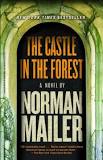 The problem with sex in thrillers, though, is that thriller writers as a group don't spend enough time learning how to write these scenes. And unless they have experience in the romance genre, a sex scene written by a thriller author can be bad, or worse, boring.
Which is not to say that thriller writers are the only ones writing what the Review has deemed to be bad sex scenes. Seems that they exist in every genre, as shown above. Past nominees have included some of the best writers in any genre. Most of us would love to be mentioned in the same sentence as these authors. You can find the latest list here.
Luckily the bad sex award is a lighthearted award and most authors seem to accept it with good humor. Should I ever be awarded such a prize, I hope to laugh along with the judges. I've only written one or two sex scenes in my books and neither were graphic. I'm not sure that graphic explanation is worthwhile in a thriller in any event. Most readers aren't interested in the genre for its sexual content. For a targeted good time a reader is better off picking up a romance book or erotica. And let's face it, authors in these genres are excellent at writing these scenes, as they should be. (Though I imagine some bad examples can be found there as well).
 The best scenes, in my opinion, leave the graphic bits to the imagination in any event. One of the steamiest sex scenes in movies can be found in The Big Easy. Starring Ellen Barkin and Dennis Quaid, the scene is sexy even though both are fully clothed throughout. Which just goes to show that imagination is the best aphrodisiac!
July 18, 2016
Sex Scenes in Novels and Film
By Karna Bodman ... We've come to expect some pretty graphic love scenes in movies (and even on some adult TV shows), and though some of my "Rogue" colleagues have mentioned him before in these posts, what better place to start a summary than with Ian Fleming's character James Bond and his ever-present "Bond girl" where the film always ends with a terrific moment "cementing" their relationship. One of the most talked about scenes involved the first Polish born Bond companion, Isabella Scarupco in Golden Eye.
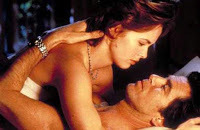 Isabella Scarupco
Over the years, each new exciting Bond exploit featured a new exciting love interest (How the man could keep "loving and leaving" so many gorgeous women remains a mystery, but of course, a key characteristic of this particular hero.)
A movie to look for in November of 2017 will be the adaptation of Jason Matthews' thriller, Red Sparrow about a lovely young Russian woman forced to work in the post-Soviet Intelligence Service as a trained seductress. The novel includes many graphic descriptions of her "training" and subsequent use of these "talents" when prying information out of many dangerous and nefarious contacts. Jennifer Lawrence has been cast in this demanding role and I'm sure the reviewers will go nuts rushing to watch the film as soon as it becomes available.
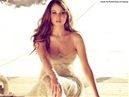 Jennifer Lawrence
Okay, so those were male authors perhaps inspired by a combination of personal experience and wishful thinking. After all, Ian Fleming was a rather dapper Naval Intelligence Officer. During WWII he was involved in planning something called "Operation Goldeneye."
 Jason Matthews
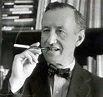 Ian FlemingAs for Jason Matthews, he too worked in service to his country -- for him it meant over thirty years in our CIA. Talk about first hand experience for both of these authors. When I met Jason at Thrillerfest when this, his first novel came out, I did not consider asking him if he had any "personal experience" with one of these "Red Sparrows" though.
What about women thriller writers? Do we include graphic scenes in our novels? I attended a panel discussion of a number of them at our recent conference and here are a few of their comments:
Meg Gardiner, the bestselling author of twelve thrillers: "I do include sex scenes, but the door closes before you read the details."
Heather Graham, bestselling author of over 200 books in many genres: "Some of the best sex scenes are described just in conversation."
Allison Brennan, New York Times and USA Today bestselling author of over two dozen thrillers: "Women focus more on emotion at the time -- the interior struggle. Men focus more on the action of it -- the exterior struggle."
What about you? When you pick up a thriller, do you want to read a "detailed description" of the hero and heroine's bedroom (or wherever) scenes? Or would you rather not interrupt the action and simply close the door and move on? Please share your thoughts with a comment and check out the scenes I have written (yes I did write them) in the novels on www.karnabodman.com.
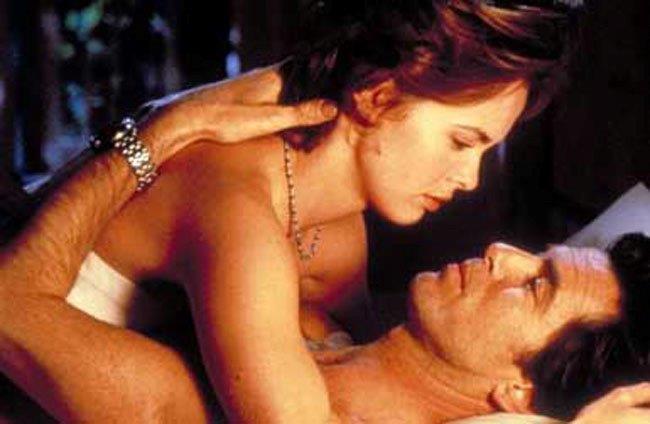 Isabella Scarupco
 Over the years, each new exciting Bond exploit featured a new exciting love interest (How the man could keep "loving and leaving" so many gorgeous women remains a mystery, but of course, a key characteristic of this particular hero.)
A movie to look for in November of 2017 will be the adaptation of Jason Matthews' thriller, Red Sparrow about a lovely young Russian woman forced to work in the post-Soviet Intelligence Service as a trained seductress. The novel includes many graphic descriptions of her "training" and subsequent use of these "talents" when prying information out of many dangerous and nefarious contacts. Jennifer Lawrence has been cast in this demanding role and I'm sure the reviewers will go nuts rushing to watch the film as soon as it becomes available.
 Jennifer Lawrence
Okay, so those were male authors perhaps inspired by a combination of personal experience and wishful thinking. After all, Ian Fleming was a rather dapper Naval Intelligence Officer. During WWII he was involved in planning something called "Operation Goldeneye."
 Jason Matthews
 Ian FlemingAs for Jason Matthews, he too worked in service to his country -- for him it meant over thirty years in our CIA. Talk about first hand experience for both of these authors. When I met Jason at Thrillerfest when this, his first novel came out, I did not consider asking him if he had any "personal experience" with one of these "Red Sparrows" though.
What about women thriller writers? Do we include graphic scenes in our novels? I attended a panel discussion of a number of them at our recent conference and here are a few of their comments:
Meg Gardiner, the bestselling author of twelve thrillers: "I do include sex scenes, but the door closes before you read the details."
Heather Graham, bestselling author of over 200 books in many genres: "Some of the best sex scenes are described just in conversation."
Allison Brennan, New York Times and USA Today bestselling author of over two dozen thrillers: "Women focus more on emotion at the time -- the interior struggle. Men focus more on the action of it -- the exterior struggle."
What about you? When you pick up a thriller, do you want to read a "detailed description" of the hero and heroine's bedroom (or wherever) scenes? Or would you rather not interrupt the action and simply close the door and move on? Please share your thoughts with a comment and check out the scenes I have written (yes I did write them) in the novels on www.karnabodman.com.
July 16, 2016
SEX AND FIGHTS--BETTER IN THE DARK
by KJ Howe
 Sex and fights are two enticing ways of cranking up the tension in novels. Why not take it a step further and do both in the dark?
The most obvious way to depict sex and fights is to describe what is happening, tapping into readers' visual cues. But talented thriller authors can enrich the impact of their stories with more sensory details--touch, taste, feel, and sound. And when you immerse your character in blackness, those other senses are heightened.
In Brett Kahr's book Who's Sleeping in Your Head?, this well-renowned psychotherapist explains that many people prefer to have sex with the lights off--not necessarily to hide self-perceived body flaws, but more to quiet the outside world, allowing participants to allow their fantasies to come to life. Just like when we visit a theater or cinema, the lights go down, and we can immerse ourselves in another world. In pure darkness, we can also lose ourselves in the secret cinema of our minds, our sexual fantasies played out without interruption.
It's interesting that we close our eyes when we kiss passionately. According to psychologists Polly Dalton and Sandra Murphy, who studied a group of participants interacting with both physical and visual stimuli, the brain cannot fully appreciate the physical when distracted with the visual. Closing our eyes before an intimate kiss helps us to block out the world and continue the interaction to a sexual encounter.
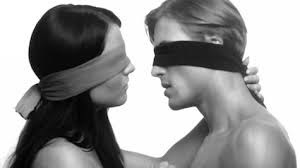
If darkness provides a sanctuary for exploring a rich fantasy life, why not let our characters delve into their secret desires on the page, allowing both the characters and the readers to lose themselves in this fantasy world where the visual fades and other senses take over. Focus on the soft brush of silk sheets, the warmth of a lover's touch, the enticing whiff of cologne or perfume, or the salty taste of a beachside romp.
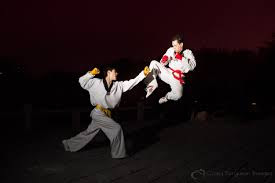 The same theme applies to fight scenes. Instead of authors focusing on the visual cues of one combatant hitting another, why not go deeper and explore other senses. The soft crunch of cartilage breaking, the whizz of bullets brushing by, the sting of a blade cutting skin, the agony of being sucker punched.
David Morrell created an unforgettable fight in THE FRATERNITY OF THE STONE, which takes place in complete darkness. If you haven't read this iconic scene, be sure and check it out. David masterfully showcases how to write a compelling fight scene using only the non-visual senses.
As David eloquently shares, "I tell my writing students that a novel should take sight details for granted and emphasize the other senses. That way there’s a multi-dimensional effect. In the 1980s, when I was a literature professor at the Univ. of Iowa, I taught a course called Modern Fiction, which featured novels that made a difference in the 20th century. One of those was E. M. Forster’s A PASSAGE TO INDIA, in which an English woman goes into an absolutely dark cave in India and experiences nothingness. I thought it would be cool to try to create something like that in a thriller, so in THE FRATERNITY OF THE STONE (1985), I had my main character chase someone at night. The chase goes into the basement of a house and then into an absolutely dark room. The task became to write a scene that was many manuscript pages long, in which the main character uses sound, touch, and smell to figure out the dimensions of the room, what it’s used for, and where his enemy is waiting to strike. It was a thrilling experiment. I still get comments about it. The memory of writing it makes me smile."
As David showcased, fight scenes in the dark offers a plethora of unique challenges for our protagonists. Balance is difficult to maintain. Basic furniture in a room becomes a minefield of potential obstacles. Distance becomes very hard to judge. When a shot is fired, our heroes only have an instant to register the muzzle flash and determine how to react. And what happens when the shooter keeps moving after firing the shot? Darkness exponentially ramps up the tension, challenges, and difficulties of a fight.
Taking away our visual cues can empower our other senses. During a study where participants were blindfolded and then played various types of harmonic music, the individuals had greatly enhanced abilities to discern between harmonies.
Let's get our blindfolds out, and start enjoying the richness of the darkness. Our readers will appreciate our efforts to plunge into the black hole.
What makes a sex or fight scene memorable for you?
 Sex and fights are two enticing ways of cranking up the tension in novels. Why not take it a step further and do both in the dark?
The most obvious way to depict sex and fights is to describe what is happening, tapping into readers' visual cues. But talented thriller authors can enrich the impact of their stories with more sensory details--touch, taste, feel, and sound. And when you immerse your character in blackness, those other senses are heightened.
In Brett Kahr's book Who's Sleeping in Your Head?, this well-renowned psychotherapist explains that many people prefer to have sex with the lights off--not necessarily to hide self-perceived body flaws, but more to quiet the outside world, allowing participants to allow their fantasies to come to life. Just like when we visit a theater or cinema, the lights go down, and we can immerse ourselves in another world. In pure darkness, we can also lose ourselves in the secret cinema of our minds, our sexual fantasies played out without interruption.
It's interesting that we close our eyes when we kiss passionately. According to psychologists Polly Dalton and Sandra Murphy, who studied a group of participants interacting with both physical and visual stimuli, the brain cannot fully appreciate the physical when distracted with the visual. Closing our eyes before an intimate kiss helps us to block out the world and continue the interaction to a sexual encounter.
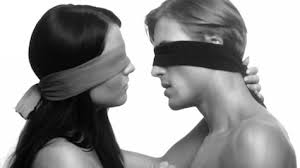
If darkness provides a sanctuary for exploring a rich fantasy life, why not let our characters delve into their secret desires on the page, allowing both the characters and the readers to lose themselves in this fantasy world where the visual fades and other senses take over. Focus on the soft brush of silk sheets, the warmth of a lover's touch, the enticing whiff of cologne or perfume, or the salty taste of a beachside romp.
 The same theme applies to fight scenes. Instead of authors focusing on the visual cues of one combatant hitting another, why not go deeper and explore other senses. The soft crunch of cartilage breaking, the whizz of bullets brushing by, the sting of a blade cutting skin, the agony of being sucker punched.
David Morrell created an unforgettable fight in THE FRATERNITY OF THE STONE, which takes place in complete darkness. If you haven't read this iconic scene, be sure and check it out. David masterfully showcases how to write a compelling fight scene using only the non-visual senses.
As David eloquently shares, "I tell my writing students that a novel should take sight details for granted and emphasize the other senses. That way there’s a multi-dimensional effect. In the 1980s, when I was a literature professor at the Univ. of Iowa, I taught a course called Modern Fiction, which featured novels that made a difference in the 20th century. One of those was E. M. Forster’s A PASSAGE TO INDIA, in which an English woman goes into an absolutely dark cave in India and experiences nothingness. I thought it would be cool to try to create something like that in a thriller, so in THE FRATERNITY OF THE STONE (1985), I had my main character chase someone at night. The chase goes into the basement of a house and then into an absolutely dark room. The task became to write a scene that was many manuscript pages long, in which the main character uses sound, touch, and smell to figure out the dimensions of the room, what it’s used for, and where his enemy is waiting to strike. It was a thrilling experiment. I still get comments about it. The memory of writing it makes me smile."
As David showcased, fight scenes in the dark offers a plethora of unique challenges for our protagonists. Balance is difficult to maintain. Basic furniture in a room becomes a minefield of potential obstacles. Distance becomes very hard to judge. When a shot is fired, our heroes only have an instant to register the muzzle flash and determine how to react. And what happens when the shooter keeps moving after firing the shot? Darkness exponentially ramps up the tension, challenges, and difficulties of a fight.
Taking away our visual cues can empower our other senses. During a study where participants were blindfolded and then played various types of harmonic music, the individuals had greatly enhanced abilities to discern between harmonies.
Let's get our blindfolds out, and start enjoying the richness of the darkness. Our readers will appreciate our efforts to plunge into the black hole.
What makes a sex or fight scene memorable for you?
July 14, 2016
WRITING SEX - AND NOT SEX
S. Lee Manning: Okay, I'll start with the question of sex in thrillers. How to write it? Whether to write it?
Sex is entertaining. It gets attention. It’s pretty much expected in a spy thriller. But exactly how sex is used - how hot, how explicit - is very much a question of the writer’s taste. Some writers cut away at the bedroom door. Others do an in-depth description of every move. I’m somewhere on the continuum between the two extremes, both as a reader and as a writer.
I write sex scenes not only for the intrinsic pleasure but either to further the plot or show something about the characters. In my novel Trojan Horse, the sex scenes between Kolya, my protagonist, and his fiancée, Alex, a smart and tough attorney, do both.
She sat on the side of the bed and leaned over to brush the light blond hair from his forehead. As she did, his arms circled her waist and pulled her down into a kiss, his mouth tasting of vodka. She melded her body against his as his hands untied the sash to her bathrobe.Then she remembered he was leaving again, after only two days in Washington, and that he hadn’t bothered to mention that fact.“I shouldn’t have to find out you’re leaving town from Teo.”“We can fight later.” He moved his hands to her shoulders and slid the robe back, but he had said the wrong thing.“Exactly when shall I schedule you in?” She grasped his wrists to stop the hands from caressing her breasts.
His instinct is to avoid the emotional confrontation, and hers is to not let him get away with it. He eventually gives in, and they have the talk that Alex is demanding. And the reader learns something about both of them and about their relationship - which will be important, not only to their personal development, but to the twists and turns of the plot.
Then they have sex. Fun for them. Fun to write. Not too too detailed, but just enough.
I have no problem writing sex. I have no problem writing violence. If I did, I would be writing in another genre. But then there’s rape. It’s a little more problematic when writing about rape, which is also in my novel, because some people confuse rape with sex. Rape is not sex; it is violence in the guise of sex. And that’s clear in Trojan Horse. When Kolya and Alex are being held prisoner, Kolya is offered a Hobson’s choice by Max, one of his captors.
“Just to show how fair I am, I’m going to let you choose your punishment. Either I break your other leg, or I fuck your woman in front of you. Which do you prefer?”
Kolya immediately chooses to have his leg broken, but the choice is illusory. Max wants not only to punish but to humiliate, and to illustrate his position of power, and to do this he has already decided to rape Alex in front of Kolya, while pretending to offer a choice.
 The rape scene is important to the plot, and important to the character arc, but it wasn’t easy to write. So while as a writer I needed the scene, I didn’t linger. I wrote the scene from Kolya’s point of view, and Kolya closes his eyes, unable to watch. I figuratively closed my eyes with him, because I was no longer writing sex. I was writing sexualized violence - which somehow is harder for me to write than either straight sex or straight violence. I wrote what he hears, and the description is brief.
It’s an interesting question – why do I find it harder? Is it my gender? Is it because rape takes an act that is meant to be intimate and pleasurable for both parties, even if it’s casual, and turns it into a brutal act that violates personal integrity in a much deeper way than a punch or a gunshot? Or is it because rape is still so often not taken seriously - regarded by some as a youthful mistake meriting nothing more than a slap on the wrist - and all too often victims are mocked or blamed for the violence that was perpetrated on them?
I pose the question, but I don’t have the answer.
Sex is entertaining. It gets attention. It’s pretty much expected in a spy thriller. But exactly how sex is used - how hot, how explicit - is very much a question of the writer’s taste. Some writers cut away at the bedroom door. Others do an in-depth description of every move. I’m somewhere on the continuum between the two extremes, both as a reader and as a writer.
I write sex scenes not only for the intrinsic pleasure but either to further the plot or show something about the characters. In my novel Trojan Horse, the sex scenes between Kolya, my protagonist, and his fiancée, Alex, a smart and tough attorney, do both.
She sat on the side of the bed and leaned over to brush the light blond hair from his forehead. As she did, his arms circled her waist and pulled her down into a kiss, his mouth tasting of vodka. She melded her body against his as his hands untied the sash to her bathrobe.Then she remembered he was leaving again, after only two days in Washington, and that he hadn’t bothered to mention that fact.“I shouldn’t have to find out you’re leaving town from Teo.”“We can fight later.” He moved his hands to her shoulders and slid the robe back, but he had said the wrong thing.“Exactly when shall I schedule you in?” She grasped his wrists to stop the hands from caressing her breasts.
His instinct is to avoid the emotional confrontation, and hers is to not let him get away with it. He eventually gives in, and they have the talk that Alex is demanding. And the reader learns something about both of them and about their relationship - which will be important, not only to their personal development, but to the twists and turns of the plot.
Then they have sex. Fun for them. Fun to write. Not too too detailed, but just enough.
I have no problem writing sex. I have no problem writing violence. If I did, I would be writing in another genre. But then there’s rape. It’s a little more problematic when writing about rape, which is also in my novel, because some people confuse rape with sex. Rape is not sex; it is violence in the guise of sex. And that’s clear in Trojan Horse. When Kolya and Alex are being held prisoner, Kolya is offered a Hobson’s choice by Max, one of his captors.
“Just to show how fair I am, I’m going to let you choose your punishment. Either I break your other leg, or I fuck your woman in front of you. Which do you prefer?”
Kolya immediately chooses to have his leg broken, but the choice is illusory. Max wants not only to punish but to humiliate, and to illustrate his position of power, and to do this he has already decided to rape Alex in front of Kolya, while pretending to offer a choice.
 The rape scene is important to the plot, and important to the character arc, but it wasn’t easy to write. So while as a writer I needed the scene, I didn’t linger. I wrote the scene from Kolya’s point of view, and Kolya closes his eyes, unable to watch. I figuratively closed my eyes with him, because I was no longer writing sex. I was writing sexualized violence - which somehow is harder for me to write than either straight sex or straight violence. I wrote what he hears, and the description is brief.
It’s an interesting question – why do I find it harder? Is it my gender? Is it because rape takes an act that is meant to be intimate and pleasurable for both parties, even if it’s casual, and turns it into a brutal act that violates personal integrity in a much deeper way than a punch or a gunshot? Or is it because rape is still so often not taken seriously - regarded by some as a youthful mistake meriting nothing more than a slap on the wrist - and all too often victims are mocked or blamed for the violence that was perpetrated on them?
I pose the question, but I don’t have the answer.