Chris Goff's Blog, page 2
February 6, 2021
ROGUE FLASH – KARNA BODMAN'S THRILLER ON SPECIAL SALE
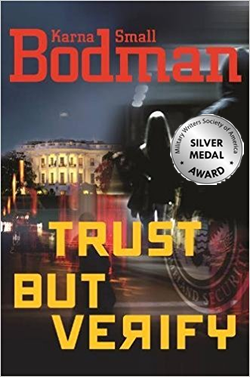
Just in time for a Valentine gift, Rogue Karna Bodman’s latest thriller Trust but Verify just went on sale at Amazon. Both the hardcover and audio versions are available at a special price, though not for long.
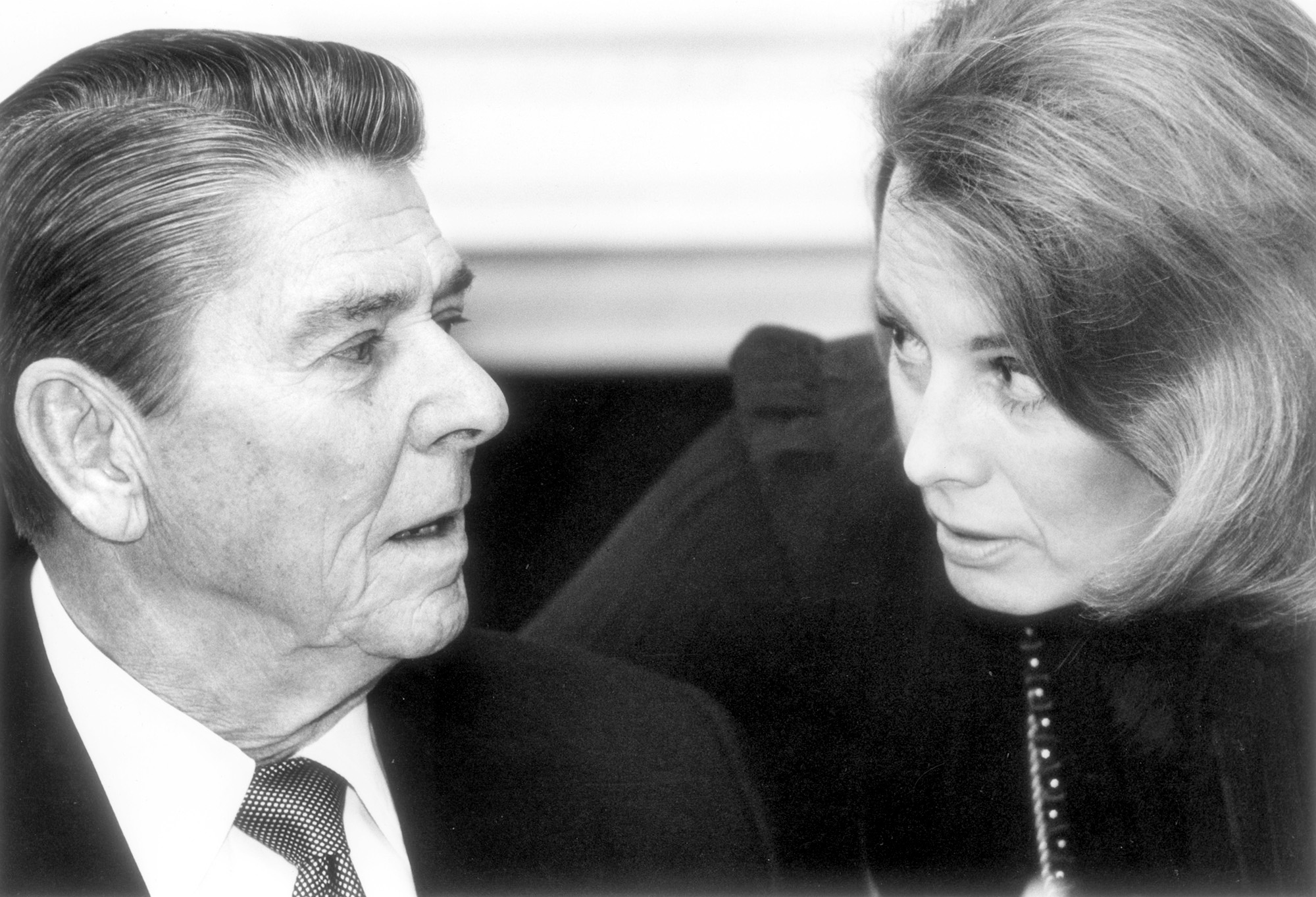
It is especially timely to make this announcement in conjunction with President Ronald Reagan’s birthday, which is February 6, because the author served six years in the Reagan White House,
first as Deputy Press Secretary, later as Senior Director of the National Security Council.
This thriller features a member of the White House staff an
d an FBI Special Agent who race to unravel an explosive plot that threatens the lives of international financial leaders and would sink stock markets worldwide.
New York Times bestselling author, Lee Child, describes it this way: “Bodman’s hard-won insider information and sheer storytelling talent make this a book to remember. This novel was recently awarded a medal by the Military Writers Association of America.
Happy Valentine’s Day from Rogue Women Writers.


February 3, 2021
THE MYSTERY OF VALENTINE'S DAY
Valentine’s Day is next week. Won’t it be nice to take some time to focus on romance rather than simply remaining safe during challenging times. You know why we all must be careful and keep our distance. But do you know why we celebrate love and close companionship on February 14, when Americans are expected to spend over $27 billion on cards, chocolate, roses and other gifts? Is any part of Valentine’s Day’s history authentically romantic?
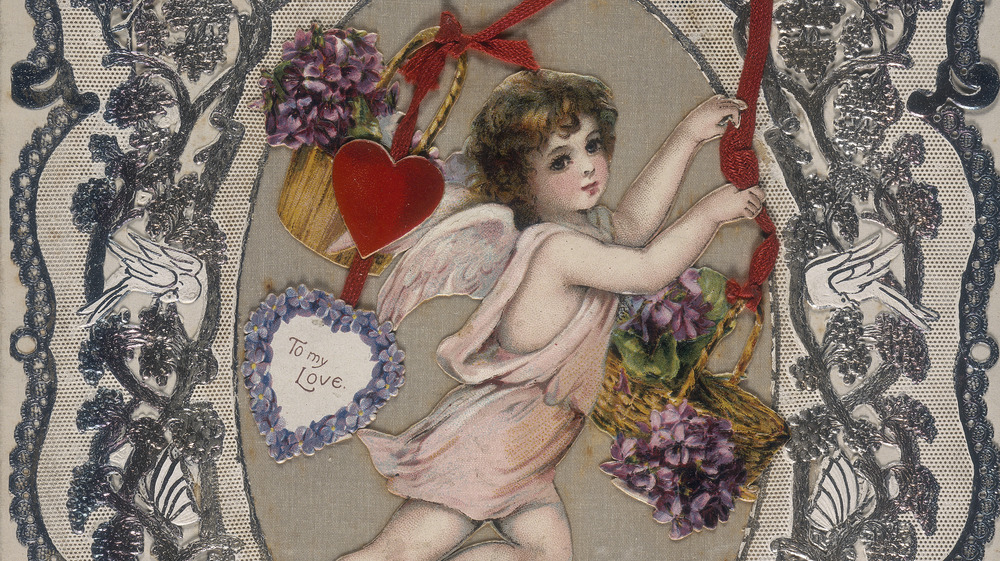
You’ve probably heard that the day has something to do with a patron saint named Valentine, but the actual origins are shrouded in mystery since there are different “martyred saints” with that name. According to one legend, Valentine was a Roman priest living in the third century who secretly married couples after the Emperor Claudius II outlawed marriage because he thought single men made better soldiers.
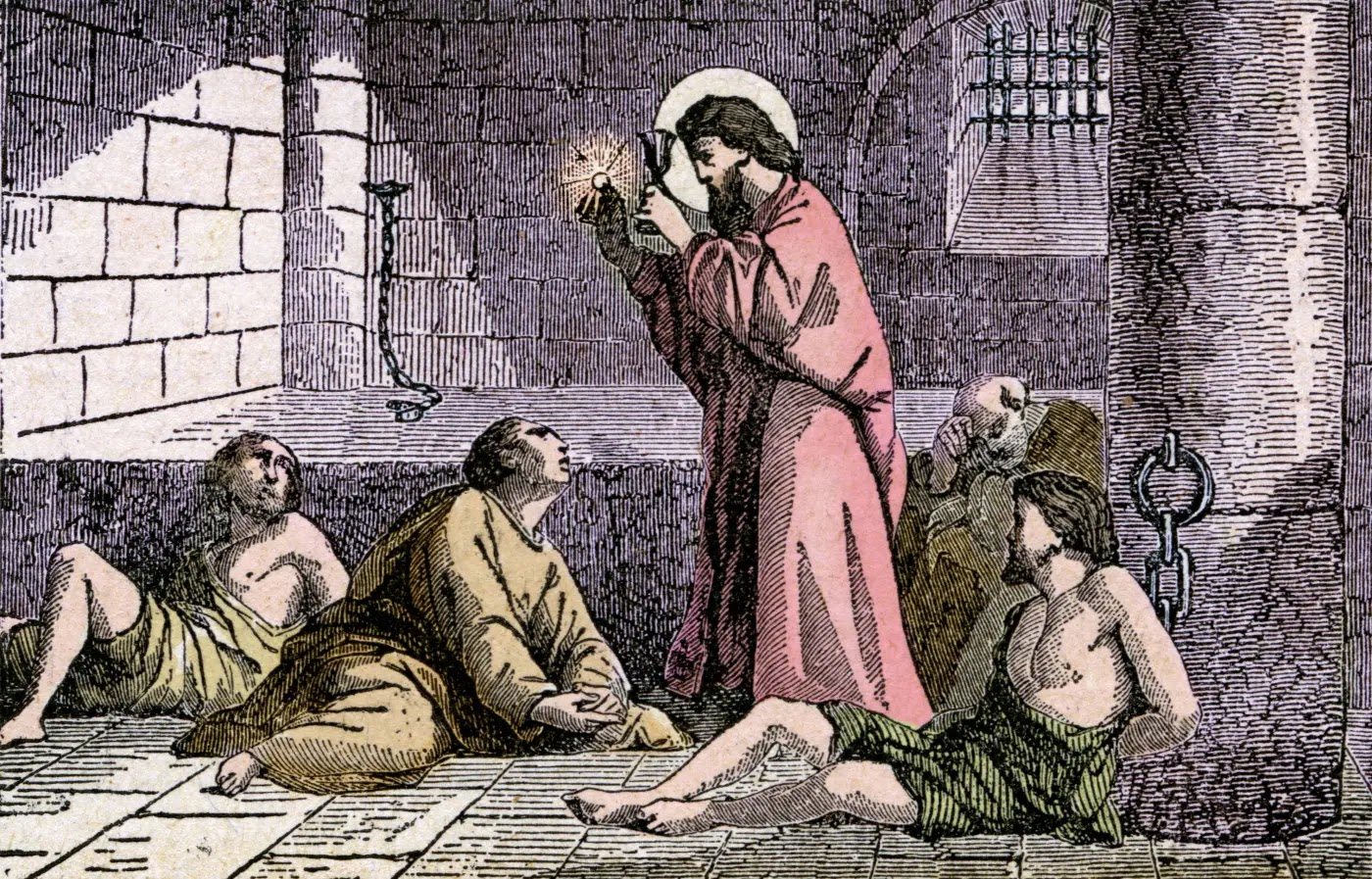
Anther legend focused on a man named Valentine who, while imprisoned, helped Christians escape and sent the first “Valentine” to a woman who visited him while he was there. He reportedly signed it, “From your Valentine.”
What about the date in February? Some believe that it originated in the Middle Ages when birds’ mating season was thought to begin on February 14. The first actual mention of celebrating Valentine’s Day as one that centers on romantic love goes back to Geoffrey Chaucer in 1375 with a line from the poem Parliament of Foules: “For this was sent on Seynt Valentynes’ day/ Whan every foul cometh ther to choose his mate.”
 When it comes to choosing how to celebrate the day with a gift for your own Valentine, you can certainly send a card, but how about choosing a book . . . perhaps one focusing on romance, mystery or a combination of the two? Since we Rogues are women, I thought I’d pull together a short list of novels penned by bestselling women authors that just might fit the bill.
A new series by Tracy Gardner from Hallmark Publishing features both romance and mystery. The first is Out of the Picture. The star of this story is Savanna Shepherd, a former art authenticator who can tell a forgery from the real thing. She’s described as having a talent for spotting secrets hiding in plain sight. One reviewer tells us this is “A story of family, new beginnings and community … that holds you in pleasure, particularly for mystery and romance story lovers. You will be gripped by the story’s irresistible pace…it will not disappoint.”
 The second in this series is Behind the Frame. In this installment, Savanna is convinced that the arrested murder suspect did not commit the crime, and with the help of a doctor, who is her new romantic interest, they uncover hidden resentments and intrigue. This novel also gets rave reviews with readers saying it is, “Everything I love in a cozy mystery: an appealing location, an intriguing mystery to solve, plenty of suspects to consider, and a wonderful group of likable characters.”
 If you think your Valentine might like to read more focused mysteries (vs. the “Hallmark variety”) here are two brand new releases that immediately hit the bestseller lists. We have written about author Marie Benedict before when her terrific novels, The Only Woman in the Room, about the inventions of actress Hedy Lamarr, and Carnegie’s Maid, about a servant who may have inspired Andrew Carnegie.
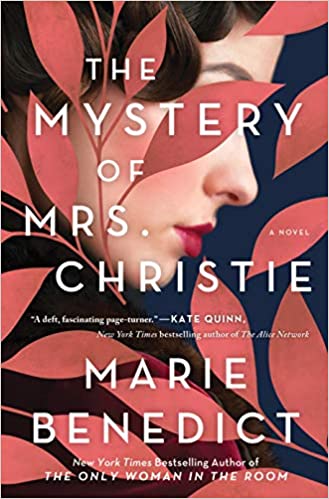
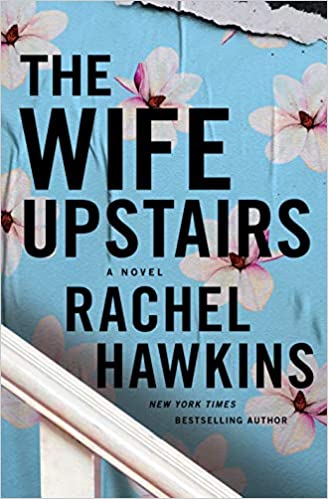
Now Marie has penned The Mystery of Mrs. Christie. This novel takes place in 1926 when famous author, Agatha Christie disappeared for a mysterious 11 days, one of the most notorious events in literary history. What happened to her when her empty car was found on the edge of a deep pond, the only clues being tire tracks and a fur coat left in the car which was strange for such a frigid night? What is real and what is mystery? Read the book and decide for yourself.A final recommendation is a book released just last month, The Wife Upstairs by Rachel Hawkins. This too was an Instant New York Times and USA Today bestseller. CNN called it “One of the most anticipated books of 2021.” It’s described as being “A delicious twist on the Gothic classic, Jane Eyre that pairs Southern charm with atmospheric suspense.” It’s also called “A delicious thriller with a fresh, sharp twist that you’ll likely want to read in a single sitting.”
Of course, I would also recommend books written by my Rogue colleagues that are listed on the left of this page. These thrillers appeal to both men and women. If you haven’t sampled their story telling skills, you might want to order one of their books as a gift on February 14.
What are YOU going to give your own special Valentine next week? Leave a comment – we’d love to know. And thanks for visiting us here on Rogue Women Writers.
February 1, 2021
ROGUE WOMEN JANUARY ROUNDUP!
Here's what we Rogues talked about, researched, and revealed in January...Most people make resolutions at New Year's, but Rogue Jenny Milchman goes all out and makes resolutions for every month of the year.
ZJ Czupor takes a hard look at Mario Puzo in "He Did It For the Money," a tale of how the Godfather came to be.
Ever wonder if a writer's background made them the writer they are? Chris Goff spills the beans in Shoutout Colorado. Chris Goff tackles the pandemic with the idea for a new book: The Spy Who Worked From Home.
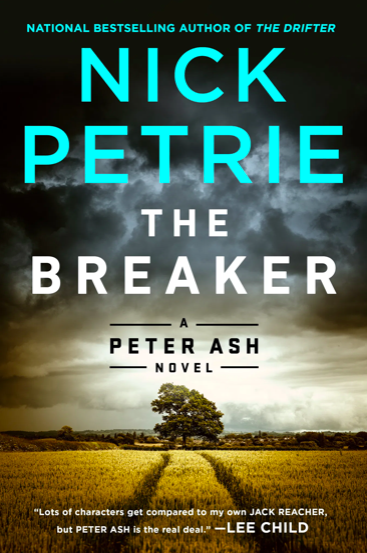
His first novel won the ITW Thriller and Barry Awards and was nominated for Edgar®, Anthony and Hammett Awards. And his sixth book, The Breaker, is just coming out. Nick Petrie shares with the Rogues just how hard writing can be.
Plenty of authors write really good action sequences, but few have ever really lived that life. Not true for this months The Real Book Spy's Rogue Recommendation, Brad Thor. Check out his new thriller: American Traitor.
Carla Neggers told us how to create a writing space that 'sparks joy'.
January 29, 2021
ORGANIZING A CREATIVE WORKSPACE THAT "SPARKS JOY"
With all the oh-so-tempting sales on all things that help us get organized, I’m not surprised to discover the National Association of Professional Organizers has designated January as “get organized month.” Everything has a place, everything in its place, right?
Marie Kondo, who’s taught and inspired millions to tidy up, has launched a new collection with The Container Store. It offers bins, boxes and canisters in a variety of sizes for…well, everything. It looks fantastic. I’m measuring drawers and shelves and making a list!
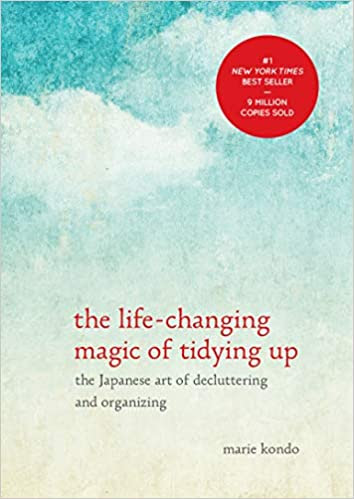 The Life-changing Magic of Tidying Up
is comprehensive in its approach but it offers great ideas to help create a tidy, inspiring writing space. Her approach is rooted in keeping only items that “spark joy,” an essential concept that resonates with so many of us.
The Life-changing Magic of Tidying Up
is comprehensive in its approach but it offers great ideas to help create a tidy, inspiring writing space. Her approach is rooted in keeping only items that “spark joy,” an essential concept that resonates with so many of us.Now, some writers I know like their “clutter.” They work best with everything out, visible. They’re surrounded by books, magazines, reference materials, printouts of research, drafts of their work-in-progress, bills to pay—nothing gets lost in a drawer, as one friend puts it. And why not? If it works, it works.
I love books, paper, pens and all sorts of office supplies and resources, but I tend not to have a lot of stuff out when I’m writing. Just what I need at that moment. It’s not a sterile space. I wouldn’t want that, either. On my desk are two pen-and-pencil holders my daughter made in pottery class when she was in third grade. They might not be the most practical options but they’re sturdy and they definitely “spark joy.”
 For me, art is part of creating an organized writing space. I’ve never framed any of my book covers. I’m proud of my work but I don’t want it up on my walls. I have an original painting by Irish artist Maureen O’Shea that makes me smile; it brings back warm memories of when I fell in love with it at Cleo’s in Kenmare, Ireland.
Like many avid readers I know, I didn’t follow Marie Kondo’s advice on getting rid of all my unread books. I’ve read some of them since the start of the pandemic. Others…I can see she has a point. No books, though, in my workspace. I have non-fiction books in an adjoining room. I’ll sit with a cup of tea and thumb through books on Ireland, Maine, stone masonry, art history. Lots of books. My husband and I keep our library of novels in a different place altogether. (I just finished Lisa Black’s Every Kind of Wicked and loved it!)
I’m not always tidy by any stretch. When I’m finishing a manuscript, I’ve been known to toss printouts of drafts on the floor and then dig around for a cast-off scene. And there was that time with the mice. Best not go there.
What about you? Are you getting anything organized this month? What items in your workspace “spark joy” for you?
January 23, 2021
ROGUE FLASH: A Chance to Zoom with Liv Constantine
Pre-order The Wife Stalker and email your receipt to livconstantine2@gmail.com for a chance to win a giveaway of books AND join a Zoom party with best-selling writing team Liv Constantine!
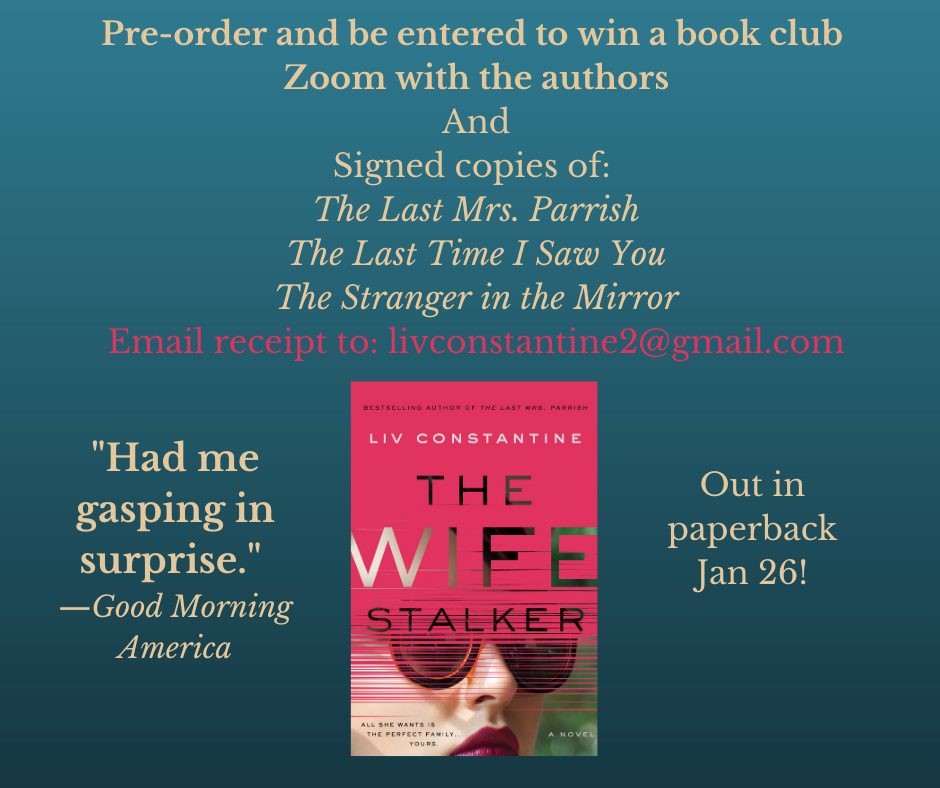
“Compelling and surprising, THE WIFE STALKER is a fast-paced page-turner, full of unexpected twists and an ending I did not see coming. Impossible to put down!” - Megan Miranda, New York Times bestselling author of ALL THE MISSING GIRLS and THE PERFECT STRANGER
After watching the trailer, we can't wait to binge-read The Wife Stalker!
January 22, 2021
THE REAL BOOK SPY'S JANUARY 2021 RECOMMENDATION IS...
 Plenty of authors write really good action sequences.
But few have ever really lived that life.
Brad Taylor, author of the New York Times bestselling Pike Logan series, is one of the few writers who’s actually experienced the kind of hard-hitting action he writes about. A 21-year veteran of the U.S. Army Infantry and Special Forces, including eight years with the 1st Special Forces Operational Detachment – Delta, Taylor knows a thing or two about combat, and that been-there-done-that authenticity bleeds through on every single page.
 In his latest blockbuster thriller,
American Traitor
, Pike Logan—who is the leader of the Taskforce, an elite, off-the-books counterterrorism unit—and his significant other, Jennifer Cahill (also a member of the Taskforce), head to Australia for what is supposed to be a relaxing getaway. Instead, things go sideways almost immediately when they discover that their host, former colleague Clifford “Dunkin” Delmonty, is on the run from a team of Chinese hitmen.
In his latest blockbuster thriller,
American Traitor
, Pike Logan—who is the leader of the Taskforce, an elite, off-the-books counterterrorism unit—and his significant other, Jennifer Cahill (also a member of the Taskforce), head to Australia for what is supposed to be a relaxing getaway. Instead, things go sideways almost immediately when they discover that their host, former colleague Clifford “Dunkin” Delmonty, is on the run from a team of Chinese hitmen. Dunkin, it turns out, stumbled upon something he shouldn’t have, and as Pike and Jennifer piece the clues together, a larger conspiracy emerges . . . one so big that it could very well lead to a war between China and Taiwan unless the Taskforce can expose the truth and stop the bad guys before it’s too late.
In typical Brad Taylor fashion, American Traitor feels ripped straight from the headlines. Without giving anything away, few writers have their finger on the pulse of the geopolitical world the way Taylor does, making his stories feel at times a bit too close for comfort. While much of the genre is still focused on Russia, North Korea, and/or Middle Eastern terrorism, Taylor’s take on what China may or may not be up too is rather refreshing, albeit a bit terrifying.

As for Pike Logan, well, he reached must-read status years ago. If you’re a fan of Vince Fynn, Brad Thor, Tom Clancy, or Mark Greaney—you will love Taylor’s work. Personally, I’ve always appreciated his diverse cast of characters, which has always featured a mix of strong, kickass women. It’s not uncommon these days to see authors try to include more women into their stories, but Taylor was doing it long before anyone else, and frankly, he just plain does it better. Pike is the star, sure, but Jennifer is every bit as important to this series, and you can expect her to steal plenty of scenes in this one.
Thank you to The Real Book Spy! We love action-packed plots and kickass female characters so American Traitor is sure to be a Rogue favorite!
January 20, 2021
NICK PETRIE GOES ROGUE
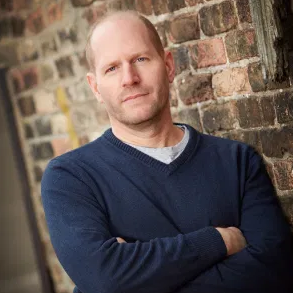 Nick Petrie received his MFA in fiction from the University of Washington and won a Hopwood Award for short fiction while an undergraduate at the University of Michigan. His story “At the Laundromat” won the 2006 Short Story Contest in The Seattle Review, a national literary journal.
His first novel, THE DRIFTER, won the ITW Thriller and Barry Awards, and was nominated for Edgar®, Anthony, and Hammett Awards. He won the 2016 Literary Award from the Wisconsin Library Association and was named one of Apple’s 10 Writers to Read in 2017. Light It Up was named the Best Thriller of 2018 by Apple Books and has been nominated for a Barry Award.
by Nick Petrie
The last time I spoke with K.J. Howe, just before the Night of a Thousand Authors, she surprised me with a question: As a writer, what are you proudest of?
I’ve done a lot of interviews in the last six years, and nobody has ever asked that question before. I wasn’t terribly proud of my answer, that’s for sure. I said something about how I was proud that I could write a book a year – although even as I said it, I knew it wasn’t coming out right.
I have wanted to be a writer since high school. I spent more than twenty-five years learning how to tell stories, accumulating three unpublished novels and countless short stories along the way. All this while running a small business, having a family, trying to have a life.
 Then Putnam agreed to publish The Drifter, and asked for another book in a year’s time. My upcoming novel, The Breaker, will be my sixth published novel. And two years ago, I shuttered my business, so I can write full time. Which is another challenge entirely.
Writing is hard work. It’s fun, for sure, but it’s also difficult, especially when your writing life, which, for me, was a precious unpaid preoccupation for twenty-five years, becomes the thing that pays your mortgage. You spend eight hours a day, for months at a time, alone in a small dark room staring at a screen and trying to be creative, goddamnit.
I was a carpenter and home renovation contractor for fifteen years, so I don’t want to equate the challenges of skilled physical labor, with all the attendant risk to life and limb, to sitting at my desk and typing. Compared to working three stories up on a steep-pitched Victorian, teetering on narrow planks as we tear off four ancient layers of shingles with pitchforks and lay down a new roof during the hot, humid heights of August? Sitting at my desk and typing is a breeze.
But writing isn’t typing. Writing, for me, is about digging deep into myself to find the hearts of my characters and to put their emotions – which are my emotions, because all my characters come from someplace inside of me – on the page for all to see. Which means that writing entails a different kind of risk than demolishing a building or raising a roof, but it is risk nonetheless. The risk of exposing my own flawed heart to the world.
Another challenge to the work involves the fact that it’s really hard to know how well you’re doing, from paragraph to paragraph, scene to scene, chapter to chapter. Do the words do what I want them to do? Does the reader feel the emotion I’m trying to convey? Does the action telegraph in a way that makes it vivid? Is the whole thing just a cliché already done better by someone else?
It takes me the better part of a year to write a novel, and most of that time is also spent trying to stay afloat in the quicksand of my own self-doubt.
 For many years, maybe because I wrote mostly in isolation, I thought that I was the only person who felt this way. Since my first novel was published, I’ve spoken to many, many accomplished writers who have spent decades navigating their own confidence quicksand. It’s become clear to me that, in order to succeed in creative life, even in the smallest way, you need enormous reserves of energy and resilience and optimism in the face of great opposition. It’s no wonder that the writers I know tend to be pretty amazing people.
 So, back to Kim Howe’s original question. What I’m proudest of, to be utterly honest, is that I manage to keep writing, despite everything. Despite my own self-doubts, despite a quarter-century of failures and near-misses, despite the uncertainties of how my agent and editor and readers will receive what I’ve written. Even now that I’m an award-winning, bestselling author – I still feel those doubts, and I still write every day anyway.
Here’s why.
In the late 90’s, I went to a talk by Seamus Heaney, Irish poet and Nobel laureate. Someone in the audience asked him: What’s the hardest thing about writing poetry? He gave her a gentle smile and said, “Getting started, keeping going, and getting started again.”
Implicit in Heaney’s tiny impromptu poem, of course, is the recurrence of failure, and the power of perseverance.
I can’t tell you how much that sly comment has meant to this writer over the decades.
Thank you, Nick! We can't wait to read THE BREAKER.
January 15, 2021
THE SPY WHO WORKED FROM HOME: OR NOT!
 So, I joked about writing The Spy Who Worked from Home, but to be honest I saw a lot of potential there. Except, it turns out, it's hard to spy from home. Spying is all about intelligence gathering, and in today's world with all the secure buildings and heavily defended cyber connections, its hard to gather much useful intel on a laptop in your pjs.
 What happened when Covid 19 struck?
Some agencies, such as the NSA, stuck with their "strictly forbidden to work from home" policies, and tried creating classified office space. They designated work hours, set up shifts for various teams and contractors, and disinfected the office space during shift change.
Other spies tried working from home. Not a problem when working unclassified elements. A big problem for classified work. And, as the intelligence communities are known for over-classifying information, it soon became clear some things needed to be declassified. It may turn out that there will be less material deemed classified that spies want to get their hands on, and more clues out there to what material is classified.
Keeping tabs on the workforce!
 Spies also faced problems similar to the problems the regular workforce experienced. With everyone working at home these days, a lot of employers want ways to keep better tabs on their employees. Work surveillance isn't new, but digital advances during the pandemic have taken it to new heights. It's almost like the boss is standing over you. Cyber apps let your boss know exactly what you're up to, what apps you are using most, what digital devices, and even what keystrokes you're making. One cyber surveillance company reported seeing a 16% increase in orders, and a 40% increase from current customers asking for more licenses.
 Just what everyone wants, their spy boss looking over their shoulder, recommending ways to be more productive working from home. What ever happened to the silent agreement that I'm doing my work and you're getting results?
So, are there spies doing real spy work from home?
Yes! Take the two Chinese engineers indicted for "researching vulnerabilities in networks of biotech and other firms publicly known for work on Covid-19 vaccines, treatments, and testing technology." They targeted firms in multiple countries: Australia, Belgium, Germany, Japan, Lithuania, the Netherlands, Spain, Sweden and the UK. They targeted AI companies, defense contractors and a solar energy company. They stole hundreds of millions of dollars in trade secrets. Working for themselves they attempted blackmail, and other times stole information of obvious interest to the Chinese government. In July, FBI Director Christopher Wray accused China of a "whole-of-state effort to become the world's only superpower by any means necessary," and said. "The FBI is now opening a new China-related counterintelligence case ever 10 hours." In fact, nearly half of the 5,000 active counterintelligence case currently under way across the country are related to China.
And the UK claimed that hackers targeting organizations trying to stop a coronavirus vaccine in the UK, US and Canada "almost certainly" operated as "part of Russian intelligence services."
How are they doing this?
The theory is the Russians hackers used malware (specifically WellMess and WellMail) to download files from machines. The malware was planted through "spear-phishing" campaigns, targeting individuals who unknowingly—or rather unwittingly—gave up passwords and access codes.
The UK's National Cyber Security Center (NCSC) calls out a hacking group called APT29, also known as The Dukes or Cozy Bear. NCSC says it's more than 95% certain the group is part of the Russian intelligence services. Cozy Bear was first identified as being a significant "threat actor" in 2014 by Crowdstrike, an American cyber-security firm.
With a name like Cozy Bear, do you have any doubt these guys are working from home, on laptops in their pjs? Me, either!

So where does that leave me?
Clearly The Spy Who Worked From Home is not a book I'm destined to write. There is a lot I know. There is a lot I can research. (My friend Lee Goldberg convinced me of that in his latest write up in CrimeReads.) And I may be technically saavy, but not at the hacking level. Which leaves me to take Lee's advice and finish researching my latest work-in-progress. Working title: Operation Gentoo.
What are your theories of what will happen with the traditional spy genre? What changes to you see coming?
January 14, 2021
ROGUE FLASH - Chris Goff is featured in Shoutout Colorado!
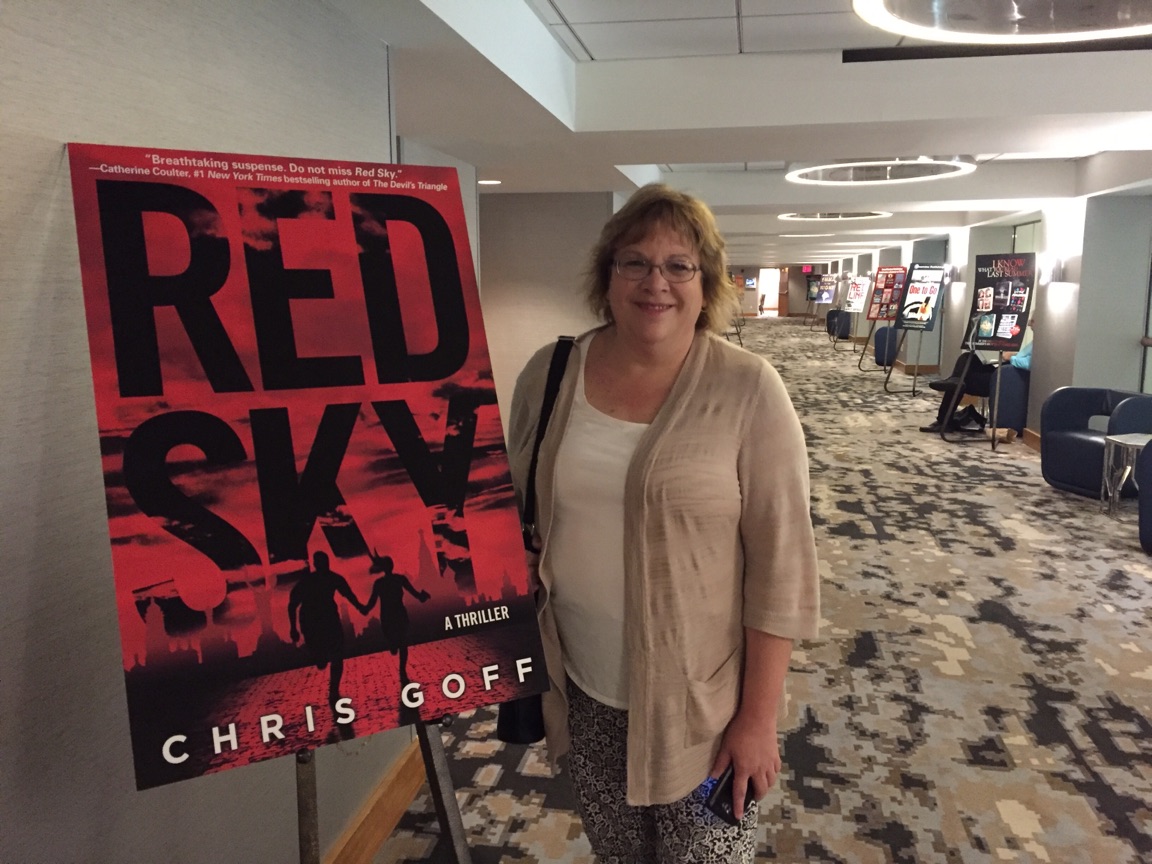 Shoutout Colorado is an online publication designed to spark meaningful conversations. They like hearing from small business owners, mom-and-pops, and independent artists. It’s all about bringing attention to the entrepreneurs and creatives who live in the community. Shoutout Colorado reached out to Chris and asked her to tell them how her background shaped who she is today. Her answers give you an insight into who she is and what makes her tick. Check it out here. Be sure to leave a comment, and become part of the conversation!
January 12, 2021
MYSTERY MINUTE GOES ROGUE
 He Did it For the Money
In 1920, he was born to poor, illiterate Italian immigrants in the Hell’s Kitchen neighborhood of New York City. At the age of 12, he dropped out of school to get a job after his father deserted the family. He worked as a railroad switchboard attendant to help put food on his family's table. Later, he graduated from City College of New York and joined the US Army Air Force in WWII. Because of his poor eyesight, he was stationed in Germany and India as a public relations officer. After the war, he returned to New York and attended the New School for Social Research and Columbia University.
His first published work was a short story, “The Last Christmas,” which appeared in American Vanguard (1950) and at the age of 28, he wrote his first novel, The Dark Arena (1955), which received fine reviews but only earned him $3,500. Ten years later, his second novel, The Fortunate Pilgrim, got similar reviews, but only earned him $3,000. The New York Times called the latter novel a "small classic."
Still in need of money, he found work writing and editing for a line of pulp magazines like Male, True Action and Swank,where he wrote adventure stories based on real events, such as WWII battles.
 In the late 1960s, Mario Puzo (1920-1999) was married with five kids and living in Long Island. He was virtually broke. His eldest child, Tony, said, "His father liked to do things first-class even though we only had fifth-class money. He ran up a lot of debt.”
Puzo's editor told him his last novel, The Fortunate Pilgrim, might have done better if it had more Mafia in it but he ignored the advice for he did not want to write about organized crime. He wrote two more undistinguished novels before he decided to put his highbrow literary goals aside and set out to write a novel with commercial appeal.
"I was 45 years old and tired of being an artist…It was really time to grow up and sell out as Lenny Bruce* once advised," Puzo wrote in his memoir.
So Puzo wrote a ten-page outline for a novel based entirely on research. He called it The Godfather; a fictional account of the Corleone crime family whose son Michael takes the reins after his father is murdered. But his publisher passed.
Later, a friend arranged a meeting at G.P. Putnam’s Sons, where Mario regaled the editors for an hour with Mafia tales. They gave him the green light and a $5,000 advance.
The advance was a strong motivation—an offer he couldn't refuse—so he set out to turn his outline into a novel. In 1965, he retreated to his basement nook, a broom-closet-like space that had enough room for a desk, typewriter, and little more. While he wrote away, his five children would often go downstairs and play loud games. Tony said his father would say, “Keep it down. I’m writing a best-seller.”
 While he worked on The Godfather, Puzo was also writing three stories a month for Magazine Management, along with book reviews for The New York Times, Book World, Time magazine, and a children's book The Runaway Summer of Davie Shaw (Platt & Munk, 1966). Puzo said, "I must have knocked out millions of words. I tell ya, it's absolutely the best training a writer could get, to work on those magazines. You did everything."
He finally finished the novel three years later, in 1968, because he needed the final installment of his $5,000 advance to pay for his family’s planned vacation to Europe. Even after he turned the novel into his publisher, he was not happy with the finished manuscript and thought he would do one more rewrite when he returned to America.
But he was in deep debt. Writing in his memoir, The Godfather Papers and Other Obsessions, he admitted owing $20,000 to relatives, finance companies, banks and assorted bookmakers and shylocks. The Europe vacation would cost him more money than he had. His wife did not know that when they came home Puzo planned to sell the house.
Upon his return, he had lunch at the Algonquin Hotel with his editor Bill Targ and was stunned to learn that the publisher sold the paperback rights for $410,000 to Fawcett Publishing before it was released in hardback. Back then, the record for paperback rights was $10,000. Today, that $410,000 would equal more than $3 million. Puzo said he didn’t dare rewrite his manuscript, figuring his publisher wouldn’t like it and would take the money back.
Published in 1969, The Godfather became a phenomenal success and remained on the New York Times Best Seller list for sixty-seven weeks, sold more than 20 million copies, and is still in print. Puzo then collaborated with director Francis Ford Coppola on the three screenplays that make up The Godfather film trilogy. The first two movies won nine Academy Awards, including best picture and best adapted screenplay for Puzo. The films catapulted The Godfather into a worldwide phenomenon.
The novel and films had a huge cultural impact in that this was the first time Italian Americans were depicted as three-dimensional characters and not just cardboard foreigners who spoke in heavy accents. Even mob figures of the era liked the film and said it was “on the money.”
Mario Puzo was never affiliated with the Mafia. Incidentally, the word “Mafia,” never appears in the film script. He said, “I never met a real, honest-to-god gangster. I knew the gambling world pretty good, but that’s all.”
Following on that success, Puzo wrote screenplays for the first two Superman films (1978, 1980) and an uncredited version of The Cotton Club (1984).
On his nationally syndicated television show on CNN, Larry King Live, King asked Puzo, "Why do we like the family Mafia theme so much?" Puzo answered, “Well, because it’s wishful thinking. I think everybody would like to have somebody that they could go to for justice, without going through the law courts and the lawyers.”
He added, “The Godfather was really, to me, a family novel, more than a crime novel.”
Despite the novel's success, Puzo still considered The Fortunate Pilgrim his best work. In his memoir, he wrote, "The book (The Godfather) got much better reviews than I expected. I wished like hell I'd written it better."
Mario Puzo wrote eleven novels: The Dark Arena (1955), The Fortunate Pilgrim (1965), The Runaway Summer of Davie Shaw (1966), Six Graves to Munich (as Mario Cleri, 1967), The Godfather, (1969), Fools Die (1978), The Sicilian (1984), The Fourth K (1990) and The Last Don (1996). His last two novels, Omerta (2000) and The Family (2001) were published posthumously. He also wrote three non-fiction books and ten short stories.
He continued to live in the same house in Bay Shore, Long Island, the one he almost had to sell. But he did remodel it and doubled it in size.
Puzo was born poor and never felt like he had enough money. When he died of heart failure in 1999, at the age of 78, his net worth was around $20 million.
###
*Leonard Alfred Schneider (1925-1966), better known as Lenny Bruce, was a stand-up counterculture comedian, satirist, and social critic.
Some of Mario Puzo’s most famous lines are:
· “I’m going to make him an offer he can’t refuse.”
· “Never hate your enemies. It affects your judgment.”
· “A lawyer with his briefcase can steal more than a hundred men with guns.”
· “The strength of a family, like the strength of an army, lies in its loyalty to each other.”
· “What is past is past, never go back. Not for excuses. Not for justification, not for happiness. You are what you are, the world is what it is.”
· “Behind every successful fortune; there is crime.” (based on Honoré de Balzac: "Behind every great fortune there is a crime.")
· "Never let a domestic quarrel ruin a day's writing. If you can't start the next day fresh, get rid of your wife."
· "Moodiness is really concentration. Accept it because concentration is the key to writing."
· “Actions defined a man; words were a fart in the wind.”
· “Italians have a little joke, that the world is so hard a man must have two fathers to look after him, and that’s why they have godfathers.”
Thank you, Z.J. Czupor for bringing the genius behind The Godfather back to life! Readers, do you have a favorite tale written by or about Mario Puzo?