Chris Goff's Blog, page 66
June 25, 2016
THINK YOU’D MAKE A GOOD SPY? TAKE THIS QUIZ TO FIND OUT. (SPY-Q Part 2)
What kind of spy would you be?Are you ruthless? Trustworthy? Cool-headed? Take the quiz to find out if you've got what it takes, then read about a few of my favorite spies.by Sonja Stone
So by now everyone who's ever spoken to me knows: I want to be a spy. I have spy-envy.
Case in point: Over a decade ago, I proposed a secret-agent-themed birthday party to my oldest child.
 ME: It’ll be so much fun! We could play spies!
THING 1: (claps hands) Yeah! OR *eight-year-old-squeal* WHAT ABOUT A MERMAID PARTY?!
ME: (nods, pretending to consider) Sure, sure. We could do mermaids. Or, what about this: we could do spies!
THING 2: Will there be cake?
ME: Secret agent cake!
THING 1: I think I like mermaids better.
ME: (still nodding) Yeah, mermaids are awesome, no doubt about it. But you know what's even more awesome? It starts with 'S' and ends with... No? No guesses?
Being an indulgent mother, I allowed my daughter to dash any hopes of vicariously reliving my childhood. She got to choose her own theme (mermaids).
And to this day, I’m still trying to play spies.
Is it any wonder, then, that some of my favorite spies embody characteristics that I also have?
(Yes, I know. I have a remarkably rich fantasy life. Let the comparisons begin.)
SPY: Julia Child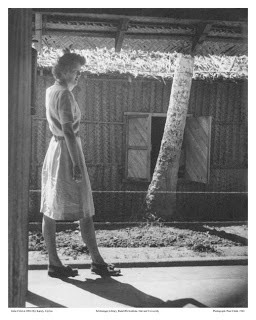 Julia Child in Ceylon
WHY SHE’S A FAVORITE: During World War II, Julia Child—too tall to join the military—served in the OSS (the predecessor to the CIA). While stationed abroad, her culinary palate developed. She attended Le Cordon Bleu (like me), then became a writer (also like me). In the 1970s, Julia made French cooking accessible to the American audience through her show, The French Chef, on PBS (My parents didn't believe in cable; I grew up on PBS. Yeah, I'm that girl.).
SHE SAYS: “In my generation, except for a few people who'd gone into banking or nursing or something like that, middle-class women didn't have careers. You were to marry and have children and be a nice mother. You didn't go out and do anything. I found that I got restless.”
SHE ALSO SAYS: “A party without cake is just a meeting.”
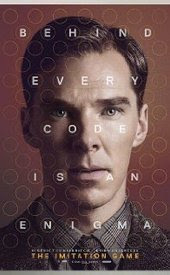 Benedict Cumberbatch as Alan Turing
SPY: Alan Turing
WHY HE’S A FAVORITE: Besides the obvious of cracking The Enigma Code to help win the war, Turing was an introvert (guilty as charged), a bad student (yours truly), and a “scruffy” dresser (I live in yoga pants and tee-shirts. Seriously.). When Turing was arrested for indecency (because in the 50s, being gay was a crime), rather than deny the charges, he logically and unapologetically stated that homosexuality shouldn’t be against the law. Quite the forward thinker.
HE SAYS: “Mathematical reasoning may be regarded rather schematically as the exercise of a combination of two facilities, which we may call intuition and ingenuity.”
SPIES: Antonio and Jonna Mendez
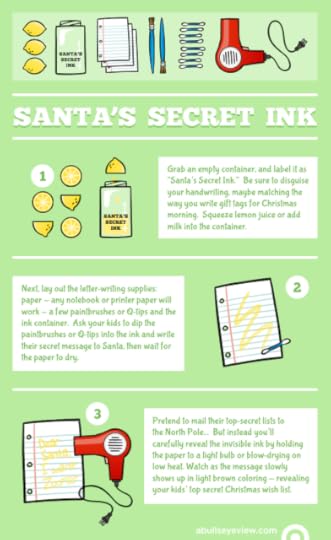 Jonna Mendez's Invisible InkWHY THEY’RE FAVORITES: While Antonio is best known as the agent behind the hit movie Argo, I fell for him while reading his fascinating account of life during the Cold War, The Master of Disguise: My Secret Life in the CIA. His wife Jonna, formerly “chief of disguise” of the CIA, put her spy skills to work as a civilian. A few years ago, Jonna was tapped by Target to serve as the holiday Kids’ Gift Detective. She wrote a series of articles for parents, including hiding holiday gifts using crypsis (camouflage), writing a letter to Santa with home-made invisible ink, and using covert-ops to discover what the kiddies really want this year. I’m a sucker for a stealth mom.
ANTONIO SAYS: “The trick is that you have to believe the lie and believe it so much that the lie becomes the truth.”
JONNA SAYS: “You’ve got to think about how to outsmart them. It’s part of the fun.” - The Washington Post
Still, if I could live the life of any spy, I'd stick with the fictional characters. Jason Bourne. Sydney Bristow. Ziva David. How about you--if you could be any spy, real or imagined, who would you choose?
photo credits: Julia Child: http://lavidalanka.blogspot.com/2010/08/julia-child-and-sri-lanka.htmlBenedict Cumberbatch: http://www.imdb.com/title/tt2084970/mediaviewer/rm3761619968 Infographic: Infographic-REVISED.png
So by now everyone who's ever spoken to me knows: I want to be a spy. I have spy-envy.
Case in point: Over a decade ago, I proposed a secret-agent-themed birthday party to my oldest child.
 ME: It’ll be so much fun! We could play spies!
THING 1: (claps hands) Yeah! OR *eight-year-old-squeal* WHAT ABOUT A MERMAID PARTY?!
ME: (nods, pretending to consider) Sure, sure. We could do mermaids. Or, what about this: we could do spies!
THING 2: Will there be cake?
ME: Secret agent cake!
THING 1: I think I like mermaids better.
ME: (still nodding) Yeah, mermaids are awesome, no doubt about it. But you know what's even more awesome? It starts with 'S' and ends with... No? No guesses?
Being an indulgent mother, I allowed my daughter to dash any hopes of vicariously reliving my childhood. She got to choose her own theme (mermaids).
And to this day, I’m still trying to play spies.
Is it any wonder, then, that some of my favorite spies embody characteristics that I also have?
(Yes, I know. I have a remarkably rich fantasy life. Let the comparisons begin.)
SPY: Julia Child
 Julia Child in Ceylon
WHY SHE’S A FAVORITE: During World War II, Julia Child—too tall to join the military—served in the OSS (the predecessor to the CIA). While stationed abroad, her culinary palate developed. She attended Le Cordon Bleu (like me), then became a writer (also like me). In the 1970s, Julia made French cooking accessible to the American audience through her show, The French Chef, on PBS (My parents didn't believe in cable; I grew up on PBS. Yeah, I'm that girl.).
SHE SAYS: “In my generation, except for a few people who'd gone into banking or nursing or something like that, middle-class women didn't have careers. You were to marry and have children and be a nice mother. You didn't go out and do anything. I found that I got restless.”
SHE ALSO SAYS: “A party without cake is just a meeting.”
 Benedict Cumberbatch as Alan Turing
SPY: Alan Turing
WHY HE’S A FAVORITE: Besides the obvious of cracking The Enigma Code to help win the war, Turing was an introvert (guilty as charged), a bad student (yours truly), and a “scruffy” dresser (I live in yoga pants and tee-shirts. Seriously.). When Turing was arrested for indecency (because in the 50s, being gay was a crime), rather than deny the charges, he logically and unapologetically stated that homosexuality shouldn’t be against the law. Quite the forward thinker.
HE SAYS: “Mathematical reasoning may be regarded rather schematically as the exercise of a combination of two facilities, which we may call intuition and ingenuity.”
SPIES: Antonio and Jonna Mendez
 Jonna Mendez's Invisible InkWHY THEY’RE FAVORITES: While Antonio is best known as the agent behind the hit movie Argo, I fell for him while reading his fascinating account of life during the Cold War, The Master of Disguise: My Secret Life in the CIA. His wife Jonna, formerly “chief of disguise” of the CIA, put her spy skills to work as a civilian. A few years ago, Jonna was tapped by Target to serve as the holiday Kids’ Gift Detective. She wrote a series of articles for parents, including hiding holiday gifts using crypsis (camouflage), writing a letter to Santa with home-made invisible ink, and using covert-ops to discover what the kiddies really want this year. I’m a sucker for a stealth mom.
ANTONIO SAYS: “The trick is that you have to believe the lie and believe it so much that the lie becomes the truth.”
JONNA SAYS: “You’ve got to think about how to outsmart them. It’s part of the fun.” - The Washington Post
Still, if I could live the life of any spy, I'd stick with the fictional characters. Jason Bourne. Sydney Bristow. Ziva David. How about you--if you could be any spy, real or imagined, who would you choose?
photo credits: Julia Child: http://lavidalanka.blogspot.com/2010/08/julia-child-and-sri-lanka.htmlBenedict Cumberbatch: http://www.imdb.com/title/tt2084970/mediaviewer/rm3761619968 Infographic: Infographic-REVISED.png


June 23, 2016
CODENAME: CYNTHIA
 CynthiaBy Francine Mathews
Amy Elizabeth Thorpe.
Betty Pack.
Forget those names, now that you've seen them.
Cynthia is the one to remember.
That's what the British Secret Intelligence Service (SIS) called Betty Pack during World War II, when she was one of their most daring and successful spies. I learned about her when I was maybe thirteen, reading my dad's copy of William Stevenson's A Man Called Intrepid on the sly while he was gone at the office. One of my sisters probably gave it to him for Father's Day. He had no idea it would spark my lifelong fascination with espionage. A fascination that started with this picture of Cynthia. She was the only woman in the book.
And she spoke to me. Such glamour. Such clarity. Such brilliance.
I wanted to be Cynthia.
She shows up in Intrepid in a description of how she stole the Vichy French codes from a safe in the French Embassy in Washington, by stripping naked and pretending to have sex with a Political Counselor when the night watchman came by, then opening the safe, tossing the code books out a window to a British associate to be copied, then actually making love to said Political Counselor on his couch until the code books were returned in the early hours of morning. The codes were necessary for Operation Torch, the Allied invasion of North Africa. Cynthia got them. Without them, Torch would never have happened.
 I thought of Cynthia years later when I was writing JACK 1939, the story of twenty-one year old Jack Kennedy in the summer of 1939, when he traveled alone through Europe as Hitler was preparing to invade Poland. Jack was researching his Harvard senior thesis. Hitler was paving the way for the Thousand Year Reich. Their collision course is fairly epic, and based entirely on fact--but I needed a Cynthia. I named her Diana. She is an incandescent and memorable character, a former cabaret dancer married to a gay British foreign officer, a fitting counterpart to Jack Kennedy, who loves her irremediably; and readers ask me all the time if Diana was based on someone real.
 And invariably I say: Yes.
An American woman code-named by the British. Cynthia.
Like my character Diana, Cynthia was a free-spirited and courageous woman who didn't give a damn for public opinion or the conventions. Like Diana, she married a British foreign service officer because they both needed cover--Betty, a prominent Washington socialite, had gotten pregnant at 18 and couldn't name the father; Arthur Pack, her nearly twenty years-older-British suitor, was gay and needed a convenient cover. They married. Betty gave birth to a son five months later; Arthur demanded she give him up for adoption. From that point on, the two went their separate but mutually convenient ways: Arthur gave Betty entree to high British circles she exploited to brilliant effect, and Betty allowed Arthur to live as he chose. They became, in espionage parlance, each other's legend. Cynthia loved freely and in a highly political fashion: as the drumbeat sounded to World War II, she made a point of liasing with Italian, Vichy French and German potentates who could provide useful information--and did. She was invaluable to the Allied war effort.
But first, she was an American debutante. The daughter of a US Marine who became a Washington lawyer, Betty Thorpe-Pack had emerald eyes, Titian hair, and a mesmerizing charm. At the age of 11, she wrote a romantic novel set in Italy and entitled Fioretta--a quality certain to endear her to me.
Once she married Arthur Pack and entered the British foreign service as a loyal wife, she was transferred with Pack to Madrid during the height of the Spanish war, where she worked to smuggle rebel Nationalists to safety and coordinated the British embassy's evacuation to safety. In 1937 she moved to Warsaw and fully entered the British Secret Intelligence Service. By that time, Arthur Pack had suffered a stroke and had been removed from the scene to Canada for convalescence. Cynthia was enrolled in the British intelligence service and afforded twenty pounds per month to work her magic among the Polish intelligence officers attempting to break the German Enigma codes in the run-up to the German invasion of Poland. She threw herself, body and soul, into the effort, allowing a particular Polish code breaker to make love to her as often as possible because he talked more after he was physically satiated. As Cynthia informed her future contact, lover, and eventual husband--a French Resistance fighter named Charles Brousse--"I let him make love to me as often as he wanted, since this guaranteed the smooth flow of political information I need." Brousse was the man Cynthia pretended to make love to as she stole the Vichy code books in Washington. He was 49 years old, married, a traitor to Vichy but not to Free France, and totally in love with her. They had met when Cynthia pretended to be a journalist and called him for information. Eventually they became lovers. Only then did Cynthia explain who she really was--and even then, she lied. She told him she worked for the Americans, not the British Secret Intelligence Service.
When the US entered the war, Cynthia worked jointly with the OSS and the SIS. She was a contrarian in a time when morals were often espoused in hypocritical ways. She did what was expedient and effective regardless of personal cost. "Ashamed? she said. "Not in the least. My superiors told me that the results of my work saved thousands of British and American lives....It involved me in situations from which 'respectable' women draw back--but mine was total commitment. Wars are not won by respectable methods."
Arthur Pack was evacuated from Poland and spent the war in convalescence in Canada. He committed suicide in 1946.
But Betty? Oh, Betty.
Our Cynthia married Charles Brousse, the Political Counselor with whom she staged so many successful intelligence coups, and became Betty Brousse, one of her many aliases. After the war Charles took her away to his chateau where she died years later, a legend in her own right.
 Stevenson's account of the collaboration between the SIS and the fledgling OSS has been rightly questioned for its accuracy in the four decades since its publication. But Cynthia's story--only barely sketched in A Man Called Intrepid--has been amplified in two excellent accounts: The Last Goodnight, by Howard Blum, and Sisterhood of Spies by the CIA's own Elizabeth MacIntosh.
So I ask you, readers: Was my childish infatuation with the glamorous Betty Pack entirely understandable? Is sexpionage, as it is sometimes called, ever justified? Was Cynthia an opportunistic voyeur and adventuress--or a true heroine?
What would you be willing to sacrifice for your country in a time of war?
A bientot--
Francine
www.francinemathews.com
June 21, 2016
THE ACCIDENTAL SPY
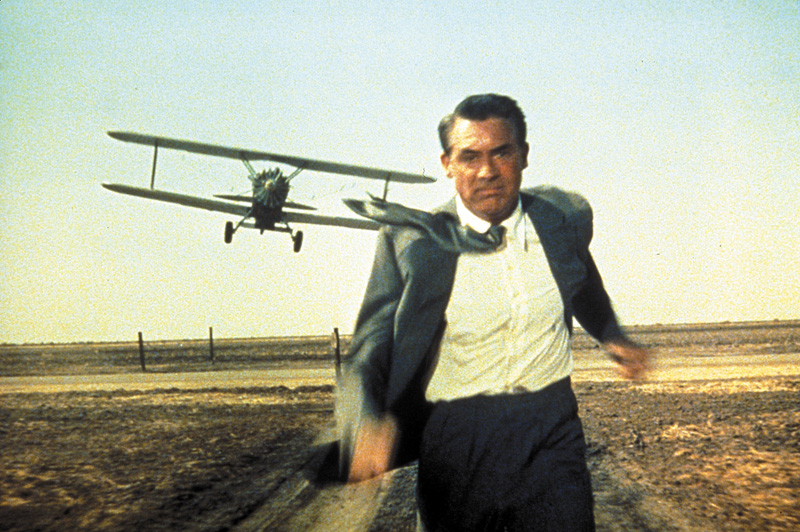 North by Northwest crop duster scene
by Jamie Frev eletti
When it comes to spies I love the idea of "average person, dangerous situation." It gives an author the chance to create a story that weaves in thrilling drama into situations that a lot of readers can relate to, because it incorporates something that happens in their daily lives. The train ride run amok, the family member that suddenly reveals a secret, the co worker that lives a double life. All of these things occur in the real world. Thriller writers take the moment and add a "what if?" question. From there the story takes off. A lot of thrillers use this theme, but what makes it so compelling is the way that the stories can be fresh every time. Who hasn't had that moment in their lives that something unusual happened? That right place/right time that ends up being an interesting story?
I love classic books and movies, and there are quite a few accidental spies that populate them. The movie North by Northwest gave director Alfred Hitchcock the perfect set up for an accidental spy. A Mad Men type advertising executive is mistaken for someone else and soon finds himself running from just about everybody. He's compelled to solve the puzzle to save his skin. What I also love about the story is how the danger changes him. He becomes a more serious, deeper person after the experience.
The hidden strength theme is present in a lot of accidental spy novels. The spy often masquerades as a dandy, or someone that others overlook as too insubstantial to be worth notice. In The Scarlet Pimpernel, Percy Blakeney is a dandy and a fop, which causes others to overlook his actual substance. Likewise, The Mask of Zorro carries the same theme of a gifted swordsman and spy masquerading as an effete dandy to divert suspicion.
 Richard E GrantThe "spy in fop clothes" has some parallels in real life. In early France, a famous spy cross dressed as a woman for most of his life. The Chevalier d'Eon was a member of Louis XV's Secret du Roi, a secret group of spies that infiltrated various governments. D'Eon infiltrated Russia by dressing as a woman, at the time only women were being allowed into the country, and conspired with other French spies to overthrow the Habsburg monarchy. D'Eon spent many years cross dressing and died wearing a dress.
There have been a few tales of actual accidental spies and overlooked meek individuals in American spy history as well. One of the most famous is Quaker woman and spy Lydia Darragh.
 Lydia DarraghWhen the British occupied Philadelphia, they stationed soldiers in private homes throughout the city. British General William Howe convened a group to discuss an upcoming attack on Whitemarsh on the 4th of December, 1777, and he made the mistake of doing so from Darragh's living room. While the soldiers listened to the upcoming battle plans Darragh did, too. She made notes, stuffed them into a book, and ran to a nearby pub, where she gave the book to a man in charge of prisons. He discovered her notes and took them to American headquarters. After their defeat, British spy Major Andre said that someone surely had given notice to the Americans and that the "walls must have ears." Not walls, but women. Howe's arrogant assumption that women were not worth noticing cost the Brits dearly that day.
Never underestimate the power of a woman!
June 20, 2016
Spies and Other Interesting Characters
While the other Rogue Women Writers and I write some great characters and some great spies, there were several real life spies and characters from WWII that have captured my imagination. Their stories are different, their motivations are different, but—good or bad—they all felt passionately about the path they chose to follow. When I read their stories, I tend to try to put myself in their shoes and wonder what I would do if I were in their position. Would I be brave, and risk life and limb to battle an enemy that threatens my family and my way of life? Would I choose to martyr myself to a cause, or become a victim, or change in order to justify my actions—or lack thereof?
When I’m reading good crime fiction, it’s the personal motivations and emotions of the characters that captures my interest and compels me to read into the wee hours of the night. We all experience feelings of sadness, joy, love and hate, but a good writer immerses you in the experiences of their characters. Exploring the motivations of real life heroes and villains helps me bring a realism to my characters and makes them come to life on the page.
#1 Real Life Spy – While few of us have experienced events like the Holocaust in our lives, most of us have felt the loss of someone or something we love so much that we felt compelled to do something to avenge that loss or to honor their memory. Most of us have also seen someone do something we think the world should take notice of. Have you ever found yourself in a situation where it’s you against the world, but then you discover you actually have friends or allies who stand with you?
In DARK WATERS, my character Raisa Jordan knows what she must do and there are a handful of people who stand with her to try and stop a plot that would devastate millions.
Born Stella Goldschlag, she was raised in Berlin as the only child in a middle-class Jewish family. After her parents were denied visas to leave Germany, Stella (known for her “Aryan” beauty) disappeared underground about the time Berlin Jews began being sent to extermination camps, using forged papers to pass as a non-Jew.
In the spring of 1943, Stella and her parents were arrested by the Nazis. Subjected to torture, Stella agreed to hunt down Jews hiding as non-Jews for the Gestapo. In return she and her parents were not to be deported, plus she was to be paid a modest sum for every Jew that she betrayed. The number of Jews she’s suspected of turning in ranges anywhere from 600 to 3,000. The Nazis called her "blonde poison,” but despite her collaboration, they eventually broke their promise and her parents were deported and killed. Still Stella continued working for the Gestapo until March 1945. At the end of the war she was sentenced, tried and convicted and was imprisoned ten years for her crimes. She eventually converted to Christianity and became an open anti-Semitic. In 1994, Stella committed suicide by throwing herself out of her apartment window.
Many of us have been pressured into doing things we don’t want to do, and sometimes through promises that turn out to be false. Have you ever tried to convince yourself that you were right rather than face the horrible truth that what you’ve done was wrong?
In DARK WATERS, Raisa learns a secret about her past, then convinces herself that keeping that secret (one that might cause her to lose her job) is the right thing to do.
#3 Born Hedwig Eva Maria Kiesler, Hedy Lamarr was an Austrian immigrant, ardent Nazi despiser and famous 1930s and 1940s actress who appeared in countless films alongside the likes of Charles Boyer, Spencer Tracy, and Clark Gable. She also was a passionate inventor who came up with critically important military technology. Working with composer George Antheil, she patented what they called the “Secret Communication System,” a method of preventing enemy ships from jamming American torpedoesby making radio signals jump between frequencies rather than stay on a single channel. The idea later became the underpinings of both secure military communications and mobile phone technology. It's also basically the reason we have things like GPS, Bluetooth, and advanced guided missile technology.
The original idea (meant to solve problems during World War II) was largely ignored until the 1960s, when some male scientists put Hedy’s invention to use during the Cuban Missile Crisis. This technological achievement combined with her acting talent made Hedy a truly amazing woman.
How many of us have had an idea for something and thought: I should make that or do that. Then someone else does, and you think: if only I had…, I would have made a fortune or effected big changes for yourself or the world.
In DARK WATERS, Raisa Jordan comes up with an idea and must implement it in the face of skeptics if she has any hope of stopping a deadly plot already set in motion.
15. Born in Bila Tserkva, Lyudmila moved to Kyiv with her family at the age of fourteen. She joined a shooting club and became an amateur sharpshooter. In June 1941, she was a fourth year history student at Kyiv University when Germany invaded the Soviet Union. Lyudmila was among the first round of volunteers at the recruiting offices, and was eventually assigned to the Red Army's 25th Rifle Division. She became one of 2,000 female snipers in the Red Army, of which only about 500 survived the war.
As a USSR citizen fighting the Nazis, Lyudmila recorded 309 kills, including 36 enemy snipers. In 1942, she toured the U.S., and then in 1943 was awarded the Gold Star of the Hero of the Soviet Union and commemorated on a Soviet postage stamp. After being wounded in service, Lyudmila was pulled from the field. Then, having achieved the rank of major, she became an instructor and trained Soviet snipers until the war's end.
Most of us have at one time or another employed a skill that we possess that no one else has to help to achieve a goal. If we’re good at a team sport, we’ve held up our end to win the game; if we’re good at carpentry, we’ve helped the high school build a set for the spring musical.
In DARK WATERS, Batya Ganani is a Shin Bet sniper, who uses her skills to help her country and to help protect the lives of Raisa Jordan and the team when they attempt to stop a plot already in motion.
There are a lot of great spies out there. Who are your favorites?
When I’m reading good crime fiction, it’s the personal motivations and emotions of the characters that captures my interest and compels me to read into the wee hours of the night. We all experience feelings of sadness, joy, love and hate, but a good writer immerses you in the experiences of their characters. Exploring the motivations of real life heroes and villains helps me bring a realism to my characters and makes them come to life on the page.
#1 Real Life Spy – While few of us have experienced events like the Holocaust in our lives, most of us have felt the loss of someone or something we love so much that we felt compelled to do something to avenge that loss or to honor their memory. Most of us have also seen someone do something we think the world should take notice of. Have you ever found yourself in a situation where it’s you against the world, but then you discover you actually have friends or allies who stand with you?
In DARK WATERS, my character Raisa Jordan knows what she must do and there are a handful of people who stand with her to try and stop a plot that would devastate millions.
Born Stella Goldschlag, she was raised in Berlin as the only child in a middle-class Jewish family. After her parents were denied visas to leave Germany, Stella (known for her “Aryan” beauty) disappeared underground about the time Berlin Jews began being sent to extermination camps, using forged papers to pass as a non-Jew.
In the spring of 1943, Stella and her parents were arrested by the Nazis. Subjected to torture, Stella agreed to hunt down Jews hiding as non-Jews for the Gestapo. In return she and her parents were not to be deported, plus she was to be paid a modest sum for every Jew that she betrayed. The number of Jews she’s suspected of turning in ranges anywhere from 600 to 3,000. The Nazis called her "blonde poison,” but despite her collaboration, they eventually broke their promise and her parents were deported and killed. Still Stella continued working for the Gestapo until March 1945. At the end of the war she was sentenced, tried and convicted and was imprisoned ten years for her crimes. She eventually converted to Christianity and became an open anti-Semitic. In 1994, Stella committed suicide by throwing herself out of her apartment window.
Many of us have been pressured into doing things we don’t want to do, and sometimes through promises that turn out to be false. Have you ever tried to convince yourself that you were right rather than face the horrible truth that what you’ve done was wrong?
In DARK WATERS, Raisa learns a secret about her past, then convinces herself that keeping that secret (one that might cause her to lose her job) is the right thing to do.
#3 Born Hedwig Eva Maria Kiesler, Hedy Lamarr was an Austrian immigrant, ardent Nazi despiser and famous 1930s and 1940s actress who appeared in countless films alongside the likes of Charles Boyer, Spencer Tracy, and Clark Gable. She also was a passionate inventor who came up with critically important military technology. Working with composer George Antheil, she patented what they called the “Secret Communication System,” a method of preventing enemy ships from jamming American torpedoesby making radio signals jump between frequencies rather than stay on a single channel. The idea later became the underpinings of both secure military communications and mobile phone technology. It's also basically the reason we have things like GPS, Bluetooth, and advanced guided missile technology.
The original idea (meant to solve problems during World War II) was largely ignored until the 1960s, when some male scientists put Hedy’s invention to use during the Cuban Missile Crisis. This technological achievement combined with her acting talent made Hedy a truly amazing woman.
How many of us have had an idea for something and thought: I should make that or do that. Then someone else does, and you think: if only I had…, I would have made a fortune or effected big changes for yourself or the world.
In DARK WATERS, Raisa Jordan comes up with an idea and must implement it in the face of skeptics if she has any hope of stopping a deadly plot already set in motion.
15. Born in Bila Tserkva, Lyudmila moved to Kyiv with her family at the age of fourteen. She joined a shooting club and became an amateur sharpshooter. In June 1941, she was a fourth year history student at Kyiv University when Germany invaded the Soviet Union. Lyudmila was among the first round of volunteers at the recruiting offices, and was eventually assigned to the Red Army's 25th Rifle Division. She became one of 2,000 female snipers in the Red Army, of which only about 500 survived the war.
As a USSR citizen fighting the Nazis, Lyudmila recorded 309 kills, including 36 enemy snipers. In 1942, she toured the U.S., and then in 1943 was awarded the Gold Star of the Hero of the Soviet Union and commemorated on a Soviet postage stamp. After being wounded in service, Lyudmila was pulled from the field. Then, having achieved the rank of major, she became an instructor and trained Soviet snipers until the war's end.
Most of us have at one time or another employed a skill that we possess that no one else has to help to achieve a goal. If we’re good at a team sport, we’ve held up our end to win the game; if we’re good at carpentry, we’ve helped the high school build a set for the spring musical.
In DARK WATERS, Batya Ganani is a Shin Bet sniper, who uses her skills to help her country and to help protect the lives of Raisa Jordan and the team when they attempt to stop a plot already in motion.
There are a lot of great spies out there. Who are your favorites?
June 19, 2016
FAVORITE SPIES
FAVORITE SPIES by Karna Small Bodman
Who are your favorite spies, intelligence officers, heroes and heroines in novels, movies or on TV? It seems that ever since Ian Fleming launched James Bond into our collective consciousness way back in 1953, we have been intrigued with the idea of a Special Agent with special skills (in addition to clever lines!). But where did Fleming get the ideas, the background and the research to create such a fabulous character? It turns out that he was in the British Naval Intelligence Division during WWII and said that Bond was a composite of the many secret agents he met at the time. This clever character, of course, has been featured for decades in films (I for one loved Sean Connery in that role), but also inspired many authors to write about new fabulous characters -- both men and women -- spies that we love to read about and admire.
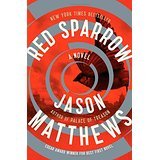 Taking a look at some of these newer characters, I so enjoyed reading about Dominka Egorova, the lovely Russian woman spirited into their Intelligence Service in Jason Matthews' terrific debut novel, RED SPARROW. The story traces her training to become a seductress as well as a brilliant spy. But our American CIA also has a brilliant spy, Nathaniel Noah, assigned to recruit her. The author gives us a unique window into the Russian spy training regime along with Putin's iron-fisted control. How did the author learn so much about the Russian system? It turns out that Matthews served as one of our own CIA agents for 33 years. Talk about "verisimilitude!" This book has it in spades, and in fact it won our International Thriller Writers Award for "Best First Novel."
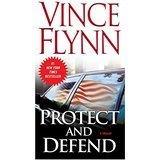 Another "Favorite Spy" is Mitch Rapp, described brilliantly by the late Vince Flynn (whom we lost recently at way too young an age). Vince wrote political thrillers about Rapp, a super secret Special Agent" sent around the world to handle national security crises that needed his own brand of expertise. In CONSENT TO KILL the hero becomes the hunted. In ACT OF TREASON Mitch must find the perpetrators of a bomb attack on a motorcade during a Presidential campaign that turns the election, and possibly the constitution upside down. But one of my favorite stories about Mitch is PROTECT AND DEFEND which involves the most ingenious plot I've ever seen to destroy Iran's nuclear capability. This scenario is positively brilliant!
A personal note about the author. I got to know Vince Flynn at various author events, and since he writes about Mitch having romantic relationships, I asked how does he "keep the romance going" in subsequent stories. He said that when he wrote about Mitch Rapp falling in love with a particular woman and marrying her, in sequels, he really couldn't figure it out. And he admitted, "I had to kill her off." So his hero had to deal with a personal tragedy along with a harrowing assignment in the next thriller.
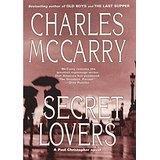
One more great spy is Intelligence Officer, Paul Christopher, working under deep cover all over the world. Written by Charles McCarry, himself a retired CIA Officer. In SECRET LOVERS he dispatches his hero to deal with a manuscript smuggled out of the old Soviet Union that, if published, could bring down the entire system. McCarry, known as the consummate spymaster, created an attractive, urbane character who plots, plans and carries out dangerous and intriguing missions in a whole series of great thrillers.
Now, my question for you is: Who are YOUR favorite spies -- men and women? Please leave a comment and we'll compare notes. And do continue to check in here all week long to learn who my "Rogue Women" colleagues choose as their favorites.
Who are your favorite spies, intelligence officers, heroes and heroines in novels, movies or on TV? It seems that ever since Ian Fleming launched James Bond into our collective consciousness way back in 1953, we have been intrigued with the idea of a Special Agent with special skills (in addition to clever lines!). But where did Fleming get the ideas, the background and the research to create such a fabulous character? It turns out that he was in the British Naval Intelligence Division during WWII and said that Bond was a composite of the many secret agents he met at the time. This clever character, of course, has been featured for decades in films (I for one loved Sean Connery in that role), but also inspired many authors to write about new fabulous characters -- both men and women -- spies that we love to read about and admire.
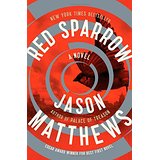 Taking a look at some of these newer characters, I so enjoyed reading about Dominka Egorova, the lovely Russian woman spirited into their Intelligence Service in Jason Matthews' terrific debut novel, RED SPARROW. The story traces her training to become a seductress as well as a brilliant spy. But our American CIA also has a brilliant spy, Nathaniel Noah, assigned to recruit her. The author gives us a unique window into the Russian spy training regime along with Putin's iron-fisted control. How did the author learn so much about the Russian system? It turns out that Matthews served as one of our own CIA agents for 33 years. Talk about "verisimilitude!" This book has it in spades, and in fact it won our International Thriller Writers Award for "Best First Novel."
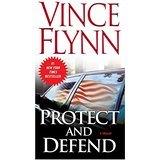 Another "Favorite Spy" is Mitch Rapp, described brilliantly by the late Vince Flynn (whom we lost recently at way too young an age). Vince wrote political thrillers about Rapp, a super secret Special Agent" sent around the world to handle national security crises that needed his own brand of expertise. In CONSENT TO KILL the hero becomes the hunted. In ACT OF TREASON Mitch must find the perpetrators of a bomb attack on a motorcade during a Presidential campaign that turns the election, and possibly the constitution upside down. But one of my favorite stories about Mitch is PROTECT AND DEFEND which involves the most ingenious plot I've ever seen to destroy Iran's nuclear capability. This scenario is positively brilliant!
A personal note about the author. I got to know Vince Flynn at various author events, and since he writes about Mitch having romantic relationships, I asked how does he "keep the romance going" in subsequent stories. He said that when he wrote about Mitch Rapp falling in love with a particular woman and marrying her, in sequels, he really couldn't figure it out. And he admitted, "I had to kill her off." So his hero had to deal with a personal tragedy along with a harrowing assignment in the next thriller.
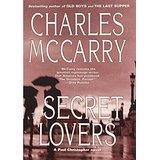
One more great spy is Intelligence Officer, Paul Christopher, working under deep cover all over the world. Written by Charles McCarry, himself a retired CIA Officer. In SECRET LOVERS he dispatches his hero to deal with a manuscript smuggled out of the old Soviet Union that, if published, could bring down the entire system. McCarry, known as the consummate spymaster, created an attractive, urbane character who plots, plans and carries out dangerous and intriguing missions in a whole series of great thrillers.
Now, my question for you is: Who are YOUR favorite spies -- men and women? Please leave a comment and we'll compare notes. And do continue to check in here all week long to learn who my "Rogue Women" colleagues choose as their favorites.
FAVORITE SPIES by Karna Small BodmanWho are your favorite...
FAVORITE SPIES by Karna Small Bodman
Who are your favorite spies, intelligence officers, heroes and heroines in novels, movies or on TV? It seems that ever since Ian Fleming launched James Bond into our collective consciousness way back in 1953, we have been intrigued with the idea of a Special Agent with special skills (in addition to clever lines!). But where did Fleming get the ideas, the background and the research to create such a fabulous character? It turns out that he was in the British Naval Intelligence Division during WWII and said that Bond was a composite of the many secret agents he met at the time. This clever character, of course, has been featured for decades in films (I for one loved Sean Connery in that role), but also inspired many authors to write about new fabulous characters -- both men and women -- spies that we love to read about and admire.
Taking a look at some of these newer characters, I so enjoyed reading about Dominka Egorova, the lovely Russian woman spirited into their Intelligence Service in Jason Matthews' terrific debut novel, RED SPARROW. The story traces her training to become a seductress as well as a brilliant spy. But our American CIA also has a brilliant spy, Nathaniel Noah, assigned to recruit her. The author gives us a unique window into the Russian spy training regime along with Putin's iron-fisted control. How did the author learn so much about the Russian system? It turns out that Matthews served as one of our own CIA agents for 33 years. Talk about "verisimilitude!" This book has it in spades, and in fact it won our International Thriller Writers Award for "Best First Novel."
Another "Favorite Spy" is Mitch Rapp, described brilliantly by the late Vince Flynn (whom we lost recently at way too young an age). Vince wrote political thrillers about Rapp, a super secret Special Agent" sent around the world to handle national security crises that needed his own brand of expertise. In CONSENT TO KILL the hero becomes the hunted. In ACT OF TREASON Mitch must find the perpetrators of a bomb attack on a motorcade during a Presidential campaign that turns the election, and possibly the constitution upside down. But one of my favorite stories about Mitch is PROTECT AND DEFEND which involves the most ingenious plot I've ever seen to destroy Iran's nuclear capability. This scenario is positively brilliant!
A personal note about the author. I got to know Vince Flynn at various author events, and since he writes about Mitch having romantic relationships, I asked how does he "keep the romance going" in subsequent stories. He said that when he wrote about Mitch Rapp falling in love with a particular woman and marrying her, in sequels, he really couldn't figure it out. And he admitted, "I had to kill her off." So his hero had to deal with a personal tragedy along with a harrowing assignment in the next thriller.
One more great spy is Intelligence Officer, Paul Christopher, working under deep cover all over the world. Written by Charles McCarry, himself a retired CIA Officer. In SECRET LOVERS he dispatches his hero to deal with a manuscript smuggled out of the old Soviet Union that, if published, could bring down the entire system. McCarry, known as the consummate spymaster, created an attractive, urbane character who plots, plans and carries out dangerous and intriguing missions in a whole series of great thrillers.
Now, my question for you is: Who are YOUR favorite spies -- men and women? Please leave a comment and we'll compare notes. And do continue to check in here all week long to learn who my "Rogue Women" colleagues choose as their favorites.
Who are your favorite spies, intelligence officers, heroes and heroines in novels, movies or on TV? It seems that ever since Ian Fleming launched James Bond into our collective consciousness way back in 1953, we have been intrigued with the idea of a Special Agent with special skills (in addition to clever lines!). But where did Fleming get the ideas, the background and the research to create such a fabulous character? It turns out that he was in the British Naval Intelligence Division during WWII and said that Bond was a composite of the many secret agents he met at the time. This clever character, of course, has been featured for decades in films (I for one loved Sean Connery in that role), but also inspired many authors to write about new fabulous characters -- both men and women -- spies that we love to read about and admire.
Taking a look at some of these newer characters, I so enjoyed reading about Dominka Egorova, the lovely Russian woman spirited into their Intelligence Service in Jason Matthews' terrific debut novel, RED SPARROW. The story traces her training to become a seductress as well as a brilliant spy. But our American CIA also has a brilliant spy, Nathaniel Noah, assigned to recruit her. The author gives us a unique window into the Russian spy training regime along with Putin's iron-fisted control. How did the author learn so much about the Russian system? It turns out that Matthews served as one of our own CIA agents for 33 years. Talk about "verisimilitude!" This book has it in spades, and in fact it won our International Thriller Writers Award for "Best First Novel."
Another "Favorite Spy" is Mitch Rapp, described brilliantly by the late Vince Flynn (whom we lost recently at way too young an age). Vince wrote political thrillers about Rapp, a super secret Special Agent" sent around the world to handle national security crises that needed his own brand of expertise. In CONSENT TO KILL the hero becomes the hunted. In ACT OF TREASON Mitch must find the perpetrators of a bomb attack on a motorcade during a Presidential campaign that turns the election, and possibly the constitution upside down. But one of my favorite stories about Mitch is PROTECT AND DEFEND which involves the most ingenious plot I've ever seen to destroy Iran's nuclear capability. This scenario is positively brilliant!A personal note about the author. I got to know Vince Flynn at various author events, and since he writes about Mitch having romantic relationships, I asked how does he "keep the romance going" in subsequent stories. He said that when he wrote about Mitch Rapp falling in love with a particular woman and marrying her, in sequels, he really couldn't figure it out. And he admitted, "I had to kill her off." So his hero had to deal with a personal tragedy along with a harrowing assignment in the next thriller.
One more great spy is Intelligence Officer, Paul Christopher, working under deep cover all over the world. Written by Charles McCarry, himself a retired CIA Officer. In SECRET LOVERS he dispatches his hero to deal with a manuscript smuggled out of the old Soviet Union that, if published, could bring down the entire system. McCarry, known as the consummate spymaster, created an attractive, urbane character who plots, plans and carries out dangerous and intriguing missions in a whole series of great thrillers.
Now, my question for you is: Who are YOUR favorite spies -- men and women? Please leave a comment and we'll compare notes. And do continue to check in here all week long to learn who my "Rogue Women" colleagues choose as their favorites.
June 18, 2016
D.P. LYLE, AUTHOR OF DEEP SIX
KJ Howe hosting author D.P. Lyle, M.D.
I've had the pleasure of knowing D.P. Lyle, Director of CraftFest, for many years. Not only is he a cardiologist, an expert in forensics, and a guru in the craft of writing, he is also a award-winning author. I often wonder when he sleeps. Please welcome D.P. as my guest today where is talking about his strong female protagonists. Let's go Rogue...
KICK-ASS WOMEN CHARACTERS by DP Lyle
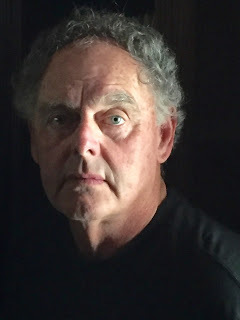 Here’s a truth that men intuitively know about women: They are smarter than we are and they don’t play fair. It’s true in life and can make for wonderful fictional characters. In my work I have created three smart, tough, kick-ass, and completely unfair female characters who I simply love writing about.
Case in point—Samantha Cody.
Sam is not big, being 5-9 and a buck thirty, but you never—never—want to challenge or threaten her. You see, Sam’s a cop and, oh yeah, a professional boxer. If she can’t stop you with words—logic, threats, pointing out better options—-she will with a mighty good left hook. This from Original Sin:
NOTE: Sam is out for an early morning country road run and is confronted by the always pleasant Watson brothers.
“Why do you feel the need to threaten everyone?” Sam said. “Don’t you see that threats only make you seem more guilty.”“You need some manners.” Eric reached into the small cargo area behind the seats and pulled out a coiled rope. “Maybe we should simply hog tie your ass and explain how things are to you.”“I understand you two aren’t the brightest bulbs in the chandelier so let me give you some advice. Don’t try anything stupid. People only get away with so much stupidity and I suspect you guys have done a lot of stupid in your life. Sort of living on borrowed time.” She smiled at them. “Take care.” Again she jogged away.The truck loped along behind her. These guys were becoming annoying. Then the truck moved up beside her yet again. As she looked toward them, the lasso fell around her shoulders and suddenly tightened across her chest, trapping her arms to her side. The truck sped up, forcing her to run with it or be dragged.Eric, twisted in his seat, both arms out the window, clutching the rope, laughing. “Good day for a run isn’t it? Think you can keep up?”The truck’s speed increased slightly, Sam now in a hard run. She had to do something. She managed to slip her arms free but the rope was now around her waist. Before Eric could react, she grasped the rope with both hands, dug in her heels, and came to a stop. The rope jerked free of Eric’s grasp. Good thing he was stoned and his reflexes were slowed, his grip weakened. She loosened the noose and stepped out of it. The truck stopped and he jumped out.“Not so fast. Missy,” he said as he came toward her. “Guess we’re going to have to do this the hard way.”The hard way? Sam actually loved the hard way. She closed on him quickly, not giving him time to think, set his feet, react to her attack in any meaningful way.The voice of her old trainer, Jimmy Ryker, echoed in her head: Hit first, hit hard, and keep hitting until they don’t move anymore. Sounded like a good plan. The left hook was perfect, the straight right hand better. The hook staggered Eric, the right put him down. She heard the gear shift slam into park and the driver’s door pop open. She stepped over Eric, who lay on the ground glassy eyed and moaning, and met Elvin head on as he circled in front of the truck. From the surprised look on his face, not exactly what he was expecting. Probably thought she’d run. Two lefts and right took Eric down, too.Time to leave.She knew they wouldn’t be down long and she was three miles from town, from help. She scanned the horizon, looking for some place to hide or at least get them on foot where she had the advantage. She saw no refuge so she ran, hard, straight ahead, along the edge of the asphalt, trying put as much distance between her and them as she could.
Then there’s Claire McBride. My Dub Walker thriller series might star Dub and his best buddy, tough as nails homicide investigator T-Tommy Tortelli, but it’s their long time friend and Dub’s ex-wife-with-benefits Claire that often stirs the chili. She’s an investigative reporter who doesn’t suffer fools well—-especially Dub and T-Tommy. She doesn’t use her fists, as would Sam, but rather her sharp tongue and sarcasm. From Hot Lights, Cold Steel—the second of three Dub Walker stories:
NOTE: Dub and T-Tommy are trying to find a way into Talbert Medical to hopefully find evidence or at least to get a look around.
I went through the pictures again. Talbert wasn’t wide open, but it wasn’t exactly a fortress, either. The chain-link fence was a hundred or so feet from the building. The upper floor windows were about four feet wide by six feet tall, the lowers similar in width but only two feet high. All were the metal-framed, push-out type. A small white sign with red lettering said, Protected by Gorman Security.“I guess we could break in. Doesn’t look very high-tech, and the guards seem disinterested.”“Might work,” T-Tommy said. Claire sighed. “You guys are low-functioning idiots.” “Because we want to dig into Talbert?” I asked. “No. Because testosterone is a dangerous drug. You would butt a door down even if you had the key in your pocket.” “And you propose what?” I asked. Claire rolled her eyes and took her cell phone from her purse. “What’s Talbert’s number?” T-Tommy gave it to her, and she punched it in, waited a second, and then said, “Mr. Talbert’s office, please. . . . This is Claire McBride, Channel 8 News. Is Mr. Talbert available? . . . I’d like to arrange a meeting with him. . . . I’m working on a story about minimally invasive surgery. I got Mr. Talbert’s name from Dr. Liz Mackey over at Memorial Medical Center. I have a few questions I’d like to ask him if he has the time. I’ll only need about fifteen minutes or so.” She covered the phone and said to us, “She’s checking.” Then into the phone she said, “That would be great. I’ll be there at three. Thanks.” She closed the phone. “Now, that wasn’t so hard, was it?” She can be such a smart-ass sometimes.
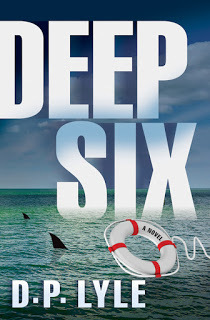
Lastly, there’s Nicole Jamison. She’s the extremely beautiful, ex-actress, current screenwriter love interest of reluctant P.I Jake Longly, the protagonist of my new comedic thriller series. Nicole is smart and can drop into her acting chops when needed if a dangerous situation lurks. From Deep Six:
NOTE: Jake and Nicole are on board criminal king pin Victor Borkov’s Yacht attempting to garner information on a murder Barkov is suspected of being involved in while also trying to isolate Borkov’s girlfriend Grace, who they suspect knows the real story. All without letting Barkov know they are investigating the murder for Jake’s P.I. father Ray and homicide detective Bob Morgan. Nicole saves the day by writing her own script.
Borkov nodded. “But you don’t work for your dad?”“Nope. Not that he doesn’t try to lure me into his world.”Borkov took a couple puffs on his cigar, exhaling upward, waving away the smoke. “I hear he’s investigating that murder that happened over on The Point? The Plummer woman?”“I wouldn’t know. Like I said, Ray and I don’t run in the same circles.”“So the other night. Out on Peppermill Road. Wasn’t that you that got a couple of windows hammered out? Right near the Plummer home?”This was definitely not going as expected. What exactly did Borkov know? That we were scamming him? That Nicole and I weren’t simply accidental tourist? How the hell did he know about my confrontation with Tammy? Why would he know? He obviously had connections within the Gulf Shores PD, and, if so, did he know we were hooked up with Detective Morgan? That would be a game changer. Was my face as red and sweaty as it felt?I glanced toward the pier, almost expecting to see Ray and Pancake storming the Bastille.“That was my ex,” I said. “I was parked near her house. She took offense.”“You asshole.” It was Nicole. She slugged my shoulder. “What the hell were doing over at that psycho’s house?”“I wasn’t. I was outside.”Tears welled in her eyes. “You promised me you’d never see her again.” She looked at Borkov. “He’s addicted to her. Can’t seem to throw the hook. Every time I think we have a future he does some shit like this.” She stood and tossed her napkin on the table.Damn she’s good. And just might have saved our bacon.“It’s not that way,” I said, following her lead.“Really? What goddamn way is it then?” She glared at me. “Sometimes I could just strangle you.” She stormed off toward the bow of the ship.Grace stood. “I’ll make sure she’s okay.”
I love each of these characters. Though they have much in common, they are also very different. But not in smarts and toughness. Each possesses those qualities in spades.
So, how do you create a great female character? Just like you would any other character—male or female. Sure she can be beautiful, desirable, and very feminine but give her flaws and skills that make her pop off the page. Remember, it’s character flaws that often get your protagonist in trouble, and skills—often unknown to her until she is forced to discover and use them—-that get her out. With Sam, she is often too narrow in her thinking, too focused on the straight line from point A to point B, and that leads her into dicey situations. But she has wit, charm, smarts, and those deadly fists that extract her from danger. With Claire and Nicole, they are beautiful women that are often taken for less than smart. That’s a mistake. They can cut you up with their words and clever deceptions. Never take either for granted.
Your character doesn’t have to be physically overpowering but she must have some skills that come to her aid at her darkest hour. Find those and use them and you will have a true heroine.
D. P. Lyle is the Macavity and Benjamin Franklin Silver Award winning and Edgar, Agatha, Anthony, Scribe, Silver Falchion, and USA Best Book Award nominated author of both non-fiction and fiction (the Samantha Cody, Dub Walker, and Jake Longly thriller series and the Royal Pains media tie-in series). Along with Jan Burke, he is the co-host of Crime and Science Radio. He has served as story consultant to many novelists and the screenwriters of shows such as Law & Order, CSI: Miami, Diagnosis Murder, Monk, Judging Amy, Peacemakers, Cold Case, House, Medium, Women’s Murder Club, 1-800-Missing, The Glades, and Pretty Little Liars.
His next book, Deep Six, is the first in his Jake Longly comedic thriller series and will be available from Oceanview on July 5, 2016.
Website: http://www.dplylemd.comBlog: http://writersforensicsblog.wordpress.comCrime & Science Radio: http://www.dplylemd.com/crime--science-radio.html
Thanks, D.P., for sharing your thoughts on strong female protagonists. Anyone have any questions regarding this topic or even forensics questions? Our resident expert is here, ready to answer.
I've had the pleasure of knowing D.P. Lyle, Director of CraftFest, for many years. Not only is he a cardiologist, an expert in forensics, and a guru in the craft of writing, he is also a award-winning author. I often wonder when he sleeps. Please welcome D.P. as my guest today where is talking about his strong female protagonists. Let's go Rogue...
KICK-ASS WOMEN CHARACTERS by DP Lyle
 Here’s a truth that men intuitively know about women: They are smarter than we are and they don’t play fair. It’s true in life and can make for wonderful fictional characters. In my work I have created three smart, tough, kick-ass, and completely unfair female characters who I simply love writing about.
Case in point—Samantha Cody.
Sam is not big, being 5-9 and a buck thirty, but you never—never—want to challenge or threaten her. You see, Sam’s a cop and, oh yeah, a professional boxer. If she can’t stop you with words—logic, threats, pointing out better options—-she will with a mighty good left hook. This from Original Sin:
NOTE: Sam is out for an early morning country road run and is confronted by the always pleasant Watson brothers.
“Why do you feel the need to threaten everyone?” Sam said. “Don’t you see that threats only make you seem more guilty.”“You need some manners.” Eric reached into the small cargo area behind the seats and pulled out a coiled rope. “Maybe we should simply hog tie your ass and explain how things are to you.”“I understand you two aren’t the brightest bulbs in the chandelier so let me give you some advice. Don’t try anything stupid. People only get away with so much stupidity and I suspect you guys have done a lot of stupid in your life. Sort of living on borrowed time.” She smiled at them. “Take care.” Again she jogged away.The truck loped along behind her. These guys were becoming annoying. Then the truck moved up beside her yet again. As she looked toward them, the lasso fell around her shoulders and suddenly tightened across her chest, trapping her arms to her side. The truck sped up, forcing her to run with it or be dragged.Eric, twisted in his seat, both arms out the window, clutching the rope, laughing. “Good day for a run isn’t it? Think you can keep up?”The truck’s speed increased slightly, Sam now in a hard run. She had to do something. She managed to slip her arms free but the rope was now around her waist. Before Eric could react, she grasped the rope with both hands, dug in her heels, and came to a stop. The rope jerked free of Eric’s grasp. Good thing he was stoned and his reflexes were slowed, his grip weakened. She loosened the noose and stepped out of it. The truck stopped and he jumped out.“Not so fast. Missy,” he said as he came toward her. “Guess we’re going to have to do this the hard way.”The hard way? Sam actually loved the hard way. She closed on him quickly, not giving him time to think, set his feet, react to her attack in any meaningful way.The voice of her old trainer, Jimmy Ryker, echoed in her head: Hit first, hit hard, and keep hitting until they don’t move anymore. Sounded like a good plan. The left hook was perfect, the straight right hand better. The hook staggered Eric, the right put him down. She heard the gear shift slam into park and the driver’s door pop open. She stepped over Eric, who lay on the ground glassy eyed and moaning, and met Elvin head on as he circled in front of the truck. From the surprised look on his face, not exactly what he was expecting. Probably thought she’d run. Two lefts and right took Eric down, too.Time to leave.She knew they wouldn’t be down long and she was three miles from town, from help. She scanned the horizon, looking for some place to hide or at least get them on foot where she had the advantage. She saw no refuge so she ran, hard, straight ahead, along the edge of the asphalt, trying put as much distance between her and them as she could.
Then there’s Claire McBride. My Dub Walker thriller series might star Dub and his best buddy, tough as nails homicide investigator T-Tommy Tortelli, but it’s their long time friend and Dub’s ex-wife-with-benefits Claire that often stirs the chili. She’s an investigative reporter who doesn’t suffer fools well—-especially Dub and T-Tommy. She doesn’t use her fists, as would Sam, but rather her sharp tongue and sarcasm. From Hot Lights, Cold Steel—the second of three Dub Walker stories:
NOTE: Dub and T-Tommy are trying to find a way into Talbert Medical to hopefully find evidence or at least to get a look around.
I went through the pictures again. Talbert wasn’t wide open, but it wasn’t exactly a fortress, either. The chain-link fence was a hundred or so feet from the building. The upper floor windows were about four feet wide by six feet tall, the lowers similar in width but only two feet high. All were the metal-framed, push-out type. A small white sign with red lettering said, Protected by Gorman Security.“I guess we could break in. Doesn’t look very high-tech, and the guards seem disinterested.”“Might work,” T-Tommy said. Claire sighed. “You guys are low-functioning idiots.” “Because we want to dig into Talbert?” I asked. “No. Because testosterone is a dangerous drug. You would butt a door down even if you had the key in your pocket.” “And you propose what?” I asked. Claire rolled her eyes and took her cell phone from her purse. “What’s Talbert’s number?” T-Tommy gave it to her, and she punched it in, waited a second, and then said, “Mr. Talbert’s office, please. . . . This is Claire McBride, Channel 8 News. Is Mr. Talbert available? . . . I’d like to arrange a meeting with him. . . . I’m working on a story about minimally invasive surgery. I got Mr. Talbert’s name from Dr. Liz Mackey over at Memorial Medical Center. I have a few questions I’d like to ask him if he has the time. I’ll only need about fifteen minutes or so.” She covered the phone and said to us, “She’s checking.” Then into the phone she said, “That would be great. I’ll be there at three. Thanks.” She closed the phone. “Now, that wasn’t so hard, was it?” She can be such a smart-ass sometimes.

Lastly, there’s Nicole Jamison. She’s the extremely beautiful, ex-actress, current screenwriter love interest of reluctant P.I Jake Longly, the protagonist of my new comedic thriller series. Nicole is smart and can drop into her acting chops when needed if a dangerous situation lurks. From Deep Six:
NOTE: Jake and Nicole are on board criminal king pin Victor Borkov’s Yacht attempting to garner information on a murder Barkov is suspected of being involved in while also trying to isolate Borkov’s girlfriend Grace, who they suspect knows the real story. All without letting Barkov know they are investigating the murder for Jake’s P.I. father Ray and homicide detective Bob Morgan. Nicole saves the day by writing her own script.
Borkov nodded. “But you don’t work for your dad?”“Nope. Not that he doesn’t try to lure me into his world.”Borkov took a couple puffs on his cigar, exhaling upward, waving away the smoke. “I hear he’s investigating that murder that happened over on The Point? The Plummer woman?”“I wouldn’t know. Like I said, Ray and I don’t run in the same circles.”“So the other night. Out on Peppermill Road. Wasn’t that you that got a couple of windows hammered out? Right near the Plummer home?”This was definitely not going as expected. What exactly did Borkov know? That we were scamming him? That Nicole and I weren’t simply accidental tourist? How the hell did he know about my confrontation with Tammy? Why would he know? He obviously had connections within the Gulf Shores PD, and, if so, did he know we were hooked up with Detective Morgan? That would be a game changer. Was my face as red and sweaty as it felt?I glanced toward the pier, almost expecting to see Ray and Pancake storming the Bastille.“That was my ex,” I said. “I was parked near her house. She took offense.”“You asshole.” It was Nicole. She slugged my shoulder. “What the hell were doing over at that psycho’s house?”“I wasn’t. I was outside.”Tears welled in her eyes. “You promised me you’d never see her again.” She looked at Borkov. “He’s addicted to her. Can’t seem to throw the hook. Every time I think we have a future he does some shit like this.” She stood and tossed her napkin on the table.Damn she’s good. And just might have saved our bacon.“It’s not that way,” I said, following her lead.“Really? What goddamn way is it then?” She glared at me. “Sometimes I could just strangle you.” She stormed off toward the bow of the ship.Grace stood. “I’ll make sure she’s okay.”
I love each of these characters. Though they have much in common, they are also very different. But not in smarts and toughness. Each possesses those qualities in spades.
So, how do you create a great female character? Just like you would any other character—male or female. Sure she can be beautiful, desirable, and very feminine but give her flaws and skills that make her pop off the page. Remember, it’s character flaws that often get your protagonist in trouble, and skills—often unknown to her until she is forced to discover and use them—-that get her out. With Sam, she is often too narrow in her thinking, too focused on the straight line from point A to point B, and that leads her into dicey situations. But she has wit, charm, smarts, and those deadly fists that extract her from danger. With Claire and Nicole, they are beautiful women that are often taken for less than smart. That’s a mistake. They can cut you up with their words and clever deceptions. Never take either for granted.
Your character doesn’t have to be physically overpowering but she must have some skills that come to her aid at her darkest hour. Find those and use them and you will have a true heroine.
D. P. Lyle is the Macavity and Benjamin Franklin Silver Award winning and Edgar, Agatha, Anthony, Scribe, Silver Falchion, and USA Best Book Award nominated author of both non-fiction and fiction (the Samantha Cody, Dub Walker, and Jake Longly thriller series and the Royal Pains media tie-in series). Along with Jan Burke, he is the co-host of Crime and Science Radio. He has served as story consultant to many novelists and the screenwriters of shows such as Law & Order, CSI: Miami, Diagnosis Murder, Monk, Judging Amy, Peacemakers, Cold Case, House, Medium, Women’s Murder Club, 1-800-Missing, The Glades, and Pretty Little Liars.
His next book, Deep Six, is the first in his Jake Longly comedic thriller series and will be available from Oceanview on July 5, 2016.
Website: http://www.dplylemd.comBlog: http://writersforensicsblog.wordpress.comCrime & Science Radio: http://www.dplylemd.com/crime--science-radio.html
Thanks, D.P., for sharing your thoughts on strong female protagonists. Anyone have any questions regarding this topic or even forensics questions? Our resident expert is here, ready to answer.
June 16, 2016
THE GOOD, THE BAD, AND THE BAD ASS
S.Lee Manning
Mossad.
You know the name, from television and novels. It’s where the bad ass villains or heroes used to work before going to work at the FBI or retiring to restore paintings or befriending an American detective and backing him up in dangerous situations or becoming the head of an international criminal organization.
Mossad also is the favorite agency for conspiracy nuts, blamed for everything from the 9-11 attacks on America or most recently and absurdly, for a series of gruesome murders of Hindus in Bangladesh.
On a whim, I googled Mossad and John F. Kennedy, and yup, there’s people who blame Mossad for that, too.
But, apart from the stories, and apart from the conspiracy theories, what is Mossad?
Mossad or Ha Mossad Le modi’in UleTafkidim Meyuhadim, which translates as the Central Institute for Intelligence and Special Duties, is the Israeli intelligence organization, formed in 1951. The original vision was to create an intelligence agency modeled after the brand new CIA to gather information to protect the then fledgling State of Israel.
Mossad’s bad ass reputation is well deserved. It has pulled off spectacular operations that brought criminals to justice and saved lives – and it has also acted brutally to counter threats to Israel in ways that may be morally questionable.
It’s a balancing act.
War criminals brought to justice – the good.
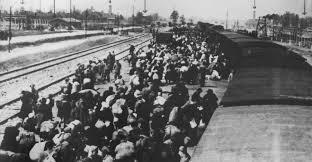 During World War II, six million men, women, and children were gassed, shot, hanged, burned, and starved to death for the crime of being Jews. At the end of the war, Adolph Eichmann, the Nazi in charge of implementing the Final Solution, escaped US custody and fled. In 1960, he was spotted living under an assumed name in Argentina by a Holocaust survivor who then alerted Israeli intelligence.
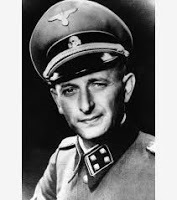 Mossad went into action. Agents covertly photographed the man living under the name of Ricardo Klement and compared those photographs to those in the SS file of Eichmann. Convinced that Klement was indeed Eichmann, Mossad agents snatched him on his way home from work. The agents checked his body and found scars that confirmed their suspicions. In a safe house in Argentina, he first denied then admitted his true identity. He was drugged, smuggled onto a commercial flight in first class, and flown back to Israel for a public trial that exposed the horrors he had orchestrated. He was hung for his crimes in 1962.
The raid on Entebbe – also the good.
One of the most spectacular Mossad operations involved the rescue of 104 hostages held by terrorists in Uganda.
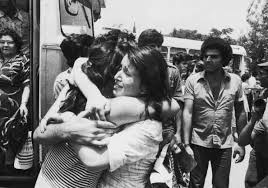
On June 27, 1976, four terrorists forced an Air France jet to land in Entebbe, Uganda, where then President Idi Amin positioned soldiers to protect the terrorists. They released more than half of the passengers, but the flight crew and passengers either with Jewish names or with Israeli passports were threatened with death unless Israel released imprisoned terrorists. The hijackers set a 48-hour deadline for their demands to be met before they would begin killing the hostages. Israel entered into negotiations, and a new deadline was set. On July 4, the hostages would die.
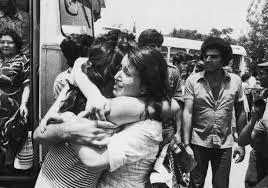 The alternatives were to release known terrorists or to launch a rescue operation. Israel began to plan a rescue – but the elite forces assigned to carry it out needed vital information if the mission were to have any chance of success.
Mossad agents began collecting intelligence. They interviewed released passengers for details on the number of terrorists, their weapons, their location, and their descriptions. They reviewed blueprints and diagrams of the airport, but the information was old. They had no way to know what exactly was on the landing strip or around the terminal where the passengers were being held.
A Mossad pilot rented a plane in Kenya and flew to Uganda where he pretended to have engine trouble. He circled the airport, taking critical photographs of the landing strip and the terminal. The photographs were sent back to the commander of the special forces planning the rescue operation.
The team decided that approaching the terminal in a black Mercedes that resembled Idi Amin’s car could allow them to fool the terrorists, at least initially. Mossad found a Mercedes, that would be flown in with the commandos, but it wasn’t black. So Mossad spray painted it.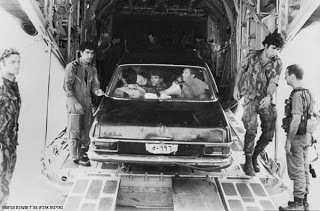
On July 3, an elite commando unit, using the intelligence gathered by Mossad, launched the raid. Three Israeli aircraft flew into the Entebbe airport. Commandos drove up to the terminal in the disguised Mercedes, accompanied by Land Rovers, copying Idi Amin’s usual entourage, and then stormed the terminal. All seven of the terrorists were killed. The Israelis lost the commander of the elite unit, Yoni Netanyahu, brother to the current prime minister, and three hostages were killed by friendly fire. Dora Bloch, a 74-year-old British woman, who had been taken to a Ugandan hospital before the raid, was murdered the next day on the orders of Idi Amin.
The Israeli team destroyed Ugandan aircraft on the runway to prevent an air pursuit and flew the remaining passengers to Israel.
Assassinations – the bad – or not? In any event, the bad ass.
Yeah, okay, Mossad has been involved in assassinating people. Heads of terrorist organizations. Iranian nuclear scientists. (Not John F. Kennedy.)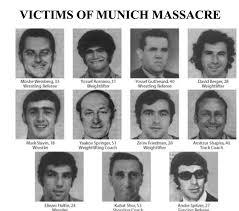 The most well-known series of assassinations occurred in the 1970s and has been the subject of films. It also forms the backstory to the popular novels of Daniel Silva. In 1972, members of the Palestinian splinter organization, Black September, kidnapped 11 Israeli athletes at the Munich Olympics. During a subsequent rescue attempt by Germany, terrorists shot and incinerated the bound Israeli hostages. Three terrorists were captured by German police but were later released in exchange for a hijacked German airplane.
Mossad responded with Operation Wrath of God, tracking down Palestinians suspected of involvement in the massacre and assassinating them. Unfortunately, in the course of exacting revenge, Mossad also killed a Norwegian waiter, mistaking him for one of the leaders of Black September.
Were these assassinations good or bad, or did they fall somewhere in between? Certainly, no one can defend killing an innocent waiter. But the others? The killing of terrorists? Or of scientists working to create a weapon that could destroy Israel for a country that denies the Holocaust occurred? I see it in shades of gray and tan instead of black and white. How do you see it?
Mossad.

You know the name, from television and novels. It’s where the bad ass villains or heroes used to work before going to work at the FBI or retiring to restore paintings or befriending an American detective and backing him up in dangerous situations or becoming the head of an international criminal organization.
Mossad also is the favorite agency for conspiracy nuts, blamed for everything from the 9-11 attacks on America or most recently and absurdly, for a series of gruesome murders of Hindus in Bangladesh.
On a whim, I googled Mossad and John F. Kennedy, and yup, there’s people who blame Mossad for that, too.
But, apart from the stories, and apart from the conspiracy theories, what is Mossad?
Mossad or Ha Mossad Le modi’in UleTafkidim Meyuhadim, which translates as the Central Institute for Intelligence and Special Duties, is the Israeli intelligence organization, formed in 1951. The original vision was to create an intelligence agency modeled after the brand new CIA to gather information to protect the then fledgling State of Israel.
Mossad’s bad ass reputation is well deserved. It has pulled off spectacular operations that brought criminals to justice and saved lives – and it has also acted brutally to counter threats to Israel in ways that may be morally questionable.
It’s a balancing act.
War criminals brought to justice – the good.
 During World War II, six million men, women, and children were gassed, shot, hanged, burned, and starved to death for the crime of being Jews. At the end of the war, Adolph Eichmann, the Nazi in charge of implementing the Final Solution, escaped US custody and fled. In 1960, he was spotted living under an assumed name in Argentina by a Holocaust survivor who then alerted Israeli intelligence.
 Mossad went into action. Agents covertly photographed the man living under the name of Ricardo Klement and compared those photographs to those in the SS file of Eichmann. Convinced that Klement was indeed Eichmann, Mossad agents snatched him on his way home from work. The agents checked his body and found scars that confirmed their suspicions. In a safe house in Argentina, he first denied then admitted his true identity. He was drugged, smuggled onto a commercial flight in first class, and flown back to Israel for a public trial that exposed the horrors he had orchestrated. He was hung for his crimes in 1962.
The raid on Entebbe – also the good.
One of the most spectacular Mossad operations involved the rescue of 104 hostages held by terrorists in Uganda.
On June 27, 1976, four terrorists forced an Air France jet to land in Entebbe, Uganda, where then President Idi Amin positioned soldiers to protect the terrorists. They released more than half of the passengers, but the flight crew and passengers either with Jewish names or with Israeli passports were threatened with death unless Israel released imprisoned terrorists. The hijackers set a 48-hour deadline for their demands to be met before they would begin killing the hostages. Israel entered into negotiations, and a new deadline was set. On July 4, the hostages would die.
 The alternatives were to release known terrorists or to launch a rescue operation. Israel began to plan a rescue – but the elite forces assigned to carry it out needed vital information if the mission were to have any chance of success.
 Mossad agents began collecting intelligence. They interviewed released passengers for details on the number of terrorists, their weapons, their location, and their descriptions. They reviewed blueprints and diagrams of the airport, but the information was old. They had no way to know what exactly was on the landing strip or around the terminal where the passengers were being held.
A Mossad pilot rented a plane in Kenya and flew to Uganda where he pretended to have engine trouble. He circled the airport, taking critical photographs of the landing strip and the terminal. The photographs were sent back to the commander of the special forces planning the rescue operation.
The team decided that approaching the terminal in a black Mercedes that resembled Idi Amin’s car could allow them to fool the terrorists, at least initially. Mossad found a Mercedes, that would be flown in with the commandos, but it wasn’t black. So Mossad spray painted it.

On July 3, an elite commando unit, using the intelligence gathered by Mossad, launched the raid. Three Israeli aircraft flew into the Entebbe airport. Commandos drove up to the terminal in the disguised Mercedes, accompanied by Land Rovers, copying Idi Amin’s usual entourage, and then stormed the terminal. All seven of the terrorists were killed. The Israelis lost the commander of the elite unit, Yoni Netanyahu, brother to the current prime minister, and three hostages were killed by friendly fire. Dora Bloch, a 74-year-old British woman, who had been taken to a Ugandan hospital before the raid, was murdered the next day on the orders of Idi Amin.
The Israeli team destroyed Ugandan aircraft on the runway to prevent an air pursuit and flew the remaining passengers to Israel.
Assassinations – the bad – or not? In any event, the bad ass.
Yeah, okay, Mossad has been involved in assassinating people. Heads of terrorist organizations. Iranian nuclear scientists. (Not John F. Kennedy.)
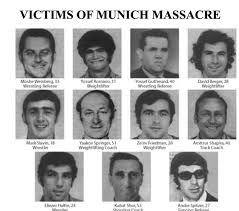 The most well-known series of assassinations occurred in the 1970s and has been the subject of films. It also forms the backstory to the popular novels of Daniel Silva. In 1972, members of the Palestinian splinter organization, Black September, kidnapped 11 Israeli athletes at the Munich Olympics. During a subsequent rescue attempt by Germany, terrorists shot and incinerated the bound Israeli hostages. Three terrorists were captured by German police but were later released in exchange for a hijacked German airplane.
 Mossad responded with Operation Wrath of God, tracking down Palestinians suspected of involvement in the massacre and assassinating them. Unfortunately, in the course of exacting revenge, Mossad also killed a Norwegian waiter, mistaking him for one of the leaders of Black September.
Were these assassinations good or bad, or did they fall somewhere in between? Certainly, no one can defend killing an innocent waiter. But the others? The killing of terrorists? Or of scientists working to create a weapon that could destroy Israel for a country that denies the Holocaust occurred? I see it in shades of gray and tan instead of black and white. How do you see it?
June 14, 2016
TEST YOUR SPY-Q!

Gayle Lynds: Ever consider becoming a spy? Over the next two weeks here at RWW we're going to be blogging about our favorite spies. CIA? Mossad? George Washington’s irregulars? Here are ten questions that'll give you a clue about how much you already know about the clandestine world in which spies thrive. The answers are at the very end, so have fun . . . but control yourself! Good spy, good spy.
1. Who or what is a Juliet spy?
 a. A female operator who uses acting as a cover story.
b. A woman who has been tricked into working as a spy.
c. A female intelligence officer who seduces for her country.
d. A male intelligence officer who disguises himself as a woman.
2. In the United States, what is MI-6’s equivalent agency?
a. The NSA
b. The CIA
c. Army intelligence
d. The FBI
3. What is blowback?
a. An important event that happens behind an operative’s back, out of sight.
b. A lie that’s planted abroad but is accepted as truth when it blows back home.
c. Drugs given to someone who is being questioned.
d. A term from World War I that originally described a strong wind that blew carrier pigeons off course.
4. Who receives the U.S. President’s Daily Brief?
a. The laundry, for washing.
 b. The press, so they can be kept up to date about the president’s schedule that day.
c. The White House staff, so they have their day’s assignments.
d. The president, vice president, and a hand-picked group of cabinet-level officials chosen by the president.
5. What is a covert action?
a. A mission designed to be so secret that it can’t be traced back to its sponsoring agency or country.
b. Anything underhanded or illegal that an intelligence officer does.
c. A hidden espionage agenda.
d. A clandestine romantic assignation between two spies.
 6. What is the most popular dead drop location?
a. Train station locker
b. Under a bridge
c. A public bathroom
d. The underside of a mailbox
7. What is a penetration agent?
a. Special chemical used to make invisible ink readable
b. Undercover operative sent secretly into a group to collect information
c. Spy who is particularly skilled at the technology of espionage
d. Accountant employed by an intelligence service to trace funds
8. Which vehicle is seldom used in surveillance?
a. Motorcycle
b. Bicycle
c. Sports car
 d. SUV
9. Who was Wild Bill Donovan?
a. Director of the OSS, which was the forerunner of the CIA
b. Inventor of a special radio transmitter distributed to European resistance groups in World War II
c. Famous spymaster seen in a popular series of 1930s movies
d. CIA mole executed by the Soviets in 1981
10. If you use a legend to gain intel, what have you done?
a. Mined mythology for interesting anecdotes to distract those you need to deceive
b. Analyzed a historical event to understand a current problem
c. Exploited a celebrated person to help you accomplish your mission
d. Created or been given a false identity to go undercover
ANSWERS
1: c
2: b
3: b
4: d
5: a
6: c
7: b
8: c
9: a
10: d
TRANSLATE YOUR SCORE!
 10 correct = you’re ready to serve
8 correct = you’re recruitable
6 correct = you’re a potential candidate
4 correct = you’re a nice person
2 correct = you’ve been living in a remote Peruvian jungle
0 correct = please get your pulse checked.
Do you have a favorite spy? Please tell us! And when you're in the neighborhood, please stop by and visit my World of Espionage!
Y'rs in tradecraft, Gayle Lynds
June 12, 2016
ADVENTURES OF AN INTREPID TRAVELER
by Christine Goff
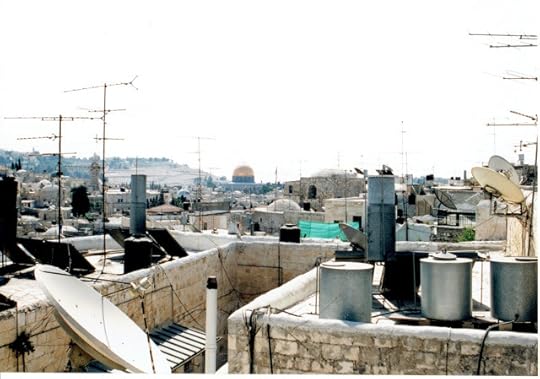
For me travel has always equaled adventure, and as a novelist I often find myself drawing upon those adventures to bring depth and emotion to my writing. Every experience is fodder. I've tapped memories of backpacking Europe with my grade school BFF after we graduated from high school. In those six months, I did my share of stupid things and lived to write about them.
For example, I tapped the fear I felt being dragged off a beach in Torremolinos by a crazy man, only to discover he may have actually saved my life. It was 1975 and Franco was still in power. As a solution to drug trafficking from Morocco via the beaches, he'd ordered the Guardia to shoot anyone on the beach after 10:00 p.m. Needless to say, I bought my savior a drink, and discovered the fun of drinking Snowballs in a bar in the south of Spain.
In my latest book, Dark Waters, I drew on experiences I had while living in Israel for two months.
For Example, late one afternoon my eleven year-old daughter and I boarded a southbound bus in Tel Aviv. We missed our stop and ended up in an ultra-orthodox area of the city. Realizing our mistake, we got off the bus intending to turn right around and head back north. Unfortunately, we couldn't find the right bus stop. It was just around sunset and families were coming out to stroll the streets. They were dressed in conservative Jewish attire: men in their long back coats, payots, top hats and wool fringes; women in dresses with conservative necklines that covered their arms and knees, the married women in wigs or scarfs that covered their hair. Being American and coming straight from a beach day in Tel Aviv (a very cosmopolitan city), I was wearing shorts and a t-shirt. My daughter had on a tank top and flip-flops. Needless to say we were inappropriately dressed for the location.
When the men started saying "lech" and spitting at us, I turned to Danielle and asked her what they were saying, not really expecting an answer. I was surprised when she answered "they are saying go home." When I asked her how she knew that, she said it's what our good friend and neighbor in Colorado always says to his dog Hamoodi.
To make a long story short, I would have gladly obliged and gone home, but no one would talk to us except to hurl insults and spit. The cab driver wouldn't let us in his cab because we would taint it, and we couldn't find the bus stop to catch the northbound bus. Finally a young teenage girl whispered, "Cross the street, go up a block, and take the 92 north." When I tried to thank her, she shunned me.
Later, an Israeli friend told us how lucky we were. He said that even a conservative Jew like himself wouldn't go into that community, especially at that time of day. He shared stories of women being stoned for not dressing properly. Suffice it to say, Danielle and I made it back safely.
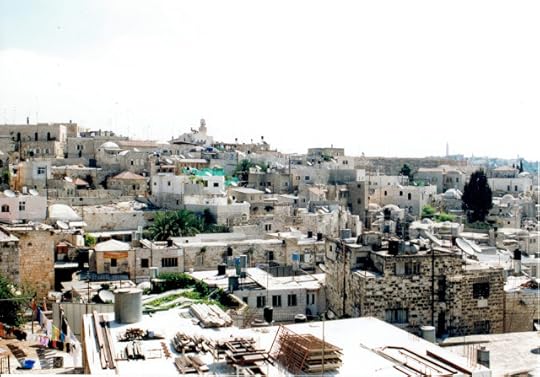
That set the stage for this scene in Dark Waters that begins:
Tamar Cline lived in Bnei Brak, a dusty subdivision on the east side of Tel Aviv. According to the guide books, it was home to nearly two hundred thousand Haredi Jews. Poor and densely populated, it had begun as an agricultural community but had grown into one of Israel’s largest cities. The community was close-knit. Its residents chose to keep to themselves and follow traditional practices, including dress codes and gender separation.
And ends with this:
He heaved the stone. It struck Jordan in the back. She winced and her hand instinctively went to where her holster should be. Then she remembered she had left her gun in the car.
Jordan picked up her pace. Clearing the yard, she figured the men would stop at the edge of the grass, but they followed her into the street.
The sedan was parked halfway down the block. She jogged toward the car, and the men followed, moving so swiftly the tails of their long black coats flared out behind them. Another stone was hurled, then another. Both missed. A fourth rock slammed into her ribs.
“Tamei, lechi habaita,” rose the chant....
Oh, and then there was the bomb in the diaper bag....
Have you survived any travel adventures? Please share!

For me travel has always equaled adventure, and as a novelist I often find myself drawing upon those adventures to bring depth and emotion to my writing. Every experience is fodder. I've tapped memories of backpacking Europe with my grade school BFF after we graduated from high school. In those six months, I did my share of stupid things and lived to write about them.
For example, I tapped the fear I felt being dragged off a beach in Torremolinos by a crazy man, only to discover he may have actually saved my life. It was 1975 and Franco was still in power. As a solution to drug trafficking from Morocco via the beaches, he'd ordered the Guardia to shoot anyone on the beach after 10:00 p.m. Needless to say, I bought my savior a drink, and discovered the fun of drinking Snowballs in a bar in the south of Spain.
In my latest book, Dark Waters, I drew on experiences I had
 while living in Israel for two months.
 For Example, late one afternoon my eleven year-old daughter and I boarded a southbound bus in Tel Aviv. We missed our stop and ended up in an ultra-orthodox area of the city. Realizing our mistake, we got off the bus intending to turn right around and head back north. Unfortunately, we couldn't find the right bus stop. It was just around sunset and families were coming out to stroll the streets. They were dressed in conservative Jewish attire: men in their long back coats, payots, top hats and wool fringes; women in dresses with conservative necklines that covered their arms and knees, the married women in wigs or scarfs that covered their hair. Being American and coming straight from a beach day in Tel Aviv (a very cosmopolitan city), I was wearing shorts and a t-shirt. My daughter had on a tank top and flip-flops. Needless to say we were inappropriately dressed for the location.
When the men started saying "lech" and spitting at us, I turned to Danielle and asked her what they were saying, not really expecting an answer. I was surprised when she answered "they are saying go home." When I asked her how she knew that, she said it's what our good friend and neighbor in Colorado always says to his dog Hamoodi.
To make a long story short, I would have gladly obliged and gone home, but no one would talk to us except to hurl insults and spit. The cab driver wouldn't let us in his cab because we would taint it, and we couldn't find the bus stop to catch the northbound bus. Finally a young teenage girl whispered, "Cross the street, go up a block, and take the 92 north." When I tried to thank her, she shunned me.
Later, an Israeli friend told us how lucky we were. He said that even a conservative Jew like himself wouldn't go into that community, especially at that time of day. He shared stories of women being stoned for not dressing properly. Suffice it to say, Danielle and I made it back safely.

That set the stage for this scene in Dark Waters that begins:
Tamar Cline lived in Bnei Brak, a dusty subdivision on the east side of Tel Aviv. According to the guide books, it was home to nearly two hundred thousand Haredi Jews. Poor and densely populated, it had begun as an agricultural community but had grown into one of Israel’s largest cities. The community was close-knit. Its residents chose to keep to themselves and follow traditional practices, including dress codes and gender separation.
And ends with this:
He heaved the stone. It struck Jordan in the back. She winced and her hand instinctively went to where her holster should be. Then she remembered she had left her gun in the car.
Jordan picked up her pace. Clearing the yard, she figured the men would stop at the edge of the grass, but they followed her into the street.
The sedan was parked halfway down the block. She jogged toward the car, and the men followed, moving so swiftly the tails of their long black coats flared out behind them. Another stone was hurled, then another. Both missed. A fourth rock slammed into her ribs.
“Tamei, lechi habaita,” rose the chant....
Oh, and then there was the bomb in the diaper bag....
Have you survived any travel adventures? Please share!