Dan Jorgensen's Blog, page 436
July 8, 2017
You 'Discover' a poem
“Isn't it amazing the way the future succeeds in creating an appropriate past?”– John Leonard
Born in Great Britain on July 7, 1965, Leonard was raised and educated there but now makes his home in Australia where he served as poetry editor of the magazine Overland. I remember first coming across Leonard quoted on a plaque made from a piece of granite. On that rugged piece of rock, it simply said: “It takes a long time to grow an old friend.”
Among Leonard’s recent collections are 2016’s Think of the world: Collected poems 1986-2016 and Missa Mundi, alternative texts for the four pieces of the Catholic liturgy most commonly set to music. More about Leonard and his many writings can be found at his website: http://www.jleonard.net/
For Saturday’s Poem, from his 2010 book Braided Lands, here is:
You Don't Write a Poem
You don't write a poem-What you do is discover That there is a world, Quite similar to our own, Except that it contains This one extra poem.
And what you recognise Is that this one poem Makes all the difference© John Leonard
Share A Writer’s Moment with a friend by clicking the g+1 button below.


July 7, 2017
Those writing possibilities surround you
“For me, a happy ending is not everything works out just right and there is a big bow, it's more coming to a place where a person has a clear vision of his or her own life in a way that enables them to kind of throw down their crutches and walk.” – Jill McCorkle
McCorkle – a native North Carolinian who was born on this date in 1958 – is the award-winning author of a dozen books and numerous short stories and a professor of writing at North Carolina State University. Among her awards is the Dos Passos Prize given annually for Excellence in Literature to a writer the judges believe has been “under-recognized” at the so-called midpoint of his or her career.
Despite that “under” recognition, McCorkle has done very well with her books, five being named as “Notable Books” by the New York Times.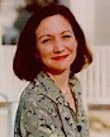 Four of her short stories have been named as “Best American Short Stories,“ and she recently earned the New England Booksellers Award for outstanding writing.
Her advise to new writers: Be alert to every writing possibility.
“I always tell my students, 'If you walk around with your eyes and ears open, you can't possibly live long enough to write all the novels you'll encounter.'”***For examples of McCorkle’s stories, see “Cuss Time” and “Me and Big Foot” on The American Scholar website.
Share A Writer’s Moment with a friend by clicking the g+1 button below.
McCorkle – a native North Carolinian who was born on this date in 1958 – is the award-winning author of a dozen books and numerous short stories and a professor of writing at North Carolina State University. Among her awards is the Dos Passos Prize given annually for Excellence in Literature to a writer the judges believe has been “under-recognized” at the so-called midpoint of his or her career.
Despite that “under” recognition, McCorkle has done very well with her books, five being named as “Notable Books” by the New York Times.
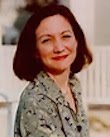 Four of her short stories have been named as “Best American Short Stories,“ and she recently earned the New England Booksellers Award for outstanding writing.
 Her advise to new writers: Be alert to every writing possibility.
“I always tell my students, 'If you walk around with your eyes and ears open, you can't possibly live long enough to write all the novels you'll encounter.'”***For examples of McCorkle’s stories, see “Cuss Time” and “Me and Big Foot” on The American Scholar website.
Share A Writer’s Moment with a friend by clicking the g+1 button below.
July 6, 2017
An endeavor toward better understanding
“History is, in its essentials, the science of change. It knows and it teaches that it is impossible to find two events that are ever exactly alike, because the conditions from which they spring are never identical.”– Marc Bloch
Born on this date in 1886, Bloch was one of Europe’s leading historians and writers of history, his life cut short by the Second World War where he fought in the French Resistance, was captured and executed by the infamous Klaus Barbie. Named for the French equivalent of the Congressional Medal of Honor, he has been honored many times over for his patriotism, historical acumen, and his writing.
In the decade leading up to the war he wrote some of the most important historical pieces on rural history, best expressed in his masterworks, French Rural History (Les caractères originaux de l'histoire rurale française, 1931) and Feudal Society(1939).
Often called by other historians as “one of the two or three greatest historians of the 20th Century,” Bloch’s final work The Historian’s Craft– started just before the war
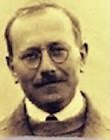 and published posthumously – is considered a landmark on how to write history.
 As a writer of historical fiction, I always marvel at historians who can craft nonfiction prose in such a way as to elicit deep and abiding interest among all readers.
“History is neither watchmaking nor cabinet construction,” Bloch once remarked. “It is an endeavor toward better understanding.”
Share A Writer’s Moment with a friend by clicking the g+1 button below.
July 5, 2017
Creating meaningful 'digital' footprints
“Social media is changing the way we communicate and the way we are perceived, both positively and negatively. Every time you post a photo, or update your status, you are contributing to your own digital footprint and personal brand.”– Amy Jo Martin
Born on this date in 1979, Martin is a native of Green River, Wyo., where I had the chance to overnight a couple weeks ago. She is a pioneering author, speaker, entrepreneur, and CEO of Digital Royalty, a social media and education company that helps individuals and brands build, measure and monetize their digital universe.
Author of the New York Times bestseller, Renegades Write the Rules, Martin began her career in advertising but then went to work for the NBA’s Phoenix Suns, where she became Director of Digital Media and Research and started the trend toward sports icons using Twitter as a platform. Her first client was Shaquille O’Neil and together they set a path now followed by thousands of celebrities worldwide. “Social media is the ultimate equalizer,” she said. “It gives a voice and a platform to anyone willing to engage.”
 With more than 1.2 million Twitter followers of her own, Martin travels the world speaking and educating audiences on the power of social media and the latest social media trends. She also is a leader in using social media on behalf of others. “I realized that social media can be powerful force for good in the world,” she said, “and that acts of kindness can be scaled globally.”
 Share A Writer’s Moment with a friend by clicking the g+1 button below.
July 4, 2017
Combining words and celebrating freedom
“Words - so innocent and powerless as they are, as standing in a dictionary, how potent for good and evil they become in the hands of one who knows how to combine them.” – Nathaniel Hawthorne
Born on the 4th of July in 1804, Hawthorne not only was one of the 19th Century's greatest writers but also one of the most thoughtful.
 On this celebration of our nation’s birth, we should reflect on the meaning of the words combined and adopted into our Declaration of Independence and our Constitution, and strive to live up to all that they say and mean.
 “We hold these truths to be self-evident, that all men are created equal, that they are endowed by their Creator with certain unalienable Rights, that among these are Life, Liberty and the pursuit of Happiness.” – The Declaration of Independence, July 4, 1776
 And that, indeed, is a great writer’s moment. Happy birthday America!

Share A Writer’s Moment with a friend by clicking the g+1 button below
July 3, 2017
Nudging words into the right order
“I don't think writers are sacred, but words are. They deserve respect. If you get the right ones in the right order, you can nudge the world a little or make a poem which children will speak for you when you're dead.”– Tom Stoppard
Born on this date in 1937 in what is now the Czech Republic, Stoppard left as a child when the Nazi’s invaded and built his life in Great Britain where he has now been Knighted by Queen Elizabeth for his contributions to literature and the literary arts. Stoppard has written prolifically for the stage, TV, radio, and film on the themes of human rights, censorship and political freedom. A key playwright of the British National Theatre, he is one of the most internationally performed dramatists of his generation.
His works, almost all of which have won some type of award, include 3 dozen plays, 17 original pieces for radio and television, and 15 movies. He won a “Best Original Screenplay” Oscar for Shakespeare in Love, and Tony Awards for Rosencrantz and Guildenstern are Dead, The Real Thing, Travesties, and The Coast of Utopia.
In 2008 he was named among the all-time most important cultural figures in British history and this year he has been selected for The America Award, a lifetime achievement literary award given to international writers.

“When I began writing, I had a need to know more about the play before I got into it,” Stoppard said. “...... But my actual experience is that the best way to find out what the structure is, is by writing the play out laterally. You just have got to be brave enough to start without knowing where you are going.”
Share A Writer’s Moment with a friend by clicking the g+1 button below.
July 2, 2017
Just 'crack on' with your story
“Every generation likes to think that children don't read as much as they used to when they were young! You listen to some adults saying they were going around reading 'Ulysses' when they were seven or eight! I think children are voracious readers if you give them the right books and if you make those books accessible to them.” – Darren Shan
Born in Ireland on this date in 1972, Darren O'Shaughnessycommonly writes for Tweens and Young Adults under the pen name Darren Shan. He has been a successful author since the age of 15 when he published an award-winning TV script under his real name.
Darren adopted the name Shan after deciding it would be the name of one of his characters in The Saga of Darren Shan series in the UK and Ireland. The series has been a huge global success and by 2016 had been marketed in 39 countries, in 31 languages, and sold over 25 million copies. He writes a “mix” of things, noting, “I think you can spread yourself across any number of genres when you're a writer as long as you have
 a deep, abiding love for each of them.”
Shan has had more than 30 books published – including some for adults – and said he has a couple dozen more written in “at least” draft form. “Many people think that it is important to have a title before you begin writing the book, but I think you should never sit around waiting for the right title to strike before you start writing,” he said. “Crack on with the story, put in the hard work, and the title will come eventually.”
Share A Writer’s Moment with a friend by clicking the g+1 button below.
July 1, 2017
A mouthful of language to swallow
“Poetry should be able to reach everybody, and it should be able to appeal to all levels of understanding.” – Peter Davison
Davison, born in New York on June 27, 1928, was an American poet, essayist, teacher, lecturer, editor, and publisher who grew up in Boulder, CO. He wrote poetry of reflection: highly intelligent, deeply informed by nature, constantly alert to the external world. "The corner of the eye / Is where my visions lie," he wrote in his poem Peripheral Vision. He wrote in his 1984 poem The Vanishing Point: “Each moment wishes us to move farther on / into a sequence we can follow at most / to vanishing point. We can see no farther, / though time seems to pause and wait for us at times / and measure us and move along again.”
His first collection of poetry, Breaking of the Day (1963), won the Yale Younger Poets Prize and his final collection, Breathing Room(2000), received the Massachusetts Book Award. He authored a dozen volumes, edited countless more, and held the post of Poetry Editor of The Atlantic Monthly for 30 years. He said he always liked light-hearted as well as introspective poems. Here for Saturday’s Poem, is Davison’s,PeachesA mouthful of language to swallow:
stretches of beach, sweet clinches,
breaches in walls, bleached branches;
britches hauled over haunches;
hunches leeches, wrenched teachers.
What English can do: ransack
the warmth that chuckles beneath
fuzzed surfaces, smooth velvet
richness, splashy juices.
I beseech you, peach,
clench me into the sweetness
of your reaches.
Share A Writer’s Moment with a friend by clicking the g+1 button below.
June 30, 2017
Making a space for kids
“Let's put it this way: if you are a novelist, I think you start out with a 20 word idea, and you work at it and you wind up with a 200,000 word novel. We, picture-book people, or at least I, start out with 200,000 words and reduce it to 20.” – Eric Carle
As a journalist I've been told time and again to “write tight.” In other words, say everything you can about a topic so that it is crystal clear in as few words as possible, because space is always at a premium. Writing as journalists might be good training for children’s book writers. But if I were an editor I’d be asking someone like Eric Carle the best way to write tight, because he’s been an expert at it for over 50 years. Of course his wonderful artwork also doesn’t hurt either.
Carle turned 88 this week and shows no sign of easing up on utilizing his creativity on behalf of children everywhere. The author of mega-sellers like The Very Hungry Caterpillar and Brown Bear, Brown Bear, What Do You See?, Carle said he has always attempted to make his books both entertaining and educational – offering readers opportunities to learn something about the world. He also advises writers wanting to work in the children’s literary genre’ to “recognize children’s feelings, inquisitiveness and creativity.”

In 2003 Carle won the Laura Ingalls Wilder Award for his career contribution to American children’s literature. “We have eyes, and we're looking at stuff all the time, all day long,” Carle said. “I just think that whatever our eyes touch should be beautiful, tasteful, appealing, and important.”
Share A Writer’s Moment with a friend by clicking the g+1 button below
Writing to fit a space for kids
“Let's put it this way: if you are a novelist, I think you start out with a 20 word idea, and you work at it and you wind up with a 200,000 word novel. We, picture-book people, or at least I, start out with 200,000 words and reduce it to 20.” – Eric Carle
As a journalist I've been told time and again to “write tight.” In other words, say everything you can about a topic so that it is crystal clear in as few words as possible, because space is always at a premium. Writing as journalists might be good training for children’s book writers. But if I were an editor I’d be asking someone like Eric Carle the best way to write tight, because he’s been an expert at it for over 50 years. Of course his wonderful artwork also doesn’t hurt either.
Carle turned 88 this week and shows no sign of easing up on utilizing his creativity on behalf of children everywhere. The author of mega-sellers like The Very Hungry Caterpillar and Brown Bear, Brown Bear, What Do You See?, Carle said he has always attempted to make his books both entertaining and educational – offering readers opportunities to learn something about the world. He also advises writers wanting to work in the children’s literary genre’ to “recognize children’s feelings, inquisitiveness and creativity.”
In 2003 Carle won the Laura Ingalls Wilder Award for his career contribution to American children’s literature. “We have eyes, and we're looking at stuff all the time, all day long,” Carle said. “I just think that whatever our eyes touch should be beautiful, tasteful, appealing, and important.”
Share A Writer’s Moment with a friend by clicking the g+1 button below