Dan Jorgensen's Blog, page 433
August 3, 2017
How to follow that writing path
“I never write to disappear and escape. The truth is exactly the opposite. Most people strike me as escaping and disappearing in one way or another - into their jobs, their daily routines, their delusions about themselves and others.”– Steven Millhauser
Born in New York City on this date in 1943, Millhauser won the 1997 Pulitzer Prize for his novel Martin Dressler. In 2012 won The Story Prize for his book We Others. That prize is given annually for the previous year’s outstanding collection of short fiction.
While he has had several successful novels, he has earned even more accolades for his numerous short stories.
 One of his best known, Eisenheim the Illusionist, was made into the critically acclaimed 2006 film The Illusionist.
 A resident of Saratoga Springs, N.Y., where he teaches writing at Skidmore, one of the nation’s leading liberal arts colleges, Millhauser has this advice about the writing process: “When a story or part of a story comes to me, I turn it over in my mind a long time before starting to write. I might make notes or take long drives or who knows what. By the time I give myself permission to write, I know certain things, though not everything. I know where the story is headed, and I know certain crucial points along the way.”
Share A Writer’s Moment with a friend by clicking the g+1 button below.


August 2, 2017
Digging into life experiences
“The responsibility of a writer is to excavate the experience of the people who produced him.”– James Baldwin
Writer and playwright James Baldwin, born in Harlem, NY, on this date in 1924, started writing in elementary school and ultimately became one of the 20th century's greatest writers. Baldwin broke new literary ground with the exploration of racial and social issues in his many works, led by his semi-autobiographical novels Go Tell It on the Mountain and Notes of a Native Son.
Beyond his many successful novels, he was feted for his ongoing series of essays on the Black experience in America, which he wrote right up until his death in 1987. Some of his essays – like The Fire Next Time and No Name in the Street – are book-length. Last year, his unfinished final essay, Remember This House, was expanded and adapted for the Academy Award-nominated documentary film I Am Not Your Negro.
 Baldwin’s passion for writing grew out of an equally devout passion as a reader, something he started at age 3. By the time he was in high school, he was working on the school magazine and had numerous poems, short stories and plays published there, often illustrated with photos by classmate and future Hall-of-Fame photographer Richard Avedon.
 In a recent essay for the Los Angeles Times, Scott Timberg wrote of Baldwin’s continuing impact on all writers and writing: "… Baldwin is not just a writer for the ages,” he said, “but a scribe whose work — as squarely as George Orwell’s — speaks directly to ours."
Share A Writer’s Moment with a friend by clicking the g+1 button below.
August 1, 2017
Bringing a dream to life
“Life is never easy for those who dream.” – Robert James Waller
Born on this date in 1939, Waller is best known for The Bridges of Madison County, an enormously successful book and subsequent movie starring Meryl Streep and Clint Eastwood. In 2014 it also became a top Broadway musical. I had the chance to visit Madison County last fall and while the much-viewed bridges are cool, I was equally impressed by the Madison County Courthouse in Winterset, which also is the birthplace of John Wayne. So, I shot photos of those instead.

 Waller, who died in Texas earlier this year, didn't become a writer until later in his life. He was first enamored by business – the subject for both his Ph.D. and teaching and leadership positions at his alma mater, The University of Northern Iowa.
 Also a photographer and musician, he took a break from teaching in the early 1990s to do some photography of Madison County's covered bridges. Having earlier written a song about a woman named Francesca, he had the inspiration to put Francesca and a visiting photogapher into a story in that setting. He wrote it in just two weeks. After the book’s remarkable success, he left teaching, wrote a few more songs called “The Ballads of Madison County," and then wrote several more top-selling novels. Waller’s book Puerto Vallarta Squeeze also was made into a movie.
 While critics didn’t much like Bridges, the public loved it. Waller said he received up to 100 letters a week about it for over a decade. “The last I knew,” he said, “at least 350 marriage ceremonies had been celebrated at Roseman Bridge alone.”
Share A Writer’s Moment with a friend by clicking the g+1 button below.
July 31, 2017
Breathing life and sensation onto the pages
"Good writing is supposed to evoke sensation in the reader. Not the fact that it is raining, but the feeling of being rained upon.” – E.L. Doctorow
A lifelong New Yorker – born in The Bronx in 1931 and died in Manhattan in July, 1915 – Doctorow was one of the literary world’s great “crafters” of historical fiction. He once said that it is the historian's place to tell us about a time in history or an era, but it is the novelist's role to tell us how we would act and feel if we lived in that time or era.
His characters exemplified Hemingway's admonition that when writing a novel, the writer should create living people - "... people, not characters. A character is a caricature."
I thought about Doctorow and his marvelous writing – books like Ragtime, for example – while talking with a radio interviewer about my historical novel And The Wind Whispered. "You really put us into the time and place," the interviewer said. "Did you feel an obligation to make that real to us, so that we would know?"
As Doctorow so succinctly said, THAT IS the writer's obligation. It is not acceptable to be "mostly right." We must be completely right in what we share
 if we are to remain true to our craft and the great writers who have led us along the way.
“One of the things I had to learn as a writer was to trust the act of writing,” Doctorow said. “To put myself in the position of writing to find out what I was writing. I did that with World's Fair, as with all of them. The inventions of the book come as discoveries.”
Share A Writer’s Moment with a friend by clicking the g+1 button below.
Evoking 'sensation' for our readers
"Good writing is supposed to evoke sensation in the reader. Not the fact that it is raining, but the feeling of being rained upon.” – E.L. Doctorow
A lifelong New Yorker – born in The Bronx in 1931 and died in Manhattan in July, 1915 – Doctorow was one of the literary world’s great “crafters” of historical fiction. He once said that it is the historian's place to tell us about a time in history or an era, but it is the novelist's role to tell us how we would act and feel if we lived in that time or era.
His characters exemplified Hemingway's admonition that when writing a novel, the writer should create living people - "... people, not characters. A character is a caricature."
I thought about Doctorow and his marvelous writing – books like Ragtime, for example – while talking with a radio interviewer about my historical novel And The Wind Whispered. "You really put us into the time and place," the interviewer said. "Did you feel an obligation to make that real to us, so that we would know?"
As Doctorow so succinctly said, THAT IS the writer's obligation. It is not acceptable to be "mostly right." We must be completely right in what we share
if we are to remain true to our craft and the great writers who have led us along the way.“One of the things I had to learn as a writer was to trust the act of writing,” Doctorow said. “To put myself in the position of writing to find out what I was writing. I did that with World's Fair, as with all of them. The inventions of the book come as discoveries.”
Share A Writer’s Moment with a friend by clicking the g+1 button below.
July 30, 2017
Mastering the nonfiction puzzle
“Writing a nonfiction story is like cracking a safe. It seems impossible at the beginning, but once you're in, you're in.” – Rich Cohen Born in Lake Forest, IL, on this date in 1968, Cohen is a contributing editor at both Vanity Fair and Rolling Stone magazines, and is co-creator, with Martin Scorsese, Mick Jagger and Terence Winter, of the HBO series Vinyl. His works have been New York Timesbestsellers, New York Times Notable Books, and collected in the Best American Essays series.
 Sometimes called one of the greatest “cultural and social” historians of the late 20th and early 21stcenturies, Cohen has won numerous awards – and some criticism – for his works. But regardless of how his writings are received, they always generate a lot of commentary, whether about people portrayed or the times in which they are set. He also has been one of the leading writers on people in the entertainment industry, something he says is both interesting and a challenge.
“It's a challenge, writing about actors, especially a good actor, because you can't always tell when they're being honest and when they're pretending - that is, when they're acting,” he said. “The really good ones don't always seem to know themselves.”
Share A Writer’s Moment with a friend by clicking the g+1 button below.
July 29, 2017
Having that 'poetic condition'
“Poets don't have an 'audience'. They're talking to a single person all the time.” – Robert Graves
Born in Wimbledon, England, in 1895, Graves was a second generation poet (his father was the celebrated Irish poet Alfred Percival Graves) who wrote more than 140 poetic works, including compilations, and also wrote a number of best-selling novels, including I, Claudius, numerous essays, reviews, and nonfiction books. His treatise on inspirational poetic writing, The White Goddess, published in 1948, has never been out of print.
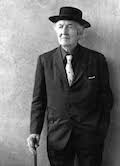
"To be a poet," Graves said, "is a condition rather than a profession." For Saturday’s Poem here are two short works by Robert Graves.
Symptoms of Love
Love is universal migraine,
bright stain on the vision
Blotting out reason.
Symptoms of true love
Are leanness, jealousy,
Laggard dawns;
Are omens and nightmares -
Listening for a knock,
Waiting for a sign:
For a touch of her fingers
In a darkened room,
For a searching look.
Take courage, lover!
Could you endure such pain
At any hand but hers? I’d Love To Be A Fairy’s ChildChildren born of fairy stock
Never need for shirt or frock,
Never want for food or fire,
Always get their hearts desire:
Jingle pockets full of gold,
Marry when they're seven years old.
Every fairy child may keep
Two ponies and ten sheep;
All have houses, each his own,
Built of brick or granite stone;
They live on cherries, they run wild--
I'd love to be a Fairy's child.
Share A Writer’s Moment with a friend by clicking the g+1 button below.
July 28, 2017
Moving beyond writing limitations
“I think that we're all, as human beings, so limited. If we want to write about ourselves, that's fairly easy. And if we write about our friends or our families, we can do that. But if we want to project ourselves somewhere beyond our personal experience, we're going to fail unless we get that experience or we borrow it from others.” – William T. Vollmann
Born in Los Angeles on this date in 1959, Vollmann earned a degree in comparative literature from Cornell University and has had a wide-ranging career as a novelist, journalist, war correspondent, short story writer, and essayist. In 2005, he won a National Book Award for his novel Europe Central .
Vollmann's other works have dealt with the settlement of North America (as in Seven Dreams: A Book of North American Landscapes, a cycle of seven novels); and stories of people on the margins of war, poverty, and hope.
 In addition to his books, he has had articles and short stories published in numerous magazines and newspapers including Harper's, Esquire, The New Yorker, and The New York Times Book Review
.
In addition to his books, he has had articles and short stories published in numerous magazines and newspapers including Harper's, Esquire, The New Yorker, and The New York Times Book Review
.
“When I was writing the first few books,” Vollmann said, “what I would do is write a bunch of sentences and then go back and expand and explode those sentences, pack as much into them as I could. So they'd kind of be like popcorn kernels popping... all this stuff in there to make the writing dense, and beautiful for its density.”
Share A Writer’s Moment with a friend by clicking the g+1 button below.
July 27, 2017
Taking those 'exploratory' writing journeys
“There’s a beauty in writing stories—each one is an exploratory journey in search of a reason and a shape. And when you find that reason and that shape, there’s no feeling like it." – T.C. Boyle
Thomas C. Boyle excels at writing short stories, even though he’s also darn good at writing novels, having published 14 of them. His book World’s End, in fact, won the coveted PEN/Faulkner Award. But, it’s his short story list that’s most impressive and it continues to grow. To date, he has more than 100 in print and many more “in process.” Boyle also is unafraid of sharing his writing skills and serves as Distinguished Professor of English and teacher of creative writing at USC.
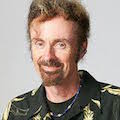 An advocate of the stream of consciousness style – he says start with a word or phrase and then just see where it might take you. It’s also a great technique for overcoming writer’s block. Just pick something and start writing.
“I have an idea and a first line – and that suggests the rest of it,” he said. “I have little concept of what I’m going to say, or where it’s going. I have some idea of how long it’s going to be – but not what will happen or what the themes will be. That’s the intrigue of doing it – it’s a process of discovery. You get to discover what you’re going to say and what it’s going to mean.”
Share A Writer’s Moment with a friend by clicking the g+1 button below
Writing that leads to 'exploratory' journeys
“There’s a beauty in writing stories—each one is an exploratory journey in search of a reason and a shape. And when you find that reason and that shape, there’s no feeling like it." – T.C. Boyle
Thomas C. Boyle excels at writing short stories, even though he’s also darn good at writing novels, having published 14 of them. His book World’s End, in fact, won the coveted PEN/Faulkner Award. But, it’s his short story list that’s most impressive and it continues to grow. To date, he has more than 100 in print and many more “in process.” Boyle also is unafraid of sharing his writing skills and serves as Distinguished Professor of English and teacher of creative writing at USC.
An advocate of the stream of consciousness style – he says start with a word or phrase and then just see where it might take you. It’s also a great technique for overcoming writer’s block. Just pick something and start writing.“I have an idea and a first line – and that suggests the rest of it,” he said. “I have little concept of what I’m going to say, or where it’s going. I have some idea of how long it’s going to be – but not what will happen or what the themes will be. That’s the intrigue of doing it – it’s a process of discovery. You get to discover what you’re going to say and what it’s going to mean.”
Share A Writer’s Moment with a friend by clicking the g+1 button below