Dan Jorgensen's Blog, page 432
August 9, 2017
Edna Ferber: Always keep an open mind
“Life can't defeat a writer who is in love with writing, for life itself is a writer's lover until death.” – Edna Ferber
Born in August, 1885, Edna Ferber was a novelist, short story writer and playwright whose novels were wildly popular and won her a remarkable four Pulitzer Prizes – for So Big, Show Boat, Cimarron and Giant, the latter three also made into award-winning movies. Show Boat was adapted for the stage as a hit Broadway musical and Cimarron won the Academy Award for Best Picture.
Ferber's novels generally featured strong female protagonists, along with a rich and diverse collection of supporting characters. She usually highlighted at least one strong secondary character who faced discrimination ethnically or for other reasons, demonstrating her belief that people are people and that the not-so-pretty people often have the best character.
 Ferber, who died in 1968, said she enjoyed writing a wide range of stories. “I like to look at all sides of people and be open to any idea,” she said. “A closed mind is a dying mind.”
 Share A Writer’s Moment with a friend by clicking the g+1 button below


Life itself is a writer's strength
“Life can't defeat a writer who is in love with writing, for life itself is a writer's lover until death.” – Edna Ferber
Born in August, 1885, Edna Ferber was a novelist, short story writer and playwright whose novels were wildly popular and won her a remarkable four Pulitzer Prizes – for So Big, Show Boat, Cimarron and Giant, the latter three also made into award-winning movies. Show Boat was adapted for the stage as a hit Broadway musical and Cimarron won the Academy Award for Best Picture.
Ferber's novels generally featured strong female protagonists, along with a rich and diverse collection of supporting characters. She usually highlighted at least one strong secondary character who faced discrimination ethnically or for other reasons, demonstrating her belief that people are people and that the not-so-pretty people often have the best character.
Ferber, who died in 1968, said she enjoyed writing a wide range of stories. “I like to look at all sides of people and be open to any idea,” she said. “A closed mind is a dying mind.” Share A Writer’s Moment with a friend by clicking the g+1 button below
August 8, 2017
Keeping her readers mesmerized
“In plotting a book, my goal is to raise the stakes for the characters and, in so doing, keep the reader mesmerized.“– Barbara Delinsky
Born in Boston in August, 1945, Delinsky started her writing career in the late 1970s, working as a newspaper reporter and photographer while simultaneously becoming a key volunteer and advocate for many medical causes, particularly on behalf of cancer victims and survivors.
In 1980 she turned to writing romance novels, working under the pseudonym Billie Douglass. While writing under that name for Silhouette Books, she also got into the market for Harlequin, writing under her own name.
After extraordinary success with both publishers and names, she decided to work strictly as Barbara Delinsky and eventually re-issued some of her Billie Douglass books under her own name. To date, she has more than 30 million copies of her books published in 25 languages and has won numerous awards, including several “best novel” prizes. One of those, A Woman's Place, also was made into a “Lifetime” movie.
In 2001, as a breast cancer survivor, Delinsky branched into nonfiction with Uplift: Secrets from the Sisterhood of Breast Cancer Survivors.
 Proceeds from that book and a second nonfiction work have been donated to fund an oncology fellowship at the Massachusetts General Hospital to help train breast surgeons.
 Delinski has authored more than 60 books, each a stand-alone title. “Each of my books is different from the last, each with its own characters, its own setting, its own themes,” she said. “As a writer, I need the variety. I sense my readers do, too.”
Share A Writer’s Moment with a friend by clicking the g+1 button below.
August 7, 2017
Pursuing writing with a passion
“I love writing. I've pursued it with a passion.”– Betsy Byars
Byars, who was born on this date in 1928, is the author of more than 60 books for young adults and children, several of which have won the top book awards, including a Newbery Medal for Summer of the Swans, a National Book Award for Children’s Fiction for The Night Swimmers, and an Edgar Award (given annually for best mysteries) for Wanted ... Mud Blossom.
Byars has been called "one of the ten best writers for children in the world" by Nancy Chambers, editor of the British literary journal Signal, and listed as one of the Educational Paperback Association's top 100 authors. In 1987 Byars received the Regina Medal for lifetime achievement from the Catholic Library Association.
She studied English at Queens College in her native North Carolina and started writing for magazines while living in Illinois where her husband was working on his graduate degree. Her work was eventually featured in The Saturday Evening Post, Look, Everywoman's Magazine, and TV Guide. Her first novel, Clementine, was published in 1962. While she created many beloved characters, each is usually a stand-alone story.
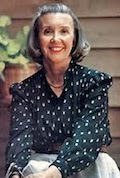
“Early in my career, I decided not to do sequels,” she said. “I know that children enjoy them, but I valued the feeling that this was the only time I would write about these characters. I felt it gave me an added incentive to do my best by them, to tell readers everything I knew; to hold nothing back.”
Share A Writer’s Moment with a friend by clicking the g+1 button below.
August 6, 2017
The terrific writing of Pat Monahan
“You don’t choose your experiences. They choose you.”– Pat Monahan
Writers come in many categories and one of the most interesting can be as a song lyricist, where you’re a combination poet and short story writer. Monahan has been called “One of the best of all time” by almost every other major songwriter.
Monahan’s amazing success has primarily been with the band Train, but it wasn’t a rocket ride to success. After initially being rejected by Columbia Records, Monahan and Train, strongly believing that they were writing lyrics and tunes that would resonate with the general public, decided to self-produce. They scraped together $25,000 and made their record, and of course the rest is history.
But, Columbia still did not dive into supporting them, instead relegating Train to a sub-label, Aware Records. The band’s first single, "Free,” was a hit on pop/mainstream rock stations. Their second, "Meet Virginia,” was a top 20 hit on the Billboard Hot 100.
Their album, "Drops of Jupiter (Tell Me),” with the title song by the same name, was a massive worldwide hit, winning Grammy Awards and rock song of the year. Another immense bestseller for Train was, “Hey, Soul Sister,” which topped every chart worldwide for a year. Train is still going strong thanks primarily to the great writing of Monahan, who also is the group’s lead singer.
For a sample of Monahan’s terrific lyrical writing, look up the lyrics to “Hey, Soul Sister,”or go on this link to the YouTube video. Enjoy. https://www.youtube.com/watch?v=kVpv8-5XWOI
Share A Writer’s Moment with a friend by clicking the g+1 button below.
August 5, 2017
Soaring words from a wise old chief
“If the very old will remember, the very young will listen.” – Chief Dan George I’ve written about Chief George before but felt his poem To A Grandchildwould make for a perfect Saturday’s Poem. Actor, poet and author, his best-known written work was My Heart Soars from a line he uttered often in the movie Little Big Man, and his book by the same name.
 Born in 1899 in British Columbia, he wrote many books, poems and songs, among them these wise words from My Heart Soars.To A Grandchild
Heed the days
when the rain flows freely,
in their greyness
lies the seed of much thought
The sky hangs low
and paints new colors
on the earth.
After the rain
the grass will shed its moisture,
the fog will lift from the trees,
a new light will brighten the sky
and play in the drops
that hang on all things.
Your heart will beat out
a new gladness
- if you let it happen.
In the midst of a land
without silence
you have to make a place for yourself.
Those who have worn out
their shoes many times
know where to step.
It is not their shoes
you can wear
only their footsteps
you may follow,
- if you let it happen.
Share A Writer’s Moment with a friend by clicking the g+1 button below
August 4, 2017
Exploring the 'What If?' factors
“Whenever I start a novel, I'm always looking for two things: a bit of science that makes me go 'what if?' and a piece of history that ends in a question mark.”– James Rollins
A writer of action-adventure/thriller novels who had been practicing veterinary medicine when he decided to "mostly" switch careers, Rollins is an amateur spelunker and a certified scuba diver who found those pastimes to be great background and settings for many of his writings.
“But, I don't actually have a one wellspring of inspiration,” he said. “I subscribe to National Geographic, Scientific American, Discover, and a slew of other magazines. And it is while reading articles for pleasure and interest that an interesting 'What if?' often will pop into my head.”
Born in August 1961, he didn’t start writing until 1999 but has been almost unstoppable since, penning dozens of novels (and counting), among them Indiana Jones and the Kingdom of the Crystal Skull. His very first novel, Witch Fire – written under his pen name James Clemens – was “discovered” as an entry in a Hawaiian writing contest. His most recent novel is the bestseller, The Seventh Plague.
 Rollins continues to practice veterinary medicine, particularly helping abandoned or abused animals. And, he says he’s found a secondary benefit from his writing. “Generally, if you preface a request with, 'I'm an author writing a book,' for some reason, that seems to open a lot of doors.”
Share A Writer’s Moment with a friend by clicking the g+1 button below.
Exploring those 'What If?' factors
“Whenever I start a novel, I'm always looking for two things: a bit of science that makes me go 'what if?' and a piece of history that ends in a question mark.”– James Rollins
A writer of action-adventure/thriller novels who had been practicing veterinary medicine when he decided to "mostly" switch careers, Rollins is an amateur spelunker and a certified scuba diver who found those pastimes to be great background and settings for many of his writings.
“But, I don't actually have a one wellspring of inspiration,” he said. “I subscribe to National Geographic, Scientific American, Discover, and a slew of other magazines. And it is while reading articles for pleasure and interest that an interesting 'What if?' often will pop into my head.”
Born in August 1961, he didn’t start writing until 1999 but has been almost unstoppable since, penning dozens of novels (and counting), among them Indiana Jones and the Kingdom of the Crystal Skull. His very first novel, Witch Fire – written under his pen name James Clemens – was “discovered” as an entry in a Hawaiian writing contest. His most recent novel is the bestseller, The Seventh Plague.
Rollins continues to practice veterinary medicine, particularly helping abandoned or abused animals. And, he says he’s found a secondary benefit from his writing. “Generally, if you preface a request with, 'I'm an author writing a book,' for some reason, that seems to open a lot of doors.”Share A Writer’s Moment with a friend by clicking the g+1 button below.
August 3, 2017
Staying visible along your writing path
“I never write to disappear and escape. The truth is exactly the opposite. Most people strike me as escaping and disappearing in one way or another - into their jobs, their daily routines, their delusions about themselves and others.”– Steven Millhauser
Born in New York City on this date in 1943, Millhauser won the 1997 Pulitzer Prize for his novel Martin Dressler. In 2012 won The Story Prize for his book We Others. That prize is given annually for the previous year’s outstanding collection of short fiction.
While he has had several successful novels, he has earned even more accolades for his numerous short stories.
 One of his best known, Eisenheim the Illusionist, was made into the critically acclaimed 2006 film The Illusionist.
 A resident of Saratoga Springs, N.Y., where he teaches writing at Skidmore, one of the nation’s leading liberal arts colleges, Millhauser has this advice about the writing process: “When a story or part of a story comes to me, I turn it over in my mind a long time before starting to write. I might make notes or take long drives or who knows what. By the time I give myself permission to write, I know certain things, though not everything. I know where the story is headed, and I know certain crucial points along the way.”
Share A Writer’s Moment with a friend by clicking the g+1 button below.
Don't disappear along the writing path
“I never write to disappear and escape. The truth is exactly the opposite. Most people strike me as escaping and disappearing in one way or another - into their jobs, their daily routines, their delusions about themselves and others.”– Steven Millhauser
Born in New York City on this date in 1943, Millhauser won the 1997 Pulitzer Prize for his novel Martin Dressler. In 2012 won The Story Prize for his book We Others. That prize is given annually for the previous year’s outstanding collection of short fiction.
While he has had several successful novels, he has earned even more accolades for his numerous short stories.
One of his best known, Eisenheim the Illusionist, was made into the critically acclaimed 2006 film The Illusionist. A resident of Saratoga Springs, N.Y., where he teaches writing at Skidmore, one of the nation’s leading liberal arts colleges, Millhauser has this advice about the writing process: “When a story or part of a story comes to me, I turn it over in my mind a long time before starting to write. I might make notes or take long drives or who knows what. By the time I give myself permission to write, I know certain things, though not everything. I know where the story is headed, and I know certain crucial points along the way.”
Share A Writer’s Moment with a friend by clicking the g+1 button below.