Dan Jorgensen's Blog, page 434
July 26, 2017
Unpredictable, sporadic and addictive
“Writing's like gambling. Unpredictable and sporadic successes make you more addicted, not less.” – M. John Harrison
Born on this date in 1945, Michael John Harrison is an English author and literary critic whose work includes the Viriconium sequence of novels and short stories, the multiple award-winning 1989 novel Climbers, and the Kefahuchi Tract trilogy, its third book Nova Swing winning the Arthur C. Clarke award, given annually for the best science fiction work published in the United Kingdom. The book also won the Philip K. Dick Award in the U.S.
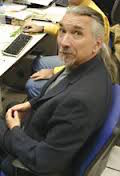 Among his many awards for Climbers was the prestigious Boardman Tasker Prize for Mountain Literature, the first work of fiction to win the prize.
 Widely considered one of the major stylists of modern fantasy and science fiction, Harrison’s reach is into all genrés and he has been twice nominated for the Nobel Prize in Literature. “He writes fantasy and science fiction … of a form, scale and brilliance that it shames not only the rest of the field, but most modern fiction,” noted 3-time Arthur C. Clarke winner China Tom Miéville.
Harrison’s works cross the writing spectrum and he also is a noted teacher of creative writing, focusing on landscape and autobiography. “Every moment of a science fiction story,” he said, “must represent the triumph of writing over world-building.”
Share A Writer’s Moment with a friend by clicking the g+1 button below.


July 25, 2017
Finding the story 'beneath the surface'
“You can have all the information you want in the world. If you don't have the people raising questions and looking beneath the surface, and people being paid to do this, you're not going to find the answers. “– Lowell Bergman
Bergman, born on July 24, 1945, has had one of the most prestigious careers in American journalism, working 5 decades in both print and television news, earning almost every major journalistic award, and now also teaching journalism at UC-Berkeley.
A native of New York City, Bergman studied at the University of Wisconsin and UC-San Diego, starting in journalism by co-founding the San Diego Free Press. After stints at the San Francisco Examiner and Rolling Stone, he moved over to TV as a producer, reporter and then executive in charge of investigative reporting at ABC News. An original producer of 20/20, he joined CBS News as a producer for 60 Minutes, where over the course of 14 years he produced more than 50 stories, many Emmy winners.
His investigative story into the tobacco industry, was later chronicled in the multiple Academy Award–nominated film The Insider, a gripping I highly commend as one of the all-time best films about investigative journalism. Since leaving CBS he has combined his love of print, broadcast and teaching, including working 10 years as an investigative correspondent for The New York Times – where he won a Pulitzer Prize for the series “A Dangerous Business.” And he is both a producer and reporter for the PBS series Frontline.

Named by the Society of Professional Journalist for its James Madison Freedom of Information Award for Career Achievement, he continues teaching and mentoring young journalists from around the world and serving as a conduit between student projects and their publication in some of the top media outlets. “I tell my students that if you have enough preparation, you can handle the big interviews,” he said. “You won't be intimidated.”
Share A Writer’s Moment with a friend by clicking the g+1 button below.
July 24, 2017
Intensifying the experience of living
Good fiction reveals feeling, refines events, locates importance and, though its methods are as mysterious as they are varied, intensifies the experience of living our own lives. – Vincent Canby
Born in July of 1924, Vincent Canby had the distinction of being both the chief film critic AND the chief theater critic for the New York Times – the only person to ever do so. As film critic from 1969-93 he reviewed more than 1,000 films.
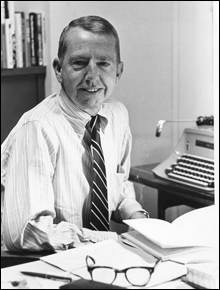 He then turned his critical eye to the theater where he did the theater reviews until his death in 2000. He was such a respected writer and reviewer that Bob Hope requested that Canby be the one to write his obituary, but Canby died first. However, he still received the byline on Hope’s story since he had crafted most of it prior to his own death, and Times editors didn’t think it could be topped.
 The career of Vincent Canby is discussed in the film For the Love of Movies: The Story of American Film Criticism, a wonderful and insightful piece of writing and movie-making that I highly recommend for all who love the silver screen and those who comment upon it.
Share A Writer’s Moment with a friend by clicking the g+1 button below.
July 23, 2017
That 'hard-boiled' writing approach
“A good story cannot be devised; it has to be distilled.” – Raymond Chandler
Born on this date in 1888, Chandler started his writing career out of desperation after losing his oil company job during the Great Depression. He found he had a great knack for writing crime stories and wrote for magazines for several years before devising his first novel – an instant hit and bestseller, The Big Sleep, published in 1939.
In addition to his many, many short stories, Chandler published seven novels including Double Indemnity and The Long Goodbye – considered a masterpiece in the genre and named one of the top 100 novels of the 20th Century. A founder of the “hard-boiled school of detective fiction,” Chandler’s protagonist Philip Marlowe was made even more famous through the acting of Humphrey Bogart, who played him in a number of films adapted from Chandler’s works.
 British author Ian Fleming said that Chandler offered “some of the finest dialogue written in any prose” and mystery writer Paul Levine described Chandler's style as the "literary equivalent of a quick punch to the gut."
“Write ‘actively,’” Chandler said when asked for his advice to young writers. “And when in doubt, have a man come through the door with a gun in his hand.”
Share A Writer’s Moment with a friend by clicking the g+1 button below.
July 22, 2017
Always a search for order
“For me, poetry is always a search for order.'' – Elizabeth Jennings
British poet Elizabeth Jennings, born this date in 1926, won many awards for her “orderly” poetry, which as it often turns out were anything but. She won acclaim and awards for her lyric style including the prestigious Somerset Maugham Award for her second book of poetry A Way of Looking, and the W.H. Smith Literary Award for her 1987 Collected Works, which includes one of her most famous short poems, “In A Garden.” She died in 2001.
 For an enjoyable and thoughtful afternoon or evening of poetic reading pick up one of her books. They will transport you to whatever place about which she is writing. For Saturday’s Poem, here is Jennings’,
 In A Garden
When the gardener has gone this garden Looks wistful and seems waiting an event.
It is so spruce, a metaphor of Eden And even more so since the gardener went, Quietly godlike, but of course, he had Not made me promise anything and I Had no one tempting me to make the bad Choice.
Yet I still felt lost and wonder why?
Even the beech tree from next door which shares Its shadow with me, seemed a kind of threat.
Everything was too neat, and someone cares
In the wrong way.
I need not have stood long Mocked by the smell of a mown lawn, and yet I did. Sickness for Eden was so strong.
Share A Writer’s Moment with a friend by clicking the g+1 button below.
July 21, 2017
Write every day -- and make it 'right'
“I feel I'm functioning at some level as a journalist because even though I write fiction, I'm trying to get the world accurate.” – Michael Connelly
Born on this date in 1956, Connelly is one of America’s premier writers of detective fiction. His books, which have been translated into 39 languages and have won nearly every major award given to mystery writers, including the Edgar Award, Anthony Award, and Los Angeles Times Best Mystery/Thriller Award.
A journalist first, Connelly graduated from the University of Florida and started his career on the crime beat, great training for his later work in creative writing. He is one of the leading advocates for keeping newspapers at the forefront in the media.
“A newspaper is the center of a community,” he said. “It's one of the tent poles of the community, and that's not going to be replaced by Web sites and blogs.”

One-time president of the Mystery Writers of America, he has had many works made into movies and television series, including the award-winning Netflix series Bosch. And, he’s a frequent speaker and panelist on writing.
His advice to all writers is simple: “Write every day even if it’s just a paragraph.”
Share A Writer’s Moment with a friend by clicking the g+1 button below.
July 20, 2017
Writer to reader: It's in the soul
“I love writing novels, even if only a few thousand people read them. Here's my soul; I hope it appeals to your soul.” – Mark O'Donnell
Writer and humorist O’Donnell was born on this date in Cleveland, OH, in 1954 and despite his love of novels, he was best known for his smash Broadway hit and subsequent hit movie Hairspray, for which he won a Tony Award. He also earned a Tony nomination for his 2008 Broadway show Cry-Baby. He did have two best-selling novels, Getting Over Homer and Let Nothing You Dismay.
An identical twin – his brother was television writer Steve O’Donnell – Mark collapsed and died suddenly in 2012 and no cause has ever been determined.

In the years leading up to his death, he had been teaching regularly at Yale where he had many successful students and offered young writers this advice: “Everybody has parents. As a dramatist, whenever you write a character, you must write their parents as well, even if the parents aren't there.”
Share A Writer’s Moment with a friend by clicking the g+1 button below.
July 19, 2017
That 'Rainbow' Connection
In Colorado this time of year, afternoon thundershowers are prevalent, invariably followed by a stunning rainbow. So, the other day when I saw yet one more, I was reminded of the wonderful song “Rainbow Connection,” written by the award winning songwriters Paul Williams and Kenneth Ascher.
Originally performed by muppet Kermit the Frog (voiced by the late, great Jim Henson), It debuted in the 1979 hit The Muppet Movie (if you haven’t seen that movie, it’s another one of those “Not to be missed” things to put on your list).
Williams and Ascher, both in the Songwriters Hall of Fame, earned Oscar nominations for the movie’s score and this terrific song, which often has been compared with “Over The Rainbow” in The Wizard of Oz exactly 40 years earlier. Both songs are beautiful, make up the opening scene of their respective movies, and reflect each singer's urge to find something more in life.
"Rainbow Connection" has been recorded by hundreds of artists around the world – everyone from Jason Mraz to Willie Nelson and Sarah McLaughlin to the Yale University Whiffenpoofs and the Cast of “Glee.” The American Film Institute rated it the 74th greatest movie song of all time – not bad for being sung by a frog.
Here's a version by the late Karen Carpenter, whose voice truly took every song to its highest level. May you find your own rainbow connection in all your writers' moments.
https://www.youtube.com/watch?v=fTb9-eDmvKQ
Share A Writer’s Moment with a friend by clicking the g+1 button below
July 17, 2017
A sense of 'connections'
“I want to look at this character from all points of view. I know I don't want to make them all good or all bad or all anything... the story itself often helps create the character.” – Chris Crutcher
Born in Ohio on this date in 1946, Crutcher grew up in a small town in Idaho where he was a multi-sport athlete and avid reader from early childhood. Influenced by To Kill A Mockingbird and the idea that writing about small town life was a good thing, he went into writing for teens almost from the start of his writing career. Good choice!
The American Library Association has named 8 of his 13 young adult novels and 2 short story collections “Best Books for Young Adults.” Four of his books appeared on Booklist’s“Best 100 Books of the 20th Century,” compiled in 2000 – more than any other single author on the list. Crutcher received the ALAN Award in 1993, the NCTE SLATE Intellectual Freedom Award in 1998, the Margaret A. Edwards Lifetime Achievement Award in 2000 and Writer Magazine’s “Writers Who Make a Difference” Award in 2004.
Crutcher's debut novel was Running Loose in 1983 about a senior in high school who has it all until life throws him for a few loops. Many of his novels concern teenaged athletes who have personal problems, often swimmers.
 His recurring supporting characters include a wise teacher or coach. One of his most honored is Staying Fat for Sarah Byrnes, the story of a girl who suffers a severe facial injury from an abusive parent.
 “What I hope my writing reflects... is a sense of the connections between all human beings... and a different perspective on the true nature of courage,” he said. “For me, those are things worth exploring and writing about.”
Share A Writer’s Moment with a friend by clicking the g+1 button below.
July 16, 2017
Escaping to a genre' of ideas
“To me, fantasy has always been the genre of escape, science fiction the genre of ideas. So if you can escape and have a little idea as well, maybe you have some kind of a cross-breed between the two.” – Sheri S. Tepper Born in Colorado on this date in 1929, Tepper wrote science fiction, horror and mystery novels and also was known for her feminist science fiction, often with an eco-feminist slant. Her novel Grassis considered a classic on this theme. Tepper employed several pen names, including A. J. Orde, E. E. Horlak, and B. J. Oliphant, and although she stared writing late in life (in her 50s) she turned out more than 50 books. Tepper started writing under the name Sheri Stewart Eberhart, first doing children’s books and poetry but then finding her niche in the sci-fi/fantasy world.
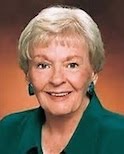
Her book The Revenants firmly established her in the genré and in the 1990s and early 2000s she wrote a couple dozen books, including two best-selling trilogies – The Marianne Series and The Arbai Trilogy, both multiple award winners, including two Hugos. Her 1992 stand-alone book, Beauty, won a Locus Award for Best Fantasy. Shortly before her death in 2016 she was given the World Fantasy Award for Lifetime Achievement.
In receiving the award she said she would encourage new writers to look into the sci-fi world. “Science fiction,” she said, “still is an idea genré.”
Share A Writer’s Moment with a friend by clicking the g+1 button below.