Dan Jorgensen's Blog, page 438
June 19, 2017
Anatomy of writing success
“I'm a fisherman who likes to observe and tell yarns, and so I told stories about things that I knew about.” – John D. Voelker
Born on this date in 1904, Voelker is best known for his book Anatomy of a Murder, written under his pen name Robert Traver. An avid fly fisherman and practitioner of the law, Voelker almost became a bartender like his father, but was constantly encouraged by his mother to get his education and pursue the law instead.
In law school at the University of Michigan he nearly flunked out, but fought the grade ruling, got reinstated, earned his degree and went on to a highly successful career, first as a trial lawyer, then as a judge,
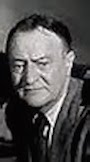 and finally as a Michigan Supreme Court Justice.
 Voelker wrote his first story, "Lost All Night in a Swamp with a Bear" at age 12 and had his first published piece, a short story called "Iron" in 1934. By that point he was immersed in the law and so took on a pen name, a combination of brother’s first name and his mother’s maiden name – because he "didn't think the taxpayers would fancy [him] doing [his] scribbling on their time."
Anatomy of a Murder is based on a real case that he won for the defendant in 1952. It not only was a best-selling book but also an award-winning movie, filmed almost entirely in Voelker’s Michigan hometown and county courthouse, the first time that type of filming had been done. It has been named one of the best trial movies of all time.
Voelker said he was glad he chose the law and combined it with his love of writing tales. “Spinning yarns,” he said, “is a protection against the nuttiness... the greed, and the hate all around us.”
Share A Writer’s Moment with a friend by clicking the g+1 button below.


June 18, 2017
Constantly freeing up new designs
“I write the way you might arrange flowers. Not every try works, but each one launches another. Every constraint, even dullness, frees up a new design.”– Richard Powers
Born on this date in 1957, Powers is noted for exploring the effects of science and technology, something he says are essential to modern writing. “I think that if the novel's task is to describe where we find ourselves and how we live now,” he explained, “the novelist must take a good, hard look at the most central facts of contemporary life - technology and science.”
A native of Evanston, IL, Powers spent a number of his formative years in Thailand where his father had a key position at the International School Bangkok. While there, he developed both writing and musical skills, becoming proficient in cello, guitar, saxophone and clarinet, studying voice and vocal performance, and also immersing himself in books, especially the classics.
His wonderful book The Time of Our Singingis a story about the musician children of an interracial couple who meet at Marian Anderson’s legendary concert on the steps of the Lincoln Memorial in 1939. The book shows off Powers’ knowledge of both music and physics while also exploring both race relations and the burdens of talent. His most honored novel, 2006’s The Echo Makerwon
 the National Book Award and was a finalist for the Pulitzer Prize. Since then he’s won dozens of other major prizes, including a MacArthur (Genius) Grant, the Lannan Literary Award and the Dos Passos Prize for Literature. Now teaching at Stanford, his advice to students is to delve into whatever opportunities arise. “If you're going to immerse yourself in a project for three years, why not stake out a chunk of the world that is completely alien to you … and go traveling?”
Share A Writer’s Moment with a friend by clicking the g+1 button below.
June 17, 2017
We all need poetry
“We all need poetry. The moments in our lives that are characterized by language that has to do with necessity or the market, or just, you know, things that take us away from the big questions that we have, those are the things that I think urge us to think about what a poem can offer.”– Tracy K. Smith
Named the nation’s 22ndPoet Laureate this week, Smith, who was born in 1972, grew up in a house lined with books of all kinds – ranging from Sci-Fi paperbacks to Shakespeare’s sonnets. Now, as laureate, she has the world’s largest library available to explore – when she’s not busy teaching poetry and creative writing at Princeton.
 Winner of the 2012 Pulitzer Prize – for her spectacular book of poems Life on Mars – Smith told Washington Postreporter Ron Charles that her new appointment gives her an opportunity “to immerse myself in the conversation that poetry generates. When we’re talking about the feelings that poems alert us to and affirm, we’re speaking as our realest selves.” For Saturday’s Poem, here is Smith’s,
 The Good Life When some people talk about money
They speak as if it were a mysterious lover
Who went out to buy milk and never
Came back, and it makes me nostalgic
For the years I lived on coffee and bread,
Hungry all the time, walking to work on payday
Like a woman journeying for water
From a village without a well, then living
One or two nights like everyone else
On roast chicken and red wine.
Share A Writer’s Moment with a friend by clicking the g+1 button below.
June 16, 2017
Carrying the lamp for editorial fairness
“To love what you do and feel that it matters – how could anything be more fun?”
– Katharine Graham
Award-winning writer, and publisher of The Washington Post for over two decades, Graham was born this date in 1917. Today, she’s especially remembered for her newspaper's role in exposing the Watergate Scandal. I loved reading her Pulitzer Prize winning memoir, simply titled Personal History, and what a history it was, exuding both her joy of working in media and the fun she had doing it. She and her editorial team revived a so-so newspaper and made it a national powerhouse, and the investigative effort during Watergate stands as a benchmark for “how it’s done.”
A Republican who oversaw investigative reporting of a Republican president, she said politics should never get in the way of good reporting. “It matters not if a person is from one party or another. If someone has done something that needs to be exposed in print, then that’s what a good reporter should do.”

A personal friend of luminaries like Truman Capote and Adlai Stevenson, who was twice a candidate for U.S. President and served as the U.N. Ambassador, she was awarded The Presidential Medal of Freedom shortly before her death in 2001. The International Press Institute named her one of the world’s 50 most influential and powerful media people of the 20th century in 2000.
“Once, power was considered a masculine attribute,” Graham said when told of the honor. “In fact, power has no sex.”
Share A Writer’s Moment with a friend by clicking the g+1 button below.
June 15, 2017
Write the words that won't wear out
“Honesty is something you can't wear out.” – Waylon Jennings
Born on this date in 1937, Jennings grew up in Littlefield, TX, where he learned how to play guitar by the time he was 8 and started in the entertainment business at age 12 – working as a DJ at a local radio station. In 1954 he befriended rising star Buddy Holly who also became his mentor, collaborating with him on songs, and helping produce Waylon’s first record. Jennings also became a fill-in player for Holly’s group The Crickets and was with him in Iowa on his final tour that ended in Holly’s death in a plane crash. Jennings was supposed to be on that plane with Holly but at the last minute gave up his seat to The Big Bopper because the latter was suffering from a bad cold. Ultimately, Jennings became one of the great songwriters
 and singers of country, country rock, and a new genre – founded with Willie Nelson, Kris Kristofferson and Jessi Coulter – called Outlaw Country. He was still at the height of his career when he died in 2002 of complications from diabetes at the relatively young age of 64.
Jennings was known for his support of many social issues and causes, saying it was an easy choice. “A lot of times people don't want to hear it. But you know, if some good is done to you, you should pass it on.”
YouTube is filled with Waylon Jennings songs. A couple I've always enjoyed, both for their tunes and the terrific lyrics are “Luckenback, Texas,” https://www.youtube.com/watch?v=n-qj-CnGZd4 and “Mammas Don’t Let Your Babies Grow Up To Be Cowboys,” here sung as a duet with old pal Willie Nelson, https://www.youtube.com/watch?v=VkYmvKnZHtE Enjoy!
Share A Writer’s Moment with a friend by clicking the g+1 button below.
June 14, 2017
Writing what you see and hear
“Whenever I write, I write what I find to be the way people are. I never use any symbolism at all, but if you write as true to life as you possibly can, people will see symbolism. They'll all see different symbolism, but they're apt to because you can see it in life.” – Carolyn Chute Born in Maine on this date in 1947, Chute is a populist political activist strongly identified with the culture of poor, rural western Maine, although her works speak to other similar areas in the U.S. such as rural Appalachia. An award-winning writer (both a Guggenheim Fellowship and a Thornton Wilder Award) who “knows of what she speaks,” she writes by hand, lives off the grid (no electricity or running water in her home), and raises much of her own food. She started writing as a part-time newspaper correspondent, then taught creative writing while finishing her best known, novel, The Beans of Egypt, Maine. Published in 1985, it was made into a 1994 film of the same name, directed by Jennifer Warren. She has since published a number of other books and short stories and is a frequent speaker about class issues in America. She also publishes "The Fringe," a monthly collection of essays, short stories, and intellectual commentary on current events.Her advice to writers is to just write what you see and hear.
 “Every time I think I know what's right and wrong, I end up being wrong. All I want to do is explore. I want to see what people would do. I say, 'What would this person do in this situation?' and I write it down.”
Share A Writer’s Moment with a friend by clicking the g+1 button below.
Just write what you see and hear
“Whenever I write, I write what I find to be the way people are. I never use any symbolism at all, but if you write as true to life as you possibly can, people will see symbolism. They'll all see different symbolism, but they're apt to because you can see it in life.” – Carolyn Chute Born in Maine on this date in 1947, Chute is a populist political activist strongly identified with the culture of poor, rural western Maine, although her works speak to other similar areas in the U.S. such as rural Appalachia. An award-winning writer (both a Guggenheim Fellowship and a Thornton Wilder Award) who “knows of what she speaks,” she writes by hand, lives off the grid (no electricity or running water in her home), and raises much of her own food. She started writing as a part-time newspaper correspondent, then taught creative writing while finishing her best known, novel, The Beans of Egypt, Maine. Published in 1985, it was made into a 1994 film of the same name, directed by Jennifer Warren. She has since published a number of other books and short stories and is a frequent speaker about class issues in America. She also publishes "The Fringe," a monthly collection of essays, short stories, and intellectual commentary on current events.Her advice to writers is to just write what you see and hear.
“Every time I think I know what's right and wrong, I end up being wrong. All I want to do is explore. I want to see what people would do. I say, 'What would this person do in this situation?' and I write it down.”Share A Writer’s Moment with a friend by clicking the g+1 button below.
June 13, 2017
Reader, writer, characters: A terrific triad
“The interesting thing about fiction from a writer's standpoint is that the characters come to life within you. And yet who are they and where are they? They seem to have as much or more vitality and complexity as the people around you.” – Whitley Strieber
Born in San Antonio, TX, on this date in 1945, Strieber has split his writing talents between horror stories, science fiction, and speculative fiction with a social conscience – interrupted (both literally and figuratively) by his nonfiction account of being abducted by “non-human visitors.” That particular book, Communion, while pooh-poohed as “improbable if not impossible,” was a huge bestseller and a subsequent successful big screen adaptation. Two of his other books, The Wolfen and The Hunger,
 also were made into successful films. Still going strong at age 72, Strieber had three books out in 2016, including the acclaimed Sci-Fi book Hunters, now set to be made into a new series for the SyFy Channel.
As for what makes for successful writing? “The truth is, everything ultimately comes down to the relationship between the reader and the writer and the characters,” Strieber said. “Does or does not a character address moral being in a universal and important way? If it does, then it's literature.”
Share A Writer’s Moment with a friend by clicking the g+1 button below.
Reader, writer and characters, a terrific triad
“The interesting thing about fiction from a writer's standpoint is that the characters come to life within you. And yet who are they and where are they? They seem to have as much or more vitality and complexity as the people around you.” – Whitley Strieber
Born in San Antonio, TX, on this date in 1945, Strieber has split his writing talents between horror stories, science fiction, and speculative fiction with a social conscience – interrupted (both literally and figuratively) by his nonfiction account of being abducted by “non-human visitors.” That particular book, Communion, while pooh-poohed as “improbable if not impossible,” was a huge bestseller and a subsequent successful big screen adaptation. Two of his other books, The Wolfen and The Hunger,
also were made into successful films. Still going strong at age 72, Strieber had three books out in 2016, including the acclaimed Sci-Fi book Hunters, now set to be made into a new series for the SyFy Channel.As for what makes for successful writing? “The truth is, everything ultimately comes down to the relationship between the reader and the writer and the characters,” Strieber said. “Does or does not a character address moral being in a universal and important way? If it does, then it's literature.”
Share A Writer’s Moment with a friend by clicking the g+1 button below.
June 12, 2017
Seeing the possibilities in everything
“I am careful not to confuse excellence with perfection. Excellence I can reach for; perfection is God's business.”– Michael J. Fox
Fox, who celebrated his 56th birthday this past weekend, stays exceptionally busy despite his ongoing battle with Parkinson’s disease, working on causes ranging from finding a cure for the illness to eradicating hunger and housing shortages.
 He remains one of the most well-known faces in acting, never resting on the laurels that came from his earlier successes, especially as Alex Keaton on the long-running TV series Family Ties, and as teen heartthrob/adventurer Marty McFly in the Back to the Future movie series.
 A native of Edmonton, Canada and now longtime resident of New York City, Fox’s acting career almost got sidelined from the start. The director of Family Ties wanted him for the Alex role, but producer Brandon Tartikoff felt Keaton was “too short (he’s 5-foot-4) and not the kind of face you’d like to see on your kid’s lunchbox.” But they tried him in the pilot and he was so well-received he went on to be the key figure in the show, winning three Emmy Awards in the process. At the end of the series, he presented Tartikoff with a lunchbox with his face emblazoned on the cover.
Also a gifted writer, Fox uses his writing skills to spread the word about the disease from which he suffers, ever optimistic that with enough attention and support a cure can be discovered – if not in his lifetime then at least to help future generations. Lucky Man, his book about dealing with the disease, is a must read for those interested in how to overcome seemingly crushing odds. “I see possibilities in everything. For everything that's taken away, something of greater value has been given,” Fox said. “I like to encourage people to realize that any action is a good action if it's proactive and there is positive intent behind it.”
Share A Writer’s Moment with a friend by clicking the g+1 button below.