Dan Jorgensen's Blog, page 442
May 16, 2017
Human because of our language
“Words are our life. We are human because we use language. So I think we are less human when we use less language.” – Carol Shields
Born on this date in 1935, Shields was American-born (Illinois) but became a well-known novelist and short story writer in her adopted country of Canada. And, after becoming a renowned writer, her life came full circle when she won the 1995 Pulitzer Prize for fiction for her novel The Stone Diaries, along with Canada’s equivalent, the Governor General's Award - the only novel to ever win both.
Shields first moved to Canada in the 1960s to do her master’s degree in English, and then she returned after marrying a Canadian citizen. She started her writing career as an editorial assistant for the journal Canadian Slavonic Papers in the late 1970s and taught creative writing in British Columbia before moving over to the University of Manitoba, where she taught the rest of her life. She died in 2003.
Side-by-side with her teaching she wrote short stories and a number of well-received novels before her major achievement with The Stone Diaries. Shields also won the 1998 Orange Prize for Fiction for her novel Larry's Party, and her last novel Unless (in 2002) won the Ethel Wilson Fiction Prize and was nominated for The Booker Prize.
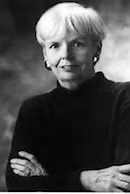
“There are chapters in every life which are seldom read,” Shields wrote about what should and should not be shared by writers. “And if they are, they should not be shared aloud.”
Share A Writer’s Moment with a friend by clicking the g+1 button below.


May 15, 2017
The sounds and rhythms of words
“The sounds and rhythms of words are really important to me.”– David Almond
Born on this date in 1951, British author Almond started writing for adults but earned accolades and critical success with works for children and young adults. Since the publication of his first young adult book, Skellig, his YA novels, stories, and plays have brought him international success and widespread critical acclaim. He is one of just 30 writers to win the biennial, international Hans Christian Andersen Award, "the world's most prestigious prize in children's literature."
A native of Newcastle, Almond said he dreamed of being a writer “even as a child,” creating little books to share with his family and classmates.
 A teacher right out of college, he didn’t begin a writing career until the 1985 adult novel, Sleepless Nights. While he had modest success writing for adults, it was Skellig that launched him onto the his award-filled (he’s won over a dozen) YA writing path. His most acclaimed recent work is A Song for Ella Grey based on the legend of Orpheus and Eurydice.
 Noted for a lyrical style that also often focuses on the region in which he resides, he said he credits “regional” writers with influencing him. “I learned to be a regional writer by reading people like (writer of the American South) Flannery O'Connor,” he said. “She was a huge influence.”
Share A Writer’s Moment with a friend by clicking the g+1 button below.
May 14, 2017
Happy Mother's Day
Happy Mother’s Day, especially to my wife Susan and daughters Kari and Becky, who also are beautiful and wonderful mothers, giving Susan and me some terrific grandsons. All 3 of these strong women have always been great inspirations to me as a writer.
And, remembering today my own mother Virginia, who died at the relatively young age of 60, but whose spirit and enthusiasm for life continues to play an important part in my life and how I look upon the world when writing about it.
“Be happy and be a friend, and your life will always be full,” my mother used to say. “Money does not measure success. If your life is filled with friends, then you are rich.” My mother’s optimistic spirit, concern for others, and hope for the future were, perhaps, the greatest gifts she gave to me and to all whose lives she touched.
We receive so many gifts from our mothers each and every day. The best each of us can do in return is cherish those gifts and use them wisely.

May 13, 2017
Celebrating the start of the day
“ I think what gets a poem going is an initiating line. Sometimes a first line will occur, and it goes nowhere; but other times - and this, I think, is a sense you develop - I can tell that the line wants to continue. If it does, I can feel a sense of momentum - the poem finds a reason for continuing.” – Billy Collins
I’ve written of Collins before and the former Poet Laureate of the U.S.
 just continues adding to his body of work and honors, including the recently awarded Peggy V. Helmerich Distinguished Author Award, given annually to an "internationally acclaimed" author who has "written a distinguished body of work and made a major contribution to the field of literature and letters."
After waking early today – I’m a “morning person” anyway – and while making coffee, I was reminded of the Collins’ poem Morning. As I re-read it, I also thought it was a perfect share for Saturday’s Poem. Enjoy!
Morning Why do we bother with the rest of the day,
the swale of the afternoon,
the sudden dip into evening,
then night with his notorious perfumes,
his many-pointed stars?
This is the best—
throwing off the light covers,
feet on the cold floor,
and buzzing around the house on espresso—
maybe a splash of water on the face,
a palmful of vitamins—
but mostly buzzing around the house on espresso,
dictionary and atlas open on the rug,
the typewriter waiting for the key of the head,
a cello on the radio,
and, if necessary, the windows—
trees fifty, a hundred years old
out there,
heavy clouds on the way
and the lawn steaming like a horse
Share A Writer’s Moment with a friend by clicking the g+1 button below.
May 12, 2017
Writing as an emotional reflection
“Whether you want to entertain or to provoke, to break hearts or reassure them, what you bring to your writing must consist of your longings and disappointments.”– Rafael Yglesias
American novelist and screenwriter Yglesias, celebrating his 63rdbirthday today, is perhaps best known for his book and screenplay Fearless, both multiple award winners and award nominees. He is a New York native who finds himself in a “sandwich” position of family writers – the son of two of them and father of two more. And, his wife is novelist Ann Packer. Literally a “born writer,” Yglesias wrote his first successful novel, Hide Fox,while still in the 10th grade.
He also has had many his major successes with screenplays – besides his own novel’s adaptation – including the 1998 version of Les Miserables, featuring Liam Neeson, Geoffrey Rush and Uma Thurman in the lead roles. And, look for more from him on television, too. He just finished a successful run with NBC’s Aquarius
 and is rumored to have signed for more.
Fiercely independent with his writing style, he is noted for creating complex characters. “To me, people's lives and loves are entwined with their characters, natures and circumstances,” he said. “I regard all general advice with skepticism.”
Share A Writer’s Moment with a friend by clicking the g+1 button below.
May 11, 2017
Engaging with the world around us
“As a writer and as a reader, I really believe in the power of narrative to allow us ways to experience life beyond our own; ways to reflect on things that have happened to us and a chance to engage with the world in ways that transcend time and gender and all sorts of things.” – Kim Edwards
Born in Texas in May 1958, Edwards is the author of The Memory Keeper's Daughter, now translated into 38 languages, and the bestselling The Lake of Dreams. She also authored a collection of short stories, The Secrets of a Fire King. Her writing honors include the Whiting Award, the British Book Award, and USA Today's2006 Book of the Year for Memory Keeper’s Daughter.
A graduate of the Iowa Writers' Workshop, she has taught widely in the U.S. and Asia and continues to teach at the University of Kentucky. She also is the recipient of a National Endowment for the Arts grant for her work. In her teaching,
 she said she often reflects on people’s desire to share stories as one of the things “that make us human.”
 As for advice to beginning writers, she likes the idea of writing from a place that you know. “I've always set my stories in places I know well,” she said. “It frees me up to spend more imaginative time on the characters if I'm not worrying about the logistics.“
Share A Writer’s Moment with a friend by clicking the g+1 button below.
May 10, 2017
A testament to perserverence
“I love writing and do not know why it is considered such a difficult, agonizing profession.” – Caroline B. Cooney Born in Connecticut on this date in 1947, Cooney is an award-winning author of Young Adult fiction in a wide range of genres ranging from mystery and suspense to romance and horror. Her 2008 book Diamonds in the Shadow was named a 2008 ALA/YALSA Quick Pick and was a nominee for the Edgar Allan Poe Award, but she is best known for her early 1990s novel The Face on the Milk Carton, which sold over 3 million copies and was made into a television movie.
Although she got off to a rather rocky start in her writing career, once she “connected,” she never dropped off the writing map again. To date she’s published over 60 books and many dozens of short stories – something she first thought might be what she would do throughout her writing life.
“I wrote 8 full-length adult novels in my twenties. None of them were published,” she said. “And so, I decided to write short stories because they got rejected quicker.” But, of course, they did not get rejected and led to her writing
 "published" novels as well. Cooney said she first knew she would be a writer in the 6th grade and never gave up on the dream even with those early publishing issues. “I’m one of the lucky writers,” she said. “Plots come easily to me.”
A Writer’s Moment with a friend by clicking the g+1 button below.
May 9, 2017
That 'amazing' creative process
“The creative act amazes me. Whether it's poetry, whether it's music, it's an amazing process, and it has something to do with bringing forth the old out into the world to create and to bring forth that which will rejuvenate.”– Joy Harjo
Harjo, whose roots trace to a number of Native American cultures, was born in Oklahoma on this date in 1951 and thought art would be her career path. But, after studying art at the Institute for American Indian Arts in Santa Fe, NM, she went on to grad school at the University of New Mexico and fell in love with both writing and music. Since the mid-1970s, she has taught writing at half-a-dozen major universities, and also made a name for herself on the performance art circuit, playing alto saxophone with the band Poetic Justice and doing poetry readings and solo musical performances across the nation.
Among her written works are 2015’s Conflict Resolution for Holy Beings, the 2012 award-winning Crazy Brave, and a wonderful book of poetry How We Became Human: New and Selected Poems 1975–2000. She also has edited literary journals, written several screenplays, and released 5 CDs. She’s also a recent recipient of a Lifetime Achievement Award from the Native Writers' Circle of the Americas.In the early 2000s I attended one of her
 performance/talks and was impressed with her dedication to writing, support for other Native American writers and artists, and commitment to Social Justice.
“I am a member of the Muskogee people. I'm a poet, a musician, a dreamer of sorts, a questioner,” she said. “It’s important as a writer to do my art well and do it in a way that is powerful and beautiful and meaningful, so that my work regenerates the people, certainly Indian people, and the earth and the sun. And in that way we all continue forever.”
Share A Writer’s Moment with a friend by clicking the g+1 button below.
May 8, 2017
Just sharing a little kindness
“Those who bring sunshine into the lives of others cannot keep it from themselves.” – J.M. Barrie
The author of more than 50 books and plays, Barrie -- who was born in May of 1860 -- cemented his place in literary (and children's) history with his beloved play and novel Peter Pan, written in the early 1900s. Invented by Barrie to entertain George and Jack Davies, the children of a close friend, Peter Pan was named for the boys’ younger brother Peter, who Barrie claimed knew how to fly. Peter Pan quickly overshadowed his previous works and everything else that followed, even though many of his writings, especially his plays, were quite successful. And he always said that without the inspiration of the Davies boys he never would have written the story at all.
Barrie's Peter Pan also is credited for creating the girl’s name Wendy. Barrie’s heroine was inspired by Margaret Henley, a friend of the family. Margaret always called Barrie “Friendly,” but like many young kids could not say her “R’s” and "L's" very well. So her pronunciation came out as “Fwendy.” Barrie liked the sound of that and thus was born the name Wendy.
Barrie unofficially adopted the Davies boys following the deaths of their parents and gave many of his proceeds from the Peter Pan book and play toward their upbringing. After they were grown and he was gravely ill, he willed the rights to Peter Pan to London’s Great Ormond Street Hospital – a medical facility known for helping the impoverished.

The hospital continues to benefit andthus, like Peter, the boy who never grew up, Barrie’s creative spirit – and that “sunshine” of which he spoke in his quote above – lives on through the lives his generosity touches each and every day. As Barrie once noted, "Always be a little kinder than necessary."
Share A Writer’s Moment with a friend by clicking the g+1 button below.
May 7, 2017
Writing 'The Feel' of the World
“What is more important in a library than anything else - than everything else - is the fact that it exists.” – Archibald MacLeish
Born in Illinois on this date in 1892, Archibald MacLeish was one of the so-called “Lost Generation” of American writers and artists who made Paris their home in the 1920s. He grew from being a rebellious writer into, “One of the hundred most influential figures in librarianship during the 20th century” working tirelessly to promote the arts, culture, and libraries.
Among his many impacts, MacLeish became the first Librarian of Congress to begin the process to name what would ultimately become the position of U.S. Poet Laureate, a position he himself easily could have fulfilled.

Associating himself with the Modernist school, he wrote so eloquently and powerfully that he ended up with dozens of prizes including two Pulitzers for Poetry and another for Drama. His dramatic winner, the Broadway play J.B. – a modern day re-telling of the Book of Job – also won a Tony as Best Drama.
Often at odds with journalists, he once said, “Journalists don’t understand how poets work. Journalism is concerned with events; poetry with feelings. Journalism is concerned with the look of the world, poetry with the feel of the world.
“Poets,” MacLeish said, “are literal-minded men who will squeeze a word till it hurts.”
Share A Writer’s Moment with a friend by clicking the g+1 button below.