
Dan Jorgensen's Blog, page 445
April 16, 2017
Easter's beauty of new life
“Easter spells out beauty, the rare beauty of new life.” – S.D. Gordon
S.D. Gordon (1859-1936), a popular writer – author of the bookQuiet Talks About Jesus – andspeaker, was a longtime affiliate of the Young Men’s Christian Association. He authored 25 books, most devotional in nature, and had many wonderful thoughts about Easter and the joy and hope that it brings to us all.
The first Bible verse I ever “learned by heart” was John 3:16. “For God so loved the world, that He gave His only son, that whoever believes in Him should not perish but have eternal life.” Our hope for the world lies in the comfort that verse provides.

Share A Writer’s Moment with a friend by clicking the g+1 button below.


April 15, 2017
Cutting through the noise of words
“. . . Poetry cuts through the noise of other words, like a prayer. It wakes us. It finds us. It witnesses life simultaneously at its most conscious and its most hidden. A poem is always about what it means to be alive and mortal.”– Anne Michaels (from a Poetry in Voice* interview)
Born on this date in 1958, Michaels is a Canadian poet and novelist who has won dozens of international awards and whose work has been translated and published in nearly 50 countries. The recipient of the Commonwealth Poetry Prize for the Americas and the Canadian Authors' Association Award, she also is an award winner
 for her fiction, especially the highly lauded novel Fugitive Pieces. Since October 2015, Michaels has served as poet laureate of Toronto. For Saturday’s Poem, here is Michaels’,
 Flowers
There’s another skin inside my skinthat gathers to your touch, a lake to the light;that looses its memory, its lost languageinto your tongue,erasing me into newness.
Just when the body thinks it knowsthe ways of knowing itself,this second skin continues to answer.
In the street – café chairs abandonedon terraces; market stalls emptiedof their solid light,though pavement still breathessummer grapes and peaches.Like the light of anything that growsfrom this newly-turned earth,every tip of me gathers under your touch,wind wrapping my dress around our legs,Your shirt twisting to flowers in my fists.
*Read more about Poetry In Voice at http://www.poetryinvoice.com/about
Share A Writer’s Moment with a friend by clicking the g+1 button below.
April 14, 2017
Just aim for the stars
“History is a vision of God's creation on the move.” – Arnold J. Toynbee
Born on this date in 1889, British historian, philosopher, and research professor of International History Arnold J. Toynbee also was the author of numerous books, including the immensely popular 12-volume A Study of History (which he wrote from the mid-1930s until the early 1960s).
Combined with his prodigious output of papers, articles, speeches and presentations, as well as other numerous books translated into many languages, Toynbee was probably the most widely read and discussed historical scholar from the mid-1940s until his death in 1975.
He was honored posthumously in 1987 with the creation of the Toynbee Prize, awarded internationally each year. The [Toynbee Prize] Foundation was chartered “to contribute to the development of the social sciences, as defined from a broad historical view of human society and of human and social problems.”
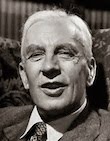 Noted for his “aim for the stars” approach to achieving goals, he once noted, “It is a paradoxical but profoundly true and important principle of life that the most likely way to reach a goal is to be aiming not at that goal itself but at some more ambitious goal beyond it.”
 Share A Writer’s Moment with a friend by clicking the g+1 button below.
April 13, 2017
Following the right writing track
“I've learned in my years as a journalist that when a politician says 'That's ridiculous' you're probably on the right track.”– Amy Goodman
Born on this date in 1957, Goodman is an award-winning journalist and author, with a distinguished career in broadcasting and newspapers. Her investigative journalism has uncovered major scandals and abuses around the globe, sometimes leading to her arrest, beatings by authorities, and ultimately changes in the mis-uses of power that she has observed.
A native of Washington, DC, Goodman studied anthropology before moving into journalism in the mid-1980s, starting as a radio reporter in New York. In 1996 she co-founded the hard-hitting news program Democracy Now! Among her many prestigious awards are the Thomas Merton Award in 2004, the Right Livelihood Award in 2008, and the Gandhi Peace Award for a "significant contribution to the promotion of an enduring international peace.” She has authored 6 books, including the The Silenced Majority: Stories of Uprisings, Occupations,
 Resistance, and Hope, and this past year’s best seller, Democracy Now!: Twenty Years Covering the Movements Changing America..
“The media is absolutely essential to the functioning of a democracy,” Goodman said. “It's not our job to cozy up to power. We're supposed to be the check and balance on government.“
Share A Writer’s Moment with a friend by clicking the g+1 button below.
April 12, 2017
A champion for libraries and writers
“If life's lessons could be reduced to single sentences, there would be no need for fiction.” – Scott Turow
Turow, born on this date in 1949, has written 9 fiction and 2 nonfiction books, which have been translated into more than 40 languages and sold more than 30 million copies. Many of his books also have been made into major films.
Always interested in writing and storytelling from his youngest days, he studied writing for part of his collegiate career before deciding on Law School (Harvard). A one-time Assistant U.S. Attorney in his native Chicago, Turow left the U.S. Attorney's Office in 1986, became a novelist, and wrote the first of his legal thrillers Presumed Innocent. The 1987 novel was a huge hit and has been followed by such top-sellers as The Burden of Proof, Pleading Guilty, and Personal Injuries.
Turow has won multiple literary awards, most notably the Silver Dagger Award from the British Crime Writers' Association, while also continuing his law career. Known as a champion of writers’ rights, he is one of the staunchest supporters of public libraries, in which he spent much of his own time as a child. “I count myself as one of millions of Americans whose life simply would not be the same [image error] without the libraries that supported my learning,” he said.
“For thousands and thousands of American kids, libraries are the only safe place they can find to study, a haven free from the dangers of street or the numbing temptations of television. As schools cut back services, the library looms even more important to countless children.”
Share A Writer’s Moment with a friend by clicking the g+1 button below.
April 11, 2017
Writing 'until it was right'
“I think about the characters I've created, and then I sit down and start typing and see what they will do. There's a lot of subconscious thought that goes on. It amazes me to find out, a few chapters later, why I put someone in a certain place when I did.” – Tom Clancy
Tom Clancy was born on this date in 1947 and died in 2013, writing right up until the end and trying to convey what those characters were still telling him to share. He was in his mid-30s when he got started as a writer and went on to 17 best-selling novels, 4 award-winning movies, and more than 100 million copies of his books in print. Not one to be tied down or intimidated by technology, he also got actively involved in developing video games based on his writings.
Clancy said he started writing in 1982 because “I wanted to see my name on the cover of a book. If your name is in the Library of Congress, you're immortal,” he told one interviewer. That first book was the suspense-filled adventure The Hunt for Red October, a book he wrote over a period of years while working at an insurance company. A stickler for the details, Clancy established himself as an undisputed master at blending exceptional realism and authenticity, intricate plotting, and razor-sharp suspense.While he never studied writing, he was
 always interested in being a writer in order to convey the knowledge that he had attained through his countless hours of research and love of military history. When asked what advice he would give to new writers, he said, “Learn to write the same way you learn to play golf. You do it and keep doing it until you get it right.”
Share A Writer’s Moment with a friend by clicking the g+1 button below.
April 10, 2017
Following that writing dream
“Dreamers become writers, and for me, being a published writer is a dream come true.”– David A. Adler A math teacher by training, Adler (born on this date in 1947) got into writing because of a question from his 3-year-old nephew about how a city becomes a city. He put together the answer in story form – relayed to a young child by his Grandpa – and in 1976 it became his first best seller, A Little at a Time. He followed with a series of math books, drawing on his teaching experience, and in 1977 he created his most famous character, Cam Jansen, originally featured in Cam Jansen and the Mystery of the Stolen Diamonds. The Cam Jansen mystery series for kids is now up over 50 titles.
All told, Adler has written more than 200 books for kids and young adults, including last year’s award-winning sports novel Don’t Throw It To Mo and dozens of biographies and historical books for kids. He’s also co-authored several books with son Michael, fitting because it was while he was a stay-at-home dad with Michael that he decided to leave teaching and become a full-time writer.
“For my books of nonfiction I write about subjects I personally find fascinating. I've been a Yankees and a Lou Gehrig fan for decades, so I wrote Lou Gehrig: The Luckiest Man. It's more the story of his great courage than of his baseball playing,” Adler said. “Children face all sorts of challenges, and it's my hope that some will be inspired by the courage of Lou Gehrig.” His advice for writers?
 “In my office I have a sign that says, 'Don't think. Just write!' and that's how I work,” Adler said. “I try not to worry about each word, or even each sentence or paragraph. For me, stories evolve. Writing is a process.”
Share A Writer’s Moment with a friend by clicking the g+1 button below.
April 9, 2017
Always 'looking in' toward creativity
“Writers are outsiders. Even when we seem like insiders, we're outsiders. We have to be. Our noses pressed to the glass, we notice everything. We mull and interpret. We store away clues, details that may be useful to us later.”– Dani Shapiro Daneile Joyce "Dani" Shapiro, born on this date in 1962,is the author of five novels and two best-selling memoirs, Slow Motionand Devotion. A frequent contributor to such prestigious magazines as The New Yorker, Oprah, Vogue, and ELLE, she also is a much sought-after speaker and has been a professor of creative writing at Wesleyan University and writing instructor at both the New School and Columbia University in New York City.
Her 2013 book, Still Writing: The perils and pleasures of a creative life, has been lauded for its witty, heartfelt, and practical look at both the challenges and the ultimate exhilaration of being a storyteller -- a sort-of “how-to” on handling the process of being a writer. It's crucial, Shapiro says, to set aside time
 for carrying out the writing craft. “It's essential to have sacred time for writing. All successful authors have some daily commitment to keep on-track and moving forward.”
Share A Writer’s Moment with a friend by clicking the g+1 button below.
April 8, 2017
Kindness: Great advice for life
“That best portion of a man's life are his little, nameless, unremembered acts of kindness and love.” – William Wordsworth
Wordsworth, born in England’s Lake Country on April 7, 1770, was mostly self-taught as both a reader and writer, but his immense natural talent led to his becoming Britain's Poet Laureate from 1843 until his death in April 1850. Along with Samuel Taylor Coleridge, he helped launch the Romantic Age in English [image error] literature with a joint publication of their 1798 masterpiece, Lyrical Ballads. When asked by rising young Scottish poet and playwright Joanna Baillie what advice a young poet might take from him, he replied, “Fill your paper with the breathings of your heart.” Indeed. For Saturday’s Poem, here is Wordsworth’s,
My Heart Leaps UpMy heart leaps up when I behold
A rainbow in the sky:
So was it when my life began;
So is it now I am a man;
So be it when I shall grow old,
Or let me die!
The Child is father of the Man;
And I could wish my days to be
Bound each to each by natural piety.
Share A Writer’s Moment with a friend by clicking the g+1 button below.
April 7, 2017
The art of saying it all
“Gossip is the art of saying nothing in a way that leaves practically nothing unsaid.”– Walter Winchell
Born on this date in 1897, Winchell rose from what he termed “the mean streets of New York” to become the somewhat mean writer about New York and the entertainment world. A grade school dropout (6thgrade) who ran off to join the Vaudeville stage, he became a conduit for sharing showbiz tales at the age of 15, first posting stories on theater walls and then feeding them to entertainment journals.
By age 20, Winchell was working for The Vaudeville News and by 30 for the New York Daily Mirror, where he started a gossip column called On-Broadway. Ultimately, King Features made it the first syndicated column, and Winchell became a worldwide phenomenon. At the height of his popularity 50 million people read his daily column and another
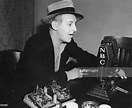 20 million tuned in for his Sunday Night radio broadcast.
Noted for taking a stand against Hitler, Mussolini and Facism and for his support of Civil Rights, he also was notorious for often unjustified attacks on those he thought were trying to hurt his career. But, if he was your friend, he was a true friend no matter what.
“A real friend,” he said, “is one who walks in when the rest of the world walks out.”
Share A Writer’s Moment with a friend by clicking the g+1 button below.



![[image error]](http://4.bp.blogspot.com/-5Qhlz6wkL70/WO4BjfdKB1I/AAAAAAAACrc/ExlzjlYOD20pZGMdLSKATgxe0ZzlXAWPgCK4B/s1600/th_007.jpg)
![[image error]](http://4.bp.blogspot.com/-HSuPUbfVOLg/WOjeOg_PXDI/AAAAAAAACqM/RppVxkzUjYQ9ky-4yIaAwCcZ-B1urtkRgCK4B/s1600/th_002.jpg)