Dan Jorgensen's Blog, page 449
March 8, 2017
Being ready for every 'open' door
“What I've come to know is that in life, it's not always the questions we ask, but rather our ability to hear the answers that truly enriches our understanding. Never, never stop learning.” – Lester Holt Born on this date in 1959, Holt anchors the weekday edition of NBC Nightly News and Dateline NBC. Born into a military family, he is a native of California, and has the distinction of being the grandson of Jamaican grandparents on his mother’s side.
Holt said he was enamored with broadcasting even as a teenager and would sit on his bed with a tape recorder and the newspaper reading stories as if on the air. His first “actual” on-air job was as a disc jockey at a Country and Western station while he was in college, but he said the only time he could land a full-time gig was when he was willing to report the news.
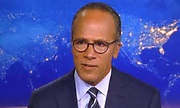
When he’s not doing journalism and broadcasting, he loves music and playing his guitar. As for advice to young people, he said, “You never know what doors are going to open up and why they are going to open up. You've always got to be ready to walk through them.”
Share A Writer’s Moment with a friend by clicking the g+1 button below.


March 7, 2017
Worth a thousand words
“I think many times news organizations, whether it's for lack of resources or something else, cover the headlines and don't follow up, even though the story continues for the people living there - they can't leave. I think it's critical that they do these follow-up stories to realize that there is still suffering, and the need is dire.” – Carol Guzy
Born on this date in 1956, Guzy has had a stellar career in both documenting the headlines and doing follow-up reporting as a news photographer. Working for The Washington Post, she has won a remarkable 4 Pulitzer Prizes —one of only 4 people to do so, and the only journalist with that achievement.

The first woman to win the “Newspaper Photographer of the Year” Award from the National Press Photographers Association, Guzy didn’t start out hoping to be a news photographer. In fact, this Bethlehem, PA, native planned to be a nurse. Then someone handed her a camera and the rest, as they say…
“The nursing program gave me more than a degree,” she said. “It helped me gain an understanding of human suffering and an incredible sensitivity to it. I know that without this background, my photography would have a totally different edge.” With it, she’s brought us up close and personal to images of both anguish and joy.
“When I'm photographing, I think - like any rescue worker who deals with tragedy - you have to have some protective barrier around your heart so you can do your job,” she said. “You tend to have a delayed reaction to things. I feel things more deeply after I put the camera down.”
And seeing her images, the world does too.
View Guzy’s remarkable photos at: https://search.yahoo.com/yhs/search?p=Photos+by+Carol+Guzy&ei=UTF-8&hspart=mozilla&hsimp=yhs-001
Share A Writer’s Moment with a friend by clicking the g+1 button below.
March 6, 2017
Remembering ... and Building your writing
“Ultimately, literature is nothing but carpentry. With both you are working with reality, a material just as hard as wood.” – Gabriel Garcia Marquez
Colombian novelist, short-story writer, screenwriter and journalist Marquez, born on this date in 1927, was one of the most significant authors of the 20th century and one of the best in the Spanish language. Winner of the 1982 Nobel Prize in Literature, he actually started his career as a journalist and wrote many acclaimed non-fiction works and journalistic short stories before trying fiction.
But, he is best known for his novels, especially One Hundred Years of Solitude, and Love in the Time of Cholera. And while he never shied away from criticism of Colombia’s intense and often corrupt political scene, at the time of his death in 2014 the President of Colombia called him “The greatest Colombian who ever live.”
Not one to be tied down by any particular style, he was a great admirer of other writers and their work and said the most important influences on his life and writing were two American authors. “Faulkner is a writer who has had much to do with my soul,” he said, “but Hemingway is the one who had the most to do with my craft - not simply for his books, but for his astounding knowledge of the aspect of craftsmanship in the science of writing.” Marquez was a rare artist who succeeded in not only
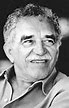 chronicling his nation's life, culture and history, but also much of other South American nations’ with his keen eye for detail and his ability as a master storyteller. “What matters in life is not what happens to you,” he said, “but what you remember and how you remember it.”
Share A Writer’s Moment with a friend by clicking the g+1 button below.
March 5, 2017
A 'progressive' commentary on life
“The function of the novelist... is to comment upon life as he sees it.”– Frank Norris
Born on this date in 1870, American journalist and novelist Norris wrote during the so-called Progressive Era. A “naturalist,” he shocked many readers with his words but was credited with having an impact on such influential people as Theodore Roosevelt, who cited Norris in his efforts to reform the big corporations. He is best known for his unfinished trilogy The Octopus, The Pit,and The Wolf (the latter only partially completed when he suddenly and unexpectedly died in 1902 from complications while in surgery). His idea for the trilogy was to follow the journey
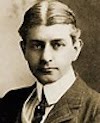 of a crop of wheat from its planting in California to its ultimate consumption as bread in Western Europe. Along the way, much suffering and death follows the storyline and its key characters as greed and harsh conditions often stand in their way.
 Sometimes criticized for his depictions of suffering caused by corrupt and greedy turn-of-the-century corporate monopolies, he stood solidly behind his writing for both its in-depth research and for being morally correct and truthful.
“Truth,” he wrote, “ is a thing immortal and perpetual, and it gives to us a beauty that fades not away in time.”
Share A Writer’s Moment with a friend by clicking the g+1 button below.
Life as seen ... in brutal detail
“The function of the novelist... is to comment upon life as he sees it.”– Frank Norris
Born on this date in 1870, American journalist and novelist Norris wrote during the so-called Progressive Era. A “naturalist,” he shocked many readers with his words but was credited with having an impact on such influential people as Theodore Roosevelt, who cited Norris in his efforts to reform the big corporations. He is best known for his unfinished trilogy The Octopus, The Pit,and The Wolf (the latter only partially completed when he suddenly and unexpectedly died in 1902 from complications while in surgery). His idea for the trilogy was to follow the journey
of a crop of wheat from its planting in California to its ultimate consumption as bread in Western Europe. Along the way, much suffering and death follows the storyline and its key characters as greed and harsh conditions often stand in their way. Sometimes criticized for his depictions of suffering caused by corrupt and greedy turn-of-the-century corporate monopolies, he stood solidly behind his writing for both its in-depth research and for being morally correct and truthful.
“Truth,” he wrote, “ is a thing immortal and perpetual, and it gives to us a beauty that fades not away in time.”
Share A Writer’s Moment with a friend by clicking the g+1 button below.
March 4, 2017
A singular style of one's own
“Whether you listen to a piece of music, or a poem, or look at a picture or a jug, or a piece of sculpture, what matters about it is not what it has in common with others of its kind, but what is singularly its own.”– Basil Bunting
One of the 20th Century’s most significant British modernist poets, Bunting was born to start the century (in 2000) and began writing poetry as a child. His reputation was cemented with the publication of his 1966 masterpiece Briggflatts, an autobiographical long poem that looks back on teenage love and his involvement in the high modernist period. It also is a meditation on the limits of life and a celebration of his native Northumbrian culture.Bunting had a lifelong interest in music that led him to emphasize
 the sonic qualities of poetry, particularly the importance of reading poetry aloud. He was an accomplished reader of verse – especially his own – and you can find many recordings of him that are well worth your time.
For Saturday’s Poem, here – from Briggflatts– is Bunting’s,
CODAA strong song tows
us, long earsick.
Blind, we follow
rain slant, spray flick
to fields we do not know.
Night, float us.
Offshore wind, shout,
ask the sea
what’s lost, what’s left,
what horn sunk,
what crown adrift.
Where we are who knows
of kings who sup
while day fails? Who,
swinging his axe
to fell kings, guesses
where we go?
Share A Writer’s Moment with a friend by clicking the g+1 button below.
March 3, 2017
The 'inspiration' of good writing
“My inspiration for writing is all the wonderful books that I read as a child and that I still read. I think that for those of us who write, when we find a wonderful book written by someone else, we don't really get jealous, we get inspired, and that's kind of the mark of what a good writer is.”– Patricia MacLachlan
Born on this date in 1938, MacLachlan is the American children's writer best known for her 1986 Newbery Medal-winning novel (and series of books) Sarah, Plain and Tall, also adapted into a wonderful “Hallmark Hall of Fame” television movie.
A board member of the National Children's Book and Literacy Alliance, the nonprofit that actively advocates for literacy, literature, and libraries, MacLachlan is a native of Cheyenne, Wyo., and said growing up “on the prairie,” shaped both who she was and how she learned to portray things.
While her “Sarah” series has gotten most of the acclaim, I highly commend any of her 20 books, and especially her 2015 novel, The Truth of Me. It’s a celebration how our unique "small truths" make each of us magical and brave in our own ways, and a wonderful example of this thoughtful writer’s poetic and poignant style that has won her legions of followers. “I have great editors,
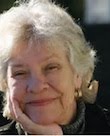 and I always have,” she modestly says of her successes. “Somehow, great editors ask the right questions or pose things to you that get you to write better. It's a dance between you, your characters, and your editor.”
Share A Writer’s Moment with a friend by clicking the g+1 button below.
March 2, 2017
Smile because it happened
“The problem with writing a book in verse is, to be successful, it has to sound like you knocked it off on a rainy Friday afternoon. It has to sound easy. When you can do it, it helps tremendously because it's a thing that forces kids to read on. You have this unconsummated feeling if you stop.”– Dr. Seuss
Today is the 113thanniversary of the birth of Theodor Seuss Geisel, known around the globe and probably for all eternity as Dr. Seuss. Writer, cartoonist, animator, book publisher, and artist, his work includes several of the most popular children's books of all time and all-told (to date) they have been translated into more than 20 languages and sold over 600 million copies. You would be hard-pressed to say “Cat in the Hat” anywhere in the world and not get a positive reaction and smile.
Four of his books also have been wildly popular animated films, led by Cat in the Hat and How The Grinch Stole Christmas – also made into a live action movie. Those four films have now done gross box office sales of $1.2 billion – and counting.While he thought
 his career would be in cartooning (he sold his first one to TheSaturday Evening Post in 1927), it was his writing in verse, primarily for kids, that led to his worldwide success. “Fantasy is a necessary ingredient in living,” he once wrote. “It's a way of looking at life through the wrong end of a telescope, and that enables you to laugh at life's realities.” He also noted, that “I like nonsense; it wakes up the brain cells.”
“Don't cry because it's over,” Geisel advised shortly before his death from cancer in 1991. “Smile because it happened.“
Share A Writer’s Moment with a friend by clicking the g+1 button below.
March 1, 2017
What will 'engage' your readers?
“One of the disconcerting things about writing for publication is that you're trying to clear your little parcel of land in a field where Taste is king - and, as we all know, there's no accounting for Taste.” – Darin Strauss
Born on this date in 1970, Strauss’s writing has handled the “taste” test just fine, earning a number of major awards and a Guggenheim Fellowship for “exceptional creative ability in the arts.”
A native of Long Island, he studied writing at Tufts University and then headed west, starting out as “Entertainment” reporter for the Aspen Times. After struggling along at $50 per article, he decided to “head home,” as it were. “I thought, 'I'll come back to New York.’ I worked for the Aspen Times when I lived in Aspen. I'll work for the New York Times when I live in New York.' It didn't work out that way.”
Instead, he became a best-selling author. His first book, Chang & Eng, (2000) won a basketfull of awards, and his second, The Real McCoy, (2002) was listed as one of the 25 best books of the year and earned him the Guggenheim. His poignant Half A Life won numerous major awards and “must read” citations and the National Book Critics Circle Award. A frequent guest speaker, he’s also now teaching writing at New York University where he advises his students to avoid excessive scene setting and “get into the story.” “The main thing is to think strategically about
 what will engage your readers,” he said. “Trust me when I tell you that few people are eager to read a story whose opening lines sound like a dissertation on giant bugs.”
Share A Writer’s Moment with a friend by clicking the g+1 button below.
February 28, 2017
Our 'unacknowledged' historians
“Increasingly I think of myself as some strange and solitary conductor, introduced to a group of very dynamic musicians who happen to be my characters, and I have no idea how they are going to play together, and I have certainly no idea how I am going to put manners on them.” – Colum McCann
Born on this date in 1970, McCann is a native Irishman who now makes his home in New York City where he is Distinguished Professor of Creative Writing in the Master of Fine Arts program at Hunter College.
His work has been published in 35 languages and has appeared in the New Yorker, Esquire, and the Paris Review. McCann has written 6 novels, including TransAtlantic and the National Book Award-winning Let the Great World Spin. He also has written 3 collections of short stories, including 2015’s Thirteen Ways of Looking.
McCann said the best writers attempt to become alternative historians. His own sense of the Great Depression, for example, is guided by the works of E.L. Doctorow “In a certain way, novelists become unacknowledged historians, because we talk about small, tiny, little anonymous moments that won't necessarily make it into the history books."

“Every first thing is always a miracle," he said. “The first person you fall in love with. The first letter you receive. The first stone you throw. And in my conception of the novel, the letter becomes important. But what's more important is the fact that we need to continue to tell each other stories.”
Share A Writer’s Moment with a friend by clicking the g+1 button below.