Dan Jorgensen's Blog, page 451
February 18, 2017
The 'music' of words
“You have your identity when you find out, not what you can keep your mind on, but what you can't keep your mind off.” – A. R. Ammons
Born on this date in 1926, Ammons was a North Carolinian who worked as an elementary school principal and as a glass company executive before turning his full attention to literature – both teaching and writing. From 1964 to 1998 he taught creative writing at Cornell University while authoring hundreds, if not thousands, of poems.
Ammons wrote about nature and the self, themes that had preoccupied Ralph Waldo Emerson and Walt Whitman and that remained the central focus of his work. His Collected Poems, 1951–1971 (a terrific read) won a National Book Award. And his Selected Poems is an excellent introduction to his works Ammons died in 2001.
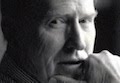 “What is poetry?” he was asked. “Poetry," he replied, "is the music of words ... the linguistic correction of disorder.” For Saturday’s Poem, here is Ammons’
 Eyesight
It was May before my attention came to spring and my word I saidto the southern slopes I've missed it, it came and went before I got right to see: don't worry, said the mountain, try the later northern slopes or if you can climb, climb into spring: but said the mountain it's not that way with all things, some that go are gone
Share A Writer’s Moment with a friend by clicking the g+1 button below.


February 17, 2017
Exploring the psychological side
“I don't know that I am fascinated with crime. I'm fascinated with people and their characters and their obsessions and what they do. And these things lead to crime, but I'm much more fascinated in their minds.”– Ruth Rendell
Rendell, in fact, made a huge impact as the creator of a separate brand of crime fiction that explored the psychological background of both criminals and victims. In the process she became one of Great Britain’s (and the world’s) all-time leading crime and mystery writers.
Born on this date in 1930, she started writing in her late 20s and then just never really stopped until her death in 2015. During a 60-year career, she wrote hundreds of novels, and short stories, including 24 featuring her best-known creation, Chief Inspector Wexford. Wexford was the hero of many popular police stories, some of them successfully adapted for television.
She also wrote 30 stand-alone mystery and crime novels and 15 under the pseudonym Barbara Vine. In the process she won virtually every major mystery and crimewriting award and was honored with the title of Baroness by the Queen. “I have had quite a lot of prizes,” she wrote at the time (1996) “but I don't think it makes any difference to the ease or difficulty to the writing process.”
Rendell’s advice to young writers is to write with style.
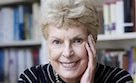 “It doesn't matter what kind of book you write - you ought to write it well and with some kind of style and elegance,” she said. “As for me, I don't know what I would do if I didn't write.”
Share A Writer’s Moment with a friend by clicking the g+1 button below.
February 16, 2017
Writing the most important things
“Happiness for me is getting to write about the most important things I know.” – Richard Ford
Ford, novelist and short story writer born on this date in 1944, is best-known for his 4-cycle series The Sportswriter, Independence Day, The Lay of the Land, and Let Me Be Frank with You. Each book follows a portion of the life of Frank Bascombe, who moves through early middle age towards his later years.
Book two, Independence Day, achieved even more accolades. Independence Daywon both the Pulitzer Prize and PEN/Faulkner in 1995, becoming the first novel ever to win both awards in a single year. The third book, The Lay of the Land, was nominated for a 2006 National Book Critics Circle Award; and the fourth, Let Me Be Frank With You, was a 2015 Pulitzer finalist.
Also an award winner for his short stories, Ford has described his sense of language as "a source of pleasure in itself.” He says valuing language is a key to good writing and balks at being compared to other great writers.
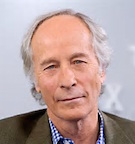 "You can't write ... on the strength of influence,” he said. “You can only write a good story or a good novel by yourself.” “My job is to have empathy and curiosity for things that I've never done. Also, I'm a person whom people talk to.”
Share A Writer’s Moment with a friend by clicking the g+1 button below.
February 15, 2017
Mining 'the feelings' of the words
“When one lives in a society where people can no longer rely on the institutions to tell them the truth, the truth must come from culture and art.”– John Trudell
Born on this date in 1946, Trudell was a Native American author, poet, actor, musician, and political activist who became a leading spokesperson – both orally and through his writing – for native peoples across the country. A Santee Dakota, he grew up in northern Nebraska near the Santee Reservation and immersed himself in the Santee culture and its oral traditions, a strong influence on his writing and music.
Trudell often used his poetry as lyrics for recordings, and began in 1982 to set them to traditional American Indian music, eventually leading to his groundbreaking gold record A.K.A Graffiti Man. Much sought-after as both a performer and a reader of his poetry, he toured worldwide with the Australian band "Midnight Oil" and with Peter Gabriel’s global World Music and Dance production. Not long before his death in 2015 Trudell published a book, Lines From a Mined Mind: The Words of John Trudell, a collection of 25 years of poetry, lyrics and essays.
“Every song I've ever written,” Trudell said, “always starts with the words because I want the music to be the musical extension of the feelings of the words, and not the words being the emotional extension of the feeling of the music.”Trudell’s advice to both writers and musicians
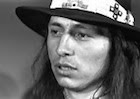 was to remember your roots in what you do or say. “It's always good to go home,” he said. “It's strengthening to see your past and know you have someplace to go where you're part of a people. “
Share A Writer’s Moment with a friend by clicking the g+1 button below.
February 14, 2017
A Valentine's Day potpourri
A potpourri of Valentine’s Day thoughts from famous writers:
When you love someone all your saved up wishes start coming out.– Elizabeth Bowen
***If you have only one smile in you give it to the people you love. – Maya Angelou
***A kiss makes the heart young again and wipes out the years.– Rupert Brooke
***The Eskimos have fifty-two names for snow because it is important to them. There ought to be as many for love. – Margaret Atwood
***If you live to be a hundred, I want to live to be a hundred minus one day so I never have to live without you. – A. A. Milne ***And finally, a thought from a “Valentine’s Day” birthday celebrant, comedian Jack Benny, who was born on this date in 1894. Benny once said: “It’s not so much knowing when to speak as it is knowing when to pause.”
Happy Valentine’s Day!
Share A Writer’s Moment with a friend by clicking the g+1 button below.
February 13, 2017
A fast-paced and 'tasty' style
“I think about my audience when I write, to some extent. Thinking of writing for young adults, I try to keep the stories moving, never a dull moment, to hold their interest.” – William Sleator
Born on this date in 1945, William Warner Sleator III wrote science fiction for young adults and children. Per his comment above, his highly entertaining books typically follow a “rapid fire” style – a technique that most young readers love but critics sometimes blasted. Despite that, most critics (and readers) love his stylish, often darkly comic prose and deliciously strange characters. Working in a genre that straddled fantasy, science fiction, horror and suspense, Sleator (pronounced “Slater”) wrote more than 30 books before his sudden – and as yet unexplained – death in Thailand in 2011. Born in Maryland and raised in Missouri, he was the son of a scientist and a doctor. Sleator often liked to intertwine
 elements of theoretical science into his works, pitting his young heroes and heroines against some sort of peculiar phenomenon in the process.
 Due to the suspenseful and often eerie nature of some of his books, Sleator has sometimes been compared to young-adult horror writer R. L. Stine, who once said he was a fan of Sleator’s work. One of 4 children, Sleator also liked the theme of family relationships and close friendships in his writing. “My stories,” he wrote, “develop from both things I read and from my own experiences; and the experiences of people I know.”
Share A Writer’s Moment with a friend by clicking the g+1 button below.
February 12, 2017
Sharing enthusiasm and hope
“I couldn't be a writer without hope. I think I became a writer because I'm pretty optimistic.” – Jacqueline Woodson
Born this date in 1963, Woodson is one of the few writers to be named for multiple Newbery Honor Awards. Her four winners: Brown Girl Dreaming, After Tupac and D Foster, Feathers, and Show Way Also the recipient of the prestigious Margaret Edwards Award for her lifetime contribution as a children's writer, she was the 2014 U.S. nominee for the biennial, international Hans Christian Andersen Award; winner of the National Book Award for Brown Girl Dreaming; and was recently selected to give the American Library Association’s 2017 May Hill Arbuthnot Honor Lecture, which recognizes significant contributions to children's literature.
Woodson also has earned major accolades for her Young Adult fiction, especially Miracle’s Boys, winner of the 2001 Coretta Scott King Award. She is known for writing detailed physical landscapes and her focus on helping protagonists break through boundaries, whether they be social, economic, physical, sexual, or racial. And as she notes in her quote above, she exudes optimism and dislikes books that do not offer hope.
 Growing up in two distinct settings – rural South Carolina and the heart of Brooklyn, NY -- Woodson said she has been influenced by the stories of both locales and by the stories of her family and their history. She encourages writers to explore stories that their families might share.
 “I realized if I didn't start talking to my relatives, asking questions, thinking back to my own beginnings, there would come a time when those people wouldn't be around to help me look back and remember,” she said. “[I wanted] to write about communities that were familiar to me and people that were familiar to me.” Fertile ground for an amazing and still growing career.
Share A Writer’s Moment with a friend by clicking the g+1 button below.
February 11, 2017
A Valentine Delight
“I always tell students that writing a poem and publishing it are two quite separate things, and you should write what you have to write, and if you're afraid it's going to upset someone, don't publish it.”– Wendy Cope
British author Cope has attracted a popular following with her lighthearted, often comical poetry, as well as achieving literary credibility winning two major writing awards. She has a keen eye for everyday, mundane aspects of life, especially the desires, frustrations, hopes, confusions and emotions in intimate relationships. A much sought-after presenter at workshops and
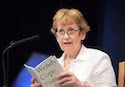 classrooms, she writes for – and speaks – to both children and adult audiences. For Saturday’s Poem and in honor of this coming Tuesday, here is Cope’s,
Valentine
My heart has made its mind upAnd I’m afraid it’s you.
Whatever you’ve got lined upMy heart has made its mind upAnd if you can’t be signed upThis year, next year will do.
My heart has made its mind upAnd I’m afraid it’s you.
Share A Writer’s Moment with a friend by clicking the g+1 button below.
February 10, 2017
Bigger than ourselves
“Each of us is carving a stone, erecting a column, or cutting a piece of stained glass in the construction of something much bigger than ourselves.”– Adrienne Clarkson
Journalist, author, and diplomat Clarkson, born on this date in 1939, first came to Canada with her family in 1941 as a refugee from Japanese-occupied Hong Kong. Raised in the national capital of Ottawa, she entered university early and earned degrees in several different fields before being drawn to broadcasting. First hired as a reporter on the Canadian Broadcasting Corporation (CBC) show Take Thirty, Clarkson was promoted to co-host after just one year, becoming one of the first members of a visible minority to obtain a prominent position on Canadian television. Alongside her positions on Take Thirty, she also was acclaimed for her thoughtful and thought-provoking journalistic writings.
During a 30-year CBC career, she hosted more than 3,500 programs and also became a leading spokesperson and luminary for such charitable organizations as the Kidney Foundation of Canada, Horizons of Canada, and International PEN.
A tireless proponent of equal opportunity and
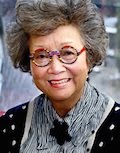 a champion of diversity, in 2011 she authored the book Room for All of Us, a compilation of 10 stories about immigrant Canadians, for whom she was a trailblazer.
 “Sometimes we read or hear too much news that makes us fearful or suspicious of others,” she said. “We can forget that most of the people that we know, or at least encounter regularly, are decent and friendly.”
Share A Writer’s Moment with a friend by clicking the g+1 button below.
February 9, 2017
Falling for imagination
“I have fallen in love with the imagination. And if you fall in love with the imagination, you understand that it is a free spirit. It will go anywhere, and it can do anything.” – Alice Walker
Novelist, short story writer, poet, and activist, Walker was born on this date in 1944 the daughter of a poor Georgia farm family. Growing up with an oral tradition, listening to stories from her grandfather (who was the model for the character of Mr. in her award-winning book The Color Purple), Walker began school at age 4 and writing at age 8.
She wrote the critically acclaimed Color Purple in 1982 and rocketed to fame. The book won the National Book Award and the Pulitzer Prize for Fiction, was made into an Academy Award-winning movie, and ultimately did a 3-year run as a play on Broadway. The story follows a young troubled
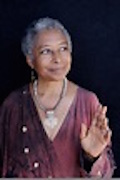 black woman fighting her way through not just racist white culture but patriarchal black culture as well.
 Walker actually started her writing career as a short story writer and poet and had her first book of poetry published while still in college. In addition to her writing, she’s been a leading figure on behalf of Civil and Equal Rights in both the U.S. and internationally and has been awarded a major international awards recognizing her work on behalf of human rights and peace initiatives. “Deliver me from writers who say the way they live doesn't matter,” she said. “I'm not sure a bad person can write a good book. If art doesn't make us better, then what on earth is it for.”
Share A Writer’s Moment with a friend by clicking the g+1 button below.