Dan Jorgensen's Blog, page 452
February 8, 2017
Teaching 'an exercise in empathy'
“Reading is an exercise in empathy; an exercise in walking in someone else's shoes for a while.” – Malorie Blackman
Born on this date in 1962, Blackman is an English writer of literature and television drama for children and young adults who often has used science fiction to explore social and ethical issues.
She is the author of more than 60 works for children, including many that address issues of racism, led by her the award-winning series Noughts & Crosses (Black & White in the U.S.). Named Britain’s “Children’s Laureate,” awarded once every two years to a writer or illustrator of children's books to celebrate outstanding achievement in their field, she traveled the country sharing her work and also “listening” to children’s voices.“Part of my job as Children's Laureate (from 2013-15)
 was to visit schools and talk about my love of books and stories and encourage them all to do it as well - to read, to write, to never be afraid of their own voice. Because we all have something to say,” she said. Blackman said it was books kept her focused and motivated as a child toward achieving something with her life. Thus, she has become a leading voice for encouraging all children to have access to books.
“What I would like to do is make sure every primary school child has a library card, so where parents don't get their children library cards, we'll see if we can get schools to step in and make sure that every child has one.”
Share A Writer’s Moment with a friend by clicking the g+1 button below.


February 7, 2017
Helping 'rationalize' those strange times
“The process of writing a book is so removed in my mind from the process of publishing it that I often forget for great stretches that I eventually hope to do the latter.” – Karen Joy Fowler
Best known, perhaps, for her award-winning and movie-adapted novel The Jane Austen Book Club, Fowler once said that her “process” of writing a book involves both “being” her characters and “saying what they say out loud.” She said that worked well when her husband was still working full time, but now that he’s retired it’s a bit more cumbersome, especially when it comes to “the shouty parts.”
Born on this date in 1950, Fowler has won multiple awards for her fiction, whether that be short stories or full-length novels. But she said she often disdains the reactions of her characters while she’s at work. “I hear so many writers say - and these are writers
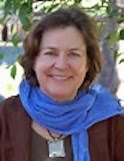 that I trust completely - 'I just started hearing a voice,' or, 'The characters came to life.' I am filled with loathing for my own characters when I hear that because they do nothing of the sort. Left to their own devices, they do nothing but drink coffee and complain about their lives.”
Among her varied works are pieces that provide a new way of looking at history, often from “odd corners” of the historical universe or with a “fantastical” or “eccentric” point of view.
“Often, when you look at history, at least through the lens that many of us have looked at history - high school and college courses - a lot of the color gets bled out of it,” Fowler said. “You're left with a time period that does not look as strange and irrational as the time you're actually living through.” Hmmm, today’s world should provide a wonderful palette for generations of writers to come.
Share A Writer’s Moment with a friend by clicking the g+1 button below.
February 6, 2017
Creating lives that 'live forever'
“Most books, like their authors, are born to die. Of only a few books can it be said that death has no dominion over them; they live, and their influence lives forever.” – William Styron
Over the period of four decades, Styron wrote 4 books that “fit” into his above description. While he is perhaps best known for 1979’s Sophie’s Choice, which also won multiple Academy Awards as a movie, his influential writings live on through his 1951 first novel Lie Down in Darkness; his 1967 Pulitzer Prize-winning The Confessions of Nat Turner; and his 1990 memoir Darkness Visible.
Born in Virginia in 1925, Styron jumped into writing as an undergraduate student at Duke – while simultaneously working toward a commission in the U.S. Marines during the war years. World War II ended before his graduation, and his entry into the military was put on hold until Korea. Meanwhile, he worked as an editor at McGraw-Hill and wrote his highly acclaimed and award winning first novel.
Also a noted essayist, short story writer, and playwright, Styron was awarded the St. Louis Literary Award and France’s Cino Del Duca World Prize, recognizing an author whose work constitutes, in a scientific or literary form, a message of modern humanism.“A great book should leave you with many experiences,
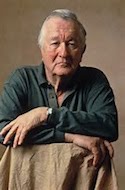 and slightly exhausted,” Styron said. “You should live several lives while reading it.”
Share A Writer’s Moment with a friend by clicking the g+1 button below.
February 5, 2017
'Jumping' into the modern ghost story
“Every reader re-creates a novel - in their own imagination, anyway. It's only entirely the writer's when nobody else has read it.”– Susan Hill
English author Hill, who celebrates her 75th birthday today, is a leading light in the modern day “gothic” world. Her novels include The Woman in Black, The Mist in the Mirror, and I'm the King of the Castlefor which she received the Somerset Maugham Award. She was appointed Commander of the Order of the British Empire (CBE) in 2012 for services to literature.
A champion of traditional English “ghost story” style (which relies on suspense and atmosphere to create impact), Hill has written both “ghost” stories and eerie suspense, including (since 2004) a series of crime novels featuring a protagonist detective named Simon Serrailler. That series is now being adapted for television. Her ghost story Woman in Black, done in 1983, has also been a long-running play on London’s West Side and is a great example of her descriptive gothic style.For aspiring writers in the genre, Hill’s advice is
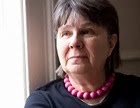 to temper the writing to the length of your story. “If you were writing a short ghost story, I would say start very quietly and go, 'One, two, three jump.' Or start with a jump and make it jumpier,” she advised. “With a long story, it must have both rises and falls.”
 Books help to form us, Hill said. "If you cut me open, you will find volume after volume, page after page, the contents of every one I have ever read, somehow transmuted and transformed into me."
Share A Writer’s Moment with a friend by clicking the g+1 button below.
February 4, 2017
Hold fast to your dreams
“Hold fast to dreams, for if dreams die, life is a broken-winged bird that cannot fly.” – Langston Hughes
At the start of Black History Month it’s fitting to share poetry from one of the earliest innovators of the literary art form known as jazz poetry. Hughes, not only a poet but also a social activist, novelist, playwright, and columnist, was born Feb. 1, 1902 in Joplin, Mo. He became world famous as a leader of the Harlem Renaissance in New York City.
His poetry and fiction portrayed the lives of the working-class blacks in America, lives he portrayed as full of struggle, joy, laughter, music, and pride in the African-American identity and its diverse culture. Today, for Saturday’s Poem, are TWO
 of Hughes’ short works on hopes and dreams.
The Dream Keeper Bring me all of your dreams,
You dreamer,
Bring me all your
Heart melodies
That I may wrap them
In a blue cloud-cloth
Away from the too-rough fingers
Of the world.
I Dream A WorldI dream a world where man
No other man will scorn,
Where love will bless the earth
And peace its paths adorn
I dream a world where all
Will know sweet freedom's way,
Where greed no longer saps the soul
Nor avarice blights our day.
A world I dream where black or white,
Whatever race you be,
Will share the bounties of the earth
And every man is free,
Where wretchedness will hang its head
And joy, like a pearl,
Attends the needs of all mankind-
Of such I dream, my world!
Share A Writer’s Moment with a friend by clicking the g+1 button below.
February 3, 2017
Mastering words' swirls & swings
“I love writing. I love the swirl and swing of words as they tangle with human emotions.” – James A. Michener
Michener, my favorite model for historical fiction, was born on this date in 1907. An orphan who said he never knew exactly who his biological parents were, he didn’t start writing until age 40 and then produced a book a year until his death in 1997. Usually his fictional tales, set in particular geographic locales, covered lengthy family sagas featuring the lives of many generations.
I’ve often said that it was my high school English teacher’s placing a copy of Michener’s Hawaii into my hands and saying, “Write like this,” that helped inspire me to become a writer. I love how he weaves the lives of many real people among those he creates. And, his meticulous research brings the stories to life amid highly edible history.
Often his research took him into unusual or difficult environments, but he always embraced the challenges and the locations to which he was drawn. “I was brought up in the great tradition of the late nineteenth century: that a writer never complains, never explains and never disdains,” he said. A writer – and traveler for that matter – should try to enjoy the environment into which he or she is drawn. “If you reject the food, ignore the customs, fear the religion and avoid the people, you might better stay at home.”
His research in Afghanistan was a great example.
 If you want a clearer understanding of the complexities and nuances of that nation and the wars that have plagued it – and in which we now find ourselves entangled – read his amazing and gripping book Caravans.
 For those contemplating a writing career, Michener’s advice was simple: Focus on what you want to write. “I think the crucial thing in the writing career is to find what you want to do and how you fit in. What somebody else does is of no concern whatever except as an interesting variation.”
Share A Writer’s Moment with a friend by clicking the g+1 button below.
February 2, 2017
Those 'key attributes' for good writing
“I always credited my mother with inspiring me to be a writer because she was such a passionate reader. She read poetry to me as a child. But rather late in life, I've come to appreciate my father, the accountant. He was a solid, organized, get-the-job-done kind of person-and you need that piece of it to be a writer, too.”– Judith Viorst
Viorst – a native of New Jersey born on this date in 1931 – is best known for her Children’s classic, Alexander and the Terrible, Horrible, No Good, Very Bad Day, written from the point of view of a 5-year-old boy and based on her own sons, Alexander, Anthony and Nick (the names of Alexander’s brothers in the story). To date the book has sold over 2 million copies and is around the globe in multiple languages.
In addition to several “Alexander” books, she’s also known for her “Lulu” series and the book The Tenth Good Thing About Barney. All told, she’s written some 30 books, both fiction and nonfiction. Her books for adults have often been related to her work as a psychoanalyst researcher. Also a well-knownnewspaper columnist, she writes frequently for The New York Times and The Washington Post and has been acontributing editor to Redbook.
She once noted that she got steered toward writing in a unique fashion. “My Girl Scout leader. … told me if I listened more and talked less, I could grow up to be a good writer. I thought that was interesting advice at age 12.”
Share A Writer’s Moment with a friend by clicking the g+1 button below.
February 1, 2017
Writing: That 'fearsome' vocation
“From the age of six I wanted to be an artist. At that point I meant a painter, but it turned out what I really meant was I was someone who was very interested in watching the world and making copies of it.” – Reynolds Price Widely admired as an acute observer of family life in small Southern towns, he won the William Faulkner Award for his very first novel, A Long and Happy Life, which might also have served as a great title for his own life despite fighting medical trauma for decades.
Stricken with a rare tumor that left him a paraplegic at age 51, Price nonetheless went on to 25 more years of amazing writing, turning out reams of novels, essays, short stories, plays and poems. Over a nearly 50-year writing career, complimented by his work as a teacher, Price produced 38 books, 14 of which were novels. Among them were numerous best sellers, including The Surface of Earth and The Source of Light.All of Price's novels are set in his native North Carolina,
 where he spent nearly his entire life. Born on this date in 1933, he attended Duke University on a full scholarship, and then was named a Rhodes Scholar, studying at Oxford before returning to Duke to teach for the next 53 years. As a professor he was lauded by students and faculty alike. Among his students was the great Ann Tyler, who started her writing while still in his classes. In 1987, Duke gave Price its highest honor: The University Medal for Distinguished Meritorious Service.
“Writing is a fearsome but grand vocation — potentially healing but likewise deadly," he said in a late-in-life interview. “I wouldn't trade my life for the world."
Share A Writer’s Moment with a friend by clicking the g+1 button below.
January 31, 2017
Those 'Labyrinthe Corridors of Knowledge'
“Andrew Carnegie loved libraries; he knew their importance to an educated society and as anchors to our communities. And so, just as some loyal baseball fans travel to attend games at all 30 major league stadiums, over the last decade or so, I have slowly, casually, visited Carnegie libraries whenever I am on the road.”– Sam Weller
An engaging and much sought-after speaker – especially about longtime Science Fiction writer Ray Bradbury – Weller is on the road often. Author of the award-winning The Bradbury Chronicles: The Life of Ray Bradbury, he is a frequent lecturer (nearly 400 talks) on Bradbury’s life and legacy. His 2014 book Ray Bradbury: The Last Interview: And Other Conversations recounts Bradbury's influences, creative processes, and love for writing and reading.
Weller, who celebrates his 50th birthday today, is native of Illinois and a faculty member at Columbia College, Chicago. The one-time Midwest Correspondent for Publishers Weekly, his personal essays have appeared in the Paris Review, on National Public Radio’s All Things Considered, and in Slate magazine. His short fiction can be found in numerous books, anthologies, literary journals, and magazines, and he’s now at work on his own fantasy-style novel.

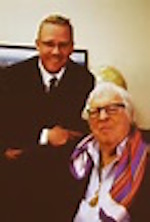 Sam Weller – and with Ray Bradbury It’s in libraries that Weller often finds inspiration, advising all to enjoy visiting a library instead of just searching on line. “Browsing for books with a mouse and screen is not nearly as joyful an act as wandering the stacks and getting lost in the labyrinthine corridors of knowledge,” he said. “The best libraries are places of imagination, education and community. The best libraries have mystery to them.”
Share A Writer’s Moment with a friend by clicking the g+1 button below.
January 30, 2017
Real characters, epic fantasies
Some books are a revelation. They come along at just the right time for just the right reasons. They become heart books and soul books. –Judith Tarr
A writer of historical and epic fantasies, or what she likes to call “alternate history,” Tarr (who celebrates her birthday today) has won awards and legions of followers under three names – her own, and as Caitlin Brennan and Kathleen Bryan.
She has been a World Fantasy Award nominee for her Alexander the Great novel, Lord of the Two Lands, and won the Crawford Award for her Hound and the Falcon trilogy. As Brennan she wrote The Mountain’s Call and sequels, and as Bryan The Serpent and the Rose and its sequels. Tarr also enjoys writing about and working with horses, especially Lipizzans. She owns Dancing Horse Farm in Arizona where she gives lessons and talks on both horses and writing – especially works that are “historically” connected. “I like going back in time and writing historical fantasy,”
 she said. “I use some real historical characters as a background to give depth to the fantasy. And I throw my fictional characters into the midst of this, and, so far, it has turned out interesting.”
 Share A Writer’s Moment with a friend by clicking the g+1 button below.