Dan Jorgensen's Blog, page 456
December 30, 2016
Life as a song; how are the lyrics?
“Storytelling is ultimately a creative act of pattern recognition. Through characters, plot and setting, a writer creates places where previously invisible truths become visible. Or the storyteller posits a series of dots that the reader can connect.” – Douglas Coupland
Canadian novelist and artist Coupland – who is celebrating his 55th birthday today – has been described as "...possibly the most gifted exegete of North American mass culture writing today." His fiction often is complemented by recognized works in design and visual art arising from his early formal training in that field.
Coupland’s first novel, the 1991 international bestseller Generation X: Tales for an Accelerated Culture, popularized both the term "Generation X” and the terms “McJob.” To date, he has published 13 novels, 2 collections of short stories, 7 non-fiction books, and a number of dramatic works and screenplays for film and television. And, in his “spare time” he is a columnist for Financial Times.One of the great satirists of modern day consumerism,
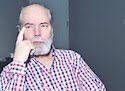 Coupland advises, “Never loan a book to someone if you expect to get it back. Loaning books is the same as giving them away.”
As for sharing his thoughts with up and coming writers, he says simply to think about how you’re leading your life and what people will remember about you. Put it into the context of a song, he said. “Think that if your life had lyrics, would they be any good?”
Hmmm? Still giving that question some thought. And also wondering what I’d title it?
Share A Writer’s Moment with a friend by clicking the g+1 button below.


December 29, 2016
Ignoring those 'censors' in our heads
“Many times, what people call 'writer's block' is the confusion that happens when a writer has a great idea, but their writing skill is not up to the task of putting that idea down on paper. I think that learning the craft of writing is critical. – Pearl Cleage
Cleage, who I’ve written about before in this blog, is an African-American author whose work, both fiction and non-fiction, has been widely recognized. Her novel What Looks Like Crazy on an Ordinary Day was a Oprah Book Club selection, and while she seems to write almost effortlessly, she said that like all writers she sometimes struggles with how to get the creative juices flowing.“One of the things that writers and creative artists
 generally have to deal with is the censors that we have in our heads, the voices that we have that say ‘you better not tell that and don't tell that, and people will think you're not a good girl, and your grandmother's going to be mad at you and all of those things.’ Ignore them.”
Share A Writer’s Moment with a friend by clicking the g+1 button below.
December 28, 2016
Putting the reader first
“It's essential not to have an ideology, not to be a member of a political party. While the writer can have certain political views, he has to be careful not to have his hands tied” – Manuel Puig Argentinian author Puig did not really practice what he preached, tending to be on the left-leaning side of the political spectrum and often angering those in power with the words he shared. That activism led to some rousing good literature but also caused him to spend much of his adult life in exile.
Born on this date in 1932, Puig is perhaps best known for his novel Kiss of the Spider Woman – which also won acclaim as both a movie and a play, the screenplay and play script also done by him. While his writing was well received it was never in the “best seller” mode, much to his dismay, since he said he always wished to have one. Instead, he mostly made a living translating other writers’ work.“I write novels,” he said shortly before his death
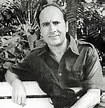 in 1990, “because there is something I don’t understand in reality. I like to put myself in the place of those who will be reading what I write. Whenever I write, I’m always thinking of the reader.”
Pretty good advice for any writer to heed.
Share A Writer’s Moment with a friend by clicking the g+1 button below.
December 27, 2016
Giving things powerful consideration
“The privilege of being a writer is that you have this opportunity to slow down and to consider things.”—Chris Abani
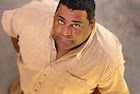
Abani, who is celebrating his 50thbirthday today, is an award-winning Nigerian and U.S. author of 4 novels, numerous novellas, short stories and plays, and 7 books of poetry. He started writing young and was so good at skewering those in power that he was imprisoned 3 times by the Nigerian government. The first time came after his first novel– Masters of the Board– came out at age 16. His second novel, Sirocco, published shortly after his release, got him right back in jail where he continued writing and produced a number of anti-government plays. Their production got him sentenced to death, but he escaped to England where he continued his education and writing after being awarded a PEN/Barbara Goldsmith Freedom to Write Award, the literary world’s response to those injustices.
In the past 15 years he has won nearly three dozen major awards including a Guggenheim Fellowship in Fiction, the Hemingway Foundation/PEN Award, a Lannan Literary Fellowship, and a California Book Award, given while he served as a Professor of Creative Writing at UC-Riverside. Today he holds the prestigious Board of Trustees Professor of English Chair at Northwestern University.
He is an avid supporter of the World Wide Web as writing and publishing resource, and selections of his poetry have often appeared in the online journal Blackbird. “Like most writers, I find the Web is a wonderful distraction,” he said. “Who doesn't need that last minute research before writing?”
Share A Writer’s Moment with a friend by clicking the g+1 button below.
December 26, 2016
Imagination -- the Writer's 'next' dimension
“Imagination... its limits are only those of the mind itself.” – Rod Serling
Serling, who was born in Syracuse, NY, on Christmas Day in 1924, had indeed a vast and multi-talented imagination, producing some of the most creative and lasting pieces ever written for radio, television, the big screen and the Broadway stage.
Known best for his live television dramas of the 1950s and his science-fiction anthology TV series The Twilight Zone, Serling also was active in politics, both on and off the screen, and helped form television industry standards. He was known as “the angry young man" of Hollywood, clashing with television executives and sponsors over a wide range of issues including censorship, racism, and war.
A World War II Army veteran who was badly wounded, Serling had strong opinions about war and the use of military force and became one of the most outspoken activists against war during the tumultuous 1960s and early 1970s – up until his sudden death in 1975 at age 50. His lead-in piece to what would become The Twilight Zone actually dealt with America’s entrance into World War II. His story concerned a man who has vivid nightmares of the attack on Pearl Harbor and goes to a psychiatrist. The “twist ending” to the story
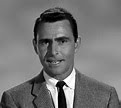 (a device for which Serling became famous) reveals that the "patient" actually had died at Pearl Harbor, and the psychiatrist is the one having the vivid dreams.
Serling had ambitions to be an actor but “had some things to get off my chest,” which led to his writing career and, ultimately a place in America’s cultural history. He is indelibly woven into modern popular culture because of The Twilight Zone. Even youth of today can hum its haunting theme song, and the title itself is a synonym for all things unexplainable.
“I think,” he once said, “every writer is a frustrated actor who recites his lines in the hidden auditorium of his skull.”
Share A Writer’s Moment with a friend by clicking the g+1 button below.
December 25, 2016
Have yourself 'A Merry Little Christmas'
(Reprinted, in part, from the Dec. 24th 2015 ‘Writer’s Moment’ post. Enjoy!)
“Have Yourself a Merry Little Christmas," primarily written by Hugh Martin (with an assist from Ralph Blane), was introduced by Judy Garland in the 1944 MGM musical Meet Me in St. Louis. Frank Sinatra, whose 100th birthday we celebrated last year, then recorded Martin's 1950s version that became the standard so often heard at Christmas.
In 2007, ASCAP ranked "Have Yourself a Merry Little Christmas" as the third most performed Christmas song and the 76th most performed of ALL songs that had been first written and recorded for the cinema. Martin said developing the song was “a moment that just came to him” as he thought about Christmas, and being together with family while vacationing near his family home in Alabama. It became his “Writer’s Moment” if you will.Martin said one of his favorite versions was done

by the incomparable Karen Carpenter. So on this Christmas Day, here’s that version. Merry Christmas everyone!https://www.youtube.com/watch?v=VyNcz7M8Kqc
Share A Writer’s Moment with a friend by clicking the g+1 button below.
December 24, 2016
The Christmas Sparrow
On this Christmas Eve, I share a poem by one of my favorite poets, the former U.S. Poet Laureate Billy Collins, who is a distinguished professor in New York where he is affiliated with the faculties of several colleges and universities.
I wrote more about Collins in an earlier post in this blog, and all I’d like to add are his most recent awards – The Norman Mailer Prize for Poetry, and the Peggy V. Helmerich Distinguished Author Award in 2016.
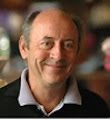 For Saturday’s Poem, here is Collins',
 Christmas Sparrow
The first thing I heard this morning
was a soft, insistent rustle,
the rapid flapping of wings
against glass as it turned out,
a small bird rioting
in the frame of a high window,
trying to hurl itself through
the enigma of transparency into the spacious light.
A noise in the throat of the cat
hunkered on the rug
told me how the bird had gotten inside,
carried in the cold night
through the flap in a basement door,
and later released from the soft clench of teeth.
Up on a chair, I trapped its pulsations
in a small towel and carried it to the door,
so weightless it seemed
to have vanished into the nest of cloth.
But outside, it burst
from my uncupped hands into its element,
dipping over the dormant garden
in a spasm of wingbeats
and disappearing over a tall row of hemlocks.
Still, for the rest of the day,
I could feel its wild thrumming
against my palms whenever I thought
about the hours the bird must have spent
pent in the shadows of that room,
hidden in the spiky branches
of our decorated tree, breathing there
among metallic angels, ceramic apples, stars of yarn,
its eyes open, like mine as I lie here tonight
picturing this rare, lucky sparrow
tucked into a holly bush now,
a light snow tumbling through the windless dark.
Share A Writer’s Moment with a friend by clicking the g+1 button below.
December 23, 2016
Listen, look, read and 'practice'
“The storytelling gift is innate: one has it or one doesn't. But style is at least partly a learned thing: one refines it by looking and listening and reading and practice - by work” – Donna Tartt
Donna Tartt dislikes the concept that authors should always have something new on the drawing board, so to speak. Thus, she only produces a new book about once every 10 years. But when they do appear, her books are always winners, starting with The Secret History in 1992, then The Little Friend in 2002, and The Goldfinch, in 2013.
Born on this date in 1963, Tartt has largely written in a style that reflects 19th Century writers, pretty uncommon in the briefer, more to-the-point prose style of most contemporary writers (something I’m guilty of myself, since my background in writing comes from journalism and “the Hemingway approach.”) Tartt’s version not only has won her legions of followers but also many prestigious awards, including the WH Smith Literary Award for The Little Friend, and the Pulitzer Prize for fiction for The Goldfinch, putting her onto Timemagazine’s "100 Most Influential People” list in 2014.Tartt said that when she’s writing she is concentrating
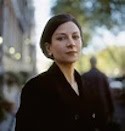 on concrete detail: the color a room is painted, or the way a drop of water rolls off a wet leaf after a rain. “I love the tradition of Dickens,” she explained, “where even the most minor walk-on characters are twitching and particular and alive.”
Share A Writer’s Moment with a friend by clicking the g+1 button below.
December 22, 2016
Touching the heart of the world
“Don't forget - no one else sees the world the way you do, so no one else can tell the stories that you have to tell.” – Charles de Lint
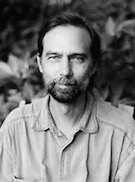
Multi-talented and multi-faceted, de Lint has told many, many stories in various genres, although fantasy is highest on his list. To date he has published a remarkable 71 books (and counting) plus numerous novellas, short stories, works of poetry, and song lyrics. Among his many works are the best-selling The Newford series (Dreams Underfoot, Widdershins, The Blue Girl, The Onion Girl, Moonlight and Vines, and Someplace to be Flying), and stand-alone novels like Moonheart, The Mystery of Grace, and A Circle of Cats. Also a noted essayist, critic and folklorist he frequently writes book reviews for The Magazine of Fantasy & Science Fiction and has served as a judge for the Nebula Award, the World Fantasy Award, and the Bram Stoker Award.
Born on this date in 1951, the talented Canadian is a frequent lecturer and teacher at creative writing workshops in both Canada and the U.S., and together with his wife MaryAnn Harris has produced several musical albums as both a lyricist and a musician (he plays several different instruments). And, he maintains a wonderful exuberance about his writing.
“Life is like art. You have to work hard to keep it simple and still have meaning,” de Lint said.“I want to touch the heart of the world and make it smile.”
Share A Writer’s Moment with a friend by clicking the g+1 button below.
December 21, 2016
Rebecca West's lasting legacy
“I write books to find out about things.” – Rebecca West Cicely Isabel Fairfield, born on this date in 1892, grew up in a home full of intellectual stimulation, political debate, lively company, books and music and turned into world-renowned author and reporter Rebecca West along the way. By the time she was 50 she was a leading spokesperson for feminism and feminist causes, and by the time of her death in 1983 she had published hundreds if not thousands of stimulating works in a wide range of genres. Along the way she also was called by Time Magazine"indisputably the world's number one woman writer,” and by U.S. President Harry S. Truman “the world’s best reporter.”
West was the daughter of a political reporter who often involved himself in controversial issues, shaping her own ideas about how to report on politics and social justice, and in novels such as The Birds Fall Down, set in pre-revolution Russia. In addition to her dozens of books, West also was
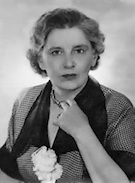 feted for her essays and as a leading reviewer and travel writer for many of the world’s top newspapers and magazines.
 Among her powerful (and many) best-selling books were Black Lamb and Grey Falcon, on the history and culture of Yugoslavia; A Train of Powder – based on her magazine coverage of the Nuremberg trials; and the "Aubrey trilogy" of autobiographical novels, The Fountain Overflows, This Real Night, and Cousin Rosamund. And she championed other writers, particularly those who were blacklisted during the McCarthy Era.
“God forbid that any book should be banned,” she wrote. “The practice is as indefensible as infanticide.”
Share A Writer’s Moment with a friend by clicking the g+1 button below.