
Dan Jorgensen's Blog, page 458
December 10, 2016
Words that foster change
“No matter how brief an encounter you have with anybody, you both change.” – Carolyn Kizer
This fall, I had the good fortune to visit Spokane, Wash., the birthplace of the wonderful poet (and Pulitzer Prize winner) Carolyn Kizer, who would have been celebrating her 91stbirthday today. Kizer, who won the Pulitzer for her 1984 poetry book Yin, was the first director of Literary Programs for the National Endowment for the Arts in 1966. She also held appointments as poet-in-residence or lecturer at many of the nation’s leading universities in the 1970s and 1980s.
Her first published poem was in The New Yorker
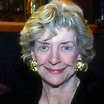 at age 17, but she said the first real poem she remembers writing “was about the wheat fields between Spokane and Pullman” when she was 14. Her first book of poems – The Ungrateful Garden – was published in 1961, two years after she helped found Poetry Northwest in Spokane. She served as its editor until her appointment to the NEA. In addition to the Pulitzer, she won the Pushcart Prize 3 times and the Frost Medal for her body of work. She died in 2014. For Saturday’s Poem, here is Kizer’s,
 A Poet’s Household1
The stout poet tiptoes
On the lawn. Surprisingly limber
In his thick sweater
Like a middle-age burglar.
Is the young robin injured?
2
She bends to feed the geese
Revealing the neck’s white curve
Below her curled hair.
Her husband seems not to watch,
But she shimmers in his poem.
3
A hush is on the house,
The only noise, a fern,
Rustling in a vase.
On the porch, the fierce poet
Is chanting words to himself.
Share A Writer’s Moment with a friend by clicking the g+1 button below.


December 9, 2016
A 'key' to unlocking the writing door
“Young writers reasonably say, 'I don't know what to write about,' so writing about yourself is a very literal way to begin.” – Susanna Moore
Author of the terrific and insightful memoir about growing up in Hawaii, I Myself Have Seen It: The Myth of Hawaii, Moore was born on this date in 1945 in Bryn Mawr, Penn., before moving with her family to the Islands.
Curiosity, she said, is a key to learning about your surroundings, and as a curious young girl she spent hours listening to Hawaiian leaders and cultural figures tell about their heritage – tales that would help shape her own writing.
“As a girl, I sat awestruck at the feet of Harriet Ne, author of Tales of Molokai,” Moore said. “It was she who used to say, 'I myself have seen it,' after telling a particularly hair-raising ghost story - a phrase that I borrowed for one of my titles.”She started her career as a production and costume
 designer for the theater then moved over to the movie industry, working for a time as an assistant writer for actor Warren Beatty. After doing some acting stints on her own, she moved to writing novels with her first one, My Old Sweetheart, published in 1982. Her latest, Paradise of the Pacific, came on the market in 2015. Following in the footsteps of those who shared tales with her – she also has become a noted teacher and lecturer on creative writing, doing lectureships at major universities like Yale, Princeton and the University of Adelaide in Australia. But, while she teaches writing, ultimately, she said, it is up to each individual.
 “Writing can't be taught,” she admonished. “The point always is to be writing something - it leads to more writing.”
Share A Writer’s Moment with a friend by clicking the g+1 button below.
December 8, 2016
Growing 'pearls' from our imagination
“For memory, we use our imagination. We take a few strands of real time and carry them with us, then like an oyster we create a pearl around them.”– John Banville
This year when Bob Dylan was named for the Nobel Prize in Literature, many were disappointed that the award didn’t go to Irish writer Banville instead. He often has been spoken of as “the heir apparent” to the prestigious award. Considered by critics as a master stylist, his writing has been described as perfectly crafted, even dazzling. David Mehegan of the Boston Globecalls him "one of the great stylists writing in English today." Banville said he very much enjoys crafting beautiful sentences. “If I was asked to say what was the greatest invention of human beings, I would say the sentence,” he said.
Born on this date in 1945, William “John” Banville also writes crime stories under the pen name Benjamin Black featuring a somewhat crusty and humorous pathologist named Quirke. As Banville, he has authored 18 novels, and as Black another 10. He’s also done 6 plays, 2 nonfiction books, and 5 screenplays.Regardless of what he’s writing, he has earned
 rave reviews and legions of followers. His ever-growing major awards list (he’s won 26) includes The Booker Prize for The Sea, and being elected a Fellow of the Royal Society of Literature. While The Sea, which also is one of his screenplays, has gotten the Lion’s share of awards, I would recommend his earlier book Body of Evidence as his best.
<!-- /* Font Definitions */ @font-face {font-family:Times; panose-1:2 0 5 0 0 0 0 0 0 0; mso-font-charset:0; mso-generic-font-family:auto; mso-font-pitch:variable; mso-font-signature:3 0 0 0 1 0;} @font-face {font-family:"MS 明朝"; mso-font-charset:78; mso-generic-font-family:auto; mso-font-pitch:variable; mso-font-signature:-536870145 1791491579 18 0 131231 0;} @font-face {font-family:"Cambria Math"; panose-1:2 4 5 3 5 4 6 3 2 4; mso-font-charset:0; mso-generic-font-family:auto; mso-font-pitch:variable; mso-font-signature:-536870145 1107305727 0 0 415 0;} @font-face {font-family:Cambria; panose-1:2 4 5 3 5 4 6 3 2 4; mso-font-charset:0; mso-generic-font-family:auto; mso-font-pitch:variable; mso-font-signature:-536870145 1073743103 0 0 415 0;} /* Style Definitions */ p.MsoNormal, li.MsoNormal, div.MsoNormal {mso-style-unhide:no; mso-style-qformat:yes; mso-style-parent:""; margin:0in; margin-bottom:.0001pt; mso-pagination:widow-orphan; font-size:12.0pt; font-family:Cambria; mso-ascii-font-family:Cambria; mso-ascii-theme-font:minor-latin; mso-fareast-font-family:"MS 明朝"; mso-fareast-theme-font:minor-fareast; mso-hansi-font-family:Cambria; mso-hansi-theme-font:minor-latin; mso-bidi-font-family:"Times New Roman"; mso-bidi-theme-font:minor-bidi;} .MsoChpDefault {mso-style-type:export-only; mso-default-props:yes; font-family:Cambria; mso-ascii-font-family:Cambria; mso-ascii-theme-font:minor-latin; mso-fareast-font-family:"MS 明朝"; mso-fareast-theme-font:minor-fareast; mso-hansi-font-family:Cambria; mso-hansi-theme-font:minor-latin; mso-bidi-font-family:"Times New Roman"; mso-bidi-theme-font:minor-bidi;} @page WordSection1 {size:8.5in 11.0in; margin:1.0in 1.25in 1.0in 1.25in; mso-header-margin:.5in; mso-footer-margin:.5in; mso-paper-source:0;} div.WordSection1 {page:WordSection1;} -- </style> </span><div class="MsoNormal" style="line-height: 200%;"><span style="font-family: Times; font-size: 10.0pt; line-height: 200%; mso-bidi-font-family: "Times New Roman"; mso-fareast-font-family: "Times New Roman";"></span></div><div class="MsoNormal" style="line-height: 200%;"><span style="font-family: "Times New Roman"; mso-fareast-font-family: "Times New Roman";">Banville said he’s grateful that people still care about reading, “…and it's great you can still fashion a life from literature.”</span><span style="font-family: Times; font-size: 10.0pt; line-height: 200%; mso-bidi-font-family: "Times New Roman"; mso-fareast-font-family: "Times New Roman";"><br style="mso-special-character: line-break;" /><br style="mso-special-character: line-break;" /></span><span style="font-family: "Times New Roman"; mso-fareast-font-family: "Times New Roman";"></span></div><br style="mso-special-character: line-break;" /><span style="font-family: "Times New Roman"; mso-fareast-font-family: "Times New Roman";"></span><br /> <div class="MsoNormal"><br /></div><div class="MsoNormal" style="line-height: 200%;"><b style="mso-bidi-font-weight: normal;"><span style="font-family: "Times New Roman"; mso-fareast-font-family: "Times New Roman";">Share <i style="mso-bidi-font-style: normal;">A Writer’s Moment</i> with a friend by clicking the g+1 button below.</span></b></div>
December 7, 2016
Keeping 'writer's blockages' at bay
“Many times, what people call 'writer's block' is the confusion that happens when a writer has a great idea, but their writing skill is not up to the task of putting that idea down on paper. I think that learning the craft of writing is critical.” – Pearl Cleage
Cleage, who teaches drama at Spelman College in Atlanta, Georgia, was born on this date in 1948, and while she is noted for her stage writing, she also has had a distinguished career as a novelist, short story writer, and essayist, particularly about feminism and topics at the intersection of sexism and racism.
Her plays, especially Blues for an Alabama Sky and A Song For Coretta, have earned her wide acclaim, and her novel What Looks Like Crazy on an Ordinary Day was a 1998 Oprah Book Club selection. “… I love being a writer,” she said. “My imagination can take me places I may never see except in my mind's eye.” As for advice to new writers, she says after getting [image error] the proper background training don’t hesitate to move forward with your ideas, regardless of what your built-in “censors” might think.
“One of the things that writers and creative artists generally have to deal with is the censors that we have in our heads, the voices that we have that say you better not tell that and don't tell that, and people will think you're not a good girl, and your grandmother's going to be mad at you and all of those things.”
Share A Writer’s Moment with a friend by clicking the g+1 button below.
Keeping those peaky 'writer's blockages' at bay
“Many times, what people call 'writer's block' is the confusion that happens when a writer has a great idea, but their writing skill is not up to the task of putting that idea down on paper. I think that learning the craft of writing is critical.” – Pearl Cleage
Cleage, who teaches drama at Spelman College in Atlanta, Georgia, was born on this date in 1948, and while she is noted for her stage writing, she also has had a distinguished career as a novelist, short story writer, and essayist, particularly about feminism and topics at the intersection of sexism and racism.
Her plays, especially Blues for an Alabama Sky and A Song For Coretta, have earned her wide acclaim, and her novel What Looks Like Crazy on an Ordinary Day was a 1998 Oprah Book Club selection. “… I love being a writer,” she said. “My imagination can take me places I may never see except in my mind's eye.” As for advice to new writers, she says after getting [image error] the proper background training don’t hesitate to move forward with your ideas, regardless of what your built-in “censors” might think.
“One of the things that writers and creative artists generally have to deal with is the censors that we have in our heads, the voices that we have that say you better not tell that and don't tell that, and people will think you're not a good girl, and your grandmother's going to be mad at you and all of those things.”
Share A Writer’s Moment with a friend by clicking the g+1 button below.
December 6, 2016
That 'lyrical' look at life and love
“One can be very happy without demanding that others agree with them.” – Ira Gershwin
When it comes to writing lyrics, few can surpass Ira Gershwin, who collaborated with his younger brother, composer George Gershwin, to create some of the most memorable songs of the 20th century.
Born on this date in 1896, Ira – along with George – wrote more than a dozen Broadway shows, featuring such hit songs as "I Got Rhythm,” "Embraceable You,” "The Man I Love,” "Strike Up The Band," and "Someone to Watch Over Me.” He was also responsible, along with DuBose Heyward, for the libretto to George's opera Porgy and Bess.
The success the brothers had with their collaborative works has often overshadowed the creative role that Ira played. And his mastery of songwriting, especially wonderful lyrics, continued after the early death of George. He wrote hit songs with composers Jerome Kern ("Long Ago and Far Away),” Kurt Weill and Harold Arlen.
Ira’s critically acclaimed book Lyrics on Several Occasions, published in 1959, is an amalgam of autobiography and annotated anthology and an important source for studying the art of the lyricist in the golden age of American popular song. If you haven’t had the chance to read it or read excerpts from it, I highly commend it to you as one of those “must read” books, especially aspiring writers. Ira Gershwin was a joyous listener to the sounds
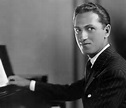 of the modern world, all which became key segments of his writing. "I guess,” he once said, “I had a sharp eye and ear for the minutiae of living."
Share A Writer’s Moment with a friend by clicking the g+1 button below.
December 5, 2016
It's 'the texture' of the thing
“Novels are like paintings, specifically watercolors. Every stroke you put down you have to go with. Of course you can rewrite, but the original strokes are still there in the texture of the thing.” – Joan Didion
Born in Sacramento, CA, on this date in 1934, Didion has blended a career in journalism, creative writing, nonfiction and screenwriting, earning many accolades along the way, particularly for her acute attention to fine detail and honing each and every sentence into a work of art.
Didion views the structure of the sentence as essential to what she is conveying in her work. In a New York Times article, Why I Write, Didion wrote, "To shift the structure of a sentence alters the meaning of that sentence, as definitely and inflexibly as the position of a camera alters the meaning of the object photographed...The arrangement of the words matters, and the arrangement you want can be found in the picture in your mind...The picture tells you how to arrange the words and the arrangement of the words tells you, or tells me, what's going on in the picture."Author of the much acclaimed The Year of Magical Thinking,
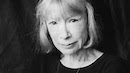 Didion started writing at age 5 though she claims that she never saw herself as a writer until after being published. She read everything she could get her hands on after learning how to read, even adult books by authors like Ernest Hemingway, who she has idolized throughout her career. She recommends, of course, reading the great writers like Hemingway and James Joyce as a good tutoring in the writing arts.
“In many ways,” she noted, “writing is the act of saying 'I,' of imposing oneself upon other people, of saying, 'Listen to me, see it my way, change your mind.' It's an aggressive, even a hostile act.”
Share A Writer’s Moment with a friend by clicking the g+1 button below.
December 4, 2016
Interesting AND illuminating writing
“I think a biography is only as interesting as the lives and times it illuminates.”– A. Scott Berg
Born on this date in 1949, American biographer Scott Berg is one of our premier biographers and has done a remarkable job in “illuminating” the lives of other famous Americans – among them Samuel Goldwyn, the founder of MGM; aviator Charles Lindbergh; and actress Katherine Hepburn.
The son of longtime film producer Dick Berg, Scott grew up in Connecticut, graduated from Princeton, and then got into writing biographies by expanding upon a senior thesis he chose to do on longtime editor Maxwell Perkins, the editor who handled both F. Scott Fitzgerald and Ernest Hemingway for the New York-based publisher Scribner’s. Max Perkins: Editor of Genius, his first full-length effort, not only is an illuminating look at the great editor but also the winner of a National Book Award. His second book was Goldwyn: A Biography, and his third Lindbergh, the acclaimed New York Times bestseller about the Lone Eagle. It won the 1999 Pulitzer Prize for Biography or Autobiography. A close friend of Hepburn, his 2003 book Kate Remembered, is a biography-cum-memoir about the friendship, and while it has received mixed reviews, I highly recommend it if you are like me and enjoyed Hepburn’s long (and terrific) acting career.Berg set a goal at age 22 of writing “a series of biographies
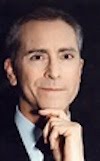
about the great 20th Century American cultural figures from different parts of the country.” So far, he’s done 5 – about one every 8-10 years. “I am a compulsive worker,” he said. “But I'm also a compulsive relaxer.”
Share A Writer’s Moment with a friend by clicking the g+1 button below.
December 3, 2016
A simple task; so just 'do it'
“The task of the artist at any time is uncompromisingly simple: To discover what has not yet been done, and to do it.” – Craig Raine
Born on this date in 1944, Raine is an English poet and past Fellow of New College, Oxford (from 1991 – 2010) where he is now emeritus professor. These days he keeps busy editing the literary magazine Areté, which he founded in 1999. Raine credits his writing and love of literature to “a great teacher in my growing up years.” We should all be so fortunate to have such a mentor set a life’s course that leads to great writing like his. For Saturday’s Poem, and as a tribute to all
 the plantlife that is about done for the fall season as the winter months arrive, here is Raine’s,
 Dandelions
Dead dandelions, bald as drumsticks,
swaying by the roadside
like Hare Krishna pilgrims
bowing to the Juggernaut.
They have given up everything.
Gold gone and their silver gone,
humbled with dust, hollow,
their milky bodies tan
to the colour of annas.
The wind changes their identity:
slender Giacomettis, Doré's convicts,
Rodin's burghers of Calais
with five bowed heads
and the weight of serrated keys . . .
They wither into mystery, waiting
to find out why they are,
patiently, before nirvana
when the rain comes down like vitriol.
Share A Writer’s Moment with a friend by clicking the g+1 button below.
December 2, 2016
Reeling in readers with real-life tales
“I think the best endings bring you back in rather than close things off with absolute finality. I'm not saying they necessarily have to be ambiguous, but we don't always need to know what happens when everyone wakes up tomorrow morning.” – T. C. Boyle
Born on this date in 1948, Thomas Coraghessan Boyle is an award-winning novelist, short story writer and Distinguished Professor of English (at the University of Southern California).
A native of New York, Boyle earned his writing degrees both there and in Iowa before gravitating to the West Coast where he has lived most of his adult life. His writing often focuses on Baby Boomers – their joys, appetites and addictions – and on the ruthlessness and unpredictability of nature and the toll human society sometimes unwittingly takes on the environment. He has authored 14 novels, including the PEN/Faulkner winning World's End, which recounts 300 years in his home stomping grounds of upstate New York. His most recent – and much acclaimed – book is this year’s The Terranauts, set in a glassed-in biodome in Arizona and closely similar to the real-life Biosphere II. The plot focuses on two of the inside crew and one jealous outsider.
Boyle’s short stories regularly appear in the major American magazines like The New Yorker and Harper’s and he has published 8 short story collections, including a great look at “the best of” in T.C. Boyle Stories II from 2014. A much sought-after speaker, he said, “I love performing in front of an audience. I like the questions; I like controversy.”
His advice to those who hope to write is to be good readers.
 “I read widely - for news, the arts, science, for entertainment, and the value of being informed - and, as a fiction writer, I can't help transposing what I learn into the scenario for a novel or story.”
Share A Writer’s Moment with a friend by clicking the g+1 button below.



![[image error]](http://1.bp.blogspot.com/-AdyVmwk0Jwk/WEgS7UlBeVI/AAAAAAAACDA/Gi4lMKtHcUAALlVpWraiagvnn8Rm5HqJwCK4B/s1600/th_010.jpg)