Dan Jorgensen's Blog, page 457
December 20, 2016
The communication of ideas
“My greatest joy comes from creativity: from feeling that I have been able to identify a certain aspect of human nature and crystallize a phenomenon in words.” – Alain de Botton
Swiss-born and British-based author de Botton is celebrating both his 47th birthday and the early success of his newest book – a sequel to his best-selling novel Essays in Love, which was his very first publishing effort from1993. His newest book, The Course of Love, not only follows up on that first best seller but also the 2010 hit movie My Last Five Girlfriends, which was based on Essays.
De Botton’s books, which usually emphasize philosophy's relevance to everyday life, have almost all been best sellers, but none to equal the romantic comedy Essays which sold over 2 million copies.
Positive reviews of his books attest that he has made literature, philosophy and art more accessible to a wider audience, as has his popularity as a guest lecturer and television documentarian, usually based on his own works.

Never shy, de Botton says “I passionately believe that's it's not just what you say that counts, it's also how you say it - that the success of your argument critically depends on your manner of presenting it.”
“I feel that the great challenge of our time is the communication of ideas.”
Share A Writer’s Moment with a friend by clicking the g+1 button below.


December 19, 2016
Writing what you know, when you can
“Titles are very hard. Sometimes a title comes before I start to write the book, but often I finish the book, and I still don't have a title. I have to go through the book again, and then sometimes I hope a title jumps out at me from what I've written.” – Eve Bunting
And, she's almost constantly in search of a new title, since Anne Evelyn (Eve) Bunting, born on this date in 1928, is the epitome of the term “writer.” The prolific author has penned more than 250 books – both fiction and nonfiction – a remarkable record since her first book, The Two Giants, wasn’t published until age 42, a dozen years after she and her family had emigrated to the U.S.
Bunting’s writing began after she took a writing course at Pasadena City College near Los Angeles. And while most of her books are set in her native Northern Ireland, she also has authored such award-winning books as Smoky Night, about the Los Angeles riots, and One Green Apple, which won the inaugural Arab American Book Award for books written for Children/ Young Adults. That 2006 book tells the story of a young girl who just immigrated to America from an Arab country and how she discovers that her differences are what makes her special. Her advice to would-be writers is to write what you know ,
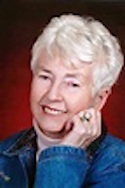 what you feel, and when you can. “I write every day,” Bunting said. “I don't have a writing schedule. I write when I feel like it. Fortunately, I feel like it all the time.”
Share A Writer’s Moment with a friend by clicking the g+1 button below.
December 18, 2016
A 'wide-eyed' approach to writing
“Imagination is the wide-open eye which leads us always to see truth more vividly.”– Christopher Fry
Born on this date in 1907, Fry was a multiple award winning English poet and playwright. He was best known for his verse dramas, notably The Lady's Not for Burning, voted by critics as one of the 100 best plays of the 20th Century. It has been revived a number of times and also made into a major movie. His One Thing More, a play about the 7th century Northumbrian monk Cædmon, who was suddenly given the gift of composing song, also won wide recognition.
One of England’s most successful playwrights and scriptwriters (especially for radio), Fry not only focused on his own works, but also did a number of translations into English of some of the better known plays from other nations. Among them were Norwegian playwright Henrik Ibsen’s Peer Gynt, and French playwright Edmond Rostand’s Cyrano de Bergerac and The Fantastiks, all widely popularized through Fry’s productions.All told, Fry wrote or translated three dozen major
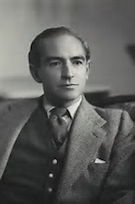 works and was voted the most popular playwright in England on many occasions. He said that perhaps his popularity also was due to his ability to write for and about ordinary people and their lives, but with a twist.
“In my plays I want to look at life - at the commonplace of existence - as if we had just turned a corner and run into it for the first time.”
Share A Writer’s Moment with a friend by clicking the g+1 button below.
December 17, 2016
Crying to the world with poetry
“Breathe-in experience, breathe-out poetry.” – Muriel Rukeyser
A few days ago I wrote about the great poet and essayist Muriel Rukeyser, who would have celebrated her 103rdbirthday this past week. “If,” she wrote, “there were no poetry on any day in the world, poetry would be invented that day. For there would be an intolerable hunger.”
Not only did she write about the world’s social injustices, but she often went to the battle lines of the wars buffeting the world, writing about the wrenching scenes she encountered there. While many of her poems about the wars were specific – “26-1-1939” (the day Barcelona, Spain, fell and thus ended the Spanish Civil War, for example), others simply cried out against what she witnessed. One of those, for Saturday’s Poem, is simply titled, PoemI lived in the first century of world wars.
Most mornings I would be more or less insane,
The newspapers would arrive with their careless stories,
The news would pour out of various devices
Interrupted by attempts to sell products to the unseen.
I would call my friends on other devices;
They would be more or less mad for similar reasons.
Slowly I would get to pen and paper,
Make my poems for others unseen and unborn.
In the day I would be reminded of those men and women,
Brave, setting up signals across vast distances,
Considering a nameless way of living, of almost unimagined values.
As the lights darkened, as the lights of night brightened,
We would try to imagine them, try to find each other,
To construct peace, to make love, to reconcile
Waking with sleeping, ourselves with each other,
Ourselves with ourselves. We would try by any means
To reach the limits of ourselves, to reach beyond ourselves,
To let go the means, to wake.
I lived in the first century of these wars.
Share A Writer’s Moment with a friend by clicking the g+1 button below.
December 16, 2016
Questions worth writing about
“The only way to discover the limits of the possible is to go beyond them into the impossible.” – Arthur C. Clarke
Born on this date in 1917, British writer Clarke is perhaps most famous for being co-writer of the screenplay for 2001: A Space Odyssey, widely considered to be one of the most influential films of all time. A farmer’s son who “loved looking at the night skies,” he was mostly self-taught about astronomy but later earned major degrees in physics and astro-physics before turning to writing.
An avid popularizer of space travel and a futurist of uncanny ability, he wrote nearly 30 books – both fiction and nonfiction – and more than a dozen collections of short stories. He also wrote hundreds of essays, which appeared in various popular magazines. In 1961 he was awarded the Kalinga Prize by UNESCO for his efforts in popularizing science. His science fiction writings earned him a number of Hugo and Nebula awards, which along with a large readership made him one of the towering figures of science fiction. Clarke died in 2008 not long after being knighted
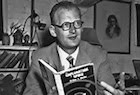 by Queen Elizabeth for “Services to Literature.” Today science fiction writing awards in Britain and more than a dozen other nations are presented in his honor and recognizing his never-ending quest to learn more and share more about space and space travel.
 “I don't pretend we have all the answers,” he said. “But the questions are certainly worth thinking about.”
Share A Writer’s Moment with a friend by clicking the g+1 button below.
December 15, 2016
Our 'witness' to understanding
“The universe is made of stories, not of atoms.” – Muriel Rukeyser
Born on this date in 1913, Rukeyser was called by critic Kenneth Rexroth “the greatest poet of her exact generation.” Also one of the leading American activists of the 1930s, ‘40s and ‘50s, she was best known for her poems about equality, feminism and social justice.
One of her most powerful pieces was a group of poems entitled The Book of the Dead (1938), documenting the details of the Hawk's Nest incident, an industrial disaster in West Virginia in which hundreds of miners died of silicosis. She said that she was drawn to write her testament and testimony to their spirits. “The sources of poetry are in the spirit seeking completeness,” she said.
A leading journalist as well as poet, she wrote on both the American and world scene, covering events like the Scottsboro Case in Alabama and The Spanish Civil War. Good writing, she said, is not only needed but essential – to democracy, human life and understanding."I should like to use another word (about both
 reporting and writing),” she said. “I suggest the old word 'witness,' which includes the act of seeing and knowing by personal experience, as well as the act of giving evidence. Nothing less is demanded of us.”
Share A Writer’s Moment with a friend by clicking the g+1 button below.
December 14, 2016
Crafting one good sentence after another
“Journalism taught me how to write a sentence that would make someone want to read the next one. I do feel that if you can write one good sentence and then another good sentence and then another, you end up with a good story.” – Amy Hempel
Born on this date in 1951, Hempel is a native of Chicago who spent her formative years in California, the setting for much of her fiction. A journalist and creative writer, she has written for numerous magazines and newspapers while also writing short stories and teaching. Currently living in Florida, she is Professor of Creative Writing at the University of Florida.
Hempel is one of only a handful of U.S. writers to build a reputation solely on short fiction. She jump-started her career by producing what has arguably been one of the most anthologized short stories ever written, "In the Cemetery Where Al Jolson Is Buried.” That 1985 story and nearly every other one of her first 20 years’ efforts are in her award-winning The Collected Stories of Amy Hempel, named as one of The New York Times' Ten Best Books of 2007. It’s truly a primer on how to do short story writing.
“I'm not first and foremost interested in story and the what-happens, but I'm interested in who's telling it and how they're telling it and the effects of whatever happened on the characters and the people,” she said about her writing style. “I’ve always known when I start a story what
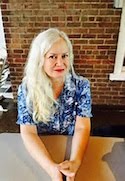 the last line is. It’s always been the case . . . I don’t know how it’s going to get there, but I seem to need that destination.”
Share A Writer’s Moment with a friend by clicking the g+1 button below.
December 13, 2016
That 'I wonder what if?' factor
“If you aren't having fun, if you aren't anxious to find out what happens next as you write, then not only will you run out of steam on the story, but you won't be able to entertain anyone else, either.” – Tamora Pierce
Born on this date in 1954, Pierce has excelled at writing fantasy fiction for teenagers and featuring strong young heroines. She won the prestigious Margaret A. Edwards Award from the American Library Association in 2013 for "significant and lasting contribution to young adult literature."
Pierce started writing when she was in the 6th grade, but not seriously until she was a student at the University of Pennsylvania. There, she started writing the books that became her first best-selling set, The Song of the Lioness quartet, published from 1983–1988. The series followed a main character named Alanna through the trials and triumphs of training as a knight. Alanna, it turned out, was modeled after her younger sister Kimberly. Tamora’s second “quartet” of best sellers was the 1999-2002 series Protector of the Small, and it was that series that cemented her nomination for the ALA award. Her writing style is inclusive to the point that the reader feels
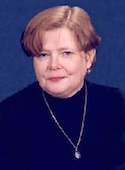 like part of the story. “The fantasy that appeals most to people is the kind that's rooted thoroughly in somebody looking around a corner and thinking, 'What if I wandered into this writer's people here?',” she said. “If you've done your job and made your people and your settings well enough, (as a writer) that adds an extra dimension that you can't buy.”
 Share A Writer’s Moment with a friend by clicking the g+1 button below.
December 12, 2016
Journalistic foundation, Creative punch
“My earliest, most impactful encounter with a book was when I was seven and awoke early on Christmas morning to find Roald Dahl's Charlie and the Chocolate Factory in my stocking. I had never been so excited by the sight of a book - and have possibly never been since!” – Sophie Kinsella Born on this date in 1969, Madeleine Sophie Wickham writes under the pen name Sophie Kinsella, an English author known for writing under the loosely termed style “Chick Lit.” Her fame has grown through her books The Shopaholic Series, led by 2009’s Confessions of a Shopaholic. Those books have literally taken the world by storm, beingtranslated into more than 30 languages. “When I had the idea for Shopaholic, it was as though a light switched on,” she said. “I realized I actually wanted to write comedy. No apologies, no trying to be serious, just full-on entertainment. The minute I went with that and threw myself into it, it felt just like writing my first book again - it was really liberating.”
Kinsella started as a financial journalist then branched into creative writing at age 24, publishing her first best-seller in 1995 The Tennis Party (re-released in 2012 as 40 Love) – under the name of Wickham. Since then, she has churned out 23 novels, the latest Finding Audrey. Glad she started as a journalist, she said journalism
 is a good foundation. “Being a journalist is good if you want to write books: it teaches you to get beyond the blank screen. My books have been described as froth, but there's scope to be witty and ironic about everything in life.”
Share A Writer’s Momentwith a friend by clicking the g+1 button below.
December 11, 2016
Buckling down and getting to work
“I strongly believe that literature can do something that nothing else can do, and that is embody the human spirit.” – Thomas McGuane
McGuane may be the only member of the American Academy of Arts and Letters who’s also a member of both the National Cutting Horse Association Hall of Fame and the Flyfishing Hall of Fame – both subjects for his writing. His work includes 10 novels, lots of short fiction, and many screenplays, as well as three collections of essays devoted to his life in the outdoors.
Born in Michigan on this date in 1939, McGuane envisioned himself as a writer from a very young age, admiring what he perceived as the adventurous life of a writer as much as the prospect of writing. He began a serious devotion to writing by the age of 16, studied writing at Michigan State and then got into playwriting and dramatic literature while studying for his MFA at Yale.
His first novel, The Sporting Club, published in 1969, set the high standards he has followed the rest of his career and also set up the types of things about which he likes to write. “I like to write about the solitary things people do,” he said. “Humans seem to function best when they're alone.” And, he noted, “I think there's only one interesting story... and that's struggle.”
McGuane said he never wanted to be a celebrity writer, but he always wanted to be a good writer. “I'm still trying to be a good writer. That's what gets me out of bed in the morning.” His best-known work – besides the screenplay he wrote for the Jack Nicholson movie The Missouri Breaks – is probably 92 in the Shade, also made into a movie. And while he said he sometimes worries about the health of the novel, he’s still a leading advocate for it as an art form.
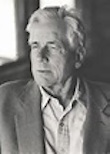
“A lot of the writers I've known for 20 years, who used to say, 'Maybe they're right - the novel is dead!' - well, now they don't feel that it's necessarily the biggest job or most sacred calling on the planet. But it's definitely a real thing - it's always been here, always will be here, and one might just as well buckle down and get to work.”
Share A Writer’s Moment with a friend by clicking the g+1 button below.