Dan Jorgensen's Blog, page 455
January 9, 2017
Reading, thinking and writing
“I like to do the research of history and the creativity of writing fiction. I am creating this thing which I think is twice as difficult as writing either history or fiction.” – Philippa Gregory
Born on this date in 1954, Gregory is the English historical novelist best known for her award-winning novels (and cinematic pieces) The Other Boleyn Girl and The White Queen. While she has a Ph.D. in 18th century literature and has written novels set in several different historical periods, her primary focus has been on the 16th century and the Tudors. Gregory said she sometimes feels that her genre choice
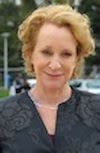 isn't highly regarded, but she likes writing it and has drawn a devoted following for her many works (over 70 so far). She also is a frequent contributor to magazines and newspapers with her short stories, features and reviews, and a regular on the BBC where she actually started her writing career after studying at a journalism school. But it is in historical fiction that she has immersed herself.
“I love reading and I love thinking,” she said. “The reason that I love my books so much is that in order to write them I have to read and to think for years at a time about the same period of time.”
Share A Writer’s Moment with a friend by clicking the g+1 button below.


January 8, 2017
Fill your pages with 'lightning'
“Mark Twain said, 'The right word is to the nearly right word as lightning is to the lightning bug.' Fill your book with lightning.”– Robert Littell
American novelist and journalist Robert Littell, who resides in France, specializes in CIA-based novels, and he coyly refuses to answer the question of whether or not he's worked for that agency.
Born on this date in 1935, he grew up in Brooklyn, spent 4 years in the U.S. Navy, and then moved into journalism, working for many years as foreign correspondent for Newsweek magazine. Self-inspired by the Cold War news coverage he was doing, he branched out into creative writing to become one of the leading “spy novelists.” His first effort, 1973’s The Defection of A.J. Lewinter, winner of several major writing awards, went almost immediately to the best-seller list, and he’s never looked back from that shift in his writing career.
To date, he has authored 20 of those genre-based novels, the most recent being 2016’s The Mayokovsky Tapes. Perhaps his best-known is the widely acclaimed is the award-winning The Company, not only a New York Times’ best-seller but also a television mini-series starring Michael Keaton. His book Legends was made into a TV series.
 Writing runs in the Littell family. His son Jonathan also is an award-winning novelist, and his older brother Alan has authored books and travel stories. His advice to new writers: Live by Mark Twain’s rule.
 “Fill your pages with details,” he said. “Work hard to get the right word.”
Share A Writer’s Moment with a friend by clicking the g+1 button below.
January 7, 2017
The beauty and 'flash' of poetry
“To feel most beautifully alive means to be reading something beautiful, ready always to apprehend in the flow of language the sudden flash of poetry.”– John Albert Holmes
Born in January, 1904, John Albert Holmes Jr., was a poet, critic, and teacher – the profession he cherished as a 30-year professor at Massachusetts’ prestigious Tufts University. There, he taught both literature and poetry, greatly admired by students and fellow faculty members. "When he taught," wrote Jerome Barron, "something magical happened. He made you want to write and understand poetry. He didn't lecture; he encouraged." Holmes brought distinguished living poets to the Tufts campus long before poetry readings and poets-in-residence became a standard feature of academia. He organized workshops, summer conferences, adult education courses, but maybe even more important, parties, late night conversations, morning coffee—for poetry, poetry, poetry.
His own writings included 10 volumes of poetry and a book on writing poetry. His final book, The Fortune Teller, came out shortly before his sudden death in 1962. For Saturday’s Poem, here is Holmes’ short poem, written at age 25, and simply called,
Noon WakingAll that long April morning while you sleptThe poplar trees were dripping in the rain.The room’s cool indoor darkness kindly keptThe quick dreams hurrying through your brain.Lying so late asleep, you could not sayWhen the slow rainy wind began to stir,Or when I rose in the dark and went away,Or what the last three words I whispered were.
The flight of stumbling dream broke and stopped going – You half sat up in bed to blink and listen.You heard, like me, the wind in gray skies blowing,And saw the three tall poplars drip and glisten.
Far on the rutted road when you awoke, I heard, I heard, the shattered words you spoke.
Share A Writer’s Moment with a friend by clicking the g+1 button below.
January 6, 2017
Writers can go 'anywhere'
“Writing is an exploration. You start from nothing and learn as you go.”– E. L. Doctorow
Edgar Lawrence "E. L." Doctorow, born on this date in 1931, was not only one of the most important American novelists of the 20th century, but perhaps one of the most important of any century in terms of his writing fiction about history. A novelist, editor, and professor, he is, in fact, best known internationally for his works of historical fiction, especially his multi-award winning works Ragtime, Billy Bathgate and The March.
A “cautious” writer who paid intimate attention to detail, Doctorow wrote 12 novels, 3 volumes of short fiction, and a stage drama. Ragtime, set in the early 20th century in New York, also became a Broadway smash hit, winning 4 Tony awards. Ragtime, Billy Bathgate, and his first novel, Welcome To Hard Times all became hit movies. His detailed writing was so effective that critics and fellow authors alike said that if you want to “be” part of history, read his books. “Good writing,” he said, “is supposed to evoke sensation in the reader - not the fact that it is raining, but the feeling of being rained upon.”
Born in New York City, he was an avid reader as a child and enamored by how writers were able to make him “feel” like he was part of their stories. It was something he said he also wanted to do. After making his way West to study writing (at Kenyon College, Ohio) and doing a stint in the Army, he went to work in the publishing industry and then wrote Welcome To Hard Times in 1960.
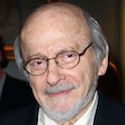
In his teaching, Doctorow liked to tell E.L. Doctorow died in 2015 aspiring writers that, “A period of time is as much an organizing principle for a work of fiction as a sense of place. You can do geography, as Faulkner did, or you can dwell on a particular period. It provides the same framework.” And he loved that he could pick a place or a time and start writing.
“In fiction, you know, there are no borders. You can go anywhere.”
Share A Writer’s Moment with a friend by clicking the g+1 button below.
January 5, 2017
Writing is a 'lifestyle;' not a 'job'
“To have a successful writing career, you must be willing to sacrifice a great deal. The book and the deadline come first before anything else. Writing is not a job; it is a lifestyle, and it is a roller-coaster ride of highs and lows. You need self-confidence and an iron carapace.” – Virginia Henley
Well-known for her Medieval, Renaissance and other period piece romance novels, Henley recently celebrated her 82nd birthday, spending the day working on her writing, of course. A tireless proponent of “work ethic,” she spends many hours a day at her craft. Since the late 1970s when she was first published, she has authored 30 historical novels, including New York Times bestsellers Seducedand Desired, and written many other novellas. Her work is now out in 14 languages.
Historical detail is the hallmark of her novels, from the practices and traditions of the day, to trends in fashion, and the day-to-day lives of prominent families. Henley weaves them into a rich tapestry for her tales. And her technique is one I like using myself. Bringing in "real" people to the story.“I love to have real people of history interact
 with my fictional characters,” she said. “History gives me the plot. I research the period meticulously, and then I blend in a romantic and sensual love story to give it balance. The heavier the history, the more romantic the couple must be.”
Henley has won many major awards - including the Romantic Times “Lifetime Achievement Award.” As for what might work best for someone who wants to be a writer of historical “love” fiction, Henley offered the same advice of most other prominent writers. “Read! I love to read history books, which is where I get my ideas,” she said. And, she added with a smile, “I also read historical romance for pleasure.”
Share A Writer’s Moment with a friend by clicking the g+1 button below.
January 4, 2017
The force and beauty of the process
“It is art that makes life, makes interest, makes importance, and I know of no substitute whatever for the force and beauty of its process.” – Max Eastman
An American writer on literature, philosophy and society, and a poet, memoirist and prominent political activist, Eastman was born on this date in 1883. A native New Yorker, he started his writing as an essayist on individual rights and causes. In 1919, he and his younger sister Crystal (who was among the founders of the American Civil Liberties Union) started the magazine The Liberator. Their magazine not only took on many causes, including Women’s Rights and Suffrage, but also published up-and-coming young writers like E. E. Cummings, John Dos Passos, and Ernest Hemingway.
A prolific writer himself, Eastman authored 20 nonfiction books on subjects as diverse as the scientific method, humor, and psychology. He also wrote 5 volumes of poetry and a novel. In 1941, he was hired as a roving editor for Reader's Digest, a position he held until his death in 1969. Among his books were memoirs and recollections of his noted friendships with leading actors, politicos and athletes, including humorists like Charlie Chaplain and Mark Twain, who he admired both for their work and their use of humor.“Laughter is, after speech, the chief thing
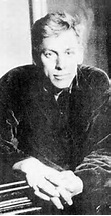 that holds society together,” he wrote. “A smile is the universal welcome.”
Share A Writer’s Moment with a friend by clicking the g+1 button below.
January 3, 2017
'Tasty' history from a gifted writer
“I'm very perverse. If someone tells me I have to read a book, I'm instantly disinclined to do so.” – Erik Larson
I first encountered Larson’s page-turning works when I read The Devil in the White City, winner of the 2004 Edgar Award for Best Fact Crime. Written about the 1893 Columbian Exposition in Chicago and a series of murders there at that same time, the book is gripping - one of many in that category by this gifted author.
Born on this date in 1954, Larson started writing as a journalist after being inspired by the award-winning movie All the President's Men, adapted from the Pulitzer Prize-winning book about Watergate. And while he’s been a feature writer for major publications like The Wall Street Journal (where he was nominated for a Pulitzer for his own investigative reporting) and Time, where he is a contributing writer, he started far more humbly.
His first newspaper job was with The Bucks County Courier Times in Levittown, PA, where he wrote about murder, witches, environmental poisons, and other "equally pleasant" things. But like his books, his stories were hard to ignore and attracted larger publications and audiences. Today, his works regularly appear in The New Yorker, The Atlantic Monthly, Harper's and Time.
As for his books, he’s had winner after winner. In the Garden of Beasts (based on the diaries of the mid-1930s U.S. Ambassador to Nazi Germany), andDead Wake: The Last Crossing of the Lusitania are “must reads” for all who enjoy what I like to call “very tasty history.” A musician, too, Larson said his writing is “sort of” inspired by music.
 “I don't listen to music when I write, but I do turn on appropriate music when I read portions of my manuscripts back to myself - kind of like adding a soundtrack to help shape mood.”
Share A Writer’s Moment with a friend by clicking the g+1 button below.
January 2, 2017
Writings are acts of hope for the future
“Poems and songs penned as an unstoppable outpouring of the heart take on a life of their own. They transcend the limits of nationality and time as they pass from person to person, from one heart to another.” – Daisaku Ikeda
A Buddhist philosopher, educator, peace activist and prolific writer of books, poems, essays and history, Ikeda celebrates his 89th birthday today. His interests in photography, art, philosophy, poetry and music are reflected in his published works, especially his well-known novel The Human Revolution, which has been widely printed in numerous languages.
In his essay collections and dialogues with leading political, cultural, and educational figures from around the world – a series now published in the Japanese-English book Embracing The Future – Ikeda discusses the transformative value of religion, the universal sanctity of life, social responsibility, and sustainable progress and development.
Also praised for his children’s books, Ikeda has won awards for such books as The Cherry Tree, The Princess and the Moon, and Over The Deep Blue Sea. And, as a World War II “survivor,” he has been a leading proponent of peace initiatives, now twice nominated for the Nobel Peace Prize (most recently in 2015).
“A healthy vision of the future is not possible without an accurate knowledge of the past,” Ikeda said of his works.
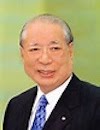
“To communicate the truths of history is an act of hope for the future.”
Share A Writer’s Moment with a friend by clicking the g+1 button below.
January 1, 2017
An 'inspired' correspondence
I never thought I'd be a writer. I never thought I'd be able to read a book, let alone write one. So if books like this (mine) inspire kids to write, or even read a whole book, I think it's good. –Don Novello
An Ohioan and “New Year’s Baby” (from 1943), Novello's path to his book series started writing in advertising in the 1960s. Then in the early 1970s he came up with the clever idea of “corresponding” with famous people under the pen name of Lazlo Toth, the deranged man who vandalized Michelangelo’s Pietà in Rome.
Written to suggest a serious but misinformed and obtuse correspondent, Novello’s letters were designed as a humorous way to tweak the noses of politicians and corporations, but many of them received serious responses. Encouraged, Novello sometimes continued the charade correspondence at length, with humorous results that would lead to another career – as a stand-up comic, particularly in the adopted persona of Father Guido Sarducci.
As a comedian and as Father Sarducci, he appeared on The Smothers Brothers Comedy Show; Saturday Night Live; and many other television specials and series, earning both accolades and awards for his cleverly written comedic scripts. And as a writer, heeventually published a series of his “Lazlo” letters and their responses – The Lazlo Letters; Citizen Lazlo!; and From Bush to Bush: The Lazlo Toth Letters. His “Lazlo” books inspired a number of other writers and comedians to try a similar approach with their own materials. “I'm kind of surprised that so many of those
 other books were almost exactly like mine,” Novello said. “They even follow the form. There were some books that even copied the stamp. It shows so little imagination.”****
Happy New Year everyone! May your 2017 be filled with imagination and many “Writer’s Moments.”
Share A Writer’s Moment with a friend by clicking the g+1 button below.
December 31, 2016
The 'master' of free verse
“I started writing poetry when I was about 13.” – Al Purdy
Canadian free verse poet Purdy's writing career spanned 56 years. His works included a remarkable 39 books of poetry, plus 1 novel, 2 volumes of memoirs and 4 books of correspondence. He has been called Canada's "unofficial poet laureate” and "a national poet in a way that you only find occasionally in the life of a culture."
Purdy was born on Dec. 30, 1918, and died at age 81 while still writing. His death bed, in fact, was cluttered with his books and papers. He was a bit chagrined by the fact that his publisher was planning a “collected works” version of his poems. “A ‘collected poems' is either a gravestone or a testimonial to survival,” he said. Here, from Beyond Remembering – The collected poems of Al Purdy (published shortly after his death) – and for Saturday’s Poem – is Purdy’sListening to Myself
I see myself staggering through deep snow
lugging blocks of wood yesterday
an old man
almost falling from bodily weakness
— look down on myself from above
then front and both sides
white hair — wrinkled face and hands
it's really not very surprising
that love spoken by my voice
should be when I am listening
ridiculous
yet there it is
a foolish old man with brain on fire
stumbling through the snow
— the loss of love
that comes to mean more
than the love itself
and how explain that?
— a still pool in the forest
that has ceased to reflect anything
except the past
— remains a sort of half-love
that is akin to kindness
and I am angry remembering
remembering the song of flesh
to flesh and bone to bone
the loss is better
Share A Writer’s Moment with a friend by clicking the g+1 button below.