Dan Jorgensen's Blog, page 439
June 11, 2017
The opportunity 'to be a mirror'
“Any form of media is an opportunity to be a mirror and reflection of what we are experiencing more in the details of our life.”– Mara Brock Akil
Brock Akilhas been a trailblazer for black women, making her impact as an award-winning television writer and producer and creating the highly successful BET show Being Mary Jane, a show centered on the life – both personal and professional – of a successful black news anchor in L.A. The show chronicles the life of Mary Jane Paul and attempts to address the statistic that within the black community 42 percent of successful women will never marry. While she has been a screenwriter for 20 years,
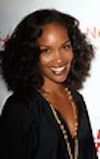 she started her career as a journalist after graduating with a journalism degree from Northwestern and credits journalistic writing as the key to her success.
 “I often attribute my screenwriting to journalism because they drill in the who, what, when, where and why - but we really need to land on that why,” she said. “That's what I've been exploring in my writing for many years.”
Share A Writer’s Moment with a friend by clicking the g+1 button below.


June 10, 2017
Writing powerful poems that matter
“I want to write poems that matter, that have an interesting point of view.”– Maxine Kumin
One-time Poet Laureate Consultant in Poetry to the Library of Congress, Kumin was born in Philadelphia on June 6, 1925. She said an “introspective” childhood led her to writing poetry early and it was a perfect fit for her life and the writing world where she did, indeed, write so many wonderful poems that matter before her death in 1914.
 Among her many awards (far too many to list here) are the Eunice Tietjens Memorial Prize for Poetry, the 1973 Pulitzer Prize for the magnificent Up Country, and the Aiken Taylor Award for Modern American Poetry, For Saturday’s Poem, here is Kumin’s,
 In The ParkYou have forty-nine days between
death and rebirth if you're a Buddhist.
Even the smallest soul could swim
the English Channel in that time
or climb, like a ten-month-old child,
every step of the Washington Monument
to travel across, up, down, over or through
- you won't know till you get there which to do.
He laid on me for a few seconds
said Roscoe Black, who lived to tell
about his skirmish with a grizzly bear
in Glacier Park. He laid on me not doing anything.
I could feel his heart
beating against my heart.
Never mind lie and lay, the whole world
confuses them. For Roscoe Black you might say
all forty-nine days flew by.
I was raised on the Old Testament.
In it God talks to Moses, Noah,
Samuel, and they answer.
People confer with angels. Certain
animals converse with humans.
It's a simple world, full of crossovers.
Heaven's an airy Somewhere, and God
has a nasty temper when provoked,
but if there's a Hell, little is made of it.
No longtailed Devil, no eternal fire,
and no choosing what to come back as.
When the grizzly bear appears, he lies/lays down
on atheist and zealot. In the pitch-dark
each of us waits for him in Glacier Park.
Share A Writer’s Moment with a friend by clicking the g+1 button below.
Powerful poetry with a point of view
“I want to write poems that matter, that have an interesting point of view.”– Maxine Kumin
One-time Poet Laureate Consultant in Poetry to the Library of Congress, Kumin was born in Philadelphia on June 6, 1925. She said an “introspective” childhood led her to writing poetry early and it was a perfect fit for her life and the writing world where she did, indeed, write so many wonderful poems that matter before her death in 1914.
Among her many awards (far too many to list here) are the Eunice Tietjens Memorial Prize for Poetry, the 1973 Pulitzer Prize for the magnificent Up Country, and the Aiken Taylor Award for Modern American Poetry, For Saturday’s Poem, here is Kumin’s, In The ParkYou have forty-nine days between
death and rebirth if you're a Buddhist.
Even the smallest soul could swim
the English Channel in that time
or climb, like a ten-month-old child,
every step of the Washington Monument
to travel across, up, down, over or through
- you won't know till you get there which to do.
He laid on me for a few seconds
said Roscoe Black, who lived to tell
about his skirmish with a grizzly bear
in Glacier Park. He laid on me not doing anything.
I could feel his heart
beating against my heart.
Never mind lie and lay, the whole world
confuses them. For Roscoe Black you might say
all forty-nine days flew by.
I was raised on the Old Testament.
In it God talks to Moses, Noah,
Samuel, and they answer.
People confer with angels. Certain
animals converse with humans.
It's a simple world, full of crossovers.
Heaven's an airy Somewhere, and God
has a nasty temper when provoked,
but if there's a Hell, little is made of it.
No longtailed Devil, no eternal fire,
and no choosing what to come back as.
When the grizzly bear appears, he lies/lays down
on atheist and zealot. In the pitch-dark
each of us waits for him in Glacier Park.
Share A Writer’s Moment with a friend by clicking the g+1 button below.
June 9, 2017
Grounded in stories about oneself
“I think any writer keeps going back to some basic theme. Sometimes it's autobiographical. I guess it usually is” – Joe Haldeman
Born in Oklahoma City on this date in 1943, Haldeman is one of America’s leading writers of Science Fiction, best known for his novels The Forever War, The Hemingway Hoax and Forever Peace. In 2009 he was selected for the Science Fiction Writers of America Grand Master Award, followed in 2010 by the Damon Knight Memorial Grand Master Award for lifetime achievement. He was inducted into The Science Fiction Hall of Fame in June 2012.
Also known for writing by hand – literally, he writes with a pen and notepad – he said there's something special about writing by hand, writing with a fountain pen. “And there's something special about writing into a book, to take a blank book and turn it into an actual book.
“I like the physical action of writing down by hand, and I don't just use it for writing my fiction.”
Many of Haldeman's works, including his debut novel War Year and The Forever War (his second book) were inspired by his experiences in the Vietnam War, where he was wounded, and by adjusting to civilian life after returning home.

“I think I would have been a writer, anyhow, in the sense of having written a story every now and then, or continued writing poetry,” Haldeman said. “But it was the war experience and the two novels I wrote about Vietnam that really got me started as a professional writer.”
Share A Writer’s Moment with a friend by clicking the g+1 button below.
June 8, 2017
Loving the 'Creativity' that writing brings
“I've always loved writing, and the impulse for me is storytelling. I don't sit down and think: 'What political message can I sell?' I love the creativity of it.”– Randa Abdel-Fattah
Born in June 1979, Abdel-Fattah is a native Australian of Palestinian-Egyptian heritage, bringing an interesting cultural mix to her writing. She started writing and had her first published work as a 6th grader. “I’ve been writing stories since I was a kid,” she said. “I love writing stories.”
She wrote numerous short stories as a teenager and by age 18 produced the first draft of Does My Head Look Big in This? later to become her 2005 debut novel. The tale of a 16-year-old Muslim girl who decides to wear the hijab full-time, it’s a story of life choices, bias and abiding friendships. The book and a play based on it have won numerous awards and accolades.
A champion for social justice and human rights, she is a frequent speaker and writer on and regular broadcast commentator on those topics. She also is a regular guest at schools around Australia addressing students about her books and the social justice issues they raise. And she loves celebratory events
 from all cultures and religions.
“Religious celebrations, and the good will, high spirits and generosity that mark them, are wonderful occasions for understanding the potential of 'everyday multiculturalism,’ and how people from diverse faiths can connect and show they care, rather than go down parallel, sometimes hostile, roads.”
Share A Writer’s Moment with a friend by clicking the g+1 button below.
June 7, 2017
Blending 'The Real' and 'The Imaginary'
“I like reading history, and actually most authors enjoy the research part because it is, after all, easier than writing.” – Ken Follett
Born in Wales in June 1949, Follett has carved out arguably the number one spot in the world for the writing both thrillers and historical fiction. Since the publication of his first book Eye of the Needle in 1978 he has sold a remarkable 350 million copies (and counting), recently achieving a rare three Number Ones in a row on the New York Times Bestseller List with his “Century Trilogy.”
While words seem to flow effortlessly from Follett’s pen, he has been a champion for those who struggle with the reading and writing process, supporting a wide range of both local and international organizations that promote literacy, writing and support for those with maladies like dyslexia so that everyone can enjoy reading as much as he has.
“Without books I would not have become a vivacious reader,” he said, “and if you are not a reader you are not a writer. “
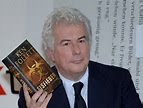
Follett said he very much likes the research process involved in creating his historical fiction. “I start with the history, and I ask myself, 'What are the great turning points? What are the big dramatic scenes that are essential to telling the story?' I like to create imaginary characters and events around a real historical situation. Iwant readers to feel: ‘Okay, this probably didn’t happen … but (wink, wink) it might have.”
Share A Writer’s Moment with a friend by clicking the g+1 button below.
The art of blending 'The Real' and 'The Imaginary'
“I like reading history, and actually most authors enjoy the research part because it is, after all, easier than writing.” – Ken Follett
Born in Wales in June 1949, Follett has carved out arguably the number one spot in the world for the writing both thrillers and historical fiction. Since the publication of his first book Eye of the Needle in 1978 he has sold a remarkable 350 million copies (and counting), recently achieving a rare three Number Ones in a row on the New York Times Bestseller List with his “Century Trilogy.”
While words seem to flow effortlessly from Follett’s pen, he has been a champion for those who struggle with the reading and writing process, supporting a wide range of both local and international organizations that promote literacy, writing and support for those with maladies like dyslexia so that everyone can enjoy reading as much as he has.
“Without books I would not have become a vivacious reader,” he said, “and if you are not a reader you are not a writer. “
Follett said he very much likes the research process involved in creating his historical fiction. “I start with the history, and I ask myself, 'What are the great turning points? What are the big dramatic scenes that are essential to telling the story?' I like to create imaginary characters and events around a real historical situation. Iwant readers to feel: ‘Okay, this probably didn’t happen … but (wink, wink) it might have.”
Share A Writer’s Moment with a friend by clicking the g+1 button below.
June 6, 2017
Writing what you WANT to know
“The one thing that makes writing a better pastime than reading is that you can make things turn out the way you want in the end!” – Geraldine McCaughrean
Born on this date in 1951, British children's novelist McCaughrean has had a fantastic career in “making things turn out just right” at the end of almost everything she’s written, including the “official” sequel to Peter Pan – Peter Pan in Scarlet.
A multiple award winner for her works, including being Britain’s nominee for the biennial Hans Christian Andersen Award, the highest international award for authors of children’s works, McCaughrean has written more than 160 books, including many re-tellings of Classic tales. Her work has been translated into 45 languages.
 She’s the only writer to win the prestigious Whitbread Children’s Book Award 3 times, for her works A Little Lower than the Angels (1987), Gold Dust (1993) and Not the End of the World (2004). She claims that what makes her love writing is the desire to escape from an unsatisfactory world. Her motto is: Do not write about what you know, write about what you want to know.
 “Writing is writing to me. I'm incapable of saying no to any writing job, so I've done everything - historical fiction, myths, fairy tales, anything that anybody expresses any interest in me writing, I'll write,” she said. “It's the same reason I used to read as a child: I like going somewhere else and being someone else.”
Share A Writer’s Moment with a friend by clicking the g+1 button below.
Write what you WANT to know
“The one thing that makes writing a better pastime than reading is that you can make things turn out the way you want in the end!” – Geraldine McCaughrean
Born on this date in 1951, British children's novelist McCaughrean has had a fantastic career in “making things turn out just right” at the end of almost everything she’s written, including the “official” sequel to Peter Pan – Peter Pan in Scarlet.
A multiple award winner for her works, including being Britain’s nominee for the biennial Hans Christian Andersen Award, the highest international award for authors of children’s works, McCaughrean has written more than 160 books, including many re-tellings of Classic tales. Her work has been translated into 45 languages.
She’s the only writer to win the prestigious Whitbread Children’s Book Award 3 times, for her works A Little Lower than the Angels (1987), Gold Dust (1993) and Not the End of the World (2004). She claims that what makes her love writing is the desire to escape from an unsatisfactory world. Her motto is: Do not write about what you know, write about what you want to know. “Writing is writing to me. I'm incapable of saying no to any writing job, so I've done everything - historical fiction, myths, fairy tales, anything that anybody expresses any interest in me writing, I'll write,” she said. “It's the same reason I used to read as a child: I like going somewhere else and being someone else.”
Share A Writer’s Moment with a friend by clicking the g+1 button below.
Write what you want to know
“The one thing that makes writing a better pastime than reading is that you can make things turn out the way you want in the end!” – Geraldine McCaughrean
Born on this date in 1951, British children's novelist McCaughrean has had a fantastic career in “making things turn out just right” at the end of almost everything she’s written, including the “official” sequel to Peter Pan – Peter Pan in Scarlet.
A multiple award winner for her works, including being Britain’s nominee for the biennial Hans Christian Andersen Award, the highest international award for authors of children’s works, McCaughrean has written more than 160 books, including many re-tellings of Classic tales. Her work has been translated into 45 languages.
She’s the only writer to win the prestigious Whitbread Children’s Book Award 3 times, for her works A Little Lower than the Angels (1987), Gold Dust (1993) and Not the End of the World (2004). She claims that what makes her love writing is the desire to escape from an unsatisfactory world. Her motto is: Do not write about what you know, write about what you want to know. “Writing is writing to me. I'm incapable of saying no to any writing job, so I've done everything - historical fiction, myths, fairy tales, anything that anybody expresses any interest in me writing, I'll write,” she said. “It's the same reason I used to read as a child: I like going somewhere else and being someone else.”
Share A Writer’s Moment with a friend by clicking the g+1 button below.