Dan Jorgensen's Blog, page 440
June 5, 2017
A little different way to see the world
“I wasn't one of those kids who grew up wanting to write or who read a particular book and thought: 'I want to do that!' I always told stories and wrote them down, but I never thought writing was a career path, even though, clearly, someone was writing the books and newspapers and magazines.”– Gayle Forman A Los Angeles native, Forman was born on this date in 1970. She is, perhaps, best known for her novel If I Stay, which both topped the New York Times bestseller list of Young Adult Fiction and also was made into a popular film – which I saw and liked a lot (I highly recommend it).
Forman began her career writing for Seventeen Magazine, with most of her articles focusing on young people and social concerns. For a number of years, in addition to her YA writing, she has been a successful freelance journalist for publications like Glamour, The Nation, and Elle.
Now a resident of Brooklyn, NY, married, and the mother of two girls, Forman said she found her niche in YA writing by zeroing in on themes that give you an in-depth and often wrenching look at her protagonists’ lives.

“I think we like movies and books that give us this emotionally moving experience,” she said. “Where you feel like a slightly different person, and you see the world a little different after you finish. It lets you see your own life in a different way, and it actually makes you feel really good.”
Share A Writer’s Moment with a friend by clicking the g+1 button below.


June 4, 2017
A writing ministry extraordinaire
“All I really need to know... I learned in kindergarten.“– Robert Fulghum
With those words, Fulghum – as he told me he prefers to be known and called by – burst onto the publishing scene in 1988, not only as a statement of fact, but as the title of his massively successful first book. Ultimately, that book would remain near the top of the New York Times bestseller list for over 2 years and begin a 30-year run of sales.
Born in Texas and celebrating his 80thbirthday today, Fulghum now lives in the State of Washington, where he is a longtime Universalist Unitarian minister and, of course, writer. There are nearly 17 million copies of his books in print, published in 27 languages in 103 countries. His prose style is very simple and direct, and finds life-affirming maxims in such mundane matters as visiting zoos, leaf-raking, and dusting. Or sayings like, “Sticks and stones will break our bones, but words will break our hearts.” The way Fulghum uses
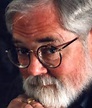 words, especially in front of an audience, is mesmerizing.
 I picked him up once at the airport in Minneapolis to take him to an appearance before 2,000 college students. We had a wonderful talk both over to the college and later on the way back, and he made me feel like one of his all-time best buddies, even though we had just met. Then, when he stood up in front of those students, he did the same for all of them, beginning by singing “Itsy, Bitsy Spider” (and getting them all to sing along).
His story that I’ll always remember is about an old sage who was asked “What is the meaning of life?” He responded by telling about a traveler who found a piece of broken mirror alongside the road, polished and shaped it, and then used it to shine light into every dark corner he might encounter. “He sought to shine a light where no light could be found, and that is the meaning of life." Fulghum then pointed to himself and added, “It’s also what every good writer should strive to do with his words."
“I think my writing,” he said, “is part of my ministry.”
Share A Writer’s Moment with a friend by clicking the g+1 button below.
June 3, 2017
Simple expressions of glory
“To have great poets, there must be great audiences.”– Walt Whitman
Poet, essayist, and journalist, Whitman was a part of the transition between transcendentalism and realism, incorporating both views in his works. He is considered among the most influential poets in the American canon, often called the father of free verse.
Born on May 31, 1819, on Long Island, New York, Whitman was an avid reader and writer as a child and began writing in his early teens.
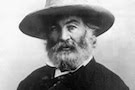 While he wrote hundreds of poems, essays and books, it is his masterpiece Leaves of Grass for which he is most remembered.
“Simplicity,” Whitman said, “is the glory of expression.” For Saturday’s Poem, here are two of Whitman’s simple, yet powerful, short poems.
A Farm Picture
Through the ample open door of the peaceful country barn, A sun-lit pasture field, with cattle and horses feeding; And haze, and vista, and the far horizon, fading away.
A Clear Midnight
This is thy hour O Soul, thy free flight into the wordless, Away from books, away from art, the day erased, the lesson done, Thee fully forth emerging, silent, gazing, pondering the themes thou lovest best.
Night, sleep, and the stars.
Share A Writer’s Moment with a friend by clicking the g+1 button below.
June 2, 2017
Timeless, surprising changes
“No one can read with profit that which he cannot learn to read with pleasure.” – Thomas Hardy
Born on this date in 1840, Thomas Hardy was a multi-talented English writer who always sought to make his mark as a poet but is best known for his wonderful novels like Far From The Madding Crowd andTess of the D’Urbervilles.
Twice nominated for the Nobel Prize in Literature, Hardy was considered a Victorian Realist and champion of the everyday man and woman, speaking out against suffering and injustice that he saw being endured by them. The author of 3 dozen books, 50 short stories
 and hundreds of poems, he also penned a number of well-received dramas and was highly regarded by the theater community. During his final years, in the 1920s, he seemed a bit surprised that many younger poets spoke of him as a mentor and role model.
“Time changes everything,” Hardy wrote (shortly before his death at age 88), “except something within us which is always seems a bit surprised by change.”
Share A Writer’s Moment with a friend by clicking the g+1 button below.
June 1, 2017
That perfect selection of a word
“When the poet makes his perfect selection of a word, he is endowing the word with life.” – John Drinkwater
English poet and dramatist John Drinkwater, born on this date in 1882, started writing as a poet in the early 1900s but didn’t have his first writing success until 1918 when he switched to drama and penned a play about an American. Abraham Lincoln was not only popular on the stage, but also spawned a big hit as a movie in the mid-1920s. That piece opened the door for Drinkwater to become a leading playwright about famous people, including popular shows about Mary Stuart and Oliver Cromwell.
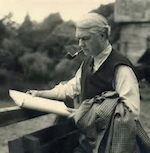 Once established as a successful writer, he published the first volume of his Collected Poems in 1923 and also compiled anthologies of his own works and other young writers of the time. And, he wrote literary criticism for several newspapers and magazines before taking over management of the Birmingham Repertory Theatre. There, he also became a popular recording artist of spoken word pieces and was still a rising star when he died suddenly in 1937.
Despite his broadcasting successes, he remained faithful to writing as a primary form of expression. “The written word,” he said solemnly, “is everything.”
Share A Writer’s Moment with a friend by clicking the g+1 button below.
May 31, 2017
Following 'the truth' along a writing path
“There are two ways of meeting difficulties: you alter the difficulties or you alter yourself meeting them.” – Phyllis Bottome Born on this date in 1884, Phyllis Forbes Dennis was a British novelist and short story writer who wrote under her birth name, Phyllis Bottome. Primarily a mystery writer, she penned some 35 novels and many dozens of short stories over a nearly 60 year writing career, starting with her first book at age 17. After marrying, she and her husband were part of the British diplomatic corps, although his work was mainly through MI-6, the spy division made famous as the parent organization of the fictional James Bond. It was great “grist for the writing mill,” she once noted.
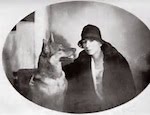 Four of her books – Private Worlds, The Mortal Storm, Danger Signal, and The Heart of a Child – were adapted to film. In addition to fiction she also wrote a highly regarded biography of psychologist Alfred Adler. She died in 1963 and her husband bequeathed a large collection of her papers and correspondence to The British Library.
“Truth, though it has many disadvantages, is at least changeless,” Bottome famously said. “You can always find it where you left it.”
Share A Writer’s Moment with a friend by clicking the g+1 button below.
May 30, 2017
A simple process: One word at a time
“I think the reason I'm a writer is because first, I was a reader. I loved to read. I read a lot of adventure stories and mystery books, and I have wonderful memories of my mom reading picture books aloud to me. I learned that words are powerful.” – Andrew Clements During his senior year at Springfield, IL, High School, Clements’ English teacher handed back a poem he’d written and he said two things were amazing about that paper. First, he’d gotten an A—a rare event in this teacher’s class; and second, she’d written in large red letters, “Andrew—this poem is so funny. This should be published!”
It was the beginning of his love of writing and, as many writers say, a teacher often shapes their writing lives. After college, he went on to teach writing to all levels from elementary through high school
 and started his own writing career.
 In addition to teaching, he worked for several publishing companies and in 1985 wrote his first picture book. His first novel, Frindle, released in 1996, won 16 state book awards and the Christopher Award given to writing that “affirms the highest values of the human spirit.” In 2015-16 it was named the Phoenix Award winner for the best book that did not win a major award when it was first published. Now the author of over 70 books, Clements has won two dozen major writing awards.
“Sometimes kids ask how I've been able to write so many books,” he said. “The answer is simple: one word at a time. Which is another good lesson, I think. You don't have to do everything at once. You don't have to know how every story is going to end. You just have to take that next step, look for that next idea, write that next word.”
Share A Writer’s Moment with a friend by clicking the g+1 button below.
May 29, 2017
Creating pictures in people's minds
“Life happens, and I write about it wherever I am.”– Melissa Etheridge
A native of Leavenworth, Kan., Melissa was born on this date in 1961 and almost from the time she could walk and talk she was interested in music, singing everywhere she went and learning to play the guitar at age 8.
 Known for her mixture of "confessional lyrics, pop-based folk-rock, and raspy, smoky vocals," her songs often are inspired by her own experiences. “But, sometimes,” she said, “they (the words) are more than my real-life and, conversely, my life is more than just my songs.”
Diagnosed with breast cancer in 2004 (now in remission) she underwent surgery and chemotherapy and said it caused her to celebrate life each and every day. "I don't have a bucket list," she said. "Whatever I do each day IS my bucket list." She is a committed advocate for environmental issues and the use of biofuels.
There are a remarkable 74 YouTube videos of her performing, and each is a feast for its vivid expression and presentation. “As an artist, singer and songwriter,” she noted, “I try to use my words to create pictures in people's minds.”
Share A Writer’s Moment with a friend by clicking the g+1 button below.
May 28, 2017
Another 'Best Day' of your year
“Write it on your heart that every day is the best day in the year.”– Ralph Waldo Emerson
Eminently quotable, Emerson was the first American to advocate for Americans to develop a writing style of their own; to create “American” writing and not just copy that of their forebears from other parts of the world.
I find it interesting that he was born this day in 1803, almost simultaneously with the commissioning of Lewis and Clark's great expedition into the Louisiana Purchase. Thus, as the Corps of Discovery was created to open American frontiers, this great writer and thinker was born to a similar pathway – only toward discovery of the written word.
Emerson was one of the first writers to keep journals, influencing his great friend Henry David Thoreau to do the same. Emerson’s lifelong extensive journals and notes, ultimately, were published in 16 volumes by Harvard University Press and are considered to be his key literary works – even though that was not his intent. “I just wanted to maintain a record of the things that were important to my life,” he wrote. As it turned out, they are things that have influenced generations of writers both in their content and the practice of journaling itself.
A teacher as well as writer and scholar, he was a staunch supporter of education for girls and women and helped found a Massachusetts school for girls. And, from the mid-1840s on, he was a national leader of the abolitionist movement. Known for his kindness and support of others, he said simply, “You cannot do a kindness too soon, for you never know how soon it will be too late.”
Share A Writer’s Moment with a friend by clicking the g+1 button below.
May 27, 2017
Nature's palette sets our writing table

“Nature never did betray the heart that loved her.” – William Wordsworth
A beautiful sky greeted me as I stood at the edge of the Great Sand Dunes National Park in Colorado this past week. And after taking the photo, I was reminded of William Wordsworth’s wonderful poem “I Wandered Lonely as a Cloud." So, here for Saturday's Poem to accompany the clouds wandering through a Colorado sky, is Wordsworth’s,
I Wandered Lonely as a Cloud
I wandered lonely as a cloud
That floats on high o’er vales and hills,
When all at once I saw a crowd,
A host, of golden daffodils;
Beside the lake, beneath the trees,
Fluttering and dancing in the breeze.
Continuous as the stars that shine
And twinkle on the milky way,
They stretched in never-ending line
Along the margin of a bay:
Ten thousand saw I at a glance,
Tossing their heads in sprightly dance.
The waves beside them danced; but they
Out-did the sparkling waves in glee:
A poet could not but be gay,
In such a jocund company:
I gazed–and gazed–but little thought
What wealth the show to me had brought:
For oft, when on my couch I lie
In vacant or in pensive mood,
They flash upon that inward eye
Which is the bliss of solitude;
And then my heart with pleasure fills,
And dances with the daffodils.