Dan Jorgensen's Blog, page 435
July 15, 2017
Seeking the elusive 'reality of joy'
“The poet's expression of joy conceals his despair at not having found the reality of joy.” – Max Jacob
Born in France on this date in 1876, the avant-garde poet Max Jacob is regarded as an important link between symbolists and surrealists, as can be seen in his prose poems (like The Dice Box)and in his paintings, exhibited in Europe and America alike during his heyday in the 1930s. Born Jewish but a Catholic convert, Jacob didn’t hesitate to speak out against the Nazis, which led to his arrest and death in an internment camp in 1944 while still at the height of his popularity.


Writer-artist Max Jacob and an example of his painting stylePsychoanalyst Jacques Lacan attributes the quote "The truth is always new" to Jacob. Here, for an example of his prose poetry and Saturday’s Poem, is Jacob’s thought-provoking,
IT'S THE GROUND THAT LACKS THE LEAST
Can one plant a beech tree in such a small garden? The doors and windows of the seven neighboring workshops come together on the little courtyard where my brother and I are. The seed of the beech tree is a slightly rotten banana or a potato. There are some old ladies who are not pleased with you. But if the beech tree grows up, won't it be too big? And if it doesn't grow up, what's the sense of planting it? Yet while planting it, my friends found my precious gems that I had lost.
Share A Writer’s Moment with a friend by clicking the g+1 button below.


July 14, 2017
A life full of surprises
“A story to me means a plot where there is some surprise. Because that is how life is - full of surprises.“ – Isaac Bashevis Singer
Nobel Prize winning author Singer was born in Poland on this date in 1902. He grew up in the tradition of Yiddish storytelling and did his entire body of work first in Yiddish and then in English, the language he adopted after emigrating to the U.S. in 1935.
Prior to winning the Nobel, he also was awarded two U.S. National Book Awards, one in Children's Literature for his memoir A Day Of Pleasure: Stories of a Boy Growing Up in Warsaw, and one in Fiction for his collection A Crown of Feathers and Other Stories. One of his best-known stories was about a girl named Yentl, basis for the hit movie by Barbra Streisand.
Singer settled in New York City, where he first took up work as a journalist and columnist for The Jewish Daily Forward. Much of his early writing was serialized in that newspaper and then expanded to others around the world.
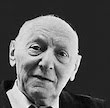 After focusing his efforts on independent writing, he published at least 18 novels, 14 children's books, a number of memoirs, essays and many dozens of widely published stories.
 He always expressed that it is a writer’s responsibility to be a conduit for the oral traditions of his or her culture even if it meant sharing in others’ concepts or ideas. “Originality is not seen in single words or even in sentences,” he said. “Originality is the sum total of a man's thinking or his writing.”
Share A Writer’s Moment with a friend by clicking the g+1 button below.
July 13, 2017
Thinking with another person's mind
“Reading is a means of thinking with another person's mind; it forces you to stretch your own.” – Charles Scribner, Jr.
Born on this date in 1921 Charles Scribner Jr. succeeded his father in 1952 as chief of the family publishing house, which had been founded by his great-grandfather in 1846. Charles Scribner Jr. oversaw its operations until 1984, when Macmillan, another American publishing company, acquired it.
He also was Ernest Hemingway's personal editor and publisher in the last portion of Hemingway's career. "He once gave me some rules of life," Scribner recalled. "Among them: 'Always do sober what you said you'd do when you were drunk. That will teach you to keep your mouth shut!'"
Scribner once said he would rather have gone into teaching but felt the obligation of continuing his family’s legacy. He is noted for streamlining and diversifying the company, including adding a successful line of reference books. He felt that despite its successes with such famous authors as Hemingway, F. Scott Fitzgerald, Thomas Wolfe and James Jones, it was too top-heavy with novels.
His own volumeof memoirs, In the Company of Writers: A Life in Publishing, is a wonderful primer on the ins and outs of the publishing world.

“Language is the soul of intellect,” Scribner wrote, “and reading is the essential process by which that intellect is cultivated beyond the commonplace experiences of everyday life.”
Share A Writer’s Moment with a friend by clicking the g+1 button below.
July 12, 2017
Imagining & writing people's lives
“If you are a good writer - and I think I am - you are able to handle any kind of group and imagine their lives.” – Earl Hamner, Jr.
Born on July 10, 1923, Hamner was perhaps best known for his book Spencer’s Mountain, which spun off into a movie, and his hit television series The Waltons. Inspired by his childhood in the mountains of Virginia, The Waltonsran for a decade in the 1970s and early 1980s and is still in syndication. He also was well known as the voice of the elderly John Boy Walton, who opened and closed each episode.
Hamner, who died in 2016 at the age of 93, got his big break in the late 1950s by writing eight episodes of The Twilight Zone – more than any other writer besides its creator Rod Serling. It was that versatility that put him on the writing map as someone who could take an idea and make it his own, regardless of the genré.
 But, he said, no matter what he wrote, he always felt both he and his writing were rooted in his Appalachian childhood.
 “I did leave Walton’s Mountain to live and work in New York City, wrote more novels, and raised a family of my own,” he said shortly before his death. “But no matter where I am, the call of a night bird, the rumble of a train crossing a trestle, the scent of crab apple, the lowing of a sleepy cow can call me home again. In memory I stand before that small white house, and I can still hear those sweet voices saying good night.”
Share A Writer’s Moment with a friend by clicking the g+1 button below
Writing (and imagining) people's lives
“If you are a good writer - and I think I am - you are able to handle any kind of group and imagine their lives.” – Earl Hamner, Jr.
Born on July 10, 1923, Hamner was perhaps best known for his book Spencer’s Mountain, which spun off into a movie, and his hit television series The Waltons. Inspired by his childhood in the mountains of Virginia, The Waltonsran for a decade in the 1970s and early 1980s and is still in syndication. He also was well known as the voice of the elderly John Boy Walton, who opened and closed each episode. Hamner, who died in 2016 at the age of 93, got his big break in the late 1950s by writing eight episodes of The Twilight Zone – more than any other writer besides its creator Rod Serling. It was that versatility that put him on the writing map as someone who could take an idea and make it his own, regardless of the genré.
But, he said, no matter what he wrote, he always felt both he and his writing were rooted in his Appalachian childhood. “I did leave Walton’s Mountain to live and work in New York City, wrote more novels, and raised a family of my own,” he said shortly before his death. “But no matter where I am, the call of a night bird, the rumble of a train crossing a trestle, the scent of crab apple, the lowing of a sleepy cow can call me home again. In memory I stand before that small white house, and I can still hear those sweet voices saying good night.”Share A Writer’s Moment with a friend by clicking the g+1 button below
July 11, 2017
No minor characters
“If I've got one thing that I really believe about fiction and life, it's that there are no minor characters.” – Jane Gardam
Celebrating her 89thbirthday today, Gardam has earned numerous writing honors including two of Britain’s prestigious Whitbread Awards for Best Novel – for the 1981 children’s book The Hollow Land, and the 1991 adult book The Queen of the Tambourine. Among her more recent award winners are 2013’s Last Friendsand 2014’s The Stories of Jane Gardam, a wonderful collection of some of her best short stories. When she’s not busy creating books and stories, she’s a reviewer for The Spectator, The Telegraph, and BBC radio.
A journalist first, she did not publish her first book until she was in her 40s. Since then she’s become one of the most prolific writers of her generation, with 30 books, numerous short stories and many journalistic pieces on her resumé. Writing, she said, has been in her blood since she was a little girl.
 “I started to write as a child as soon as I could read, or even before, when my mother read me Beatrix Potter at bedtime,” she said. “Writing seemed to me to be the only sensible way to live and be happy.
“I just knew I would be a writer. It just seemed the only sensible thing to do. “
Share A Writer’s Moment with a friend by clicking the g+1 button below.
There are no minor characters
“If I've got one thing that I really believe about fiction and life, it's that there are no minor characters.” – Jane Gardam
Celebrating her 89thbirthday today, Gardam has earned numerous writing honors including two of Britain’s prestigious Whitbread Awards for Best Novel – for the 1981 children’s book The Hollow Land, and the 1991 adult book The Queen of the Tambourine. Among her more recent award winners are 2013’s Last Friendsand 2014’s The Stories of Jane Gardam, a wonderful collection of some of her best short stories. When she’s not busy creating books and stories, she’s a reviewer for The Spectator, The Telegraph, and BBC radio.
A journalist first, she did not publish her first book until she was in her 40s. Since then she’s become one of the most prolific writers of her generation, with 30 books, numerous short stories and many journalistic pieces on her resumé. Writing, she said, has been in her blood since she was a little girl.
“I started to write as a child as soon as I could read, or even before, when my mother read me Beatrix Potter at bedtime,” she said. “Writing seemed to me to be the only sensible way to live and be happy.“I just knew I would be a writer. It just seemed the only sensible thing to do. “
Share A Writer’s Moment with a friend by clicking the g+1 button below.
Never a 'minor' character
“If I've got one thing that I really believe about fiction and life, it's that there are no minor characters.” – Jane Gardam
Celebrating her 89thbirthday today, Gardam has earned numerous writing honors including two of Britain’s prestigious Whitbread Awards for Best Novel – for the 1981 children’s book The Hollow Land, and the 1991 adult book The Queen of the Tambourine. Among her more recent award winners are 2013’s Last Friendsand 2014’s The Stories of Jane Gardam, a wonderful collection of some of her best short stories. When she’s not busy creating books and stories, she’s a reviewer for The Spectator, The Telegraph, and BBC radio.
A journalist first, she did not publish her first book until she was in her 40s. Since then she’s become one of the most prolific writers of her generation, with 30 books, numerous short stories and many journalistic pieces on her resumé. Writing, she said, has been in her blood since she was a little girl.
“I started to write as a child as soon as I could read, or even before, when my mother read me Beatrix Potter at bedtime,” she said. “Writing seemed to me to be the only sensible way to live and be happy.“I just knew I would be a writer. It just seemed the only sensible thing to do. “
Share A Writer’s Moment with a friend by clicking the g+1 button below.
July 10, 2017
Channeling daily lives and living
“Memory is the way we keep telling ourselves our stories - and telling other people a somewhat different version of our stories.” – Alice Munro
Born on this date in 1931, Canadian short story writer and Nobel Prize winner Munro is noted for “revolutionizing the architecture of short stories,” especially in her tendency to move forward and backward in time. Her stories have been said to "embed more than announce, reveal more than parade."
A frequent theme of Munro’s work, particularly in her early stories like 1971’s Lives of Girls and Women, she focuses on the dilemma of girls coming of age and to terms with their families and small-town life. In her later works like Hateship, Friendship, Courtship, Loveship, Marriage(2001) and Runaway (2004), she shifted her focus to the travails of middle age, of women alone, and of the elderly.
 Winner of the 2009 Man Booker International Prize for her lifetime body of work, she also is a three-time winner of Canada's Governor General's Award for fiction
 “I think any life can be interesting, any surroundings can be interesting,” she said about her works. “I don't think I could have been so brave if I had been living in a town, competing with people on what can be called a generally higher cultural level.”
Share A Writer’s Moment with a friend by clicking the g+1 button below.
July 9, 2017
Having faith to see the light
“Books were this wonderful escape for me because I could open a book and disappear into it, and that was the only way out of that house when I was a kid.” – Dean Koontz
When he was a senior at Shippensburg State in Pennsylvania, Dean Koontz won an Atlantic Monthly fiction competition and he’s been writing ever since. His books are published in 38 languages and have sold over 450 million copies.
Turning 72 today, he is arguably America’s leading writer of suspense thrillers, and he shows no sign of easing up. Reading Koontz’s work often provides a text on character development and how to draw readers into a story. “Each reader,” he says,
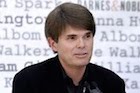 “needs to bring his or her own mind and heart into the text.”
Fourteen of his novels have risen to number one on the New York Times bestseller list, including the mega-selling Strangers, Sole Survivor, and What the Night Knows, making him one of only a dozen writers ever to have achieved that milestone. Sixteen of his books have risen to the number one position in paperback and also been major bestsellers in countries as diverse as Japan and Sweden.
Koontz said he was abused as a child and because of that he has championed causes to help victims of alcohol and abuse. “Even in the darkest moments light exists if you have faith to see it,” Koontz said. “Civilization rests on the fact that most people do the right thing most of the time.”
Share A Writer’s Moment with a friend by clicking the g+1 button below.