
Brian Solis's Blog, page 9
January 30, 2025
diginomica: AI is eating the world – why the AI revolution is good for business
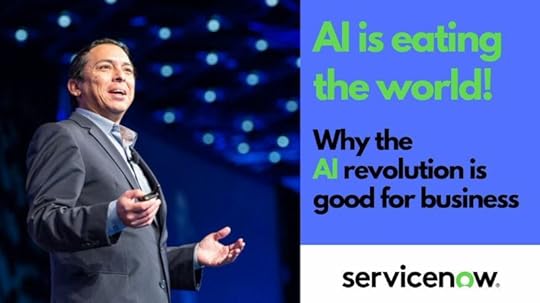
I’m fortunate to serve as the opening keynote speaker at ISE in Barcelona. To celebrate the moment, my team at ServiceNow secured an opportunity at diginomica for a contributed article that explores the keynote topic, “AI is eating the world – why the AI revolution is good for business.”
Summary: AI isn’t just transforming business, it’s redefining what’s possible (if you lead it!) From automation to augmentation, let’s explore how AI can reshape the future of innovation and value creation. Here’s how…
AI is eating the world – why the AI revolution is good for businessThe AI revolution isn’t just another chapter in the history of technology — it’s the beginning of a new story entirely. One where businesses can reimagine what’s possible, rethink value creation for an evolving market, and reshape their future together with customers and employees.
In a world where disruption seems to have become the default setting, AI is a great equalizer. Picture this: a small retailer leveraging AI to deliver personalized recommendations on par with e-commerce giants or a healthcare provider using AI to improve patient outcomes with precision diagnostics. AI is leveling the playing field, democratizing innovation, unlocking possibilities not possible before, and opening doors to growth and agility.
Unlocking new value
What makes this revolution so extraordinary is AI’s ability to help creative and open-minded leaders discover value we never even knew existed. It shifts us from the mundane to the meaningful — from reactive to predictive, static to dynamic, from one-size-fits-all commodities to deeply personal and scalable experiences.
Let’s think about customer experience for a moment. In today’s hyperconnected world, personalization isn’t just a nice-to-have; it’s a competitive edge. AI can process enormous amounts of customer data in real-time, enabling businesses to deliver hyper-relevant experiences at scale. Netflix’s recommendation engine, for instance, doesn’t just keep us binge-watching; it’s the cornerstone of content production and fostering customer loyalty.
At the same time, AI can free us from routine tasks. By automating the mundane — data entry, inventory management, logistics — it allows people to focus on what truly matters: creativity, strategy, and problem-solving. This isn’t about replacing jobs; it’s about elevating them. Teams are empowered to tackle more prominent challenges, leading to more engaged, satisfied employees and customers.
Please read the full article at diginomica! 
Please read, Mindshift: Transform Leadership, Drive Innovation, and Reshape the Future. Visit Mindshift.ing to learn more!
My main list for news, events, and updates, a Quantum of Solis.
The post diginomica: AI is eating the world – why the AI revolution is good for business appeared first on Brian Solis.


January 27, 2025
AInsights: Press Zero for the Future, This AI Operator Takes the ‘Work’ Out of Work
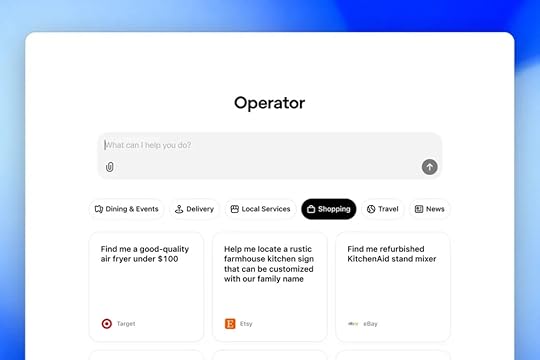
2025 was said to be the year of AI agents and the dawn of agentic AI. I’m just returning from the ServiceNow Sales Kickoff in Las Vegas and from employees to consumers to enterprise, it’s on.
Introduction to OpenAI’s “Operator”OpenAI is releasing a “research preview” of an AI agent called Operator that can “go to the web to perform tasks for you,” according to the launch post. “Using its own browser, it can look at a webpage and interact with it by typing, clicking, and scrolling,” OpenAI says. It’s launching first in the US for subscribers of OpenAI’s $200 per month ChatGPT Pro tier. It is available to Pro users here.
Before we continue, as you read this article and think about AI agents, juxtapose the word operator with orchestrator. You become the orchestrator and AI becomes the operator.
High-Level Summary of OperatorAt its core, OpenAI’s Operator represents a bold step toward making AI more than just a conversational tool—it’s meant to serve as your special AI agent. Operator isn’t just about answering questions; it’s about executing specific tasks with intelligence, speed, and adaptability.
From filling out forms and ordering groceries to generating memes on demand, Operator takes on the repetitive, time-consuming tasks that clutter our digital lives. What makes it promising is its ability to navigate the same interfaces and tools we use every day, albeit disparately, but instead, seamlessly integrating into existing workflows. As such, it introduces new possibilities to give time, and sanity, back to people ready to reimagine how they work in an AI-driven world.
Operator is powered by a next-generation AI model called the Computer-Using Agent (CUA)—an innovation that combines GPT-4o’s vision capabilities with advanced reinforcement learning to navigate and interact with graphical user interfaces (GUIs) just like a human.
Operator can “see” and “act” in a dedicated browser environment. It analyzes screenshots and executes actions via a virtual mouse and keyboard inputs. Operator has ability to self-correct. If it encounters challenges or makes mistakes, it applies advanced reasoning to adjust in real time. When a task requires human intervention, Operator hands control back to the user.
OpenAI is working closely with leading companies like DoorDash, Instacart, OpenTable, Priceline, StubHub, Thumbtack, and Uber to ensure Operator is practical, reliable, and aligned with real-world business needs. These partnerships help refine its ability to execute tasks efficiently, making AI-driven automation a seamless part of everyday operations.



Beyond business applications, Operator has the potential to streamline and enhance public services. OpenAI is exploring how AI can improve accessibility and efficiency in government workflows by collaborating with organizations such as the City of Stockton. This initiative aims to simplify processes like enrolling in city services and public programs, demonstrating how AI can be a powerful tool for improving civic engagement and accessibility.
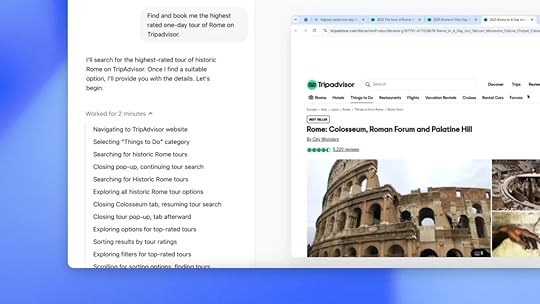
Here’s what makes Operator so interesting, even in its research form:
Context Awareness in Action – Unlike traditional chatbots, Operator maintains continuity across interactions, making its responses and actions more intuitive and relevant.Multimodal Power – Operator processes text and images via screenshots. It interacts with the web dynamically, clicking, scrolling, and making decisions like a human would.API & Software Integrations – Operator can tap into databases, software tools, and APIs to get real work done.Adaptive Decision-Making – Operator anticipates needs, suggests next steps, and automates processes without requiring step-by-step instructions.Personalization & Continuous Learning – The more it interacts, the better it understands user preferences, optimizing for efficiency and impact.Operator’s “Computer-Using Agent” ModelOperator is powered by a “Computer-Using Agent” model powered by GPT-4o’s vision capabilities with advanced reasoning through reinforcement learning. This means Operator is actively engaging with digital environments in real-time.
Here’s why this is important and representative of the beginning of a new era of AI agents and agentic AI:
Operator Can See – It processes screenshots and visual cues, allowing it to interpret and interact with digital interfaces more like a human. If it gets stuck, Operator will ask for help.Operator Can Act – Using virtual keyboard and mouse actions, it navigates web pages, clicks buttons, scrolls, fills out forms, and executes workflows without requiring custom API integrations.Bridging Human and Machine Interaction – This capability closes the gap between AI automation and human-like engagement with software and web environments.OpenAI has essentially built an agent that doesn’t rely on proprietary integrations—it works directly within existing digital workflows, making it more adaptable and immediately useful.
AInsightsComparison to AI AgentsThe AI revolution has long envisioned intelligent agents—systems capable of operating with autonomy, foresight, and strategic execution. The definition of AI agents includes:
Autonomy: The ability to act independently with minimal human oversight.Proactive Decision-Making: Anticipating needs and making informed choices without explicit prompts.Goal-Oriented Behavior: Working towards defined objectives rather than reacting to queries.Continuous Learning: Improving over time based on interactions and outcomes.Multi-Agent Collaboration: Interacting with other AI agents or humans to solve complex challenges.Operator is an evolution, not the final form. It enhances automation and intelligence but still requires guardrails, enterprise integration, and predefined rules. It’s a powerful step toward the AI-driven future but not yet the fully autonomous, strategic AI agent envisioned in science fiction.
Why Operator’s Release is SignificantThis release matters because it redefines what’s possible with AI today:
Bridging the Gap Between Chatbots and True AI Agents – Operator moves beyond static conversations into real-world, task-oriented execution.AI in the Enterprise – Businesses can deploy Operator to optimize workflows, freeing up teams to focus on strategy and innovation.Operationalizing AI for Real-World Use Cases – This is AI that works, not just responds. Industries from finance to healthcare can leverage it to solve real problems.Building AI Trust & Governance – Operator’s release provides a framework for businesses to deploy AI responsibly while maintaining human oversight.Competing in the AI Arms Race – With advances from OpenAI, Google DeepMind, and Anthropic, Operator positions OpenAI at the forefront of enterprise AI evolution.ConclusionOperator is an inflection point. It signals a shift from AI as an assistant to AI as an active participant in digital workflows. While it’s not yet a fully autonomous agent, it sets the stage for a future where AI doesn’t just respond—it acts, executes, and collaborates in ways that redefine productivity and innovation.
For more in the enterprise world of agents, please visit ServiceNow’s realworld examples.
—
Please read, Mindshift: Transform Leadership, Drive Innovation, and Reshape the Future. Visit Mindshift.ing to learn more!
Please subscribe to AInsights, here.
My main list for news, events, and updates, a Quantum of Solis.
The post AInsights: Press Zero for the Future, This AI Operator Takes the ‘Work’ Out of Work appeared first on Brian Solis.
January 20, 2025
AInsights: How OpenAI’s o3 Model Is Ushering in an AI Reasoning Revolution
AInsights: Your executive-level insights making sense of the latest in generative AI…
OpenAI introduced its o3 “reasoning” model, three months after introducing o1. Interesting fact…the company skipped o2 not because of a technology leap, but instead, copyright issues. Perhaps you heard of O2 in the UK?
The OpenAI o3 model represents a significant advancement in artificial intelligence, positioning as a reasoning and complex problem-solving model. And no, this isn’t AGI. But it is innovative, pushing AI into a new era of ‘scaling laws.’ More on that in a bit…
Unlike traditional large language models (LLMs) that rely on pattern recognition, o3 introduces simulated reasoning (SR), enabling it to “think” through problems by pausing and reflecting on its internal thought processes. This approach mimics human-like reasoning, making it capable of tackling tasks that require multi-step logic or novel problem-solving.
How is o3 Different from ChatGPT and Other LLMs?OpenAI’s o3 model differs from earlier ChatGPT iterations and other LLMs in several key ways:
Enhanced Reasoning:
o3 uses a “private chain-of-thought” process to evaluate multiple solutions before responding, improving accuracy in complex tasks like coding, mathematics, and scientific reasoning.
Its achieved benchmark scores are close to or surpassing human-level performance in areas like visual reasoning (ARC-AGI) and advanced mathematics (AIME). 
Adaptability:
o3 can handle tasks it was not explicitly trained for by exploring multiple solution pathways and selecting the best one through an evaluator system.
Performance Efficiency:
The o3 model demonstrates a 20% improvement in efficiency over earlier models on technical benchmarks like SWE-Bench for software engineering.
Safety and Alignment:
o3 incorporates “Deliberative Alignment,” a feature that allows it to critically evaluate responses against safety protocols, reducing risks of harmful or biased outputs.
o3 Model BreakthroughsProgram Synthesis for Task Adaptation: O3 introduces “program synthesis,” enabling it to adapt to new tasks by generating solutions dynamically, rather than relying solely on pre-trained patterns. This approach allows the model to solve novel problems effectively.
Natural Language Reasoning: The model uses advanced reasoning techniques, including “chains of reasoning,” which allow it to analyze tasks step-by-step, improving accuracy and reducing errors like hallucinations.
Benchmark Performance: O3 achieved groundbreaking results on benchmarks like ARC-AGI (87.5% accuracy under high compute) and AIME (96.7% in advanced mathematics). These scores demonstrate its ability to generalize knowledge and reason across complex domains.
Efficiency Gains: The model exhibits improved sampling efficiency, meaning it can achieve more accurate results with less data and compute, making it more adaptable and cost-effective compared to earlier models.
Generalization Abilities: O3’s architecture allows it to learn and adapt quickly with minimal examples, mimicking human-like cognitive abilities and addressing limitations of traditional AI models.
The Second Era of Scaling LawsAI leaders refer to this phase of AI model development as the “second era of scaling laws.” Let’s take a moment to unpack what that means.
The “second era of scaling laws” in artificial intelligence represents a paradigm shift in how AI models are developed and optimized. It moves away from the traditional approach of simply increasing model size, compute power, and dataset size—methods that have driven much of AI’s progress over the last decade but are now showing diminishing returns. Instead, this new era emphasizes architectural optimization, training efficiency, and innovative techniques like test-time scaling to achieve better performance without proportional increases in computational costs.
The second era of scaling laws is important for businesses and researchers because it ensures that AI innovation can continue without unsustainable resource demands.
Inference AIOpenAI’s o3 model is a representative of Inference AI, the stage where a trained model applies its learned knowledge to new, unseen data to make predictions, decisions, or solve tasks in real time.
OpenAI’s o3 model leverages advanced reasoning capabilities during inference. Unlike earlier models that primarily relied on pattern recognition, o3 employs simulated reasoning and a hybrid reasoning framework (neural symbolic learning combined with probabilistic logic) to actively breakdown complex problems and generate actionable outputs.
O3 also redefines ‘inference AI’ by introducing reasoning as a core component of the inference process. This evolution allows it to: 1) Handle tasks requiring structured thinking and logic, such as diagnostics in healthcare or advanced robotics, and 2) Make decisions that are not just based on pre-trained patterns but are dynamically reasoned out during runtime.
AInsightsThe o3 model marks a qualitative leap in AI capabilities, with implications for industries requiring advanced reasoning and adaptability.
It allows for complex problem-solving. For example, o3 excels in areas like robotics, medical imaging, and financial modeling by addressing tasks that involve multi-step logic or novel scenarios.
o3 also mimics human-level reasoning. Tests show that its performance approaches human-level understanding in certain domains, making it suitable for high-stakes applications like scientific research or strategic planning.
So, what will o3 allow you to do differently?
Compared to traditional LLMs, o3 enables businesses to:
Tackle Complex Tasks: Solve problems requiring advanced reasoning, such as optimizing logistics networks or diagnosing rare medical conditions.
Enhance Decision-Making: Significantly enhance your company’s decision-making processes by introducing advanced reasoning capabilities, improving accuracy, and enabling more dynamic, data-driven strategies. This will provide more accurate insights by simulating multiple reasoning pathways before delivering recommendations.
Develop Tailored Solutions: Fine-tune the AI’s reasoning approach for specific business needs, improving outcomes in areas like customer service automation or predictive analytics.
Mitigate Risks: Ensure compliance with ethical standards and reduce the likelihood of biased or harmful outputs
AppendixThe Key Features of the Second Era of Scaling Laws:
Optimization Over Size:
The focus is on refining model architectures and training methodologies rather than merely scaling up resources. This includes designing smarter algorithms and more efficient neural network structures to maximize performance gains.
Test-Time Scaling:
A significant innovation in this era is “test-time scaling,” which allows models to dynamically allocate more computational resources during inference (when answering questions or solving problems) rather than just during training. This approach enhances real-time adaptability and decision-making capabilities.
Efficiency and Sustainability:
The second era prioritizes balancing performance improvements with computational efficiency. This shift addresses the growing costs—both financial and environmental—associated with training massive AI models, making advanced AI more economically viable and accessible.
Diminishing Returns from Traditional Scaling:
Previous scaling laws relied on brute-force increases in compute, data, and model size, which yielded predictable improvements but are now hitting a “compute-efficient frontier.” Beyond this point, additional resources result in smaller performance gains, necessitating new strategies for continued progress.
—
Please read, Mindshift: Transform Leadership, Drive Innovation, and Reshape the Future. Visit Mindshift.ing to learn more!
Please subscribe to AInsights, here.
Subscribe to my master mailing list for news and events, a Quantum of Solis.
The post AInsights: How OpenAI’s o3 Model Is Ushering in an AI Reasoning Revolution appeared first on Brian Solis.
January 18, 2025
AInsights: Lights, Camera, AI: How OpenAI and Google Are Reimagining Hollywood 2.0

AInsights: Your executive-level insights making sense of the latest in generative AI…
OpenAI released its initial version of Sora, a text-to-video AI model that generates high-quality video clips based on your text prompts.
Text-to-Video Generation: Sora enables you to produce videos by simply inputting descriptive text, facilitating rapid content development without the need for extensive technical expertise. But, Sora doesn’t work like you might imagine using ChatGPT. Your movie is comprised of storyboards, where each scene is then described with as much detail as you can provide, allowing you to craft the story from beginning to end.
Asset Integration: You can customize your videos by incorporating your own images and video clips.
Storyboard Tool: Storyboards are the foundation of any good storyteller. This feature allows precise control over each frame, aiding in the creation of detailed and structured narratives.
Resolution and Format Options: Sora supports video outputs up to 1080p resolution and offers various aspect ratios, including widescreen, vertical, and square formats, catering to diverse platform requirements.
Subscriptions: If you have a subscription to ChatGPT Plus, Sora is included at no additional cost. You can generate up to 50 videos per month at 480p resolution, with options for 720p. If you subscribe to ChatGPT Pro, you gain access to high-volume workflows. With this plan, you can generate videos with higher resolutions up to 1080p up to 20 seconds. You can also download videos without watermarks.
While Sora represents a significant advancement in AI video generation, it still has limitations. There’s a big difference between the promotional videos we’ve watched and what’s possible today. For example, the current version of Sora faces difficulties with complex scene generation, physics simulations and maintaining image quality and spatial details. OpenAI is actively addressing these issues similar to its approach to its ChatGPT and o1 models.
Here’s an example of Sora at work…
OpenAI Sora – Quick and Dirty Prompt:An AI movie in there parts…
Please create a video that shows a business executive reading the digital version of AInsights newsletter published by Brian Solis. Start with the executive looking confused and overwhelmed with information overload about AI, but her team is looking for her guidance and leadership. Then she reads AInsights, and all the answers are clear toward innovation!
Storyboard 1: A business executive sits at her polished office desk, surrounded by stacks of papers, open devices, and charts depicting complex AI data. Her expression is one of confusion and overwhelm, as she holds her head in her hands. Her team peers through the glass office door, looking expectantly at her for guidance.
Storyboard 2: The executive picks up a tablet displaying a digital newsletter focused on AI insights. Her eyes scan the screen, and her face lights up with clarity and understanding.
Storyboard 3: The executive stands confidently, addressing her team with newfound insights and innovative ideas, the stress replaced by a calm assurance.
Google Veo 2Not to be outdone, Google also introduced Veo 2, its advanced ‘state-of-the-art’ AI video generation tool. It’s not widely available yet, but you can join the waitlist over at Google’s VideoFX Lab.
Like Sora, Veo 2 excels in generating realistic videos from text prompts. What sets Veo 2 apart is, for now, the following…
Cinematic Quality: Veo 2 delivers ultra-high-quality videos up to 4K resolution, with the ability to produce extended scenes lasting several minutes. This level of quality promises to meet the demands of professional-grade storytelling and high-end brand campaigns.
Realism and Detail: By understanding real-world physics and the nuances of human movement and expression, Veo 2 creates lifelike videos that resonate with viewers. This makes it ideal for industries where authenticity is critical, such as healthcare, education, and luxury goods. I’m sure Sora will also offer these capabilities, if it doesn’t already by the time I publish this.
Cinematography Intelligence: Veo 2 interprets detailed creative prompts, enabling users to specify cinematic elements such as:
1) Lens Types: For example, “18mm lens” produces a wide-angle perspective
2) Camera Angles: Prompts like “low-angle tracking shot” deliver dynamic, immersive visuals.
3) Effects: Instructions such as “shallow depth of field” create professional focus and framing.
4) Wide Range of Styles: From technical demonstrations to emotive storytelling, Veo 2 adapts seamlessly to diverse subjects and genres.
This is an example I found online, since I don’t have access to VideoFX yet. It’s an elephant drawing an elephant!
https://briansolis.com/wp-content/uploads/2024/12/MyO9EE6RYdsL7jGp.mp4AInsightsFor executives, Sora and Veo 2 Veo 2 represent a new class of AI tools that allow teams to create strategic assets that empower your organization to communicate more effectively. They offer the ability to differentiate your brand and transform your content strategy, build deeper connections with your audience, and maintain a competitive edge in an increasingly visual and digital-first marketplace.
But with it, will come the need for vision and imagination, creativity, expertise and skills, and the ability to tell a story that people will watch, feel, and share. While any one can create a high quality video, like with any form of content, audiences are never guaranteed.
Hollywood vs. Sorawood vs. VeowoodThe impact of OpenAI’s Sora and Google’s Veo 2 on Hollywood is profound, potentially reshaping the entire filmmaking process and industry dynamics.
Studios
For studios, AI video generation tools offer both opportunities and challenges:
Cost Reduction: AI can significantly lower production costs, especially in areas like visual effects and post-production.
Rapid Prototyping: Studios can quickly generate concept art, storyboards, and even rough cuts of scenes, streamlining the pre-production process.
Expanded Creative Possibilities: AI enables the creation of complex scenes and effects that might have been prohibitively expensive or technically challenging before.
Disruption Risk: While major studios have the resources to adopt AI, they may face disruption from smaller, more agile competitors who can now produce high-quality content at lower costs.
Directors
Directors will find their role evolving with AI:
Enhanced Visualization: AI tools can help directors better communicate their vision by quickly generating visual representations of scenes2.
Workflow Efficiency: Directors can iterate faster, experimenting with different visual styles and effects in real-time.
Creative Augmentation: AI serves as a tool to enhance, rather than replace, a director’s creativity.
Skill Adaptation: Directors will need to develop new skills to effectively leverage AI tools in their workflow.
Actors
The impact on actors is potentially significant:
Digital Doubles: AI-generated versions of actors could be used for dangerous stunts, reshoots, or even to extend an actor’s career beyond their physical limitations.
Performance Enhancement: AI could be used to refine or alter performances in post-production.
Job Concerns: There are fears that AI could eventually replace background actors or even lead roles in some productions. I need to think more deeply about this…
New Opportunities: Actors may find new roles in voicing or motion-capturing for AI-generated characters.
Screenwriters
Screenwriters face both opportunities and challenges:
Ideation Assistance: AI can help generate plot ideas, character backgrounds, or even dialogue options.
Script Analysis: AI tools can analyze scripts for pacing, structure, and marketability.
Adaptation Concerns: There are worries about AI potentially writing entire scripts, though current technology is far from this capability.
Collaborative Tool: AI is more likely to become a tool that enhances the screenwriter’s process rather than replacing them entirely.
Industry-Wide Implications
Democratization of Filmmaking: AI tools could lower barriers to entry, allowing more creators to produce high-quality content.
Ethical and Legal Challenges: The industry will need to grapple with issues of copyright, actor likeness rights, and the ethical use of AI-generated content.
Job Transformation: While some roles may be at risk, new jobs focused on AI integration and management are likely to emerge.
Creative Boundaries: As AI capabilities expand, the definition of creativity and authorship in filmmaking may need to be reevaluated.
While AI tools like Sora and Veo 2 present challenges to traditional filmmaking roles, they also offer unprecedented opportunities for innovation and creativity. Before disruption takes over an industry, professional and personal growth comes from those willing to first disrupt themselves. The key for Hollywood will be to adapt to this new technology, finding ways to integrate AI that enhance human creativity rather than replace it. As the technology evolves, we can expect a period of significant transformation in how films are conceived, produced, and distributed.
—
Please read, Mindshift: Transform Leadership, Drive Innovation, and Reshape the Future. Visit Mindshift.ing to learn more!
Subscribe to AInsights, here.
Join my master mailing list for news and events, a Quantum of Solis.
The post AInsights: Lights, Camera, AI: How OpenAI and Google Are Reimagining Hollywood 2.0 appeared first on Brian Solis.
January 14, 2025
AInsights: Unlocking Executive-Level Insights with Google’s NotebookLM
AInsights: Your executive-level insights making sense of the latest in generative AI…
I was already a big fan of Google’s NotebookLM. Now Google has already introduced compelling upgrades and new features that have me diving back in.
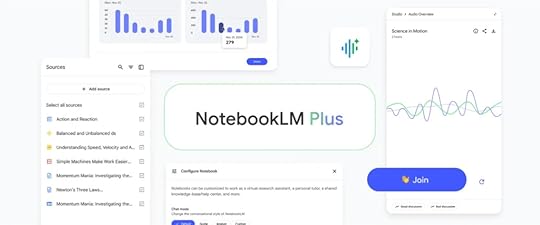
Google’s NotebookLM is an AI-powered workspace that transforms how executives, organize, interact with, and synthesize information. It combines the power of Google’s Gemini Pro language model with whatever information you’re interested in learning more about to create a personalized research assistant and hub.
NotebookLM allows users to upload up to 50 diverse information sources per notebook, including documents, presentations, PDFs, and websites. For example, I uploaded individual chapter of my book, Mindshift, press coverage, articles I’ve written about it, and podcasts. NotebookLM then analyzes all the content to create summaries, identify key topics, and generate insights. The platform offers a unified interface for managing sources, chatting with AI, and creating new takes on the content provided. Each research project or topic becomes its own ‘notebook.’
Key features include:
Intelligent analysis of uploaded documents, including charts and images.
Question-answering with inline citations.
Collaborative sharing and editing of notebooks.
Generation of podcast-style audio discussions about the content.
Creation of study guides, outlines, and briefing documents.
Interactive Mode!
Alright. That’s great. But for me, the excitement comes with the ability to now interact with the audio overviews, which were already provided in the form of an engaging podcast. Now, you can interact with the hosts!
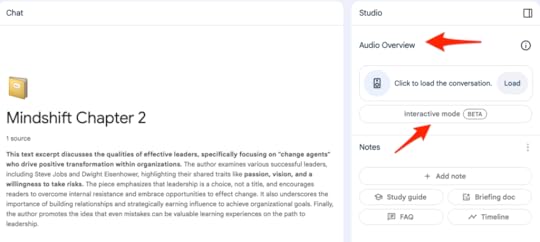
For those who don’t know, NotebookLM offers a very cool audio overview that isn’t just simple narration of the information. It’s presented in a podcast format where two hosts discuss the information in a fun, relatable, and engaging way. You’d be hard pressed to know it was AI if you were simply listening to the audio. What’s new here is “interactive mode,” where you you can raise your hand and ask a question.
The hosts will pause and call on you. Once you ask the question, they’ll respond with personalized information based on the content in your notebook.
Here’s an example using my notebook that dives into the information shared in Mindshift Chapter 2!
Brian Solis · Mindshift Chapter 2: GoogleLM Interactive Mode Demo 12/24Imagine creating notebooks of synthesized information for your teams to understand new information at scale. Whether it’s a handful of people or scaled across dozens or hundreds or even thousands of people, each individual can interact with the AI to understand information and learn in their own (fun and engaging) way.
Redesigned Interface
NotebookLM features an updated layout organizes NotebookLM into three distinct panels:
1) Sources Panel: Manage and reference all central information for your project.
2) Chat Panel: Engage in conversations with the AI about your sources, complete with citations.
3) Studio Panel: Create new content, such as Study Guides, Briefing Documents, or Audio Overviews, either individually or collaboratively.
NotebookLM Plus
Google will now offer a premium subscription offering designed for power users, teams, and enterprises. Benefits include increased limits (e.g., five times more Audio Overviews, notebooks, and sources per notebook), customization options for the style and tone of responses, shared team notebooks with usage analytics, and enhanced privacy and security features. NotebookLM Plus is available through Google Workspace and will be included in Google One AI Premium starting in early 2025.
Customizable Audio Overviews
I love this! You can provide specific instructions to AI hosts, guiding the focus of discussions to particular topics or tailoring content for specific audiences. This customization allows for a more personalized and relevant audio experience.
AInsightsThe point of AInsights isn’t just to provide the latest in AI insights for busy executives, it’s also to explore potential applications of each new innovation.
So, let’s explore killer use cases of Notebook LM for executive leaders!
Strategic Planning: Consolidate market research, competitor analyses, and internal reports to inform decision-making. (I have a team of researchers and we’re going to experiment here!)
Meeting Preparation: Quickly synthesize key points from multiple documents to ensure thorough preparation.
Trend Analysis: Identify emerging patterns and trends by analyzing various industry reports and news articles. I’m training my notebooks on the tools and methodologies shared in Mindshift to teach others at scale!
Competitive Intelligence: Process and synthesize vast amounts of market data to generate comprehensive competitive insights.
Executive Summaries: Transform lengthy documents into concise, digestible formats for quick understanding.
Project Management: Create centralized notebooks for specific projects, keeping all relevant documents and discussions in one place.
Regulatory Compliance: Generate comprehensive compliance frameworks by analyzing regulatory requirements and internal policies.
Sales Enablement: Build and maintain dynamic sales playbooks that adapt to market changes and customer needs.
Research and Development: Synthesize technical knowledge from research papers and experimental data, creating living documents that evolve with ongoing projects.
Customer/Client Proposal Development: Streamline the creation of targeted and compelling client proposals by analyzing past successful bids and client requirements.
—
Please read, Mindshift: Transform Leadership, Drive Innovation, and Reshape the Future. Visit Mindshift.ing to learn more!
Please subscribe to AInsights, here.
My main list for news, events, and updates, a Quantum of Solis.
The post AInsights: Unlocking Executive-Level Insights with Google’s NotebookLM appeared first on Brian Solis.
January 9, 2025
AInsights: The AI Assistant You Can Call Anytime

AInsights: Your executive-level insights making sense of the latest in generative AI…
OpenAI recently announced the acquisition of the URL chat.com to access ChatGPT directly, saving you an extra three keystrokes! TY! See what I did there? I saved an extra six keystrokes instead of typing out “thank you!”
But wait, there’s more. If you don’t feel like using a browser, an app, or a mobile app to collaborate with generative AI, OpenAI has introduced a toll-free phone number for you to call in your prompts!
That’s right, you can now call 1-800-ChatGPT (242-8478), without the need to have an account.
The ChatGPT call-in number is a toll-free hotline that allows users to interact with ChatGPT directly over the phone. This voice-enabled feature provides real-time responses to your inquiries, combining the latest advancements in conversational AI with the simplicity of a traditional phone call.
AInsightsI’ve been thinking through noteworthy applications.
If you believe AI should be about versatility, accessibility, and innovation, then offering multiple ways to connect with ChatGPT—whether through an app, a browser, or now a phone call—makes perfect sense.
1-800-CHATGPT isn’t a replacement; it’s meant to be an enhancement. It brings conversational AI closer to people, meeting them where they are—not just where AI happens to live.
Here are some scenarios where this call-in number could transform your workflows:
On-the-Go Strategy Planning:
Need to run through a decision tree while heading to your next meeting? Call ChatGPT to brainstorm scenarios and key insights in real time.
Team Collaboration & Meeting Prep:
Dial in with your team to summarize reports, refine a pitch, or generate action items for an upcoming project.
Customer & Vendor Insights:
Use the service to practice conversations, prepare for negotiations, or get advice on framing communication strategies.
Executive-Level Q&A: Ask about trends, draft messaging, or explore new ideas for the business—all through a quick, voice-driven interface.
Instant Ideation:
Dial in for brainstorming sessions while commuting or during team meetings. ChatGPT can help spark creativity, refine ideas, or even draft messaging on the fly.
Quick Problem-Solving:
Call for immediate answers to complex questions, from business strategies to technical troubleshooting, without needing to search or type.
Team Collaboration:
Use it during meetings to summarize points, explore alternative solutions, or generate action plans.
Learning & Development:
Access conversational coaching, role-playing scenarios, or even quick explanations of industry trends and concepts.
Efficiency Gains:
AI now fits seamlessly into busy schedules, making information retrieval and ideation immediate and mobile.
Team Enablement:
Your teams can access powerful AI capabilities without needing technical expertise, enabling real-time collaboration and support.
A Glimpse into an Evolving Future of Work:
This is another step toward an AI-enabled workplace where advanced tools adapt to how—and where—we work.
—
Please support my new book, Mindshift: Transform Leadership, Drive Innovation, and Reshape the Future. Visit Mindshift.ing to learn more! 
Please subscribe to AInsights, here.
If you’d like to join my master mailing list for news and events, please follow, a Quantum of Solis.
The post AInsights: The AI Assistant You Can Call Anytime appeared first on Brian Solis.
January 6, 2025
Join Brian Solis for a Special AMA with Hardskill Exchange
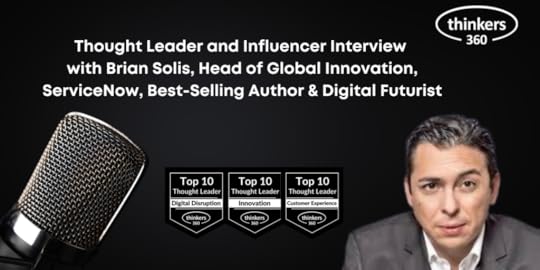
Join futurist Brian Solis for an Ask Me Anything on his new book, Mindshift. Learn how to lead boldly, innovate fearlessly, and thrive in an AI-fueled future.
Jan 10, 2025 • 9 AM, PT • Online • Free
Register here.
AgendaEvery company needs leaders who can spot opportunities before they emerge and rally teams to act with purpose. In this AMA session, Brian Solis shares insights from his new bestselling book Mindshift, empowering leaders to transform disruption into opportunity and reshape the future, starting with you.
What You’ll Learn…
Adapt to an AI-First World:
Navigate and thrive in the complex, ever-evolving digital landscape, where AI and other technologies are rewriting the rules of engagement.
Spot Emerging Trends:
Develop the foresight to anticipate disruptions before they happen, transforming challenges into opportunities for growth and innovation.
Drive Meaningful Innovation:
Ignite creativity and foster a culture of continuous innovation within your organization, empowering people to see new possibilities and bring them to life.
Lead with Confidence:
Cultivate the resilience and vision to guide your team through uncertainty, inspiring transformative change and uniting others behind a bold new vision.
The post Join Brian Solis for a Special AMA with Hardskill Exchange appeared first on Brian Solis.
January 2, 2025
AInsights: NVIDIA Unveils Game-Changing AI Supercomputer
AInsights: Your executive-level insights making sense of the latest in generative AI…
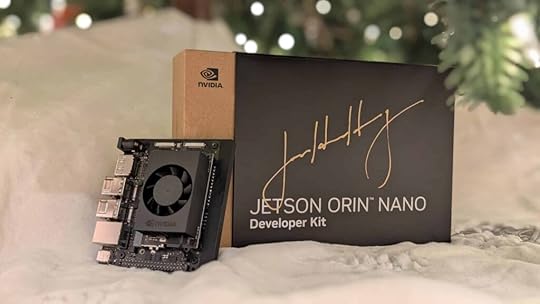
NVIDIA launched the Jetson Orin Nano Super Developer Kit, a palm-sized AI supercomputer that’s set to revolutionize the accessibility of artificial intelligence for businesses of all sizes. Priced at just $249, this powerful device delivers unprecedented AI capabilities in a compact, energy-efficient, and affordable package.
The NVIDIA Jetson Orin Nano is making waves as a breakthrough in edge AI and robotics. Designed as a compact yet highly capable supercomputer, this device is revolutionizing how businesses process data and deploy AI at the edge. For business executives, understanding its potential is critical to staying ahead in an increasingly AI-driven world.
What is it?The NVIDIA Jetson Orin Nano is a powerful AI computing platform specifically designed for edge devices. At its core, it is a small, power-efficient module capable of running advanced AI and machine learning (ML) workloads. Despite its compact size, it delivers impressive performance, enabling developers to deploy sophisticated AI models directly on devices without relying heavily on cloud computing.
Overview:
Packages a Jetson Orin Nano 8GB system-on-module (SoM) and a reference carrier board.
Comprises an NVIDIA Ampere architecture GPU with tensor cores and a 6-core Arm CPU.
Performs at 67 INT8 TOPS (total operations per second), a 70% performance increase over the previous version.
Includes 102GB/s of memory bandwidth, a 50% increase over the previous generation.
Runs at just 25 watts of power.
Can support up to four cameras for computer vision applications.
Target UsersThe Jetson Orin Nano is targeted at:
Developers and Engineers: Building AI-powered edge applications in industries like robotics, IoT, and automation.
Startups and Enterprises: Innovators looking to implement edge AI solutions in cost-effective and scalable ways.
Academics and Researchers: Exploring AI use cases and prototyping cutting-edge technologies in real-world environments.
Potential ApplicationsThe Jetson Orin Nano can be used to create:
Robotics: Autonomous navigation systems for delivery robots, drones, or industrial automation.
Smart Cities: Real-time video analytics for surveillance, traffic management, and environmental monitoring.
Retail AI: Applications like cashier-less stores, shelf-monitoring robots, and personalized customer interactions.
Healthcare Devices: AI-enabled diagnostic tools, patient monitoring, and telemedicine solutions.
Industrial IoT (IIoT): Predictive maintenance, process automation, and quality control in manufacturing.
Consumer Electronics: Smart assistants, gaming systems, and home automation.
AInsightsThe Jetson Orin Nano Super represents a democratization of AI technology, offering capabilities previously reserved for large enterprises with substantial R&D budgets. Executives should consider how this affordable, powerful AI tool could drive innovation, improve efficiency, and create new business opportunities within their organizations
With the Jetson Orin Nano, businesses can harness AI capabilities at the edge, reducing reliance on expensive cloud infrastructure and lowering latency in applications requiring real-time decision-making. The goal is to accelerate cost-effective AI development and deployment.
Scalability and Flexibility
Its modular design enables businesses to scale AI projects from prototype to production at speed, scale, and affordability. By enabling edge AI solutions, businesses can save on cloud computing costs while scaling operations with more intelligent systems. For instance, a factory can deploy multiple AI-powered cameras or sensors to optimize production without significant increases in IT infrastructure costs.
Competitive Edge
By embedding advanced AI into their products and services, companies can differentiate themselves in the market and create new revenue streams.
Efficiency and Sustainability
Operating on low power, the Jetson Orin Nano supports sustainable innovation while minimizing operational costs.
Faster Innovation at the Edge
The Orin Nano empowers businesses to process and analyze data locally, reducing reliance on cloud connectivity. This is a game-changer for industries requiring real-time decision-making, such as manufacturing, retail, healthcare, and logistics. The platform accelerates time-to-market for AI-enabled products, helping businesses stay ahead in rapidly evolving industries.
Enhanced Customer Experiences
Retailers, for example, can use Orin Nano-powered edge devices for real-time shopper behavior analysis, enabling hyper-personalized experiences. Similarly, smart cities can leverage the technology to optimize traffic flow and public safety in real-time.
Future-Proofing Operations
As AI and machine learning (ML) applications grow more sophisticated, the Orin Nano provides a scalable platform to support increasingly complex workloads. This ensures businesses remain agile in the face of rapid technological advances.
The NVIDIA Jetson Orin Nano isn’t just a technical marvel—it’s a strategic enabler for businesses looking to harness the power of AI at the edge. By adopting this technology, executives can drive innovation, reduce costs, and create a competitive advantage in their respective industries.
—
My new book is out! Please read, Mindshift: Transform Leadership, Drive Innovation, and Reshape the Future. I can’t wait to see what you imagine next! Please visit Mindshift.ing to learn more!
Please subscribe to AInsights, here.
If you’d like to join my master mailing list for news and events, please follow, a Quantum of Solis.
The post AInsights: NVIDIA Unveils Game-Changing AI Supercomputer appeared first on Brian Solis.
December 30, 2024
Why Creativity Is the Superpower Marketers Need in the Age of AI
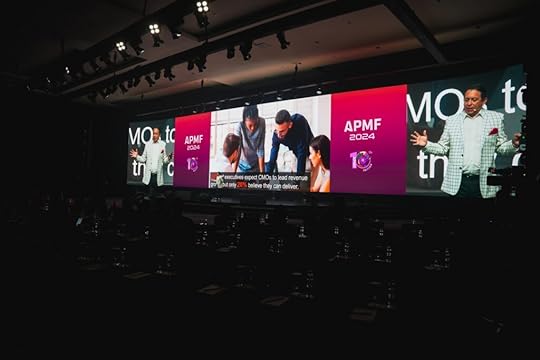
Earlier this year, I was invited to keynote the Asia Pacific Media Forum (APMF) in Bali. What a privilege it was not only to keynote such a prestigious event, but also visit the magical country of Bali…for the first time! (video is included at the end)
The team shared pictures and video from the event, and in the spirit of sharing, I’d like to also share it with you.
Make.Your.Mark.
In a world reshaped by digital disruption and shifting consumer behaviors, the role of advertising and marketing executives has never been more pivotal — or more challenging. Gone are the days when traditional strategies could reliably drive growth. Today, executives must navigate a confluence of technological innovation, changing human behaviors, and heightened expectations for personalized experiences.
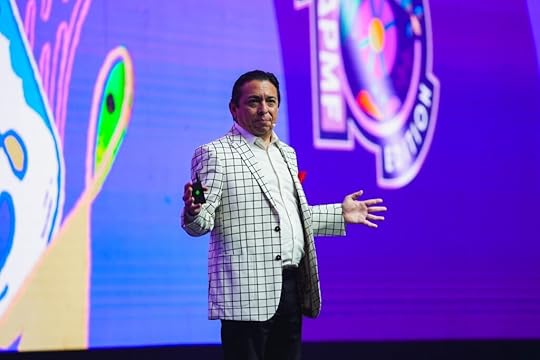
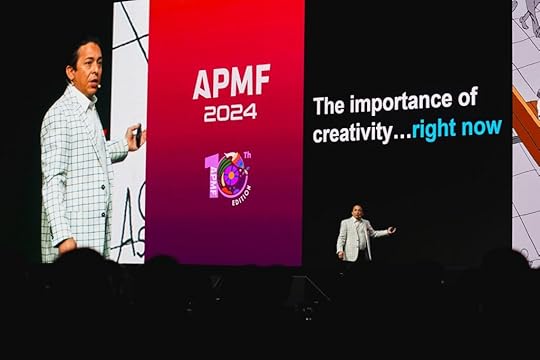
I invite you to watch the presentation when you have a moment. The talk explored the widening gap between consumer expectations and executive strategies, the rise of AI as a transformative tool, and the profound changes in consumer behavior that demand a new approach. For those willing to adapt, this is not merely a time of disruption but one of extraordinary opportunity.
And that’s where we’ll begin…
Let’s review the key insights from the keynote, outlining what advertising and marketing executives must do to thrive in this rapidly evolving landscape. It is both a wake-up call and a rallying cry for leaders to rethink how they connect with their audiences and to take bold steps toward building the future.

The Disconnect Between Executives and Consumers“If you’re waiting for someone to tell you what to do, you’re on the wrong side of innovation.”
Many organizations struggle to understand marketing as a strategic growth driver. Instead, it is often seen as a cost center with unclear contributions to the company’s success.
The Challenge: There’s a significant gap between leadership expectations and marketing’s ability to deliver. While 70% of CEOs expect marketing leaders to drive revenue and growth, only 20% of marketers feel equipped with the skills or resources necessary to meet those demands.
What to Do About It…
Upskill Marketing Teams: Invest in training to ensure marketers have the tools and knowledge to integrate growth-focused strategies into their work.
Collaborate Across Departments: Marketing, product, and customer experience teams must work together to align efforts and break down silos that hinder performance.
Rise of the Growth DesignerThe growth designer role is emerging as a critical function in modern marketing, combining data-driven decision-making with creative storytelling and user-centric design.
The Challenge: Traditional roles don’t address the need for personalized, outcome-oriented engagement. Growth designers bridge this gap by driving revenue through innovative KPIs and engagement strategies.
What to Do About It…
Hire for Hybrid Skills: Look for professionals skilled in user experience design, behavioral psychology, storytelling, and data analysis.
Redefine Metrics: Shift away from legacy metrics like impressions and NPS toward KPIs that measure actionable outcomes like conversions, lifetime value, and customer retention.
In today’s attention economy, consumers are selective about where they direct their focus. Platforms like TikTok exemplify how attention is fragmented yet deeply immersive.
The Challenge: Traditional marketing approaches fail to resonate in an environment where relevance, immediacy, and personalization are critical.
What to Do About It…
Develop Platform-Native Strategies: Craft campaigns that align with the unique behaviors and formats of each platform.
Engage with Purpose: Focus on creating content that adds value to the consumer’s journey rather than simply vying for attention.
Artificial intelligence is transforming the marketing landscape, enabling marketers to work smarter, not harder.
The Challenge: Many professionals view AI as a competitor rather than a collaborator, missing opportunities to enhance their capabilities.
What to Do About It…
Embrace AI as Augmented Intelligence: Use AI tools to analyze data, personalize messaging, and streamline workflows.Experiment Boldly: Test AI-driven innovations like chatbots, predictive analytics, and dynamic creative optimization to push the boundaries of traditional campaigns.
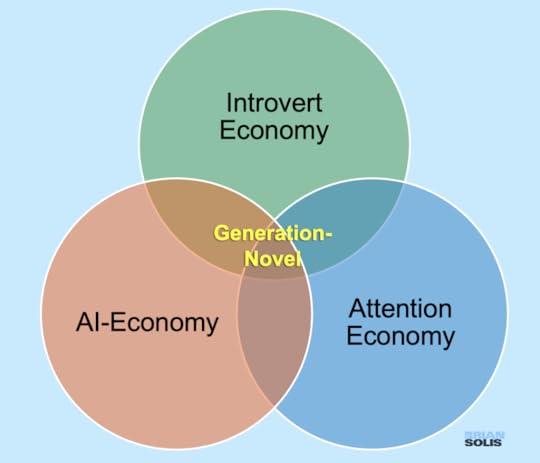
Introvert EconomyPost-pandemic shifts have accelerated the rise of the introvert economy, with consumers prioritizing convenience, introspection, and technology-driven experiences.
The Challenge: Traditional engagement models that rely on in-person interactions or broad-based campaigns no longer suffice.
What to Do About It…
Optimize for Convenience: Focus on services and campaigns that reduce friction, such as streamlined checkout processes or subscription-based models.
Reimagine Connection: Design experiences that feel personal and empathetic, acknowledging the more reflective nature of today’s consumers.

Generation Novel is a new type of consumer defined by behavioral shifts rather than age, emphasizing speed, trust, and personalization.
The Challenge: This cohort blurs the lines between digital and physical worlds, demanding seamless, intuitive experiences across platforms.
What to Do About It…
Rethink the Customer Journey: Map out and optimize every touchpoint to ensure a cohesive and satisfying experience.
Prioritize Trust: Be transparent about data use, ethical AI practices, and sustainability efforts to build long-term loyalty.
The Power of Creativity in the Age of AI“As children, we were all artists.”
Creativity is an innate quality we all possess, yet one that often goes underdeveloped in adulthood.
Creativity is not only a human advantage but also the differentiator in crafting memorable, impactful experiences. AI may simulate intelligence, but it lacks the spirit and originality that define true creativity.
In an era where technology and automation dominate the conversation, creativity remains the most uniquely human and irreplaceable skill. Unlike AI, which excels in logic, data analysis, and efficiency, creativity taps into emotional depth, empathy, and the ability to envision entirely new possibilities.
It’s time to rekindle creativity. It’s time to rekindle the curiosity and imagination that drive bold ideas and breakthrough innovations.
Make Your Mark

The future is not written; it is being created every day by those willing to think differently, embrace innovation, and challenge the status quo. This moment in history offers a rare opportunity to redefine not just marketing strategies but the very way businesses connect with people. The age of AI, the introvert economy, and the evolving attention economy demand leaders who are courageous, curious, and committed to making an impact.
This is your moment to lead. to make your mark. It’s your chance to be more than just a participant in the unfolding future — you can be a leader, a trailblazer, and an innovator who transforms challenges into opportunities.
The future of marketing lies not in simply keeping up with technological advances but in leveraging them to create deeper, more meaningful connections with your audience. By understanding and addressing the changing dynamics of the AI economy, attention economy, and introvert economy, you can transform how your organization engages with the world.
Remember that every ignite moment you create — every experience that feels personal and meaningful — has the power to shape not only your brand’s future but the lives of those you serve. The world is moving fast, but so can you. Take the tools, insights, and inspiration at your disposal and use them to reinvent what’s possible.
Let this be your rallying cry. Embrace AI not as a competitor but as a partner that expands your capabilities. Redefine how you measure success, focusing on the experiences you create and the trust you build with your audience. Above all, give yourself permission to imagine, to be curious, and to wonder. These are the seeds of true innovation.
Your mark will be defined by your willingness to embrace a mindshift, to lead change, challenge outdated norms, and create experiences that resonate. The tools are at your fingertips, the opportunities are vast, and the time is now. Be bold, be innovative, and be human.
“Creativity is a human skill, and the importance of creativity right now has never been greater.”
In a world reshaped by AI, automation, and shifting consumer expectations, creativity is the key to standing out, building trust, and creating lasting impact. Embrace your creativity — and make your mark.
Make Your Mark: Actionable Insights for Advertising and Marketing ExecutivesBe Curious and Solution-Oriented: Create an environment where curiosity and experimentation are celebrated, empowering teams to think beyond the status quo. Cultivate curiosity and problem-solving as core cultural values within your organization. Encourage teams to approach challenges with innovation and proactivity.Adopt a Growth Mindset: Transition from traditional marketing models to growth-oriented strategies. Focus on measurable outcomes like conversion optimization, customer lifetime value, and satisfaction scores.Invest in Creative Skills: Encourage teams to nurture their creative potential through workshops, brainstorming sessions, and exposure to diverse perspectives.Leverage AI as Augmented Intelligence: Use AI to enhance creativity, efficiency, and personalization. Treat it as a tool to amplify human ingenuity rather than a replacement for it.Design for the Introvert Economy: Create campaigns that align with consumers’ priorities for trust, convenience, and emotional resonance.Prioritize Emotional Engagement: Design campaigns that focus on how people feel, not just what they do. Use creativity to craft experiences that resonate on a personal level. This sets the stage for defining “ignite moments.”Focus on Experiences: Develop “ignite moments” that leave a lasting impression on consumers. Use technology to enhance, not replace, the human touch.Rethink Discovery and Engagement: Adapt to how consumers now research and make decisions. Be present on platforms like TikTok, Instagram, and AI-driven tools like ChatGPT, where traditional SEO and SEM fall short.
It’s time for new leadership!
Consider reading,
Mindshift
to Transform Leadership, Drive Innovation, and Reshape the Future.
The post Why Creativity Is the Superpower Marketers Need in the Age of AI appeared first on Brian Solis.
The European House, Ambrosetti, to Host Innotech Salon Featuring Mindshift
Screenshot
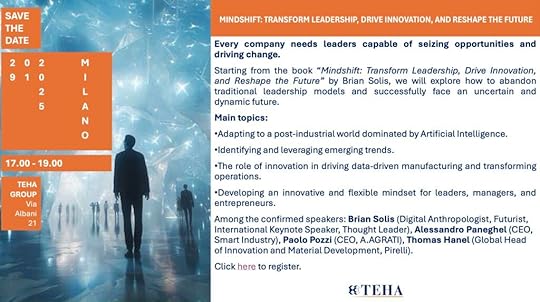
Mindshift: Transform Leadership, Drive Innovation, and Reshape the FutureEvery company needs leaders capable of seizing opportunities and driving change.
Starting from the book “Mindshift: Transform Leadership, Drive Innovation, and Reshape the Future” by Brian Solis, we will explore how to abandon traditional leadership models and successfully face an uncertain and dynamic future.
Main topics:
Adapting to a post-industrial world dominated by Artificial Intelligence.
Identifying and leveraging emerging trends.
The role of innovation in driving data-driven manufacturing and transforming
operations.
Developing an innovative and flexible mindset for leaders, managers, and
entrepreneurs.
Among the confirmed speakers: Brian Solis (Digital Anthropologist, Futurist, International Keynote Speaker, Thought Leader), Alessandro Paneghel (CEO, Smart Industry), Paolo Pozzi (CEO, A.AGRATI), Thomas Hanel (Global Head of Innovation and Material Development, Pirelli).
Click here to register.
Ogni azienda ha bisogno di leader capaci di cogliere le opportunità e guidare il cambiamento. Nel libro Mindshift: Transform Leadership, Drive Innovation, and Reshape the Future, Brian Solis, esperto di innovazione e trasformazione aziendale, presenta strumenti e strategie per abbandonare i modelli di leadership tradizionali e affrontare un futuro incerto e dinamico. Il libro offre insegnamenti su come adattarsi al mondo post-industriale dominato dall’intelligenza artificiale, identificare tendenze emergenti e sviluppare idee innovative. Mindshift è una guida per leader, manager ed imprenditori che desiderano rompere con il passato, accogliere nuove possibilità e costruire un futuro significativo.
Quali sfide le organizzazioni dovranno affrontare per abbandonare i modelli di leadership tradizionali?Come le aziende si stanno preparando per cogliere le opportunità offerte dalle tendenze emergenti?Qual è il primo passo concreto che ogni individuo può fare per sviluppare una mentalità innovativa e adattabile?Queste sono alcune domande a cui proveremo a rispondere nel corso della Tavola Rotonda.
The post The European House, Ambrosetti, to Host Innotech Salon Featuring Mindshift appeared first on Brian Solis.


